The video owner has disabled playback on external websites.
This video is no longer available on YouTube.
This video cannot be played right now.
Watch on YouTube
学习统计
CEFR 等级
难度
字幕 (104 片段)
"Sorry, my phone died."
"It's nothing. I'm fine."
"These allegations are completely unfounded."
"The company was not aware of any wrongdoing."
"I love you."
We hear anywhere from 10 to 200 lies a day,
and we spent much of our history coming up with ways to detect them,
from medieval torture devices to polygraphs,
blood-pressure and breathing monitors, voice-stress analyzers,
eye trackers, infrared brain scanners,
and even the 400-pound electroencephalogram.
But although such tools have worked under certain circumstances,
most can be fooled with enough preparation,
and none are considered reliable enough to even be admissible in court.
But, what if the problem is not with the techniques,
but the underlying assumption that lying spurs physiological changes?
What if we took a more direct approach,
using communication science to analyze the lies themselves?
On a psychological level, we lie partly to paint a better picture of ourselves,
connecting our fantasies to the person we wish we were
rather than the person we are.
完整字幕可在视频播放器中查看
评论 (0)
登录后评论互动模式
测验
正确答案:
相关视频

Titanic 3D | The Boat Leaving The Port | Official Clip HD

Dave Filoni Cameo Full Scene - Star Wars The Mandalorian Episode 6 X-Wing
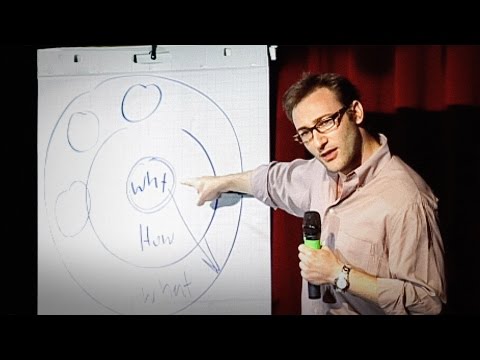
How Great Leaders Inspire Action | Simon Sinek | TED

Robin Williams & Martha Stewart Can't Stop Laughing While Cooking Tacos | Martha Stewart

"Oswald Mosley Meets the Shelby Brothers" | S0503 | Peaky Blinders

TED-Ed
测验
正确答案:
观看视频时会出现测验
记忆技巧
来自此视频
免费开始学语言

