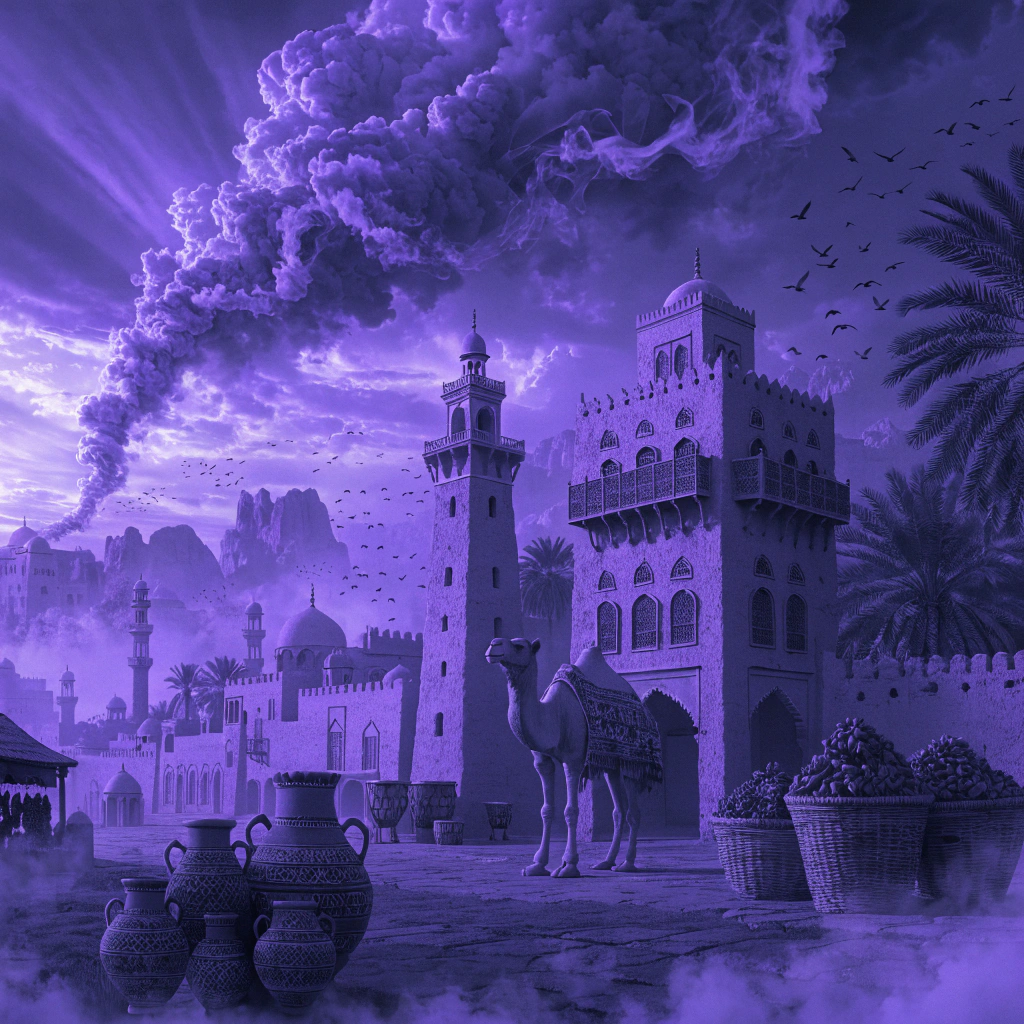
A Special Day in Saudi Arabia
Saudi Arabia has a special day. It is Saudi Founding Day. People celebrate this day on February 22nd every year. It is a very old and important story.
Long ago, in 1727, a leader named Imam Muhammad bin Saud started a new state. The capital city was Diriyah. Now, Diriyah is a famous place with old buildings.
On this day, people are very happy. They wear traditional clothes and carry flags. Families eat together and see beautiful lights. It is a day of history and pride for the Kingdom.
تسليط الضوء على القواعد
نمط: المضارع البسيط (أفعال الكينونة)
"It is Saudi Founding Day."
نستخدم 'is' مع الفاعل 'it' لوصف الحقائق. في المستوى A1، هذه هي الطريقة الأكثر شيوعاً للتعريف بالأشياء.
نمط: المضارع البسيط (أفعال الحركة)
"Families eat together."
نستخدم الصيغة الأساسية للفعل عندما يكون الفاعل جمعاً. هذا النمط يصف الأشياء التي تحدث كل عام.
اختبر فهمك
10 أسئلة · A1 مبتدئ · معاينة مجانية واحدة
اختبر ما تعلمته من هذا المقال. أجب على جميع الأسئلة لكسب نقاط خبرة!
متى يوم التأسيس السعودي؟
هل تريد إنهاء الاختبار؟
9 أسئلة أخرى بانتظارك. سجّل مجاناً لفتح الاختبار الكامل وكسب نقاط خبرة!
سجل مجاناًلديك حساب بالفعل؟ دخول
تفصيل الأسئلة
متى يوم التأسيس السعودي؟
إجابتك:
الإجابة الصحيحة: 22 فبراير
كانت الدرعية العاصمة الأولى.
إجابتك:
الإجابة الصحيحة: صحيح
ماذا تعني كلمة 'famous'؟
إجابتك:
الإجابة الصحيحة: معروف لدى الكثير من الناس
الناس يرتدون ملابس _____ في هذا اليوم.
إجابتك:
الإجابة الصحيحة: traditional
Saudi Founding Day: A Special Celebration
Saudi Founding Day is a very important holiday in Saudi Arabia. People celebrate it every year on February 22nd. This day is special because it remembers the start of the first Saudi state in 1727.
A long time ago, Imam Muhammad bin Saud began the state in a city called Diriyah. Diriyah was the first capital city. Today, it is a famous UNESCO World Heritage site because it has a very old and beautiful history. Many people visit Diriyah to see the traditional buildings and learn about the past.
During Founding Day, the streets are full of life. People wear traditional clothes and share local food with their families. They also drink Saudi coffee and watch traditional dances. It is a happy time because people feel proud of their heritage.
Founding Day is different from National Day. National Day celebrates the modern country, but Founding Day celebrates three hundred years of history. It is older than National Day. This holiday helps young people understand their roots and the history of their great country.
تسليط الضوء على القواعد
نمط: الماضي البسيط
"Imam Muhammad bin Saud began the state in a city called Diriyah."
نستخدم الماضي البسيط للتحدث عن أفعال انتهت في الماضي. الأفعال المنتظمة يضاف إليها '-ed'، ولكن 'began' هي صيغة غير منتظمة للفعل 'begin'.
نمط: صيغ المقارنة
"It is older than National Day."
نستخدم صيغ المقارنة للنظر في الفرق بين شيئين. بالنسبة للصفات القصيرة، نضيف '-er' ونستخدم كلمة 'than'.
اختبر فهمك
11 أسئلة · A2 ابتدائي · معاينة مجانية واحدة
اختبر ما تعلمته من هذا المقال. أجب على جميع الأسئلة لكسب نقاط خبرة!
متى يحتفل الناس بيوم التأسيس السعودي؟
هل تريد إنهاء الاختبار؟
10 أسئلة أخرى بانتظارك. سجّل مجاناً لفتح الاختبار الكامل وكسب نقاط خبرة!
سجل مجاناًلديك حساب بالفعل؟ دخول
تفصيل الأسئلة
متى يحتفل الناس بيوم التأسيس السعودي؟
إجابتك:
الإجابة الصحيحة: 22 فبراير
كانت الدرعية أول عاصمة للدولة السعودية.
إجابتك:
الإجابة الصحيحة: صحيح
ماذا تعني كلمة 'traditional'؟
إجابتك:
الإجابة الصحيحة: شيء يفعله الناس منذ وقت طويل
يشرب الناس _____ السعودية ويشاهدون الرقصات التقليدية في هذا اليوم.
إجابتك:
الإجابة الصحيحة: coffee
لماذا تشتهر الدرعية اليوم؟
إجابتك:
الإجابة الصحيحة: إنها موقع تراث عالمي لليونسكو
Celebrating the Roots: Saudi Founding Day
Saudi Founding Day is celebrated every February 22nd to honor the deep roots of the Kingdom of Saudi Arabia. It is a day that commemorates the historical moment in 1727 when Imam Muhammad bin Saud established the First Saudi State in Diriyah. While National Day celebrates the modern unification, Founding Day focuses on three centuries of rich heritage and the resilient foundations of the state.
The first capital, Diriyah, is a very important place. It has been recognized as a UNESCO World Heritage site because of its historic architecture and significance. Today, people visit the ruins of Turaif to learn about the courage of the leaders who built the state.
During this national holiday, the streets are filled with people wearing traditional costumes. Men often wear the 'Bisht' or 'Daglah', while women wear beautiful, colorful dresses that represent different regions of the country. Traditional food is also a major part of the celebration. Families gather to share meals and stories about their ancestors.
Many events have been organized across the Kingdom to showcase Saudi culture. Schools and museums participate by teaching students about the history of the First Saudi State. It is a time for reflection and pride.
Since its establishment three centuries ago, Saudi Arabia has grown into a modern and influential country. However, the people have never forgotten their origins. Founding Day reminds everyone that the strength of the future depends on the solid foundations of the past. By celebrating this day, Saudis connect their modern achievements with their historic legacy.
تسليط الضوء على القواعد
نمط: المبني للمجهول (المضارع البسيط)
"Saudi Founding Day is celebrated every February 22nd."
نستخدم المبني للمجهول عندما يكون الحدث أهم من الفاعل. يتم تشكيله باستخدام 'am/is/are' بالإضافة إلى التصريف الثالث للفعل.
نمط: المضارع التام
"Saudi Arabia has grown into a modern and influential country."
يصف هذا النمط حدثاً بدأ في الماضي ويستمر حتى الحاضر أو له تأثير الآن. يتم تشكيله باستخدام 'have/has' بالإضافة إلى التصريف الثالث للفعل.
اختبر فهمك
11 أسئلة · B1 متوسط · معاينة مجانية واحدة
اختبر ما تعلمته من هذا المقال. أجب على جميع الأسئلة لكسب نقاط خبرة!
في أي عام تأسست الدولة السعودية الأولى؟
هل تريد إنهاء الاختبار؟
10 أسئلة أخرى بانتظارك. سجّل مجاناً لفتح الاختبار الكامل وكسب نقاط خبرة!
سجل مجاناًلديك حساب بالفعل؟ دخول
تفصيل الأسئلة
في أي عام تأسست الدولة السعودية الأولى؟
إجابتك:
الإجابة الصحيحة: 1727
يوم التأسيس يحتفل بنفس الحدث الذي يحتفل به اليوم الوطني.
إجابتك:
الإجابة الصحيحة: خطأ
ما هو تعريف كلمة 'heritage' (تراث)؟
إجابتك:
الإجابة الصحيحة: تاريخ وتقاليد مجتمع ما
تم الاعتراف بالدرعية كموقع _____ للتراث العالمي لليونسكو.
إجابتك:
الإجابة الصحيحة: Heritage
ماذا يرتدي الناس غالباً خلال احتفالات يوم التأسيس؟
إجابتك:
الإجابة الصحيحة: أزياء تقليدية
Saudi Founding Day: Honoring Three Centuries of Heritage
While many international observers are familiar with Saudi National Day in September, February 22nd marks an equally significant, though distinct, milestone: Saudi Founding Day. Officially established as a national holiday in 2022, this day commemorates the deep-rooted historical origins of the Kingdom. It honors the moment in 1727 when Imam Muhammad bin Saud established the First Saudi State in the historic city of Diriyah. This city, now a UNESCO World Heritage site, served as the epicenter of a political and cultural movement that would eventually transform the Arabian Peninsula.
Understanding the distinction between Founding Day and National Day is crucial for any student of Saudi history. While National Day celebrates the unification of the modern Kingdom by King Abdulaziz in 1932, Founding Day focuses on the three centuries of statehood that preceded it. By highlighting the year 1727, the Kingdom emphasizes its long-standing political stability and cultural continuity. For nearly three centuries, the Saudi state has demonstrated remarkable resilience, surviving various challenges and evolving into a modern global leader.
The celebrations of Founding Day are characterized by a profound sense of national pride and cultural expression. Throughout the country, events are organized to showcase the nation's diverse heritage. Citizens often wear traditional attire, such as the 'ghutra' and 'bisht', which symbolize the values and aesthetics of their ancestors. These garments are not merely costumes; they are a testament to the enduring identity of the Saudi people. Furthermore, the festivities often include traditional dances and culinary displays, allowing both locals and expatriates to appreciate the depth of Saudi traditions.
From an academic perspective, Founding Day invites a scholarly evaluation of the nation's endurance. The restoration of Diriyah, the original capital, serves as a focal point for this reflection. By preserving the mud-brick architecture of the At-Turaif district, the government ensures that the foundations of the state remain visible to future generations. This commitment to historical preservation aligns with the goals of Vision 2030, which seeks to balance modern innovation with traditional values.
Ultimately, Founding Day serves as a bridge between the past and the future. It reminds citizens that the prosperity of the modern era is built upon the sacrifices and visions of those who came before. As the Kingdom continues to undergo rapid social and economic transformation, Founding Day provides a steady anchor, reinforcing a national identity that is both ancient and forward-looking. For language learners, studying this topic offers a rich opportunity to engage with complex narratives of statehood and cultural legacy.
تسليط الضوء على القواعد
نمط: المبني للمجهول (Passive Voice)
"The celebrations of Founding Day are characterized by a profound sense of national pride."
بنستخدم صيغة المبني للمجهول هنا عشان نركز على الاحتفالات نفسها أكتر من الأشخاص اللي بيقوموا بالفعل. بيتكون من استخدام verb 'to be' مع التصريف الثالث للفعل الرئيسي.
نمط: جمل الوصل (Relative Clauses)
"...this city served as the epicenter of a movement that would eventually transform the Arabian Peninsula."
جملة الوصل بتدينا معلومات أكتر عن الاسم (الحركة في المثال ده). كلمة 'that' استُخدمت عشان تحدد الحركة المقصودة ونتائجها التاريخية.
نمط: زمن المضارع التام (Present Perfect Tense)
"For nearly three centuries, the Saudi state has demonstrated remarkable resilience."
زمن المضارع التام (has/have + التصريف الثالث) بيوصف فعل أو حالة بدأت في الماضي ولسه مستمرة لحد النهاردة.
اختبر فهمك
11 أسئلة · B2 فوق المتوسط · معاينة مجانية واحدة
اختبر ما تعلمته من هذا المقال. أجب على جميع الأسئلة لكسب نقاط خبرة!
ما هو التركيز التاريخي الأساسي ليوم التأسيس السعودي؟
هل تريد إنهاء الاختبار؟
10 أسئلة أخرى بانتظارك. سجّل مجاناً لفتح الاختبار الكامل وكسب نقاط خبرة!
سجل مجاناًلديك حساب بالفعل؟ دخول
تفصيل الأسئلة
ما هو التركيز التاريخي الأساسي ليوم التأسيس السعودي؟
إجابتك:
الإجابة الصحيحة: تأسيس الدولة السعودية الأولى عام 1727
يحتفل اليوم الوطني السعودي ويوم التأسيس السعودي بنفس الحدث التاريخي تماماً.
إجابتك:
الإجابة الصحيحة: خطأ
ماذا تعني كلمة 'distinction' في سياق المقال؟
إجابتك:
الإجابة الصحيحة: فرق أو تباين واضح
على مدى ثلاثة قرون تقريباً، أظهرت الدولة السعودية _____ ملحوظاً.
إجابتك:
الإجابة الصحيحة: resilience
لماذا تم ذكر مدينة الدرعية كـ 'مركز' (epicenter) الدولة الأولى؟
إجابتك:
الإجابة الصحيحة: لأنها كانت العاصمة الأصلية التي تأسست عام 1727
Architect of a Legacy: Decoding the Historical Significance of Saudi Founding Day
Seldom has a historical milestone been so intricately woven into the fabric of a modern nation’s identity as the establishment of the First Saudi State. Every February 22nd, Saudi Arabia observes Founding Day, a profound commemoration that transcends the celebration of modern statehood to honor three centuries of heritage. While National Day marks the unification of the modern Kingdom in 1932, Founding Day looks back to 1727, the year Imam Muhammad bin Saud ascended to power in Diriyah, signaling a pivotal shift toward regional stability and political sovereignty. This distinction is crucial for C1 learners of history, as it highlights the deep-rooted continuity of the Saudi state, which precedes the modern era by over two hundred years.
The significance of Diriyah cannot be overstated. Once a modest oasis in the heart of the Arabian Peninsula, it evolved into a venerated capital and a cradle of culture. Today, as a UNESCO World Heritage site, its mud-brick architecture stands as a testament to the resilient foundations of the Saudi state. It was in this very city that the transition from fragmented tribalism to a centralized political entity began. This consolidation of power was not merely an exercise in expansionism; rather, it represented the birth of a collective identity. The restoration of the At-Turaif district, the heart of Diriyah, epitomizes the Kingdom's dedication to historical preservation. As visitors traverse the labyrinthine alleys of this site, they encounter a tangible connection to the audacity of the First Saudi State.
What distinguishes the First Saudi State is its early emphasis on institutional legitimacy. Not only did Imam Muhammad bin Saud provide security for pilgrimage routes, but he also fostered an environment where commerce and scholarship could flourish. The convergence of spiritual values and administrative acumen allowed the state to withstand numerous external pressures over the centuries. This resilience is a recurring theme in the Saudi narrative, illustrating a nation that has consistently rebuilt itself upon its original values. The architectural prowess displayed in these earthen structures belies the harsh environmental conditions of the Nejd region, showcasing an innate ingenuity that defined the early pioneers.
The observance of Founding Day is also a manifestation of cultural pride. It serves as a bridge between the past and the future, aligning the historical legacy of the First Saudi State with the ambitious goals of Vision 2030. By acknowledging the deep-rooted history of the nation, the Kingdom reinforces its contemporary standing as a global leader with an ancient pedigree. Nominalisation of complex actions—such as the 'institutionalization of governance' or the 'revitalization of heritage'—reflects the sophisticated way in which the state interprets its own history. This cultural tapestry, woven from the threads of perseverance and vision, provides the necessary context for understanding modern Saudi Arabia’s geopolitical weight.
Ultimately, Founding Day is an invitation to reflect on the continuity of the Saudi experience. It reminds the populace and the world alike that the Kingdom’s current prosperity is anchored in three centuries of endurance. Seldom does one find a nation so committed to preserving the echoes of its ancestors while simultaneously charting a course toward a hyper-modern future. To ignore the events of 1727 is to overlook the very essence of the Saudi identity—a synthesis of tradition and progress that continues to define the nation’s trajectory in the twenty-first century.
تسليط الضوء على القواعد
نمط: تقديم النفي (Negative Inversion)
"Seldom has a historical milestone been so intricately woven into the fabric of a modern nation’s identity as the establishment of the First Saudi State."
يضع هذا التركيب ظرفًا منفيًا أو مقيدًا (مثل 'seldom' - نادراً) في البداية للتوكيد. يتطلب ذلك تبديل أماكن الفاعل والفعل المساعد (has/does/can).
نمط: الجمل المشقوقة (Cleft Sentences)
"It was in this very city that the transition from fragmented tribalism to a centralized political entity began."
تستخدم الجمل المشقوقة تركيب 'It + be + [التركيز] + جملة الوصل' للتأكيد على معلومة محددة. هنا، التركيز هو 'in this very city' (في هذه المدينة بالتحديد).
نمط: التحويل إلى أسماء (Nominalisation)
"The consolidation of power was not merely an exercise in expansionism; rather, it represented the birth of a collective identity."
يتضمن هذا الأسلوب تحويل الأفعال (مثل consolidate) أو الصفات إلى أسماء (consolidation). هذه التقنية شائعة في الكتابة الأكاديمية والرسمية بمستوى C1 لخلق نبرة أكثر موضوعية وتطورًا.
اختبر فهمك
12 أسئلة · C1 متقدم · معاينة مجانية واحدة
اختبر ما تعلمته من هذا المقال. أجب على جميع الأسئلة لكسب نقاط خبرة!
ما هو التركيز التاريخي الأساسي ليوم التأسيس السعودي وفقًا للمقال؟
هل تريد إنهاء الاختبار؟
11 أسئلة أخرى بانتظارك. سجّل مجاناً لفتح الاختبار الكامل وكسب نقاط خبرة!
سجل مجاناًلديك حساب بالفعل؟ دخول
تفصيل الأسئلة
ما هو التركيز التاريخي الأساسي ليوم التأسيس السعودي وفقًا للمقال؟
إجابتك:
الإجابة الصحيحة: تأسيس الدولة السعودية الأولى في عام 1727
يوم التأسيس واليوم الوطني يحتفلان بنفس الحدث التاريخي تمامًا.
إجابتك:
الإجابة الصحيحة: خطأ
ماذا تعني كلمة 'venerated' في سياق المقال؟
إجابتك:
الإجابة الصحيحة: يُنظر إليه باحترام كبير
تقف العمارة الطينية في الدرعية كـ _____ للأسس الصامدة للدولة السعودية.
إجابتك:
الإجابة الصحيحة: testament
أي مدينة كانت عاصمة للدولة السعودية الأولى؟
إجابتك:
الإجابة الصحيحة: الدرعية
ركز الإمام محمد بن سعود فقط على التوسع وتجاهل العلم والمعرفة.
إجابتك:
الإجابة الصحيحة: خطأ
The Diriyah Paradigm: Deconstructing the Historical Genesis of Saudi Sovereignty
To contemplate the essence of the Saudi state is to engage with a narrative of profound endurance and historical continuity that transcends the mere boundaries of modern political geography. While the modern unification celebrated on National Day marks a pivotal milestone in the 20th century, Saudi Founding Day, observed annually on February 22nd, invites a more nuanced exploration of the nation’s deep-seated provenance. This occasion commemorates the year 1727, a chronological anchor when Imam Muhammad bin Saud ascended to leadership in Diriyah, thereby catalyzing the formation of the First Saudi State. Were one to scrutinize the geopolitical landscape of the early 18th-century Arabian Peninsula, one would find a fragmented mosaic of tribal territories and localized power centers; however, the Imam’s vision offered a transformative paradigm of stability, unity, and sovereignty.
The choice of Diriyah as the crucible for this nascent state was by no means arbitrary, nor was it a consequence of mere serendipity. Situated along the fertile banks of Wadi Hanifa, Diriyah emerged not merely as a commercial hub but as an intellectual and political epicenter of unprecedented significance. The historiography of this period suggests that the establishment of the state was predicated upon a confluence of local administrative acumen, strategic foresight, and a steadfast commitment to cultural integrity. Not only did the Imam consolidate disparate factions under a unified banner, but he also laid the immutable foundations of a governance system that would weather three centuries of regional volatility and external pressures. Notwithstanding the subsequent challenges faced by the state throughout the ensuing centuries, the indomitable spirit of its founders remained a constant, providing the ideological scaffolding for the Second and Third Saudi States.
The physical vestiges of this era, most notably the Turaif District in Diriyah—now a venerated UNESCO World Heritage site—serve as silent sentinels of this legacy. To walk through its sun-drenched mud-brick ruins is to witness the architectural manifestation of a civilization that refused to be eclipsed by time or the harshness of the desert environment. The resilience of these structures, with their intricate Najdi designs, mirrors the societal resilience that has characterized the Saudi people since the mid-18th century. It is perhaps an overstatement to suggest that the modern Kingdom is a mere evolution; rather, it is a sophisticated extrapolation of the original principles established in Diriyah, adapted to the exigencies of a globalized world.
Furthermore, scholars often argue that the celebration of Founding Day is essential for a comprehensive understanding of the Saudi zeitgeist. It provides the necessary historical depth to appreciate the scale of the nation's contemporary metamorphosis. Had the foundations laid in the 18th century been less robust or had the social contract been less enduring, the rapid modernization witnessed under the aegis of Vision 2030 might have lacked its essential cultural mooring. The interplay between tradition and progress is not a contradiction but a symbiotic relationship where the past informs the future, ensuring that the national identity is not lost amidst the tide of technological advancement.
In conclusion, Saudi Founding Day is far more than a simple historical retrospective; it is an affirmation of a three-century-long journey toward self-determination and sovereign dignity. By honoring the events of 1727, the Kingdom acknowledges that its current stature on the global stage is the culmination of an arduous but rewarding historical trajectory. As the nation looks toward the horizons of the future, it does so with the profound assurance that its roots are buried deep within the resilient soil of Diriyah, ensuring that the Saudi identity remains both vibrant and immutable in an ever-changing world. This historical consciousness is the bedrock upon which the future is built, bridging the gap between the mud-brick palaces of the past and the giga-projects of the future.
تسليط الضوء على القواعد
نمط: القلب الشرطي للحالات الافتراضية
"Were one to scrutinize the geopolitical landscape of the early 18th-century Arabian Peninsula, one would find a fragmented mosaic of tribal territories."
يحل هذا التركيب محل 'If one were to...' بـ 'Were one to...' لإضفاء نبرة أكثر رسمية وأكاديمية. يستخدم لوصف موقف افتراضي ونتائجه المحتملة.
نمط: القلب السلبي للتوكيد
"Not only did the Imam consolidate disparate factions under a unified banner, but he also laid the immutable foundations of a governance system."
عند بدء الجملة بتعبير سلبي أو تقييدي مثل 'Not only'، يتم قلب الفاعل والفعل المساعد. هذا يخلق توكيدًا أقوى على النقاط اللاحقة.
نمط: الحالة الشرطية الثالثة مع 'Had'
"Had the foundations laid in the 18th century been less robust, the rapid modernization witnessed under the aegis of Vision 2030 might have lacked its essential cultural mooring."
يتم حذف 'if' ونقل 'had' إلى البداية. يستخدم هذا الشكل لمناقشة المواقف الماضية الافتراضية ونتائجها المتخيلة، وهو شائع في التحليل الأكاديمي.
اختبر فهمك
12 أسئلة · C2 إتقان · معاينة مجانية واحدة
اختبر ما تعلمته من هذا المقال. أجب على جميع الأسئلة لكسب نقاط خبرة!
ما هو الاختلاف التاريخي الرئيسي بين يوم التأسيس واليوم الوطني حسب المقال؟
هل تريد إنهاء الاختبار؟
11 أسئلة أخرى بانتظارك. سجّل مجاناً لفتح الاختبار الكامل وكسب نقاط خبرة!
سجل مجاناًلديك حساب بالفعل؟ دخول
تفصيل الأسئلة
ما هو الاختلاف التاريخي الرئيسي بين يوم التأسيس واليوم الوطني حسب المقال؟
إجابتك:
الإجابة الصحيحة: يحتفل يوم التأسيس بتأسيس الدولة الأولى عام 1727، في حين يرمز اليوم الوطني إلى توحيد القرن العشرين.
يشير الكاتب إلى أن اختيار الدرعية عاصمة كان إلى حد كبير مسألة صدفة عشوائية.
إجابتك:
الإجابة الصحيحة: خطأ
ماذا تعني كلمة 'immutable' في سياق المقال؟
إجابتك:
الإجابة الصحيحة: ثابت ولا يتغير بمرور الوقت.
تأسست الدولة السعودية الأولى في مدينة _____.
إجابتك:
الإجابة الصحيحة: Diriyah
ماذا يرمز إليه حي الطريف في النص؟
إجابتك:
الإجابة الصحيحة: المرونة المعمارية والمجتمعية للشعب السعودي.
يزعم المقال أن تحديث رؤية 2030 منفصل بشكل أساسي عن أحداث عام 1727.
إجابتك:
الإجابة الصحيحة: خطأ

