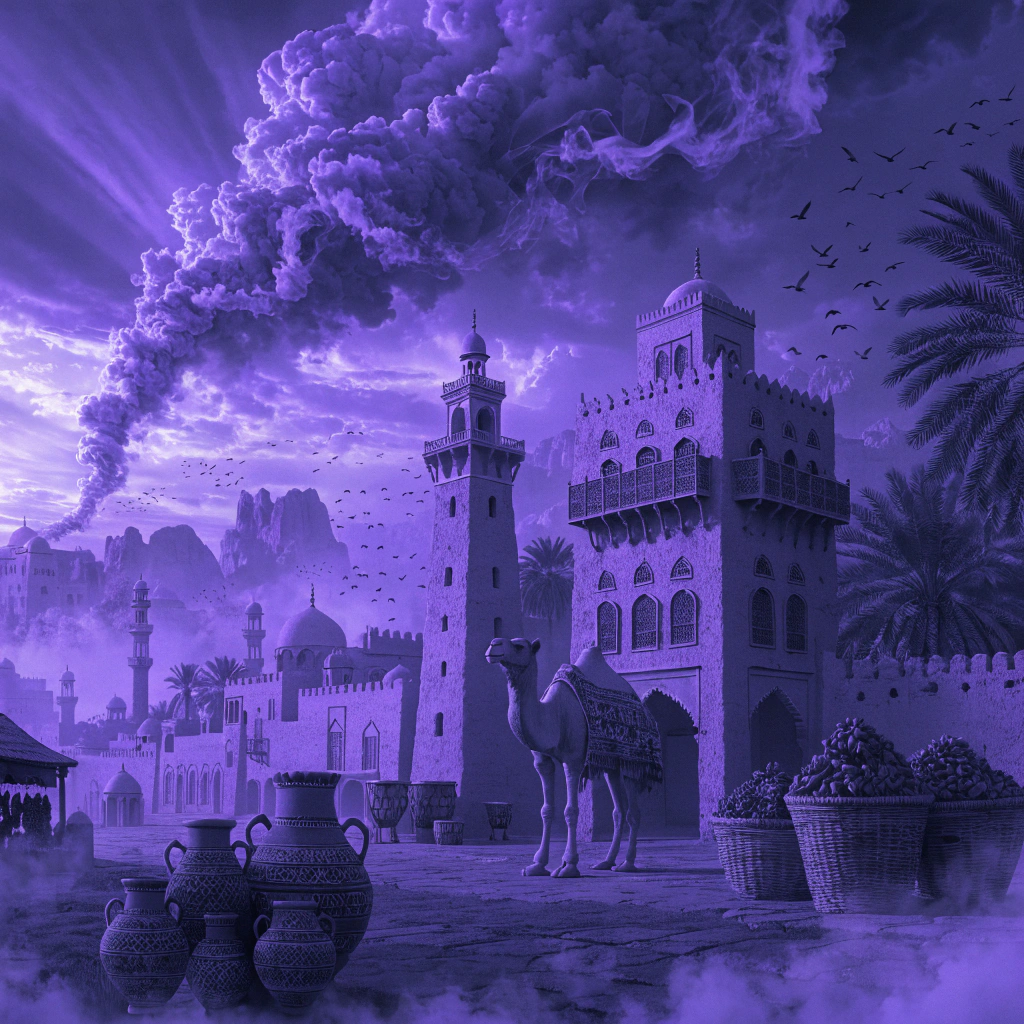
A Special Day in Saudi Arabia
Saudi Arabia has a special day. It is Saudi Founding Day. People celebrate this day on February 22nd every year. It is a very old and important story.
Long ago, in 1727, a leader named Imam Muhammad bin Saud started a new state. The capital city was Diriyah. Now, Diriyah is a famous place with old buildings.
On this day, people are very happy. They wear traditional clothes and carry flags. Families eat together and see beautiful lights. It is a day of history and pride for the Kingdom.
Grammar Spotlight
Pattern: Present Simple (to be)
"It is Saudi Founding Day."
We use 'is' with the subject 'it' to describe facts. In A1, this is the most common way to identify things.
Pattern: Present Simple (Action Verbs)
"Families eat together."
We use the base form of the verb when the subject is plural. This pattern describes things that happen every year.
Test Your Understanding
10 questions · A1 Beginner · 1 free preview
Test what you learned from this article. Answer all questions to earn XP!
When is Saudi Founding Day?
Want to finish the quiz?
9 more questions are waiting for you. Sign up free to unlock the full quiz and earn XP!
Sign Up FreeAlready have an account? Sign In
Question Breakdown
When is Saudi Founding Day?
Your answer:
Correct answer: February 22nd
Diriyah was the first capital city.
Your answer:
Correct answer: True
What does 'famous' mean?
Your answer:
Correct answer: Known by many people
People wear _____ clothes on this day.
Your answer:
Correct answer: traditional
Saudi Founding Day: A Special Celebration
Saudi Founding Day is a very important holiday in Saudi Arabia. People celebrate it every year on February 22nd. This day is special because it remembers the start of the first Saudi state in 1727.
A long time ago, Imam Muhammad bin Saud began the state in a city called Diriyah. Diriyah was the first capital city. Today, it is a famous UNESCO World Heritage site because it has a very old and beautiful history. Many people visit Diriyah to see the traditional buildings and learn about the past.
During Founding Day, the streets are full of life. People wear traditional clothes and share local food with their families. They also drink Saudi coffee and watch traditional dances. It is a happy time because people feel proud of their heritage.
Founding Day is different from National Day. National Day celebrates the modern country, but Founding Day celebrates three hundred years of history. It is older than National Day. This holiday helps young people understand their roots and the history of their great country.
Grammar Spotlight
Pattern: Past Simple
"Imam Muhammad bin Saud began the state in a city called Diriyah."
We use the past simple to talk about finished actions in the past. Regular verbs add '-ed', but 'began' is an irregular form of 'begin'.
Pattern: Comparatives
"It is older than National Day."
We use comparatives to look at the difference between two things. For short adjectives, we add '-er' and use the word 'than'.
Test Your Understanding
11 questions · A2 Elementary · 1 free preview
Test what you learned from this article. Answer all questions to earn XP!
When do people celebrate Saudi Founding Day?
Want to finish the quiz?
10 more questions are waiting for you. Sign up free to unlock the full quiz and earn XP!
Sign Up FreeAlready have an account? Sign In
Question Breakdown
When do people celebrate Saudi Founding Day?
Your answer:
Correct answer: February 22nd
Diriyah was the first capital city of the Saudi state.
Your answer:
Correct answer: True
What does 'traditional' mean?
Your answer:
Correct answer: Something that people have done for a long time
People drink Saudi _____ and watch traditional dances on this day.
Your answer:
Correct answer: coffee
Why is Diriyah famous today?
Your answer:
Correct answer: It is a UNESCO World Heritage site
Celebrating the Roots: Saudi Founding Day
Saudi Founding Day is celebrated every February 22nd to honor the deep roots of the Kingdom of Saudi Arabia. It is a day that commemorates the historical moment in 1727 when Imam Muhammad bin Saud established the First Saudi State in Diriyah. While National Day celebrates the modern unification, Founding Day focuses on three centuries of rich heritage and the resilient foundations of the state.
The first capital, Diriyah, is a very important place. It has been recognized as a UNESCO World Heritage site because of its historic architecture and significance. Today, people visit the ruins of Turaif to learn about the courage of the leaders who built the state.
During this national holiday, the streets are filled with people wearing traditional costumes. Men often wear the 'Bisht' or 'Daglah', while women wear beautiful, colorful dresses that represent different regions of the country. Traditional food is also a major part of the celebration. Families gather to share meals and stories about their ancestors.
Many events have been organized across the Kingdom to showcase Saudi culture. Schools and museums participate by teaching students about the history of the First Saudi State. It is a time for reflection and pride.
Since its establishment three centuries ago, Saudi Arabia has grown into a modern and influential country. However, the people have never forgotten their origins. Founding Day reminds everyone that the strength of the future depends on the solid foundations of the past. By celebrating this day, Saudis connect their modern achievements with their historic legacy.
Grammar Spotlight
Pattern: Passive Voice (Present Simple)
"Saudi Founding Day is celebrated every February 22nd."
We use the passive voice when the action is more important than who performs it. It is formed using 'am/is/are' plus the past participle of the verb.
Pattern: Present Perfect
"Saudi Arabia has grown into a modern and influential country."
This pattern describes an action that started in the past and continues to the present or has an effect now. It is formed with 'have/has' plus the past participle.
Test Your Understanding
11 questions · B1 Intermediate · 1 free preview
Test what you learned from this article. Answer all questions to earn XP!
In which year was the First Saudi State established?
Want to finish the quiz?
10 more questions are waiting for you. Sign up free to unlock the full quiz and earn XP!
Sign Up FreeAlready have an account? Sign In
Question Breakdown
In which year was the First Saudi State established?
Your answer:
Correct answer: 1727
Founding Day celebrates the same event as National Day.
Your answer:
Correct answer: False
What is the definition of 'heritage'?
Your answer:
Correct answer: The history and traditions of a society
Diriyah has been recognized as a UNESCO World _____ site.
Your answer:
Correct answer: Heritage
What do people often wear during Founding Day celebrations?
Your answer:
Correct answer: Traditional costumes
Saudi Founding Day: Honoring Three Centuries of Heritage
While many international observers are familiar with Saudi National Day in September, February 22nd marks an equally significant, though distinct, milestone: Saudi Founding Day. Officially established as a national holiday in 2022, this day commemorates the deep-rooted historical origins of the Kingdom. It honors the moment in 1727 when Imam Muhammad bin Saud established the First Saudi State in the historic city of Diriyah. This city, now a UNESCO World Heritage site, served as the epicenter of a political and cultural movement that would eventually transform the Arabian Peninsula.
Understanding the distinction between Founding Day and National Day is crucial for any student of Saudi history. While National Day celebrates the unification of the modern Kingdom by King Abdulaziz in 1932, Founding Day focuses on the three centuries of statehood that preceded it. By highlighting the year 1727, the Kingdom emphasizes its long-standing political stability and cultural continuity. For nearly three centuries, the Saudi state has demonstrated remarkable resilience, surviving various challenges and evolving into a modern global leader.
The celebrations of Founding Day are characterized by a profound sense of national pride and cultural expression. Throughout the country, events are organized to showcase the nation's diverse heritage. Citizens often wear traditional attire, such as the 'ghutra' and 'bisht', which symbolize the values and aesthetics of their ancestors. These garments are not merely costumes; they are a testament to the enduring identity of the Saudi people. Furthermore, the festivities often include traditional dances and culinary displays, allowing both locals and expatriates to appreciate the depth of Saudi traditions.
From an academic perspective, Founding Day invites a scholarly evaluation of the nation's endurance. The restoration of Diriyah, the original capital, serves as a focal point for this reflection. By preserving the mud-brick architecture of the At-Turaif district, the government ensures that the foundations of the state remain visible to future generations. This commitment to historical preservation aligns with the goals of Vision 2030, which seeks to balance modern innovation with traditional values.
Ultimately, Founding Day serves as a bridge between the past and the future. It reminds citizens that the prosperity of the modern era is built upon the sacrifices and visions of those who came before. As the Kingdom continues to undergo rapid social and economic transformation, Founding Day provides a steady anchor, reinforcing a national identity that is both ancient and forward-looking. For language learners, studying this topic offers a rich opportunity to engage with complex narratives of statehood and cultural legacy.
Grammar Spotlight
Pattern: Passive Voice
"The celebrations of Founding Day are characterized by a profound sense of national pride."
The passive voice is used here to focus on the celebrations rather than the people performing the action. It is formed using a form of 'to be' and the past participle of the main verb.
Pattern: Relative Clauses
"...this city served as the epicenter of a movement that would eventually transform the Arabian Peninsula."
A relative clause provides more information about a noun (the movement). 'That' is used to define the specific movement and its historical consequences.
Pattern: Present Perfect Tense
"For nearly three centuries, the Saudi state has demonstrated remarkable resilience."
The present perfect (has/have + past participle) is used to describe an action or state that started in the past and continues to the present day.
Test Your Understanding
11 questions · B2 Upper Intermediate · 1 free preview
Test what you learned from this article. Answer all questions to earn XP!
What is the primary historical focus of Saudi Founding Day?
Want to finish the quiz?
10 more questions are waiting for you. Sign up free to unlock the full quiz and earn XP!
Sign Up FreeAlready have an account? Sign In
Question Breakdown
What is the primary historical focus of Saudi Founding Day?
Your answer:
Correct answer: The establishment of the First Saudi State in 1727
Saudi National Day and Saudi Founding Day celebrate exactly the same historical event.
Your answer:
Correct answer: False
What does 'distinction' mean in the context of the article?
Your answer:
Correct answer: A clear difference or contrast
For nearly three centuries, the Saudi state has demonstrated remarkable _____.
Your answer:
Correct answer: resilience
Why is the city of Diriyah mentioned as the 'epicenter' of the first state?
Your answer:
Correct answer: It was the original capital established in 1727
Architect of a Legacy: Decoding the Historical Significance of Saudi Founding Day
Seldom has a historical milestone been so intricately woven into the fabric of a modern nation’s identity as the establishment of the First Saudi State. Every February 22nd, Saudi Arabia observes Founding Day, a profound commemoration that transcends the celebration of modern statehood to honor three centuries of heritage. While National Day marks the unification of the modern Kingdom in 1932, Founding Day looks back to 1727, the year Imam Muhammad bin Saud ascended to power in Diriyah, signaling a pivotal shift toward regional stability and political sovereignty. This distinction is crucial for C1 learners of history, as it highlights the deep-rooted continuity of the Saudi state, which precedes the modern era by over two hundred years.
The significance of Diriyah cannot be overstated. Once a modest oasis in the heart of the Arabian Peninsula, it evolved into a venerated capital and a cradle of culture. Today, as a UNESCO World Heritage site, its mud-brick architecture stands as a testament to the resilient foundations of the Saudi state. It was in this very city that the transition from fragmented tribalism to a centralized political entity began. This consolidation of power was not merely an exercise in expansionism; rather, it represented the birth of a collective identity. The restoration of the At-Turaif district, the heart of Diriyah, epitomizes the Kingdom's dedication to historical preservation. As visitors traverse the labyrinthine alleys of this site, they encounter a tangible connection to the audacity of the First Saudi State.
What distinguishes the First Saudi State is its early emphasis on institutional legitimacy. Not only did Imam Muhammad bin Saud provide security for pilgrimage routes, but he also fostered an environment where commerce and scholarship could flourish. The convergence of spiritual values and administrative acumen allowed the state to withstand numerous external pressures over the centuries. This resilience is a recurring theme in the Saudi narrative, illustrating a nation that has consistently rebuilt itself upon its original values. The architectural prowess displayed in these earthen structures belies the harsh environmental conditions of the Nejd region, showcasing an innate ingenuity that defined the early pioneers.
The observance of Founding Day is also a manifestation of cultural pride. It serves as a bridge between the past and the future, aligning the historical legacy of the First Saudi State with the ambitious goals of Vision 2030. By acknowledging the deep-rooted history of the nation, the Kingdom reinforces its contemporary standing as a global leader with an ancient pedigree. Nominalisation of complex actions—such as the 'institutionalization of governance' or the 'revitalization of heritage'—reflects the sophisticated way in which the state interprets its own history. This cultural tapestry, woven from the threads of perseverance and vision, provides the necessary context for understanding modern Saudi Arabia’s geopolitical weight.
Ultimately, Founding Day is an invitation to reflect on the continuity of the Saudi experience. It reminds the populace and the world alike that the Kingdom’s current prosperity is anchored in three centuries of endurance. Seldom does one find a nation so committed to preserving the echoes of its ancestors while simultaneously charting a course toward a hyper-modern future. To ignore the events of 1727 is to overlook the very essence of the Saudi identity—a synthesis of tradition and progress that continues to define the nation’s trajectory in the twenty-first century.
Grammar Spotlight
Pattern: Negative Inversion
"Seldom has a historical milestone been so intricately woven into the fabric of a modern nation’s identity as the establishment of the First Saudi State."
This structure places a negative or restrictive adverb (like 'seldom') at the beginning for emphasis. It requires switching the positions of the subject and the auxiliary verb (has/does/can).
Pattern: Cleft Sentences
"It was in this very city that the transition from fragmented tribalism to a centralized political entity began."
Cleft sentences use the 'It + be + [focus] + relative clause' structure to emphasize a specific piece of information. Here, the focus is 'in this very city' (Diriyah).
Pattern: Nominalisation
"The consolidation of power was not merely an exercise in expansionism; rather, it represented the birth of a collective identity."
Nominalisation involves turning verbs (consolidate) or adjectives into nouns (consolidation). This technique is common in C1-level academic and formal writing to create a more objective and sophisticated tone.
Test Your Understanding
12 questions · C1 Advanced · 1 free preview
Test what you learned from this article. Answer all questions to earn XP!
What is the primary historical focus of Saudi Founding Day according to the article?
Want to finish the quiz?
11 more questions are waiting for you. Sign up free to unlock the full quiz and earn XP!
Sign Up FreeAlready have an account? Sign In
Question Breakdown
What is the primary historical focus of Saudi Founding Day according to the article?
Your answer:
Correct answer: The establishment of the First Saudi State in 1727
Founding Day and National Day celebrate the exact same historical event.
Your answer:
Correct answer: False
What does the word 'venerated' mean in the context of the article?
Your answer:
Correct answer: Regarded with great respect
The mud-brick architecture of Diriyah stands as a _____ to the resilient foundations of the Saudi state.
Your answer:
Correct answer: testament
Which city served as the capital of the First Saudi State?
Your answer:
Correct answer: Diriyah
Imam Muhammad bin Saud focused only on expansionism and ignored scholarship.
Your answer:
Correct answer: False
The Diriyah Paradigm: Deconstructing the Historical Genesis of Saudi Sovereignty
To contemplate the essence of the Saudi state is to engage with a narrative of profound endurance and historical continuity that transcends the mere boundaries of modern political geography. While the modern unification celebrated on National Day marks a pivotal milestone in the 20th century, Saudi Founding Day, observed annually on February 22nd, invites a more nuanced exploration of the nation’s deep-seated provenance. This occasion commemorates the year 1727, a chronological anchor when Imam Muhammad bin Saud ascended to leadership in Diriyah, thereby catalyzing the formation of the First Saudi State. Were one to scrutinize the geopolitical landscape of the early 18th-century Arabian Peninsula, one would find a fragmented mosaic of tribal territories and localized power centers; however, the Imam’s vision offered a transformative paradigm of stability, unity, and sovereignty.
The choice of Diriyah as the crucible for this nascent state was by no means arbitrary, nor was it a consequence of mere serendipity. Situated along the fertile banks of Wadi Hanifa, Diriyah emerged not merely as a commercial hub but as an intellectual and political epicenter of unprecedented significance. The historiography of this period suggests that the establishment of the state was predicated upon a confluence of local administrative acumen, strategic foresight, and a steadfast commitment to cultural integrity. Not only did the Imam consolidate disparate factions under a unified banner, but he also laid the immutable foundations of a governance system that would weather three centuries of regional volatility and external pressures. Notwithstanding the subsequent challenges faced by the state throughout the ensuing centuries, the indomitable spirit of its founders remained a constant, providing the ideological scaffolding for the Second and Third Saudi States.
The physical vestiges of this era, most notably the Turaif District in Diriyah—now a venerated UNESCO World Heritage site—serve as silent sentinels of this legacy. To walk through its sun-drenched mud-brick ruins is to witness the architectural manifestation of a civilization that refused to be eclipsed by time or the harshness of the desert environment. The resilience of these structures, with their intricate Najdi designs, mirrors the societal resilience that has characterized the Saudi people since the mid-18th century. It is perhaps an overstatement to suggest that the modern Kingdom is a mere evolution; rather, it is a sophisticated extrapolation of the original principles established in Diriyah, adapted to the exigencies of a globalized world.
Furthermore, scholars often argue that the celebration of Founding Day is essential for a comprehensive understanding of the Saudi zeitgeist. It provides the necessary historical depth to appreciate the scale of the nation's contemporary metamorphosis. Had the foundations laid in the 18th century been less robust or had the social contract been less enduring, the rapid modernization witnessed under the aegis of Vision 2030 might have lacked its essential cultural mooring. The interplay between tradition and progress is not a contradiction but a symbiotic relationship where the past informs the future, ensuring that the national identity is not lost amidst the tide of technological advancement.
In conclusion, Saudi Founding Day is far more than a simple historical retrospective; it is an affirmation of a three-century-long journey toward self-determination and sovereign dignity. By honoring the events of 1727, the Kingdom acknowledges that its current stature on the global stage is the culmination of an arduous but rewarding historical trajectory. As the nation looks toward the horizons of the future, it does so with the profound assurance that its roots are buried deep within the resilient soil of Diriyah, ensuring that the Saudi identity remains both vibrant and immutable in an ever-changing world. This historical consciousness is the bedrock upon which the future is built, bridging the gap between the mud-brick palaces of the past and the giga-projects of the future.
Grammar Spotlight
Pattern: Subjunctive Inversion for Hypothetical Conditions
"Were one to scrutinize the geopolitical landscape of the early 18th-century Arabian Peninsula, one would find a fragmented mosaic of tribal territories."
This structure replaces 'If one were to...' with 'Were one to...' for a more formal and academic tone. It is used to describe a hypothetical situation and its likely result.
Pattern: Negative Inversion for Emphasis
"Not only did the Imam consolidate disparate factions under a unified banner, but he also laid the immutable foundations of a governance system."
When starting a sentence with a negative or restrictive expression like 'Not only', the subject and auxiliary verb are inverted. This creates a stronger emphasis on the subsequent points.
Pattern: Third Conditional with 'Had'
"Had the foundations laid in the 18th century been less robust, the rapid modernization witnessed under the aegis of Vision 2030 might have lacked its essential cultural mooring."
The 'if' is omitted and 'had' is moved to the beginning. This form is used to discuss hypothetical past situations and their imaginary results, common in scholarly analysis.
Test Your Understanding
12 questions · C2 Mastery · 1 free preview
Test what you learned from this article. Answer all questions to earn XP!
What is the primary historical distinction between Founding Day and National Day according to the article?
Want to finish the quiz?
11 more questions are waiting for you. Sign up free to unlock the full quiz and earn XP!
Sign Up FreeAlready have an account? Sign In
Question Breakdown
What is the primary historical distinction between Founding Day and National Day according to the article?
Your answer:
Correct answer: Founding Day celebrates the 1727 establishment of the first state, whereas National Day marks the 20th-century unification.
The author suggests that the choice of Diriyah as the capital was largely a matter of random chance.
Your answer:
Correct answer: False
What does 'immutable' mean in the context of the article?
Your answer:
Correct answer: Fixed and unchanging over time.
The first Saudi state was established in the city of _____.
Your answer:
Correct answer: Diriyah
What does the Turaif District symbolize in the text?
Your answer:
Correct answer: The architectural and societal resilience of the Saudi people.
The article argues that the modernization of Vision 2030 is fundamentally disconnected from the events of 1727.
Your answer:
Correct answer: False
