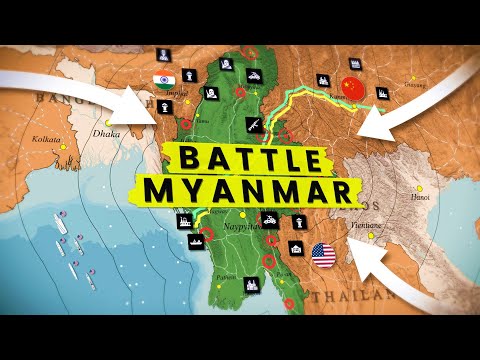
arakan في 30 ثانية
- Arakan is a historical and geographical region in western Myanmar, now officially called Rakhine State.
- It is famous for its maritime history, ancient temples in Mrauk U, and the Arakan Yoma mountains.
- The term is widely used in academic, historical, and international humanitarian contexts to describe the region.
- It represents a unique cultural crossroads between South Asia and Southeast Asia along the Bay of Bengal.
The term arakan refers to a historically significant and geographically distinct region located on the western coast of modern-day Myanmar, bordering the Bay of Bengal to the west and Bangladesh to the northwest. In contemporary administrative terms, this region is officially known as the Rakhine State. However, the name arakan carries deep historical, cultural, and political weight, often used to evoke the memory of the independent kingdoms that once flourished in this coastal strip. When people use the word arakan, they are frequently referring to the historical sovereignty of the area, particularly the Kingdom of Mrauk U, which was a powerful maritime state between the 15th and 18th centuries. This kingdom was a crossroads of cultures, where Buddhist traditions met Islamic influences from the neighboring Bengal region, creating a unique syncretic culture that is still studied by historians today. In academic and historical contexts, arakan is the preferred term to describe the pre-colonial and colonial periods of the region. For instance, a historian might discuss the 'Arakanese' navy or the 'Arakan' trade routes that linked Southeast Asia with the Indian Ocean. In modern political discourse, the term is sometimes used by activists and ethnic groups to emphasize a distinct identity that predates the modern Burmese state. The geography of arakan is defined by the Arakan Mountains, also known as the Arakan Yoma, which form a natural barrier separating the coastal plains from the central Irrawaddy valley of Myanmar. This isolation allowed the region to develop a distinct dialect of the Burmese language and unique artistic traditions. People use this word when discussing the diverse ethnic tapestry of the region, which includes the Rakhine people, the Rohingya, and various smaller hill tribes. The use of the word arakan is also common in literature and travelogues from the British colonial era, as it was the official name used by the British administration after the First Anglo-Burmese War in 1826. Today, while 'Rakhine' is the official name on maps, arakan remains a powerful symbol of heritage and regional pride.
- Historical Context
- The term is used to describe the sovereign kingdoms that existed before the Burmese conquest in 1784 and the subsequent British annexation.
The ancient city of Mrauk U was once the capital of the powerful kingdom of arakan, serving as a major hub for international maritime trade.
- Geographical Usage
- Used to refer to the coastal strip and the mountain range known as the Arakan Yoma.
Scholars often study the linguistic shifts that occurred within the arakan region due to its proximity to Bengal.
- Political Nuance
- The term can sometimes carry connotations of regional autonomy or ethnic identity in modern discussions.
Many cultural festivals in the region celebrate the unique heritage of arakan, showcasing traditional music and dance.
The British East India Company established administrative control over arakan following the Treaty of Yandabo.
The coastal geography of arakan makes it vulnerable to seasonal monsoons and cyclones.
Using the word arakan correctly requires an understanding of its role as a proper noun referring to a specific place. In English, it is almost always capitalized as 'Arakan', though in some contexts or linguistic studies, it may appear in lowercase or as part of a compound term. When constructing sentences, arakan usually functions as the subject or object of a sentence describing historical events, geographical features, or cultural attributes. For example, you might say, 'Arakan was a major center for rice production during the colonial era.' In this sentence, arakan is the subject, and the sentence provides a historical fact about its economy. You can also use it as an adjective to modify other nouns, such as 'Arakanese culture' or 'the Arakan mountains'. When discussing the geography of the region, it is common to use it in prepositional phrases: 'The explorers traveled through the dense jungles of Arakan.' This highlights the physical location. In political or social science writing, arakan might be used to discuss identity: 'The people of Arakan have long maintained a sense of distinct cultural identity.' It is important to distinguish between the historical region and the modern administrative state. If you are writing about current government policies in Myanmar, you would likely use 'Rakhine State', but if you are writing a poem about the ancient temples of Mrauk U, arakan would be more evocative and appropriate. Furthermore, the word can be used in the context of natural sciences, specifically when referring to the Arakan Yoma mountain range, which is a significant geological feature in Asia. For instance, 'The Arakan Yoma acts as a rain shadow, affecting the climate of central Myanmar.' In this case, the word is part of a specific geographical name. When using the word in a sentence, ensure that the context clearly indicates whether you are referring to the historical kingdom, the geographical region, or the cultural concept. Using it in the possessive form is also common: 'Arakan's history is intertwined with that of its neighbors.' This shows the historical relationships of the region. Overall, arakan is a versatile noun that adds depth to discussions about Southeast Asian history and geography.
- As a Subject
- Arakan played a pivotal role in the maritime trade routes of the Indian Ocean.
During the 17th century, arakan reached the height of its political and military power.
- As a Geographical Descriptor
- The rugged terrain of the arakan mountains made travel difficult for early explorers.
The biodiversity found in the forests of arakan is truly remarkable.
- In Possessive Form
- Arakan's strategic location made it a target for various regional empires.
The cultural heritage of arakan is preserved in its ancient stone inscriptions.
Many refugees from arakan have sought safety in neighboring countries.
The unique architecture of the temples in arakan reflects a blend of different styles.
You are most likely to encounter the word arakan in specific professional, academic, and journalistic environments. In the field of international relations and human rights, arakan is frequently mentioned in reports by organizations like the United Nations or Amnesty International. These reports often discuss the humanitarian situation in the region, using arakan to refer to the historical and ethnic context of the ongoing conflicts. For example, a news broadcast might feature an expert discussing the 'crisis in Arakan,' focusing on the displacement of ethnic minorities. In university classrooms, particularly those specializing in Southeast Asian studies, history, or anthropology, the word is a staple. Professors will lecture on the 'Kingdom of Arakan' and its role in the early modern world, or the 'Arakanese' language and its linguistic evolution. Academic journals are another common place to see the word, where researchers publish papers on the archaeology of Mrauk U or the ecological importance of the Arakan Yoma. If you are a fan of historical documentaries, you might hear narrators describe the maritime prowess of the Arakanese kings or the arrival of Portuguese mercenaries in the ports of arakan. Furthermore, the word appears in literary circles, especially in historical fiction set in colonial Burma or in the works of travel writers who explore the remote corners of the world. In these contexts, arakan is used to create a sense of place and history that the more modern 'Rakhine' might not fully capture. You might also hear it in political speeches, particularly those given by representatives of ethnic organizations from the region who use the term to assert their historical rights and identity. In the world of environmental science, researchers studying the tectonic activity of the Indian plate often refer to the 'Arakan Trench' or the 'Arakan subduction zone,' highlighting the word's importance in geology. Finally, in the culinary world, you might occasionally hear about 'Arakanese cuisine,' known for its spicy and sour flavors, distinct from the milder dishes of central Myanmar. Whether in a high-level diplomatic meeting, a quiet library, or a vibrant cultural festival, the word arakan serves as a vital link to a rich and complex part of the world.
- News and Media
- Used in international news coverage of humanitarian issues and regional conflicts in Myanmar.
The documentary provided a detailed look at the ancient maritime traditions of arakan.
- Academic Lectures
- Commonly used in history and anthropology courses focusing on Southeast Asian civilizations.
The professor explained how the geography of arakan influenced its political independence.
- Humanitarian Reports
- Frequently appears in UN documents discussing the rights of ethnic groups in the region.
Journalists often travel to the borders of arakan to report on the latest developments.
The archaeological site in arakan contains thousands of ancient pagodas.
The geopolitical importance of arakan has increased due to its offshore natural gas reserves.
One of the most common mistakes when using the word arakan is failing to capitalize it in formal writing. Since it is a proper noun referring to a specific geographic and historical region, it should always begin with an uppercase 'A'. Another frequent error is confusing the historical term arakan with the modern administrative name 'Rakhine State'. While they refer to the same general area, using 'Arakan' in a modern legal or governmental context might be seen as technically incorrect or politically charged, depending on the audience. Conversely, using 'Rakhine' when discussing the 16th-century kingdom of Mrauk U might be historically anachronistic. Another mistake is using arakan as an adjective without the proper suffix; the correct adjective form is 'Arakanese'. For example, saying 'the Arakan people' is common but 'the Arakanese people' is more grammatically standard. Some learners also confuse arakan with other similar-sounding place names or terms in Southeast Asia, so it is important to be precise about its location in western Myanmar. Additionally, there is often confusion regarding the pronunciation, with some misplacing the stress on the syllables. The stress is typically on the final syllable: ar-a-KAN. In terms of usage, some people mistakenly use arakan to refer to the entire country of Myanmar, which is a significant geographical error as it only refers to one specific coastal region. It is also important to avoid using the term in a way that oversimplifies the complex ethnic and religious diversity of the region. For instance, referring to 'the Arakan conflict' without specifying the groups involved can be vague and misleading. Finally, some writers use the term in a way that suggests it is a currently independent nation, which is factually incorrect as it is a state within the Union of Myanmar. By being aware of these common pitfalls, you can use the word arakan with greater accuracy and sensitivity.
- Capitalization
- Mistake: Writing 'arakan' in a formal essay. Correct: Always use 'Arakan'.
It is a mistake to say 'arakan is a country'; it is a historical region and a modern state.
- Adjective Usage
- Mistake: 'The Arakan language'. Correct: 'The Arakanese language'.
Using the term arakan in a modern government document might be considered outdated.
- Geographical Scope
- Mistake: Referring to the mountains as 'the Arakan' instead of 'the Arakan Yoma' or 'the Arakan Mountains'.
One should not use arakan as a verb; it is strictly a noun.
The term arakan should not be used to exclude the diverse ethnic groups that live there.
Confusing arakan with 'Aragon' in Spain is a rare but possible mistake for beginners.
When discussing the region of arakan, there are several related terms and alternatives that can be used depending on the context. The most direct modern alternative is 'Rakhine State'. This is the official name used by the government of Myanmar and is appropriate for all contemporary administrative, legal, and political discussions. While 'Arakan' emphasizes history and heritage, 'Rakhine' emphasizes current political reality. Another related term is 'Mrauk U', which refers specifically to the ancient capital city and the kingdom that once ruled the region. Using 'Mrauk U' is more precise if you are discussing the archaeological site or the specific period of the 15th to 18th centuries. For the people of the region, 'Arakanese' is the traditional English term, while 'Rakhine' is more commonly used today. In some historical texts, you might encounter the term 'Rohang', which is a name used by some groups to refer to the region, particularly in the context of the Rohingya community's heritage. This term is more specific and carries significant political and identity-based connotations. When describing the geography, you can use 'the Arakan Yoma' or 'the Rakhine Mountains' interchangeably, though 'Arakan Yoma' remains very common in geographical literature. If you are looking for more general terms, you might use 'Western Myanmar' or 'the coastal region of the Bay of Bengal'. These are more descriptive but less culturally specific. In terms of synonyms for the concept of a historical kingdom, words like 'realm', 'sovereignty', or 'territory' could be used in a broader sense. For example, 'the Arakanese realm' instead of 'the kingdom of Arakan'. It is also useful to understand the term 'Magh', which was a name used by Bengalis in the past to refer to the people of Arakan, though it is now considered outdated and sometimes derogatory. Understanding these alternatives allows for more nuanced and accurate communication about this complex region.
- Rakhine State
- The official modern name for the region. Use this for current events and government-related topics.
While 'Rakhine' is the official name, many still prefer the historical resonance of arakan.
- Mrauk U
- Refers specifically to the ancient capital and the era of its greatest power.
The term 'Western Myanmar' is a more neutral geographical alternative to arakan.
- Arakanese
- The adjective form used to describe the people, language, and culture of the region.
The arakan Yoma mountain range is a significant barrier for weather patterns.
Scholars often compare the maritime history of arakan with that of the Malacca Sultanate.
The coastal strip of arakan is famous for its beautiful but rugged shoreline.
How Formal Is It?
حقيقة ممتعة
During the medieval period, the kings of Arakan used Islamic titles alongside their Buddhist names to facilitate trade with the Muslim world, reflecting the region's cosmopolitan nature.
دليل النطق
- Stressing the first syllable: AR-a-kan.
- Pronouncing the final 'a' like 'ah': ar-a-KAHN.
- Confusing it with 'Aragon' (Spanish region).
- Adding an extra syllable: ar-a-ka-an.
- Mispronouncing the 'r' as a 'l'.
مستوى الصعوبة
Requires some knowledge of geography and history.
Simple to spell but requires correct capitalization.
Pronunciation of the stress can be tricky for some.
May be confused with similar-sounding place names.
ماذا تتعلّم بعد ذلك
المتطلبات الأساسية
تعلّم لاحقاً
متقدم
قواعد يجب معرفتها
Proper Noun Capitalization
Always write 'Arakan' with a capital 'A'.
Adjective Formation
Add '-ese' to form the adjective 'Arakanese'.
Possessive Nouns
Use an apostrophe-s: 'Arakan's history'.
Prepositional Phrases for Location
Use 'in' for the region: 'in Arakan'.
Compound Proper Nouns
Capitalize both words in 'Arakan Mountains'.
أمثلة حسب المستوى
Arakan is a place in Myanmar.
Arakan es un lugar en Myanmar.
Proper noun, always capitalized.
The mountains in Arakan are very high.
Las montañas en Arakan son muy altas.
Used in a prepositional phrase.
I want to see the old temples of Arakan.
Quiero ver los templos antiguos de Arakan.
Object of the preposition 'of'.
Arakan is near the sea.
Arakan está cerca del mar.
Subject of the sentence.
Many people live in Arakan.
Mucha gente vive en Arakan.
Prepositional phrase indicating location.
The weather in Arakan is hot.
El clima en Arakan es caluroso.
Noun used to specify location.
Arakan has a long history.
Arakan tiene una larga historia.
Subject with a transitive verb.
We are learning about Arakan today.
Estamos aprendiendo sobre Arakan hoy.
Object of the preposition 'about'.
Arakan was an independent kingdom many years ago.
Arakan fue un reino independiente hace muchos años.
Historical reference as a subject.
The Arakan Mountains are difficult to cross.
Las montañas de Arakan son difíciles de cruzar.
Used as an adjective to modify 'Mountains'.
You can find beautiful beaches in Arakan.
Puedes encontrar playas hermosas en Arakan.
Locative noun.
The capital of Arakan was once Mrauk U.
La capital de Arakan fue una vez Mrauk U.
Possessive relationship indicated by 'of'.
Arakanese food is known for being very spicy.
La comida arakanesa es conocida por ser muy picante.
Adjective form 'Arakanese' derived from the noun.
The British ruled Arakan in the 19th century.
Los británicos gobernaron Arakan en el siglo XIX.
Direct object of the verb 'ruled'.
Many different groups of people live in Arakan.
Muchos grupos diferentes de personas viven en Arakan.
Indicates a geographical region.
Arakan is famous for its ancient stone carvings.
Arakan es famoso por sus antiguas tallas de piedra.
Subject in a descriptive sentence.
The historical region of Arakan is now called Rakhine State.
La región histórica de Arakan ahora se llama Estado de Rakhine.
Appositive phrase clarifying the noun.
Scholars study the unique culture that developed in Arakan.
Los académicos estudian la cultura única que se desarrolló en Arakan.
Prepositional phrase showing where development occurred.
The geography of Arakan has protected it from outside influence.
La geografía de Arakan la ha protegido de la influencia externa.
Possessive construction.
Arakan played a key role in maritime trade in the Indian Ocean.
Arakan desempeñó un papel clave en el comercio marítimo en el Océano Índico.
Subject performing an action.
The conflict in Arakan has received international attention.
El conflicto en Arakan ha recibido atención internacional.
Specifies the location of a noun (conflict).
Many historical documents mention the wealth of Arakan.
Muchos documentos históricos mencionan la riqueza de Arakan.
Object of the preposition 'of'.
The Arakan Yoma is a significant mountain range in Myanmar.
El Arakan Yoma es una cordillera significativa en Myanmar.
Part of a proper name.
Visitors to Arakan are often amazed by the ancient ruins.
Los visitantes de Arakan a menudo se asombran por las ruinas antiguas.
Target of a visit.
The annexation of Arakan by the Burmese in 1784 was a major turning point.
La anexión de Arakan por los birmanos en 1784 fue un punto de inflexión importante.
Subject of a complex noun phrase.
Arakan's maritime power allowed it to dominate the Bay of Bengal for centuries.
El poder marítimo de Arakan le permitió dominar la Bahía de Bengala durante siglos.
Possessive noun acting as an adjective.
The term Arakan is still used to evoke a sense of regional identity.
El término Arakan todavía se usa para evocar un sentido de identidad regional.
The noun itself is the subject of discussion.
Humanitarian aid has been directed towards the displaced people in Arakan.
La ayuda humanitaria se ha dirigido a las personas desplazadas en Arakan.
Locative noun in a passive sentence.
The diversity of Arakan is reflected in its various religious sites.
La diversidad de Arakan se refleja en sus diversos sitios religiosos.
Possessive 'of' construction.
Researchers are investigating the tectonic activity along the Arakan coast.
Los investigadores están investigando la actividad tectónica a lo largo de la costa de Arakan.
Noun modifying another noun (coast).
The historical significance of Arakan cannot be overstated.
La importancia histórica de Arakan no puede ser exagerada.
Subject of the sentence.
Arakanese literature provides a window into the region's past.
La literatura arakanesa proporciona una ventana al pasado de la región.
Adjective form used as a subject.
The historiography of Arakan reveals a complex interplay of regional powers.
La historiografía de Arakan revela una compleja interacción de potencias regionales.
Formal academic usage.
Arakan's strategic position facilitated the exchange of ideas between India and Southeast Asia.
La posición estratégica de Arakan facilitó el intercambio de ideas entre la India y el Sudeste Asiático.
Possessive form in a complex sentence.
The Arakan Trench is a critical area for understanding regional seismicity.
La fosa de Arakan es un área crítica para comprender la sismicidad regional.
Scientific proper name.
The cosmopolitan nature of the Arakanese court attracted scholars from across the region.
La naturaleza cosmopolita de la corte arakanesa atrajo a eruditos de toda la región.
Adjective form in a formal context.
Contemporary political narratives often draw upon the historical legacy of Arakan.
Las narrativas políticas contemporáneas a menudo se basan en el legado histórico de Arakan.
Object of the preposition 'of'.
The linguistic divergence of Arakanese from central Burmese is a subject of ongoing research.
La divergencia lingüística del arakanés del birmano central es un tema de investigación continua.
Proper noun referring to a language/dialect.
Environmental conservation in Arakan is complicated by the region's political instability.
La conservación ambiental en Arakan se ve complicada por la inestabilidad política de la región.
Locative noun.
The fall of the Arakanese kingdom led to a period of significant social upheaval.
La caída del reino arakanés llevó a un período de agitación social significativa.
Adjective modifying 'kingdom'.
The polycentric power structures of pre-colonial Arakan challenge traditional state-centric models.
Las estructuras de poder policéntricas de la Arakan precolonial desafían los modelos tradicionales centrados en el estado.
Highly formal academic subject.
Arakan's littoral geography necessitated a maritime-oriented defense strategy.
La geografía litoral de Arakan requería una estrategia de defensa orientada al mar.
Possessive noun in a technical description.
The persistence of the name Arakan in international discourse underscores its symbolic potency.
La persistencia del nombre Arakan en el discurso internacional subraya su potencia simbólica.
Noun as the object of a name.
The Arakan subduction zone is a focal point for geologists studying plate tectonics.
La zona de subducción de Arakan es un punto focal para los geólogos que estudian la tectónica de placas.
Technical scientific term.
Scholars argue that the cultural synthesis in Arakan was a precursor to modern pluralism.
Los académicos argumentan que la síntesis cultural en Arakan fue un precursor del pluralismo moderno.
Locative noun in an argumentative sentence.
The administrative transition from Arakan to Rakhine State reflects broader shifts in national identity.
La transición administrativa de Arakan al Estado de Rakhine refleja cambios más amplios en la identidad nacional.
Part of a comparative phrase.
The intricate stone architecture of Arakan stands as a testament to its former grandeur.
La intrincada arquitectura de piedra de Arakan se erige como un testimonio de su antigua grandeza.
Possessive 'of' construction.
Linguistic analysis of Arakanese reveals archaic features lost in other Tibeto-Burman languages.
El análisis lingüístico del arakanés revela características arcaicas perdidas en otras lenguas tibeto-birmanas.
Noun referring to a language.
تلازمات شائعة
العبارات الشائعة
— Refers to the upland areas of the region.
Many ethnic groups live in the hills of Arakan.
— Refers to the flat coastal areas suitable for farming.
Rice is the main crop grown in the plains of Arakan.
— Refers to the region during its early history.
Ancient Arakan was a crossroads of trade and culture.
— Refers to the region in its current state.
Modern Arakan faces many economic challenges.
— Refers to the central or most important part of the region.
Mrauk U is considered the heart of Arakan.
— Areas next to the region.
The districts bordering Arakan have seen an influx of refugees.
— In the remote or interior parts of the region.
They traveled deep into Arakan to find the lost temple.
— The cultural or emotional essence of the place.
The traditional music captures the spirit of Arakan.
— All the diverse groups living in the region.
The people of Arakan are known for their resilience.
يُخلط عادةً مع
Aragon is a region in Spain, while Arakan is in Myanmar.
Refers to Afghanistan; the sounds are distinct but can be confused by very early learners.
A poetic term for a pastoral paradise, unrelated to the geographical Arakan.
تعبيرات اصطلاحية
— Something or someone very precious from the region.
The temple of Shittaung is often called the jewel of Arakan.
Literary— A place that serves as the main entry point to the region.
Sittwe is known as the gateway to Arakan.
Informal— Something that the people of the region are very proud of.
The local weaving tradition is Arakan's pride.
Neutral— Living or occurring in the region near the mountains.
Life in the shadow of the Arakan Yoma is dictated by the seasons.
Poetic— A person or organization that speaks for the region.
The local newspaper aims to be the voice of Arakan.
Journalistic— The period of greatest prosperity and power.
The 17th century is often described as Arakan's golden age.
Historical— The current mood or state of the region.
The busy markets reflect the pulse of Arakan.
Metaphorical— Encompassing the entire geographical range of the region.
The festival is celebrated from the mountains to the sea in Arakan.
Descriptive— The historical and cultural impact of the region.
Arakan's legacy is visible in its architecture and art.
Formal— A place where different cultures or paths meet.
The port city was a crossroads of Arakan for centuries.
Neutralسهل الخلط
They refer to the same place.
Arakan is historical/colonial; Rakhine is the modern official name.
He studies Arakanese history but lives in Rakhine State.
One is a noun for the place, the other is an adjective or noun for the people.
Arakan is the region; Arakanese refers to the people, language, or culture.
The Arakanese people live in Arakan.
Both are historical names for parts of the same country.
Burma is the old name for the whole country; Arakan is a specific region within it.
Arakan was part of British Burma.
Often mentioned together.
Mrauk U is a city; Arakan is the whole region.
Mrauk U was the capital of Arakan.
Part of the name 'Arakan Yoma'.
Yoma means 'mountain range' in Burmese; Arakan is the specific name.
The Arakan Yoma is a long range.
أنماط الجُمل
Arakan is [adjective].
Arakan is beautiful.
I want to visit [place] in Arakan.
I want to visit the temples in Arakan.
Arakan is known for [noun phrase].
Arakan is known for its ancient history.
The [noun] of Arakan [verb] [object].
The geography of Arakan protected the kingdom.
Arakan's [noun] has been [verb participle] by [noun].
Arakan's cultural heritage has been influenced by its neighbors.
The [adjective] nature of Arakan [verb] [complex phrase].
The maritime nature of Arakan facilitated a cosmopolitan court.
Despite [noun], Arakan [verb].
Despite its isolation, Arakan traded with many nations.
It is [adjective] to note that Arakan [verb].
It is important to note that Arakan was once independent.
عائلة الكلمة
الأسماء
الصفات
مرتبط
كيفية الاستخدام
Common in history, geography, and international news.
-
Using 'arakan' with a lowercase 'a'.
→
Arakan
Arakan is a proper noun and must always be capitalized.
-
Saying 'The Arakan' to refer to the people.
→
The Arakanese
Use the adjective form 'Arakanese' when referring to the people as a group.
-
Confusing Arakan with a country.
→
The region of Arakan
Arakan is a region within Myanmar, not a separate country.
-
Using Arakan as a verb.
→
To visit Arakan
Arakan is a noun and cannot be used to describe an action.
-
Misspelling it as 'Arrakan'.
→
Arakan
There is only one 'r' in the standard English spelling of Arakan.
نصائح
Historical Context
Use 'Arakan' when writing about the period before 1989 or when discussing the ancient kingdoms. It adds a sense of historical accuracy to your work.
Capitalization
Always capitalize Arakan. As a proper noun for a specific region, it follows the same rules as 'London' or 'Asia'.
Adjective Form
Remember the adjective is 'Arakanese'. Use it to describe food, people, language, or art from the region.
The Yoma
When talking about the mountains, you can say 'the Arakan Mountains' or 'the Arakan Yoma'. Both are widely understood by geographers.
Mrauk U
Associate 'Arakan' with 'Mrauk U'. Knowing the capital helps you remember the region's historical importance.
Stress the End
Focus on the last syllable: ar-a-KAN. This is the most common way it is pronounced in English.
International Relations
In news reports, 'Arakan' is often used to refer to the broader historical and ethnic context of the region's current issues.
No Double Letters
The spelling is simple: A-R-A-K-A-N. There are no double consonants to worry about.
Visual Aid
Look at a map of Myanmar. Find the long coastal strip on the left side. That is Arakan. Visualizing it helps retention.
Political Awareness
Be aware that using 'Arakan' can sometimes be seen as a political statement in favor of regional identity. Use it thoughtfully.
احفظها
وسيلة تذكّر
Think of 'A-Rock-In' the sea. Arakan is a rocky, mountainous region right by the sea.
ربط بصري
Imagine a high green mountain (Arakan Yoma) meeting a deep blue ocean (Bay of Bengal) with ancient stone temples in between.
Word Web
تحدٍّ
Try to use the word 'Arakan' in three different sentences: one about history, one about geography, and one about culture.
أصل الكلمة
The name Arakan is believed to be derived from the Sanskrit word 'Rakkhasapura' or 'Arakkhadesa', meaning the land of the Rakshasas (demons or guardians). Over time, this was adapted into the local language and later into European languages as Arakan. The term has been used for over a millennium to describe the region.
المعنى الأصلي: Land of the guardians or land of the Rakshasas.
Indo-Aryan/Sanskrit influence on Tibeto-Burman languages.السياق الثقافي
The use of the term 'Arakan' vs 'Rakhine' can sometimes be politically sensitive, as it may be associated with different ethnic or political viewpoints.
In English-speaking countries, Arakan is mostly known through news reports about the Rohingya crisis or through historical studies of the British Empire in Burma.
تدرّب في الحياة الواقعية
سياقات واقعية
History Class
- The Kingdom of Arakan
- The Mrauk U period
- Colonial Arakan
- The fall of Arakan
Geography Lesson
- The Arakan Yoma range
- The Bay of Bengal coast
- Western Myanmar geography
- Tropical climate of Arakan
News Report
- Crisis in Arakan
- Displaced people in the region
- Humanitarian aid to Arakan
- Political situation in Arakan
Travel Writing
- Exploring the ruins of Arakan
- The beaches of Arakan
- Cultural heritage of Arakan
- Visiting Mrauk U
Academic Research
- The Arakanese dialect
- Archaeological findings in Arakan
- Maritime trade routes of Arakan
- Biodiversity in the Arakan Yoma
بدايات محادثة
"Have you ever heard about the ancient kingdom of Arakan?"
"What do you know about the geography of the Arakan region?"
"I was reading about the history of Arakan; it's quite fascinating."
"Do you think the name Arakan sounds more historical than Rakhine?"
"How does the isolation of Arakan affect its culture?"
مواضيع للكتابة اليومية
Imagine you are a traveler visiting the ancient city of Mrauk U in Arakan. Describe what you see.
Reflect on how the geography of a place like Arakan can shape its history and identity.
Write a short essay on the importance of preserving the cultural heritage of Arakan.
How does the term 'Arakan' evoke different feelings compared to 'Rakhine State'?
If you could visit the Arakan Mountains, what would you hope to discover?
الأسئلة الشائعة
10 أسئلةNo, Arakan is not an independent country. It is a historical region and a modern state (Rakhine State) within the country of Myanmar. While it was an independent kingdom in the past, it is now part of the Union of Myanmar.
Arakan is located on the western coast of Myanmar. It borders the Bay of Bengal to the west, Bangladesh to the northwest, and the rest of Myanmar to the east, separated by the Arakan Yoma mountains.
Arakan is the historical and colonial name for the region. Rakhine is the modern official name adopted by the Myanmar government in 1989. Both terms refer to the same geographical area.
The Arakanese (or Rakhine) people are the majority ethnic group in the region. They are predominantly Buddhist and speak the Arakanese dialect, which is closely related to Burmese.
Arakan is famous for its rich maritime history, the ancient archaeological site of Mrauk U, its unique spicy cuisine, and the significant Arakan Yoma mountain range.
Travel safety in Arakan can vary due to political instability and conflict. It is important to check current travel advisories from your government before planning a trip to the region.
The main language is Arakanese (Rakhine), a dialect of Burmese. Other languages spoken by minority groups include Rohingya, Chin, and various tribal languages.
The Arakan Mountains, or Arakan Yoma, are a mountain range in western Myanmar that runs from north to south, acting as a barrier between the coast and the central plains.
The Kingdom of Arakan was a sovereign state that existed for centuries, reaching its peak with the Mrauk U dynasty. It was known for its powerful navy and trade connections.
It is typically pronounced ar-a-KAN, with the stress on the final syllable. The 'a' sounds are short, similar to 'cat' and 'can'.
اختبر نفسك 180 أسئلة
Write a short paragraph about the history of Arakan.
Well written! Good try! Check the sample answer below.
Describe the geography of Arakan in three sentences.
Well written! Good try! Check the sample answer below.
Explain the difference between the terms 'Arakan' and 'Rakhine State'.
Well written! Good try! Check the sample answer below.
Write a sentence using the word 'Arakanese' as an adjective.
Well written! Good try! Check the sample answer below.
Why is Mrauk U important to the history of Arakan?
Well written! Good try! Check the sample answer below.
Imagine you are a historian. Write a thesis statement about Arakan's maritime power.
Well written! Good try! Check the sample answer below.
Write a travel advertisement for the Arakan region.
Well written! Good try! Check the sample answer below.
How did the Arakan Yoma mountains affect the region's development?
Well written! Good try! Check the sample answer below.
Write a short poem about Arakan.
Well written! Good try! Check the sample answer below.
Discuss the significance of the name 'Arakan' in modern identity politics.
Well written! Good try! Check the sample answer below.
Write a sentence about the Arakan campaign in World War II.
Well written! Good try! Check the sample answer below.
Describe the climate of Arakan.
Well written! Good try! Check the sample answer below.
Write a sentence using 'Arakan' as the subject.
Well written! Good try! Check the sample answer below.
Explain the importance of the Arakan Trench to geologists.
Well written! Good try! Check the sample answer below.
Write a short dialogue between two people discussing a trip to Arakan.
Well written! Good try! Check the sample answer below.
What are some traditional Arakanese crafts?
Well written! Good try! Check the sample answer below.
Write a sentence about the biodiversity of the Arakan Yoma.
Well written! Good try! Check the sample answer below.
Why is the history of Arakan considered 'syncretic'?
Well written! Good try! Check the sample answer below.
Write a sentence about the British administration of Arakan.
Well written! Good try! Check the sample answer below.
Summarize the main points of the 'What It Means' section.
Well written! Good try! Check the sample answer below.
Pronounce the word 'Arakan' correctly.
Read this aloud:
قلت:
Speech recognition is not supported in your browser. Try Chrome or Edge.
Say a sentence about where Arakan is located.
Read this aloud:
قلت:
Speech recognition is not supported in your browser. Try Chrome or Edge.
Describe one thing Arakan is famous for.
Read this aloud:
قلت:
Speech recognition is not supported in your browser. Try Chrome or Edge.
Explain the difference between 'Arakan' and 'Rakhine'.
Read this aloud:
قلت:
Speech recognition is not supported in your browser. Try Chrome or Edge.
Talk about the geography of Arakan for 30 seconds.
Read this aloud:
قلت:
Speech recognition is not supported in your browser. Try Chrome or Edge.
Discuss the historical significance of the Kingdom of Arakan.
Read this aloud:
قلت:
Speech recognition is not supported in your browser. Try Chrome or Edge.
How would you describe Arakanese cuisine?
Read this aloud:
قلت:
Speech recognition is not supported in your browser. Try Chrome or Edge.
What is the Arakan Yoma?
Read this aloud:
قلت:
Speech recognition is not supported in your browser. Try Chrome or Edge.
Why do historians use the term 'Arakan'?
Read this aloud:
قلت:
Speech recognition is not supported in your browser. Try Chrome or Edge.
Summarize the importance of the Arakan Trench in your own words.
Read this aloud:
قلت:
Speech recognition is not supported in your browser. Try Chrome or Edge.
Listen to the description: 'It is a coastal region in western Myanmar with ancient temples.' What is the place?
Listen to the sentence: 'The Arakan Yoma is a mountain range.' What is the mountain range called?
Listen to the fact: 'Arakan was annexed by the British in 1826.' In what year was it annexed?
Listen to the name: 'Mrauk U was the capital of Arakan.' What was the capital?
Listen to the adjective: 'We ate Arakanese food.' What kind of food was it?
Write the word 'Arakan' three times.
Well written! Good try! Check the sample answer below.
Write a sentence about Arakanese food.
Well written! Good try! Check the sample answer below.
Describe the Arakanese navy.
Well written! Good try! Check the sample answer below.
Explain the term 'Arakanese littoral'.
Well written! Good try! Check the sample answer below.
Discuss the symbolic potency of the name Arakan.
Well written! Good try! Check the sample answer below.
/ 180 correct
Perfect score!
Summary
Arakan is a vital term for understanding the historical and cultural identity of western Myanmar. For example, when discussing the ancient maritime trade of the Indian Ocean, historians often refer to the Kingdom of Arakan as a major regional power.
- Arakan is a historical and geographical region in western Myanmar, now officially called Rakhine State.
- It is famous for its maritime history, ancient temples in Mrauk U, and the Arakan Yoma mountains.
- The term is widely used in academic, historical, and international humanitarian contexts to describe the region.
- It represents a unique cultural crossroads between South Asia and Southeast Asia along the Bay of Bengal.
Historical Context
Use 'Arakan' when writing about the period before 1989 or when discussing the ancient kingdoms. It adds a sense of historical accuracy to your work.
Capitalization
Always capitalize Arakan. As a proper noun for a specific region, it follows the same rules as 'London' or 'Asia'.
Adjective Form
Remember the adjective is 'Arakanese'. Use it to describe food, people, language, or art from the region.
The Yoma
When talking about the mountains, you can say 'the Arakan Mountains' or 'the Arakan Yoma'. Both are widely understood by geographers.