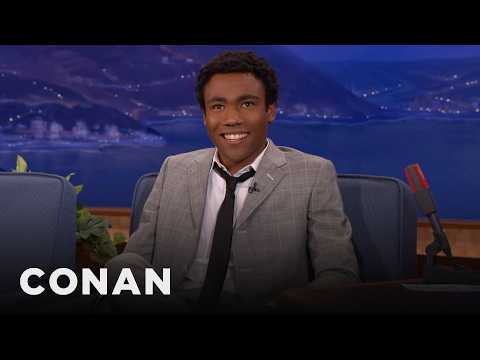
conan في 30 ثانية
- Conan is a masculine given name of Gaelic origin, traditionally meaning 'little hound' or 'little wolf'.
- It is most famous as the name of the fantasy character Conan the Barbarian, created by Robert E. Howard.
- In modern media, it refers to American comedian Conan O'Brien and the anime character Detective Conan.
- The name is a proper noun and should always be capitalized in written English.
The name conan is a proper noun with deep historical and cultural roots, primarily recognized today through two very different lenses: ancient Gaelic heritage and modern pulp fantasy literature. Originally derived from the Old Irish word 'con', meaning 'hound' or 'wolf', combined with a diminutive suffix, it translates literally to 'little hound'. In the context of ancient Celtic culture, being compared to a hound was a mark of high honor, signifying loyalty, ferocity in battle, and keen instincts. This linguistic origin sets the stage for the name's most famous bearer in fiction: Conan the Barbarian. Created by Robert E. Howard in 1932, this character redefined the 'sword and sorcery' genre. When people use the word today, they are often referring to this archetypal warrior—a figure of immense physical strength, survivalist cunning, and a stoic, often cynical worldview. However, the name is not confined to the Hyborian Age. In the modern media landscape, 'Conan' might refer to Conan O'Brien, the influential American late-night talk show host known for his self-deprecating humor and quick wit, or 'Detective Conan', the protagonist of a long-running Japanese manga and anime series. Thus, the context of use is vital. In a literary discussion, it evokes the 'noble savage' trope; in a television context, it suggests comedy; and in a genealogical context, it points toward Irish or Breton ancestry. The name carries a weight of masculinity and ancient power, yet it has been successfully adapted into various niches of popular culture, making it a versatile proper noun that bridges the gap between mythic past and digital present.
- Historical Context
- The name appears in Irish mythology, notably with Conán Maol, a member of the Fianna known for his boisterous and often troublesome nature.
- Literary Impact
- Robert E. Howard's Conan the Cimmerian is credited with establishing the tropes of the fantasy barbarian, influencing thousands of later works in games and books.
The legend of conan has inspired countless artists to depict the raw power of the Cimmerian warrior.
Beyond the fictional warriors, the name remains a living part of naming traditions in Ireland and Brittany. It is often chosen by parents who wish to evoke a sense of strength and heritage. In academic circles, particularly those studying Onomastics (the study of names), Conan is a fascinating case study of how a name can migrate from a specific linguistic root to a global brand. The 'little hound' meaning is particularly significant in Indo-European studies, where the wolf or dog often symbolizes the warrior class. Furthermore, the name's popularity in Japan via 'Detective Conan' (Meitantei Konan) shows the incredible reach of the name, though in that specific case, it was chosen by the character as a pseudonym inspired by Sir Arthur Conan Doyle, the creator of Sherlock Holmes. This creates a multi-layered cultural tapestry where one name connects a 19th-century British doctor, a 20th-century American pulp writer, and a 21st-century Japanese animator. Whether discussed in the context of high-fantasy adventure, late-night comedy, or mystery-solving children, the name Conan carries a distinct identity that is hard to ignore.
Many fans of the show were surprised to learn that conan O'Brien actually has a degree from Harvard.
- Cultural Archetype
- Conan represents the 'outsider' who succeeds through raw ability rather than social standing.
The name conan carries an aura of ancient, rugged masculinity that few other names can match.
Using the word conan correctly requires an understanding of its status as a proper noun. Because it refers to specific individuals or characters, it should almost always be capitalized. In a sentence, it functions as the subject or object, and its meaning is heavily dependent on the surrounding words. For instance, if you are discussing literature, you might say, 'Conan's journey from a thief to a king is a classic example of the hero's journey.' Here, the name acts as a possessive noun, indicating the character's progression. If you are talking about television, you might say, 'I stayed up late to watch Conan interview the latest movie star.' In this case, the name refers to the person Conan O'Brien. The word can also be used as an adjective in a more informal, descriptive sense, though this is less common. For example, 'That guy has a very Conan-like physique,' implies that the person is muscular and rugged, similar to the barbarian character. This 'adjectival' use is a form of anthimeria, where a proper noun is used to describe a set of qualities. It is also important to note that 'Conan' can appear in compound names, such as Sir Arthur Conan Doyle. In this instance, 'Conan' is part of a double-barreled surname, and it would be incorrect to refer to him simply as 'Doyle' in many formal contexts, as 'Conan Doyle' is the full recognized surname.
- Subject Position
- Conan swung his sword with a ferocity that terrified his enemies.
- Object Position
- The audience cheered for Conan as he walked onto the stage.
If you want to understand 20th-century fantasy, you must read the stories of conan.
When using the name in a multicultural context, be aware of the different associations. In Japan, 'Conan' (from Detective Conan) is a household name associated with intelligence and mystery-solving, quite the opposite of the brute strength associated with the barbarian. Therefore, a sentence like 'Conan solved the crime using his superior intellect' would be perfectly logical in an anime discussion but confusing in a discussion about Robert E. Howard's work. To avoid ambiguity, it is often helpful to use the full name or a descriptive title. Phrases like 'Conan the Barbarian,' 'Conan O'Brien,' or 'Detective Conan' provide the necessary clarity. In grammatical terms, Conan is a count noun when referring to multiple people with the name ('There are three Conans in my class'), but it is primarily used as a non-count proper noun. The possessive form is 'Conan's', and it follows standard English rules for proper nouns ending in a consonant. Using the name effectively involves tapping into the shared cultural knowledge of your audience, ensuring that the 'Conan' you are referring to is the one they are imagining.
The transition from the literary conan to the cinematic version was a major turning point for the franchise.
- Possessive Usage
- Conan's adventures have been translated into over forty languages.
Whether he is a king or a thief, conan remains a symbol of untamed spirit.
You are most likely to encounter the word conan in environments related to entertainment, literature, and pop culture history. In a comic book store, for instance, the name is ubiquitous, appearing on the spines of hundreds of graphic novels and monthly issues. Fans might debate the merits of different 'Conan' runs, comparing the original Howard stories to the Marvel or Dark Horse adaptations. In a cinematic context, the name is synonymous with the 1982 film 'Conan the Barbarian', which catapulted Arnold Schwarzenegger to superstardom. You will hear it in film classes discussing the evolution of the action hero or the 'hyper-masculine' cinema of the 1980s. Moving to the digital realm, 'Conan' is a frequent topic in online forums like Reddit or specialized fantasy wikis, where enthusiasts dissect the lore of the Hyborian Age. On television, particularly in the United States, the name was heard nightly for decades as the title of Conan O'Brien's various talk shows. In this setting, 'Conan' became a brand for a specific type of surreal, high-energy comedy. You might hear a comedian say, 'I'm doing Conan tonight,' which is shorthand for appearing on his show. This usage is so common that 'Conan' often stands alone without the need for a surname.
- In Pop Culture
- 'Did you see the latest Conan O'Brien Needs a Friend podcast episode?'
- In Gaming
- 'I've been playing Conan Exiles all weekend; the survival mechanics are brutal.'
The host announced, 'Please welcome conan O'Brien!' to a roar of applause.
In international settings, particularly in East Asia, the word 'Conan' is frequently heard in discussions about anime. 'Detective Conan' is one of the most successful media franchises in history, and in countries like Japan, China, and Vietnam, 'Conan' is a name every child knows. You might hear it in a conversation about the best mystery series or see it on merchandise in a Tokyo department store. Furthermore, in the UK and Ireland, you might hear 'Conan' used as a standard first name. While not as common as 'John' or 'Patrick', it is a recognized and respected traditional name. You might hear it in a school roll call or at a local sporting event. In the world of literature, the name 'Conan Doyle' is a staple of library shelves and academic syllabi. Students of Victorian literature or detective fiction will frequently hear the name when discussing the origins of Sherlock Holmes. Thus, the word 'Conan' exists in a state of constant resonance across multiple spheres—from the rugged mountains of a fictional prehistoric earth to the bright lights of a Hollywood studio and the quiet corridors of a library.
At the anime convention, dozens of fans were dressed as conan Edogawa.
- In Literature
- 'Sir Arthur Conan Doyle's influence on the mystery genre cannot be overstated.'
I found an old conan the Barbarian comic in the attic.
One of the most frequent mistakes people make with the word conan is failing to capitalize it. As a proper noun, it should always start with an uppercase 'C'. Writing 'conan' in lowercase is a grammatical error that can make a piece of writing look unprofessional or amateurish. Another common error is the confusion between the various 'Conans' in popular culture. For example, referencing 'Conan's brilliant detective work' in a discussion about the barbarian character would be a factual error, as that trait belongs to Detective Conan. Similarly, attributing the quote 'What is best in life?' to Conan O'Brien instead of Conan the Barbarian is a common mix-up in pop culture trivia. There is also a spelling mistake that occasionally crops up: 'Conon' or 'Conen'. While these might be names in their own right, they are not the correct spelling for the famous warrior or the talk show host. Furthermore, some people mistakenly believe that 'Conan' is a surname in the case of Arthur Conan Doyle. In fact, 'Conan' was his middle name, which he later began using as part of a compound surname. Referring to him simply as 'Mr. Conan' is incorrect; he should be 'Mr. Conan Doyle' or 'Sir Arthur'.
- Capitalization Error
- Incorrect: 'i love conan the barbarian.' Correct: 'I love Conan the Barbarian.'
- Identity Confusion
- Incorrect: 'Conan O'Brien wields a broadsword.' (Unless it's a specific comedy sketch).
It is a common mistake to think conan is a modern name; it actually dates back centuries.
In terms of pronunciation, some non-native speakers might struggle with the 'o' sound, pronouncing it like 'cannon' or 'cone-an'. The standard English pronunciation is /'koʊnən/ (KOH-nun). Mispronouncing it can lead to confusion, especially in spoken conversation. Another subtle mistake involves the possessive form. Some might try to write 'Conans' without the apostrophe when they mean 'belonging to Conan'. Always remember that 'Conan's' is the possessive, while 'Conans' is the plural (referring to more than one person named Conan). Finally, avoid using 'Conan' as a generic term for any barbarian. While he is the most famous one, calling every fantasy warrior 'a Conan' is technically a metaphor (specifically, a synecdoche), but it can be imprecise in literary analysis. It is better to use terms like 'barbarian archetype' or 'Howardian hero' to maintain clarity. By being mindful of these common pitfalls—capitalization, identity, spelling, pronunciation, and precise terminology—you can use the word Conan with confidence and accuracy in any context.
The editor corrected the manuscript, ensuring that conan was capitalized throughout.
- Spelling Pitfall
- Avoid 'Connon' or 'Conen'; the standard spelling is C-O-N-A-N.
Don't refer to Sir Arthur conan Doyle simply as 'Doyle' if you want to be formally accurate.
When looking for alternatives to the word conan, the choice depends entirely on which 'Conan' you are trying to replace. If you are referring to the barbarian archetype, similar words might include 'warrior', 'savage', 'hero', or 'adventurer'. However, none of these carry the specific literary weight of Howard's creation. In a more descriptive sense, you might use 'Cimmerian' (the fictional ethnicity of the character) or 'the barbarian'. If you are looking for names with similar Gaelic roots or meanings, you might consider 'Connor' (meaning 'lover of hounds') or 'Cormac' (meaning 'charioteer' or 'son of defilement', but often associated with ancient Irish kings). These names share a linguistic and cultural DNA with Conan. In the context of the talk show host, alternatives are usually limited to his full name, 'Conan O'Brien', or titles like 'the host' or 'the comedian'. In the anime world, 'Detective Conan' is often referred to by his real name in the series, 'Shinichi Kudo', or his English-dubbed name, 'Jimmy Kudo'.
- Conan vs. Connor
- While both are Irish names involving 'hound', Conan is 'little hound' and Connor is 'hound-lover'. Conan feels more ancient/mythic, while Connor is a very common modern name.
- Conan vs. Hercules
- Both are archetypal strongmen, but Hercules is a demigod of Greek myth, while Conan is a mortal man from pulp fiction who relies on his own strength and will.
Instead of saying 'that conan-like man', you could say 'that Herculean figure'.
In a broader literary sense, if you want to avoid repeating the name 'Conan' in an essay, you can use epithets. For the barbarian, 'the Cimmerian' or 'the giant slayer' works well. For the talk show host, 'the redhead' or 'the veteran broadcaster' are possible, though less formal. When discussing the name's meaning, you can use synonyms for its root, such as 'canine-derived name' or 'lupine moniker'. It is also interesting to compare Conan with other 'pulp' heroes like Tarzan or John Carter. While they share the 'heroic adventurer' label, each has a distinct flavor—Tarzan is the 'ape-man', Carter is the 'warlord of Mars', and Conan is the 'barbarian'. Choosing the right alternative requires a keen sense of the specific attributes you want to highlight. If it's the strength, go with 'mighty warrior'. If it's the Irish heritage, go with 'Gaelic name'. If it's the specific character, stick with 'Conan' but vary it with 'the protagonist' or 'Howard's hero'.
The author used the term 'the Cimmerian' to refer to conan throughout the second chapter.
- Conan vs. Arthur
- Arthur (as in King Arthur) represents chivalry and divine right, whereas Conan represents raw survival and self-made kingship.
For a more modern Irish name, many choose 'Cian' or 'Finn' instead of the more traditional conan.
How Formal Is It?
حقيقة ممتعة
Despite the 'little' in its meaning, the most famous Conan is a giant of a man. This irony is a common point of interest for linguists and fans alike. Also, the name was very popular among the nobility in medieval Brittany.
دليل النطق
- Pronouncing it like 'cannon'.
- Pronouncing it like 'cone-ann' with a long 'a'.
- Adding an extra 'n' sound in the middle.
- Stress on the second syllable: ko-NAN.
- Pronouncing the 'o' like the 'o' in 'hot'.
مستوى الصعوبة
The word itself is easy to read, but the context can be complex.
Simple spelling, but requires capitalization.
Clear pronunciation, though some regional variations exist.
Easily recognizable in speech.
ماذا تتعلّم بعد ذلك
المتطلبات الأساسية
تعلّم لاحقاً
متقدم
قواعد يجب معرفتها
Capitalization of Proper Nouns
Always write 'Conan', never 'conan'.
Possessive form of nouns ending in 'n'
Conan's sword (add 's).
Appositives with names
Conan, the famous warrior, was very brave.
Using names as adjectives
He has a Conan-like personality.
Zero article with proper names
Conan is here (not 'The Conan is here').
أمثلة حسب المستوى
My friend has a dog named Conan.
Mon ami a un chien nommé Conan.
Proper noun used as a pet name.
Conan is a strong man in the movie.
Conan est un homme fort dans le film.
Subject of the sentence.
I see Conan on TV every night.
Je vois Conan à la télé tous les soirs.
Object of the verb 'see'.
Is Conan a common name in Ireland?
Est-ce que Conan est un nom commun en Irlande ?
Interrogative sentence using the name.
Conan has red hair.
Conan a les cheveux roux.
Simple subject-verb-object structure.
We like to watch Conan's show.
Nous aimons regarder l'émission de Conan.
Possessive form 'Conan's'.
Conan the Barbarian is very famous.
Conan le Barbare est très célèbre.
Proper noun with a title.
Hello, my name is Conan.
Bonjour, je m'appelle Conan.
Introducing oneself using the name.
Conan O'Brien is a very funny person.
Conan O'Brien est une personne très drôle.
Full name used as a subject.
The story of Conan was written a long time ago.
L'histoire de Conan a été écrite il y a longtemps.
Passive voice with the name as the object of a preposition.
Many people in Ireland are named Conan.
Beaucoup de gens en Irlande s'appellent Conan.
Name used in a plural context.
I bought a Conan comic book yesterday.
J'ai acheté une bande dessinée de Conan hier.
Proper noun used as a modifier.
Conan's sword is very large and heavy.
L'épée de Conan est très grande et lourde.
Possessive case.
Do you know who Conan the Barbarian is?
Sais-tu qui est Conan le Barbare ?
Indirect question.
Conan moved from the countryside to the city.
Conan a déménagé de la campagne à la ville.
Action verb with a proper noun subject.
The name Conan means 'little hound'.
Le nom Conan signifie 'petit chien'.
Defining the name.
Conan the Barbarian was created by the writer Robert E. Howard.
Conan le Barbare a été créé par l'écrivain Robert E. Howard.
Passive construction with agent.
If you enjoy fantasy, you should read the Conan stories.
Si tu aimes la fantasy, tu devrais lire les histoires de Conan.
Conditional sentence.
Conan O'Brien hosted a late-night talk show for many years.
Conan O'Brien a animé un talk-show de fin de soirée pendant de nombreuses années.
Past tense describing a long-term action.
The character of Conan is known for his incredible strength.
Le personnage de Conan est connu pour sa force incroyable.
Prepositional phrase describing a character.
Sir Arthur Conan Doyle is the man who created Sherlock Holmes.
Sir Arthur Conan Doyle est l'homme qui a créé Sherlock Holmes.
Relative clause.
Conan's adventures take place in a fictional world called Hyboria.
Les aventures de Conan se déroulent dans un monde fictif appelé Hyboria.
Subject-verb agreement with a possessive noun.
I've been a fan of Conan's comedy since I was a teenager.
Je suis fan de l'humour de Conan depuis que je suis adolescent.
Present perfect continuous.
The name Conan has become a symbol of the barbarian archetype.
Le nom Conan est devenu un symbole de l'archétype du barbare.
Present perfect with a noun complement.
Conan's transition from a mercenary to a king is a central theme in the books.
La transition de Conan de mercenaire à roi est un thème central des livres.
Gerund phrase as a subject.
Many critics argue that Conan O'Brien changed the landscape of late-night TV.
De nombreux critiques affirment que Conan O'Brien a changé le paysage de la télévision de fin de soirée.
Noun clause following 'argue'.
The name Conan, though ancient, remains popular in modern fantasy literature.
Le nom Conan, bien qu'ancien, reste populaire dans la littérature fantasy moderne.
Appositive phrase.
In the series 'Detective Conan', the protagonist is a teenager trapped in a child's body.
Dans la série 'Détective Conan', le protagoniste est un adolescent piégé dans un corps d'enfant.
Prepositional phrase indicating context.
Sir Arthur Conan Doyle's medical background influenced his writing style.
Le passé médical de Sir Arthur Conan Doyle a influencé son style d'écriture.
Possessive proper noun as a modifier.
The ruggedness associated with Conan makes it a popular choice for fictional warriors.
La rudesse associée à Conan en fait un choix populaire pour les guerriers de fiction.
Participial phrase modifying 'ruggedness'.
Conan's philosophy is often described as 'live for the moment'.
La philosophie de Conan est souvent décrite comme 'vivre l'instant présent'.
Passive voice with a quoted phrase.
The popularity of the name Conan peaked in the 1980s due to the films.
La popularité du nom Conan a atteint son sommet dans les années 1980 à cause des films.
Prepositional phrase indicating cause.
The literary Conan is a far more nuanced character than his cinematic counterpart.
Le Conan littéraire est un personnage bien plus nuancé que son homologue cinématographique.
Adjective 'literary' modifying a proper noun.
Conan O'Brien's departure from NBC was a significant event in media history.
Le départ de Conan O'Brien de NBC a été un événement important dans l'histoire des médias.
Complex noun phrase as a subject.
The name Conan evokes a sense of primordial power and untamed nature.
Le nom Conan évoque un sentiment de puissance primordiale et de nature indomptée.
Abstract nouns as objects.
By adopting the name Conan, the young detective pays homage to a literary giant.
En adoptant le nom Conan, le jeune détective rend hommage à un géant de la littérature.
Gerund phrase expressing means.
The etymological roots of Conan lie in the ancient languages of the British Isles.
Les racines étymologiques de Conan se trouvent dans les langues anciennes des îles britanniques.
Plural subject with a collective noun.
Conan's enduring appeal lies in his status as an outsider who defies societal norms.
L'attrait durable de Conan réside dans son statut d'étranger qui défie les normes sociétales.
Relative clause defining 'outsider'.
The name Conan Doyle is inextricably linked with the birth of modern detective fiction.
Le nom Conan Doyle est inextricablement lié à la naissance du roman policier moderne.
Adverb modifying an adjective.
In the context of onomastics, Conan is a fascinating example of a name's cultural evolution.
Dans le contexte de l'onomastique, Conan est un exemple fascinant de l'évolution culturelle d'un nom.
Prepositional phrase setting the academic context.
The Howardian Conan serves as a stark critique of the perceived decadence of civilization.
Le Conan howardien sert de critique cinglante de la décadence perçue de la civilisation.
Eponymous adjective 'Howardian'.
Conan O'Brien's comedic style is characterized by a unique blend of self-deprecation and absurdity.
Le style comique de Conan O'Brien se caractérise par un mélange unique d'autodérision et d'absurdité.
Passive voice with a complex agent.
The name Conan, through its various iterations, has become a multifaceted cultural icon.
Le nom Conan, à travers ses diverses itérations, est devenu une icône culturelle aux multiples facettes.
Parenthetical phrase 'through its various iterations'.
The linguistic journey of 'Conan' from 'little hound' to 'barbarian king' reflects broader societal shifts.
Le voyage linguistique de 'Conan', de 'petit chien' à 'roi barbare', reflète des changements sociétaux plus larges.
Metaphorical use of 'linguistic journey'.
Scholars often analyze Conan the Barbarian through the lens of early 20th-century existentialism.
Les chercheurs analysent souvent Conan le Barbare à travers le prisme de l'existentialisme du début du XXe siècle.
Prepositional phrase 'through the lens of'.
The ubiquity of the name Conan in Japanese pop culture underscores the power of literary adaptation.
L'ubiquité du nom Conan dans la culture pop japonaise souligne le pouvoir de l'adaptation littéraire.
Noun phrase as a subject with a transitive verb.
Sir Arthur Conan Doyle's legacy is often overshadowed by the very character he sought to distance himself from.
L'héritage de Sir Arthur Conan Doyle est souvent éclipsé par le personnage même dont il cherchait à se distancier.
Relative clause with a stranded preposition.
The name Conan acts as a bridge between the mythic past and the postmodern media landscape.
Le nom Conan agit comme un pont entre le passé mythique et le paysage médiatique postmoderne.
Metaphorical subject-verb-object structure.
تلازمات شائعة
العبارات الشائعة
— An oath used by Conan the Barbarian, referring to his god.
By Crom, this is a difficult task!
— Resembling the style or characteristics of Conan the Barbarian.
The movie had a very Conan-esque feel to it.
— An epithet for Conan, referring to his homeland.
The Cimmerian did not trust the sorcerer.
— The English title for the Detective Conan series.
I prefer the name Detective Conan over Case Closed.
— The genre of fantasy that Conan helped define.
Conan is the king of sword and sorcery.
— The fictional time period in which Conan lives.
The Hyborian Age is full of monsters and magic.
— A famous quote from the 1982 Conan movie.
He quoted Conan: 'To crush your enemies...'
— The literal translation of the name from Gaelic.
The name Conan literally means little hound.
— The organization that manages the author's works.
The Conan Doyle estate approved the new book.
يُخلط عادةً مع
Both are Irish names starting with 'Con', but they have different meanings and associations.
A biblical place name that sounds slightly similar but is unrelated.
A word meaning a collection of rules or books, often confused in spelling.
تعبيرات اصطلاحية
— Extremely physically powerful.
After months of training, he was as strong as Conan.
Informal— A very large or difficult challenge.
We have a Conan-sized problem on our hands.
Informal— The most dominant or powerful person in a specific area.
He is the Conan of the tech world.
Metaphorical— Taking on a massive responsibility or power.
The new CEO felt like he was wielding Conan's sword.
Literary— Surviving against impossible odds.
He escaped the crash with nothing but Conan's luck.
Informal— Doing something in a rugged, direct, or forceful way.
He handled the negotiation in the style of Conan.
Neutral— A man who is very masculine and tough.
He's a real Conan, always out in the wild.
Informal— A simple, personal set of rules or ethics.
He lives by Conan's code: loyalty to friends, death to enemies.
Literary— The influence of the barbarian archetype on other works.
Every new fantasy hero stands in the shadow of Conan.
Academic— Extreme focus or ferocity.
She approached the project with Conan-level intensity.
Informalسهل الخلط
Similar spelling and pronunciation.
Conan is a name; Canon is a set of laws, a musical form, or a camera brand.
The Sherlock Holmes canon was written by Conan Doyle.
Similar pronunciation.
Conan is a name; a cannon is a large gun.
The ship fired a cannon, not a Conan.
Vaguely similar sound.
Conan is a person; a canyon is a deep valley.
Conan rode his horse through the canyon.
Same name, different people.
One is a fictional warrior; the other is a real-life comedian.
I was confused when you said Conan was funny; I thought you meant the barbarian!
One letter difference.
Conan is the standard Irish name; Conon is a rarer Greek name.
The general's name was Conon, not Conan.
أنماط الجُمل
My name is [Name].
My name is Conan.
[Name] is [Adjective].
Conan is strong.
[Name] is known for [Noun].
Conan is known for his bravery.
The character of [Name] represents [Concept].
The character of Conan represents the noble savage.
By [Verb-ing] [Name], the author [Verb].
By creating Conan, the author redefined fantasy.
The [Adjective] [Name] serves as a [Noun] for [Concept].
The Howardian Conan serves as a critique of civilization.
I like [Name]'s [Noun].
I like Conan's sense of humor.
Do you like [Name]?
Do you like Conan?
عائلة الكلمة
الأسماء
الصفات
مرتبط
كيفية الاستخدام
The name is moderately frequent in general English but very high in pop culture and media contexts.
-
Writing 'conan' with a lowercase 'c'.
→
Conan
Proper nouns, including names of people and characters, must always be capitalized in English.
-
Referring to Conan O'Brien as a barbarian.
→
Conan O'Brien is a comedian.
This is a factual error. While they share a name, their roles in culture are very different.
-
Spelling the name as 'Canon'.
→
Conan
'Canon' is a different word with several meanings (laws, books, cameras). The name is 'Conan'.
-
Saying 'The Conan' when referring to the person.
→
Conan is coming to town.
We don't usually use the definite article 'the' before proper names unless we are using a title like 'Conan the Barbarian'.
-
Thinking 'Conan' is Arthur Conan Doyle's surname.
→
His surname was Doyle (or Conan Doyle).
Conan was his middle name, though it is often treated as part of a compound surname.
نصائح
Always Capitalize
Since Conan is a proper noun, it must always be capitalized. This applies whether you are talking about the person, the character, or the name itself.
Provide Context
Because there are several famous Conans, always provide a little context (e.g., 'the host', 'the warrior') so your listener knows who you mean.
Watch the Vowels
The name is spelled C-O-N-A-N. Don't confuse it with 'Canon' (with an 'o') or 'Cannon' (with two 'n's and an 'o').
Know the Roots
Knowing that Conan means 'little hound' can help you understand why the name is associated with loyalty and warrior cultures.
Stress the First Syllable
Always put the emphasis on the 'CO' part of Conan. Saying 'ko-NAN' sounds incorrect to native speakers.
Use Epithets
In creative writing, you can refer to Conan as 'the Cimmerian' or 'the barbarian' to avoid repeating his name too often.
Conan O'Brien's Nickname
If you hear the name 'Coco' in a media context, it's almost certainly a reference to Conan O'Brien.
Sir Arthur's Name
When citing the author of Sherlock Holmes, 'Conan Doyle' is the preferred way to refer to him, rather than just 'Doyle'.
Detective Conan's Origin
Remember that the anime character's name is a tribute to Arthur Conan Doyle, which explains why he is a detective.
Conan-esque
You can use the suffix '-esque' to describe anything that feels like a Conan story—rugged, adventurous, and epic.
احفظها
وسيلة تذكّر
Think of a 'COne' (the shape) and a 'mAN'. A man wearing a cone hat named Conan. Or: 'CO-NAN' - The COmander of the NAN-tucket warriors.
ربط بصري
Imagine a large, muscular warrior (Conan the Barbarian) holding a small, cute puppy (the 'little hound' meaning). This contrast helps remember both the character and the etymology.
Word Web
تحدٍّ
Try to use the name 'Conan' in three different contexts (a warrior, a comedian, and a detective) in a single paragraph.
أصل الكلمة
The name Conan originates from the Old Irish name 'Conán'. It is a diminutive form of 'cú', which means 'hound' or 'wolf'. The suffix '-án' is a common diminutive in Gaelic languages, similar to '-y' or '-ie' in English. Thus, the name literally translates to 'little hound' or 'little wolf'.
المعنى الأصلي: Little hound / Little wolf
Celtic (Goidelic)السياق الثقافي
No major sensitivities, but be aware that 'barbarian' can sometimes have negative connotations if used to describe real cultures.
Primarily associated with the barbarian character and the talk show host.
تدرّب في الحياة الواقعية
سياقات واقعية
Fantasy Literature
- The Hyborian Age
- Sword and sorcery
- Robert E. Howard
- Cimmerian warrior
Television/Comedy
- Late-night host
- Team Coco
- Monologue
- Sketch comedy
Anime/Manga
- Detective Conan
- Case Closed
- Shinichi Kudo
- Mystery solving
Irish Heritage
- Gaelic origin
- Little hound
- Irish mythology
- Traditional name
General Pop Culture
- Arnold Schwarzenegger
- Iconic character
- Pop culture legend
- Famous moniker
بدايات محادثة
"Have you ever seen the original Conan the Barbarian movie with Arnold Schwarzenegger?"
"Do you prefer Conan O'Brien's old late-night show or his new podcast?"
"Did you know that the name Conan actually means 'little hound' in Gaelic?"
"Have you ever read any of the original Conan stories by Robert E. Howard?"
"Is 'Detective Conan' popular in your country, or do they call it 'Case Closed'?"
مواضيع للكتابة اليومية
If you were a warrior like Conan the Barbarian, what would your 'code of honor' be?
Describe a time when you had to use 'Conan-like' strength to overcome a difficult situation.
Which 'Conan' do you relate to more: the strong warrior, the funny host, or the smart detective? Why?
Imagine you are naming a new character 'Conan'. What traits would you give them to make them unique?
Write about the importance of names. Does a name like 'Conan' change how people see a person?
الأسئلة الشائعة
10 أسئلةYes, Conan is a real masculine given name. It has its origins in Ireland and Brittany. While it is most famous today because of fictional characters and celebrities, many real people carry the name, particularly in English-speaking and Celtic regions.
The name Conan comes from the Gaelic word 'Conán', which is a diminutive of 'cú' (meaning hound or wolf). Therefore, the name literally means 'little hound' or 'little wolf'. It was historically a name given to warriors to signify loyalty and strength.
Conan the Barbarian was created by the American writer Robert E. Howard. The character first appeared in a series of fantasy stories published in the pulp magazine 'Weird Tales' starting in 1932. Howard is considered the father of the 'sword and sorcery' genre.
No, they are not related. Conan O'Brien is a real-life American comedian and television host, while Conan the Barbarian is a fictional character. They simply share the same first name, which has led to many jokes and sketches on O'Brien's shows.
No. The protagonist of the anime 'Detective Conan', Shinichi Kudo, chooses the pseudonym 'Conan Edogawa' by combining the names of two famous mystery writers: Sir Arthur Conan Doyle and Edogawa Ranpo. It is a tribute to detective fiction, not the barbarian.
In English, the standard pronunciation is 'KOH-nan' (/ˈkoʊnən/). The first syllable sounds like the word 'go' and the second syllable is a short, neutral 'nuhn'. The stress is always on the first syllable.
It is not one of the most common names like Jack or James, but it is a recognized traditional name. It has seen various waves of popularity over the centuries and remains a respected choice for parents looking for a name with heritage.
'Team Coco' is the official brand and fan community for Conan O'Brien. The name 'Coco' was a nickname given to him during his time on 'The Tonight Show', and it stuck as a way for fans to show their support.
The most famous portrayal of Conan the Barbarian was by Arnold Schwarzenegger in the 1982 film 'Conan the Barbarian' and its 1984 sequel 'Conan the Destroyer'. Jason Momoa also played the character in a 2011 reboot.
Arthur was his first name, Conan was his middle name, and Doyle was his surname. However, later in his life, he began using 'Conan Doyle' as a compound surname. Most people today refer to him by both names to distinguish him from other Doyles.
اختبر نفسك 180 أسئلة
Write a short sentence using the name Conan as a subject.
Well written! Good try! Check the sample answer below.
Explain the meaning of the name Conan in your own words.
Well written! Good try! Check the sample answer below.
Compare Conan the Barbarian and Conan O'Brien in two sentences.
Well written! Good try! Check the sample answer below.
Describe a 'Conan-esque' character.
Well written! Good try! Check the sample answer below.
Write a dialogue between two people discussing the anime 'Detective Conan'.
Well written! Good try! Check the sample answer below.
Discuss the significance of the name Conan in fantasy literature.
Well written! Good try! Check the sample answer below.
Write a formal sentence about Sir Arthur Conan Doyle.
Well written! Good try! Check the sample answer below.
Create a mnemonic to remember the spelling of Conan.
Well written! Good try! Check the sample answer below.
Write a sentence using the possessive form 'Conan's'.
Well written! Good try! Check the sample answer below.
Describe the fictional world of Conan the Barbarian.
Well written! Good try! Check the sample answer below.
Why is capitalization important for the word Conan?
Well written! Good try! Check the sample answer below.
What does 'By Crom!' mean?
Well written! Good try! Check the sample answer below.
Write a short story about a boy named Conan.
Well written! Good try! Check the sample answer below.
How did Arnold Schwarzenegger influence the image of Conan?
Well written! Good try! Check the sample answer below.
What are the linguistic roots of the name Conan?
Well written! Good try! Check the sample answer below.
Write a sentence using 'Conan' as an object.
Well written! Good try! Check the sample answer below.
Explain the term 'Sword and Sorcery'.
Well written! Good try! Check the sample answer below.
What is the difference between Conan and Connor?
Well written! Good try! Check the sample answer below.
Write a sentence about Conan O'Brien's podcast.
Well written! Good try! Check the sample answer below.
Describe Conan's physical appearance in the books.
Well written! Good try! Check the sample answer below.
Pronounce the name 'Conan' clearly.
Read this aloud:
قلت:
Speech recognition is not supported in your browser. Try Chrome or Edge.
Say 'Conan the Barbarian' with emphasis.
Read this aloud:
قلت:
Speech recognition is not supported in your browser. Try Chrome or Edge.
Explain who Conan O'Brien is in one sentence.
Read this aloud:
قلت:
Speech recognition is not supported in your browser. Try Chrome or Edge.
Describe the meaning of the name Conan.
Read this aloud:
قلت:
Speech recognition is not supported in your browser. Try Chrome or Edge.
Tell a short joke about a warrior named Conan.
Read this aloud:
قلت:
Speech recognition is not supported in your browser. Try Chrome or Edge.
Discuss your favorite 'Conan' (warrior, host, or detective).
Read this aloud:
قلت:
Speech recognition is not supported in your browser. Try Chrome or Edge.
Say 'Sir Arthur Conan Doyle' correctly.
Read this aloud:
قلت:
Speech recognition is not supported in your browser. Try Chrome or Edge.
Use 'Conan-esque' in a sentence about a movie.
Read this aloud:
قلت:
Speech recognition is not supported in your browser. Try Chrome or Edge.
Explain why Conan is a proper noun.
Read this aloud:
قلت:
Speech recognition is not supported in your browser. Try Chrome or Edge.
Describe the character of Conan in three adjectives.
Read this aloud:
قلت:
Speech recognition is not supported in your browser. Try Chrome or Edge.
What is 'Team Coco'?
Read this aloud:
قلت:
Speech recognition is not supported in your browser. Try Chrome or Edge.
Who played Conan in the 1980s?
Read this aloud:
قلت:
Speech recognition is not supported in your browser. Try Chrome or Edge.
What does 'By Crom!' mean?
Read this aloud:
قلت:
Speech recognition is not supported in your browser. Try Chrome or Edge.
Is Conan a common name in your country?
Read this aloud:
قلت:
Speech recognition is not supported in your browser. Try Chrome or Edge.
Say 'Detective Conan' in Japanese (if you know it).
Read this aloud:
قلت:
Speech recognition is not supported in your browser. Try Chrome or Edge.
What is the literal meaning of 'Conan'?
Read this aloud:
قلت:
Speech recognition is not supported in your browser. Try Chrome or Edge.
Who is Robert E. Howard?
Read this aloud:
قلت:
Speech recognition is not supported in your browser. Try Chrome or Edge.
Use 'Conan's' in a sentence.
Read this aloud:
قلت:
Speech recognition is not supported in your browser. Try Chrome or Edge.
What is the Hyborian Age?
Read this aloud:
قلت:
Speech recognition is not supported in your browser. Try Chrome or Edge.
Why is Conan famous?
Read this aloud:
قلت:
Speech recognition is not supported in your browser. Try Chrome or Edge.
Listen and write the name: /ˈkoʊnən/.
Listen to the sentence: 'Conan is a warrior.' What is Conan?
Listen to the sentence: 'Conan's show is funny.' Whose show is it?
Listen for the origin: 'The name Conan has Gaelic roots.' Where is it from?
Listen for the meaning: 'Conan literally means little hound.' What does it mean?
Listen for the creator: 'Robert E. Howard created Conan.' Who created him?
Listen for the actor: 'Arnold Schwarzenegger played the barbarian.' Who played him?
Listen for the genre: 'Conan is the king of sword and sorcery.' What is the genre?
Listen for the nickname: 'Fans call him Coco.' What is the nickname?
Listen for the author: 'Arthur Conan Doyle wrote mystery.' Who wrote mystery?
Listen for the anime: 'Detective Conan is a hit.' What is a hit?
Listen for the homeland: 'He is from Cimmeria.' Where is he from?
Listen for the god: 'He prays to Crom.' Who is his god?
Listen for the hair color: 'The host has red hair.' What color is his hair?
Listen for the age: 'It happened in the Hyborian Age.' When did it happen?
/ 180 correct
Perfect score!
Summary
The name Conan is a versatile proper noun that bridges ancient Celtic heritage with modern pop culture. Whether referring to a mythic warrior, a late-night comedian, or a brilliant detective, it consistently evokes a sense of distinct identity and strength. Example: 'The legacy of Conan spans from ancient Irish legends to modern Hollywood blockbusters.'
- Conan is a masculine given name of Gaelic origin, traditionally meaning 'little hound' or 'little wolf'.
- It is most famous as the name of the fantasy character Conan the Barbarian, created by Robert E. Howard.
- In modern media, it refers to American comedian Conan O'Brien and the anime character Detective Conan.
- The name is a proper noun and should always be capitalized in written English.
Always Capitalize
Since Conan is a proper noun, it must always be capitalized. This applies whether you are talking about the person, the character, or the name itself.
Provide Context
Because there are several famous Conans, always provide a little context (e.g., 'the host', 'the warrior') so your listener knows who you mean.
Watch the Vowels
The name is spelled C-O-N-A-N. Don't confuse it with 'Canon' (with an 'o') or 'Cannon' (with two 'n's and an 'o').
Know the Roots
Knowing that Conan means 'little hound' can help you understand why the name is associated with loyalty and warrior cultures.