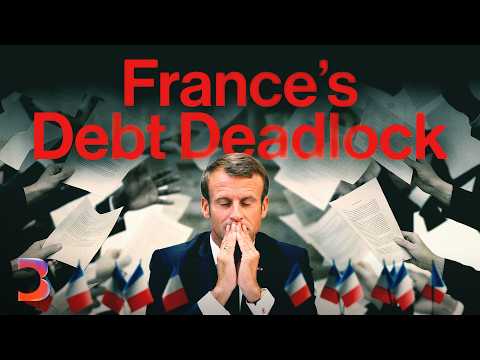
eurozone في 30 ثانية
- The eurozone consists of 20 EU countries that use the euro as their official currency, sharing a single monetary policy managed by the European Central Bank.
- It simplifies trade and travel by eliminating exchange rate costs and risks, creating a unified economic bloc that is a major player in global finance.
- Membership requires meeting specific economic criteria, and while it offers stability, it also means countries lose independent control over their own interest rates.
- It is distinct from the European Union and the Schengen Area, representing a specific level of economic integration within the broader European project.
The term eurozone refers specifically to the group of European Union (EU) member states that have fully integrated their economies by adopting the euro as their sole legal tender. It is not merely a geographic designation but a sophisticated monetary union governed by a singular monetary policy. When people use this word, they are usually discussing matters of international finance, macroeconomics, or regional politics. It distinguishes those countries that share the currency from those EU members that still use their own national currencies, such as Poland or Sweden. Understanding the eurozone is crucial for anyone looking at global markets, as it represents one of the largest economic blocs in the world, rivaling the United States and China in terms of trade volume and economic influence.
- Economic Integration
- The process by which different nations coordinate their fiscal and monetary policies to create a unified market and currency system.
- Monetary Union
- An agreement between two or more states sharing the same currency and a single central bank to manage interest rates and money supply.
The term is frequently heard in the context of the European Central Bank (ECB), which is headquartered in Frankfurt, Germany. The ECB's primary mandate is to maintain price stability within the eurozone, primarily by controlling inflation. When the ECB raises interest rates, it affects every country within the eurozone simultaneously, from the northern reaches of Finland to the southern islands of Malta. This shared destiny is a hallmark of the eurozone; a crisis in one member state, such as the Greek debt crisis of the early 2010s, can have profound ripple effects across the entire currency bloc, necessitating collective action and bailouts.
Economists are closely monitoring inflation rates across the eurozone to predict the next move by the European Central Bank.
In everyday conversation, travelers might use the term to describe the ease of moving between countries without needing to exchange money. If you are traveling from France to Germany and then to Italy, you are staying within the eurozone, meaning your wallet remains filled with the same notes and coins. However, the moment you cross into Switzerland or the Czech Republic, you leave the eurozone, even though you are still within the geographic continent of Europe. This distinction is vital for budgeting and financial planning for both individuals and multinational corporations operating across European borders.
The eurozone officially came into existence on January 1, 1999, as an 'invisible' currency used for accounting purposes and electronic payments. It wasn't until January 1, 2002, that physical notes and coins were introduced, replacing historic currencies like the French franc, the German mark, and the Italian lira. Since then, the eurozone has expanded as more countries met the 'convergence criteria'—a set of economic requirements regarding debt levels, inflation, and interest rates. Croatia became the 20th member of the eurozone on January 1, 2023, marking the most recent expansion of this economic experiment.
The expansion of the eurozone to include Croatia demonstrates the continued appeal of a unified European currency despite past economic challenges.
Politically, the eurozone is represented by the Eurogroup, an informal body where the finance ministers of the eurozone member states meet to discuss matters relating to their shared responsibilities. This group plays a pivotal role in coordinating fiscal policies, which is often a point of contention. Unlike the United States, where there is a central federal budget, the eurozone consists of independent nations with their own budgets, leading to debates about how much control the central authorities should have over national spending. This tension between national sovereignty and collective economic stability is a defining characteristic of the eurozone's ongoing development.
Discussions within the Eurogroup often highlight the divergent economic priorities of different nations within the eurozone.
- Convergence Criteria
- The economic and legal conditions that EU member states must meet to join the eurozone, ensuring they are ready for the single currency.
Ultimately, the eurozone is more than just a list of countries; it is a symbol of European integration and a major pillar of the global financial system. Whether you are a student of economics, a frequent traveler, or a business professional, understanding the nuances of the eurozone—its history, its governance, and its member states—is essential for navigating the complexities of the modern world. It represents a bold attempt to transcend national borders through the medium of money, creating a shared economic space for over 340 million people.
The eurozone serves as a primary example of how shared currency can facilitate trade and tourism across international borders.
Maintaining the stability of the eurozone is a top priority for European leaders during times of global financial uncertainty.
Using the word eurozone correctly requires an understanding of its role as a proper noun and its function as a collective entity. It is almost always preceded by the definite article 'the'. Because it refers to a geographic and economic region, it is frequently the subject of verbs related to growth, stability, expansion, or crisis. For instance, one might say, 'The eurozone is experiencing a period of low inflation,' or 'The eurozone expanded to include its twentieth member.' In these cases, the word acts as a singular noun representing the collective group of countries.
- As a Subject
- The eurozone faces significant challenges regarding energy prices this winter.
- As an Object
- Investors are pouring capital into the eurozone following the latest economic report.
When describing actions taken by the countries within the bloc, the word 'eurozone' often acts as a modifier for other nouns. Common pairings include 'eurozone members,' 'eurozone economy,' 'eurozone crisis,' and 'eurozone leaders.' This attributive use allows for concise descriptions of phenomena that affect the entire region. For example, 'Eurozone leaders met in Brussels to discuss the budget' is more efficient than saying 'The leaders of the countries that use the euro met in Brussels.' It is important to note that while the countries are diverse, 'eurozone' emphasizes their shared economic status.
The eurozone economy grew by 0.3% in the last quarter, exceeding analysts' expectations.
In more technical or academic writing, the word is used to discuss the mechanics of the monetary union. You might encounter sentences like, 'The structural imbalances within the eurozone necessitate a more unified fiscal policy.' Here, the word is used to describe the internal workings of the system. It can also be used in comparative contexts, contrasting the eurozone with other currency areas like the 'dollar zone' or the 'sterling area.' Such comparisons help highlight the unique nature of a multi-nation currency union compared to a single-nation currency.
Another common usage is in the context of entry and exit. Countries 'join the eurozone' or 'enter the eurozone' when they adopt the currency. Conversely, during times of intense economic pressure, there is often talk of a country 'leaving the eurozone' or a 'eurozone exit' (sometimes colloquially termed 'Grexit' or similar portmanteaus). These phrases describe the legal and economic process of changing a nation's currency status. For example, 'There was significant speculation about whether Greece would remain in the eurozone during the 2015 negotiations.'
Many Eastern European nations are still working toward meeting the requirements to join the eurozone.
Furthermore, 'eurozone' is used to describe the collective performance of its constituent parts. Phrases like 'eurozone inflation' or 'eurozone unemployment' refer to the weighted average of these statistics across all member states. This is a crucial distinction for policymakers who must look at the big picture rather than just the situation in a single country. A sentence like 'Eurozone inflation hit a record high' means that, on average, prices across all 20 countries rose significantly, even if the rate in Spain was different from the rate in Estonia.
The European Central Bank must balance the needs of all countries within the eurozone when setting interest rates.
- Prepositional Use
- Business is booming across the eurozone this summer.
- Comparative Use
- The eurozone's recovery has been slower than that of the United States.
Finally, the word is used to describe the geographic extent of the currency's reach. 'Traveling through the eurozone' implies a journey where no currency exchange is necessary. 'The eurozone borders' refers to the outer limits of the countries using the euro. This usage is common in travel guides and logistical planning. For example, 'Once you cross the border from Poland into Germany, you are back in the eurozone.' This highlights the tangible, physical reality of the monetary union for the average person.
The eurozone provides a seamless financial experience for millions of tourists every year.
Policymakers are debating the future of the eurozone in an increasingly digital global economy.
The word eurozone is a staple of international news broadcasting and financial journalism. If you tune into networks like the BBC, CNN International, or Al Jazeera, you will frequently hear news anchors discussing 'eurozone inflation,' 'eurozone debt,' or 'eurozone growth.' It is the standard term used to group these 20 nations together when discussing their collective economic health. Financial analysts on Bloomberg or CNBC use the word dozens of times a day to describe market trends, currency fluctuations, and the policy decisions of the European Central Bank. For anyone following global finance, the word is unavoidable.
- Financial News
- Reports on stock market performance often cite eurozone data as a key indicator of global economic health.
- Political Summits
- During EU summits, journalists distinguish between the broader EU and the specific eurozone meetings.
In the world of business and commerce, the word is used in corporate boardrooms and annual reports. Multinational companies that operate in Europe often categorize their revenue by region, with 'the eurozone' being a common segment. Executives might discuss 'eurozone sales' or 'eurozone supply chain issues.' Because the eurozone shares a currency, it simplifies accounting for these companies, but it also means they are exposed to the same currency risks across multiple countries. Hearing the word in a business context usually implies a discussion about the regulatory and economic environment of these specific 20 nations.
The company's annual report highlighted a 5% increase in revenue from the eurozone market.
Academic settings, particularly in economics and political science departments, are another place where 'eurozone' is frequently heard. Professors and students analyze the 'eurozone crisis' as a case study in the challenges of monetary unions without fiscal unions. They might debate the 'optimum currency area' theory and whether the eurozone meets those criteria. In these discussions, the word is used with a high degree of technicality, often involving complex data sets and theoretical models. If you are reading a textbook on European integration, the eurozone will likely have several chapters dedicated to it.
Travelers and expatriates also use the word, though perhaps less formally. A travel blogger might write a post titled 'Budgeting for your trip through the eurozone,' explaining that you won't need to change money between Spain and Greece. Expatriates living in Europe might talk about the 'eurozone cost of living' or the ease of transferring money between 'eurozone bank accounts.' In these contexts, the word represents a practical reality of daily life—the convenience of a single currency and the lack of exchange rate fees when moving across borders.
Digital nomads often prefer working within the eurozone to avoid the hassle of managing multiple currencies.
Finally, you will hear the word in official government communications from member states. When a national finance minister gives a speech, they might refer to their country's 'commitments to the eurozone' or the 'stability of the eurozone.' This reinforces the idea that the eurozone is a collective project that requires the cooperation and adherence of all its members. It is a word that carries the weight of international law and treaty obligations, reflecting the deep level of commitment required to be part of this unique monetary experiment.
The French President emphasized the need for greater solidarity within the eurozone to combat economic inequality.
- Legal Context
- The eurozone is governed by the Treaty on the Functioning of the European Union.
- Daily Life
- Many people in the eurozone have never used their old national currencies.
In summary, the word 'eurozone' is heard wherever there is a discussion about European economics, global finance, international travel, or regional politics. It is a term that bridges the gap between high-level policy and the practicalities of everyday life, making it a vital part of the modern vocabulary for anyone engaged with the world at large.
Understanding the eurozone is key to grasping the complexities of modern European identity.
The eurozone remains a focal point for international investors seeking stability in Europe.
One of the most frequent mistakes people make is using eurozone as a synonym for the 'European Union' (EU). While they are closely related, they are not the same thing. The EU is a political and economic union of 27 member states, whereas the eurozone is the subset of 20 of those states that have adopted the euro. For example, Sweden and Denmark are in the EU but not in the eurozone. Using 'eurozone' when you mean 'EU' can lead to significant confusion, especially in legal or economic discussions where the distinction is vital. It's like confusing 'New York City' with 'New York State'—one is contained within the other, but they have different boundaries and rules.
- Mistake 1
- Confusing the eurozone with the European Union (EU).
- Mistake 2
- Assuming all countries in Europe are in the eurozone.
Another common error is assuming that all countries on the European continent are part of the eurozone. This is far from the truth. Major European nations like the United Kingdom (which has left the EU entirely), Switzerland, Norway, and many Balkan countries are not in the eurozone. Travelers often make the mistake of arriving in Zurich or London expecting to use euros, only to find they need Swiss francs or British pounds. In writing, referring to 'the eurozone's stance on the war in Ukraine' might be inaccurate if you are actually talking about the stance of the broader European continent or the EU, which includes non-euro countries.
Incorrect: "I'm going to London, which is in the eurozone." Correct: "I'm going to London, but the UK is not in the eurozone."
A more subtle mistake involves the 'Schengen Area.' The Schengen Area is a zone where 29 European countries have abolished internal border controls. While many eurozone countries are also in Schengen, they are not identical. For instance, Ireland is in the eurozone but not in the Schengen Area (it maintains its own border controls). Conversely, Switzerland and Norway are in the Schengen Area but not in the eurozone. Confusing these two 'zones' can lead to logistical nightmares for travelers who might have the right currency but not the right visa, or vice versa. It is important to treat these as three distinct circles: the EU, the eurozone, and the Schengen Area.
Grammatically, some people forget to use the definite article 'the' before 'eurozone.' Because it refers to a specific, unique entity, it requires 'the' in almost all contexts. Saying 'Eurozone is growing' sounds unnatural to a native speaker; it should be 'The eurozone is growing.' Additionally, while the word is a noun, it is often used as an adjective. However, you should avoid overusing it as a modifier when a simpler term would suffice. For example, 'eurozone money' is redundant; just say 'the euro.' 'Eurozone citizens' is also slightly awkward; 'citizens of the eurozone' or 'people living in the eurozone' is often better, though 'eurozone members' is perfectly standard for referring to the countries themselves.
Incorrect: "Eurozone inflation is high." Correct: "The eurozone inflation rate is high."
Finally, there is a common misconception about the 'Eurogroup.' Some people use 'eurozone' to refer to the political body that manages the currency. While the eurozone is the region, the 'Eurogroup' is the actual meeting of finance ministers. Confusing the geographic/economic area with the political committee can lead to inaccuracies in political reporting. For instance, 'The eurozone decided to raise taxes' is technically incorrect because the eurozone itself doesn't make decisions; the governments of the member states or the Eurogroup do. Precision in who is acting is key to clear communication about European affairs.
It is more accurate to say that the Eurogroup coordinates policy for the eurozone.
- Mistake 3
- Forgetting the definite article 'the' before eurozone.
- Mistake 4
- Confusing the eurozone with the Schengen Area.
In summary, avoiding these mistakes requires a clear mental map of Europe's various overlapping unions. By distinguishing between the EU (political), the eurozone (monetary), and Schengen (travel), and by remembering to use 'the' and proper capitalization, you can speak and write about European economics with the precision of a professional analyst. These distinctions might seem small, but they are the difference between a clear explanation and a confusing one.
Clear communication about the eurozone requires distinguishing it from other European institutions.
Precision is paramount when discussing the eurozone in a professional or academic setting.
While eurozone is the most common term, there are several alternatives and related concepts that are used depending on the context. The most official alternative is 'the euro area.' This is the term preferred by the European Central Bank and the European Commission in their formal reports and legal documents. While 'eurozone' sounds a bit more journalistic or colloquial, 'euro area' is considered more technically precise in a bureaucratic sense. In most situations, they are completely interchangeable, but if you are writing a formal policy paper, 'euro area' might be the better choice.
- Euro Area
- The official term used by EU institutions to describe the countries using the euro. It is more formal than eurozone.
- Monetary Union
- A broader economic term for any group of countries sharing a currency. The eurozone is a specific type of monetary union.
Another related term is 'Economic and Monetary Union' (EMU). This is a broader concept that includes all EU member states, even those that haven't adopted the euro yet. The EMU is the framework for economic integration across the entire EU, of which the eurozone is the most advanced stage. When people talk about 'completing the EMU,' they are usually referring to making the eurozone more stable through deeper financial and political integration. Understanding the difference between the eurozone (the current reality) and the EMU (the broader framework) is important for high-level political analysis.
The eurozone is the most visible success of the broader Economic and Monetary Union project.
In a more general economic sense, you might hear the term 'currency bloc.' A currency bloc is any group of countries that use the same currency or peg their national currencies to a single dominant one. The eurozone is the world's most famous currency bloc, but others exist, such as the CFA franc zone in Africa. Using 'currency bloc' instead of 'eurozone' can be useful when you want to compare the European system to other international monetary arrangements. It emphasizes the collective power and shared risks of the group rather than its specific European identity.
For those discussing the geographic aspects, 'the euro-using countries' or 'the members of the single currency' are descriptive alternatives. These are often used in journalism to avoid repeating the word 'eurozone' too many times in a single article. They are clear and easy for a general audience to understand. However, they lack the punchy, recognizable quality of the single word 'eurozone.' In travel contexts, you might simply hear people talk about 'countries where you can use the euro,' which is the most informal way to describe the region.
Many eurozone countries have seen a surge in tourism since the adoption of the single currency.
Finally, it is worth mentioning 'the single market.' While the single market includes the eurozone, it is much larger, encompassing all EU members plus some non-EU countries like Norway and Iceland. The single market refers to the free movement of goods, services, capital, and people. The eurozone adds a single currency on top of that. If you are talking about trade rules and regulations, 'the single market' is usually the correct term. If you are talking about money, interest rates, and inflation, 'the eurozone' is the one to use. Distinguishing between these two is a hallmark of an advanced English speaker.
The single market and the eurozone are the twin pillars of European economic integration.
- Single Market
- The broader area of free trade in Europe, which includes the eurozone but also many other countries.
- Euro-using countries
- A descriptive, less formal way to refer to the eurozone members.
In conclusion, while 'eurozone' is your go-to word, being aware of 'euro area,' 'monetary union,' 'currency bloc,' and 'EMU' will help you understand more complex texts and vary your own language. Each term has a slightly different shade of meaning and formality, allowing you to tailor your speech or writing to your specific audience and purpose. Whether you are aiming for journalistic flair or bureaucratic precision, choosing the right term is essential.
Choosing between 'eurozone' and 'euro area' often depends on the level of formality required.
The eurozone remains the most integrated part of the European Union's economic structure.
How Formal Is It?
حقيقة ممتعة
Before 'eurozone' became the standard term, some people suggested 'Euroland', but it was rejected for sounding too much like a theme park.
دليل النطق
- Pronouncing 'euro' as 'yoo-roh' instead of 'yur-oh'.
- Putting the stress on the last syllable: yur-oh-ZONE.
- Missing the 'n' at the end.
- Pronouncing the 'z' as an 's'.
- Merging the first two syllables into one.
مستوى الصعوبة
The word itself is easy, but the context is often complex economic news.
Easy to spell and use, just remember the definite article.
Pronunciation is straightforward but requires clear syllable stress.
Very common in news, making it easy to recognize.
ماذا تتعلّم بعد ذلك
المتطلبات الأساسية
تعلّم لاحقاً
متقدم
قواعد يجب معرفتها
Proper Nouns with 'The'
We always say 'the eurozone', never just 'eurozone' in a sentence.
Collective Nouns
The eurozone *is* (singular) or the eurozone *are* (plural in UK English).
Capitalization
Always capitalize 'Eurozone' as it refers to a specific entity.
Possessive Forms
Use 'the eurozone's' to describe things belonging to the region.
Adjectival Use
You can use 'eurozone' as an adjective, e.g., 'eurozone leaders'.
أمثلة حسب المستوى
The eurozone has 20 countries.
The eurozone has 20 countries.
Uses the simple present tense.
I use euros in the eurozone.
I use euros in the eurozone.
The word 'eurozone' is a proper noun.
Is France in the eurozone?
Is France in the eurozone?
A simple question format.
The eurozone is in Europe.
The eurozone is in Europe.
Uses the definite article 'the'.
Traveling in the eurozone is easy.
Traveling in the eurozone is easy.
Gerund 'traveling' as a subject.
Many people live in the eurozone.
Many people live in the eurozone.
Plural subject 'many people'.
The eurozone uses one money.
The eurozone uses one money.
Singular verb 'uses' for the collective noun.
We like the eurozone.
We like the eurozone.
Simple subject-verb-object structure.
Croatia joined the eurozone in 2023.
Croatia joined the eurozone in 2023.
Past tense 'joined'.
The eurozone helps businesses trade.
The eurozone helps businesses trade.
Verb 'helps' followed by an object and infinitive.
You don't need to change money in the eurozone.
You don't need to change money in the eurozone.
Negative construction 'don't need to'.
The eurozone is a large economic area.
The eurozone is a large economic area.
Adjective 'large economic' modifying 'area'.
Is the UK part of the eurozone?
Is the UK part of the eurozone?
Question about membership.
The eurozone has a central bank in Germany.
The eurozone has a central bank in Germany.
Prepositional phrase 'in Germany'.
Prices are often similar in the eurozone.
Prices are often similar in the eurozone.
Adverb 'often' modifying the adjective 'similar'.
The eurozone countries work together.
The eurozone countries work together.
Phrasal verb 'work together'.
The eurozone's economy is growing slowly this year.
The eurozone's economy is growing slowly this year.
Possessive form 'eurozone's'.
Inflation is a major concern for the eurozone.
Inflation is a major concern for the eurozone.
Noun 'concern' followed by the preposition 'for'.
The European Central Bank manages the eurozone's money.
The European Central Bank manages the eurozone's money.
Present simple for a factual statement.
Some countries want to join the eurozone soon.
Some countries want to join the eurozone soon.
Verb 'want' followed by a 'to' infinitive.
The eurozone crisis affected many families.
The eurozone crisis affected many families.
Past tense 'affected'.
It is cheaper to travel across the eurozone.
It is cheaper to travel across the eurozone.
Comparative adjective 'cheaper'.
The eurozone is different from the European Union.
The eurozone is different from the European Union.
Adjective 'different' followed by 'from'.
We discussed the future of the eurozone in class.
We discussed the future of the eurozone in class.
Prepositional phrase 'of the eurozone'.
The eurozone's fiscal policy remains a topic of intense debate.
The eurozone's fiscal policy remains a topic of intense debate.
Subject 'fiscal policy' with possessive 'eurozone's'.
Member states must meet strict criteria to enter the eurozone.
Member states must meet strict criteria to enter the eurozone.
Modal verb 'must' for obligation.
The eurozone provides a shield against global currency volatility.
The eurozone provides a shield against global currency volatility.
Metaphorical use of 'shield'.
Economic growth in the eurozone has been uneven recently.
Economic growth in the eurozone has been uneven recently.
Present perfect tense 'has been'.
The eurozone was established to foster deeper economic integration.
The eurozone was established to foster deeper economic integration.
Passive voice 'was established'.
Investors are cautious about the eurozone's long-term stability.
Investors are cautious about the eurozone's long-term stability.
Adjective 'cautious' followed by 'about'.
The eurozone's share of global GDP has declined over the years.
The eurozone's share of global GDP has declined over the years.
Noun phrase 'share of global GDP'.
Many experts believe the eurozone needs a unified budget.
Many experts believe the eurozone needs a unified budget.
Reporting verb 'believe' followed by a clause.
The structural flaws of the eurozone were exposed during the debt crisis.
The structural flaws of the eurozone were exposed during the debt crisis.
Complex noun phrase 'structural flaws of the eurozone'.
The eurozone's monetary policy is often at odds with national fiscal needs.
The eurozone's monetary policy is often at odds with national fiscal needs.
Idiomatic expression 'at odds with'.
A lack of labor mobility remains a challenge for the eurozone.
A lack of labor mobility remains a challenge for the eurozone.
Abstract noun phrase 'labor mobility'.
The eurozone's resilience has been tested by numerous geopolitical shocks.
The eurozone's resilience has been tested by numerous geopolitical shocks.
Present perfect passive 'has been tested'.
Sovereign debt levels across the eurozone vary significantly between members.
Sovereign debt levels across the eurozone vary significantly between members.
Adverb 'significantly' modifying the verb 'vary'.
The eurozone's banking union aims to break the link between banks and states.
The eurozone's banking union aims to break the link between banks and states.
Infinitive of purpose 'to break'.
Critics argue that the eurozone is not an optimum currency area.
Critics argue that the eurozone is not an optimum currency area.
Technical economic term 'optimum currency area'.
The eurozone's expansion reflects a continued desire for European unity.
The eurozone's expansion reflects a continued desire for European unity.
Abstract noun 'desire' followed by 'for'.
The eurozone's existential crisis prompted a fundamental rethink of its architecture.
The eurozone's existential crisis prompted a fundamental rethink of its architecture.
Adjective 'existential' and noun 'architecture' used metaphorically.
Asymmetric shocks pose a persistent threat to the stability of the eurozone.
Asymmetric shocks pose a persistent threat to the stability of the eurozone.
Technical term 'asymmetric shocks'.
The eurozone's survival depends on the political will to deepen integration.
The eurozone's survival depends on the political will to deepen integration.
Conditional structure 'depends on'.
Divergent economic paths within the eurozone complicate the ECB's mandate.
Divergent economic paths within the eurozone complicate the ECB's mandate.
Verb 'complicate' with a complex subject.
The eurozone's fiscal rules have been criticized for being too pro-cyclical.
The eurozone's fiscal rules have been criticized for being too pro-cyclical.
Technical economic term 'pro-cyclical'.
The eurozone's role as a global reserve currency is second only to the US dollar.
The eurozone's role as a global reserve currency is second only to the US dollar.
Idiomatic phrase 'second only to'.
Legitimacy deficits in eurozone governance have fueled populist movements.
Legitimacy deficits in eurozone governance have fueled populist movements.
Complex noun phrase 'legitimacy deficits'.
The eurozone's evolution toward a fiscal union remains a contentious prospect.
The eurozone's evolution toward a fiscal union remains a contentious prospect.
Adjective 'contentious' modifying 'prospect'.
المرادفات
الأضداد
تلازمات شائعة
العبارات الشائعة
— Refers to the long-term viability and development of the currency union.
Many books have been written about the future of the eurozone.
— The state of being economically and politically secure as a bloc.
The stability of the eurozone is vital for global markets.
— The specific economic rules a country must follow to join.
Meeting the eurozone entry requirements is a difficult process.
— The process of countries becoming more economically connected.
Integration within the eurozone has increased since the 2000s.
— A rule or decision that applies to all 20 member states.
The ECB implements eurozone-wide policy on interest rates.
— Refers to the most influential countries, like Germany and France.
Decisions made at the heart of the eurozone affect everyone.
— Referring to countries in Europe that do not use the euro.
Life outside the eurozone can be more expensive for travelers.
— The laws governing how much countries can spend and borrow.
Strict eurozone fiscal rules were introduced after the crisis.
— How well the economy of the region is doing.
The eurozone's performance has been better than expected.
— A country that is part of the currency union.
Spain has been a member of the eurozone since its inception.
يُخلط عادةً مع
The EU is a political union of 27 countries; the eurozone is the subset of 20 that use the euro.
Schengen is about border-free travel; the eurozone is about a shared currency. They are not the same.
Europe is a continent; the eurozone is a specific economic group within that continent.
تعبيرات اصطلاحية
— Being central to the decisions and economy of the region.
Germany is often seen as being at the heart of the eurozone.
journalistic— A specific weakness that could cause the whole system to fail.
The lack of a unified fiscal policy is often called the eurozone's Achilles' heel.
academic/journalistic— A situation where some countries grow fast while others struggle.
Economists worry about the emergence of a two-speed eurozone.
political— The continued existence of the currency union.
Many feared for the eurozone's survival during the Greek crisis.
dramatic/journalistic— To survive a period of economic difficulty within the region.
The bank managed to weather the eurozone storm without a bailout.
metaphorical— The most powerful or influential member states.
Decisions are often made by the eurozone's inner circle before the full meeting.
political— An essential part or country that supports the whole system.
The European Central Bank is a primary pillar of the eurozone.
formal— To have one's economic fate linked to the success of the bloc.
As a member, Italy's economy is inextricably tied to the eurozone.
neutral— The original plan or design for the currency union.
The eurozone's blueprint was laid out in the Maastricht Treaty.
formal— To become a member of the exclusive group of euro-using nations.
Croatia was the latest country to join the eurozone club.
informal/journalisticسهل الخلط
Both refer to the currency system.
The 'euro' is the actual money (coins/notes), while the 'eurozone' is the geographic area where it is used.
I have five euros in my pocket, and I am currently in the eurozone.
Both relate to the management of the euro.
The 'Eurogroup' is the committee of finance ministers, while the 'eurozone' is the region itself.
The Eurogroup met to discuss the economic health of the eurozone.
Technical terms for the same region.
The 'Eurosystem' refers specifically to the ECB and national central banks, whereas 'eurozone' is the general term for the area.
The Eurosystem ensures the stability of the currency within the eurozone.
Both involve European economic integration.
The Single Market is about free trade of goods/people; the eurozone is specifically about the shared currency.
Being in the Single Market is great, but joining the eurozone is a further step.
Similar prefix.
A 'Eurosceptic' is a person who is critical of the EU or the eurozone, not the zone itself.
Many Eurosceptics argued against their country joining the eurozone.
أنماط الجُمل
The eurozone has [number] countries.
The eurozone has 20 countries.
[Country] is in the eurozone.
Germany is in the eurozone.
The eurozone's economy is [adjective].
The eurozone's economy is stable.
Joining the eurozone requires [noun].
Joining the eurozone requires economic stability.
The eurozone faces challenges regarding [noun].
The eurozone faces challenges regarding fiscal integration.
The viability of the eurozone depends on [noun].
The viability of the eurozone depends on political solidarity.
Inflation in the eurozone is [verb-ing].
Inflation in the eurozone is rising.
The eurozone was created to [verb].
The eurozone was created to simplify trade.
عائلة الكلمة
الأسماء
الأفعال
الصفات
مرتبط
كيفية الاستخدام
Extremely high in news, finance, and political discourse.
-
Using 'eurozone' to mean all of Europe.
→
Using 'eurozone' only for the 20 countries that use the euro.
Many European countries, like Norway, Switzerland, and the UK, are not in the eurozone. Using the term too broadly is factually incorrect.
-
Saying 'The Eurozone are...' in American English.
→
Saying 'The Eurozone is...'
In American English, collective nouns like 'eurozone' are almost always singular. In British English, plural is acceptable but singular is still more common in formal contexts.
-
Confusing the eurozone with the European Union.
→
Recognizing that the eurozone is a subset of the EU.
This is the most common conceptual mistake. There are 27 EU countries but only 20 eurozone countries.
-
Forgetting the definite article 'the'.
→
Always saying 'the eurozone'.
Because it is a unique, specific geographic and economic entity, it requires 'the' just like 'the United States' or 'the Netherlands'.
-
Assuming all eurozone countries are in the Schengen Area.
→
Checking each country's status individually.
Ireland is a prime example of a eurozone country that is not in the Schengen Area. Travelers must be aware of this distinction for visa purposes.
نصائح
Always use 'the'
In English, 'eurozone' is almost always preceded by 'the'. For example, 'The eurozone is growing,' not 'Eurozone is growing.' This is a very common mistake for learners.
Check the map
Before traveling, check if your destination is in the eurozone. Countries like the Czech Republic, Hungary, and Poland are in the EU but use their own money, so you'll need to exchange currency.
Watch the ECB
If you work in finance, keep an eye on the European Central Bank. Their decisions affect the entire eurozone, meaning an interest rate change in Frankfurt impacts business in Lisbon and Helsinki.
Capitalize it
Because 'Eurozone' is a proper noun derived from 'Euro' and refers to a specific entity, it should always be capitalized in professional and academic writing.
Learn 'Euro Area'
If you are reading official reports from the EU, you will see 'euro area' more often than 'eurozone'. Learning both terms will help you understand a wider range of texts.
Coins are valid everywhere
One cool thing about the eurozone is that euro coins have a 'national' side and a 'European' side. Even if a coin has a German design, you can use it in Spain or any other eurozone country!
Don't confuse with Schengen
Remember: Eurozone = Money. Schengen = No Borders. They are different groups of countries. Ireland is in the eurozone but not Schengen; Switzerland is in Schengen but not the eurozone.
Syllable Stress
Focus on the first syllable: **YUR**-oh-zone. If you put the stress on 'zone', it might be harder for native speakers to understand you quickly.
Use as a modifier
You can use 'eurozone' as an adjective to make your writing more concise. Instead of 'the economy of the countries that use the euro,' just write 'the eurozone economy'.
The 'Zone' Mnemonic
Think of it as a 'Time Zone' but for money. Just as a time zone shares the same time, the eurozone shares the same money.
احفظها
وسيلة تذكّر
Think of 'Euro' + 'Zone'. It's the 'Zone' where you use the 'Euro'. Simple as that!
ربط بصري
Imagine a giant blue circle over a map of Europe with a gold '€' symbol in the middle.
Word Web
تحدٍّ
Try to name 10 countries in the eurozone without looking at a map. Then, use the word in a sentence about your next vacation.
أصل الكلمة
The word is a compound of 'euro' (the currency) and 'zone' (an area). 'Euro' was chosen as the name for the currency in 1995, derived from 'Europe'. 'Zone' comes from the Greek 'zone', meaning a belt or girdle.
المعنى الأصلي: The term was coined in the late 1990s as the project for a single European currency moved toward reality.
English (Germanic/Romance hybrid compound).السياق الثقافي
Be careful when discussing the 'eurozone crisis' as it can be a sensitive political topic in countries like Greece, Italy, or Germany.
In the UK and US, the eurozone is often discussed as a foreign economic bloc, sometimes with skepticism about its long-term stability.
تدرّب في الحياة الواقعية
سياقات واقعية
Financial News
- eurozone inflation data
- ECB interest rate hike
- eurozone growth forecast
- market reaction in the eurozone
Travel
- traveling through the eurozone
- using euros in the eurozone
- eurozone exchange rates
- no currency fees in the eurozone
Politics
- eurozone member states
- eurozone integration
- the Eurogroup meeting
- joining the eurozone
Business
- eurozone sales figures
- operating in the eurozone
- eurozone supply chains
- eurozone market share
Education
- history of the eurozone
- eurozone economic theory
- the eurozone crisis case study
- structure of the eurozone
بدايات محادثة
"Do you think more countries should join the eurozone in the future?"
"How has the eurozone made traveling easier for you personally?"
"What do you think is the biggest challenge facing the eurozone today?"
"Is your home country part of the eurozone, or does it use its own currency?"
"How does the eurozone affect the global economy compared to the US dollar?"
مواضيع للكتابة اليومية
Imagine a world where every continent had its own 'eurozone'. How would that change global trade and travel?
Write about the pros and cons of a country giving up its national currency to join the eurozone.
Describe a trip you took through the eurozone. How did the single currency affect your experience?
Reflect on the importance of economic unity in preventing conflict between nations.
If you were the head of the European Central Bank, what would be your top priority for the eurozone?
الأسئلة الشائعة
10 أسئلةAs of 2024, there are 20 countries in the eurozone. The most recent country to join was Croatia on January 1, 2023. Other members include major economies like Germany, France, Italy, and Spain.
No, the United Kingdom was never part of the eurozone. It kept the British Pound while it was in the EU, and it has since left the European Union entirely following Brexit.
The European Union (EU) is a political and economic union of 27 countries. The eurozone is a group of 20 countries within the EU that have adopted the euro as their currency. Not all EU members are in the eurozone.
The eurozone's monetary policy is managed by the European Central Bank (ECB), located in Frankfurt, Germany. The finance ministers of the member states also meet as the 'Eurogroup' to coordinate fiscal policies.
There is currently no legal mechanism in the EU treaties to expel a country from the eurozone. However, during the debt crisis, there was much talk about a 'voluntary' exit, though this has never happened.
Not necessarily. Visa requirements depend on the Schengen Area rules, not the eurozone. Most eurozone countries are in Schengen, allowing for passport-free travel, but some (like Ireland) are not.
Some countries, like Denmark, have a legal 'opt-out.' Others, like Poland or Hungary, haven't met the economic criteria yet or choose to keep their own currency for more control over their economy.
The main benefits include the elimination of currency exchange costs, easier price comparisons for consumers, increased trade between members, and greater economic stability through a shared, strong currency.
The eurozone crisis was a multi-year debt crisis that began in late 2009. Several member states (like Greece, Ireland, and Portugal) were unable to repay their government debt, leading to bailouts and major economic reforms.
No, Switzerland is not in the EU and not in the eurozone. It uses the Swiss Franc (CHF). However, many shops in Switzerland will accept euros, though they will give you change in francs.
اختبر نفسك 200 أسئلة
Explain the difference between the eurozone and the European Union in three sentences.
Well written! Good try! Check the sample answer below.
Write a short paragraph about the benefits of the eurozone for a tourist.
Well written! Good try! Check the sample answer below.
Discuss one challenge that the eurozone faces today.
Well written! Good try! Check the sample answer below.
Imagine your country is considering joining the eurozone. List two pros and two cons.
Well written! Good try! Check the sample answer below.
Describe the role of the European Central Bank in the eurozone.
Well written! Good try! Check the sample answer below.
How did the introduction of physical euro notes in 2002 change the eurozone?
Well written! Good try! Check the sample answer below.
Explain the term 'convergence criteria' in the context of the eurozone.
Well written! Good try! Check the sample answer below.
Write a dialogue between two people discussing whether a new country should join the eurozone.
Well written! Good try! Check the sample answer below.
What is the 'Eurogroup' and why is it important?
Well written! Good try! Check the sample answer below.
Reflect on the cultural impact of the eurozone.
Well written! Good try! Check the sample answer below.
Summarize the history of the eurozone from 1999 to today.
Well written! Good try! Check the sample answer below.
Why is the eurozone's inflation rate so important for the ECB?
Well written! Good try! Check the sample answer below.
Compare the eurozone to another currency area, like the US dollar zone.
Well written! Good try! Check the sample answer below.
What does 'price transparency' mean in the eurozone?
Well written! Good try! Check the sample answer below.
Explain the concept of 'sovereignty' in relation to the eurozone.
Well written! Good try! Check the sample answer below.
Write a news headline and a short lead sentence about a new eurozone report.
Well written! Good try! Check the sample answer below.
What are 'euro-denominated' assets?
Well written! Good try! Check the sample answer below.
Discuss the pros and cons of the 'one-size-fits-all' monetary policy.
Well written! Good try! Check the sample answer below.
How does the eurozone affect global trade?
Well written! Good try! Check the sample answer below.
Describe the physical appearance of euro coins and notes.
Well written! Good try! Check the sample answer below.
Pronounce the word 'eurozone' clearly. Focus on the first syllable stress.
Read this aloud:
قلت:
Speech recognition is not supported in your browser. Try Chrome or Edge.
Describe what the eurozone is in your own words.
Read this aloud:
قلت:
Speech recognition is not supported in your browser. Try Chrome or Edge.
Explain why a country might want to join the eurozone.
Read this aloud:
قلت:
Speech recognition is not supported in your browser. Try Chrome or Edge.
Discuss the potential downsides of being in the eurozone.
Read this aloud:
قلت:
Speech recognition is not supported in your browser. Try Chrome or Edge.
Give a short presentation on the history of the eurozone.
Read this aloud:
قلت:
Speech recognition is not supported in your browser. Try Chrome or Edge.
Explain the difference between the eurozone and the Schengen Area.
Read this aloud:
قلت:
Speech recognition is not supported in your browser. Try Chrome or Edge.
How does the eurozone affect the global economy?
Read this aloud:
قلت:
Speech recognition is not supported in your browser. Try Chrome or Edge.
What is the role of the European Central Bank?
Read this aloud:
قلت:
Speech recognition is not supported in your browser. Try Chrome or Edge.
Discuss the 'Grexit' debate from a few years ago.
Read this aloud:
قلت:
Speech recognition is not supported in your browser. Try Chrome or Edge.
How do you think the eurozone will change in the next 10 years?
Read this aloud:
قلت:
Speech recognition is not supported in your browser. Try Chrome or Edge.
Explain the concept of 'price transparency' to a friend.
Read this aloud:
قلت:
Speech recognition is not supported in your browser. Try Chrome or Edge.
What are the Maastricht criteria?
Read this aloud:
قلت:
Speech recognition is not supported in your browser. Try Chrome or Edge.
Is the euro a good thing for Europe? Why or why not?
Read this aloud:
قلت:
Speech recognition is not supported in your browser. Try Chrome or Edge.
Describe a time you used euros in a eurozone country.
Read this aloud:
قلت:
Speech recognition is not supported in your browser. Try Chrome or Edge.
What is the 'Eurogroup'?
Read this aloud:
قلت:
Speech recognition is not supported in your browser. Try Chrome or Edge.
Why is Germany so important to the eurozone?
Read this aloud:
قلت:
Speech recognition is not supported in your browser. Try Chrome or Edge.
What is 'monetary policy'?
Read this aloud:
قلت:
Speech recognition is not supported in your browser. Try Chrome or Edge.
Discuss the pros and cons of having a single currency for 20 different nations.
Read this aloud:
قلت:
Speech recognition is not supported in your browser. Try Chrome or Edge.
How does the eurozone help businesses?
Read this aloud:
قلت:
Speech recognition is not supported in your browser. Try Chrome or Edge.
What would happen if the eurozone collapsed?
Read this aloud:
قلت:
Speech recognition is not supported in your browser. Try Chrome or Edge.
Listen to a news clip about the ECB. What word do they use to describe the 20-country region?
In a travel podcast, the speaker mentions 'no currency fees'. Which region are they likely talking about?
A financial analyst says 'inflation in the bloc is falling'. What does 'the bloc' refer to here?
A politician mentions 'meeting the criteria for entry'. What are they trying to join?
Listen for the name of the bank that manages the euro. What is it?
A reporter mentions 'Frankfurt' in a story about money. Why is this city important for the eurozone?
In a debate, someone mentions 'fiscal sovereignty'. Is this something countries keep or lose in the eurozone?
A traveler says, 'I'm crossing from Poland into Germany'. Will they need to change money?
Listen for the number of countries in the eurozone. How many are mentioned?
A speaker talks about 'the 2002 transition'. What are they referring to?
An economist mentions 'asymmetric shocks'. Does this mean a problem that affects everyone or just some?
A news anchor says 'The Eurogroup is meeting today'. Who is attending?
Listen for the word 'Maastricht'. What is it associated with?
A traveler says 'I'm going from Italy to Greece'. What currency will they use?
A reporter mentions 'price transparency'. Is this a good or bad thing for consumers?
/ 200 correct
Perfect score!
Summary
The eurozone is a 20-nation monetary union within the EU that uses the euro. It provides economic stability and convenience for travel and trade but requires countries to follow a shared monetary policy. Example: 'The eurozone's unified currency makes cross-border business much more efficient.'
- The eurozone consists of 20 EU countries that use the euro as their official currency, sharing a single monetary policy managed by the European Central Bank.
- It simplifies trade and travel by eliminating exchange rate costs and risks, creating a unified economic bloc that is a major player in global finance.
- Membership requires meeting specific economic criteria, and while it offers stability, it also means countries lose independent control over their own interest rates.
- It is distinct from the European Union and the Schengen Area, representing a specific level of economic integration within the broader European project.
Always use 'the'
In English, 'eurozone' is almost always preceded by 'the'. For example, 'The eurozone is growing,' not 'Eurozone is growing.' This is a very common mistake for learners.
Check the map
Before traveling, check if your destination is in the eurozone. Countries like the Czech Republic, Hungary, and Poland are in the EU but use their own money, so you'll need to exchange currency.
Watch the ECB
If you work in finance, keep an eye on the European Central Bank. Their decisions affect the entire eurozone, meaning an interest rate change in Frankfurt impacts business in Lisbon and Helsinki.
Capitalize it
Because 'Eurozone' is a proper noun derived from 'Euro' and refers to a specific entity, it should always be capitalized in professional and academic writing.