









meleager’s في 30 ثانية
- Meleager’s is the possessive form of the name of a famous Greek hero from Calydon.
- It is primarily used in academic, artistic, and literary contexts to discuss his tragic myth.
- The word identifies specific items like his fatal brand or his sisters, the Meleagrides.
- Correct usage requires an apostrophe before the 's' and capitalization of the proper noun.
The term meleager’s is the possessive form of the proper noun Meleager, a figure of profound significance in Greek mythology. To understand its usage, one must delve into the tragic narrative of the Prince of Calydon. Meleager was the son of King Oeneus and Queen Althaea. His life is most famously defined by the Calydonian Boar Hunt and the 'brand' or piece of wood that determined his lifespan. When people use the possessive form, they are typically referring to his specific actions, his ill-fated legacy, or artistic representations of his myth. In classical studies and art history, meleager’s choice—to give the hide of the boar to Atalanta—is a pivotal moment of hubris and romantic devotion that led to his eventual demise. The word is used in academic discourse to analyze the themes of fate versus free will, as his life was literally held in his mother's hands through the preservation of a charred log.
- Mythological Context
- Refers to the specific attributes or possessions of the Calydonian hero, such as his spear or his tragic fate.
The museum curator spent the afternoon discussing the intricate details of meleager’s sarcophagus, noting the relief carvings of the boar hunt.
Furthermore, the term appears in biological nomenclature, though rarely in the possessive form unless referring to the historical discovery by a researcher named Meleager (though the hero is the primary referent). In literature, meleager’s grief is a common trope, representing the internal conflict between family loyalty and personal desire. When his mother, Althaea, threw the fatal log into the fire to avenge her brothers, meleager’s physical agony mirrored the burning wood. This visceral connection makes the possessive form particularly evocative in poetic contexts. Scholars use the term to describe the 'Meleagerian' cycle of myths, which includes the gathering of heroes like Jason and Castor. In modern English, you might encounter it in high-level literary criticism or when visiting galleries that house Renaissance paintings depicting the hunt. It is a word that carries the weight of antiquity, suggesting a blend of heroic prowess and inescapable tragedy.
- Artistic Reference
- Commonly used to describe paintings by Rubens or Poussin that focus on the hero's exploits.
In the epic poem, the poet describes meleager’s spear as a flash of lightning against the bristling hide of the Calydonian beast.
The depth of the term extends to the 'Meleagrides,' his sisters who wept so much at his death that they were turned into guinea fowls by Artemis. Thus, meleager’s death had transformative effects on his entire household. In contemporary C2-level English, the word functions as a precise marker of classical literacy. It is not a word used in casual conversation at a coffee shop, but rather in the hallowed halls of academia or the silent observation of a masterpiece. It signifies an understanding of the specific nuances of the Ovidian Metamorphoses, where Meleager's story is told with heartbreaking detail. To use meleager’s correctly is to invoke the entire spectrum of Greek tragedy: the birth-prophecy, the heroic peak, the familial betrayal, and the silent, burning end. It is a possessive that owns a story of fire and ash.
- Symbolic Meaning
- Often symbolizes the fragility of life and the way our existence can be tied to external, seemingly insignificant objects.
The philosopher used meleager’s brand as a metaphor for the hidden vulnerabilities that every great leader possesses.
Scholars often compare meleager’s hubris to that of Achilles, though the former's end was far more domestic and agonizing.
The tapestry depicted meleager’s presentation of the boar's head to the huntress Atalanta, a gesture that sparked a fatal jealousy.
Using meleager’s in a sentence requires a firm grasp of possessive nouns and a specific context involving Greek mythology or its derivatives. Because it is a C2-level word, the surrounding vocabulary should ideally match its formal and academic tone. You will most frequently find it modifying nouns like 'fate,' 'brand,' 'spear,' 'mother,' or 'sisters.' For example, 'Meleager’s fate was sealed the moment the Fates predicted his life would last only as long as the log in the hearth.' Here, the possessive shows the direct connection between the hero and his predestined end. In art history, you might say, 'The painting captures Meleager’s final moments, as the color drains from his face in synchronization with the crumbling ash of the brand.' This usage highlights the descriptive power of the possessive in narrative scenes.
- Formal Writing
- In essays, use it to attribute specific mythological elements. 'Meleager’s role in the Calydonian hunt serves as a template for the tragic hero.'
The lecturer pointed to the slide, explaining how meleager’s decision to honor Atalanta challenged the patriarchal norms of the time.
When discussing the 'Meleager's brand' idiom (though 'Meleager's log' is also used), the possessive is essential. It functions as a genitive of possession, indicating that the object belongs to or is uniquely associated with him. You can also use it in the plural possessive if referring to multiple versions of the character in different texts, though this is rare: 'Across various interpretations, Meleagers’ fates remain largely consistent.' However, the singular meleager’s is the standard. It is also important to distinguish it from the adjective 'Meleagrian.' While 'Meleagrian' describes things in the style of Meleager, meleager’s refers to the actual person. For instance, 'Meleager’s actual spear' vs. 'A Meleagrian style of hunting.' In poetry, the word can be used to create a sense of ancient doom. 'The smoke from the fire was Meleager’s last breath, rising to the heavens as the wood turned to gray dust.'
- Comparative Usage
- Comparing his possessions to others: 'Unlike Achilles’s heel, Meleager’s vulnerability was entirely external and controlled by another.'
We must consider meleager’s relationship with his mother to fully understand the tragedy of the Calydonian cycle.
In literary analysis, you might explore meleager’s agency. Did he have a choice, or was his path set by the Fates? Sentences like 'Meleager’s agency is undermined by the physical manifestation of his soul in the brand' are common in high-level humanities papers. You might also see it in the context of the 'Meleager's sisters' (the Meleagrides), where the possessive identifies the familial bond. 'Meleager’s sisters were so overcome by grief that their transformation into birds became a symbol of eternal mourning.' This variety of usage shows that while the word is specific, it is versatile within its niche. Whether you are describing a physical object, a psychological state, or a familial relation, meleager’s provides the necessary specificity to anchor the sentence in the rich soil of Greek myth.
- Narrative Focus
- Focusing on the hero's perspective: 'Meleager’s eyes never left Atalanta, even as his uncles shouted their protests.'
The ancient text details meleager’s lineage, tracing his roots back to the gods themselves.
Historians often debate the location of meleager’s kingdom, though Calydon remains the traditional site.
The poet’s use of meleager’s story emphasizes the theme of inescapable mortality.
The word meleager’s is a rare gem in the English language, primarily heard in specialized environments. You are most likely to encounter it in the lecture halls of universities, specifically within departments of Classics, Ancient History, or Comparative Literature. Professors might discuss meleager’s role in the *Iliad* (where his story is told by Phoenix to Achilles) or his more elaborate treatment in Ovid's *Metamorphoses*. In these settings, the word is spoken with a sense of historical reverence. Another common venue is the art museum. Audio guides for Baroque or Renaissance galleries often feature the word when describing works by Peter Paul Rubens or Nicolas Poussin, both of whom were fascinated by the drama of the Calydonian hunt. You might hear, 'Notice the tension in Meleager’s muscles as he strikes the boar,' or 'The lighting highlights Meleager’s tragic expression.'
- Academic Lectures
- Used when analyzing primary sources like Homer or Ovid.
During the seminar, the professor analyzed meleager’s internal conflict between his duty to his uncles and his love for Atalanta.
Classical music and opera are other domains where meleager’s might be heard. George Frideric Handel’s opera *Atalanta* features Meleager as a central character, and program notes or pre-concert talks will frequently use the possessive form to describe his arias or his dramatic arc. Similarly, in the world of rare books and manuscript studies, a librarian might refer to meleager’s appearance in a specific 15th-century illuminated manuscript. Outside of these high-culture niches, the word is virtually non-existent in daily speech. You won't hear it on the news or in a popular sitcom unless the show is specifically about mythology or academic life. However, for those who move in intellectual circles, the word is a shorthand for a specific kind of tragic heroism. It signals that the speaker is well-versed in the foundational stories of Western civilization.
- Art Gallery Tours
- Heard in descriptions of mythological paintings and sculptures.
The audio guide explained that meleager’s death was a popular subject for Roman sarcophagi because it symbolized the brevity of life.
In the digital age, you might hear the word in high-quality educational podcasts or YouTube channels dedicated to mythology, such as 'Mythology' by Parcast or 'The History of Ancient Greece.' These platforms bring the story of Meleager to a wider audience, though the word remains firmly in the 'educational' category. Even in these contexts, the speaker will likely assume the audience has some interest in the subject. The word is also used in the naming of certain species in biology (like *Meleagris gallopavo*, the wild turkey), but as noted before, the possessive form meleager’s is almost exclusively reserved for the person. If you are a student of the humanities, hearing this word is a sign that you are approaching the 'deep end' of mythological study, moving beyond the famous gods like Zeus and Poseidon into the more complex and human stories of the heroes.
- Literary Criticism
- Heard in discussions about the structure of epic poetry and tragic narratives.
In the symposium, the speaker compared meleager’s log to the threads of the Moirai, both representing the physical manifestation of destiny.
The opera singer practiced the aria that expressed meleager’s anguish as the fire consumed his life force.
During the tour of the Vatican Museums, the guide highlighted meleager’s statue, a Roman copy of a Greek original.
One of the most frequent mistakes involving meleager’s is orthographic: the placement of the apostrophe. Because many Greek names end in 's' (like Achilles, Hercules, or Perseus), learners often assume Meleager does as well. This leads to the incorrect 'Meleager's' or 'Meleagers'. It is crucial to remember that the base name is Meleager, so the possessive is simply meleager’s. Another common error is confusing Meleager with other similarly named figures. For instance, Menelaus (the husband of Helen of Troy) or Melampus (the seer). Misattributing meleager’s actions—such as saying 'Meleager’s heel' instead of 'Achilles’s heel'—is a hallmark of a student who has not yet mastered the specifics of the mythological canon.
- Spelling Error
- Writing 'Meleagers' without an apostrophe or 'Meleageres' by mistake.
Incorrect: Meleagers fate was tied to a log. Correct: Meleager’s fate was tied to a log.
In terms of pronunciation, some people mistakenly place the stress on the third syllable ('me-le-A-ger') instead of the second ('me-LE-a-ger'). This can make the possessive form sound awkward or unrecognizable to experts. Furthermore, there is the 'conceptual mistake' of treating meleager’s as a plural noun. While the 'Meleagrides' are his sisters, meleager’s itself is strictly singular. In writing, a common stylistic mistake is using the word in a context that is too informal. Using meleager’s in a text message about a modern barbecue ('This steak is like Meleager’s log!') is likely to be met with confusion rather than appreciation for the wit, as the reference is too obscure for most casual settings. It is a word that requires a certain level of 'register matching' with the rest of the sentence.
- Mythological Confusion
- Confusing Meleager’s hunt with the Labors of Hercules or the voyage of the Argonauts.
Mistake: The student wrote about meleager’s twelve labors, confusing him with the more famous Heracles.
Another subtle mistake is the misuse of the possessive when the name is part of a compound title. For example, 'The Meleager Sarcophagus' is often used as a proper name for a specific artifact. Adding an 's' to make it 'The Meleager’s Sarcophagus' is technically redundant if the title is established without it, though grammatically it might seem correct. Learners should observe how specific artifacts are named in museum catalogs. Finally, avoid overusing the word. In a paragraph about the hero, you don't need to use meleager’s in every sentence. Use pronouns like 'his' or 'the hero's' to maintain flow. 'Meleager’s spear was sharp. Meleager’s aim was true. Meleager’s mother was angry.' This is repetitive and poor style. Instead, vary the sentence structure while keeping the possessive for the most impactful moments.
- Capitalization
- Always capitalize 'Meleager' as it is a proper noun. Failing to do so is a common oversight in quick writing.
Correct: Meleager’s story is found in Ovid. Incorrect: meleager’s story is found in Ovid.
Mistake: Referring to meleager’s golden fleece, which actually belonged to Jason and the Argonauts.
Error: Using meleager’s as a verb, which is not possible in English.
When looking for alternatives to meleager’s, one must consider the context. If you are referring to the hero himself, synonyms are limited to descriptive phrases like 'the Calydonian hero’s,' 'the son of Oeneus’s,' or 'the ill-fated prince’s.' These alternatives help avoid repetition in a long essay. If you are using meleager’s to describe a tragic fate, you might use 'Achilles’s' or 'Oedipus’s' as comparative alternatives, though they refer to different stories. In terms of the 'brand' or 'log,' you might simply say 'the fatal log's' or 'the charred wood's,' which focuses on the object rather than the owner. However, meleager’s is so specific that replacing it often requires a loss of mythological precision.
- Comparison: Meleager’s vs. Achilles’s
- Both refer to Greek heroes with a specific physical vulnerability. Achilles’s is internal (his heel), while Meleager’s is external (the log).
While meleager’s story is less famous than Achilles’s, it offers a more complex look at familial betrayal.
Another set of similar words includes adjectives derived from the name, such as 'Meleagrian.' While meleager’s is a possessive noun, 'Meleagrian' is an adjective meaning 'pertaining to Meleager.' For example, 'Meleagrian poetry' refers to the style of the Hellenistic poet Meleager of Gadara (a different person, but the name is the same). This distinction is vital for C2 learners. If you are discussing the hunt, you might use 'the hunter’s' or 'the protagonist’s' as generic alternatives. In a broader sense, if meleager’s is being used to represent a life that is precariously balanced, alternatives like 'Damocles’s' (as in the Sword of Damocles) might serve a similar metaphorical purpose. Both names possessively modify a noun to indicate a looming, external threat to one's life.
- Comparison: Meleager’s vs. Atalanta’s
- Often used together. Meleager’s spear drew first blood, but Atalanta’s arrow was the first to strike the boar in some versions.
The rivalry between meleager’s uncles and the huntress Atalanta drove the plot toward its bloody conclusion.
In the context of Greek tragedy, meleager’s is often grouped with 'Heracles’s' or 'Theseus’s.' However, Meleager’s story is uniquely domestic. Unlike the grand, world-spanning adventures of Theseus, Meleager’s tragedy happens at home, at the hearth. Therefore, an alternative like 'the prince’s' captures the status, but 'the son’s' captures the tragedy. In biological contexts, if you are referring to the turkey (Meleagris), you would use 'the turkey’s' or 'the bird’s' rather than the possessive of the hero’s name. This avoids the confusion between the mythological figure and the animal named after his sisters. Ultimately, the best alternative is often a descriptive phrase that maintains the dignity of the original reference while providing linguistic variety.
- Comparison: Meleager’s vs. Althaea’s
- Meleager’s life was the object; Althaea’s hand was the agent of destruction. The two possessives are often linked in thematic analysis.
The contrast between meleager’s external strength and his internal fragility is a masterclass in characterization.
Historians sometimes use 'the Calydonian’s' as a synonym for meleager’s when the location has already been established.
In the play, meleager’s ghost appears to warn the living of the dangers of pride.
How Formal Is It?
حقيقة ممتعة
Meleager’s name is so old it appears in the Iliad, which was composed around the 8th century BCE.
دليل النطق
- Pronouncing it as 'Me-le-ager' (three syllables).
- Using a soft 'g' like in 'germ'.
- Stress on the first syllable.
- Dropping the 's' sound at the end.
- Confusing it with 'Manager'.
مستوى الصعوبة
Requires knowledge of Greek mythology to fully comprehend.
Apostrophe placement is a common hurdle.
Pronunciation of the four syllables can be tricky.
Easy to confuse with other similar-sounding names.
ماذا تتعلّم بعد ذلك
المتطلبات الأساسية
تعلّم لاحقاً
متقدم
قواعد يجب معرفتها
Singular Possessive
Meleager’s spear (Name + 's)
Proper Noun Capitalization
Always capitalize Meleager.
Genitive of Attribution
Meleager’s story (The story about him).
Apostrophe Placement
Meleager’s (Before the s).
Double Possessive
A friend of Meleager’s.
أمثلة حسب المستوى
Meleager’s dog is very big.
Le chien de Méléagre est très grand.
Possessive 's added to the name Meleager.
This is Meleager’s house.
C'est la maison de Méléagre.
Shows ownership of a place.
Meleager’s sisters are sad.
Les sœurs de Méléagre sont tristes.
Possessive used with family members.
I see Meleager’s spear.
Je vois la lance de Méléagre.
Shows ownership of a weapon.
Meleager’s mother is Althaea.
La mère de Méléagre est Althée.
Proper noun possessive.
Is that Meleager’s boat?
Est-ce le bateau de Méléagre ?
Question form using possessive.
Meleager’s name is famous.
Le nom de Méléagre est célèbre.
Possessive used with an abstract noun.
Meleager’s story is old.
L'histoire de Méléagre est ancienne.
Possessive used with 'story'.
Meleager’s life was very short.
La vie de Méléagre a été très courte.
Possessive 's with an abstract noun 'life'.
The boar was killed by Meleager’s spear.
Le sanglier a été tué par la lance de Méléagre.
Passive voice with possessive.
Meleager’s father was a king.
Le père de Méléagre était un roi.
Possessive used to show lineage.
We are reading Meleager’s myth today.
Nous lisons le mythe de Méléagre aujourd'hui.
Possessive used as a title/subject.
Meleager’s uncles were not happy.
Les oncles de Méléagre n'étaient pas contents.
Plural noun owned by Meleager.
The fire burned Meleager’s log.
Le feu a brûlé la bûche de Méléagre.
Direct object with possessive.
Meleager’s hunt was dangerous.
La chasse de Méléagre était dangereuse.
Possessive used with an event.
Everyone heard Meleager’s shout.
Tout le monde a entendu le cri de Méléagre.
Possessive with a sensory noun.
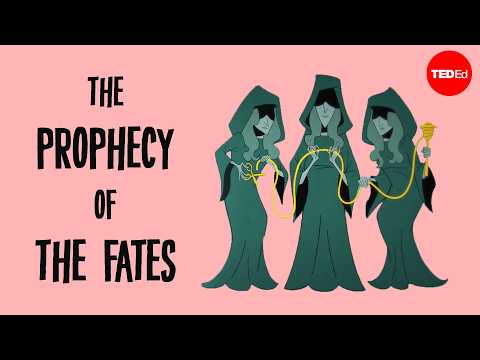
Meleager’s fate was decided by the Fates.
Le destin de Méléagre a été décidé par les Parques.
Focus on the theme of destiny.
The museum has Meleager’s statue.
Le musée possède la statue de Méléagre.
Possessive used for an artifact.
Meleager’s decision to help Atalanta was brave.
La décision de Méléagre d'aider Atalante était courageuse.
Possessive with a complex noun phrase.
The poet describes Meleager’s courage in detail.
Le poète décrit le courage de Méléagre en détail.
Possessive used in literary context.
Meleager’s death caused great pain to his family.
La mort de Méléagre a causé une grande douleur à sa famille.
Possessive with 'death'.
We studied Meleager’s role in the Calydonian hunt.
Nous avons étudié le rôle de Méléagre dans la chasse de Calydon.
Possessive indicating participation.
Meleager’s spear was a gift from his father.
La lance de Méléagre était un cadeau de son père.
Possessive used for an heirloom.
The painting shows Meleager’s final moments.
Le tableau montre les derniers instants de Méléagre.
Possessive used for a specific time period.
Meleager’s tragic end is a classic theme in Greek art.
La fin tragique de Méléagre est un thème classique de l'art grec.
Possessive with a compound noun 'tragic end'.
The conflict arose from Meleager’s refusal to listen to his uncles.
Le conflit est né du refus de Méléagre d'écouter ses oncles.
Possessive with a gerund phrase.
Meleager’s brand is a powerful metaphor for mortality.
Le tison de Méléagre est une métaphore puissante de la mortalité.
Symbolic use of the possessive.
Scholars often compare Meleager’s story to that of Achilles.
Les chercheurs comparent souvent l'histoire de Méléagre à celle d'Achille.
Comparative possessive structure.
Meleager’s sisters were transformed into birds after his death.
Les sœurs de Méléagre ont été transformées en oiseaux après sa mort.
Possessive used in a transformation myth.
The epic highlights Meleager’s prowess as a hunter.
L'épopée souligne les prouesses de Méléagre en tant que chasseur.
Possessive with 'prowess'.
Meleager’s mother acted out of a sense of duty to her brothers.
La mère de Méléagre a agi par sens du devoir envers ses frères.
Possessive used to explain motivation.
The discovery of Meleager’s tomb remains a goal for archaeologists.
La découverte du tombeau de Méléagre reste un objectif pour les archéologues.
Possessive with 'tomb'.
Meleager’s Garland is a significant collection of Hellenistic poetry.
La Couronne de Méléagre est une collection importante de poésie hellénistique.
Refers to Meleager of Gadara, not the hero.
The artist captured the subtle nuances of Meleager’s grief.
L'artiste a capturé les nuances subtiles de la douleur de Méléagre.
Possessive with an abstract emotion.
Meleager’s role in the Iliad serves as a didactic paradigm.
Le rôle de Méléagre dans l'Iliade sert de paradigme didactique.
Academic use of the possessive.
The iconography of Meleager’s sarcophagi evolved over several centuries.
L'iconographie des sarcophages de Méléagre a évolué sur plusieurs siècles.
Possessive with a plural noun.
Meleager’s internal struggle reflects the tension between oikos and polis.
La lutte interne de Méléagre reflète la tension entre l'oikos et la polis.
Thematic analysis using possessive.
The poet’s choice to focus on Meleager’s death emphasizes the theme of inevitability.
Le choix du poète de se concentrer sur la mort de Méléagre souligne le thème de l'inévitabilité.
Possessive in a literary critique.
Meleager’s relationship with Atalanta challenged traditional gender roles.
La relation de Méléagre avec Atalante a remis en question les rôles de genre traditionnels.
Possessive used in social analysis.
We must account for Meleager’s absence in later versions of the myth.
Nous devons tenir compte de l'absence de Méléagre dans les versions ultérieures du mythe.
Possessive with 'absence'.
Meleager’s brand serves as a quintessential example of the external soul motif.
Le tison de Méléagre sert d'exemple quintessentiel du motif de l'âme externe.
Highly academic thematic use.
The scholar argued that Meleager’s tragedy is rooted in the subversion of heroic norms.
Le chercheur a soutenu que la tragédie de Méléagre est enracinée dans la subversion des normes héroïques.
Complex possessive attribution.
Meleager’s Gadarene origin is central to understanding his poetic innovations.
L'origine gadarénienne de Méléagre est centrale pour comprendre ses innovations poétiques.
Refers to the poet Meleager.
The fluidity of Meleager’s myth allows for various socio-political interpretations.
La fluidité du mythe de Méléagre permet diverses interprétations socio-politiques.
Possessive with 'myth'.
Meleager’s agonizing demise is depicted with visceral intensity in the late Roman reliefs.
La fin agonisante de Méléagre est dépeinte avec une intensité viscérale dans les reliefs romains tardifs.
Possessive with 'demise'.
One cannot overlook Meleager’s agency, despite the deterministic nature of the prophecy.
On ne peut ignorer le libre arbitre de Méléagre, malgré la nature déterministe de la prophétie.
Philosophical use of the possessive.
The intertextual echoes of Meleager’s story in modern literature are profound.
Les échos intertextuels de l'histoire de Méléagre dans la littérature moderne sont profonds.
Literary theory context.
Meleager’s sisters’ lamentation is a recurring trope in classical elegy.
La lamentation des sœurs de Méléagre est un trope récurrent dans l'élégie classique.
Double possessive structure.
تلازمات شائعة
العبارات الشائعة
— The piece of wood that represented his life.
The fire consumed Meleager’s life-log.
— The narrative of the Calydonian Boar Hunt.
The story of Meleager’s hunt is told by Ovid.
— His brave actions during his life.
Meleager’s heroic deeds were sung by bards.
— The personality trait that led to his death.
Meleager’s tragic flaw was his temper.
— The help he received from the gods.
Meleager’s divine protection eventually failed.
يُخلط عادةً مع
Menelaus was the King of Sparta; Meleager was the Prince of Calydon.
This is the plural name for his sisters, not a possessive form.
This is an adjective, whereas Meleager’s is a possessive noun.
تعبيرات اصطلاحية
— A metaphor for something that determines the length of one's life or a hidden vulnerability.
The secret document was the CEO's Meleager’s brand.
Literary— To be inconsolable in grief.
They wept like Meleager’s sisters after the tragedy.
Poetic— A gift that causes jealousy or conflict.
The promotion was a Meleager’s gift that split the team.
Academic— To have absolute power over someone else's life.
The dictator held Meleager’s log over the prisoners.
Rare— A massive, cooperative effort involving many experts.
The search for the vaccine was a modern Meleager’s hunt.
Metaphorical— A decision that favors love or merit over family duty.
His Meleager’s choice to marry for love cost him his inheritance.
Literary— Deliberately destroying someone's future or life.
By leaking the scandal, she was burning Meleager’s log.
Rare— The primary or most effective tool in a group effort.
Her research was the Meleager’s spear of the project.
Poetic— The remnants of a once-great life or career.
The bankrupt company was nothing but Meleager’s ash.
Poetic— Endless or transformative sorrow.
The rain felt like Meleager’s sisters' tears.
Poeticسهل الخلط
Base name vs possessive.
Meleager is the person; Meleager’s is something he owns.
Meleager was a hero. Meleager’s spear was sharp.
Similar phonetic structure.
A manager runs a business; Meleager is a Greek hero.
The manager’s office vs Meleager’s palace.
Spelling and sound.
Meager means small or lacking; Meleager is a name.
A meager meal vs Meleager’s feast.
Both start with 'Mel' and relate to sadness.
Melancholy is a feeling; Meleager’s is a possessive name.
His melancholy was as deep as Meleager’s grief.
Similar Greek root.
Meles is a river god; Meleager is a human hero.
Meles’s waters vs Meleager’s blood.
أنماط الجُمل
Meleager’s [noun] is [adjective].
Meleager’s dog is big.
This is Meleager’s [noun].
This is Meleager’s spear.
Meleager’s [noun] was [verb] by [noun].
Meleager’s life was taken by fire.
The [noun] of Meleager’s [noun] is [adjective].
The tragedy of Meleager’s death is famous.
Meleager’s [abstract noun] reflects [concept].
Meleager’s grief reflects ancient values.
The [literary term] of Meleager’s [noun] suggests [theory].
The iconography of Meleager’s sarcophagi suggests Roman stoicism.
Neither [noun] nor Meleager’s [noun] could [verb].
Neither the king nor Meleager’s mother could stop the fire.
Meleager’s [noun], though [adjective], was [adjective].
Meleager’s brand, though small, was powerful.
عائلة الكلمة
الأسماء
الصفات
مرتبط
كيفية الاستخدام
Very Low (Specialized)
-
Meleagers fate
→
Meleager’s fate
Missing apostrophe in the possessive form.
-
Meleageres brand
→
Meleager’s brand
Incorrect spelling of the base name.
-
Meleager's (with soft g)
→
Meleager’s (with hard g)
Mispronunciation of the name.
-
Using it for Menelaus
→
Meleager’s
Confusing two different mythological figures.
-
Meleager’s heel
→
Achilles’s heel
Misattributing a famous mythological trait.
نصائح
Apostrophe First
Always put the apostrophe before the 's'. Meleager is a singular name, so it follows the standard 's rule.
Think Mythology
If you see this word, immediately look for clues related to ancient Greece, hunting, or tragedy.
The 'Eager' Trick
Remember the word 'eager' is inside the name: Mel-eager. This helps you spell it correctly every time.
Academic Tone
Use this word when you want to sound more scholarly in your writing about literature or art.
The Brand Motif
Understand that 'Meleager’s brand' is a common literary motif for a life-link or a fatal weakness.
Four Syllables
Don't rush the name. Count the syllables: 1(Mel) 2(e) 3(a) 4(ger). The 's' is an extra sound at the end.
Check the Referent
Make sure you know if the text is talking about the hero Meleager or the poet Meleager of Gadara.
Avoid Overuse
In a long text, alternate between 'Meleager’s' and 'his' or 'the hero's' to keep the prose smooth.
Visual Cues
In paintings, Meleager’s presence is often signaled by a boar's head or a hunting spear.
Contrast with Others
Compare Meleager’s fate with other heroes to show a deeper understanding of Greek tragedy.
احفظها
وسيلة تذكّر
Mel is Eager to hunt, but Meleager’s life is in the fire.
ربط بصري
Imagine a man holding a spear in one hand and a burning log in the other. The log is Meleager’s life.
Word Web
تحدٍّ
Try to use 'Meleager’s' in a sentence that also uses the word 'ephemeral'.
أصل الكلمة
From the Ancient Greek name Μελέαγρος (Meléagros). It is a compound name that has been part of Greek oral tradition for millennia.
المعنى الأصلي: Likely derived from 'melein' (to care for) and 'agros' (field), though some suggest 'melas' (black).
Indo-European > Hellenic > Greek.السياق الثقافي
The myth involves themes of fratricide and filicide, which may be sensitive for some audiences.
Commonly taught in university-level 'Intro to Mythology' courses.
تدرّب في الحياة الواقعية
سياقات واقعية
Art History
- Meleager’s pose
- Meleager’s relief
- Meleager’s iconography
- Meleager’s sarcophagus
Classical Literature
- Meleager’s paradigm
- Meleager’s narrative
- Meleager’s tragedy
- Meleager’s lineage
Mythology Studies
- Meleager’s brand
- Meleager’s hunt
- Meleager’s sisters
- Meleager’s mother
Opera/Music
- Meleager’s aria
- Meleager’s role
- Meleager’s character
- Meleager’s theme
Archaeology
- Meleager’s tomb
- Meleager’s city
- Meleager’s artifacts
- Meleager’s kingdom
بدايات محادثة
"Have you ever read the story of Meleager’s hunt in Ovid?"
"What do you think about Meleager’s decision to give the hide to Atalanta?"
"Do you think Meleager’s fate was truly unavoidable?"
"How does Meleager’s story compare to the myth of Achilles?"
"Have you seen Rubens' painting of Meleager’s triumph?"
مواضيع للكتابة اليومية
Reflect on the idea of Meleager’s brand. What is the 'log' in your own life that you protect?
Write a short story from the perspective of one of Meleager’s sisters.
Analyze the moral complexity of Meleager’s mother's decision to burn the log.
If you were at Meleager’s hunt, which hero would you want to be?
How does the concept of Meleager’s fate influence your view on destiny?
الأسئلة الشائعة
10 أسئلةYes, it is the possessive form of the proper name Meleager, used in English to denote ownership or association with the Greek hero.
It is typically pronounced mel-ee-AY-ger-z or me-LEE-uh-ger-z, with four syllables and a 'z' sound at the end.
It refers to the piece of wood that determined his lifespan. If the brand burned completely, Meleager would die.
In most versions of the myth, his wife was Cleopatra (not the Egyptian queen), though his heart belonged to Atalanta.
The name Meleagris is used for turkeys, but the possessive form Meleager’s is almost exclusively mythological or literary.
Because it requires specific knowledge of classical mythology and is used in highly academic or literary registers.
No, that would be grammatically incorrect unless you are referring to multiple people named Meleager, which is very rare.
According to the myth, Meleager’s sisters were so grief-stricken that they were turned into guinea fowls.
They are both possessive forms of hero names, but they refer to different people and different stories.
You can find it on Roman sarcophagi, in paintings by Rubens, and in various classical vase paintings.
اختبر نفسك 200 أسئلة
Write a sentence using 'Meleager’s' and 'fate'.
Well written! Good try! Check the sample answer below.
Describe Meleager’s hunt in three sentences.
Well written! Good try! Check the sample answer below.
Explain the significance of Meleager’s brand.
Well written! Good try! Check the sample answer below.
Compare Meleager’s tragedy to another Greek myth.
Well written! Good try! Check the sample answer below.
Write a short dialogue about Meleager’s choice.
Well written! Good try! Check the sample answer below.
How would you describe Meleager’s mother's feelings?
Well written! Good try! Check the sample answer below.
Write a museum label for Meleager’s sarcophagus.
Well written! Good try! Check the sample answer below.
Summarize Meleager’s story for a child.
Well written! Good try! Check the sample answer below.
Use 'Meleager’s' in a sentence about art history.
Well written! Good try! Check the sample answer below.
Create a poem that mentions Meleager’s sisters.
Well written! Good try! Check the sample answer below.
Write a letter from Meleager’s perspective.
Well written! Good try! Check the sample answer below.
Explain why Meleager’s name is capitalized.
Well written! Good try! Check the sample answer below.
Discuss the theme of mortality in Meleager’s myth.
Well written! Good try! Check the sample answer below.
Write a sentence about Meleager’s spear.
Well written! Good try! Check the sample answer below.
Describe the scene of Meleager’s death.
Well written! Good try! Check the sample answer below.
What is the lesson of Meleager’s story?
Well written! Good try! Check the sample answer below.
Use 'Meleager’s' in a complex sentence with a gerund.
Well written! Good try! Check the sample answer below.
Write a news headline about Meleager’s hunt.
Well written! Good try! Check the sample answer below.
Describe Meleager’s relationship with Atalanta.
Well written! Good try! Check the sample answer below.
How does Meleager’s story make you feel?
Well written! Good try! Check the sample answer below.
Pronounce 'Meleager’s' correctly three times.
Read this aloud:
قلت:
Speech recognition is not supported in your browser. Try Chrome or Edge.
Tell the story of Meleager’s hunt in your own words.
Read this aloud:
قلت:
Speech recognition is not supported in your browser. Try Chrome or Edge.
Discuss the irony of Meleager’s fate with a partner.
Read this aloud:
قلت:
Speech recognition is not supported in your browser. Try Chrome or Edge.
Explain why Meleager’s mother was so angry.
Read this aloud:
قلت:
Speech recognition is not supported in your browser. Try Chrome or Edge.
Describe a painting of Meleager’s death.
Read this aloud:
قلت:
Speech recognition is not supported in your browser. Try Chrome or Edge.
Argue whether Meleager’s choice was right or wrong.
Read this aloud:
قلت:
Speech recognition is not supported in your browser. Try Chrome or Edge.
Summarize Meleager’s myth in 30 seconds.
Read this aloud:
قلت:
Speech recognition is not supported in your browser. Try Chrome or Edge.
Explain the 'Meleager’s brand' idiom.
Read this aloud:
قلت:
Speech recognition is not supported in your browser. Try Chrome or Edge.
Talk about Meleager’s sisters and their transformation.
Read this aloud:
قلت:
Speech recognition is not supported in your browser. Try Chrome or Edge.
Compare Meleager’s spear to other mythological weapons.
Read this aloud:
قلت:
Speech recognition is not supported in your browser. Try Chrome or Edge.
How would you use Meleager’s in a conversation about art?
Read this aloud:
قلت:
Speech recognition is not supported in your browser. Try Chrome or Edge.
What is the most tragic part of Meleager’s life?
Read this aloud:
قلت:
Speech recognition is not supported in your browser. Try Chrome or Edge.
Practice the stress pattern of Meleager’s.
Read this aloud:
قلت:
Speech recognition is not supported in your browser. Try Chrome or Edge.
Describe the Calydonian Boar from Meleager’s perspective.
Read this aloud:
قلت:
Speech recognition is not supported in your browser. Try Chrome or Edge.
Discuss the role of the Fates in Meleager’s story.
Read this aloud:
قلت:
Speech recognition is not supported in your browser. Try Chrome or Edge.
Why is Meleager’s story still told today?
Read this aloud:
قلت:
Speech recognition is not supported in your browser. Try Chrome or Edge.
Explain the difference between Meleager and Menelaus.
Read this aloud:
قلت:
Speech recognition is not supported in your browser. Try Chrome or Edge.
Talk about the 'Meleager Painter' and his vases.
Read this aloud:
قلت:
Speech recognition is not supported in your browser. Try Chrome or Edge.
Describe Meleager’s father and his mistake.
Read this aloud:
قلت:
Speech recognition is not supported in your browser. Try Chrome or Edge.
What would you say to Meleager’s mother?
Read this aloud:
قلت:
Speech recognition is not supported in your browser. Try Chrome or Edge.
Listen to the pronunciation of Meleager’s. Which syllable is stressed?
Identify the word 'Meleager’s' in a short audio clip about myths.
Listen to a description of Meleager’s hunt and list the participants.
What object is mentioned as being Meleager’s in the audio?
Listen to a lecture on Ovid and note how the speaker uses Meleager’s.
True or False: The speaker said Meleager’s life was tied to a ring.
Listen for the 'z' sound at the end of Meleager’s.
How many times did the speaker say Meleager’s?
Identify the emotion in the speaker's voice when discussing Meleager’s death.
Listen to a poem and identify the line with Meleager’s.
What is the speaker's opinion on Meleager’s choice?
Listen to a guide describing Meleager’s sarcophagus.
Which name did the speaker use: Meleager or Meleager’s?
Listen to the story and explain why Meleager’s sisters are crying.
Identify the historical period mentioned in the talk about Meleager’s.
/ 200 correct
Perfect score!
Summary
The word Meleager’s is a C2-level possessive noun used to attribute actions, artifacts, or tragic elements to the Greek hero Meleager. For example, 'Meleager’s brand' refers to the piece of wood that held his life force.
- Meleager’s is the possessive form of the name of a famous Greek hero from Calydon.
- It is primarily used in academic, artistic, and literary contexts to discuss his tragic myth.
- The word identifies specific items like his fatal brand or his sisters, the Meleagrides.
- Correct usage requires an apostrophe before the 's' and capitalization of the proper noun.
Apostrophe First
Always put the apostrophe before the 's'. Meleager is a singular name, so it follows the standard 's rule.
Think Mythology
If you see this word, immediately look for clues related to ancient Greece, hunting, or tragedy.
The 'Eager' Trick
Remember the word 'eager' is inside the name: Mel-eager. This helps you spell it correctly every time.
Academic Tone
Use this word when you want to sound more scholarly in your writing about literature or art.
محتوى ذو صلة
شاهدها في الفيديوهات
مزيد من كلمات Culture
creon
C2كريون هو حاكم طيبة في الأساطير اليونانية، ويلعب دوراً مركزياً في مآسي سوفوكليس.
ethnic
B2الشخص الإثني هو فرد ينتمي إلى مجموعة عرقية أو ثقافية معينة.
wukong’s
B1صيغة الملكية لـ 'ووكونغ'، تشير إلى الأشياء التي تنتمي إلى ملك القرود.
germanic
B2يتعلق بعائلة اللغات التي تشمل الإنجليزية والألمانية. القبائل الجرمانية أثرت في تاريخ أوروبا.
hercules
C1هرقل هو بطل في الأساطير الرومانية اشتهر بقوته الخارقة.
moroccan
A2متعلق بالمغرب أو شعبه أو ثقافته. المغربي هو مواطن أو سكان المغرب.
daedalus
B2دايدالوس هو مهندس ومخترع يوناني أسطوري صمم المتاهة للملك مينوس في كريت.
oedipus’
C1Oedipus' هي صيغة الملكية لاسم أوديب، وتشير إلى شيء يخصه أو يرتبط به.
turkish
A1متعلق بتركيا أو شعبها أو لغتها.
imp
B2العفريت هو شيطان صغير أو جنية مشاكسة في الفولكلور.

