mischief في 30 ثانية
- Mischief is a noun used to describe playful but troublesome behavior, typically associated with children, pets, or tricksters who cause minor annoyance without real malice.
- Grammatically, it is an uncountable noun, meaning you should use 'some' or 'much' rather than 'a' or 'many' when describing instances of it.
- Commonly used in idioms like 'up to mischief' or 'get into mischief,' it can also have a serious legal meaning involving minor property damage or vandalism.
- It is often paired with adjectives like 'harmless,' 'pure,' or 'malicious' to define the severity and intent behind the naughty or disruptive actions.
The word mischief is a nuanced noun that captures the essence of playful misbehavior. It occupies a unique space in the English language, sitting comfortably between innocent play and minor wrongdoing. When we speak of mischief, we are usually referring to actions that cause a bit of trouble, annoyance, or perhaps very slight damage, but the defining characteristic is the lack of deep-seated malice. It is the realm of the trickster, the bored child, and the curious pet. To understand mischief, one must understand the intent behind the action; it is driven by curiosity, a desire for entertainment, or a sense of rebellion against mundane rules rather than a desire to truly hurt someone or destroy property in a significant way.
- The Core Essence
- Mischief is fundamentally about the 'spirit' of the act. It is often described as 'playful' or 'harmless,' though the person on the receiving end might find it quite irritating. It is the act of the schoolboy hiding his teacher's chalk, or the dog shredding a roll of toilet paper while the owner is at work.
- Social Context
- In social settings, mischief is often used to describe a person's character. Someone with a 'glint of mischief' in their eyes is perceived as witty, energetic, and perhaps a bit unpredictable. It suggests a person who doesn't take life too seriously and enjoys a good-natured prank.
The children were remarkably quiet, which usually meant they were up to some mischief in the kitchen.
Historically, the word has evolved from the Old French 'meschef,' which meant misfortune or a bad result. Over centuries, the severity of the word softened. While it once implied a tragic accident, it now leans heavily toward the 'naughty' side of the spectrum. This evolution is important because it explains why we still use the word in legal contexts, such as 'criminal mischief,' which refers to the intentional damage of property. Even in a legal sense, it often implies a lower level of crime than 'malicious destruction,' though the consequences can still be serious. The duality of the word—ranging from a toddler's mess to a teenager's graffiti—makes it a versatile tool for English speakers.
He was a man of great wit, but his love for mischief often landed him in hot water with the authorities.
When using this word, consider the 'mischief-maker.' This is a person who enjoys stirring the pot or creating small disruptions. In many cultures, folklore is filled with mischief-makers, such as the Norse god Loki or the Greek god Hermes. These figures are not necessarily villains; they are catalysts for change, using their wit to challenge the status quo. This cultural background adds a layer of intelligence to the word. Mischief isn't just about being bad; it's about being clever enough to break the rules in an interesting way. Whether it's a computer hacker performing 'digital mischief' or a comedian using 'satirical mischief,' the word implies a level of intentionality and creative energy.
- Visual Cues
- Think of a 'mischievous smile.' It is usually lopsided, with one corner of the mouth turned up higher than the other, and eyes that are bright and darting. This visual representation perfectly captures the 'mischief' noun—it is dynamic, slightly off-balance, and full of hidden intent.
The puppy’s mischief was forgiven the moment he wagged his tail and looked up with big, innocent eyes.
In modern usage, mischief is frequently paired with verbs like 'make,' 'cause,' or 'get into.' 'Getting into mischief' is perhaps the most common idiom, suggesting a journey or a transition from a state of boredom into a state of active, albeit minor, trouble. It is a word that parents use with a sigh, friends use with a chuckle, and lawyers use with a stern face. This breadth of application is what makes 'mischief' a B1-level essential; it allows you to describe a wide range of human (and animal) behaviors with a single, evocative term. By mastering its use, you can describe anything from a harmless prank to a significant social disruption, all while maintaining the correct tone for your audience.
The festival was a time for music, dancing, and a little bit of harmless mischief in the streets.
- The 'Harmless' Qualifier
- You will very often see the word 'harmless' placed before mischief. This is a redundant but common way to emphasize that no real damage was done. It reinforces the idea that the act was performed for fun, not for profit or out of hate.
The computer virus was designed not to steal data, but to cause mischief by changing all the desktop wallpapers to pictures of cats.
Using mischief correctly in a sentence requires an understanding of its grammatical role as an uncountable noun and its typical collocations. Because it is uncountable, you cannot say 'he did many mischiefs.' Instead, you must use quantifiers like 'a lot of,' 'some,' or 'a bit of.' This section will guide you through the various ways to integrate this word into your writing and speech, ensuring you sound natural and precise.
- Common Verb Pairings
- The most frequent verbs used with mischief are 'make,' 'cause,' 'do,' and 'get into.' 'Get into mischief' is particularly common when talking about children or pets who find trouble when left unsupervised. 'Cause mischief' is often used when the trouble affects other people or systems.
If you leave those two boys alone for five minutes, they are bound to get into mischief.
Another important aspect of using 'mischief' is the use of adjectives to specify the type of trouble. Adjectives like 'pure,' 'utter,' 'harmless,' 'playful,' and 'malicious' (though the latter is less common) help define the severity. 'Pure mischief' suggests that the action was done solely for the sake of causing trouble, often with a sense of joy. 'Harmless mischief' is a defensive phrase used to downplay the consequences of an action. When you want to describe the look on someone's face, you might say they have 'an air of mischief' or 'a hint of mischief' about them.
The storm caused a great deal of mischief in the garden, knocking over pots and scattering leaves everywhere.
In formal or legal writing, 'mischief' takes on a more technical meaning. You might encounter the phrase 'public mischief,' which refers to the crime of wasting police time by purposely providing false information. In these contexts, the word loses its 'playful' connotation and becomes a serious legal term. However, even here, it is treated as an uncountable noun. For example, 'He was charged with public mischief' is the standard phrasing. Understanding these different registers—from the nursery to the courtroom—is key to using the word effectively.
- Prepositional Phrases
- We often use 'out of' to describe the motivation: 'She did it out of mischief.' We also use 'up to' to describe the state of being involved in it: 'What mischief are you up to now?' These idiomatic structures are essential for sounding like a native speaker.
There was a touch of mischief in her voice as she told the story of how she tricked her brother.
When describing the result of an action, 'mischief' can be used to emphasize the annoyance caused. For instance, 'The prank caused more mischief than he had intended.' Here, the word highlights the unforeseen consequences of a supposedly simple joke. This usage is very common in narrative writing, where authors want to show the ripple effects of a character's actions. It allows for a subtle critique of the character's judgment without labeling them as 'evil' or 'bad.' It is the perfect word for describing the 'grey area' of human behavior.
The cat, sensing mischief, waited until the guests were seated before jumping onto the dining table.
- Register and Tone
- While 'mischief' is a common word, it can sound slightly old-fashioned or literary in certain contexts. In very casual slang, people might use 'trouble' or 'messing around,' but 'mischief' remains the most precise word for that specific blend of play and problem-making.
The internet is a breeding ground for digital mischief, where trolls and pranksters thrive.
You will encounter the word mischief in a variety of real-world settings, ranging from domestic life to high-stakes legal environments. Its versatility is its greatest strength, allowing it to adapt to different tones and intentions. Understanding where you are likely to hear it will help you grasp its practical application and the subtle social cues it carries.
- In the Home and School
- The most common place to hear 'mischief' is in conversations about children and pets. Parents often use it to describe the 'quiet' periods that precede a mess. Teachers might use it to describe a student who is not being 'bad' in a malicious way but is constantly distracting others with jokes or small pranks.
'I can see the mischief in your eyes, young man,' the grandmother said with a wink.
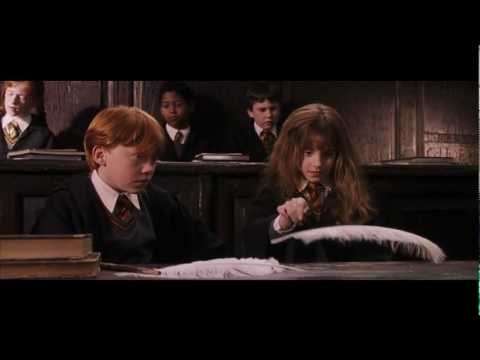
In literature and film, 'mischief' is a staple word for describing characters who drive the plot through trickery. One of the most famous modern references is from the 'Harry Potter' series, where the 'Marauder's Map' is activated with the phrase 'I solemnly swear that I am up to no good' and deactivated with 'Mischief managed.' This has cemented the word in the minds of millions of readers as a symbol of rule-breaking that is ultimately for a good cause or just for fun. You will also hear it in classic literature, such as Shakespeare's plays, where characters like Puck or Ariel are described as 'spirits of mischief.'
The teenagers were arrested for mischief after they were caught soaping the town's main fountain.
In the workplace, 'mischief' might be used to describe office pranks or the behavior of a 'difficult' colleague who enjoys creating minor conflicts. However, it is usually used with a lighter touch than words like 'harassment' or 'insubordination.' If a boss says, 'Let's have no more of this mischief,' they are usually giving a firm but not yet disciplinary warning. It implies that the behavior is unprofessional and distracting, but perhaps not yet a fireable offense. This 'middle ground' makes it a very useful word for managing social dynamics in a professional setting.
- Digital and Online Spaces
- In the age of the internet, 'mischief' has found a new home in describing the actions of 'trolls' or 'hacktivists.' When someone hacks a website to display a funny message rather than to steal credit card numbers, it is often described as 'digital mischief.' It captures the spirit of using technology to play tricks on a large scale.
The prankster's YouTube channel was dedicated to 'social mischief,' which mostly involved confusing strangers in public.
Finally, you will hear 'mischief' in legal and police terminology. In many jurisdictions, 'mischief' is a specific category of offense. If you hear a news anchor say, 'The suspect was charged with three counts of mischief,' they are referring to property damage. This is the most serious use of the word and is a good reminder that while mischief can be playful, it can also have legal consequences. The context—whether it's a playground or a police station—completely changes the 'weight' of the word, but the underlying idea of 'causing trouble' remains the same.
The old man looked back on his youth as a time of great mischief and very little responsibility.
Even for intermediate learners, the word mischief can be tricky. Most errors stem from its countability, its confusion with the adjective form, or a misunderstanding of its emotional weight. By identifying these common pitfalls, you can avoid sounding unnatural and ensure your meaning is always clear.
- The Countability Trap
- As mentioned before, 'mischief' is an uncountable noun. Learners often try to pluralize it as 'mischiefs' or use 'a mischief.' This is incorrect. If you want to talk about specific instances, you must say 'acts of mischief' or 'instances of mischief.' For example, 'He committed several mischiefs' should be 'He committed several acts of mischief.'
Incorrect: The cat did a mischief in the kitchen.
Correct: The cat caused some mischief in the kitchen.
Another frequent mistake is confusing the noun 'mischief' with the adjective 'mischievous.' Because they look similar, learners often swap them. 'Mischief' is the thing you do; 'mischievous' is the kind of person you are. You cannot say 'He is very mischief.' You must say 'He is very mischievous' or 'He is full of mischief.' Additionally, the pronunciation of 'mischievous' is a common stumbling block even for native speakers, who often add an extra syllable (mis-CHEE-vee-ous). The correct pronunciation is MIS-chi-vuhs.
Incorrect: He has a mischievous of humor.
Correct: He has a sense of mischief.
A more subtle mistake involves the 'severity' of the word. Using 'mischief' to describe a serious crime like arson or assault is inappropriate and can sound like you are downplaying the victim's suffering. Mischief is for broken windows, not broken lives. Conversely, using it for something completely normal and allowed, like 'He did the mischief of eating his lunch early,' sounds strange because eating lunch isn't 'trouble.' The word requires a specific 'flavor' of rule-breaking that is annoying or slightly damaging but not catastrophic.
- The 'Make' vs. 'Do' Confusion
- While 'do mischief' is technically correct in some older texts, modern English heavily prefers 'make mischief' or 'cause mischief.' Using 'do' can sound a bit stiff or non-native in a casual conversation. 'Make mischief' often implies stirring up trouble between people (like spreading rumors), while 'cause mischief' is more general.
Stop trying to make mischief between me and my sister!
Finally, be careful with the phrase 'up to mischief.' It is a very common idiom, but it is almost always used with the verb 'to be.' You are 'up to mischief.' You don't 'do up to mischief' or 'have up to mischief.' It describes a state of being currently involved in something naughty. If you use it incorrectly, the whole sentence can fall apart. For example, 'He was up to some mischief' is perfect, but 'He made some up to mischief' is nonsensical. Mastering these small idiomatic quirks will greatly improve your fluency.
The mischief was done; there was no way to put the glitter back in the bottle.
To truly master mischief, it helps to see how it compares to its synonyms. English has many words for 'trouble,' and choosing the right one depends on the level of severity, the intent, and the context. This section explores the alternatives and explains when to use each one.
- Mischief vs. Trouble
- 'Trouble' is the most general word. It can be accidental, serious, or minor. 'Mischief' is a specific *kind* of trouble—it is intentional and usually playful. If you are in 'trouble,' you might be facing a serious punishment. If you are in 'mischief,' you are likely just being naughty.
- Mischief vs. Prank
- A 'prank' is a single, specific act (like a 'practical joke'). 'Mischief' is a more general state or a series of actions. You can play a prank as part of your mischief. Pranks are usually aimed at a specific person to get a laugh, while mischief can be more aimless.
His mischief usually took the form of elaborate pranks on his roommates.
Other words include 'antics' and 'shenanigans.' 'Antics' refers to silly, playful behavior that is often funny to watch (like a monkey's antics). 'Shenanigans' is a more informal, often plural word for secret or dishonest activities that are usually not very serious. You might hear someone say, 'I'm tired of your shenanigans!' This is very similar to 'mischief' but feels a bit more chaotic and perhaps slightly more annoying. 'Naughtiness' is another close synonym, but it is almost exclusively used for children. You wouldn't usually call a 30-year-old's behavior 'naughtiness,' but you could call it 'mischief.'
The CEO's financial mischief was eventually uncovered by the auditors.
On the more serious side, we have 'malice' and 'vandalism.' 'Malice' is the desire to cause pain or injury, which is the opposite of the 'playful' intent of mischief. 'Vandalism' is the specific act of damaging property. While 'criminal mischief' and 'vandalism' overlap, 'mischief' is the broader category. If you want to emphasize that someone is a 'troublemaker' without being too harsh, 'mischief-maker' is the perfect term. It suggests a personality trait rather than a criminal record. Using these alternatives correctly will help you paint a more precise picture of the behavior you are describing.
- Mischief vs. Devilry
- 'Devilry' (or 'deviltry') is a much stronger word. It implies something wicked or even supernatural. While 'mischief' is often cute or minor, 'devilry' suggests a darker, more dangerous kind of trouble. Use 'devilry' only when the actions are truly shocking or sinister.
What began as simple mischief quickly spiraled into something much more serious.
In summary, choose 'mischief' when the trouble is intentional but not hateful. Use 'trouble' for general problems, 'prank' for specific jokes, 'antics' for funny behavior, and 'vandalism' for property damage. By understanding these boundaries, you can use 'mischief' with the confidence of a native speaker, knowing exactly which 'flavor' of trouble you are communicating to your audience.
She was the queen of mischief in our high school, always finding ways to bend the rules without breaking them.
How Formal Is It?
حقيقة ممتعة
In the 14th century, 'mischief' was a much darker word, often used to describe physical injury or even death. Over time, it 'lightened up' to describe the playful trouble we know today.
دليل النطق
- Pronouncing it as mis-CHIEF (stressing the second syllable).
- Adding an extra syllable to the adjective form: mis-CHEE-vee-ous (incorrect) instead of MIS-chi-vuhs (correct).
- Confusing the 'ie' spelling with 'ei'.
- Pronouncing the 'f' as a 'v'.
- Treating it as a countable noun (e.g., 'a mischief').
مستوى الصعوبة
Common in literature and news, easy to recognize.
Tricky due to uncountable nature and spelling.
Idioms like 'up to mischief' are essential for natural speech.
Clear pronunciation, but can be confused with 'mischievous'.
ماذا تتعلّم بعد ذلك
المتطلبات الأساسية
تعلّم لاحقاً
متقدم
قواعد يجب معرفتها
Uncountable Nouns
We say 'much mischief' not 'many mischiefs'.
Adjective vs. Noun
He is 'mischievous' (adj), but he does 'mischief' (noun).
Prepositional Idioms
Use 'up to' or 'into' with mischief.
Motivation with 'Out of'
She did it 'out of' mischief.
Possessive Gerunds
The cat's mischief involved 'shredding' the curtains.
أمثلة حسب المستوى
The cat did some mischief with the yarn.
The cat played with the yarn and made a mess.
Mischief is used here as an uncountable noun.
The little boy is full of mischief.
The boy likes to do naughty things.
Full of [noun] is a common pattern.
Stop that mischief right now!
Stop doing that naughty thing.
Imperative sentence.
They like to make mischief in school.
They like to cause small trouble in class.
Make mischief is a common verb-noun pair.
Is there any mischief in the house?
Is anyone doing something naughty?
Any is used for questions with uncountable nouns.
The dog's mischief was eating the shoe.
The dog was naughty and ate the shoe.
Possessive noun + mischief.
I saw the mischief in her eyes.
I saw that she wanted to play a trick.
In her eyes describes where the feeling is seen.
It was just a little mischief.
It was only a small bit of trouble.
A little is used with uncountable nouns.
The children were up to some mischief in the garden.
The kids were doing something naughty outside.
Up to mischief is a very common idiom.
He caused a lot of mischief at the party.
He made many small problems at the party.
Cause mischief is a formal way to say make trouble.
She has a talent for mischief.
She is very good at being naughty.
Talent for [noun].
The puppy gets into mischief when he is bored.
The puppy does bad things when he has nothing to do.
Gets into mischief is a phrasal-like expression.
The mischief started when the teacher left the room.
The trouble began when the teacher walked out.
Mischief as the subject of the sentence.
We don't want any mischief here.
We want everyone to behave well.
Any used in a negative sentence.
His mischief was harmless, but annoying.
His tricks didn't hurt anyone, but they were bothersome.
Harmless is a common adjective for mischief.
There was a lot of mischief during the holiday.
Many small tricks happened during the vacation.
During indicates the time period.
The teenagers were warned about the consequences of their mischief.
The teens were told they would be punished for their trouble.
Consequences of [noun].
He had a look of pure mischief on his face.
He looked like he was definitely going to play a trick.
Pure mischief emphasizes the intent.
The cat’s latest mischief involved knocking over all the plants.
The cat's newest naughty act was hitting the plants.
Involved + gerund (-ing).
I suspect there is some mischief going on in the basement.
I think someone is doing something naughty downstairs.
Going on means happening.
She did it out of mischief, not because she was angry.
She did it for fun, not because she was mad.
Out of [noun] describes the motivation.
The storm caused some mischief with the power lines.
The wind and rain made small problems for the electricity.
Mischief can be caused by nature, not just people.
He was always a bit of a mischief-maker in school.
He was the person who always started the trouble.
Mischief-maker is a compound noun.
The book is full of tales of mischief and adventure.
The book has many stories about tricks and excitement.
Tales of [noun] and [noun].
The prank was intended as harmless mischief, but it backfired.
The joke was supposed to be funny, but it had a bad result.
Intended as [noun].
The company was sued for the mischief caused by its faulty software.
The business was taken to court for the trouble its bad program made.
Mischief caused by [noun] is a formal structure.
He managed to stay out of mischief for most of the semester.
He was able to avoid trouble for a long time.
Stay out of mischief is the opposite of get into mischief.
There was a certain mischief in the way he told the story.
He told the story in a way that suggested he was joking.
A certain [noun] implies a specific quality.
The law was designed to prevent public mischief.
The rule was made to stop people from causing trouble for everyone.
Public mischief is a legal term.
She was always looking for an opportunity for a little mischief.
She was always waiting for a chance to play a trick.
Opportunity for [noun].
The mischief managed to disrupt the entire meeting.
The small trouble was enough to stop the whole meeting.
Manage to [verb] indicates success in doing something.
He was charged with criminal mischief after the incident.
He was accused of a crime for damaging property.
Charged with [noun] is a legal phrase.
The satirist used his column to create a bit of intellectual mischief.
The writer used his articles to challenge ideas in a playful way.
Intellectual mischief is a metaphorical use.
The court found that the defendant had acted with malicious mischief.
The judge decided the person caused damage on purpose to be mean.
Malicious mischief is a specific legal category.
The inherent mischief of the situation was not lost on the observers.
The people watching realized how naturally troublesome the situation was.
Inherent [noun] means a quality that is a natural part of something.
He was a spirit of pure mischief, untethered by social norms.
He was someone who only wanted to cause trouble and didn't care about rules.
Untethered by means not controlled by.
The legislation was an attempt to remedy the mischief caused by the previous law.
The new law tried to fix the problems the old law had created.
Remedy the mischief is a very formal, legalistic use.
There is a fine line between creative genius and mere mischief.
It is hard to tell the difference between being very smart and just causing trouble.
Fine line between [noun] and [noun].
The mischievous glint in her eye suggested she was up to no good.
The look in her eye showed she was planning some trouble.
Mischievous is the adjective form of mischief.
The hackers were motivated by a sense of digital mischief rather than profit.
The computer experts did it for fun, not for money.
Motivated by [noun].
The protagonist's penchant for mischief serves as the primary engine of the plot.
The main character's love for trouble is what makes the story happen.
Penchant for [noun] means a strong liking for something.
The ambiguity of the contract allowed for considerable legal mischief.
The unclear contract made it possible for lawyers to cause a lot of trouble.
Allowed for [noun] means made something possible.
To label his actions as mere mischief is to underestimate the severity of the disruption.
Calling it 'mischief' makes it sound less serious than it actually was.
Mere [noun] is used to downplay something.
The play explores the thin veneer of civility that masks a deep-seated mischief.
The story shows how people act nice but are actually very troublesome underneath.
Veneer of [noun] means a thin outward appearance.
The mischief of the gods is a recurring theme in classical mythology.
The way gods play tricks is a common topic in old stories.
Recurring theme means a topic that appears often.
He navigated the corporate world with a blend of strategic brilliance and calculated mischief.
He succeeded in business by being very smart and also playing clever tricks.
Calculated mischief means trouble that was planned carefully.
The unintended mischief of the algorithm led to several high-profile errors.
The unexpected problems caused by the computer program resulted in big mistakes.
Unintended [noun] means something that wasn't planned.
In the hands of a master, satire is a form of elevated mischief.
When a great writer uses satire, it is like a high-level form of playing tricks.
Elevated [noun] means a higher or more sophisticated version.
تلازمات شائعة
العبارات الشائعة
— Doing something naughty or suspicious. Very similar to being up to mischief.
Those kids are up to no good in the alley.
— A phrase used to say that the trouble is over or the trick was successful. Popularized by Harry Potter.
We finished the prank and slipped away—mischief managed.
— To create disorder, which is often the result of mischief.
The dog made a mess of the living room.
— To do something to deceive someone for fun.
He loves to play tricks on his younger sister.
— To intentionally cause trouble or conflict between people.
She doesn't have an opinion; she just likes to stir the pot.
— To cause a lot of noisy trouble or excitement. Much stronger than mischief.
The teenagers were raising hell at the concert.
— To do something that is not strictly allowed but not a major crime.
He didn't break the law, but he certainly bent the rules.
— To behave in a way that is likely to cause problems.
If you keep talking like that, you're looking for trouble.
— To behave badly, often because of frustration or boredom.
The student started to act out when the lesson became too difficult.
— Something that is slightly bad or mischievous but also enjoyable.
That extra slice of cake was naughty but nice.
يُخلط عادةً مع
Mischievous is the adjective (describing a person), while mischief is the noun (the behavior itself).
While they share an origin, misfortune is a bad thing that happens to you, while mischief is a bad thing you do.
Malice is the desire to cause serious harm; mischief is usually playful and less severe.
تعبيرات اصطلاحية
— Engaged in or planning some kind of naughty or playful trouble.
The children have been very quiet; I suspect they are up to mischief.
informal— To start doing something that causes trouble, often due to boredom.
If you don't give the dog a toy, he'll get into mischief.
neutral— To cause trouble, especially by spreading rumors or creating conflict between people.
He's always trying to make mischief between the manager and the staff.
neutral— A person who enjoys causing trouble or stirring up conflict.
Don't listen to him; he's just a mischief-maker.
neutral— To provide someone with something to do so they don't get into trouble.
I gave the kids some coloring books to keep them out of mischief.
informal— The damage or trouble has already occurred and cannot be easily fixed.
It's too late to apologize now; the mischief is done.
literary— To cause a lot of damage or problems for something.
The cold weather played the mischief with my garden plants.
old-fashioned— Having a playful and naughty personality or mood.
The puppy was full of mischief this morning.
neutral— A look in someone's eyes that suggests they are thinking of a prank.
With a glint of mischief, she hid his car keys.
literary— A phrase used to explain that one did not mean to cause any real harm.
I was only joking; there was no mischief intended.
formalسهل الخلط
Both mean problems.
Trouble is general; mischief is intentional and usually playful.
He's in trouble for his mischief.
Both involve tricks.
A prank is a single event; mischief is a type of behavior.
His mischief often involved playing pranks.
Both mean bad behavior.
Naughtiness is for children; mischief can be for anyone or even natural forces.
The child's naughtiness was pure mischief.
Both involve property damage.
Vandalism is always a crime; mischief can be a harmless joke.
The graffiti was seen as criminal mischief.
Both mean playful trouble.
Shenanigans is more informal and often implies secret activities.
I'm tired of your late-night shenanigans and mischief.
أنماط الجُمل
Subject + be + up to + mischief.
The kids are up to mischief.
Subject + get into + mischief.
The puppy always gets into mischief.
There is + [adjective] + mischief + in + [place/person].
There is pure mischief in his smile.
Subject + cause + mischief + with + Object.
The storm caused mischief with the roof.
Subject + do + something + out of + mischief.
He hid the keys out of mischief.
The + [adjective] + mischief + of + [noun].
The inherent mischief of the plan was obvious.
Subject + be + charged with + criminal mischief.
She was charged with criminal mischief.
Subject + penchant for + mischief + [verb phrase].
His penchant for mischief often led to creative breakthroughs.
عائلة الكلمة
الأسماء
الأفعال
الصفات
مرتبط
كيفية الاستخدام
Common in daily conversation and literature; very common in legal news.
-
He did a mischief.
→
He caused some mischief.
Mischief is uncountable and doesn't take the indefinite article 'a'.
-
The boy is very mischief.
→
The boy is very mischievous.
You must use the adjective form to describe a person.
-
They did many mischiefs.
→
They did many acts of mischief.
Mischief cannot be pluralized in standard modern English.
-
He was charged with malicious mischievous.
→
He was charged with malicious mischief.
In legal terms, the noun 'mischief' is required.
-
Pronouncing it mis-CHEE-vee-ous.
→
Pronouncing it MIS-chi-vuhs.
The standard pronunciation has three syllables and stress on the first.
نصائح
Uncountable Noun
Always treat mischief as uncountable. Use 'some' or 'a bit of' instead of 'a' or 'one'.
Adjective Form
Remember that the adjective is 'mischievous'. Use it to describe the person causing the mischief.
Idiom: Up to Mischief
This is the most common way to use the word in conversation. 'The kids are up to mischief again!'
I before E
Mischief follows the 'i before e' rule. M-I-S-C-H-I-E-F.
Home vs. Law
At home, mischief is cute. In court, mischief is a crime. Know your audience!
Vivid Writing
Use 'mischief' to add a playful tone to your stories. It's much more evocative than 'trouble'.
Stress the First
Always put the emphasis on the first syllable: MIS-chief.
Choose Wisely
Use 'shenanigans' for something sillier and 'vandalism' for something more serious.
Verb Pairs
Memorize 'make mischief' and 'cause mischief' as set phrases.
Tone Matters
Listen for a chuckle in the speaker's voice to know if the mischief is being praised or criticized.
احفظها
وسيلة تذكّر
Think of a 'MISS' who is a 'CHIEF' of trouble. She is the 'MIS-CHIEF'.
ربط بصري
Imagine a small fox (a classic mischief-maker) wearing a crown and hiding a pair of shoes behind its back.
Word Web
تحدٍّ
Try to use 'mischief' in three different sentences today: one about a pet, one about a child, and one using the phrase 'up to mischief'.
أصل الكلمة
Derived from the Old French word 'meschef', which comes from 'mes-' (badly) and 'chef' (head/end). It originally referred to a 'bad end' or misfortune.
المعنى الأصلي: A state of misfortune, distress, or a tragic outcome.
Indo-European > Italic > Romance > French > Middle English.السياق الثقافي
Be careful using 'criminal mischief' as it is a serious legal charge. In casual settings, 'mischief' is lighthearted, but in a police report, it is not.
Commonly used in parenting and pet ownership contexts. 'Mischief Managed' is a huge pop-culture reference from Harry Potter.
تدرّب في الحياة الواقعية
سياقات واقعية
Parenting
- What mischief are you up to?
- Stay out of mischief!
- He's a little mischief-maker.
- Full of mischief.
Pets
- The cat's mischief.
- Getting into mischief.
- Harmless mischief.
- Cause mischief.
Legal
- Criminal mischief.
- Public mischief.
- Charged with mischief.
- Malicious mischief.
Literature
- Spirit of mischief.
- Glint of mischief.
- Bent on mischief.
- Pure mischief.
Technology
- Digital mischief.
- Online mischief.
- Cause mischief with the system.
- Mischief-making software.
بدايات محادثة
"What's the funniest bit of mischief you got into as a child?"
"Do you have a pet that is always getting into mischief?"
"Have you ever been the victim of a harmless piece of mischief?"
"What do you think is the difference between mischief and a crime?"
"Who is the biggest mischief-maker you know?"
مواضيع للكتابة اليومية
Describe a time when you were 'up to mischief.' What did you do and what were the consequences?
Write a story about a character who is a 'spirit of mischief.' How do they change the world around them?
Reflect on a piece of 'mischief' that went wrong. How did you feel afterward?
Compare the words 'mischief' and 'malice.' Why is the intent behind an action so important?
If you could play one harmless piece of mischief on a friend today, what would it be?
الأسئلة الشائعة
10 أسئلةIt depends on the context. Usually, it refers to playful, harmless trouble that is seen as annoying but not evil. However, 'criminal mischief' is a serious legal term for property damage.
No, mischief is an uncountable noun. You should say 'a lot of mischief' or 'many acts of mischief'.
A mischief-maker is a person who frequently causes trouble or plays tricks on others, often for their own amusement.
It is pronounced MIS-chi-vuhs. Many people incorrectly say mis-CHEE-vee-ous, but that is considered non-standard.
It became famous because of the Harry Potter books, but it uses real English words to mean 'the trouble is finished'.
Yes, you can use 'mischief' metaphorically to describe minor damage caused by weather or nature.
It is a legal charge for someone who intentionally damages or destroys property that belongs to someone else.
Not exactly. A prank is one specific trick, while mischief is the general behavior of causing trouble.
Because in Norse mythology, he is a trickster who uses his intelligence to play tricks on the other gods, often causing trouble but sometimes helping too.
It is a neutral word. It can be used in a child's storybook or in a serious legal document.
اختبر نفسك 180 أسئلة
Write a sentence using 'mischief' and 'children'.
Well written! Good try! Check the sample answer below.
Describe a 'mischief-maker' you know.
Well written! Good try! Check the sample answer below.
Use 'criminal mischief' in a sentence about a broken window.
Well written! Good try! Check the sample answer below.
Write a short story (3 sentences) about a cat's mischief.
Well written! Good try! Check the sample answer below.
Explain the difference between mischief and a prank.
Well written! Good try! Check the sample answer below.
Use the phrase 'up to mischief' in a dialogue.
Well written! Good try! Check the sample answer below.
Describe a 'glint of mischief' in someone's eyes.
Well written! Good try! Check the sample answer below.
Write a sentence using 'mischief' in a formal context.
Well written! Good try! Check the sample answer below.
Use 'harmless mischief' to describe a joke.
Well written! Good try! Check the sample answer below.
Write a sentence about a storm causing mischief.
Well written! Good try! Check the sample answer below.
Explain why Loki is the 'God of Mischief'.
Well written! Good try! Check the sample answer below.
Use 'mischief' to describe a person's character.
Well written! Good try! Check the sample answer below.
Write a sentence about 'digital mischief'.
Well written! Good try! Check the sample answer below.
Use 'out of mischief' to explain a motivation.
Well written! Good try! Check the sample answer below.
Write a sentence using 'mischief managed'.
Well written! Good try! Check the sample answer below.
Describe a messy room using the word 'mischief'.
Well written! Good try! Check the sample answer below.
Use 'pure mischief' in a sentence.
Well written! Good try! Check the sample answer below.
Write a sentence about 'public mischief'.
Well written! Good try! Check the sample answer below.
Use 'mischief' in a sentence about folklore.
Well written! Good try! Check the sample answer below.
Explain the etymology of mischief in one sentence.
Well written! Good try! Check the sample answer below.
Describe a time you got into mischief as a child.
Read this aloud:
قلت:
Speech recognition is not supported in your browser. Try Chrome or Edge.
How would you handle a 'mischief-maker' in your workplace?
Read this aloud:
قلت:
Speech recognition is not supported in your browser. Try Chrome or Edge.
Do you think 'harmless mischief' is always okay? Why or why not?
Read this aloud:
قلت:
Speech recognition is not supported in your browser. Try Chrome or Edge.
Talk about a famous character who is known for mischief.
Read this aloud:
قلت:
Speech recognition is not supported in your browser. Try Chrome or Edge.
Explain the phrase 'up to mischief' to a friend.
Read this aloud:
قلت:
Speech recognition is not supported in your browser. Try Chrome or Edge.
What kind of mischief do pets usually get into?
Read this aloud:
قلت:
Speech recognition is not supported in your browser. Try Chrome or Edge.
Is 'criminal mischief' a fair term for vandalism? Discuss.
Read this aloud:
قلت:
Speech recognition is not supported in your browser. Try Chrome or Edge.
How do you say 'mischief' in your native language? Is the meaning exactly the same?
Read this aloud:
قلت:
Speech recognition is not supported in your browser. Try Chrome or Edge.
Roleplay: A parent catching a child doing mischief.
Read this aloud:
قلت:
Speech recognition is not supported in your browser. Try Chrome or Edge.
What are the signs that someone is 'up to no good'?
Read this aloud:
قلت:
Speech recognition is not supported in your browser. Try Chrome or Edge.
Discuss the 'Mischief Managed' catchphrase from Harry Potter.
Read this aloud:
قلت:
Speech recognition is not supported in your browser. Try Chrome or Edge.
Can mischief ever be a good thing? Give an example.
Read this aloud:
قلت:
Speech recognition is not supported in your browser. Try Chrome or Edge.
How does the word 'mischief' change when used for a storm?
Read this aloud:
قلت:
Speech recognition is not supported in your browser. Try Chrome or Edge.
Describe a 'mischievous smile'.
Read this aloud:
قلت:
Speech recognition is not supported in your browser. Try Chrome or Edge.
What is the difference between mischief and malice in your own words?
Read this aloud:
قلت:
Speech recognition is not supported in your browser. Try Chrome or Edge.
Tell a story about a 'spirit of mischief'.
Read this aloud:
قلت:
Speech recognition is not supported in your browser. Try Chrome or Edge.
Why do people enjoy playing pranks?
Read this aloud:
قلت:
Speech recognition is not supported in your browser. Try Chrome or Edge.
What are some common office pranks that count as mischief?
Read this aloud:
قلت:
Speech recognition is not supported in your browser. Try Chrome or Edge.
Is 'mischief' a word you would use in a business meeting?
Read this aloud:
قلت:
Speech recognition is not supported in your browser. Try Chrome or Edge.
How do you spell and pronounce 'mischievous' correctly?
Read this aloud:
قلت:
Speech recognition is not supported in your browser. Try Chrome or Edge.
Listen to the sentence: 'The kids are up to mischief.' What are the kids doing?
Listen: 'He was charged with criminal mischief.' Is this a serious situation?
Listen: 'There was a glint of mischief in her eyes.' How does the speaker feel about her?
Listen: 'Mischief managed!' Where is this phrase from?
Listen: 'Stop making mischief between them.' What is the person doing?
Listen: 'The puppy got into some mischief.' What likely happened?
Listen: 'It was just harmless mischief.' Is the speaker apologizing?
Listen: 'He has a penchant for mischief.' Does he do it often?
Listen: 'The storm caused mischief in the harbor.' What was affected?
Listen: 'Public mischief is a waste of resources.' What is the speaker's tone?
Listen: 'She did it out of mischief.' What was her motive?
Listen: 'The mischief-maker was finally caught.' Who was caught?
Listen: 'There was a hint of mischief in his grin.' What part of his face is described?
Listen: 'The mischief was done.' Is it over?
Listen: 'Keep out of mischief!' Is this a command?
/ 180 correct
Perfect score!
Summary
Mischief is the perfect word for that 'middle ground' of trouble—it's more than a mistake but less than a crime. Use it to describe a puppy chewing a rug or a friend playing a harmless prank. Example: 'The kitten's mischief left the living room covered in feathers.'
- Mischief is a noun used to describe playful but troublesome behavior, typically associated with children, pets, or tricksters who cause minor annoyance without real malice.
- Grammatically, it is an uncountable noun, meaning you should use 'some' or 'much' rather than 'a' or 'many' when describing instances of it.
- Commonly used in idioms like 'up to mischief' or 'get into mischief,' it can also have a serious legal meaning involving minor property damage or vandalism.
- It is often paired with adjectives like 'harmless,' 'pure,' or 'malicious' to define the severity and intent behind the naughty or disruptive actions.
Uncountable Noun
Always treat mischief as uncountable. Use 'some' or 'a bit of' instead of 'a' or 'one'.
Adjective Form
Remember that the adjective is 'mischievous'. Use it to describe the person causing the mischief.
Idiom: Up to Mischief
This is the most common way to use the word in conversation. 'The kids are up to mischief again!'
I before E
Mischief follows the 'i before e' rule. M-I-S-C-H-I-E-F.