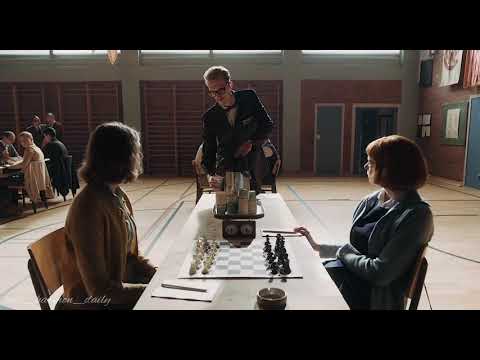
moves في 30 ثانية
- Moves is the 3rd person singular verb form of 'move', meaning to change position or location.
- Moves is also a plural noun referring to strategic steps in games, dance, or business.
- It can describe physical motion, emotional impact, or professional and political strategies.
- Commonly used in sports, gaming, and daily life to describe actions and planned sequences.
The word moves is a highly versatile term in the English language, functioning both as a third-person singular verb and a plural noun. At its most fundamental level, as a verb, it describes the action of changing physical position or location. When we say 'the clock moves,' we are observing the mechanical progression of time through physical displacement. However, the utility of 'moves' extends far beyond simple physics. It encompasses emotional resonance, strategic planning, and social progression. In a social context, when someone 'moves' in certain circles, they are navigating a specific social environment. In an emotional context, if a story 'moves' a listener, it evokes a deep sense of sympathy or connection. This dual nature—physical and abstract—makes it a cornerstone of intermediate English communication.
- Physical Displacement
- The act of an object or person shifting from point A to point B. For example, a car moves down the street, or a person moves their arm to wave hello.
The athlete moves with incredible grace across the field.
As a plural noun, 'moves' refers to specific actions taken within a sequence, often with a goal in mind. This is most commonly seen in games like chess or sports like basketball. A 'move' is a discrete unit of strategy. When we discuss a politician's 'moves,' we are analyzing their calculated steps to gain power or influence. This noun form is essential for discussing tactics, choreography in dance, and procedural steps in business. Understanding the nuance between 'he moves' (action) and 'his moves' (tactics) is key to mastering B1-level English. The word suggests a sense of agency and direction, implying that the change in position is not random but part of a larger process or intent.
- Strategic Actions
- Calculated steps taken to achieve a specific outcome in a game, business deal, or personal interaction.
She has some impressive dance moves that she practiced for the competition.
Furthermore, 'moves' appears in various idiomatic expressions that describe progress or decision-making. To say someone 'moves the needle' means they are making a significant impact. To say someone 'moves mountains' implies they are doing the impossible. These metaphorical uses are frequent in professional and motivational settings. In the modern digital age, we also see 'moves' used in the context of logistics and data—how information moves through a network or how a company moves its headquarters. The word is dynamic, energetic, and constantly evolving in its application, reflecting the very motion it describes.
- Emotional Impact
- The capacity of a piece of art, music, or a story to stir deep feelings within a person.
The government moves slowly when it comes to passing new environmental laws.
Every chess player knows that the opening moves are the most critical.
The sun moves across the sky from east to west every single day.
Using 'moves' correctly requires a clear understanding of its grammatical function in a sentence. As a verb, 'moves' is the third-person singular present tense form of 'move'. This means it must agree with subjects like he, she, it, or singular nouns. For example, 'The cat moves silently' is correct because 'the cat' is a singular subject. If the subject were 'the cats', the verb would change to 'move'. This distinction is a fundamental rule of English grammar that learners must internalize to achieve fluency. When 'moves' is used as a verb, it often takes an adverb to describe the manner of the movement, such as 'quickly', 'slowly', or 'gracefully'.
- Subject-Verb Agreement
- The requirement that a singular subject takes the form 'moves' while a plural subject takes 'move'.
He moves the heavy boxes into the garage one by one.
As a noun, 'moves' is plural. It refers to more than one action or step. You will often see it paired with possessive adjectives like 'my', 'your', 'his', or 'their'. For instance, 'I like your dance moves' refers to the various steps and motions a person makes while dancing. In the context of games, you might hear 'The player made several brilliant moves to win the match.' Here, 'moves' is the object of the verb 'made'. It can also be the subject of a sentence, as in 'Great moves are often the result of years of practice.' Understanding this shift from action to object is crucial for complex sentence construction.
- Noun Usage
- Using 'moves' as a plural object or subject to describe a series of actions or strategic steps.
The chess grandmaster's moves were completely unpredictable to his opponent.
In more advanced usage, 'moves' can describe organizational or political shifts. For example, 'The company moves its operations to Asia' (verb) vs 'The company's recent moves have worried investors' (noun). In the first case, we focus on the action of relocating. In the second, we focus on the strategic decisions as entities themselves. This versatility allows 'moves' to appear in almost any section of a newspaper, from the sports page to the business section to the arts and culture reviews. Mastering these patterns allows a speaker to transition smoothly between literal and figurative descriptions of change and progress.
- Transitive vs. Intransitive
- As a verb, 'moves' can be transitive (He moves the chair) or intransitive (The chair moves), depending on whether there is a direct object.
The story moves along at a very fast pace, keeping the reader engaged.
Watch how the dancer moves her feet in time with the music.
You will encounter the word 'moves' in a wide variety of real-world scenarios, ranging from casual conversations to professional broadcasts. In the world of sports, commentators frequently use 'moves' to describe an athlete's technique. You might hear, 'Look at those moves!' when a soccer player dribbles past a defender. In this context, 'moves' is a noun referring to the player's agility and skill. Similarly, in dance competitions or music videos, 'moves' is the standard term for choreography. Fans often discuss their favorite artist's 'signature moves,' which are the specific dance steps that the artist is famous for performing on stage.
- Sports and Athletics
- Commonly used to describe the physical skills and deceptive actions of players in games like basketball, football, and soccer.
The commentator shouted, 'What incredible moves by the striker to get past the goalie!'
In the business and political world, 'moves' takes on a more strategic meaning. News anchors might report on a company's 'strategic moves' to enter a new market or a politician's 'political moves' to secure more votes. Here, the word implies a calculated, often secretive or clever, step toward a goal. You might hear a colleague say, 'The boss is making some big moves this quarter,' which suggests significant organizational changes or new projects are underway. In these settings, 'moves' is synonymous with 'initiatives' or 'actions,' but it carries a more dynamic and active connotation.
- Business Strategy
- Refers to the tactical decisions made by corporations to gain a competitive advantage or respond to market changes.
The tech giant moves into the electric vehicle market with its latest acquisition.
Finally, 'moves' is ubiquitous in the gaming community. Whether it's a board game like chess, a card game like poker, or a video game, players are constantly discussing their 'next moves.' In video games, 'moves' often refers to the specific button combinations required to perform a special attack or action. For example, a player might say, 'I need to learn the character's special moves to win.' This usage highlights the word's connection to rules, systems, and sequences. Whether you are watching a movie, playing a game, or reading the news, 'moves' is a word that describes the heartbeat of action and strategy in human life.
- Gaming and Strategy
- Describes the turns taken by players and the specific techniques used to progress or defeat opponents.
In chess, every one of your moves must be carefully considered to avoid a trap.
The stock market moves up and down based on investor confidence and economic data.
One of the most frequent mistakes learners make with 'moves' involves subject-verb agreement. Because 'moves' ends in 's', many students mistakenly think it is a plural verb. In English, however, adding 's' to a verb usually makes it singular (third-person). For example, a student might say 'They moves to the city,' which is incorrect. The correct form is 'They move' or 'He moves.' This confusion often stems from the fact that adding 's' to a noun *does* make it plural. Thus, 'one move' becomes 'two moves.' Keeping these two rules separate—plural nouns vs. singular verbs—is a major hurdle for many English as a Second Language (ESL) students.
- The 'S' Confusion
- Misunderstanding that 'moves' is a singular verb but a plural noun. This is the most common grammatical error associated with the word.
Incorrect: The children moves the toys. Correct: The children move the toys.
Another common error is confusing 'moves' with 'movies.' While they sound somewhat similar, they are entirely different words. 'Movies' refers to films or cinema, while 'moves' refers to actions or shifting position. A learner might say, 'I like his dance movies,' when they actually mean 'dance moves.' This is a phonological mistake that can lead to significant confusion in conversation. Additionally, learners sometimes use 'moves' when they should use 'movement.' 'Movement' is a more general, abstract noun (e.g., 'the civil rights movement'), while 'moves' usually refers to specific, discrete actions (e.g., 'his moves on the dance floor').
- Moves vs. Movement
- Confusing specific actions (moves) with a general trend or a large-scale organized effort (movement).
Incorrect: He moves the house next week. Correct: He is moving house next week (or 'He moves next week').
Lastly, there is the issue of 'moving' vs 'moves' in the present continuous sense. Learners often use the simple present 'moves' when they should use the present continuous 'is moving' to describe an action happening right now. For example, if you see someone carrying a box, you should say 'He is moving the box,' not 'He moves the box.' The simple present 'moves' is better suited for habits, general truths, or scheduled events. For example, 'The train moves at 80 mph' (general truth) or 'He moves to a new city every year' (habit). Misusing the tense can make the speaker sound robotic or unnatural to native ears.
- Tense Misuse
- Using the simple present 'moves' for immediate actions instead of the present continuous 'is moving'.
Incorrect: Look! The car moves! Correct: Look! The car is moving!
Incorrect: I like his movie on the dance floor. Correct: I like his moves on the dance floor.
To enrich your vocabulary, it is helpful to look at words that can replace 'moves' depending on the context. If you are talking about physical movement, synonyms like shifts, transfers, or relocates might be more precise. 'Shifts' implies a small change in position, while 'relocates' is often used for moving a home or business to a new city. In a more formal or scientific context, you might use displaces or propels. For example, 'The engine propels the car forward' is more descriptive than 'The engine moves the car.' Choosing the right synonym helps convey the exact nature of the motion being described.
- Shifts vs. Moves
- 'Shifts' usually refers to a slight adjustment or change in weight/position, whereas 'moves' is a more general term for any change in location.
The company relocates its headquarters to a more central location every decade.
When 'moves' is used as a noun to mean strategic actions, alternatives include maneuvers, tactics, steps, or measures. 'Maneuvers' often has a military or highly technical connotation, suggesting a complex series of movements. 'Tactics' is common in sports and business to describe specific plans. 'Measures' is frequently used in political contexts, such as 'The government took several measures to reduce inflation.' Using these alternatives can make your writing sound more professional and varied. For instance, instead of saying 'He made good moves in the game,' you could say 'He executed brilliant maneuvers,' which sounds much more sophisticated.
- Maneuvers vs. Moves
- 'Maneuvers' implies a higher level of skill, complexity, or calculation than the simple word 'moves'.
The general's strategic maneuvers caught the enemy completely by surprise.
In the emotional sense, 'moves' can be replaced by touches, affects, or inspires. 'The music touches my soul' or 'The story affects me deeply' are common ways to express emotional impact. 'Inspires' is used when the movement leads to a desire to act or create. In the context of progress, you might use advances or proceeds. 'The project proceeds as planned' is a more formal way of saying 'The project moves forward.' By expanding your range of synonyms, you can tailor your language to the specific tone and intensity of the situation, moving from basic B1 communication toward the more nuanced levels of B2 and C1.
- Touches vs. Moves
- While both refer to emotion, 'touches' often implies a gentle or sweet feeling, while 'moves' can imply a more profound or even overwhelming emotional response.
The charity's work inspires thousands of people to donate every year.
The court proceeds with the trial despite the lack of a key witness.
How Formal Is It?
حقيقة ممتعة
The word 'movie' is actually a shortened form of 'moving picture', directly linking back to the verb 'move'.
دليل النطق
- Pronouncing the 's' as a sharp 's' like in 'moose'.
- Shortening the 'oo' sound to sound like 'muffs'.
- Confusing it with 'movies' by adding an extra syllable.
- Dropping the 's' entirely in third-person singular.
- Adding an 'e' sound at the end (move-ez).
مستوى الصعوبة
Easy to recognize in text, but noun/verb distinction requires attention.
Requires correct subject-verb agreement which can be tricky.
Simple pronunciation, but 'z' sound at the end is important.
Can be confused with 'movies' if not listening carefully.
ماذا تتعلّم بعد ذلك
المتطلبات الأساسية
تعلّم لاحقاً
متقدم
قواعد يجب معرفتها
Third-person singular -s
He moves (not 'He move').
Plural nouns
Many moves (not 'Many move').
Transitive verbs
She moves the box (object required).
Intransitive verbs
The car moves (no object required).
Present simple for general truths
The earth moves around the sun.
أمثلة حسب المستوى
The big bus moves slowly.
Le grand bus avance lentement.
Third-person singular verb 'moves' agrees with 'the bus'.
He moves his chair to the table.
Il déplace sa chaise vers la table.
Transitive verb usage with a direct object 'his chair'.
The cat moves in the garden.
Le chat bouge dans le jardin.
Intransitive verb usage.
She moves the book to the shelf.
Elle déplace le livre sur l'étagère.
Simple present tense for a physical action.
The clock moves every second.
L'horloge bouge chaque seconde.
Describes a regular, mechanical action.
The sun moves across the sky.
Le soleil se déplace dans le ciel.
General truth in simple present tense.
My brother moves his toys.
Mon frère déplace ses jouets.
Subject 'my brother' is singular.
The water moves in the river.
L'eau bouge dans la rivière.
Uncountable noun 'water' takes a singular verb.
She has very good dance moves.
Elle a de très bons pas de danse.
'Moves' is a plural noun here.
The player moves the ball quickly.
Le joueur déplace le ballon rapidement.
Verb describing a skill in sports.
He moves to a new house today.
Il déménage dans une nouvelle maison aujourd'hui.
'Moves' can mean 'relocates' or 'déménage'.
The robot moves its arms.
Le robot bouge ses bras.
Describes mechanical motion.
Show me your best chess moves.
Montre-moi tes meilleurs coups d'échecs.
Noun referring to game strategy.
The snake moves through the grass.
Le serpent se déplace dans l'herbe.
Describing animal movement.
He moves the cursor with the mouse.
Il déplace le curseur avec la souris.
Modern technology context.
The story moves very fast.
L'histoire avance très vite.
Metaphorical movement of a narrative.
The company moves its office to London.
L'entreprise déplace son bureau à Londres.
Business context for relocation.
His speech moves the audience to tears.
Son discours émeut le public jusqu'aux larmes.
Emotional use of the verb 'moves'.
She makes smart moves in her career.
Elle fait des choix judicieux dans sa carrière.
Noun referring to strategic life choices.
The government moves to change the law.
Le gouvernement s'apprête à changer la loi.
Formal use meaning 'takes action'.
The music moves me deeply.
La musique me touche profondément.
Abstract emotional impact.
He moves the heavy furniture alone.
Il déplace les meubles lourds tout seul.
Physical effort context.
The project moves forward slowly.
Le projet avance lentement.
Describing progress of a task.
I don't understand his recent moves.
Je ne comprends pas ses récents agissements.
Noun referring to mysterious actions.
The CEO moves to acquire the rival firm.
Le PDG prend des mesures pour acquérir l'entreprise rivale.
Strategic business maneuver.
Public opinion moves in favor of the reform.
L'opinion publique évolue en faveur de la réforme.
Abstract shift in collective thought.
The athlete's moves are perfectly timed.
Les mouvements de l'athlète sont parfaitement synchronisés.
Noun referring to high-level physical skill.
The plot moves toward a tragic conclusion.
L'intrigue s'achemine vers une conclusion tragique.
Literary analysis of narrative progression.
She moves in high social circles now.
Elle fréquente maintenant la haute société.
Idiomatic use meaning 'socializes'.
The glacier moves only a few inches a year.
Le glacier ne se déplace que de quelques centimètres par an.
Scientific/geological context.
His moves were calculated to provoke a reaction.
Ses actions étaient calculées pour provoquer une réaction.
Psychological strategy context.
The economy moves into a recession.
L'économie entre en récession.
Macroeconomic shift.
The senator moves that the bill be amended.
Le sénateur propose que le projet de loi soit amendé.
Formal parliamentary procedure.
The poem moves from joy to profound sorrow.
Le poème passe de la joie à une profonde tristesse.
Nuanced shift in tone or theme.
The company's moves are being closely watched.
Les agissements de l'entreprise sont surveillés de près.
Noun referring to corporate transparency.
He moves with a quiet confidence that commands respect.
Il se déplace avec une assurance tranquille qui impose le respect.
Describing character through physical presence.
The narrative moves seamlessly between past and present.
Le récit passe sans transition du passé au présent.
Sophisticated literary technique.
The tectonic plate moves beneath the ocean floor.
La plaque tectonique se déplace sous le fond de l'océan.
Geological precision.
Her moves to consolidate power were swift.
Ses manœuvres pour consolider son pouvoir ont été rapides.
Political strategy noun.
The focus of the study moves to a new demographic.
L'objet de l'étude se déplace vers une nouvelle catégorie démographique.
Academic shift in focus.
The philosopher moves beyond traditional ethics.
Le philosophe dépasse l'éthique traditionnelle.
Intellectual or theoretical progression.
The piece moves with a rhythmic complexity that defies analysis.
Le morceau évolue avec une complexité rythmique qui défie l'analyse.
Advanced aesthetic description.
His moves in the negotiation were masterfully executed.
Ses interventions dans la négociation ont été magistralement exécutées.
High-stakes professional strategy.
The boundary between art and life moves constantly.
La frontière entre l'art et la vie se déplace constamment.
Philosophical abstraction.
The camera moves in a long, unbroken tracking shot.
La caméra se déplace dans un long plan-séquence ininterrompu.
Technical cinematic terminology.
The spirit moves him to speak the truth.
L'esprit le pousse à dire la vérité.
Archaic or spiritual motivation.
The company moves to mitigate the environmental impact.
L'entreprise prend des mesures pour atténuer l'impact environnemental.
Corporate social responsibility context.
The entire structure moves slightly in the wind.
Toute la structure bouge légèrement sous l'effet du vent.
Engineering and physics context.
تلازمات شائعة
العبارات الشائعة
— Taking action to achieve success or progress.
He's out there making moves in the real estate market.
— Be careful about what you do or how you behave.
You need to watch your moves around the new boss.
— To approach or attempt to take control of something.
The competitor moves in on our territory.
— To leave the past behind and start something new.
After the breakup, she moves on with her life.
يُخلط عادةً مع
Movies are films; moves are actions or steps.
Movement is a general state; moves are specific instances.
A moose is a large animal; moves is an action (different vowel and final sound).
تعبيرات اصطلاحية
— To make a noticeable difference or significant impact.
Small changes won't move the needle; we need a big idea.
business— To do something that seems impossible.
She would move mountains to help her children.
informal— To exert maximum effort to achieve something.
The lawyer moved heaven and earth to prove his client's innocence.
formal— To change the rules or criteria in the middle of a process.
Every time I finish a task, my boss moves the goalposts.
professional— To associate with influential or important people.
He moves in the right circles to get his projects funded.
neutral— To adapt one's ideas or habits to modern standards.
Old companies must move with the times to survive.
neutral— To be stubborn or unyielding.
The old guard moves for no man; they refuse to change.
literary— Feeling a sudden impulse or inspiration to do something.
I'll clean the garage when the spirit moves me.
humorous— To become more successful or gain higher social status.
Since his promotion, he's really moving up in the world.
neutralسهل الخلط
It is the base form.
Move is for I/you/we/they; moves is for he/she/it.
They move, but he moves.
Past tense form.
Moved happened in the past; moves happens now or generally.
He moved yesterday; he moves every day.
Continuous form.
Moving is happening right now; moves is a habit or fact.
He is moving the box now; he moves boxes for a living.
Related to moving things.
Removal is the act of taking something away; moves is the act of changing position.
The removal of the trash; he moves the trash.
Scientific synonym.
Motion is the abstract concept of moving; moves are specific actions.
The laws of motion; he makes his moves.
أنماط الجُمل
Subject + moves + adverb.
The dog moves fast.
Subject + has + adjective + moves.
She has cool moves.
Subject + moves + object + to + place.
He moves the desk to the corner.
The [Noun] moves [Someone].
The song moves me.
Subject + moves + to + infinitive.
The company moves to expand.
Possessive + moves + were + adjective.
His moves were calculated.
It is [adjective] how [subject] moves.
It is remarkable how the narrative moves.
Subject + moves + beyond + abstract noun.
The theory moves beyond simple logic.
عائلة الكلمة
الأسماء
الأفعال
الصفات
مرتبط
كيفية الاستخدام
Very high in both spoken and written English.
-
They moves to London.
→
They move to London.
Plural subjects (they) take the base form of the verb (move).
-
I like his dance movies.
→
I like his dance moves.
Confusing 'movies' (films) with 'moves' (actions).
-
The car moves right now.
→
The car is moving right now.
Use present continuous for actions happening at the moment.
-
He move the chair.
→
He moves the chair.
Singular subjects (he) need the -s ending on the verb.
-
The movement of the player was good.
→
The moves of the player were good.
Use 'moves' for specific actions in a game.
نصائح
Subject-Verb Agreement
Always check if your subject is singular (he/she/it) before using 'moves' as a verb.
Noun Usage
Use 'moves' as a noun when describing a series of steps in dance or a game.
The 'Z' Sound
Make sure to voice the 's' at the end of 'moves' so it sounds like a 'z'.
Vivid Verbs
Instead of just saying 'he goes', use 'he moves' to imply more physical action.
Context Clues
If you hear 'chess' or 'dance', 'moves' is almost certainly a noun.
Move the Needle
Use this phrase in business meetings to talk about making a real impact.
Moves vs Movies
Don't forget the 'i' in 'movies' if you are talking about films!
Social Circles
To 'move in certain circles' means to hang out with a specific group of people.
Game Talk
When playing games, always ask your opponent, 'What are your moves?'
Feeling Moved
If something makes you cry or feel inspired, say 'It moves me'.
احفظها
وسيلة تذكّر
Think of 'Moves' as 'Motion Over Various Every-day Spaces'. The 'S' at the end is for 'Singular' (He moves) or 'Steps' (Dance moves).
ربط بصري
Imagine a chess player's hand hovering over a piece, or a dancer's feet creating a pattern on the floor. Both represent 'moves'.
Word Web
تحدٍّ
Try to use 'moves' as both a verb and a noun in a single sentence about a game of chess.
أصل الكلمة
Derived from the Old French word 'mouvoir', which comes from the Latin 'movere'. It has been used in English since the 13th century.
المعنى الأصلي: To set in motion, to stir, or to displace.
Indo-European > Italic > Latin > Romance > Germanic influence.السياق الثقافي
Generally a neutral word, but 'making a move' on someone can have romantic or sexual connotations depending on context.
Commonly used in sports commentary and business news to imply dynamism.
تدرّب في الحياة الواقعية
سياقات واقعية
Sports
- Great moves!
- The player moves well.
- Defensive moves.
- Fast moves.
Games
- Your moves.
- Opening moves.
- Illegal moves.
- Winning moves.
Business
- Strategic moves.
- Moves the market.
- Career moves.
- Moves headquarters.
Dance
- Smooth moves.
- Learn the moves.
- New moves.
- Dance moves.
Daily Life
- Moves house.
- Moves furniture.
- Moves slowly.
- Moves away.
بدايات محادثة
"What are some of the best dance moves you have ever seen?"
"Do you think the world moves too fast these days?"
"What are the most important moves to make in a game of chess?"
"Has a book or movie ever moved you to tears?"
"Are you planning any big career moves in the next year?"
مواضيع للكتابة اليومية
Describe a time when you had to make some difficult moves in your life.
Write about how your favorite athlete moves and why it is impressive.
Reflect on a story that moves you emotionally and explain why.
If you could move to any city in the world, where would it be and why?
Discuss the strategic moves you are taking to improve your English skills.
الأسئلة الشائعة
10 أسئلةIt can be both! As a verb, it's the third-person singular form (He moves). As a noun, it's the plural form of 'move' (His dance moves).
It is pronounced like 'moovz' with a long 'oo' and a 'z' sound at the end.
No, that is incorrect. You should say 'They move' or 'He moves'.
It is a slang term meaning to take action to be successful or to achieve a goal.
No. 'Movies' are films you watch at the cinema. 'Moves' are actions.
These are strategic decisions you make to improve your professional life, like changing jobs or getting a new certification.
Yes, as a verb. 'The music moves me' means the music makes you feel strong emotions.
A 'bold move' is a brave or risky action taken to achieve something important.
In chess, 'moves' refers to the turns each player takes to shift their pieces on the board.
'Moves' is general, while 'shifts' usually implies a small change in position or weight.
اختبر نفسك 190 أسئلة
Write a sentence using 'moves' as a verb about an animal.
Well written! Good try! Check the sample answer below.
Write a sentence using 'moves' as a noun about a game.
Well written! Good try! Check the sample answer below.
Write a sentence using 'moves' as a verb about a person's feelings.
Well written! Good try! Check the sample answer below.
Write a sentence using 'moves' as a noun about a career.
Well written! Good try! Check the sample answer below.
Write a sentence using 'moves' as a verb about a company.
Well written! Good try! Check the sample answer below.
Describe a dancer's 'moves' in two sentences.
Well written! Good try! Check the sample answer below.
Use 'moves' in a sentence about the weather.
Well written! Good try! Check the sample answer below.
Use 'moves' in a sentence about technology.
Well written! Good try! Check the sample answer below.
Write a sentence using the idiom 'move the needle'.
Well written! Good try! Check the sample answer below.
Write a sentence using 'moves' as a verb about a planet.
Well written! Good try! Check the sample answer below.
Write a sentence about a politician's 'moves'.
Well written! Good try! Check the sample answer below.
Write a sentence about someone 'moving house'.
Well written! Good try! Check the sample answer below.
Use 'moves' in a sentence about a sports player.
Well written! Good try! Check the sample answer below.
Write a sentence using 'moves' to mean 'takes action'.
Well written! Good try! Check the sample answer below.
Write a sentence using 'moves' as a noun about a strategy.
Well written! Good try! Check the sample answer below.
Write a sentence about a clock that 'moves'.
Well written! Good try! Check the sample answer below.
Write a sentence about a robot that 'moves'.
Well written! Good try! Check the sample answer below.
Write a sentence about a story that 'moves' you.
Well written! Good try! Check the sample answer below.
Write a sentence about a car that 'moves'.
Well written! Good try! Check the sample answer below.
Write a sentence using 'moves' as a noun about a board game.
Well written! Good try! Check the sample answer below.
Describe how a cat moves.
Read this aloud:
قلت:
Speech recognition is not supported in your browser. Try Chrome or Edge.
Tell me about your favorite dance moves.
Read this aloud:
قلت:
Speech recognition is not supported in your browser. Try Chrome or Edge.
Explain a 'career move' you want to make.
Read this aloud:
قلت:
Speech recognition is not supported in your browser. Try Chrome or Edge.
How does a chess player think about their moves?
Read this aloud:
قلت:
Speech recognition is not supported in your browser. Try Chrome or Edge.
Describe a movie or book that moves you.
Read this aloud:
قلت:
Speech recognition is not supported in your browser. Try Chrome or Edge.
What moves does a basketball player make?
Read this aloud:
قلت:
Speech recognition is not supported in your browser. Try Chrome or Edge.
How does the sun move across the sky?
Read this aloud:
قلت:
Speech recognition is not supported in your browser. Try Chrome or Edge.
Talk about someone you know who moves house often.
Read this aloud:
قلت:
Speech recognition is not supported in your browser. Try Chrome or Edge.
What does 'making moves' mean to you?
Read this aloud:
قلت:
Speech recognition is not supported in your browser. Try Chrome or Edge.
How does a robot move differently than a human?
Read this aloud:
قلت:
Speech recognition is not supported in your browser. Try Chrome or Edge.
Describe a 'bold move' someone made in a movie.
Read this aloud:
قلت:
Speech recognition is not supported in your browser. Try Chrome or Edge.
How do you feel when the music moves you?
Read this aloud:
قلت:
Speech recognition is not supported in your browser. Try Chrome or Edge.
What moves should a beginner learn in chess?
Read this aloud:
قلت:
Speech recognition is not supported in your browser. Try Chrome or Edge.
Why does a company move its office?
Read this aloud:
قلت:
Speech recognition is not supported in your browser. Try Chrome or Edge.
How does a snake move without legs?
Read this aloud:
قلت:
Speech recognition is not supported in your browser. Try Chrome or Edge.
What are some 'signature moves' of famous athletes?
Read this aloud:
قلت:
Speech recognition is not supported in your browser. Try Chrome or Edge.
How does a clock move?
Read this aloud:
قلت:
Speech recognition is not supported in your browser. Try Chrome or Edge.
What moves do you make when you are nervous?
Read this aloud:
قلت:
Speech recognition is not supported in your browser. Try Chrome or Edge.
Describe a 'strategic move' in a business deal.
Read this aloud:
قلت:
Speech recognition is not supported in your browser. Try Chrome or Edge.
How does a glacier move?
Read this aloud:
قلت:
Speech recognition is not supported in your browser. Try Chrome or Edge.
Listen: 'He moves the table.' What is he moving?
Listen: 'Her moves were amazing!' What was amazing?
Listen: 'The train moves at noon.' When does it move?
Listen: 'The music moves me.' How does the person feel?
Listen: 'He moves to London.' Where is he going?
Listen: 'Watch your moves!' Is this a warning?
Listen: 'The company moves its HQ.' What is HQ?
Listen: 'His chess moves were fast.' How did he play?
Listen: 'The snake moves in the grass.' Where is the snake?
Listen: 'She moves house often.' Does she stay in one place?
Listen: 'The robot moves its head.' What part of the robot moves?
Listen: 'The story moves along.' Is the story stopping?
Listen: 'He makes bold moves.' Is he shy?
Listen: 'The clock moves slowly.' Is it fast?
Listen: 'The spirit moves him.' What is happening?
/ 190 correct
Perfect score!
Summary
The word 'moves' is a versatile term that bridges the gap between physical action and strategic thought. Whether describing a cat's silent steps or a CEO's market strategy, it always implies a purposeful change in state or position. Example: 'He moves the pieces carefully because his next moves will decide the game.'
- Moves is the 3rd person singular verb form of 'move', meaning to change position or location.
- Moves is also a plural noun referring to strategic steps in games, dance, or business.
- It can describe physical motion, emotional impact, or professional and political strategies.
- Commonly used in sports, gaming, and daily life to describe actions and planned sequences.
Subject-Verb Agreement
Always check if your subject is singular (he/she/it) before using 'moves' as a verb.
Noun Usage
Use 'moves' as a noun when describing a series of steps in dance or a game.
The 'Z' Sound
Make sure to voice the 's' at the end of 'moves' so it sounds like a 'z'.
Vivid Verbs
Instead of just saying 'he goes', use 'he moves' to imply more physical action.