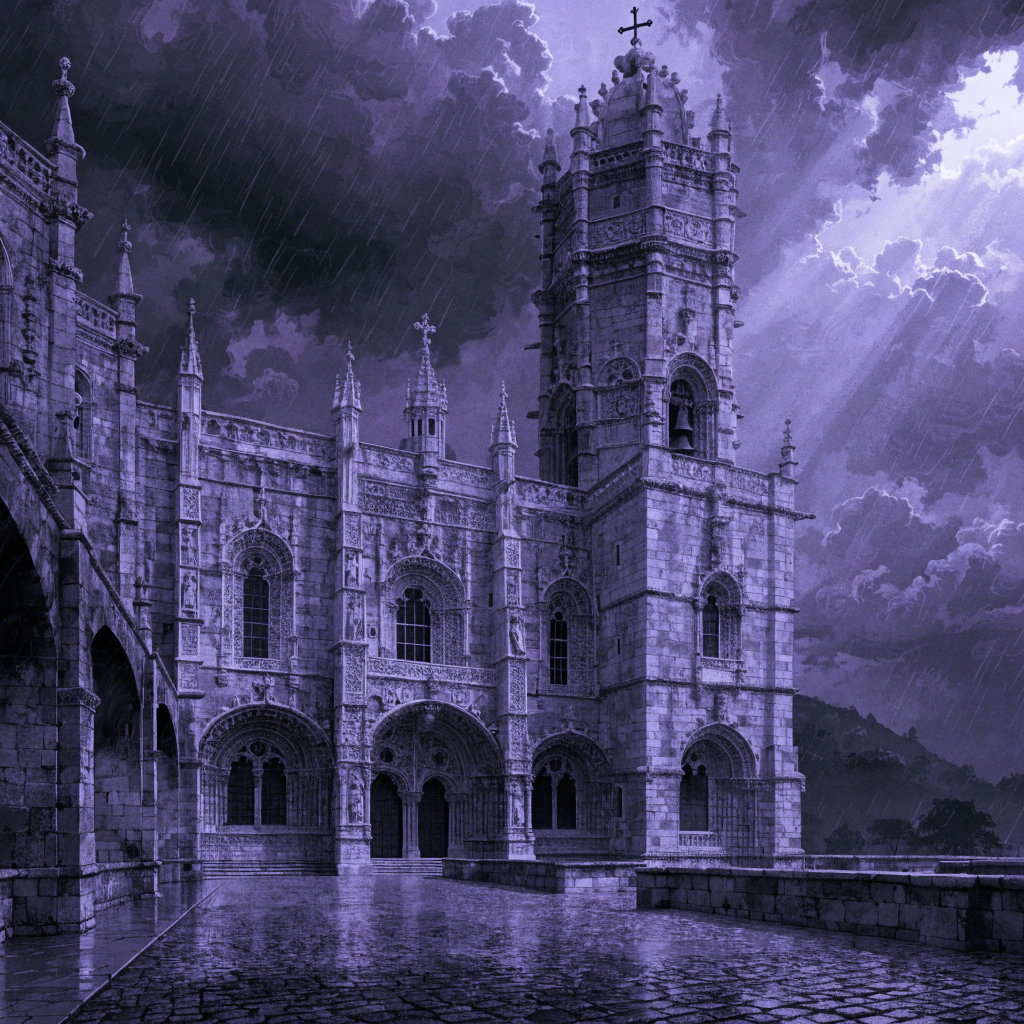
A Visit to Jerónimos Monastery
Jerónimos Monastery is a very big and beautiful building. It is in Lisbon, Portugal. It is very old. King Manuel I built it a long time ago. The monastery is near the river. It is white and has many decorations. Many people visit it every year. They see the tombs of famous people. One famous person is Vasco da Gama. He was a great explorer. The monastery is a special place. It is a UNESCO World Heritage site. Visitors like the garden and the big church. It is a peaceful place to walk.
Grammar Spotlight
Pattern: The Verb 'To Be' (Present Simple)
"It is in Lisbon, Portugal."
We use 'is' for singular subjects like 'it' or 'he'. It describes location, state, or identity.
Pattern: Present Simple (Regular Verbs)
"Many people visit it every year."
We use the base form of the verb for plural subjects like 'people'. This shows a regular action or a fact.
Test Your Understanding
10 questions · A1 Beginner · 1 free preview
Test what you learned from this article. Answer all questions to earn XP!
Where is the Jerónimos Monastery?
Want to finish the quiz?
9 more questions are waiting for you. Sign up free to unlock the full quiz and earn XP!
Sign Up FreeAlready have an account? Sign In
Question Breakdown
Where is the Jerónimos Monastery?
Your answer:
Correct answer: Lisbon
The monastery is a new building.
Your answer:
Correct answer: False
What is a 'church'?
Your answer:
Correct answer: A religious building
The monastery is near the _____.
Your answer:
Correct answer: river
The Beautiful Jerónimos Monastery
The Jerónimos Monastery is a very famous building in Lisbon, Portugal. It is in the historic area called Belém. King Manuel I started the construction in 1501. He wanted to celebrate the return of Vasco da Gama from India. Vasco da Gama was a famous explorer who traveled by sea.
The monastery was very expensive to build. The King used money from the spice trade to pay for it. There was a special tax on pepper from Africa and Asia. Because the trade was successful, the King had a lot of money. The building is larger and more beautiful than other monuments in the city.
Today, many tourists visit the monastery every year. They look at the amazing stone carvings and the big church. It is a symbol of the Portuguese Age of Discovery. People like it because it tells an important story about the past. It is one of the most important places in Portugal.
Grammar Spotlight
Pattern: Past Simple
"King Manuel I started the construction in 1501."
We use the past simple to talk about finished actions in the past. To form it for regular verbs, we usually add '-ed' to the verb.
Pattern: Comparatives
"The building is larger and more beautiful than other monuments in the city."
We use comparatives to compare two things. For short words, we add '-er', and for long words, we use 'more' before the adjective.
Test Your Understanding
11 questions · A2 Elementary · 1 free preview
Test what you learned from this article. Answer all questions to earn XP!
Where is the Jerónimos Monastery located?
Want to finish the quiz?
10 more questions are waiting for you. Sign up free to unlock the full quiz and earn XP!
Sign Up FreeAlready have an account? Sign In
Question Breakdown
Where is the Jerónimos Monastery located?
Your answer:
Correct answer: Lisbon, Portugal
The construction of the monastery began in 1501.
Your answer:
Correct answer: True
What does 'explorer' mean?
Your answer:
Correct answer: A person who travels to find new places
The King used money from the _____ trade to pay for the monastery.
Your answer:
Correct answer: spice
Why was the monastery built?
Your answer:
Correct answer: To celebrate the return of Vasco da Gama
The Jerónimos Monastery: A Golden Piece of History
The Jerónimos Monastery is one of the most famous landmarks in Lisbon, Portugal. Located in the historic district of Belém, this magnificent building stands as an enduring testament to the Portuguese Age of Discovery. It was commissioned by King Manuel I in 1501 to commemorate the successful return of Vasco da Gama, who had completed a pioneering voyage to India.
The construction of this massive site was a long process that took nearly a hundred years to finish. It was largely funded by the 'Vintena da Pimenta,' which was a five percent tax on the lucrative spice trade from Africa and the Orient. Because of this massive wealth, the monastery displays incredible opulence in every corner. The architectural style, which is known as Manueline, features intricate carvings of sea monsters, ropes, and exotic plants. These artistic details were designed to remind visitors of the brave sailors who explored the unknown oceans centuries ago.
Since its completion, the monastery has survived many historical challenges, including the great earthquake of 1755 that destroyed much of Lisbon. Today, it has become a UNESCO World Heritage site and attracts millions of tourists from all over the world. Many people visit the church specifically to see the tomb of Vasco da Gama, which is located near the entrance.
For modern travelers, the monastery is more than just a museum; it is a symbol of national pride. It has played a central role in Portuguese history and identity for over five hundred years. Visitors often feel like they have stepped back in time when they walk through the quiet, beautiful stone corridors. It remains a must-see destination for anyone who wants to understand the rich heritage of Portugal.
Grammar Spotlight
Pattern: Passive Voice
"The construction of this massive site was a long process that took nearly a hundred years to finish."
The passive voice is used when the action is more important than who did it. It is formed using 'to be' plus the past participle.
Pattern: Relative Clauses
"...Vasco da Gama, who had completed a pioneering voyage to India."
Relative clauses add extra information about a noun. 'Who' is used for people, and 'which' or 'that' is used for things.
Test Your Understanding
11 questions · B1 Intermediate · 1 free preview
Test what you learned from this article. Answer all questions to earn XP!
Why did King Manuel I order the construction of the monastery?
Want to finish the quiz?
10 more questions are waiting for you. Sign up free to unlock the full quiz and earn XP!
Sign Up FreeAlready have an account? Sign In
Question Breakdown
Why did King Manuel I order the construction of the monastery?
Your answer:
Correct answer: To celebrate Vasco da Gama's return from India
The monastery was built using money from a tax on the spice trade.
Your answer:
Correct answer: True
What does 'opulence' mean in the text?
Your answer:
Correct answer: Great wealth and luxury
The monastery is located in the historic district of _____.
Your answer:
Correct answer: Belém
What kind of carvings are found in the Manueline architectural style?
Your answer:
Correct answer: Sea monsters and ropes
The Jerónimos Monastery: A Stone Testament to the Age of Discovery
Standing as a monumental testament to the Portuguese Age of Discovery, the Jerónimos Monastery is located in the historic Belém district of Lisbon. This magnificent structure, which was designated a UNESCO World Heritage site in 1983, serves as a permanent reminder of the era when Portuguese navigators explored the unknown corners of the globe. Consequently, it remains one of the most visited landmarks in Portugal, attracting scholars and tourists alike who wish to admire its unique architectural style.
The monastery was commissioned by King Manuel I in 1501, shortly after Vasco da Gama had returned from his pioneering voyage to India. The primary intention behind this ambitious project was to commemorate the success of the expedition and to provide a spiritual home for the monks of the Order of Saint Jerome. These monks were tasked with praying for the King’s soul and offering guidance to sailors who were about to embark on dangerous journeys across the Atlantic.
Interestingly, the opulence of the monastery was made possible by the enormous wealth generated during this period. The construction was largely funded by the 'Vintena da Pimenta,' a five percent tax levied on the lucrative spice trade from Africa and the Orient. This steady stream of income allowed for the use of high-quality limestone and the employment of the most skilled craftsmen of the time. As a result, the building flourished into a masterpiece that far exceeded the initial expectations of the royal court.
Architecturally, the Jerónimos Monastery is the quintessential example of the Manueline style. This specific Portuguese variant of Late Gothic architecture is characterized by its intricate carvings and maritime motifs. Throughout the cloisters and the church, one can observe stone decorations shaped like ropes, corals, and sea creatures, all of which reflect the nation’s deep connection to the ocean. Furthermore, the interior of the church features soaring columns and delicate vaulting that create a sense of weightlessness, despite the massive scale of the stone blocks used.
In conclusion, the Jerónimos Monastery is not merely a religious building; it is a symbol of national pride and historical achievement. Its legacy continues to influence Portuguese culture, serving as a bridge between the medieval past and the modern era. While it was built to celebrate maritime conquest, it now stands as a place of reflection on the complex history of global exploration.
Grammar Spotlight
Pattern: Past Perfect for Sequential Events
"The monastery was commissioned by King Manuel I in 1501, shortly after Vasco da Gama had returned from his pioneering voyage to India."
The Past Perfect 'had returned' is used to show that this action was completed before another action in the past (the commissioning). This clarifies the historical timeline for the reader.
Pattern: Reduced Relative Clause (Passive Participle)
"The construction was largely funded by the 'Vintena da Pimenta,' a five percent tax levied on the lucrative spice trade from Africa and the Orient."
The phrase 'levied on' acts as a reduced relative clause (which was levied on). Using the past participle directly after the noun is a formal way to provide additional details concisely.
Pattern: Future in the Past (Be about to)
"These monks were tasked with praying for the King’s soul and offering guidance to sailors who were about to embark on dangerous journeys across the Atlantic."
The structure 'were about to' indicates an action that was intended or expected to happen immediately after a specific moment in the past. It highlights the tension and proximity of the sailors' departure.
Test Your Understanding
11 questions · B2 Upper Intermediate · 1 free preview
Test what you learned from this article. Answer all questions to earn XP!
What was the primary reason King Manuel I commissioned the monastery?
Want to finish the quiz?
10 more questions are waiting for you. Sign up free to unlock the full quiz and earn XP!
Sign Up FreeAlready have an account? Sign In
Question Breakdown
What was the primary reason King Manuel I commissioned the monastery?
Your answer:
Correct answer: To celebrate the successful return of Vasco da Gama
The construction of the monastery was funded by local property taxes in Lisbon.
Your answer:
Correct answer: False
What does the word 'intricate' mean in the context of the article?
Your answer:
Correct answer: Very detailed and complicated
The monastery is located in the historic _____ district of Lisbon.
Your answer:
Correct answer: Belém
Which architectural style is the Jerónimos Monastery the best example of?
Your answer:
Correct answer: Manueline
Stone and Spice: The Manueline Grandeur of Jerónimos Monastery
Situated at the mouth of the Tagus River in Lisbon’s historic Belém district, the Jerónimos Monastery stands as a formidable testament to the Portuguese Age of Discovery. Rarely has a structure so effectively encapsulated the zeitgeist of an entire era as does this limestone marvel. Commissioned by King Manuel I in 1501, its construction was intended to celebrate the successful return of Vasco da Gama from his pioneering maritime voyage to India, an event that fundamentally shifted the geopolitical landscape of the early modern world. The monastery’s opulence, characterized by intricate carvings and soaring vaults, was largely funded by the 'Vintena da Pimenta,' a five percent tax levied on the lucrative spice trade from Africa and the Orient.
What defines the monastery’s unique aesthetic is the Manueline style, a burgeoning architectural movement that married Late Gothic elements with the burgeoning spirit of the Renaissance. It was the influx of unprecedented wealth that facilitated such meticulous craftsmanship, where maritime motifs—ranging from twisted ropes to coral-like protrusions—are etched into the very fabric of the stone. This aesthetic choice was not merely decorative; it served as a multifaceted narrative of Portugal’s naval supremacy. The cloister, often regarded as the zenith of Manueline art, offers a sense of ethereal lightness despite its massive proportions, challenging the traditional austerity associated with monastic life.
However, a critical analysis of the monastery necessitates a nuanced understanding of its historical context. While the structure is an undeniable triumph of human creativity, its existence is inextricably linked to the complexities of colonial expansion. The wealth that built these walls was the byproduct of a trade network that brought both prosperity to the Portuguese crown and profound disruption to the regions it touched. The nominalisation of historical 'achievements' often obscures the human cost inherent in the pursuit of global dominance. Nevertheless, the monastery remains a commemorative site of immense cultural significance, housing the tombs of both Vasco da Gama and the poet Luís de Camões.
Today, the preservation of this UNESCO World Heritage site requires a delicate balance between accommodating the demands of global tourism and maintaining the structural integrity of the delicate limestone. It is not merely a relic of a bygone age, but a living monument that continues to provoke discourse on the intersection of art, religion, and empire. As visitors wander through the light-dappled corridors, they are invited to reflect on how the pursuit of the unknown can yield both magnificent beauty and enduring ethical questions. The Jerónimos Monastery, in all its weathered glory, remains an essential anchor for understanding the maritime identity of Portugal.
Grammar Spotlight
Pattern: Negative Inversion
"Rarely has a structure so effectively encapsulated the zeitgeist of an entire era as does this limestone marvel."
Inversion is used after negative or restrictive adverbs like 'rarely' to create emphasis. The auxiliary verb 'has' moves before the subject 'a structure'.
Pattern: It-Cleft Sentence
"It was the influx of unprecedented wealth that facilitated such meticulous craftsmanship."
A cleft sentence focuses on a specific part of the information (the influx of wealth) by placing it after 'It was... that'.
Pattern: Nominalisation
"The nominalisation of historical 'achievements' often obscures the human cost inherent in the pursuit of global dominance."
This involves turning verbs or adjectives into nouns (e.g., 'achievements' from 'achieve'). It makes the writing more formal and objective, common in academic C1 texts.
Test Your Understanding
12 questions · C1 Advanced · 1 free preview
Test what you learned from this article. Answer all questions to earn XP!
What was the primary source of funding for the monastery's construction?
Want to finish the quiz?
11 more questions are waiting for you. Sign up free to unlock the full quiz and earn XP!
Sign Up FreeAlready have an account? Sign In
Question Breakdown
What was the primary source of funding for the monastery's construction?
Your answer:
Correct answer: A specific tax on the spice trade
The Manueline style is described as a mixture of Late Gothic and Renaissance influences.
Your answer:
Correct answer: True
Which word means the highest point or peak of a movement or style?
Your answer:
Correct answer: Zenith
The monastery was built to celebrate the return of Vasco da Gama from his voyage to _____.
Your answer:
Correct answer: India
What does the author suggest about the 'achievements' of the Age of Discovery?
Your answer:
Correct answer: They often hide the human cost of global expansion.
The monastery is no longer at risk from the effects of modern tourism.
Your answer:
Correct answer: False
An Architectural Epitome of Lusitanian Grandeur: Deciphering the Jerónimos Monastery
Should one venture into the historic Belém district of Lisbon, one is immediately confronted by the Jerónimos Monastery, a structure that transcends mere religious utility to become a profound ontological statement of Portuguese maritime identity. Commissioned in 1501 by King Manuel I, the monastery serves as an enduring testament to the Age of Discovery, specifically commemorating Vasco da Gama’s epoch-making voyage to India. To perceive the monastery solely as a place of worship would be to overlook its role as a monumental ledger of the 'Vintena da Pimenta'—the five percent tax on the lucrative spice trade from Africa and the Orient that bankrolled its construction.
The architectural style, often termed 'Manueline,' represents a late Gothic exuberance infused with idiosyncratic nautical motifs. Here, the stone appears to have been rendered fluid, as if the very limestone were susceptible to the ebb and flow of the Atlantic. Intricate carvings of ropes, corals, and armillary spheres are not merely decorative; they are semiotic markers of a nation that viewed the ocean as its sovereign domain. Were the monastery to be stripped of these ornaments, it would lose the very essence of its historical narrative.
The interior of the Santa Maria church offers a masterclass in spatial dynamics. The slender, octagonal columns rise like petrified palms, supporting a vaulted ceiling of such complexity that it seems to defy the laws of gravity. This ethereal lightness is achieved through a sophisticated understanding of structural engineering, a feat that allowed the building to survive the devastating earthquake of 1755. It is through this resilience that the monastery has maintained its status as a pinnacle of European architecture.
Furthermore, the cloister warrants a meticulous examination. Widely regarded as one of the most beautiful in the world, its two-story structure exhibits a harmonious juxtaposition of Manueline and Renaissance elements. Each archway is uniquely detailed, ensuring that no two perspectives are identical. It is imperative that the scholar recognize the subtle shifts in stylistic influence, from the ornate plateresque details to the more restrained classical forms that began to permeate Portuguese art during the long construction period.
The Hieronymite Order, for whom the monastery was built, played a pivotal role in providing spiritual solace to the sailors who departed from the nearby docks. The monks were tasked with praying for the king's soul and for the safe passage of the maritime expeditions. This symbiotic relationship between the ecclesiastical and the imperial is palpable in every corner of the cloisters.
The Jerónimos Monastery is also a necropolis of sorts, housing the tombs of luminaries such as Vasco da Gama and the poet Luís de Camões. Their presence underscores the monastery’s function as a secular shrine to Portuguese genius. It is not merely the stones that speak, but the collective memory of a people who once stood at the vanguard of global exploration. Seldom does a single edifice encapsulate the geopolitical ambitions and spiritual aspirations of an entire era so succinctly.
In contemporary discourse, the monastery’s inclusion as a UNESCO World Heritage site is frequently cited as a justification for its preservation. However, its significance extends far beyond institutional labels. It remains a living archive of the human impulse to reach beyond the horizon. For the modern observer, the Jerónimos Monastery serves as a reminder that prosperity is often the catalyst for artistic innovation, provided that such wealth is channeled into the creation of enduring beauty. To contemplate its facade is to engage with a history that is as turbulent as the seas that once carried the Portuguese caravels toward the unknown.
Grammar Spotlight
Pattern: Negative Inversion
"Seldom does a single edifice encapsulate the geopolitical ambitions and spiritual aspirations of an entire era so succinctly."
When a negative or restrictive adverbial (like 'seldom') starts a sentence, the auxiliary verb and subject are inverted. This is used for rhetorical emphasis and formal tone.
Pattern: Inverted Second Conditional (Subjunctive)
"Were the monastery to be stripped of these ornaments, it would lose the very essence of its historical narrative."
The word 'were' is used at the beginning of the clause to replace 'if' in a hypothetical condition. This structure is highly formal and common in academic or literary English.
Pattern: Cleft Sentences for Focus
"It is through this resilience that the monastery has maintained its status as a pinnacle of European architecture."
This structure uses 'It is... that' to emphasize a specific part of the sentence, in this case, the reason ('through this resilience') for the outcome.
Test Your Understanding
12 questions · C2 Mastery · 1 free preview
Test what you learned from this article. Answer all questions to earn XP!
What was the primary fiscal source for the monastery’s construction?
Want to finish the quiz?
11 more questions are waiting for you. Sign up free to unlock the full quiz and earn XP!
Sign Up FreeAlready have an account? Sign In
Question Breakdown
What was the primary fiscal source for the monastery’s construction?
Your answer:
Correct answer: The Vintena da Pimenta
The Jerónimos Monastery was built primarily to celebrate the discovery of the Americas.
Your answer:
Correct answer: False
What does the term 'edifice' most accurately describe in the context of the article?
Your answer:
Correct answer: A large, imposing building
The presence of luminaries like Vasco da Gama underscores the monastery’s function as a secular _____ to Portuguese genius.
Your answer:
Correct answer: shrine
How did the monastery's architecture respond to the 1755 earthquake?
Your answer:
Correct answer: It survived due to sophisticated structural engineering
The Manueline style is characterized by the use of nautical motifs such as ropes and corals.
Your answer:
Correct answer: True
