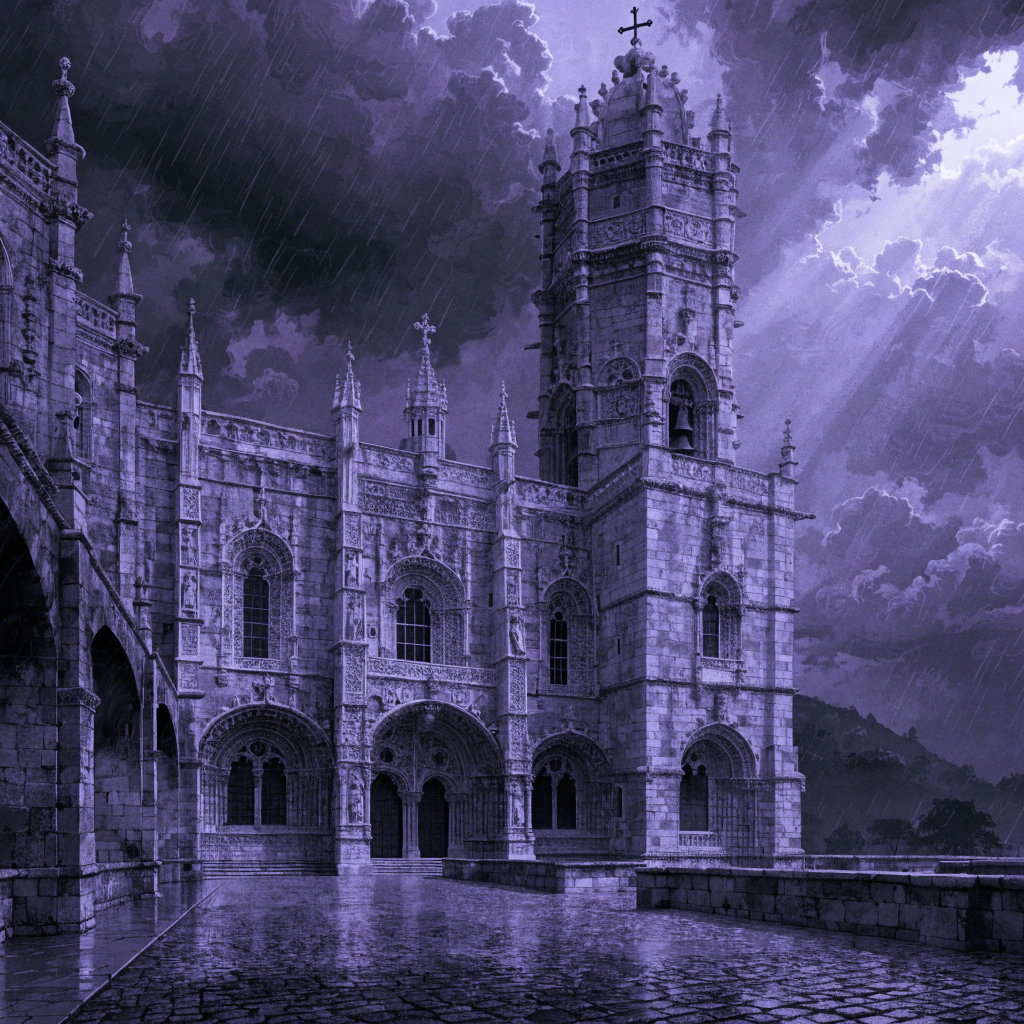
A Visit to Jerónimos Monastery
Jerónimos Monastery is a very big and beautiful building. It is in Lisbon, Portugal. It is very old. King Manuel I built it a long time ago. The monastery is near the river. It is white and has many decorations. Many people visit it every year. They see the tombs of famous people. One famous person is Vasco da Gama. He was a great explorer. The monastery is a special place. It is a UNESCO World Heritage site. Visitors like the garden and the big church. It is a peaceful place to walk.
문법 스포트라이트
패턴: The Verb 'To Be' (Present Simple)
"It is in Lisbon, Portugal."
We use 'is' for singular subjects like 'it' or 'he'. It describes location, state, or identity.
패턴: Present Simple (Regular Verbs)
"Many people visit it every year."
We use the base form of the verb for plural subjects like 'people'. This shows a regular action or a fact.
이해도를 테스트하세요
10 질문 · A1 초급 · 무료 미리보기 1회
이 기사에서 배운 내용을 테스트하세요. 모든 질문에 답하여 XP를 획득하세요!
Where is the Jerónimos Monastery?
문제별 결과
Where is the Jerónimos Monastery?
내 답변:
정답: Lisbon
The monastery is a new building.
내 답변:
정답: 거짓
What is a 'church'?
내 답변:
정답: A religious building
The monastery is near the _____.
내 답변:
정답: river
The Beautiful Jerónimos Monastery
The Jerónimos Monastery is a very famous building in Lisbon, Portugal. It is in the historic area called Belém. King Manuel I started the construction in 1501. He wanted to celebrate the return of Vasco da Gama from India. Vasco da Gama was a famous explorer who traveled by sea.
The monastery was very expensive to build. The King used money from the spice trade to pay for it. There was a special tax on pepper from Africa and Asia. Because the trade was successful, the King had a lot of money. The building is larger and more beautiful than other monuments in the city.
Today, many tourists visit the monastery every year. They look at the amazing stone carvings and the big church. It is a symbol of the Portuguese Age of Discovery. People like it because it tells an important story about the past. It is one of the most important places in Portugal.
문법 스포트라이트
패턴: Past Simple
"King Manuel I started the construction in 1501."
We use the past simple to talk about finished actions in the past. To form it for regular verbs, we usually add '-ed' to the verb.
패턴: Comparatives
"The building is larger and more beautiful than other monuments in the city."
We use comparatives to compare two things. For short words, we add '-er', and for long words, we use 'more' before the adjective.
이해도를 테스트하세요
11 질문 · A2 초등급 · 무료 미리보기 1회
이 기사에서 배운 내용을 테스트하세요. 모든 질문에 답하여 XP를 획득하세요!
Where is the Jerónimos Monastery located?
문제별 결과
Where is the Jerónimos Monastery located?
내 답변:
정답: Lisbon, Portugal
The construction of the monastery began in 1501.
내 답변:
정답: 참
What does 'explorer' mean?
내 답변:
정답: A person who travels to find new places
The King used money from the _____ trade to pay for the monastery.
내 답변:
정답: spice
Why was the monastery built?
내 답변:
정답: To celebrate the return of Vasco da Gama
The Jerónimos Monastery: A Golden Piece of History
The Jerónimos Monastery is one of the most famous landmarks in Lisbon, Portugal. Located in the historic district of Belém, this magnificent building stands as an enduring testament to the Portuguese Age of Discovery. It was commissioned by King Manuel I in 1501 to commemorate the successful return of Vasco da Gama, who had completed a pioneering voyage to India.
The construction of this massive site was a long process that took nearly a hundred years to finish. It was largely funded by the 'Vintena da Pimenta,' which was a five percent tax on the lucrative spice trade from Africa and the Orient. Because of this massive wealth, the monastery displays incredible opulence in every corner. The architectural style, which is known as Manueline, features intricate carvings of sea monsters, ropes, and exotic plants. These artistic details were designed to remind visitors of the brave sailors who explored the unknown oceans centuries ago.
Since its completion, the monastery has survived many historical challenges, including the great earthquake of 1755 that destroyed much of Lisbon. Today, it has become a UNESCO World Heritage site and attracts millions of tourists from all over the world. Many people visit the church specifically to see the tomb of Vasco da Gama, which is located near the entrance.
For modern travelers, the monastery is more than just a museum; it is a symbol of national pride. It has played a central role in Portuguese history and identity for over five hundred years. Visitors often feel like they have stepped back in time when they walk through the quiet, beautiful stone corridors. It remains a must-see destination for anyone who wants to understand the rich heritage of Portugal.
문법 스포트라이트
패턴: Passive Voice
"The construction of this massive site was a long process that took nearly a hundred years to finish."
The passive voice is used when the action is more important than who did it. It is formed using 'to be' plus the past participle.
패턴: Relative Clauses
"...Vasco da Gama, who had completed a pioneering voyage to India."
Relative clauses add extra information about a noun. 'Who' is used for people, and 'which' or 'that' is used for things.
이해도를 테스트하세요
11 질문 · B1 중급 · 무료 미리보기 1회
이 기사에서 배운 내용을 테스트하세요. 모든 질문에 답하여 XP를 획득하세요!
Why did King Manuel I order the construction of the monastery?
문제별 결과
Why did King Manuel I order the construction of the monastery?
내 답변:
정답: To celebrate Vasco da Gama's return from India
The monastery was built using money from a tax on the spice trade.
내 답변:
정답: 참
What does 'opulence' mean in the text?
내 답변:
정답: Great wealth and luxury
The monastery is located in the historic district of _____.
내 답변:
정답: Belém
What kind of carvings are found in the Manueline architectural style?
내 답변:
정답: Sea monsters and ropes
The Jerónimos Monastery: A Stone Testament to the Age of Discovery
Standing as a monumental testament to the Portuguese Age of Discovery, the Jerónimos Monastery is located in the historic Belém district of Lisbon. This magnificent structure, which was designated a UNESCO World Heritage site in 1983, serves as a permanent reminder of the era when Portuguese navigators explored the unknown corners of the globe. Consequently, it remains one of the most visited landmarks in Portugal, attracting scholars and tourists alike who wish to admire its unique architectural style.
The monastery was commissioned by King Manuel I in 1501, shortly after Vasco da Gama had returned from his pioneering voyage to India. The primary intention behind this ambitious project was to commemorate the success of the expedition and to provide a spiritual home for the monks of the Order of Saint Jerome. These monks were tasked with praying for the King’s soul and offering guidance to sailors who were about to embark on dangerous journeys across the Atlantic.
Interestingly, the opulence of the monastery was made possible by the enormous wealth generated during this period. The construction was largely funded by the 'Vintena da Pimenta,' a five percent tax levied on the lucrative spice trade from Africa and the Orient. This steady stream of income allowed for the use of high-quality limestone and the employment of the most skilled craftsmen of the time. As a result, the building flourished into a masterpiece that far exceeded the initial expectations of the royal court.
Architecturally, the Jerónimos Monastery is the quintessential example of the Manueline style. This specific Portuguese variant of Late Gothic architecture is characterized by its intricate carvings and maritime motifs. Throughout the cloisters and the church, one can observe stone decorations shaped like ropes, corals, and sea creatures, all of which reflect the nation’s deep connection to the ocean. Furthermore, the interior of the church features soaring columns and delicate vaulting that create a sense of weightlessness, despite the massive scale of the stone blocks used.
In conclusion, the Jerónimos Monastery is not merely a religious building; it is a symbol of national pride and historical achievement. Its legacy continues to influence Portuguese culture, serving as a bridge between the medieval past and the modern era. While it was built to celebrate maritime conquest, it now stands as a place of reflection on the complex history of global exploration.
문법 스포트라이트
패턴: Past Perfect for Sequential Events
"The monastery was commissioned by King Manuel I in 1501, shortly after Vasco da Gama had returned from his pioneering voyage to India."
The Past Perfect 'had returned' is used to show that this action was completed before another action in the past (the commissioning). This clarifies the historical timeline for the reader.
패턴: Reduced Relative Clause (Passive Participle)
"The construction was largely funded by the 'Vintena da Pimenta,' a five percent tax levied on the lucrative spice trade from Africa and the Orient."
The phrase 'levied on' acts as a reduced relative clause (which was levied on). Using the past participle directly after the noun is a formal way to provide additional details concisely.
패턴: Future in the Past (Be about to)
"These monks were tasked with praying for the King’s soul and offering guidance to sailors who were about to embark on dangerous journeys across the Atlantic."
The structure 'were about to' indicates an action that was intended or expected to happen immediately after a specific moment in the past. It highlights the tension and proximity of the sailors' departure.
이해도를 테스트하세요
11 질문 · B2 중상급 · 무료 미리보기 1회
이 기사에서 배운 내용을 테스트하세요. 모든 질문에 답하여 XP를 획득하세요!
What was the primary reason King Manuel I commissioned the monastery?
문제별 결과
What was the primary reason King Manuel I commissioned the monastery?
내 답변:
정답: To celebrate the successful return of Vasco da Gama
The construction of the monastery was funded by local property taxes in Lisbon.
내 답변:
정답: 거짓
What does the word 'intricate' mean in the context of the article?
내 답변:
정답: Very detailed and complicated
The monastery is located in the historic _____ district of Lisbon.
내 답변:
정답: Belém
Which architectural style is the Jerónimos Monastery the best example of?
내 답변:
정답: Manueline
Stone and Spice: The Manueline Grandeur of Jerónimos Monastery
Situated at the mouth of the Tagus River in Lisbon’s historic Belém district, the Jerónimos Monastery stands as a formidable testament to the Portuguese Age of Discovery. Rarely has a structure so effectively encapsulated the zeitgeist of an entire era as does this limestone marvel. Commissioned by King Manuel I in 1501, its construction was intended to celebrate the successful return of Vasco da Gama from his pioneering maritime voyage to India, an event that fundamentally shifted the geopolitical landscape of the early modern world. The monastery’s opulence, characterized by intricate carvings and soaring vaults, was largely funded by the 'Vintena da Pimenta,' a five percent tax levied on the lucrative spice trade from Africa and the Orient.
What defines the monastery’s unique aesthetic is the Manueline style, a burgeoning architectural movement that married Late Gothic elements with the burgeoning spirit of the Renaissance. It was the influx of unprecedented wealth that facilitated such meticulous craftsmanship, where maritime motifs—ranging from twisted ropes to coral-like protrusions—are etched into the very fabric of the stone. This aesthetic choice was not merely decorative; it served as a multifaceted narrative of Portugal’s naval supremacy. The cloister, often regarded as the zenith of Manueline art, offers a sense of ethereal lightness despite its massive proportions, challenging the traditional austerity associated with monastic life.
However, a critical analysis of the monastery necessitates a nuanced understanding of its historical context. While the structure is an undeniable triumph of human creativity, its existence is inextricably linked to the complexities of colonial expansion. The wealth that built these walls was the byproduct of a trade network that brought both prosperity to the Portuguese crown and profound disruption to the regions it touched. The nominalisation of historical 'achievements' often obscures the human cost inherent in the pursuit of global dominance. Nevertheless, the monastery remains a commemorative site of immense cultural significance, housing the tombs of both Vasco da Gama and the poet Luís de Camões.
Today, the preservation of this UNESCO World Heritage site requires a delicate balance between accommodating the demands of global tourism and maintaining the structural integrity of the delicate limestone. It is not merely a relic of a bygone age, but a living monument that continues to provoke discourse on the intersection of art, religion, and empire. As visitors wander through the light-dappled corridors, they are invited to reflect on how the pursuit of the unknown can yield both magnificent beauty and enduring ethical questions. The Jerónimos Monastery, in all its weathered glory, remains an essential anchor for understanding the maritime identity of Portugal.
문법 스포트라이트
패턴: Negative Inversion
"Rarely has a structure so effectively encapsulated the zeitgeist of an entire era as does this limestone marvel."
Inversion is used after negative or restrictive adverbs like 'rarely' to create emphasis. The auxiliary verb 'has' moves before the subject 'a structure'.
패턴: It-Cleft Sentence
"It was the influx of unprecedented wealth that facilitated such meticulous craftsmanship."
A cleft sentence focuses on a specific part of the information (the influx of wealth) by placing it after 'It was... that'.
패턴: Nominalisation
"The nominalisation of historical 'achievements' often obscures the human cost inherent in the pursuit of global dominance."
This involves turning verbs or adjectives into nouns (e.g., 'achievements' from 'achieve'). It makes the writing more formal and objective, common in academic C1 texts.
이해도를 테스트하세요
12 질문 · C1 고급 · 무료 미리보기 1회
이 기사에서 배운 내용을 테스트하세요. 모든 질문에 답하여 XP를 획득하세요!
What was the primary source of funding for the monastery's construction?
문제별 결과
What was the primary source of funding for the monastery's construction?
내 답변:
정답: A specific tax on the spice trade
The Manueline style is described as a mixture of Late Gothic and Renaissance influences.
내 답변:
정답: 참
Which word means the highest point or peak of a movement or style?
내 답변:
정답: Zenith
The monastery was built to celebrate the return of Vasco da Gama from his voyage to _____.
내 답변:
정답: India
What does the author suggest about the 'achievements' of the Age of Discovery?
내 답변:
정답: They often hide the human cost of global expansion.
The monastery is no longer at risk from the effects of modern tourism.
내 답변:
정답: 거짓
벨렘의 보석, 제로니무스 수도원: 대항해시대의 총체적 미학
포르투갈 리스본의 유서 깊은 벨렘 지구에 자리한 제로니무스 수도원은 대항해시대의 영광과 열망을 기념하는 기념비적인 건축물로서, 인류 문화유산의 정수라 해도 과언이 아니다. 16세기 초, 마누엘 1세 국왕의 명으로 건립되기 시작한 이 수도원은 바스쿠 다 가마가 인도 항로를 개척하고 성공적으로 귀환한 위대한 업적을 기리기 위해 세워졌다. 이는 단순한 종교 시설을 넘어, 당시 포르투갈이 해상 무역을 통해 거머쥔 막대한 부와 세계를 향한 진취적인 기상을 상징하는 총체적인 예술 작품이라 할 수 있다.
수도원 건설에 소요된 천문학적인 비용은 주로 '빈테나 다 피멘타(Vintena da Pimenta)'라는 독특한 세금 제도에서 충당되었다. 이는 아프리카와 동양에서 수입되는 향신료 무역 수익의 5%를 징수하는 것으로, 당시 향신료가 금보다 귀하게 여겨지던 시대를 감안하면 그 규모를 짐작하기 어렵지 않다. 이러한 막대한 자금력 덕분에 제로니무스 수도원은 당시로서는 상상하기 어려울 만큼 호화롭고 정교한 건축미를 자랑하게 되었으며, 이는 마누엘 양식(Manueline style)이라는 독자적인 건축 양식의 절정으로 평가받기에 이른다.
마누엘 양식은 고딕과 르네상스 건축 양식에 해양 모티프와 이국적인 요소가 절묘하게 결합된 것이 특징이다. 밧줄, 산호, 조개껍데기, 돛대 등 바다와 관련된 장식들이 건물 외벽과 내부 기둥, 천장 등에 섬세하게 조각되어 있으며, 이는 대항해시대 포르투갈의 해양 강국으로서의 정체성을 고스란히 드러낸다. 특히, 수도원의 남쪽 출입구와 회랑은 그 정교함과 웅장함에 있어 타의 추종을 불허하며, 건축 예술의 극치를 보여주는 명작으로 손꼽힌다. 회랑의 섬세한 조각과 빛이 쏟아져 들어오는 아름다운 중정은 방문객으로 하여금 경외감을 느끼게 한다.
제로니무스 수도원은 단순히 아름다운 건축물을 넘어, 포르투갈 역사의 중요한 순간들을 증언하는 살아있는 박물관이기도 하다. 바스쿠 다 가마와 시인 루이스 드 카몽이스의 묘소가 이곳에 안치되어 있으며, 이는 포르투갈 국민들에게 국가적 자부심의 상징으로 자리매김하고 있다. 또한, 1755년 리스본 대지진 속에서도 기적적으로 거의 온전하게 보존된 것은 이 건축물의 견고함과 신성함을 더욱 부각시키는 일화라 할 수 있다.
오늘날 제로니무스 수도원은 유네스코 세계문화유산으로 등재되어 전 세계인의 사랑을 받고 있다. 이곳은 포르투갈의 과거 영광을 되새기는 역사적 장소일 뿐만 아니라, 그 자체로 시간이 멈춘 듯한 초월적인 아름다움을 선사하는 예술적 공간이다. 방문객들은 수도원의 웅장한 규모와 세밀한 장식들을 통해 대항해시대의 열정과 번영, 그리고 그 시대인들의 신앙심과 예술적 역량을 오롯이 느낄 수 있을 것이다. 그야말로 건축과 역사, 예술이 총체적으로 어우러진 인류의 귀중한 보고(寶庫)라 아니할 수 없다.
이처럼 제로니무스 수도원은 단순한 돌과 벽돌의 집합체에 불과한 것이 아니라, 포르투갈 민족의 정신과 염원이 응축된 결정체이며, 시간을 초월하여 인류에게 깊은 감동과 영감을 선사하는 불멸의 유산이다. 그 장엄한 자태는 오늘날에도 여전히 벨렘 지구의 하늘을 수놓으며, 과거의 위대함을 현재에 투영하고 미래 세대에 그 가치를 전승하는 데 지대한 역할을 하고 있다. 이곳을 방문하는 이들은 포르투갈의 황금기를 직접 체험하며, 인류가 이룩한 위대한 문명의 한 단면을 마주하게 될 것이다.
문법 스포트라이트
패턴: ~라 해도 과언이 아니다
"인류 문화유산의 정수라 해도 과언이 아니다."
이 표현은 'A라고 말해도 지나친 말이 아니다' 또는 'A라고 말하는 것이 전혀 틀리지 않다'는 의미로, 어떤 사실이나 평가를 강하게 긍정하고 강조할 때 사용됩니다. 주로 문어체나 격식 있는 글에서 주장의 정당성을 뒷받침할 때 쓰입니다.
패턴: ~에 다름 아니다
"이는 단순한 종교 시설을 넘어, 당시 포르투갈이 해상 무역을 통해 거머쥔 막대한 부와 세계를 향한 진취적인 기상을 상징하는 총체적인 예술 작품이라 할 수 있다."
이 구문은 'A는 B와 마찬가지이다' 또는 'A는 B에 지나지 않는다'는 의미로, 어떤 대상이 다른 대상과 본질적으로 같음을 강조할 때 사용됩니다. '~에 불과하다'와는 달리 긍정적 또는 중립적인 의미로 쓰일 수 있으며, 문장 전체의 주장을 강화하는 역할을 합니다.
패턴: ~을/를 불문하고
"방문객들은 수도원의 웅장한 규모와 세밀한 장식들을 통해 대항해시대의 열정과 번영, 그리고 그 시대인들의 신앙심과 예술적 역량을 오롯이 느낄 수 있을 것이다."
이 문형은 'A를 가리지 않고', 'A와 상관없이'라는 의미를 지니며, 어떤 조건이나 대상을 고려하지 않고 모든 경우에 해당됨을 나타냅니다. 앞뒤에 오는 내용에 대한 예외가 없음을 강조할 때 사용되며, 폭넓은 적용 가능성을 표현합니다.
이해도를 테스트하세요
12 질문 · C2 마스터 · 무료 미리보기 1회
이 기사에서 배운 내용을 테스트하세요. 모든 질문에 답하여 XP를 획득하세요!
제로니무스 수도원 건설의 주요 목적은 무엇이었습니까?
문제별 결과
제로니무스 수도원 건설의 주요 목적은 무엇이었습니까?
내 답변:
정답: 바스쿠 다 가마의 인도 항로 개척 성공 기념
제로니무스 수도원 건설 비용은 아프리카와 동양에서 수입되는 향신료 무역 수익의 5%인 '빈테나 다 피멘타'에서 충당되었다.
내 답변:
정답: 참
다음 단어 중 '다른 사람이 감히 따를 수 없을 만큼 뛰어나거나 독보적인 위치에 있음을 강조할 때 쓰는 표현'에 해당하는 것은 무엇입니까?
내 답변:
정답: 타의 추종을 불허하다
제로니무스 수도원은 고딕과 르네상스 건축 양식에 해양 모티프와 이국적인 요소가 결합된 독자적인 ______ 양식의 절정으로 평가받는다.
내 답변:
정답: 마누엘
다음 중 제로니무스 수도원의 마누엘 양식에서 찾아볼 수 있는 해양 관련 장식 모티프가 아닌 것은 무엇입니까?
내 답변:
정답: 별자리
제로니무스 수도원은 1755년 리스본 대지진으로 완전히 파괴되어 현재는 재건된 모습이다.
내 답변:
정답: 거짓

