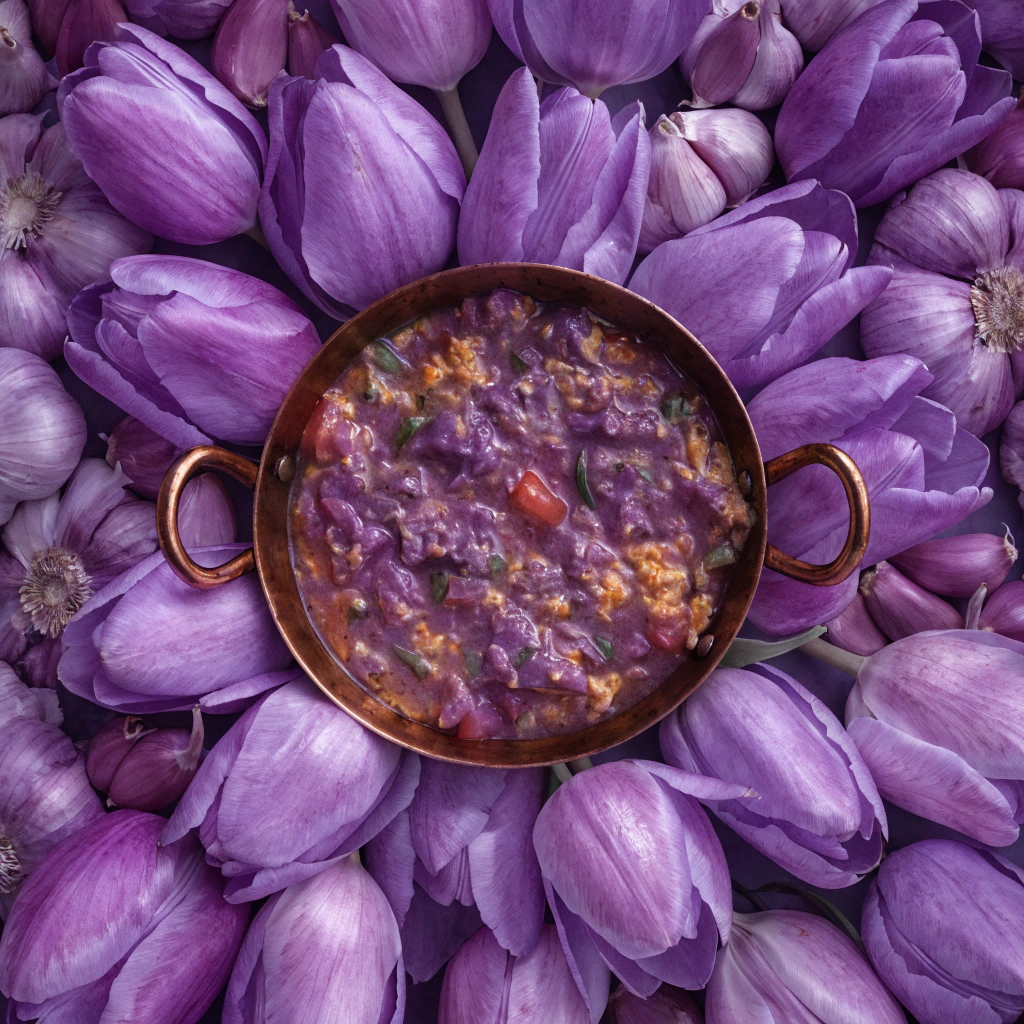
A Delicious Breakfast from Turkey
Menemen is a famous food from Turkey. It is a popular breakfast. People eat it in the morning, but it is good for lunch too.
Menemen has simple ingredients. You need tomatoes, green peppers, and onions. You cook them in a pan with oil. Then, you add eggs. You mix everything together.
Turkish people eat Menemen with fresh bread. It is hot and very tasty. Many families cook this dish at home. It is easy and cheap to make. Do you want to try it?
Grammar Spotlight
Pattern: Present Simple for Facts
"Menemen has simple ingredients."
We use the present simple to talk about facts or things that are generally true. For 'it', we use the verb form 'has' instead of 'have'.
Pattern: Subject-Verb-Object (SVO)
"Turkish people eat Menemen with fresh bread."
This is the basic sentence structure in English. The subject (Turkish people) comes first, then the verb (eat), and finally the object (Menemen).
Test Your Understanding
10 questions · A1 Beginner · 1 free preview
Test what you learned from this article. Answer all questions to earn XP!
Where is Menemen from?
Want to finish the quiz?
9 more questions are waiting for you. Sign up free to unlock the full quiz and earn XP!
Sign Up FreeAlready have an account? Sign In
Question Breakdown
Where is Menemen from?
Your answer:
Correct answer: Turkey
Menemen is only good for dinner.
Your answer:
Correct answer: False
What does 'cheap' mean?
Your answer:
Correct answer: Not costing much money
You cook the vegetables in a _____ with oil.
Your answer:
Correct answer: pan
Menemen: A Delicious Turkish Breakfast
Menemen is a very popular dish in Turkey. People usually eat it for breakfast, but it is also good for a quick dinner. It started in a small place called Menemen in Izmir. This happened many years ago, and now everyone in the country loves it because it is delicious and simple.
To make Menemen, you need simple ingredients. You need fresh tomatoes, green peppers, and eggs. First, you cook the vegetables in a pan with some oil or butter. Then, you add the eggs and mix them. Some people like to add onions, but others say that onions are not for breakfast. This is a big debate in Turkey!
Menemen is better than many other breakfast foods because it is very fresh. It is also cheaper than dishes with meat. Most people eat it directly from the pan with pieces of fresh bread. It is the best meal to share with your friends and family on a sunny morning.
Grammar Spotlight
Pattern: Past Simple
"It started in a small place called Menemen in Izmir."
We use the past simple to talk about finished actions in the past. To form it with regular verbs, we usually add '-ed' to the base verb.
Pattern: Comparatives
"Menemen is better than many other breakfast foods because it is very fresh."
We use comparatives to compare two things. For short adjectives, we add '-er', and for irregular adjectives like 'good', we use 'better'.
Test Your Understanding
11 questions · A2 Elementary · 1 free preview
Test what you learned from this article. Answer all questions to earn XP!
Where did Menemen originally come from?
Want to finish the quiz?
10 more questions are waiting for you. Sign up free to unlock the full quiz and earn XP!
Sign Up FreeAlready have an account? Sign In
Question Breakdown
Where did Menemen originally come from?
Your answer:
Correct answer: Izmir
People only eat Menemen for breakfast.
Your answer:
Correct answer: False
What does 'simple' mean?
Your answer:
Correct answer: Easy to do
You need fresh tomatoes, green _____, and eggs.
Your answer:
Correct answer: peppers
How do most people eat Menemen?
Your answer:
Correct answer: With pieces of bread
Menemen: The Heart of the Turkish Breakfast
Turkey is famous for its incredible food culture, and one dish that has captured the hearts of locals and tourists alike is Menemen. This traditional Turkish breakfast is more than just a simple meal; it is a symbol of comfort and hospitality. Although it is often eaten for breakfast, it has also become a popular choice for a quick lunch or a late-night snack.
The dish is named after the Menemen district in Izmir, which is where it originated in the early 20th century. To make a perfect Menemen, fresh ingredients are essential. Usually, green peppers and tomatoes are chopped and sautéed in a pan with olive oil or butter. Once the vegetables have softened, eggs are added and gently stirred. It is important that the eggs are not overcooked so that the dish remains juicy.
There is a famous debate in Turkey about whether onions should be included. While some people believe that onions belong in Menemen, others think they should only be used if the dish is served for lunch. Regardless of the ingredients, Menemen is always served in the same metal pan in which it was cooked. This helps to keep the food warm while it is shared among friends and family.
Menemen is best enjoyed with thick slices of fresh bread, which are used to dip into the sauce. Because it is easy to prepare and uses seasonal produce, it has remained a staple of Turkish life for decades. If you ever visit Turkey, you must try this delicious meal which represents the true heart of Mediterranean cooking.
Grammar Spotlight
Pattern: Present Perfect
"one dish that has captured the hearts of locals and tourists alike is Menemen."
The present perfect (have/has + past participle) is used here to describe an action that happened in the past but has a result or relevance in the present.
Pattern: Passive Voice
"Menemen is always served in the same metal pan in which it was cooked."
The passive voice (is + past participle) is used to focus on the action or the object rather than the person performing the action.
Test Your Understanding
11 questions · B1 Intermediate · 1 free preview
Test what you learned from this article. Answer all questions to earn XP!
Where did Menemen originate?
Want to finish the quiz?
10 more questions are waiting for you. Sign up free to unlock the full quiz and earn XP!
Sign Up FreeAlready have an account? Sign In
Question Breakdown
Where did Menemen originate?
Your answer:
Correct answer: Izmir
Menemen is only eaten for breakfast in Turkey.
Your answer:
Correct answer: False
What does 'essential' mean in the context of the article?
Your answer:
Correct answer: Necessary
The dish is named _____ the Menemen district in Izmir.
Your answer:
Correct answer: after
What is the famous debate regarding Menemen?
Your answer:
Correct answer: Whether to include onions
The Cultural Significance of Menemen: More Than Just a Breakfast Dish
Menemen is often described as the quintessential comfort food of Turkey, serving as a fundamental staple of the legendary Turkish breakfast, or 'kahvaltı'. However, its popularity extends far beyond the morning hours, as it is equally cherished as a quick lunch or a satisfying late-night meal. Named after the Menemen district in Izmir, the dish is believed to have originated in the early 20th century, representing the Mediterranean heart of Turkish culinary traditions. It relies heavily on the harmony of fresh, seasonal produce and the simplicity of one-pan preparation.
While an uninitiated observer might perceive it as a simple scrambled egg dish, Menemen is a sophisticated balance of textures and flavors. The preparation typically begins with sautéing finely chopped green peppers in olive oil or butter until they soften. Subsequently, peeled and diced tomatoes are added, which are then simmered until the mixture reduces into a thick, fragrant sauce. Only then are the eggs incorporated, either whisked beforehand or cracked directly into the pan to be gently folded into the vegetables. The objective is to achieve a succulent consistency where the eggs are cooked but remain moist, rather than dry.
Furthermore, the inclusion of onions remains a subject of intense controversy among culinary enthusiasts. A famous food critic once sparked a nationwide debate by questioning whether authentic Menemen should include onions. Proponents argue that onions provide a necessary depth of flavor, whereas purists maintain that onions are only appropriate when the dish is consumed as a main course for lunch or dinner. Regardless of one’s personal preference, the dish is almost always served in the traditional copper pan, which is known as a sahan, accompanied by generous portions of fresh, crusty bread used to scoop up the mixture.
From a sociological perspective, Menemen facilitates a communal dining experience. It is rarely consumed in isolation; instead, it sits at the center of the table, inviting participants to share from the same vessel. Despite its humble ingredients, Menemen is often regarded as a culinary masterpiece because it reflects the Turkish philosophy of hospitality and the celebration of fresh ingredients. In conclusion, Menemen is not merely a recipe but a cultural symbol that bridges the gap between simplicity and sophistication, making it an indispensable part of the Turkish identity.
Grammar Spotlight
Pattern: Passive Reporting Verbs
"The dish is believed to have originated in the early 20th century."
This structure (subject + be + past participle + to have + past participle) is used to report past events or beliefs in a formal, objective way.
Pattern: Non-defining Relative Clauses
"...the traditional copper pan, which is known as a sahan."
This clause adds extra information about the 'copper pan'. It is separated by commas and uses 'which' because the information is not essential to identify the noun.
Pattern: Concessive Clauses with 'Despite'
"Despite its humble ingredients, Menemen is often regarded as a culinary masterpiece."
The word 'despite' is a preposition used to show contrast. It must be followed by a noun, a pronoun, or a gerund (-ing form), not a full subject-verb clause.
Test Your Understanding
11 questions · B2 Upper Intermediate · 1 free preview
Test what you learned from this article. Answer all questions to earn XP!
In which Turkish district is the dish Menemen believed to have started?
Want to finish the quiz?
10 more questions are waiting for you. Sign up free to unlock the full quiz and earn XP!
Sign Up FreeAlready have an account? Sign In
Question Breakdown
In which Turkish district is the dish Menemen believed to have started?
Your answer:
Correct answer: Menemen
There is a significant disagreement among food lovers regarding whether onions should be included in Menemen.
Your answer:
Correct answer: True
What does the word 'texture' refer to in the context of the article?
Your answer:
Correct answer: The physical feel and consistency of the dish
Menemen is considered a fundamental _____ of the traditional Turkish breakfast.
Your answer:
Correct answer: staple
What is the name of the traditional copper pan used to serve Menemen?
Your answer:
Correct answer: Sahan
The Gastronomic Paradox: Menemen and the Art of Turkish Simplicity
Seldom does a dish so humble command such nationwide devotion as menemen. Rooted in the Aegean district of the same name within Izmir, this quintessential Turkish scramble has transcended its modest origins to become a cornerstone of the country’s culinary identity. While the uninitiated might perceive it as a mere amalgamation of eggs, tomatoes, and peppers, for the Turkish palate, it represents a sophisticated exercise in textural balance and seasonal reverence. The ubiquity of the dish across both high-end metropolitan bistros and dusty roadside stops speaks to its democratic nature, yet beneath its surface lies a contentious debate regarding its very composition.
It is the inclusion of the humble onion that has sparked a digital firestorm among epicurean circles. In 2018, a prominent food critic launched a social media poll asking whether menemen should be prepared with or without onions, attracting over 400,000 votes. This dichotomy between the 'breakfast purists'—who argue that onions belong strictly to lunch versions—and the 'flavor maximalists' highlights the nuanced arguments that define Turkish food culture. The meticulous balancing of acidity and sweetness is at the heart of this dispute. Proponents of the onion-free version claim that the ephemeral sweetness of the summer tomato should remain unadulterated, whereas their opponents argue that the caramelization of onions provides a necessary depth of flavor to counteract the acidity.
The preparation of menemen is an exercise in restraint. The technique relies heavily on the viscosity of the eggs; they must be folded into the simmering vegetable base at the precise moment to ensure a creamy, almost velvety consistency. Overcooking the eggs is considered a sacrosanct violation of the dish's integrity. Furthermore, the reliance on seasonal produce means that a true menemen is a fleeting experience, best enjoyed when tomatoes are at their peak of ripeness. Nominalisation of the cooking process—the transition from 'frying' to 'stewing'—is what distinguishes a mediocre scramble from a sublime menemen. What the observer witnesses is not merely a cooking method, but a cultural ritual of communal eating, where the pan itself serves as the centerpiece for shared experience. Ultimately, menemen serves as a reminder that in a world of increasingly complex gastronomy, the most profound satisfaction often derives from the most basic ingredients, provided they are treated with the respect they deserve.
Grammar Spotlight
Pattern: Negative Inversion
"Seldom does a dish so humble command such nationwide devotion as menemen."
This structure is used for emphasis by placing a negative or restrictive adverb at the beginning of the sentence, followed by auxiliary verb-subject order.
Pattern: Cleft Sentence
"It is the inclusion of the humble onion that has sparked a digital firestorm among epicurean circles."
A cleft sentence focuses on a specific part of the information (the onion) by using the 'It + be + focus + relative clause' structure.
Pattern: Nominalisation
"The meticulous balancing of acidity and sweetness is at the heart of this dispute."
Nominalisation turns verbs or adjectives into nouns (balancing) to create a more formal, academic, and objective tone characteristic of C1 writing.
Test Your Understanding
12 questions · C1 Advanced · 1 free preview
Test what you learned from this article. Answer all questions to earn XP!
What does the author suggest about the 'uninitiated' view of menemen?
Want to finish the quiz?
11 more questions are waiting for you. Sign up free to unlock the full quiz and earn XP!
Sign Up FreeAlready have an account? Sign In
Question Breakdown
What does the author suggest about the 'uninitiated' view of menemen?
Your answer:
Correct answer: They might see it as just a basic mix of ingredients.
The debate regarding the use of onions in menemen was purely academic and had little public engagement.
Your answer:
Correct answer: False
Which word describes something that is considered too important to be changed or disrespected?
Your answer:
Correct answer: Sacrosanct
The author argues that the _____ of the eggs is crucial for achieving the correct velvety consistency.
Your answer:
Correct answer: viscosity
According to the article, why is menemen considered a 'democratic' dish?
Your answer:
Correct answer: Because it is served in both expensive restaurants and humble roadside stops.
Overcooking the eggs is viewed as a significant mistake that ruins the dish.
Your answer:
Correct answer: True
The Gastronomic Semiotics of Menemen: A Study in Turkish Culinary Heritage
To contemplate the Turkish culinary landscape without acknowledging the quintessential role of Menemen would be to ignore a fundamental pillar of the nation’s gastronomic identity. This dish, ostensibly a humble amalgam of eggs, tomatoes, and green peppers, serves as a profound semiotic marker of Turkish domesticity. Its provenance is frequently traced to the Menemen district of Izmir, where, in the early 20th century, it emerged from the confluence of Cretan immigrant influences and local Anatolian produce. However, to classify it merely as a breakfast staple is to overlook its ubiquitous presence across the socio-economic spectrum, where it functions as a visceral link between the agrarian past and the urbanized present. Had it not been for the influx of Cretan immigrants during the population exchange, the dish might never have achieved its current status as a cultural icon.
The preparation of Menemen is a contentious affair, often sparking a national dichotomy regarding the inclusion of onions. Should one suggest the addition of onions to a breakfast Menemen, one might inadvertently ignite a debate that transcends mere preference, touching upon the very definition of the dish’s ontological status. The debate became so pervasive that it prompted a nationwide digital referendum, illustrating how a simple culinary choice can mirror broader societal divisions. Proponents of the onion-free version argue for the ephemeral purity of the tomato-egg synergy, whereas those in favor of onions posit that the vegetable provides a necessary structural depth, particularly when the dish is consumed as a midday or evening repast. This academic hedging regarding the 'correct' recipe suggests that Menemen is not a static relic, but a living, evolving entity.
Technically, the dish demands a sophisticated understanding of heat management and moisture retention. It is imperative that the green peppers—typically the 'sivri' variety—be sautéed until they reach a state of translucent tenderness, yet retain an al dente bite. The subsequent addition of peeled, sun-ripened tomatoes necessitates a patient reduction, allowing the juices to emulsify into a rich, savory base. This process is influenced by the thermal conductivity of the 'sahan'—the traditional double-handled copper skillet. Lest the reader misinterpret the dish as a dry scramble, it must be emphasized that the eggs are added only at the penultimate stage, gently folded into the simmering mixture to achieve a creamy, almost custard-like consistency. This delicate balance of textures is what elevates Menemen from a mundane scramble to a gastronomic masterpiece.
Furthermore, the egalitarian nature of Menemen is reflected in its communal consumption. Traditionally served in the sahan, it invites a collective experience, where the act of dipping crusty bread into the shared vessel supersedes individual portioning. This communal aspect reinforces the dish’s role in fostering social cohesion, making it a quintessential element of the Turkish breakfast ritual. In an era of increasing culinary globalization, the enduring popularity of Menemen stands as a testament to the resilience of local traditions. It remains a visceral reminder that the most profound cultural expressions are often found in the most unassuming of vessels, provided they are prepared with the requisite respect for heritage and seasonality. One might tentatively suggest that Menemen is not merely food, but a shared language of comfort and identity.
Grammar Spotlight
Pattern: Negative Purpose Clause (Lest + Subjunctive)
"Lest the reader misinterpret the dish as a dry scramble, it must be emphasized that the eggs are added only at the penultimate stage."
The word 'lest' is used to express a negative purpose, meaning 'for fear that' or 'to avoid the risk of'. In formal English, it is often followed by the base form of the verb (subjunctive mood).
Pattern: Inverted Conditional (Should)
"Should one suggest the addition of onions to a breakfast Menemen, one might inadvertently ignite a debate..."
This is a formal alternative to 'If someone should suggest...'. Inverting the subject and the auxiliary verb 'should' creates a more academic or literary tone for first conditional structures.
Pattern: Subjunctive after 'Imperative'
"It is imperative that the green peppers—typically the 'sivri' variety—be sautéed until they reach a state of translucent tenderness."
After adjectives expressing necessity or importance (imperative, essential, crucial), the 'that' clause uses the base form of the verb (be) regardless of the subject.
Test Your Understanding
12 questions · C2 Mastery · 1 free preview
Test what you learned from this article. Answer all questions to earn XP!
According to the article, what is the primary historical origin of Menemen?
Want to finish the quiz?
11 more questions are waiting for you. Sign up free to unlock the full quiz and earn XP!
Sign Up FreeAlready have an account? Sign In
Question Breakdown
According to the article, what is the primary historical origin of Menemen?
Your answer:
Correct answer: It emerged from a confluence of local produce and Cretan immigrant influences.
The debate regarding onions in Menemen was significant enough to trigger a digital referendum in Turkey.
Your answer:
Correct answer: True
What does the word 'penultimate' imply in the context of adding eggs?
Your answer:
Correct answer: The second to last step of the process.
The article describes the dish as a/an _____ of eggs, tomatoes, and peppers.
Your answer:
Correct answer: amalgam
What does the author suggest about the social nature of eating Menemen?
Your answer:
Correct answer: The use of the 'sahan' encourages a collective, egalitarian experience.
The author argues that Menemen should be cooked until it becomes a dry scramble.
Your answer:
Correct answer: False
