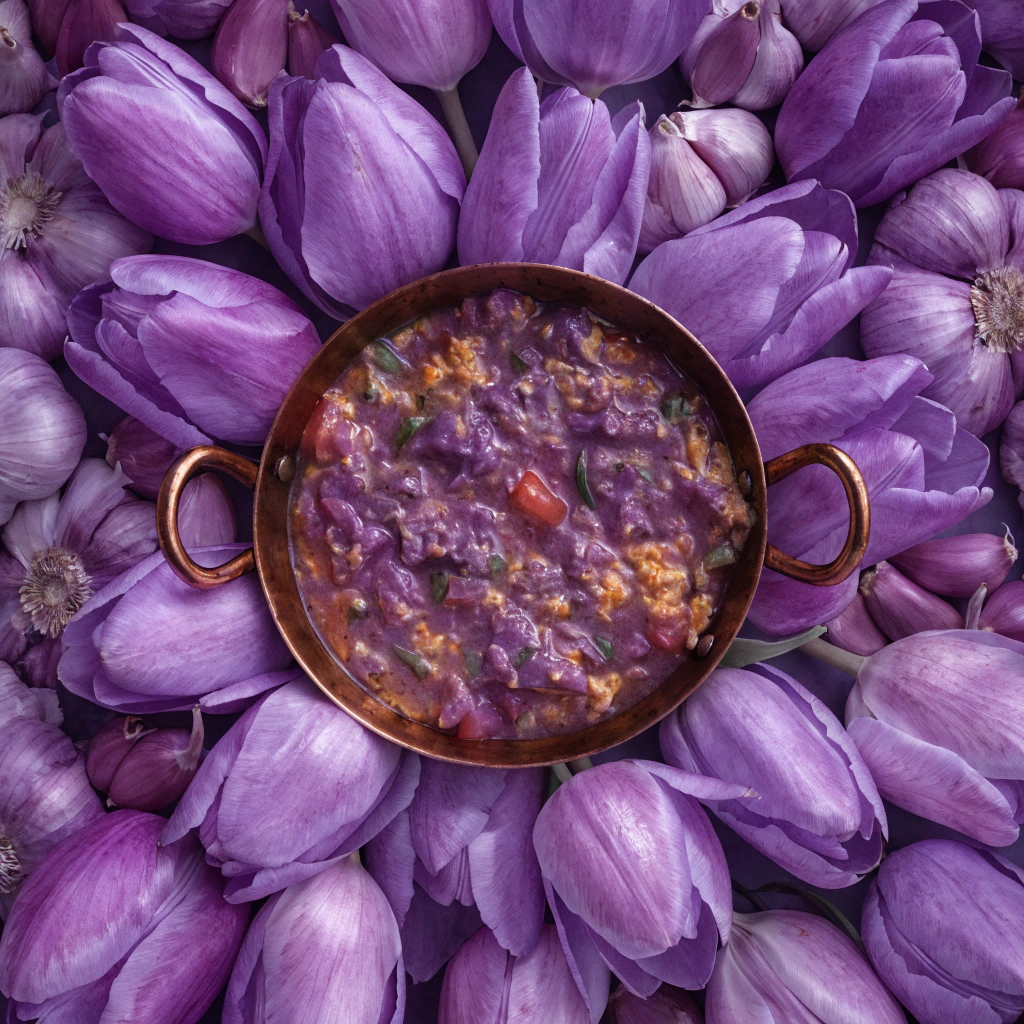
A Delicious Breakfast from Turkey
Menemen is a famous food from Turkey. It is a popular breakfast. People eat it in the morning, but it is good for lunch too.
Menemen has simple ingredients. You need tomatoes, green peppers, and onions. You cook them in a pan with oil. Then, you add eggs. You mix everything together.
Turkish people eat Menemen with fresh bread. It is hot and very tasty. Many families cook this dish at home. It is easy and cheap to make. Do you want to try it?
Gramática destacada
Patrón: Present Simple for Facts
"Menemen has simple ingredients."
We use the present simple to talk about facts or things that are generally true. For 'it', we use the verb form 'has' instead of 'have'.
Patrón: Subject-Verb-Object (SVO)
"Turkish people eat Menemen with fresh bread."
This is the basic sentence structure in English. The subject (Turkish people) comes first, then the verb (eat), and finally the object (Menemen).
Pon a prueba tu comprensión
10 preguntas · A1 Principiante · 1 vista previa gratis
Pon a prueba lo que aprendiste en este artículo. ¡Responde todas las preguntas para ganar XP!
Where is Menemen from?
¿Quieres terminar el quiz?
9 preguntas más te esperan. ¡Regístrate gratis para desbloquear el quiz completo y ganar XP!
Regístrate gratis¿Ya tienes cuenta? Acceder
Desglose de preguntas
Where is Menemen from?
Tu respuesta:
Respuesta correcta: Turkey
Menemen is only good for dinner.
Tu respuesta:
Respuesta correcta: Falso
What does 'cheap' mean?
Tu respuesta:
Respuesta correcta: Not costing much money
You cook the vegetables in a _____ with oil.
Tu respuesta:
Respuesta correcta: pan
Menemen: A Delicious Turkish Breakfast
Menemen is a very popular dish in Turkey. People usually eat it for breakfast, but it is also good for a quick dinner. It started in a small place called Menemen in Izmir. This happened many years ago, and now everyone in the country loves it because it is delicious and simple.
To make Menemen, you need simple ingredients. You need fresh tomatoes, green peppers, and eggs. First, you cook the vegetables in a pan with some oil or butter. Then, you add the eggs and mix them. Some people like to add onions, but others say that onions are not for breakfast. This is a big debate in Turkey!
Menemen is better than many other breakfast foods because it is very fresh. It is also cheaper than dishes with meat. Most people eat it directly from the pan with pieces of fresh bread. It is the best meal to share with your friends and family on a sunny morning.
Gramática destacada
Patrón: Past Simple
"It started in a small place called Menemen in Izmir."
We use the past simple to talk about finished actions in the past. To form it with regular verbs, we usually add '-ed' to the base verb.
Patrón: Comparatives
"Menemen is better than many other breakfast foods because it is very fresh."
We use comparatives to compare two things. For short adjectives, we add '-er', and for irregular adjectives like 'good', we use 'better'.
Pon a prueba tu comprensión
11 preguntas · A2 Básico · 1 vista previa gratis
Pon a prueba lo que aprendiste en este artículo. ¡Responde todas las preguntas para ganar XP!
Where did Menemen originally come from?
¿Quieres terminar el quiz?
10 preguntas más te esperan. ¡Regístrate gratis para desbloquear el quiz completo y ganar XP!
Regístrate gratis¿Ya tienes cuenta? Acceder
Desglose de preguntas
Where did Menemen originally come from?
Tu respuesta:
Respuesta correcta: Izmir
People only eat Menemen for breakfast.
Tu respuesta:
Respuesta correcta: Falso
What does 'simple' mean?
Tu respuesta:
Respuesta correcta: Easy to do
You need fresh tomatoes, green _____, and eggs.
Tu respuesta:
Respuesta correcta: peppers
How do most people eat Menemen?
Tu respuesta:
Respuesta correcta: With pieces of bread
Menemen: The Heart of the Turkish Breakfast
Turkey is famous for its incredible food culture, and one dish that has captured the hearts of locals and tourists alike is Menemen. This traditional Turkish breakfast is more than just a simple meal; it is a symbol of comfort and hospitality. Although it is often eaten for breakfast, it has also become a popular choice for a quick lunch or a late-night snack.
The dish is named after the Menemen district in Izmir, which is where it originated in the early 20th century. To make a perfect Menemen, fresh ingredients are essential. Usually, green peppers and tomatoes are chopped and sautéed in a pan with olive oil or butter. Once the vegetables have softened, eggs are added and gently stirred. It is important that the eggs are not overcooked so that the dish remains juicy.
There is a famous debate in Turkey about whether onions should be included. While some people believe that onions belong in Menemen, others think they should only be used if the dish is served for lunch. Regardless of the ingredients, Menemen is always served in the same metal pan in which it was cooked. This helps to keep the food warm while it is shared among friends and family.
Menemen is best enjoyed with thick slices of fresh bread, which are used to dip into the sauce. Because it is easy to prepare and uses seasonal produce, it has remained a staple of Turkish life for decades. If you ever visit Turkey, you must try this delicious meal which represents the true heart of Mediterranean cooking.
Gramática destacada
Patrón: Present Perfect
"one dish that has captured the hearts of locals and tourists alike is Menemen."
The present perfect (have/has + past participle) is used here to describe an action that happened in the past but has a result or relevance in the present.
Patrón: Passive Voice
"Menemen is always served in the same metal pan in which it was cooked."
The passive voice (is + past participle) is used to focus on the action or the object rather than the person performing the action.
Pon a prueba tu comprensión
11 preguntas · B1 Intermedio · 1 vista previa gratis
Pon a prueba lo que aprendiste en este artículo. ¡Responde todas las preguntas para ganar XP!
Where did Menemen originate?
¿Quieres terminar el quiz?
10 preguntas más te esperan. ¡Regístrate gratis para desbloquear el quiz completo y ganar XP!
Regístrate gratis¿Ya tienes cuenta? Acceder
Desglose de preguntas
Where did Menemen originate?
Tu respuesta:
Respuesta correcta: Izmir
Menemen is only eaten for breakfast in Turkey.
Tu respuesta:
Respuesta correcta: Falso
What does 'essential' mean in the context of the article?
Tu respuesta:
Respuesta correcta: Necessary
The dish is named _____ the Menemen district in Izmir.
Tu respuesta:
Respuesta correcta: after
What is the famous debate regarding Menemen?
Tu respuesta:
Respuesta correcta: Whether to include onions
The Cultural Significance of Menemen: More Than Just a Breakfast Dish
Menemen is often described as the quintessential comfort food of Turkey, serving as a fundamental staple of the legendary Turkish breakfast, or 'kahvaltı'. However, its popularity extends far beyond the morning hours, as it is equally cherished as a quick lunch or a satisfying late-night meal. Named after the Menemen district in Izmir, the dish is believed to have originated in the early 20th century, representing the Mediterranean heart of Turkish culinary traditions. It relies heavily on the harmony of fresh, seasonal produce and the simplicity of one-pan preparation.
While an uninitiated observer might perceive it as a simple scrambled egg dish, Menemen is a sophisticated balance of textures and flavors. The preparation typically begins with sautéing finely chopped green peppers in olive oil or butter until they soften. Subsequently, peeled and diced tomatoes are added, which are then simmered until the mixture reduces into a thick, fragrant sauce. Only then are the eggs incorporated, either whisked beforehand or cracked directly into the pan to be gently folded into the vegetables. The objective is to achieve a succulent consistency where the eggs are cooked but remain moist, rather than dry.
Furthermore, the inclusion of onions remains a subject of intense controversy among culinary enthusiasts. A famous food critic once sparked a nationwide debate by questioning whether authentic Menemen should include onions. Proponents argue that onions provide a necessary depth of flavor, whereas purists maintain that onions are only appropriate when the dish is consumed as a main course for lunch or dinner. Regardless of one’s personal preference, the dish is almost always served in the traditional copper pan, which is known as a sahan, accompanied by generous portions of fresh, crusty bread used to scoop up the mixture.
From a sociological perspective, Menemen facilitates a communal dining experience. It is rarely consumed in isolation; instead, it sits at the center of the table, inviting participants to share from the same vessel. Despite its humble ingredients, Menemen is often regarded as a culinary masterpiece because it reflects the Turkish philosophy of hospitality and the celebration of fresh ingredients. In conclusion, Menemen is not merely a recipe but a cultural symbol that bridges the gap between simplicity and sophistication, making it an indispensable part of the Turkish identity.
Gramática destacada
Patrón: Passive Reporting Verbs
"The dish is believed to have originated in the early 20th century."
This structure (subject + be + past participle + to have + past participle) is used to report past events or beliefs in a formal, objective way.
Patrón: Non-defining Relative Clauses
"...the traditional copper pan, which is known as a sahan."
This clause adds extra information about the 'copper pan'. It is separated by commas and uses 'which' because the information is not essential to identify the noun.
Patrón: Concessive Clauses with 'Despite'
"Despite its humble ingredients, Menemen is often regarded as a culinary masterpiece."
The word 'despite' is a preposition used to show contrast. It must be followed by a noun, a pronoun, or a gerund (-ing form), not a full subject-verb clause.
Pon a prueba tu comprensión
11 preguntas · B2 Intermedio alto · 1 vista previa gratis
Pon a prueba lo que aprendiste en este artículo. ¡Responde todas las preguntas para ganar XP!
In which Turkish district is the dish Menemen believed to have started?
¿Quieres terminar el quiz?
10 preguntas más te esperan. ¡Regístrate gratis para desbloquear el quiz completo y ganar XP!
Regístrate gratis¿Ya tienes cuenta? Acceder
Desglose de preguntas
In which Turkish district is the dish Menemen believed to have started?
Tu respuesta:
Respuesta correcta: Menemen
There is a significant disagreement among food lovers regarding whether onions should be included in Menemen.
Tu respuesta:
Respuesta correcta: Verdadero
What does the word 'texture' refer to in the context of the article?
Tu respuesta:
Respuesta correcta: The physical feel and consistency of the dish
Menemen is considered a fundamental _____ of the traditional Turkish breakfast.
Tu respuesta:
Respuesta correcta: staple
What is the name of the traditional copper pan used to serve Menemen?
Tu respuesta:
Respuesta correcta: Sahan
The Gastronomic Paradox: Menemen and the Art of Turkish Simplicity
Seldom does a dish so humble command such nationwide devotion as menemen. Rooted in the Aegean district of the same name within Izmir, this quintessential Turkish scramble has transcended its modest origins to become a cornerstone of the country’s culinary identity. While the uninitiated might perceive it as a mere amalgamation of eggs, tomatoes, and peppers, for the Turkish palate, it represents a sophisticated exercise in textural balance and seasonal reverence. The ubiquity of the dish across both high-end metropolitan bistros and dusty roadside stops speaks to its democratic nature, yet beneath its surface lies a contentious debate regarding its very composition.
It is the inclusion of the humble onion that has sparked a digital firestorm among epicurean circles. In 2018, a prominent food critic launched a social media poll asking whether menemen should be prepared with or without onions, attracting over 400,000 votes. This dichotomy between the 'breakfast purists'—who argue that onions belong strictly to lunch versions—and the 'flavor maximalists' highlights the nuanced arguments that define Turkish food culture. The meticulous balancing of acidity and sweetness is at the heart of this dispute. Proponents of the onion-free version claim that the ephemeral sweetness of the summer tomato should remain unadulterated, whereas their opponents argue that the caramelization of onions provides a necessary depth of flavor to counteract the acidity.
The preparation of menemen is an exercise in restraint. The technique relies heavily on the viscosity of the eggs; they must be folded into the simmering vegetable base at the precise moment to ensure a creamy, almost velvety consistency. Overcooking the eggs is considered a sacrosanct violation of the dish's integrity. Furthermore, the reliance on seasonal produce means that a true menemen is a fleeting experience, best enjoyed when tomatoes are at their peak of ripeness. Nominalisation of the cooking process—the transition from 'frying' to 'stewing'—is what distinguishes a mediocre scramble from a sublime menemen. What the observer witnesses is not merely a cooking method, but a cultural ritual of communal eating, where the pan itself serves as the centerpiece for shared experience. Ultimately, menemen serves as a reminder that in a world of increasingly complex gastronomy, the most profound satisfaction often derives from the most basic ingredients, provided they are treated with the respect they deserve.
Gramática destacada
Patrón: Negative Inversion
"Seldom does a dish so humble command such nationwide devotion as menemen."
This structure is used for emphasis by placing a negative or restrictive adverb at the beginning of the sentence, followed by auxiliary verb-subject order.
Patrón: Cleft Sentence
"It is the inclusion of the humble onion that has sparked a digital firestorm among epicurean circles."
A cleft sentence focuses on a specific part of the information (the onion) by using the 'It + be + focus + relative clause' structure.
Patrón: Nominalisation
"The meticulous balancing of acidity and sweetness is at the heart of this dispute."
Nominalisation turns verbs or adjectives into nouns (balancing) to create a more formal, academic, and objective tone characteristic of C1 writing.
Pon a prueba tu comprensión
12 preguntas · C1 Avanzado · 1 vista previa gratis
Pon a prueba lo que aprendiste en este artículo. ¡Responde todas las preguntas para ganar XP!
What does the author suggest about the 'uninitiated' view of menemen?
¿Quieres terminar el quiz?
11 preguntas más te esperan. ¡Regístrate gratis para desbloquear el quiz completo y ganar XP!
Regístrate gratis¿Ya tienes cuenta? Acceder
Desglose de preguntas
What does the author suggest about the 'uninitiated' view of menemen?
Tu respuesta:
Respuesta correcta: They might see it as just a basic mix of ingredients.
The debate regarding the use of onions in menemen was purely academic and had little public engagement.
Tu respuesta:
Respuesta correcta: Falso
Which word describes something that is considered too important to be changed or disrespected?
Tu respuesta:
Respuesta correcta: Sacrosanct
The author argues that the _____ of the eggs is crucial for achieving the correct velvety consistency.
Tu respuesta:
Respuesta correcta: viscosity
According to the article, why is menemen considered a 'democratic' dish?
Tu respuesta:
Respuesta correcta: Because it is served in both expensive restaurants and humble roadside stops.
Overcooking the eggs is viewed as a significant mistake that ruins the dish.
Tu respuesta:
Respuesta correcta: Verdadero
Menemen: La Quintesencia de la Gastronomía Turca en su Expresión Más Sencilla y Profunda
En el vasto y ubérrimo tapiz de la culinaria mundial, pocos platos logran encapsular la esencia de una cultura con la sencillez y la profundidad que el menemen exhibe. Este eximio manjar, a menudo relegado a la categoría de 'desayuno turco', trasciende con creces tal denominación, erigiéndose como un pilar ineludible de la dieta otomana, tanto para el primer ágape del día como para una improvisada cena nocturna o un almuerzo reconfortante. Podría aducirse que su ubicuidad y su arraigo cultural lo sitúan en una posición privilegiada, casi como un emblema gastronómico que, a pesar de su aparente modestia, revela la sofisticación inherente a la cocina mediterránea turca.
Su etimología nos remite al distrito de Menemen en Esmirna, una región costera del Egeo que, a principios del siglo XX, presenció el nacimiento de esta preparación. No es casualidad que su génesis se ubique en una zona bendecida por la generosidad de la tierra, donde la frescura de los productos de temporada es una constante. La filosofía subyacente al menemen es, en esencia, una oda a la armonía de ingredientes prístinos y a la elegancia de la preparación en una única sartén. Si bien para un ojo inexperto pudiera parecer un mero revuelto de huevos, la maestría reside en la proporción, la calidad de los componentes y el punto exacto de cocción que permite que cada elemento conserve su identidad mientras se fusiona en una sinfonía de sabores y texturas.
Los pilares fundamentales del menemen son, sin lugar a dudas, los tomates maduros y los pimientos verdes, preferentemente del tipo dulce o con un ligero picor, que se cocinan lentamente hasta alcanzar una consistencia casi de salsa. A este lecho vegetal se le incorporan los huevos, cuya preparación es objeto de un debate perenne y apasionado entre los puristas: ¿deben batirse hasta integrarse completamente con las verduras, o es preferible que se cocinen ligeramente revueltos, manteniendo algunas yemas intactas y un aspecto más marmóreo? Ambas aproximaciones tienen sus defensores, y la elección a menudo depende de la tradición familiar o del gusto personal. Algunos puristas argüirían que la adición de cebolla altera la pureza del plato, mientras que otros la consideran un elemento que potencia la complejidad aromática, dotándolo de una capa adicional de sabor que, lejos de desvirtuarlo, lo enriquece.
La preparación es engañosamente sencilla, mas exige una atención meticulosa. Se comienza sofriendo los pimientos y, opcionalmente, la cebolla en aceite de oliva o mantequilla, hasta que estén tiernos. Posteriormente, se añaden los tomates rallados o finamente picados, dejándolos cocer a fuego lento hasta que el agua se evapore y se forme una base densa y fragante. Es crucial que esta base adquiera la consistencia adecuada para que el menemen no resulte aguado. Finalmente, se rompen los huevos directamente sobre la mezcla, se sazonan con sal, pimienta y, a menudo, hojuelas de pimiento rojo (pul biber), y se cocinan hasta que las claras estén cuajadas y las yemas, si se opta por no batirlas, permanezcan ligeramente líquidas. El menemen se sirve directamente en la sartén, acompañado de pan turco fresco para mojar en la salsa, siendo un ritual casi sagrado que invita a la convivialidad y al disfrute compartido.
La versatilidad del menemen es otro rasgo que merece ser destacado. Aunque su asociación con el kahvaltı (desayuno turco) es innegable, su perfil nutricional y su capacidad para saciar lo convierten en una opción viable para cualquier momento del día. Representa, en última instancia, una manifestación culinaria de la resiliencia y la inventiva turca, una prueba fehaciente de cómo ingredientes humildes, manejados con respeto y conocimiento, pueden transformarse en una experiencia gastronómica sublime. No es solo comida; es una narrativa sensorial que evoca los sabores de Anatolia, la calidez del hogar y la generosidad de una cultura que encuentra en la mesa uno de sus más elocuentes lenguajes. Que se siga deleitando su paladar con esta maravilla, es el mejor tributo a su legado imperecedero.
Gramática destacada
Patrón: Uso del Subjuntivo para expresar subjetividad y opinión (Podría aducirse que...)
"Podría aducirse que su ubicuidad y su arraigo cultural lo sitúan en una posición privilegiada..."
El subjuntivo se emplea aquí en la construcción impersonal 'Podría aducirse que' para introducir una opinión o una posibilidad de manera más atenuada y formal, sin presentarla como un hecho absoluto. Este uso permite expresar una sugerencia o una inferencia con un alto grado de sofisticación lingüística, evitando una afirmación categórica.
Patrón: Oración de relativo con valor concesivo (Si bien... pudiera parecer)
"Si bien para un ojo inexperto pudiera parecer un mero revuelto de huevos, la maestría reside en la proporción..."
La conjunción 'si bien' introduce una oración concesiva, que presenta un obstáculo o una objeción a lo que se afirma en la oración principal, pero sin impedir su cumplimiento. El uso del pretérito imperfecto de subjuntivo ('pudiera parecer') en lugar del indicativo ('parece') añade un matiz de menor certeza o de posibilidad hipotética a la objeción, elevando el nivel de formalidad y reflexión en el discurso.
Patrón: Construcción impersonal con 'se' para expresar generalidad (Se comienza sofriendo...)
"Se comienza sofriendo los pimientos y, opcionalmente, la cebolla en aceite de oliva o mantequilla..."
La construcción impersonal con 'se' se utiliza para describir acciones o procesos sin especificar un sujeto concreto que las realice. En este caso, 'se comienza' indica una acción general o una etapa inicial en la preparación, aplicable a cualquier persona que cocine el plato. Este uso es común en textos descriptivos, recetas o instrucciones, aportando objetividad y generalidad a la información.
Pon a prueba tu comprensión
12 preguntas · C2 Dominio · 1 vista previa gratis
Pon a prueba lo que aprendiste en este artículo. ¡Responde todas las preguntas para ganar XP!
¿Qué región de Turquía es mencionada como el lugar de origen del menemen?
¿Quieres terminar el quiz?
11 preguntas más te esperan. ¡Regístrate gratis para desbloquear el quiz completo y ganar XP!
Regístrate gratis¿Ya tienes cuenta? Acceder
Desglose de preguntas
¿Qué región de Turquía es mencionada como el lugar de origen del menemen?
Tu respuesta:
Respuesta correcta: Esmirna
El artículo sugiere que el menemen es exclusivamente un plato de desayuno en Turquía.
Tu respuesta:
Respuesta correcta: Falso
¿Qué significa la palabra "ubérrimo"?
Tu respuesta:
Respuesta correcta: Fértil o abundante
Uno de los debates perennes entre los puristas del menemen es si los huevos deben batirse completamente o cocinarse ligeramente ______.
Tu respuesta:
Respuesta correcta: revueltos
¿Cuál de los siguientes ingredientes NO es mencionado como uno de los pilares fundamentales del menemen?
Tu respuesta:
Respuesta correcta: Aceitunas negras
El menemen se sirve tradicionalmente en la misma sartén en que se prepara.
Tu respuesta:
Respuesta correcta: Verdadero

