Carnival in Brazil
Carnival is a very big party in Brazil. It happens every year in February or March. The celebration lasts for four days. People wear colorful clothes and masks. They dance in the streets with their friends. There is loud music everywhere.
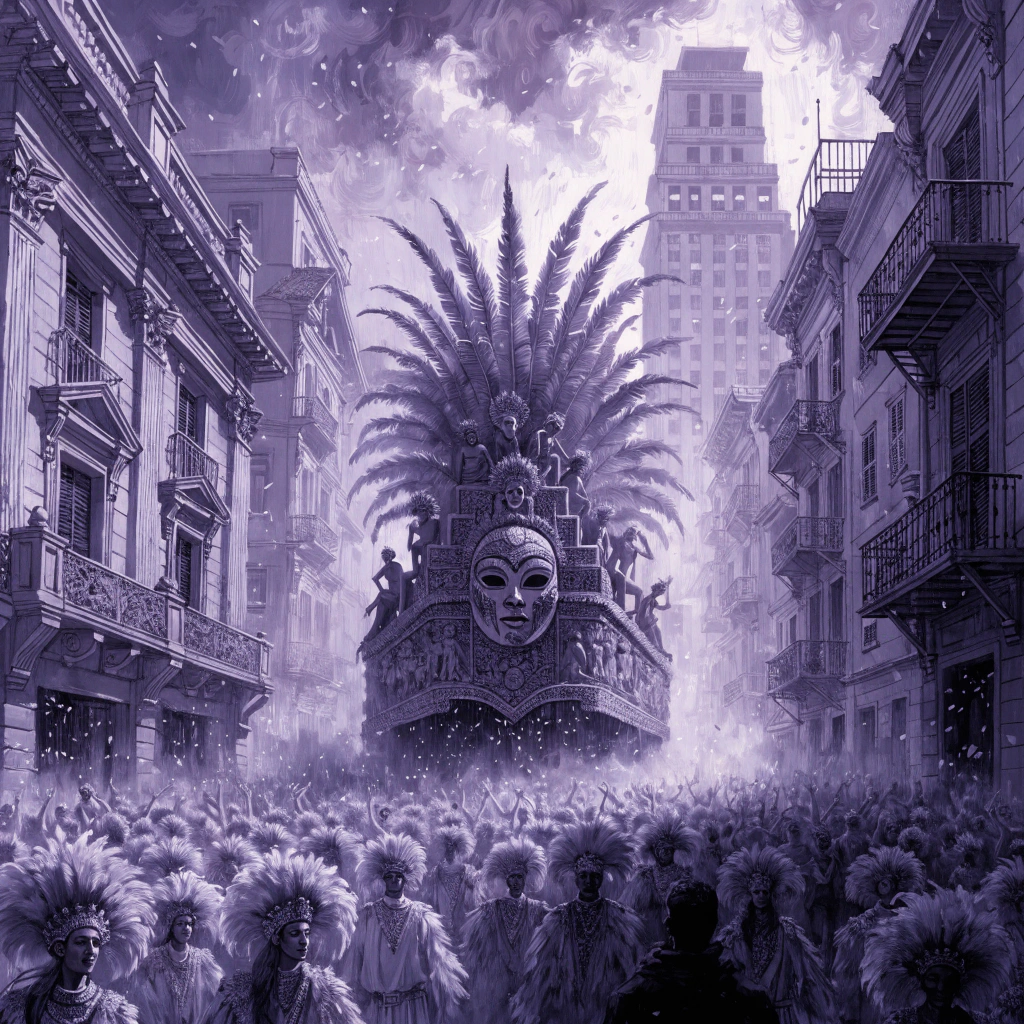
In the city of Rio de Janeiro, there is a famous parade. Many people watch the dancers. The dancers move to fast samba music. They wear beautiful costumes with many feathers.
Families celebrate together at this time. They eat delicious food and drink juice. Everyone is very happy during Carnival. It is a special and famous holiday for the whole country.
Grammatik-Spotlight
Muster: Präsens von 'To Be' (sein)
"Carnival is a very big party in Brazil."
Wir verwenden 'is' bei Subjekten in der Einzahl wie 'Carnival', um Fakten auszudrücken. Es beschreibt, was etwas ist oder wo es sich befindet.
Muster: Substantive im Plural
"People wear colorful clothes and masks."
Wir hängen ein '-s' an Substantive wie 'mask' an, um zu zeigen, dass es mehr als eins gibt. Manche Wörter, wie 'people' und 'clothes', stehen bereits im Plural.
Teste dein Verständnis
10 Fragen · A1 Anfänger · 1 kostenlose Vorschau
Teste, was du aus diesem Artikel gelernt hast. Beantworte alle Fragen und sammle XP!
Wann findet der Karneval normalerweise statt?
Möchtest du das Quiz beenden?
9 weitere Fragen warten auf dich. Registriere dich kostenlos, um das vollständige Quiz freizuschalten und XP zu sammeln!
Kostenlos registrierenHast du schon ein Konto? Anmelden
Gut gemacht!
Weiter üben!
Bereits abgeschlossen — keine zusätzlichen XP
Registriere dich, um XP zu verdienenFragenübersicht
Wann findet der Karneval normalerweise statt?
Deine Antwort:
Richtige Antwort: Februar oder März
Der Karneval dauert zehn Tage.
Deine Antwort:
Richtige Antwort: Falsch
Was bedeutet 'holiday'?
Deine Antwort:
Richtige Antwort: Ein besonderer Tag zum Feiern
Die Tänzer bewegen sich zu schneller _____ Musik.
Deine Antwort:
Richtige Antwort: samba
Carnival: The Biggest Party in Brazil
Carnival is the most famous festival in Brazil. Every year, millions of people go to the streets to celebrate. It usually happens in February or March, before the Catholic season of Lent. People wear beautiful costumes with many colors.
The history of Carnival is very interesting. A long time ago, Portuguese people brought their traditions to Brazil. Later, African music and dance changed the festival. Today, the samba is the most important part of Carnival. Samba is faster and more energetic than other types of music.
In big cities like Rio de Janeiro, there are huge parades. People dance for many hours and play drums. They are happy because they love their traditions. Last year, more than two million people visited Rio for the party. It was bigger than the year before. Carnival is a special time for everyone in Brazil.
Grammatik-Spotlight
Muster: Superlative von Adjektiven
"Carnival is the most famous festival in Brazil."
Wir benutzen 'the most' bei langen Adjektiven, um eine Sache mit allen anderen in einer Gruppe zu vergleichen. Es zeigt, dass der Karneval den höchsten Bekanntheitsgrad hat.
Muster: Komparative von Adjektiven
"Samba is faster and more energetic than other types of music."
Wir benutzen den Komparativ, um die Unterschiede zwischen zwei Dingen zu betrachten. Bei kurzen Wörtern wie 'fast' hängen wir '-er' an; bei langen Wörtern wie 'energetic' benutzen wir 'more'.
Teste dein Verständnis
11 Fragen · A2 Grundkenntnisse · 1 kostenlose Vorschau
Teste, was du aus diesem Artikel gelernt hast. Beantworte alle Fragen und sammle XP!
Wann findet der Karneval normalerweise statt?
Möchtest du das Quiz beenden?
10 weitere Fragen warten auf dich. Registriere dich kostenlos, um das vollständige Quiz freizuschalten und XP zu sammeln!
Kostenlos registrierenHast du schon ein Konto? Anmelden
Gut gemacht!
Weiter üben!
Bereits abgeschlossen — keine zusätzlichen XP
Registriere dich, um XP zu verdienenFragenübersicht
Wann findet der Karneval normalerweise statt?
Deine Antwort:
Richtige Antwort: Im Februar oder März
Portugiesische Traditionen halfen dabei, den Karneval in Brasilien zu begründen.
Deine Antwort:
Richtige Antwort: Richtig
Was bedeutet das Wort 'huge'?
Deine Antwort:
Richtige Antwort: Sehr, sehr groß
Die Menschen tragen während des Festivals wunderschöne _____ mit vielen Farben.
Deine Antwort:
Richtige Antwort: costumes
Warum sind die Menschen während der Paraden glücklich?
Deine Antwort:
Richtige Antwort: Weil sie ihre Traditionen lieben
Karneval in Brasilien: Ein Fest der Farben und Musik!
Karneval in Brasilien ist ein weltbekanntes Fest, das jedes Jahr Millionen von Menschen begeistert. Es ist nicht nur eine Party, sondern ein wichtiges kulturelles Ereignis, das das ganze Land für vier Tage in einen Rausch versetzt. Man könnte sagen, es ist die Seele Brasiliens, die hier zum Ausdruck kommt, voll von Farben, Musik und Tanz.
Die Wurzeln des brasilianischen Karnevals liegen im portugiesischen „Entrudo“, einem alten Straßenfest. Aber im Laufe der Zeit hat sich der Karneval stark verändert und entwickelt. Im 19. und 20. Jahrhundert sind afrikanische Rhythmen und indigene Traditionen dazugekommen. Diese Mischung hat das einzigartige Spektakel geschaffen, das wir heute kennen und lieben. Besonders die Samba-Musik und die großen Paraden sind sehr wichtig geworden und haben den Karneval weltweit berühmt gemacht.
Der Zeitpunkt des Karnevals wird durch den katholischen Kalender bestimmt. Er beginnt am Freitag vor Aschermittwoch und endet am Faschingsdienstag. Das ist eine Zeit, in der die Menschen vor der Fastenzeit noch einmal ausgelassen feiern möchten, bevor eine ruhigere Zeit beginnt. Die Vorbereitungen für dieses riesige Fest beginnen oft schon Monate im Voraus, besonders für die Samba-Schulen.
Die bekanntesten Karnevalsfeiern finden in Rio de Janeiro, Salvador und Olinda statt. In Rio gibt es die berühmten Samba-Schulen, die monatelang für ihre beeindruckenden Paraden im Sambódromo trainieren. Jede Schule hat ihre eigenen Kostüme, Tänze und Lieder, die sie mit Stolz präsentiert. Salvador ist bekannt für seine "Blocos" und "Trio Elétricos", große Lastwagen mit Bands, die durch die Straßen fahren und Menschenmassen anziehen, die ausgelassen tanzen. Olinda bietet einen traditionelleren Karneval mit riesigen Puppen und viel Straßenmusik, der oft als sehr authentisch beschrieben wird.
Egal, wo man in Brasilien ist, der Karneval ist ein unvergessliches Erlebnis. Überall sieht man fröhliche Menschen, die tanzen, singen und das Leben feiern. Es ist ein Fest, das man einmal im Leben gesehen haben muss, um es wirklich zu verstehen und die Energie zu spüren, die es ausstrahlt.
Grammatik-Spotlight
Muster: Das Perfekt (Vergangenheit)
"Aber im Laufe der Zeit hat sich der Karneval stark verändert und entwickelt."
Das Perfekt benutzt man, um über abgeschlossene Handlungen in der Vergangenheit zu sprechen, deren Ergebnis für die Gegenwart wichtig ist. Man bildet es mit dem Hilfsverb "haben" oder "sein" und dem Partizip II des Hauptverbs.
Muster: Das Passiv (Vorgangspassiv)
"Der Zeitpunkt des Karnevals wird durch den katholischen Kalender bestimmt."
Das Passiv wird verwendet, wenn die Handlung oder der Vorgang wichtiger ist als die Person, die die Handlung ausführt. Es wird mit einer Form von "werden" und dem Partizip II des Hauptverbs gebildet.
Teste dein Verständnis
11 Fragen · B1 Mittelstufe · 1 kostenlose Vorschau
Teste, was du aus diesem Artikel gelernt hast. Beantworte alle Fragen und sammle XP!
Was ist der Karneval in Brasilien hauptsächlich?
Möchtest du das Quiz beenden?
10 weitere Fragen warten auf dich. Registriere dich kostenlos, um das vollständige Quiz freizuschalten und XP zu sammeln!
Kostenlos registrierenHast du schon ein Konto? Anmelden
Gut gemacht!
Weiter üben!
Bereits abgeschlossen — keine zusätzlichen XP
Registriere dich, um XP zu verdienenFragenübersicht
Was ist der Karneval in Brasilien hauptsächlich?
Deine Antwort:
Richtige Antwort: Ein wichtiges kulturelles Ereignis
Die Wurzeln des brasilianischen Karnevals liegen in afrikanischen Traditionen.
Deine Antwort:
Richtige Antwort: Falsch
Was bedeutet das Wort "begeistert" in diesem Kontext?
Deine Antwort:
Richtige Antwort: enthusiastisch und voller Freude
Der Karneval beginnt am Freitag vor _____.
Deine Antwort:
Richtige Antwort: Aschermittwoch
Welche Stadt wird im Artikel nicht als Ort einer der bekanntesten Karnevalsfeiern genannt?
Deine Antwort:
Richtige Antwort: São Paulo
Brazil’s Carnival: A Tapestry of History, Rhythm, and Social Identity
Brazil's Carnival is far more than a mere celebration; it is a profound sociological phenomenon that encapsulates the nation's complex history. Originating from the Portuguese 'entrudo', the festivities were initially characterized by rowdy street plays where participants threw water and flour at one another. This primitive form of revelry was often seen as chaotic and socially disruptive. However, throughout the 19th and 20th centuries, this tradition underwent a radical transformation as it moved from the margins of society to the center of national pride. By successfully incorporating African percussion and indigenous elements, it evolved into the vibrant spectacle we witness today, blending European roots with deep-seated local traditions.
Central to this evolution is the samba, a rhythmic genre that emerged from the Afro-Brazilian communities in Rio de Janeiro. Samba schools are not merely performing groups; they function as essential social hubs that provide a sense of belonging and support to their members throughout the year. The meticulous preparation for the annual parade at the Sambadrome involves thousands of participants, showcasing elaborate costumes and allegorical floats that often convey poignant social messages about politics, environment, or history. While the Rio parade captures global attention with its sheer scale, the street parties, or 'blocos', in cities like Salvador and Recife offer a more participatory experience. In these northern regions, the barriers between performers and spectators are dismantled, fostering a collective euphoria that lasts for days and permeates every street corner.
Nevertheless, the commercialization of Carnival has sparked significant debate among scholars and locals alike. Some critics argue that the increasing focus on international tourism might dilute the event's authentic cultural roots, turning a sacred tradition into a mere commodity. Conversely, others maintain that the global exposure ensures the survival of these traditions in a rapidly modernizing world. Regardless of these conflicting perspectives, it remains undeniable that Carnival serves as a powerful catalyst for national unity. It is a period where social hierarchies are momentarily suspended, allowing for a unique, uninhibited expression of Brazilian identity.
Furthermore, the economic implications of the festival are staggering. Millions of international visitors flock to the country annually, generating substantial revenue and creating numerous employment opportunities in the hospitality and arts sectors. Despite the logistical challenges and the inevitable exhaustion that follows such a massive undertaking, the spirit of Carnival continues to thrive. It has become an indispensable part of Brazil's cultural fabric, reflecting both the struggles of the past and the exuberant hope of the future. Through its fusion of diverse influences, Carnival remains a testament to the resilience and creativity of the Brazilian people.
Grammatik-Spotlight
Muster: Spaltsätze
"It is a period where social hierarchies are momentarily suspended, allowing for a unique, uninhibited expression of Brazilian identity."
Spaltsätze werden verwendet, um einen bestimmten Teil eines Satzes zu betonen. Diese Struktur (It + is + Nominalphrase + Relativsatz) hebt die Wichtigkeit des Zeitraums hervor.
Muster: Modalverben der Möglichkeit
"Some critics argue that the increasing focus on international tourism might dilute the event's authentic cultural roots."
Das Modalverb 'might' wird hier benutzt, um eine zukünftige Möglichkeit oder eine vorsichtige Voraussage auszudrücken. In akademischen oder formellen Analysen ist es üblich, damit zu zeigen, dass ein Ergebnis nicht sicher ist.
Muster: Partizipialsätze
"By successfully incorporating African percussion and indigenous elements, it evolved into the vibrant spectacle we witness today."
Diese Struktur verwendet ein Partizip Präsens (-ing) nach einer Präposition, um die Methode oder das Mittel zu beschreiben, mit dem eine Handlung erreicht wurde, was den Text prägnanter macht.
Teste dein Verständnis
11 Fragen · B2 Obere Mittelstufe · 1 kostenlose Vorschau
Teste, was du aus diesem Artikel gelernt hast. Beantworte alle Fragen und sammle XP!
Was war das Hauptmerkmal des frühen portugiesischen 'entrudo'?
Möchtest du das Quiz beenden?
10 weitere Fragen warten auf dich. Registriere dich kostenlos, um das vollständige Quiz freizuschalten und XP zu sammeln!
Kostenlos registrierenHast du schon ein Konto? Anmelden
Gut gemacht!
Weiter üben!
Bereits abgeschlossen — keine zusätzlichen XP
Registriere dich, um XP zu verdienenFragenübersicht
Was war das Hauptmerkmal des frühen portugiesischen 'entrudo'?
Deine Antwort:
Richtige Antwort: Wilde Straßenspiele mit Wasser und Mehl
Samba-Schulen in Rio de Janeiro existieren nur, um während der vier Karnevalstage aufzutreten.
Deine Antwort:
Richtige Antwort: Falsch
Was bedeutet das Wort 'euphoria' im Kontext des Artikels?
Deine Antwort:
Richtige Antwort: Ein Gefühl intensiver Glückseligkeit
Darüber hinaus sind die wirtschaftlichen Auswirkungen des Festivals _____.
Deine Antwort:
Richtige Antwort: staggering
Wie unterscheiden sich Straßenfeste (blocos) in nördlichen Städten von der Parade in Rio?
Deine Antwort:
Richtige Antwort: Die Barrieren zwischen Darstellern und Zuschauern werden abgebaut
The Kaleidoscope of Carnaval: Brazil’s Syncretic Symphony of Rhythms and Resistance
Seldom has a national celebration managed to capture the global imagination quite as viscerally as Brazil’s Carnival. While the untrained eye might perceive merely a cacophony of sound and a riot of color, the event represents a profound synthesis of disparate historical narratives. Its genesis lies in the Portuguese 'entrudo', a raucous street play characterized by water fights and practical jokes that often bordered on the chaotic. However, what started as a colonial import underwent a radical transformation through the osmosis of African rhythmic structures and indigenous aesthetic traditions. The resulting amalgam is not merely a festive interlude before Lent but a testament to the resilient spirit of a multi-ethnic populace striving for cultural expression.
At the heart of Rio de Janeiro’s iteration lies the Samba School—a misnomer for what are effectively massive community organizations. These institutions serve as the bedrock of local identity, often emerging from the most disenfranchised neighborhoods. The culmination of a year’s labor is the parade in the Sambadrome, where precision is paramount. It is the meticulous choreography and the conceptual depth of the 'enredo' (theme) that determine the victor. Such is the prestige of the competition that it often functions as a vehicle for biting social commentary, critiquing everything from environmental degradation to political corruption.
To view Carnival solely through the lens of Rio, however, would be a gross oversimplification. In Salvador da Bahia, the celebration takes a distinctively Afro-centric turn. Here, the 'Trio Elétrico'—colossal trucks laden with sound systems—navigates through surging throngs of revelers. Meanwhile, in the historic streets of Olinda and Recife, the air is thick with the frantic energy of Frevo, a dance characterized by acrobatic agility and tiny umbrellas. The ubiquity of the 'Bonecos de Olinda'—giant papier-mâché puppets—adds a touch of surrealism to the festivities, highlighting the regional idiosyncrasies that preclude a singular definition of the event.
Underlying the glitz and glamour is a complex socio-economic reality that warrants critical examination. The increasing commercialization of the event has led to growing concerns regarding the exclusion of the very communities that birthed it. What was once an organic street party is now, in some sectors, a high-priced commodity marketed primarily to international tourists and the domestic elite. Yet, despite these encroaching market forces, the grassroots 'blocos' (street bands) continue to reclaim public spaces with defiance, ensuring that the democratization of joy remains central to the experience. It is this tension between institutional spectacle and communal spontaneity that keeps the tradition in a state of constant, vibrant flux.
Ultimately, Carnival is far more than a hedonistic escape. It is a period of 'liminality', where social hierarchies are temporarily inverted and the marginalized take center stage. Through the sophisticated interplay of percussion, pageantry, and political satire, Brazil narrates its own story to itself and the world. As the last echoes of the drums fade on Ash Wednesday, what remains is the enduring power of cultural syncretism to foster a sense of collective belonging in an increasingly fragmented world.
Grammatik-Spotlight
Muster: Inversion mit negativen/einschränkenden Adverbien
"Seldom has a national celebration managed to capture the global imagination quite as viscerally as Brazil’s Carnival."
Inversion wird verwendet, um Betonung zu erzeugen. Wenn ein Satz mit einem einschränkenden Adverb wie 'seldom' (selten), 'hardly' (kaum) oder 'never' (nie) beginnt, steht das Hilfsverb vor dem Subjekt.
Muster: Spaltsätze (It-Clefts)
"It is the meticulous choreography and the conceptual depth of the 'enredo' that determine the victor."
Spaltsätze werden verwendet, um den Fokus auf bestimmte Informationen zu legen. Die Konstruktion 'It is' + [betonter Teil] + 'that' hilft dem Autor, die genaue Ursache oder den Grund innerhalb eines komplexen Satzes hervorzuheben.
Muster: Nominalisierung
"The increasing commercialization of the event has led to growing concerns..."
Nominalisierung beinhaltet die Umwandlung von Verben oder Adjektiven in Nomen (z. B. 'commercialize' zu 'commercialization'). Dies ist ein Kennzeichen für Texte auf C1-Niveau, da es den Text formeller und prägnanter macht.
Teste dein Verständnis
12 Fragen · C1 Fortgeschritten · 1 kostenlose Vorschau
Teste, was du aus diesem Artikel gelernt hast. Beantworte alle Fragen und sammle XP!
Was deutet der Autor über die Sambaschulen in Rio an?
Möchtest du das Quiz beenden?
11 weitere Fragen warten auf dich. Registriere dich kostenlos, um das vollständige Quiz freizuschalten und XP zu sammeln!
Kostenlos registrierenHast du schon ein Konto? Anmelden
Gut gemacht!
Weiter üben!
Bereits abgeschlossen — keine zusätzlichen XP
Registriere dich, um XP zu verdienenFragenübersicht
Was deutet der Autor über die Sambaschulen in Rio an?
Deine Antwort:
Richtige Antwort: Es sind gemeinschaftsbasierte Organisationen, die in benachteiligten Gebieten verwurzelt sind.
Der Autor argumentiert, dass der Karneval in Rio die einzige Version ist, die das nationale Fest definiert.
Deine Antwort:
Richtige Antwort: Falsch
Was bedeutet 'Amalgam' im Kontext des Artikels?
Deine Antwort:
Richtige Antwort: Eine Mischung aus verschiedenen kulturellen Elementen.
Was einst eine organische Straßenparty war, ist heute in einigen Bereichen eine hochpreisige _____, die vor allem an internationale Touristen vermarktet wird.
Deine Antwort:
Richtige Antwort: commodity
Wie unterscheidet sich die Feier in Salvador laut Text von der in Rio?
Deine Antwort:
Richtige Antwort: Sie nimmt eine afrozentrischere Wendung mit 'Trio Elétrico'-Lastwagen.
Der Begriff 'Entrudo' bezieht sich auf die ursprünglichen portugiesischen Wurzeln des Karnevals.
Deine Antwort:
Richtige Antwort: Richtig
The Brazilian Carnival: A Dionysian Synthesis of Sacred Rites and Secular Revelry
To approach the Brazilian Carnival merely as a sequence of boisterous parades would be to do a profound disservice to its intricate socio-cultural architecture. Occurring at the temporal threshold between the indulgence of the secular year and the asceticism of Lent, Carnival operates as a liminal space where the conventional hierarchies of Brazilian society are—at least ostensibly—inverted. This annual explosion of pageantry is not merely a modern iteration of the Portuguese 'entrudo,' but rather a sophisticated syncretism that reflects the nation's arduous history of colonization, resistance, and cultural fusion. Throughout the streets of Rio de Janeiro and Salvador, the event manifests as a bacchanalian celebration that nonetheless retains a deeply structured set of traditions.
Historically, the evolution of Carnival mirrors the shifting paradigms of Brazilian identity. The 'entrudo,' a rowdy and often violent street play introduced by Portuguese settlers in the 17th century, eventually met the visceral rhythms and spiritual motifs brought by enslaved Africans. It was within this crucible that the Samba schools emerged in the early 20th century, providing a marginalized population with a platform for collective expression and artistic legitimacy. Were one to scrutinize the meticulous craftsmanship of the 'barracões'—the workshops where colossal floats are constructed—one would discover a level of technical precision and narrative complexity that rivals any traditional academic discipline. These schools do not merely dance; they articulate a 'pedagogy of the streets,' teaching history and social commentary through polyrhythmic percussion.
Furthermore, the Sambadrome, designed by the modernist architect Oscar Niemeyer, functions as a modern-day amphitheater where the aesthetics of excess are institutionalized. It is through the rhythmic pulse of the 'bateria' (drum section) that the 'escolas de samba' narrate stories of national myth, historical grievance, and utopian futures. This 'total work of art' demands that the viewer acknowledge the profound dedication of the 'passistas' and 'ritmistas' who labor throughout the year for a performance that is inherently ephemeral. The paradox of Carnival lies in this very transience: months of painstaking labor culminate in a fleeting moment of transcendence that vanishes with the first light of Ash Wednesday.
Sociologically, Carnival is often theorized as a 'safety valve'—a mechanism for social catharsis that allows for a temporary suspension of class stratification. Influenced by Mikhail Bakhtin’s theory of the 'carnivalesque,' scholars suggest that the mask allows the subaltern to mock the powerful, if only for four days. While some critics argue that the increasing commercialization of the event has reinforced the hegemony of the elite, others maintain that the spontaneous street 'blocos' represent a reclaimed egalitarianism. In these interstices of the urban landscape, the rigid boundaries of the everyday are dissolved, and the city becomes a playground of polyphonic voices. Scarcely had the first drum sounded when the streets are transformed into a kaleidoscope of bodies, challenging the notions of public and private space.
In the northeastern city of Salvador, the celebration takes a different form, focusing on the 'Trio Elétrico'—massive mobile sound systems that navigate through crowds of millions. Here, the African heritage is even more pronounced, with 'afoxé' groups bringing Yoruba-inspired spirituality to the pavement. This regional diversity underscores that there is no singular 'Brazilian Carnival,' but rather a mosaic of local interpretations that share a common primordial energy. Whether in the choreographed precision of Rio or the chaotic fervor of Bahia, the event remains a visceral display of national pride that navigates the tension between the sacred and the profane.
In conclusion, the Brazilian Carnival remains an enigma, a sophisticated cultural performance that defies simple categorization. It is imperative that the observer look beyond the superficial glitter and recognize the profound cultural synthesis at play. As the last echoes of the parade fade into the Ash Wednesday morning, what remains is not merely a vestigial memory of revelry, but a reinforced sense of collective identity that continues to define the Brazilian spirit. Complex as the event may be, it remains the quintessential expression of a nation that finds its soul in the dance, perpetually regenerating itself through the ritual of the mask.
Grammatik-Spotlight
Muster: Invertierte Konditionalsätze
"Were one to scrutinize the meticulous craftsmanship of the 'barracões', one would discover a level of technical precision..."
Diese formale Struktur ersetzt das Wort 'if' durch eine Umstellung von Subjekt und Hilfsverb (were/had/should). Sie wird in C2-Texten verwendet, um der Diskussion einen akademischen oder hypothetischen Ton zu verleihen.
Muster: Subjunctive Mood (Konjunktiv)
"It is imperative that the observer look beyond the superficial glitter..."
Der 'Subjunctive' wird nach Verben oder Adjektiven der Notwendigkeit oder Dringlichkeit verwendet. Beachte, dass 'look' in der Grundform bleibt, obwohl das Subjekt 'observer' in der dritten Person Singular steht.
Muster: Negative Inversion zur Betonung
"Scarcely had the first drum sounded when the streets are transformed into a kaleidoscope of bodies..."
Wenn ein Satz mit einem verneinenden oder einschränkenden Adverb beginnt (scarcely, hardly, never), werden Subjekt und Hilfsverb umgestellt, um einen dramatischeren, literarischen Effekt zu erzielen.
Teste dein Verständnis
12 Fragen · C2 Meisterschaft · 1 kostenlose Vorschau
Teste, was du aus diesem Artikel gelernt hast. Beantworte alle Fragen und sammle XP!
Was ist die primäre Perspektive des Autors auf den brasilianischen Karneval?
Möchtest du das Quiz beenden?
11 weitere Fragen warten auf dich. Registriere dich kostenlos, um das vollständige Quiz freizuschalten und XP zu sammeln!
Kostenlos registrierenHast du schon ein Konto? Anmelden
Gut gemacht!
Weiter üben!
Bereits abgeschlossen — keine zusätzlichen XP
Registriere dich, um XP zu verdienenFragenübersicht
Was ist die primäre Perspektive des Autors auf den brasilianischen Karneval?
Deine Antwort:
Richtige Antwort: Es ist eine komplexe soziokulturelle Synthese, die Geschichte und Identität widerspiegelt.
Der 'Entrudo' war eine friedliche und stille religiöse Prozession, die von den Portugiesen eingeführt wurde.
Deine Antwort:
Richtige Antwort: Falsch
Welches Wort beschreibt das vorübergehende Aussetzen oder Loslassen starker sozialer Emotionen?
Deine Antwort:
Richtige Antwort: Catharsis
Der Autor bezeichnet den Karneval als ein 'safety _____' (Sicherheitsventil) für soziale Spannungen.
Deine Antwort:
Richtige Antwort: valve
Worauf bezieht sich der Begriff 'ephemeral' (vergänglich) im Kontext der Sambaschul-Paraden?
Deine Antwort:
Richtige Antwort: Die kurzlebige, flüchtige Natur der eigentlichen Aufführung.
Der Autor deutet an, dass der Karneval in Salvador in seiner Form identisch mit dem Karneval in Rio de Janeiro ist.
Deine Antwort:
Richtige Antwort: Falsch

