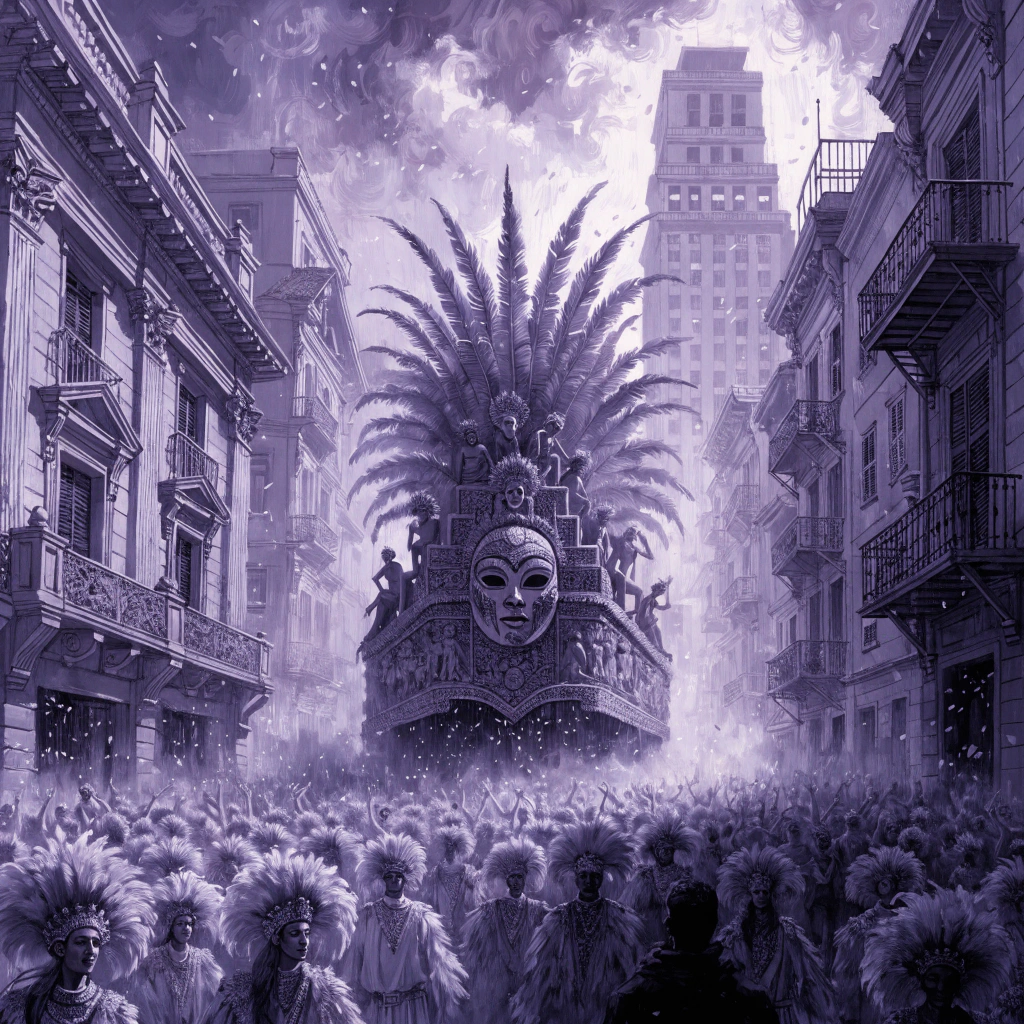
Carnival in Brazil
Carnival is a very big party in Brazil. It happens every year in February or March. The celebration lasts for four days. People wear colorful clothes and masks. They dance in the streets with their friends. There is loud music everywhere.
In the city of Rio de Janeiro, there is a famous parade. Many people watch the dancers. The dancers move to fast samba music. They wear beautiful costumes with many feathers.
Families celebrate together at this time. They eat delicious food and drink juice. Everyone is very happy during Carnival. It is a special and famous holiday for the whole country.
تسليط الضوء على القواعد
نمط: المضارع البسيط للفعل 'To Be'
"Carnival is a very big party in Brazil."
نستخدم 'is' مع الفاعل المفرد مثل 'Carnival' لذكر الحقائق. هي تصف ماهية الشيء أو مكان وجوده.
نمط: أسماء الجمع
"People wear colorful clothes and masks."
نضيف '-s' إلى الأسماء مثل 'mask' لنوضح أن هناك أكثر من واحد. بعض الكلمات، مثل 'people' و 'clothes'، هي بالفعل في صيغة الجمع.
اختبر فهمك
10 أسئلة · A1 مبتدئ · معاينة مجانية واحدة
اختبر ما تعلمته من هذا المقال. أجب على جميع الأسئلة لكسب نقاط خبرة!
متى يُقام الكرنفال عادةً؟
هل تريد إنهاء الاختبار؟
9 أسئلة أخرى بانتظارك. سجّل مجاناً لفتح الاختبار الكامل وكسب نقاط خبرة!
سجل مجاناًلديك حساب بالفعل؟ دخول
تفصيل الأسئلة
متى يُقام الكرنفال عادةً؟
إجابتك:
الإجابة الصحيحة: فبراير أو مارس
يستمر الكرنفال لمدة عشرة أيام.
إجابتك:
الإجابة الصحيحة: خطأ
ماذا تعني كلمة 'holiday'؟
إجابتك:
الإجابة الصحيحة: يوم خاص للاحتفال
يتحرك الراقصون على أنغام موسيقى _____ السريعة.
إجابتك:
الإجابة الصحيحة: samba
Carnival: The Biggest Party in Brazil
Carnival is the most famous festival in Brazil. Every year, millions of people go to the streets to celebrate. It usually happens in February or March, before the Catholic season of Lent. People wear beautiful costumes with many colors.
The history of Carnival is very interesting. A long time ago, Portuguese people brought their traditions to Brazil. Later, African music and dance changed the festival. Today, the samba is the most important part of Carnival. Samba is faster and more energetic than other types of music.
In big cities like Rio de Janeiro, there are huge parades. People dance for many hours and play drums. They are happy because they love their traditions. Last year, more than two million people visited Rio for the party. It was bigger than the year before. Carnival is a special time for everyone in Brazil.
تسليط الضوء على القواعد
نمط: صيغة التفضيل (Superlative Adjectives)
"Carnival is the most famous festival in Brazil."
نستخدم 'the most' مع الصفات الطويلة لمقارنة شيء واحد بكل الأشياء الأخرى في المجموعة. هذا يظهر أن الكرنفال يمتلك أعلى مستوى من الشهرة.
نمط: صيغة المقارنة (Comparative Adjectives)
"Samba is faster and more energetic than other types of music."
نستخدم المقارنات للنظر في الاختلافات بين شيئين. للكلمات القصيرة مثل 'fast'، نضيف '-er'؛ وللكلمات الطويلة مثل 'energetic'، نستخدم 'more'.
اختبر فهمك
11 أسئلة · A2 ابتدائي · معاينة مجانية واحدة
اختبر ما تعلمته من هذا المقال. أجب على جميع الأسئلة لكسب نقاط خبرة!
متى يقام الكرنفال عادة؟
هل تريد إنهاء الاختبار؟
10 أسئلة أخرى بانتظارك. سجّل مجاناً لفتح الاختبار الكامل وكسب نقاط خبرة!
سجل مجاناًلديك حساب بالفعل؟ دخول
تفصيل الأسئلة
متى يقام الكرنفال عادة؟
إجابتك:
الإجابة الصحيحة: في فبراير أو مارس
ساعدت التقاليد البرتغالية في بدء الكرنفال في البرازيل.
إجابتك:
الإجابة الصحيحة: صحيح
ماذا تعني كلمة 'huge'؟
إجابتك:
الإجابة الصحيحة: كبير جداً جداً
يرتدي الناس _____ جميلة بألوان عديدة أثناء المهرجان.
إجابتك:
الإجابة الصحيحة: costumes
لماذا يكون الناس سعداء أثناء المواكب؟
إجابتك:
الإجابة الصحيحة: لأنهم يحبون تقاليدهم
Carnival: The Heart and Soul of Brazil
Carnival is the most famous celebration in Brazil, which transforms the entire country into a massive party every year. It has been celebrated for centuries and traditionally marks the period before the Catholic season of Lent. While the early roots of the festival come from Portuguese traditions, it has evolved into a unique spectacle that combines African rhythms with indigenous dance.
In famous cities like Rio de Janeiro and Salvador, the streets are filled with "blocos," which are organized street parties. These lively events are enjoyed by millions of people who wear creative costumes and dance to the energetic beat of drums. The music that defines Carnival is Samba, a rhythmic style that was developed by Afro-Brazilian communities in the early 20th century. Samba schools, which are large community organizations, spend the entire year preparing for the grand parades held in the Sambadrome.
During these four days of music and dance, the nation's economy is significantly boosted by tourism. Visitors from every corner of the globe arrive to experience the electric atmosphere. The parades are judged by a panel of experts who carefully evaluate the costumes, the music, and the complex choreography. Consequently, the event is often described as the "greatest show on Earth" because of its incredible scale and artistic creativity.
Even though it is a time of intense celebration, Carnival also represents the diverse and complex history of Brazil. These traditions have been passed down through many generations, ensuring that the spirit of the festival remains vibrant. For most Brazilians, Carnival is not simply a public holiday; it is a powerful expression of their shared cultural identity and a celebration of life itself.
تسليط الضوء على القواعد
نمط: المضارع التام
"It has been celebrated for centuries and traditionally marks the period before the Catholic season of Lent."
يُستخدم المضارع التام (has + been) هنا لوصف فعل بدأ في الماضي ولا يزال مستمراً حتى اليوم. هو يؤكد على التقاليد العريقة للكرنفال.
نمط: المبني للمجهول
"The parades are judged by a panel of experts who carefully evaluate the costumes, the music, and the complex choreography."
يُستخدم المبني للمجهول (are + judged) للتركيز على الفعل الذي يتم تطبيقه على العروض. هذا الأسلوب شائع في الكتابة لوصف العمليات الرسمية حيث يكون الفعل نفسه أهم من الأشخاص الذين يقومون به.
اختبر فهمك
11 أسئلة · B1 متوسط · معاينة مجانية واحدة
اختبر ما تعلمته من هذا المقال. أجب على جميع الأسئلة لكسب نقاط خبرة!
ما هو النمط الموسيقي المرتبط بشكل أساسي بكرنفال البرازيل؟
هل تريد إنهاء الاختبار؟
10 أسئلة أخرى بانتظارك. سجّل مجاناً لفتح الاختبار الكامل وكسب نقاط خبرة!
سجل مجاناًلديك حساب بالفعل؟ دخول
تفصيل الأسئلة
ما هو النمط الموسيقي المرتبط بشكل أساسي بكرنفال البرازيل؟
إجابتك:
الإجابة الصحيحة: سامبا
بدأ الكرنفال كاحتفال أنشأته القبائل البرازيلية الأصلية حصرياً.
إجابتك:
الإجابة الصحيحة: خطأ
ماذا تعني كلمة 'boosted' في سياق المقال؟
إجابتك:
الإجابة الصحيحة: زاد أو تحسن
يستمتع ملايين الأشخاص بهذه الفعاليات المفعمة بالحيوية، حيث يرتدون _____ إبداعية.
إجابتك:
الإجابة الصحيحة: costumes
لماذا يُطلق على كرنفال البرازيل غالباً لقب 'أعظم عرض على وجه الأرض'؟
إجابتك:
الإجابة الصحيحة: بسبب حجمه الهائل وإبداعه المذهل
كرنفال البرازيل: سيمفونية الألوان وتلاقي الحضارات
يُعد الكرنفال في البرازيل ظاهرة ثقافية واجتماعية فريدة من نوعها، إذ يتجاوز كونه مجرد احتفال سنوي ليصبح تجسيداً حقيقياً للهوية الوطنية البرازيلية. يمتد هذا المهرجان الصاخب على مدار أربعة أيام، حيث تتوقف الحياة اليومية في البلاد تماماً لتفسح المجال أمام موجات عارمة من الألوان، والموسيقى، والرقص التي تجتاح الشوارع من أقصاها إلى أقصاها. وبالرغم من أن الكرنفال يرتبط في الأذهان بالبهجة المطلقة، إلا أن جذوره التاريخية تضرب في أعماق صراعات وتفاعلات ثقافية معقدة.
تعود أصول الكرنفال إلى التقاليد البرتغالية التي عُرفت باسم «إنترودو»، وهي ألعاب شوارع كانت تتسم بالفوضى والمرح. ومع مرور الزمن، وتحديداً خلال القرنين التاسع عشر والعشرين، شهد الاحتفال تحولاً جذرياً؛ حيث اندمجت العناصر الأوروبية مع الإيقاعات الأفريقية النابضة والتقاليد الأصلية للسكان المحليين. هذا التمازج الثقافي أدى إلى ولادة «السامبا»، ذلك الإيقاع الذي صار القلب النابض للكرنفال. ومن المنظور التاريخي، كان الكرنفال بمثابة متنفس للطبقات المهمشة للتعبير عن هويتها وفنها في وجه القيود الاجتماعية.
يُحدد موعد الكرنفال بدقة وفقاً للتقويم الكاثوليكي، حيث يبدأ عادةً في يوم الجمعة الذي يسبق «أربعاء الرماد»، وينتهي في «ثلاثاء الاعتراف». هذا التوقيت يسبق فترة الصوم الكبير، مما يفسر حالة الانغماس الكلي في الاحتفالات قبل الدخول في فترة التأمل الديني. ولعل أبرز معالم هذا المهرجان هي مدارس السامبا في ريو دي جانيرو، والتي ليست مجرد فرق موسيقية، بل هي مؤسسات مجتمعية ضخمة تعمل طوال العام لتصميم استعراضات مبهرة تتنافس في «سامبودرومو» أمام آلاف المشاهدين.
علاوة على ذلك، يمثل الكرنفال رافداً اقتصادياً حيوياً للبرازيل، حيث يجذب ملايين السياح من كافة أنحاء العالم، مما يساهم في تعزيز قطاع السياحة وتوفير آلاف فرص العمل. ومع ذلك، يظل الجانب الإنساني هو الأسمى؛ إذ يتجلى في الكرنفال تلاحم اجتماعي منقطع النظير، حيث تذوب الفوارق الطبقية والعرقية تحت راية الموسيقى. إن تأملنا في هذا الحدث، ندرك أنه ليس مجرد استعراض للأزياء الفاخرة، بل هو إرث حي يعكس قدرة الشعوب على تحويل المعاناة إلى فن، والاختلاف إلى تناغم مبهر.
تسليط الضوء على القواعد
نمط: المفعول المطلق للتأكيد
"تتوقف الحياة اليومية في البلاد تماماً"
يُستخدم المفعول المطلق (تماماً) هنا لتأكيد الفعل (تتوقف)، وهو اسم منصوب مشتق من لفظ الفعل لبيان مدى قوة وقوع الحدث.
نمط: المبني للمجهول
"يُحدد موعد الكرنفال بدقة"
استُخدم الفعل المبني للمجهول (يُحدد) للتركيز على الحدث نفسه (تحديد الموعد) بدلاً من الفاعل، وهو أسلوب شائع في النصوص الرسمية والأكاديمية.
نمط: أسلوب الشرط
"إن تأملنا في هذا الحدث، ندرك أنه ليس مجرد استعراض"
يتكون أسلوب الشرط هنا من أداة الشرط (إن) وفعل الشرط (تأملنا) وجواب الشرط (ندرك)، ويُستخدم للربط بين السبب والنتيجة منطقياً.
اختبر فهمك
11 أسئلة · B2 فوق المتوسط · معاينة مجانية واحدة
اختبر ما تعلمته من هذا المقال. أجب على جميع الأسئلة لكسب نقاط خبرة!
ما هو الأصل التاريخي المباشر للكرنفال قبل تطوره في البرازيل؟
هل تريد إنهاء الاختبار؟
10 أسئلة أخرى بانتظارك. سجّل مجاناً لفتح الاختبار الكامل وكسب نقاط خبرة!
سجل مجاناًلديك حساب بالفعل؟ دخول
تفصيل الأسئلة
ما هو الأصل التاريخي المباشر للكرنفال قبل تطوره في البرازيل؟
إجابتك:
الإجابة الصحيحة: تقاليد برتغالية تسمى إنترودو
ينتهي الكرنفال دائماً في يوم الجمعة العظيم.
إجابتك:
الإجابة الصحيحة: خطأ
ما معنى كلمة 'تجسيد' كما وردت في النص؟
إجابتك:
الإجابة الصحيحة: تمثيل الفكرة بشكل مادي
أدى التمازج الثقافي إلى ولادة إيقاع _____ الذي صار القلب النابض للكرنفال.
إجابتك:
الإجابة الصحيحة: السامبا
لماذا يُعد الكرنفال مهماً للاقتصاد البرازيلي؟
إجابتك:
الإجابة الصحيحة: لأنه يجذب ملايين السياح ويوفر فرص عمل
The Kaleidoscope of Carnaval: Brazil’s Syncretic Symphony of Rhythms and Resistance
Seldom has a national celebration managed to capture the global imagination quite as viscerally as Brazil’s Carnival. While the untrained eye might perceive merely a cacophony of sound and a riot of color, the event represents a profound synthesis of disparate historical narratives. Its genesis lies in the Portuguese 'entrudo', a raucous street play characterized by water fights and practical jokes that often bordered on the chaotic. However, what started as a colonial import underwent a radical transformation through the osmosis of African rhythmic structures and indigenous aesthetic traditions. The resulting amalgam is not merely a festive interlude before Lent but a testament to the resilient spirit of a multi-ethnic populace striving for cultural expression.
At the heart of Rio de Janeiro’s iteration lies the Samba School—a misnomer for what are effectively massive community organizations. These institutions serve as the bedrock of local identity, often emerging from the most disenfranchised neighborhoods. The culmination of a year’s labor is the parade in the Sambadrome, where precision is paramount. It is the meticulous choreography and the conceptual depth of the 'enredo' (theme) that determine the victor. Such is the prestige of the competition that it often functions as a vehicle for biting social commentary, critiquing everything from environmental degradation to political corruption.
To view Carnival solely through the lens of Rio, however, would be a gross oversimplification. In Salvador da Bahia, the celebration takes a distinctively Afro-centric turn. Here, the 'Trio Elétrico'—colossal trucks laden with sound systems—navigates through surging throngs of revelers. Meanwhile, in the historic streets of Olinda and Recife, the air is thick with the frantic energy of Frevo, a dance characterized by acrobatic agility and tiny umbrellas. The ubiquity of the 'Bonecos de Olinda'—giant papier-mâché puppets—adds a touch of surrealism to the festivities, highlighting the regional idiosyncrasies that preclude a singular definition of the event.
Underlying the glitz and glamour is a complex socio-economic reality that warrants critical examination. The increasing commercialization of the event has led to growing concerns regarding the exclusion of the very communities that birthed it. What was once an organic street party is now, in some sectors, a high-priced commodity marketed primarily to international tourists and the domestic elite. Yet, despite these encroaching market forces, the grassroots 'blocos' (street bands) continue to reclaim public spaces with defiance, ensuring that the democratization of joy remains central to the experience. It is this tension between institutional spectacle and communal spontaneity that keeps the tradition in a state of constant, vibrant flux.
Ultimately, Carnival is far more than a hedonistic escape. It is a period of 'liminality', where social hierarchies are temporarily inverted and the marginalized take center stage. Through the sophisticated interplay of percussion, pageantry, and political satire, Brazil narrates its own story to itself and the world. As the last echoes of the drums fade on Ash Wednesday, what remains is the enduring power of cultural syncretism to foster a sense of collective belonging in an increasingly fragmented world.
تسليط الضوء على القواعد
نمط: القلب اللغوي مع الظروف السلبية/التحديدية
"Seldom has a national celebration managed to capture the global imagination quite as viscerally as Brazil’s Carnival."
يُستخدم القلب اللغوي للتأكيد. عندما تبدأ الجملة بظرف تقييدي مثل 'seldom' (نادراً ما)، 'hardly' (بالكاد)، أو 'never' (أبداً)، يأتي الفعل المساعد قبل الفاعل.
نمط: الجمل المشقوقة (It-Cleft)
"It is the meticulous choreography and the conceptual depth of the 'enredo' that determine the victor."
تُستخدم الجمل المشقوقة للتركيز على معلومات محددة. الصيغة 'It is' + [الجزء المؤكد] + 'that' تساعد الكاتب على إبراز السبب أو المبرر الدقيق ضمن جملة معقدة.
نمط: التصريف الاسمي (Nominalisation)
"The increasing commercialization of the event has led to growing concerns..."
التصريف الاسمي يتضمن تحويل الأفعال أو الصفات إلى أسماء (مثلاً، 'commercialize' إلى 'commercialization'). هذه السمة مميزة للكتابة في المستوى C1 لأنها تجعل النص أكثر رسمية وإيجازاً.
اختبر فهمك
12 أسئلة · C1 متقدم · معاينة مجانية واحدة
اختبر ما تعلمته من هذا المقال. أجب على جميع الأسئلة لكسب نقاط خبرة!
ماذا يقترح الكاتب حول مدارس السامبا في ريو؟
هل تريد إنهاء الاختبار؟
11 أسئلة أخرى بانتظارك. سجّل مجاناً لفتح الاختبار الكامل وكسب نقاط خبرة!
سجل مجاناًلديك حساب بالفعل؟ دخول
تفصيل الأسئلة
ماذا يقترح الكاتب حول مدارس السامبا في ريو؟
إجابتك:
الإجابة الصحيحة: هي منظمات مجتمعية متجذرة في المناطق المحرومة.
يجادل الكاتب بأن كرنفال ريو هو النسخة الوحيدة التي تحدد الاحتفال الوطني.
إجابتك:
الإجابة الصحيحة: خطأ
ماذا تعني كلمة 'amalgam' (مزيج) في سياق المقال؟
إجابتك:
الإجابة الصحيحة: مزيج من عناصر ثقافية مختلفة.
ما كان في السابق حفلاً عفوياً في الشارع، أصبح الآن في بعض القطاعات _____ باهظ الثمن يتم تسويقه بشكل أساسي للسياح الدوليين.
إجابتك:
الإجابة الصحيحة: commodity
كيف يختلف الاحتفال في سلفادور عن الاحتفال في ريو حسب النص؟
إجابتك:
الإجابة الصحيحة: يتخذ منحى أكثر تركيزاً على الثقافة الأفريقية ويتميز بشاحنات 'Trio Elétrico'.
يشير مصطلح 'entrudo' إلى الجذور البرتغالية الأصلية للكرنفال.
إجابتك:
الإجابة الصحيحة: صحيح
The Brazilian Carnival: A Dionysian Synthesis of Sacred Rites and Secular Revelry
To approach the Brazilian Carnival merely as a sequence of boisterous parades would be to do a profound disservice to its intricate socio-cultural architecture. Occurring at the temporal threshold between the indulgence of the secular year and the asceticism of Lent, Carnival operates as a liminal space where the conventional hierarchies of Brazilian society are—at least ostensibly—inverted. This annual explosion of pageantry is not merely a modern iteration of the Portuguese 'entrudo,' but rather a sophisticated syncretism that reflects the nation's arduous history of colonization, resistance, and cultural fusion. Throughout the streets of Rio de Janeiro and Salvador, the event manifests as a bacchanalian celebration that nonetheless retains a deeply structured set of traditions.
Historically, the evolution of Carnival mirrors the shifting paradigms of Brazilian identity. The 'entrudo,' a rowdy and often violent street play introduced by Portuguese settlers in the 17th century, eventually met the visceral rhythms and spiritual motifs brought by enslaved Africans. It was within this crucible that the Samba schools emerged in the early 20th century, providing a marginalized population with a platform for collective expression and artistic legitimacy. Were one to scrutinize the meticulous craftsmanship of the 'barracões'—the workshops where colossal floats are constructed—one would discover a level of technical precision and narrative complexity that rivals any traditional academic discipline. These schools do not merely dance; they articulate a 'pedagogy of the streets,' teaching history and social commentary through polyrhythmic percussion.
Furthermore, the Sambadrome, designed by the modernist architect Oscar Niemeyer, functions as a modern-day amphitheater where the aesthetics of excess are institutionalized. It is through the rhythmic pulse of the 'bateria' (drum section) that the 'escolas de samba' narrate stories of national myth, historical grievance, and utopian futures. This 'total work of art' demands that the viewer acknowledge the profound dedication of the 'passistas' and 'ritmistas' who labor throughout the year for a performance that is inherently ephemeral. The paradox of Carnival lies in this very transience: months of painstaking labor culminate in a fleeting moment of transcendence that vanishes with the first light of Ash Wednesday.
Sociologically, Carnival is often theorized as a 'safety valve'—a mechanism for social catharsis that allows for a temporary suspension of class stratification. Influenced by Mikhail Bakhtin’s theory of the 'carnivalesque,' scholars suggest that the mask allows the subaltern to mock the powerful, if only for four days. While some critics argue that the increasing commercialization of the event has reinforced the hegemony of the elite, others maintain that the spontaneous street 'blocos' represent a reclaimed egalitarianism. In these interstices of the urban landscape, the rigid boundaries of the everyday are dissolved, and the city becomes a playground of polyphonic voices. Scarcely had the first drum sounded when the streets are transformed into a kaleidoscope of bodies, challenging the notions of public and private space.
In the northeastern city of Salvador, the celebration takes a different form, focusing on the 'Trio Elétrico'—massive mobile sound systems that navigate through crowds of millions. Here, the African heritage is even more pronounced, with 'afoxé' groups bringing Yoruba-inspired spirituality to the pavement. This regional diversity underscores that there is no singular 'Brazilian Carnival,' but rather a mosaic of local interpretations that share a common primordial energy. Whether in the choreographed precision of Rio or the chaotic fervor of Bahia, the event remains a visceral display of national pride that navigates the tension between the sacred and the profane.
In conclusion, the Brazilian Carnival remains an enigma, a sophisticated cultural performance that defies simple categorization. It is imperative that the observer look beyond the superficial glitter and recognize the profound cultural synthesis at play. As the last echoes of the parade fade into the Ash Wednesday morning, what remains is not merely a vestigial memory of revelry, but a reinforced sense of collective identity that continues to define the Brazilian spirit. Complex as the event may be, it remains the quintessential expression of a nation that finds its soul in the dance, perpetually regenerating itself through the ritual of the mask.
تسليط الضوء على القواعد
نمط: الجمل الشرطية المعكوسة (Inverted Conditionals)
"Were one to scrutinize the meticulous craftsmanship of the 'barracões', one would discover a level of technical precision..."
يحل هذا الهيكل الرسمي محل كلمة 'if' بتقديم الفعل المساعد (were/had/should) على الفاعل. يُستخدم في نصوص المستوى C2 لإضفاء طابع أكاديمي أو افتراضي على النقاش.
نمط: صيغة النصب (Subjunctive Mood)
"It is imperative that the observer look beyond the superficial glitter..."
تُستخدم صيغة النصب بعد الأفعال أو الصفات التي تدل على الضرورة أو الإلحاح. لاحظ أن الفعل 'look' يبقى في صيغته المجردة (المصدر) رغم أن الفاعل 'observer' مفرد غائب.
نمط: التقديم والتأخير للنفي والتوكيد (Negative Inversion)
"Scarcely had the first drum sounded when the streets are transformed into a kaleidoscope of bodies..."
عندما تبدأ الجملة بظرف نفي أو تقييد (scarcely, hardly, never)، يتم تقديم الفعل المساعد على الفاعل لخلق تأثير أدبي وأكثر درامية.
اختبر فهمك
12 أسئلة · C2 إتقان · معاينة مجانية واحدة
اختبر ما تعلمته من هذا المقال. أجب على جميع الأسئلة لكسب نقاط خبرة!
ما هو المنظور الأساسي للمؤلف حول الكرنفال البرازيلي؟
هل تريد إنهاء الاختبار؟
11 أسئلة أخرى بانتظارك. سجّل مجاناً لفتح الاختبار الكامل وكسب نقاط خبرة!
سجل مجاناًلديك حساب بالفعل؟ دخول
تفصيل الأسئلة
ما هو المنظور الأساسي للمؤلف حول الكرنفال البرازيلي؟
إجابتك:
الإجابة الصحيحة: هو مزيج اجتماعي وثقافي معقد يعكس التاريخ والهوية.
كان 'entrudo' موكباً دينياً سلمياً وصامتاً أدخله البرتغاليون.
إجابتك:
الإجابة الصحيحة: خطأ
أي كلمة تصف التعليق المؤقت أو التنفيس عن المشاعر الاجتماعية القوية؟
إجابتك:
الإجابة الصحيحة: Catharsis
يصف المؤلف الكرنفال بأنه 'safety _____' (صمام أمان) للتوترات الاجتماعية.
إجابتك:
الإجابة الصحيحة: valve
إلى ماذا يشير مصطلح 'ephemeral' (سريع الزوال) في سياق مسيرات مدارس السامبا؟
إجابتك:
الإجابة الصحيحة: الطبيعة العابرة وقصيرة الأمد للعرض الفعلي.
يقترح المؤلف أن الكرنفال في سلفادور يطابق في شكله الكرنفال في ريو دي جانيرو.
إجابتك:
الإجابة الصحيحة: خطأ

