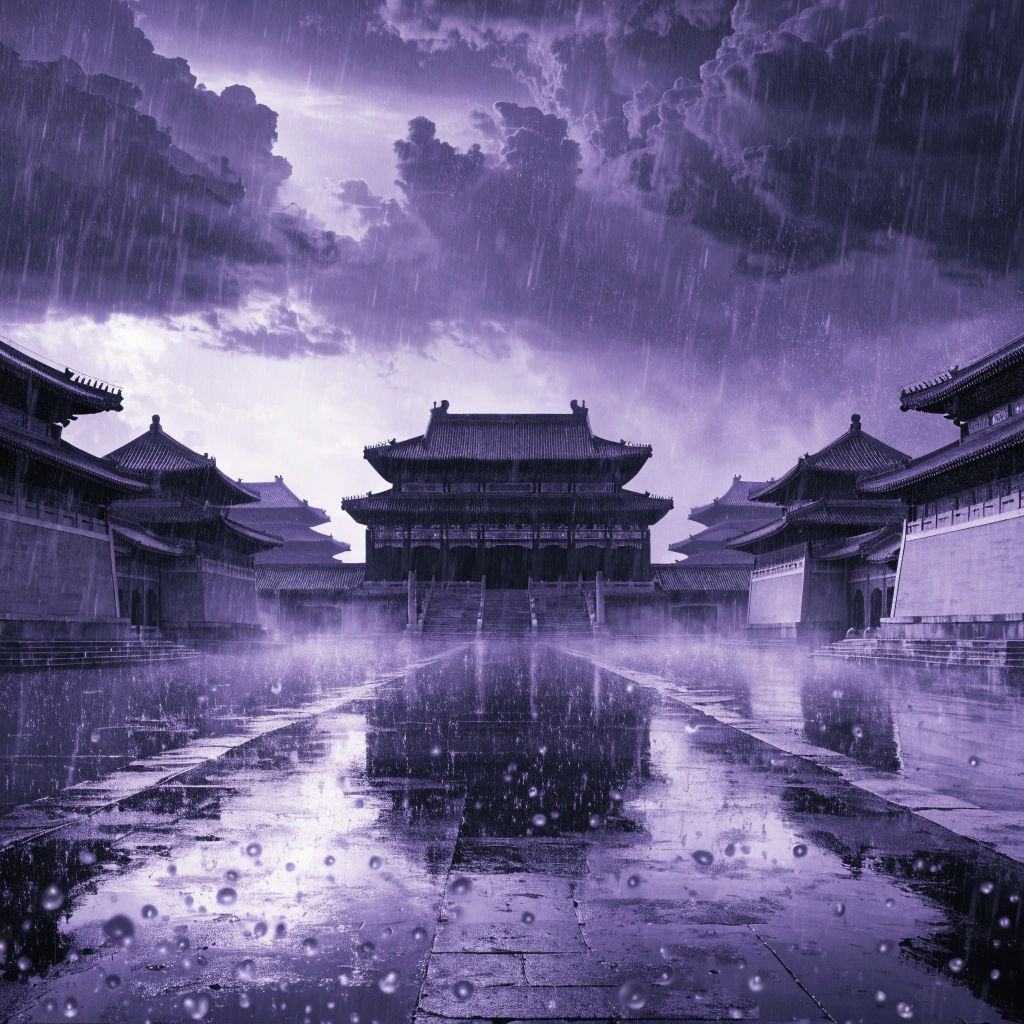
The Beautiful Forbidden City
The Forbidden City is a big museum in Beijing, China. It is very old. Many years ago, kings lived here. Now, many people visit this beautiful place every day. It is a very popular place for tourists.
The palace has many buildings. The buildings are red and yellow. There are 980 buildings in the city. It is very large and famous.
You need a ticket to go inside. You can see many old things. It is a special part of Chinese history.
نکته دستوری
الگو: Present Simple 'Be'
"The Forbidden City is a big museum in Beijing, China."
We use 'is' for singular subjects to describe facts. It is the verb 'to be' in the present simple tense.
الگو: Plural Nouns
"The palace has many buildings."
We add '-s' to the end of most nouns to show there is more than one. In this sentence, 'building' becomes 'buildings'.
درک خود را بسنجید
10 سوال · A1 مبتدی · 1 پیشنمایش رایگان
آنچه از این مقاله آموختید را بسنجید. به همه سؤالات پاسخ دهید و XP کسب کنید!
Where is the Forbidden City?
آیا میخواهید آزمون را تمام کنید؟
9 سؤال دیگر منتظر شماست. ثبتنام رایگان کنید تا آزمون کامل را باز کنید و XP کسب کنید!
ثبتنام رایگانقبلاً ثبتنام کردی؟ ورود
جزئیات سؤالات
Where is the Forbidden City?
پاسخ شما:
پاسخ درست: Beijing
The Forbidden City is in China.
پاسخ شما:
پاسخ درست: درست
What does 'large' mean?
پاسخ شما:
پاسخ درست: Big
The buildings are red and _____.
پاسخ شما:
پاسخ درست: yellow
The Secrets of the Forbidden City
The Forbidden City is in the center of Beijing, China. It is a very large palace with 980 buildings. Workers finished building it in 1420. For almost 500 years, 24 emperors lived there. It was the most important place for the Chinese government because the emperors made all the big decisions there.
The palace has a special name. It is called 'forbidden' because people could not enter or leave without permission from the emperor. It was a very private and quiet place. If someone went inside without an invitation, they were in big trouble.
The architecture is beautiful and traditional. The buildings are bigger and more colorful than other houses in the city. Today, it is called the Palace Museum. Millions of tourists visit it every year to see the gold decorations and old art. It is one of the most famous places in the world.
نکته دستوری
الگو: Past Simple
"Workers finished building it in 1420."
We use the past simple to talk about finished actions in the past. To make regular verbs, we usually add '-ed' to the end of the verb.
الگو: Comparatives
"The buildings are bigger and more colorful than other houses in the city."
We use comparatives to compare two things. For short words like 'big', we add '-er'. For longer words like 'colorful', we use 'more' before the word.
درک خود را بسنجید
11 سوال · A2 مقدماتی · 1 پیشنمایش رایگان
آنچه از این مقاله آموختید را بسنجید. به همه سؤالات پاسخ دهید و XP کسب کنید!
How many emperors lived in the Forbidden City?
آیا میخواهید آزمون را تمام کنید؟
10 سؤال دیگر منتظر شماست. ثبتنام رایگان کنید تا آزمون کامل را باز کنید و XP کسب کنید!
ثبتنام رایگانقبلاً ثبتنام کردی؟ ورود
جزئیات سؤالات
How many emperors lived in the Forbidden City?
پاسخ شما:
پاسخ درست: 24
People could enter the palace whenever they wanted.
پاسخ شما:
پاسخ درست: نادرست
What does 'forbidden' mean?
پاسخ شما:
پاسخ درست: Not allowed
The Forbidden City is in the _____ of Beijing.
پاسخ شما:
پاسخ درست: center
When did workers finish building the palace?
پاسخ شما:
پاسخ درست: 1420
A Journey Through the Forbidden City
The Forbidden City, which is located in the heart of Beijing, is one of the most famous historical sites in the world. For nearly 500 years, it served as the home for 24 emperors from the Ming and Qing dynasties. This massive complex was built between 1406 and 1420. It has been recognized as a UNESCO World Heritage site since 1987 because of its amazing architecture and cultural importance.
The palace is known as the 'Forbidden City' because ordinary people were not allowed to enter without the emperor’s permission. It consists of 980 buildings, which were designed according to traditional Chinese principles. The architecture is very impressive, with red walls and yellow roofs that represent the power of the imperial family. Many beautiful gardens and courtyards are found within the walls, providing a peaceful space for the royal family.
Today, the complex has been turned into the Palace Museum. It houses thousands of ancient artifacts and artworks that have been preserved for centuries. Millions of tourists visit the site every year to learn about China’s rich history. Although the emperors are gone, the spirit of the past still lives in these grand halls.
If you visit, you will see the Great Hall of Supreme Harmony, which was used for important ceremonies. The entire area is a masterpiece that shows the skill of ancient workers. It remains a symbol of China's long and fascinating journey through time.
نکته دستوری
الگو: Passive Voice
"This massive complex was built between 1406 and 1420."
The passive voice is used here because the action (building) is more important than who did it. It is formed using the verb 'to be' and the past participle of the main verb.
الگو: Relative Clauses
"The Forbidden City, which is located in the heart of Beijing, is one of the most famous historical sites in the world."
Relative clauses provide extra information about a noun. The word 'which' is used to refer to the Forbidden City and connect the two parts of the sentence.
درک خود را بسنجید
11 سوال · B1 متوسط · 1 پیشنمایش رایگان
آنچه از این مقاله آموختید را بسنجید. به همه سؤالات پاسخ دهید و XP کسب کنید!
How many emperors lived in the Forbidden City over the years?
آیا میخواهید آزمون را تمام کنید؟
10 سؤال دیگر منتظر شماست. ثبتنام رایگان کنید تا آزمون کامل را باز کنید و XP کسب کنید!
ثبتنام رایگانقبلاً ثبتنام کردی؟ ورود
جزئیات سؤالات
How many emperors lived in the Forbidden City over the years?
پاسخ شما:
پاسخ درست: 24
Ordinary people were allowed to enter the palace whenever they wanted.
پاسخ شما:
پاسخ درست: نادرست
What does the word 'preserve' mean?
پاسخ شما:
پاسخ درست: To keep something in good condition
The Forbidden City is located in the _____ of Beijing.
پاسخ شما:
پاسخ درست: heart
When did the Forbidden City become a UNESCO World Heritage site?
پاسخ شما:
پاسخ درست: 1987
The Forbidden City: A Gilded Legacy of Imperial China
Standing at the heart of Beijing, the Forbidden City remains one of the most significant architectural achievements in human history. Constructed during the Ming Dynasty, this sprawling complex served as the imperial residence for twenty-four emperors over a span of nearly five hundred years. Its name, 'Zijincheng' or the Purple Forbidden City, reflects both ancient astronomical beliefs and the absolute authority of the Son of Heaven. Traditionally, it was believed that the North Star was the center of the celestial world, and as the earthly counterpart, the Emperor’s palace was designed to mirror this cosmic order. Consequently, the layout was not merely functional but deeply symbolic, representing the divine right of the ruler.
The meticulous design of the palace follows the principles of traditional Chinese architecture, emphasizing symmetry and hierarchy. Every structure, from the grand halls used for ceremonial purposes to the private quarters of the imperial family, was positioned according to a strict north-south axis. The use of yellow roof tiles—a color reserved exclusively for the emperor—and the abundance of dragon motifs further emphasize the unparalleled power of the ruling dynasty. Although the complex consists of 980 buildings, it feels like a unified masterpiece rather than a collection of separate structures. This architectural harmony was achieved through fourteen years of intense labor, involving over a million workers.
Historically, the Forbidden City was more than just a residence; it was the political and ceremonial center of China. Decisions made within these walls shaped the destiny of millions, yet the common people were strictly prohibited from entering without express permission. This isolation created an aura of mystery and grandeur that persists even today. Had the Qing Dynasty not collapsed in the early 20th century, the palace might have remained a closed world. Instead, it was transformed into the Palace Museum in 1925, allowing the public to witness the treasures of China’s past.
Today, the preservation of this UNESCO World Heritage site presents a continuous challenge for historians and conservators. The legacy of the Forbidden City emanates through its intricate woodwork and vast art collections, offering a profound insight into Chinese culture. By analyzing its layout and history, one can appreciate how the palace successfully integrated political function with aesthetic beauty, leaving an indelible mark on the global cultural landscape. It stands as a testament to a civilization that valued order, tradition, and artistic excellence.
نکته دستوری
الگو: Passive Voice
"Constructed during the Ming Dynasty, this sprawling complex served as the imperial residence..."
The passive participle 'Constructed' is used here as a reduced relative clause to focus on the action performed on the building rather than who built it.
الگو: Relative Clauses
"The use of yellow roof tiles—a color reserved exclusively for the emperor..."
This is an appositive phrase acting like a non-defining relative clause, providing extra information about a specific noun.
الگو: Third Conditional (Inverted)
"Had the Qing Dynasty not collapsed in the early 20th century, the palace might have remained a closed world."
This uses 'Had' at the start of the sentence instead of 'If' for a formal, hypothetical situation in the past that did not happen.
درک خود را بسنجید
11 سوال · B2 بالاتر از متوسط · 1 پیشنمایش رایگان
آنچه از این مقاله آموختید را بسنجید. به همه سؤالات پاسخ دهید و XP کسب کنید!
Why was the Forbidden City designed to mirror the North Star?
آیا میخواهید آزمون را تمام کنید؟
10 سؤال دیگر منتظر شماست. ثبتنام رایگان کنید تا آزمون کامل را باز کنید و XP کسب کنید!
ثبتنام رایگانقبلاً ثبتنام کردی؟ ورود
جزئیات سؤالات
Why was the Forbidden City designed to mirror the North Star?
پاسخ شما:
پاسخ درست: To reflect the emperor's role as the earthly counterpart to the celestial center
Common citizens were allowed to visit the palace during the Ming Dynasty if they had a valid reason.
پاسخ شما:
پاسخ درست: نادرست
What does 'unparalleled' mean in the context of the article?
پاسخ شما:
پاسخ درست: Something that has no equal or match
The palace was transformed into the Palace _____ in 1925.
پاسخ شما:
پاسخ درست: Museum
What architectural feature was reserved exclusively for the emperor?
پاسخ شما:
پاسخ درست: Yellow roof tiles
The Forbidden City: An Architectural Manifestation of Imperial Hegemony
Seldom has a monument so perfectly encapsulated the nexus of cosmic order and earthly power as the Forbidden City in Beijing. Completed in 1420 during the Ming Dynasty, this sprawling complex served as the reclusive seat of sovereignty for twenty-four emperors over five centuries. To the modern observer, the palace is not merely an assemblage of 980 buildings; it is a meticulously crafted metaphorical landscape designed to reinforce the 'Mandate of Heaven.' Its very name, Zijincheng, alludes to the North Star—the celestial center around which the universe revolves—thereby positioning the emperor as the terrestrial equivalent of this cosmic anchor.
What defines the complex is not merely its staggering scale, but the meticulous adherence to geomantic principles and Confucian hierarchy. The architectural layout follows a strict north-south axis, reflecting a paradigm of stability and balance. Within these impregnable walls, the distinction between the Outer Court, used for ceremonial purposes, and the Inner Court, the emperor's domestic residence, was absolute. This physical segregation mirrored the rigid social stratifications of the era. Only through the lens of such structural symbolism can one truly appreciate the profound psychological impact the palace had on those granted the rare privilege of entry.
The transition from an exclusionary imperial seat to a public repository of cultural heritage signifies a profound shift in Chinese sociopolitical identity. Following the abdication of the final Qing emperor, the complex was transformed into the Palace Museum. This democratization of space allows for a fascinating juxtaposition of historical grandeur and contemporary accessibility. However, the preservation of the site is not without its challenges. The ephemeral nature of the traditional timber structures necessitates constant, painstaking restoration to prevent the degradation of these intricate vestiges of the past.
Critically analyzing the Forbidden City requires looking beyond its aesthetic allure. It stands as a testament to the centralization of power and the immense human labor required to sustain such a monumental vision. While the palace now welcomes millions of visitors annually, its walls still whisper of a time when the emperor’s word was law and his personhood was considered divine. Ultimately, the Forbidden City remains a poignant reminder of the tension between the enduring legacy of imperial history and the evolving narrative of modern China.
نکته دستوری
الگو: Negative Inversion
"Seldom has a monument so perfectly encapsulated the nexus of cosmic order and earthly power as the Forbidden City in Beijing."
When using a negative or restrictive adverb like 'seldom' at the beginning of a sentence, the subject and auxiliary verb are inverted. This is used for rhetorical emphasis in formal writing.
الگو: Cleft Sentences
"What defines the complex is not merely its staggering scale, but the meticulous adherence to geomantic principles and Confucian hierarchy."
A pseudo-cleft sentence starting with 'What' is used to focus on specific information. It highlights 'what defines the complex' as the most important part of the statement.
الگو: Nominalisation
"The transition from an exclusionary imperial seat to a public repository of cultural heritage signifies a profound shift in Chinese sociopolitical identity."
Nouns like 'transition' and 'democratization' are used instead of verbs to create a more formal, academic tone. This allows for the dense packing of complex ideas into a single sentence.
درک خود را بسنجید
12 سوال · C1 پیشرفته · 1 پیشنمایش رایگان
آنچه از این مقاله آموختید را بسنجید. به همه سؤالات پاسخ دهید و XP کسب کنید!
What does the name 'Zijincheng' symbolize in relation to the emperor?
آیا میخواهید آزمون را تمام کنید؟
11 سؤال دیگر منتظر شماست. ثبتنام رایگان کنید تا آزمون کامل را باز کنید و XP کسب کنید!
ثبتنام رایگانقبلاً ثبتنام کردی؟ ورود
جزئیات سؤالات
What does the name 'Zijincheng' symbolize in relation to the emperor?
پاسخ شما:
پاسخ درست: The emperor as the earthly center of the universe
The architectural layout of the Forbidden City intentionally avoids symmetry to represent chaos.
پاسخ شما:
پاسخ درست: نادرست
What is the meaning of 'ephemeral' as used in the text?
پاسخ شما:
پاسخ درست: Lasting for a very short time
The complex served as the reclusive seat of _____ for twenty-four emperors.
پاسخ شما:
پاسخ درست: sovereignty
Which two areas within the palace represented the social stratification of the imperial era?
پاسخ شما:
پاسخ درست: The Outer Court and the Inner Court
The transition to a museum occurred after the abdication of the final Qing emperor.
پاسخ شما:
پاسخ درست: درست
The Imperial Palimpsest: A Socio-Architectural Deconstruction of the Forbidden City
Lying at the heart of Beijing’s urban sprawl, the Forbidden City serves as an imposing testament to the rigid hierarchical structures of the Ming and Qing dynasties. Completed in 1420, after fourteen years of meticulous labor, this sprawling complex comprises 980 buildings that coalesce into a paradigm of traditional Chinese palatial architecture. It is axiomatic that the site represents more than mere residential grandeur; rather, it functions as a physical manifestation of the Mandate of Heaven, the philosophical underpinning that legitimized imperial hegemony for centuries. Were one to traverse the Meridian Gate today, the sheer scale of the complex would still evoke a sense of profound insignificance, a psychological effect intentionally engineered by the architects of the Yongle Emperor to emphasize the distance between the sovereign and the subject.
The spatial configuration of the Forbidden City is governed by a strict adherence to axial symmetry, reflecting the Confucian ideal of cosmic order. The North-South axis, which bisects the city, was conceived as the backbone of the empire, aligning the terrestrial ruler with the celestial pole. This meticulously planned layout ensured that every structure, from the Hall of Supreme Harmony to the private quarters of the Inner Court, reinforced the stratified nature of the imperial court. Seldom has a monument so effectively utilized geometry to articulate social distance; the transition from the Outer Court, where public ceremonies were held, to the Inner Court, the domestic sanctuary of the emperor, was a journey through layers of increasing exclusivity. The architecture thus served as a silent but potent enforcer of political stability and social stratification.
Symbolism permeates every facet of the complex, from the ubiquitous dragon motifs—symbolizing the emperor’s virility and authority—to the esoteric numerology embedded in the architecture. It is frequently noted that the Forbidden City is said to contain 9,999.5 rooms, a figure that falls just short of the 10,000 rooms believed to exist in the celestial palace of the God of Heaven. This deliberate omission served as a humble acknowledgment of the emperor’s subordinate status to the divine, even as he wielded absolute power on earth. Furthermore, the confluence of yellow roof tiles, reserved exclusively for the imperial family, and the vermilion walls creates a visual lexicon of power that remains unparalleled in world history. This chromatic hierarchy was not merely aesthetic but was a legal requirement, strictly enforced to prevent any usurpation of imperial symbols.
Despite its name, the Forbidden City was never an entirely stagnant entity. It evolved through the centuries, surviving catastrophic fires, foreign invasions, and the eventual dissolution of the imperial system in 1912. The transition from a sequestered palace to the Palace Museum represents a fascinating cultural shift. What was once a vestige of autocratic seclusion has been transformed into a public space, though the ephemeral nature of human power is still palpable within its walls. To have served as the epicenter of Chinese political life for five hundred years is no small feat, yet the museum now grapples with the paradox of preserving history while accommodating the influx of millions of modern tourists. This tension between conservation and accessibility highlights the site's ongoing role as a contested symbol of national identity.
In conclusion, the Forbidden City remains a cultural palimpsest, where the layers of dynastic history are etched into the very timber and stone of its halls. It is not merely a relic of a bygone era but a living document of China’s philosophical and political evolution. It is imperative that the contemporary observer look beyond the aesthetic beauty of the site to appreciate the intricate web of social and cosmic ideologies that it continues to represent. Whether viewed as a monument to imperial hubris or a masterpiece of architectural ingenuity, the Forbidden City stands as an enduring symbol of a civilization that sought to harmonize the earthly realm with the infinite heavens.
نکته دستوری
الگو: Inversion for Emphasis
"Seldom has a monument so effectively utilized geometry to articulate social distance."
When negative or restrictive adverbs (like 'seldom', 'never', 'rarely') begin a sentence, the subject and auxiliary verb are inverted to create a formal, rhetorical emphasis.
الگو: Mixed Conditionals (Subjunctive Mood)
"Were one to traverse the Meridian Gate today, the sheer scale of the complex would still evoke a sense of profound insignificance."
This uses 'Were' + subject to form a hypothetical conditional. It is a highly formal way of expressing a present or future possibility that is unlikely or purely academic.
الگو: Perfect Infinitive
"To have served as the epicenter of Chinese political life for five hundred years is no small feat."
The perfect infinitive (to + have + past participle) is used to refer to an earlier time or a completed action in relation to the main verb.
درک خود را بسنجید
12 سوال · C2 تسلط · 1 پیشنمایش رایگان
آنچه از این مقاله آموختید را بسنجید. به همه سؤالات پاسخ دهید و XP کسب کنید!
What was the primary philosophical goal behind the Forbidden City's layout?
آیا میخواهید آزمون را تمام کنید؟
11 سؤال دیگر منتظر شماست. ثبتنام رایگان کنید تا آزمون کامل را باز کنید و XP کسب کنید!
ثبتنام رایگانقبلاً ثبتنام کردی؟ ورود
جزئیات سؤالات
What was the primary philosophical goal behind the Forbidden City's layout?
پاسخ شما:
پاسخ درست: To reflect the Confucian ideal of cosmic and social order
The construction of the Forbidden City was completed in less than a decade.
پاسخ شما:
پاسخ درست: نادرست
Which word describes the dominance of one group or philosophy over others?
پاسخ شما:
پاسخ درست: Hegemony
The text describes the Forbidden City as a cultural _____, where layers of history are etched into the site.
پاسخ شما:
پاسخ درست: palimpsest
Why does the complex allegedly contain 9,999.5 rooms instead of 10,000?
پاسخ شما:
پاسخ درست: As a sign of humility toward the celestial palace of the gods
Yellow roof tiles were strictly reserved for the imperial family and their residences.
پاسخ شما:
پاسخ درست: درست

