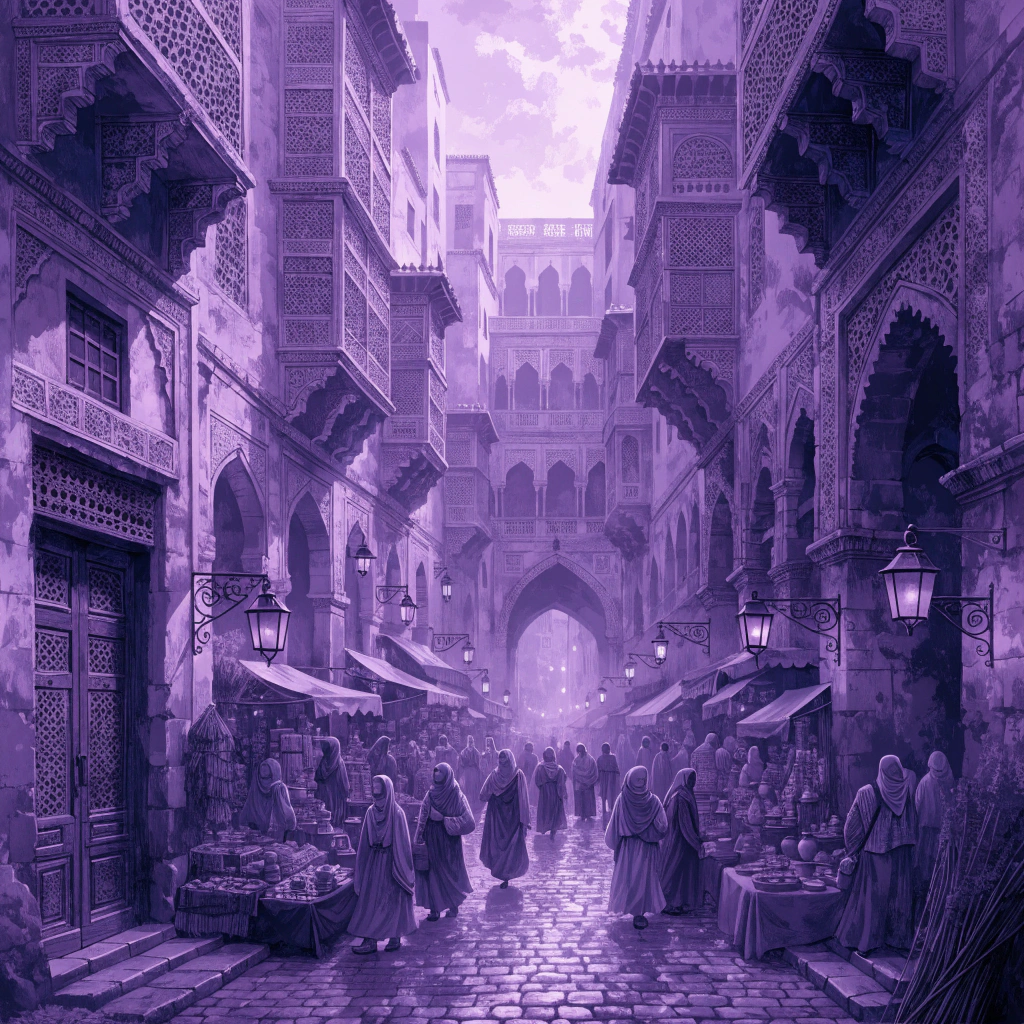
A Famous Market in Cairo
Khan el-Khalili is a big market in Cairo, Egypt. It is very old and famous. Many people visit this place every day. It is a beautiful part of the city.
The market has many small streets. You can see many shops there. They sell gold, clothes, and spices. The shops have many bright colors. You can buy gifts for your family.
You can drink mint tea in a traditional cafe. You can talk to your friends or look at the people. It is a very busy and happy place. It is a great place to visit.
نکته دستوری
الگو: Present Simple (to be)
"It is very old and famous."
We use the verb 'to be' (am, is, are) to describe facts or states. In this sentence, 'is' describes the market.
الگو: Can + Verb
"You can buy gifts for your family."
We use 'can' followed by the base form of a verb to talk about possibility. It shows what is possible to do in the market.
درک خود را بسنجید
10 سوال · A1 مبتدی · 1 پیشنمایش رایگان
آنچه از این مقاله آموختید را بسنجید. به همه سؤالات پاسخ دهید و XP کسب کنید!
Where is Khan el-Khalili?
آیا میخواهید آزمون را تمام کنید؟
9 سؤال دیگر منتظر شماست. ثبتنام رایگان کنید تا آزمون کامل را باز کنید و XP کسب کنید!
ثبتنام رایگانقبلاً ثبتنام کردی؟ ورود
جزئیات سؤالات
Where is Khan el-Khalili?
پاسخ شما:
پاسخ درست: Cairo
The market is a new place.
پاسخ شما:
پاسخ درست: نادرست
What are 'gifts'?
پاسخ شما:
پاسخ درست: Things you give to people
You can drink mint _____ in a cafe.
پاسخ شما:
پاسخ درست: tea
A Visit to Khan el-Khalili Bazaar
Khan el-Khalili is a very old market in the heart of Cairo, Egypt. It started more than 600 years ago in the 14th century. In the past, it was a place where merchants could rest and trade their goods. Today, it is one of the most famous markets in the Middle East.
The bazaar is like a large maze with many narrow streets and stone archways. When you walk through the market, you can see many beautiful things. There are colorful lanterns, gold jewelry, and traditional clothes. The smells of spices and perfumes are everywhere because there are many shops.
Many people visit the bazaar because it is more interesting than a modern shopping mall. You can buy gifts for your family or sit in a famous café. The Fishawy Café is the oldest one in the market. People go there to drink mint tea and talk with friends. It is a busy and exciting place to visit.
نکته دستوری
الگو: Past Simple
"It started more than 600 years ago in the 14th century."
We use the past simple for actions that finished in the past. For regular verbs, we add '-ed' to the base verb.
الگو: Comparatives
"Many people visit the bazaar because it is more interesting than a modern shopping mall."
We use comparatives to compare two different things. For long adjectives, we use 'more' + adjective + 'than'.
درک خود را بسنجید
11 سوال · A2 مقدماتی · 1 پیشنمایش رایگان
آنچه از این مقاله آموختید را بسنجید. به همه سؤالات پاسخ دهید و XP کسب کنید!
Where is Khan el-Khalili located?
آیا میخواهید آزمون را تمام کنید؟
10 سؤال دیگر منتظر شماست. ثبتنام رایگان کنید تا آزمون کامل را باز کنید و XP کسب کنید!
ثبتنام رایگانقبلاً ثبتنام کردی؟ ورود
جزئیات سؤالات
Where is Khan el-Khalili located?
پاسخ شما:
پاسخ درست: Cairo
Khan el-Khalili is a very new market.
پاسخ شما:
پاسخ درست: نادرست
What is a 'merchant'?
پاسخ شما:
پاسخ درست: A person who buys and sells things
The bazaar is like a large _____ with many narrow streets.
پاسخ شما:
پاسخ درست: maze
What is the name of the oldest café in the market?
پاسخ شما:
پاسخ درست: Fishawy Café
A Journey Through Khan el-Khalili: Cairo’s Ancient Heart
Khan el-Khalili is a famous marketplace located in the heart of Islamic Cairo. It has been a center of trade for over six hundred years and remains one of the most exciting places to visit in Egypt. This historic site was established in the late 14th century by Emir Gerkes al-Khalili. Originally, it was built as a caravanserai, which is a special inn where merchants could rest after long journeys across the desert.
Since its early days, the bazaar has expanded into a huge maze of narrow streets and beautiful stone archways. When you walk through the market, you are surrounded by the smell of exotic spices and the sound of craftsmen working with copper. Many tourists have described the experience as stepping back in time. You can find almost anything here, from handmade jewelry to traditional perfumes.
The bazaar is not only for tourists; it is still a place where local people go to shop and meet friends. The famous Fishawy’s Café, which has been open for over two centuries, is always crowded with people drinking mint tea. If you want to buy something, you should be prepared to bargain. This is a common tradition in Egyptian markets where the price is decided through a friendly discussion.
In recent years, the market has been renovated to preserve its historical beauty. However, it still keeps its magical atmosphere. Whether you are looking for a unique souvenir or just want to enjoy the culture, Khan el-Khalili is a place that should not be missed. It remains a vibrant symbol of Cairo's rich history and commercial spirit.
نکته دستوری
الگو: Passive Voice (Past Simple)
"This historic site was established in the late 14th century by Emir Gerkes al-Khalili."
We use the passive voice when the action is more important than who did it. It is formed using 'was/were' + the past participle of the verb.
الگو: Relative Clauses with 'which'
"Originally, it was built as a caravanserai, which is a special inn where merchants could rest."
Relative clauses give extra information about a noun. 'Which' is used to provide more details about the caravanserai without starting a new sentence.
درک خود را بسنجید
11 سوال · B1 متوسط · 1 پیشنمایش رایگان
آنچه از این مقاله آموختید را بسنجید. به همه سؤالات پاسخ دهید و XP کسب کنید!
When was the Khan el-Khalili bazaar established?
آیا میخواهید آزمون را تمام کنید؟
10 سؤال دیگر منتظر شماست. ثبتنام رایگان کنید تا آزمون کامل را باز کنید و XP کسب کنید!
ثبتنام رایگانقبلاً ثبتنام کردی؟ ورود
جزئیات سؤالات
When was the Khan el-Khalili bazaar established?
پاسخ شما:
پاسخ درست: In the late 14th century
The bazaar was originally built as a place for merchants to rest.
پاسخ شما:
پاسخ درست: درست
What does the word 'bargain' mean in the context of the article?
پاسخ شما:
پاسخ درست: To negotiate the price of an item
Fishawy’s Café has been open for more than two _____.
پاسخ شما:
پاسخ درست: centuries
What is the purpose of bargaining in the bazaar?
پاسخ شما:
پاسخ درست: To decide a price through friendly discussion
The Khan el-Khalili Bazaar: A Timeless Intersection of History and Commerce
Nestled in the heart of Islamic Cairo, the Khan el-Khalili is not merely a marketplace; it is a historical monument that encapsulates the essence of Egyptian heritage. Established in the late 14th century during the Mamluk era by Emir Gerkes al-Khalili, it originally served as a caravanserai—a roadside inn where merchants could rest and trade their goods. Over the centuries, this labyrinthine souk has survived numerous political and social transformations, expanding into a sprawling maze of narrow alleys and vaulted stone archways. Had the merchants of the Mamluk era not recognized the strategic value of this location, Cairo might never have developed into such a significant commercial hub between the East and the West.
Walking through the narrow alleys today, visitors are immediately struck by the juxtaposition of ancient architecture and modern commerce. While many tourists flock to the bazaar to purchase intricate souvenirs, the site remains an essential part of the local economy. Local artisans continue to practice crafts that have been passed down through generations, ensuring that traditional techniques in metalwork and textile production are preserved despite the pressures of globalization. Furthermore, the bazaar offers a unique sensory experience; the air is thick with the aroma of exotic spices, while the rhythmic sound of copper being hammered echoes through the stone corridors. This vibrant atmosphere is particularly evident in the evening, when the golden glow of traditional lamps illuminates the storefronts.
However, the bazaar is not without its challenges. Critics argue that the increasing focus on tourism has led to a degree of commercialization that threatens its authenticity. Some shops have replaced traditional hand-crafted goods with mass-produced items to satisfy the demands of casual visitors. Nevertheless, the enduring popularity of the Khan el-Khalili suggests that its cultural value remains intact. It serves as a bridge between the past and the present, offering a glimpse into the rich tapestry of history. Consequently, it is imperative that efforts are made to balance commercial interests with the preservation of its historical integrity. For many, a visit to Cairo is incomplete without experiencing the timeless charm of this historic marketplace, which continues to be a symbol of resilience and tradition.
نکته دستوری
الگو: Third Conditional
"Had the merchants of the Mamluk era not recognized the strategic value of this location, Cairo might never have developed into such a significant commercial hub."
This pattern is used to talk about an imaginary past situation and its hypothetical result. 'Had the merchants not recognized' is an inverted form of 'If the merchants had not recognized'.
الگو: Present Perfect Passive
"Local artisans continue to practice crafts that have been passed down through generations."
This structure (have/has + been + past participle) focuses on the action being performed on the subject over time, emphasizing the continuity of the tradition.
الگو: Non-defining Relative Clause
"...the timeless charm of this historic marketplace, which continues to be a symbol of resilience and tradition."
This clause provides extra information about the 'historic marketplace'. It is separated by a comma and uses 'which' because the sentence would still make sense without it.
درک خود را بسنجید
11 سوال · B2 بالاتر از متوسط · 1 پیشنمایش رایگان
آنچه از این مقاله آموختید را بسنجید. به همه سؤالات پاسخ دهید و XP کسب کنید!
What was the original function of the Khan el-Khalili in the 14th century?
آیا میخواهید آزمون را تمام کنید؟
10 سؤال دیگر منتظر شماست. ثبتنام رایگان کنید تا آزمون کامل را باز کنید و XP کسب کنید!
ثبتنام رایگانقبلاً ثبتنام کردی؟ ورود
جزئیات سؤالات
What was the original function of the Khan el-Khalili in the 14th century?
پاسخ شما:
پاسخ درست: A caravanserai for traveling merchants
The author suggests that globalization has completely destroyed all traditional metalwork techniques in the bazaar.
پاسخ شما:
پاسخ درست: نادرست
What does the word 'authenticity' refer to in the context of the article?
پاسخ شما:
پاسخ درست: The quality of being real and traditional
The bazaar is described as a _____ maze of narrow alleys and vaulted stone archways.
پاسخ شما:
پاسخ درست: labyrinthine
According to the text, why do some critics worry about the bazaar?
پاسخ شما:
پاسخ درست: Because commercialization might threaten its historical truth
The Palimpsest of Commerce: Navigating the Historical Labyrinth of Khan el-Khalili
Nestled within the dense urban fabric of Islamic Cairo, the Khan el-Khalili bazaar stands as a testament to the enduring legacy of Mamluk architecture and the historical resilience of Middle Eastern trade. Established in the late 14th century, what began as a modest caravanserai under the auspices of Emir Gerkes al-Khalili has metamorphosed into a sprawling labyrinthine network of narrow alleys and vaulted stone archways. Seldom do contemporary visitors encounter such a visceral convergence of antiquity and modernity, where the rhythmic clinking of copper-smiths competes with the digital hum of modern commerce. This juxtaposition is not merely aesthetic; it represents the survival of a traditional economic model in a globalized world.
It is the sheer sensory overload that first strikes the uninitiated traveler. The air is thick with the scent of frankincense and the pungent aroma of freshly ground spices, creating an olfactory palimpsest that hints at centuries of transcontinental exchange. However, beyond the aesthetic allure lies a more nuanced narrative concerning the preservation of cultural authenticity. The proliferation of mass-produced souvenirs often threatens to overshadow the artisanal vestiges that have defined the bazaar for generations. This tension between the demands of mass tourism and the integrity of local craftsmanship is central to the bazaar's contemporary identity.
The architectural integrity of the site, characterized by its intricately carved mashrabiya screens and limestone facades, invites a critical analysis of urban conservation. While some argue that the commercialization of the bazaar is a necessary evil for its economic survival, others contend that the commodification of Cairo’s heritage risks eroding its intrinsic value. Not only does the bazaar serve as a commercial hub, but it also functions as a social microcosm where the traditional 'ahwa' (coffeehouse) culture persists, providing a space for intellectual and social discourse that transcends the mere exchange of goods.
What remains most compelling about Khan el-Khalili is its ability to adapt without losing its historical soul. The transition from a medieval trade depot to a global tourist landmark has been fraught with challenges, yet the bazaar remains a cornerstone of Cairene identity. Through the strategic implementation of restoration projects, there is hope that the delicate balance between historical reverence and modern functionality can be maintained. By fostering an environment where traditional skills are valued alongside modern tourism, the bazaar can continue to serve as a living chronicle of Egypt’s illustrious past, rather than becoming a static museum piece. Ultimately, the Khan is a reflection of Cairo itself: chaotic, resilient, and deeply rooted in history.
نکته دستوری
الگو: Negative Inversion
"Seldom do contemporary visitors encounter such a visceral convergence of antiquity and modernity."
This pattern places a negative or restrictive adverbial at the beginning of the sentence for emphasis. It requires the inversion of the subject and the auxiliary verb (do/does/did).
الگو: Pseudo-cleft Sentence
"What remains most compelling about Khan el-Khalili is its ability to adapt without losing its historical soul."
Cleft sentences are used to focus on specific information. A pseudo-cleft uses a 'Wh-' clause as the subject to emphasize the noun phrase following the verb 'be'.
الگو: Nominalisation
"Through the strategic implementation of restoration projects, there is hope..."
Nominalisation involves turning verbs or adjectives into nouns (implement -> implementation). It is a hallmark of C1 writing, making the text more formal and concise.
درک خود را بسنجید
12 سوال · C1 پیشرفته · 1 پیشنمایش رایگان
آنچه از این مقاله آموختید را بسنجید. به همه سؤالات پاسخ دهید و XP کسب کنید!
What is the primary concern mentioned regarding the impact of globalization on the bazaar?
آیا میخواهید آزمون را تمام کنید؟
11 سؤال دیگر منتظر شماست. ثبتنام رایگان کنید تا آزمون کامل را باز کنید و XP کسب کنید!
ثبتنام رایگانقبلاً ثبتنام کردی؟ ورود
جزئیات سؤالات
What is the primary concern mentioned regarding the impact of globalization on the bazaar?
پاسخ شما:
پاسخ درست: The erosion of artisanal vestiges by mass-produced items
The Khan el-Khalili was originally established as a religious temple during the Mamluk era.
پاسخ شما:
پاسخ درست: نادرست
What does 'palimpsest' refer to in the context of the bazaar's atmosphere?
پاسخ شما:
پاسخ درست: A layer of history where traces of the past are still visible
The _____ of mass-produced souvenirs often threatens to overshadow traditional crafts.
پاسخ شما:
پاسخ درست: proliferation
The bazaar is described as a 'social microcosm' because:
پاسخ شما:
پاسخ درست: It encapsulates the broader characteristics of Cairene society and culture
The author suggests that commercialization is viewed by some as necessary for the bazaar's survival.
پاسخ شما:
پاسخ درست: درست
The Khan el-Khalili: A Historical Palimpsest of Cairene Mercantilism
The Khan el-Khalili bazaar, nestled within the labyrinthine heart of Islamic Cairo, stands not merely as a commercial hub but as a profound historical palimpsest. To traverse its narrow alleys is to navigate through layers of Mamluk and Ottoman history, where the very limestone of the vaulted archways seems to resonate with the echoes of medieval commerce. Established in the late 14th century by Emir Gerkes al-Khalili, the site originated as a caravanserai—a vital nexus for merchants traversing the Silk Road. Were one to examine the bazaar through a sociological lens, it would appear that the Khan functions as a microcosm of Egyptian society, juxtaposing the ephemeral nature of modern tourism with the enduring legacy of artisanal craftsmanship.
Lest the visitor be led astray by the superficial glitz of mass-produced souvenirs, a more discerning eye will observe the subtle ubiquity of traditional workshops. Here, the olfactory experience is as potent as the visual; the air is thick with the scent of roasted coffee, exotic spices, and the metallic tang of hammered copper. This sensory deluge serves as a reminder of the bazaar's historical role as a center for the spice trade. It is often posited by historians that the spatial configuration of the Khan—its dense, organic growth—reflects the complex socio-economic hierarchies of the Mamluk era. Scarcely had the foundations of the original khan been laid when it became the epicenter of Cairo’s economic life, a position it has maintained with remarkable resilience for over six centuries.
However, the bazaar is not merely an anachronism preserved for the delectation of tourists. It is a living entity, albeit one that faces the existential threat of globalization. The synergy between the ancient and the modern is palpable; one might witness a merchant negotiating a wholesale deal via a smartphone while seated on a stool that appears unchanged since the 19th century. This juxtaposition invites a certain nostalgia, yet it also highlights the adaptability of the Cairene spirit. Should the bazaar fail to evolve, it would risk becoming a stagnant museum piece rather than a thriving marketplace. Nevertheless, the preservation of its architectural integrity remains a subject of academic debate, with scholars questioning how much modernization can be permitted before the site’s historical essence is irrevocably compromised.
Ultimately, the Khan el-Khalili remains a quintessential experience for those seeking to understand the confluence of trade, religion, and urban life in the Middle East. Its enduring charm lies in its ability to remain relevant in a rapidly changing world, serving as a testament to the fact that while the methods of commerce may change, the human desire for connection and the vibrancy of the marketplace are eternal. To walk through the Khan is to participate in a centuries-old dialogue between the past and the present, a dialogue that continues to shape the cultural identity of Cairo today.
نکته دستوری
الگو: Subjunctive Mood with 'Lest'
"Lest the visitor be led astray by the superficial glitz of mass-produced souvenirs..."
The word 'lest' is followed by the base form of the verb (subjunctive) to express a negative purpose or fear. It is a formal way of saying 'to avoid the risk of'.
الگو: Negative Inversion for Emphasis
"Scarcely had the foundations of the original khan been laid when it became the epicenter of Cairo’s economic life."
When 'scarcely', 'hardly', or 'no sooner' begin a sentence, the subject and auxiliary verb are inverted. This structure emphasizes that one event happened immediately after another.
الگو: Inverted Conditional (Should)
"Should the bazaar fail to evolve, it would risk becoming a stagnant museum piece."
This is a formal alternative to 'If the bazaar should fail'. By omitting 'if' and placing 'should' at the beginning, the sentence becomes more formal and hypothetical.
درک خود را بسنجید
12 سوال · C2 تسلط · 1 پیشنمایش رایگان
آنچه از این مقاله آموختید را بسنجید. به همه سؤالات پاسخ دهید و XP کسب کنید!
What does the author suggest by calling the bazaar a 'palimpsest'?
آیا میخواهید آزمون را تمام کنید؟
11 سؤال دیگر منتظر شماست. ثبتنام رایگان کنید تا آزمون کامل را باز کنید و XP کسب کنید!
ثبتنام رایگانقبلاً ثبتنام کردی؟ ورود
جزئیات سؤالات
What does the author suggest by calling the bazaar a 'palimpsest'?
پاسخ شما:
پاسخ درست: It is a location where multiple historical eras are visible simultaneously.
The Khan el-Khalili was originally established during the Ottoman period.
پاسخ شما:
پاسخ درست: نادرست
What is the meaning of 'anachronism' as used in the text?
پاسخ شما:
پاسخ درست: Something out of its proper historical time.
The author notes a _____ between ancient traditions and modern technology, such as merchants using smartphones.
پاسخ شما:
پاسخ درست: synergy
What is the primary academic debate regarding the bazaar's future?
پاسخ شما:
پاسخ درست: The degree of modernization allowed without losing historical essence.
The author believes the bazaar is purely a tourist attraction and no longer functional for locals.
پاسخ شما:
پاسخ درست: نادرست

