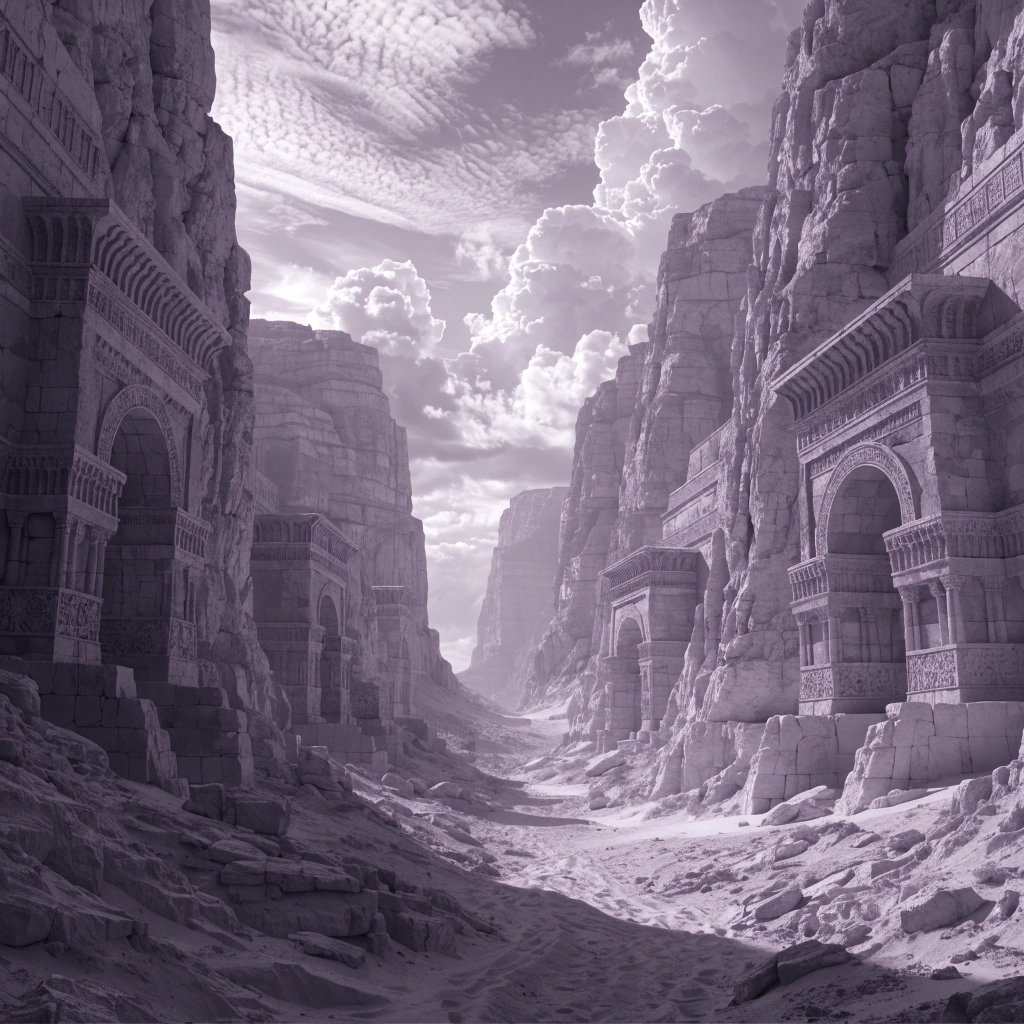
The Valley of the Kings
Egypt is a beautiful country. It has many old places. One place is the Valley of the Kings. It is near the city of Luxor. Many kings have tombs here. These kings are pharaohs. They have big tombs under the ground. The tombs are secret. This is because they hide their gold there. There are sixty tombs in the valley. One famous king is Tutankhamun. People from all over the world visit this place today. They look at the beautiful paintings on the walls. It is a very special place.
نکته دستوری
الگو: There is / There are
"There are sixty tombs in the valley."
We use 'there are' with plural nouns to say that something exists. Use 'there is' for singular nouns.
الگو: Present Simple (Possession)
"They have big tombs under the ground."
Use 'have' or 'has' to show that someone owns or possesses something. Use 'has' for he, she, and it.
درک خود را بسنجید
10 سوال · A1 مبتدی · 1 پیشنمایش رایگان
آنچه از این مقاله آموختید را بسنجید. به همه سؤالات پاسخ دهید و XP کسب کنید!
Where is the Valley of the Kings?
آیا میخواهید آزمون را تمام کنید؟
9 سؤال دیگر منتظر شماست. ثبتنام رایگان کنید تا آزمون کامل را باز کنید و XP کسب کنید!
ثبتنام رایگانقبلاً ثبتنام کردی؟ ورود
جزئیات سؤالات
Where is the Valley of the Kings?
پاسخ شما:
پاسخ درست: Near Luxor
The tombs are under the ground.
پاسخ شما:
پاسخ درست: درست
What is a tomb?
پاسخ شما:
پاسخ درست: A place for a dead person
One _____ king is Tutankhamun.
پاسخ شما:
پاسخ درست: famous
The Secrets of the Valley of the Kings
The Valley of the Kings is a very famous place in Egypt. It is on the west bank of the Nile River, near the city of Luxor. For 500 years, the most powerful kings of ancient Egypt were buried here. These kings were called pharaohs.
In earlier times, kings built big pyramids. However, robbers often stole the gold from the pyramids because they were easy to see. Later, the pharaohs wanted a safer place. They chose this quiet valley because it was easier to hide the tombs under the rocks. They wanted to protect their bodies and their treasure.
There are more than 60 tombs in the valley. The most famous tomb belongs to King Tutankhamun. Archaeologists found it in 1922. It was full of amazing objects because grave robbers never found it.
Today, many people visit the Valley of the Kings. It is hotter than the city of Luxor, so visitors usually go early in the morning. It is an important place because it helps us understand how people lived in the past.
نکته دستوری
الگو: Past Simple (Regular and Irregular)
"Archaeologists found it in 1922."
We use the Past Simple to talk about finished actions in the past. 'Found' is the irregular past of 'find', while 'wanted' is a regular verb ending in -ed.
الگو: Comparatives
"It is hotter than the city of Luxor."
We use comparatives to compare two things. For short adjectives like 'hot', we add -ter and use the word 'than'.
درک خود را بسنجید
11 سوال · A2 مقدماتی · 1 پیشنمایش رایگان
آنچه از این مقاله آموختید را بسنجید. به همه سؤالات پاسخ دهید و XP کسب کنید!
Where is the Valley of the Kings located?
آیا میخواهید آزمون را تمام کنید؟
10 سؤال دیگر منتظر شماست. ثبتنام رایگان کنید تا آزمون کامل را باز کنید و XP کسب کنید!
ثبتنام رایگانقبلاً ثبتنام کردی؟ ورود
جزئیات سؤالات
Where is the Valley of the Kings located?
پاسخ شما:
پاسخ درست: On the west bank of the Nile
The pharaohs chose the valley because it was easier to hide than a pyramid.
پاسخ شما:
پاسخ درست: درست
What does 'tomb' mean?
پاسخ شما:
پاسخ درست: A place where someone is buried
The pharaohs wanted to protect their bodies and their _____.
پاسخ شما:
پاسخ درست: treasure
When did archaeologists find King Tutankhamun's tomb?
پاسخ شما:
پاسخ درست: In 1922
Secrets of the Valley of the Kings
The Valley of the Kings is one of the most famous archaeological sites in the world. It is located on the west bank of the Nile, near the modern city of Luxor. For nearly 500 years, this secluded valley was used as the primary burial place for the most powerful pharaohs of the New Kingdom.
Unlike the earlier rulers who had built massive pyramids, these pharaohs chose to hide their tombs underground. They wanted to protect their treasures from grave robbers who had stolen from the pyramids in the past. Therefore, many deep tunnels were carved into the limestone rock to keep the mummies and their gold safe.
There are more than 60 tombs that have been discovered in the valley so far. Some of the most impressive tombs belong to famous leaders like Ramses II and Seti I. However, the most famous discovery was made in 1922 when Howard Carter found the tomb of Tutankhamun. This tomb was special because it had not been touched by thieves for thousands of years.
The walls of the tombs are decorated with beautiful paintings and hieroglyphics which tell stories about the journey to the afterlife. These colorful scenes have been preserved remarkably well due to the dry desert air. Today, the valley is visited by thousands of tourists every day. It has been recognized as a UNESCO World Heritage site because of its historical importance.
Archaeologists have worked in the valley for centuries, but they believe there are still many secrets waiting to be found. Each discovery helps us understand more about how the ancient Egyptians lived and what they believed about death.
نکته دستوری
الگو: Passive Voice
"The walls of the tombs are decorated with beautiful paintings."
The passive voice is used here because the action (decorating) and the object (the walls) are more important than who did it. It is formed using 'to be' + past participle.
الگو: Relative Clauses
"They wanted to protect their treasures from grave robbers who had stolen from the pyramids."
The relative pronoun 'who' starts a clause that gives more information about the noun 'robbers'. This helps combine two ideas into one complex sentence.
درک خود را بسنجید
11 سوال · B1 متوسط · 1 پیشنمایش رایگان
آنچه از این مقاله آموختید را بسنجید. به همه سؤالات پاسخ دهید و XP کسب کنید!
Where is the Valley of the Kings located?
آیا میخواهید آزمون را تمام کنید؟
10 سؤال دیگر منتظر شماست. ثبتنام رایگان کنید تا آزمون کامل را باز کنید و XP کسب کنید!
ثبتنام رایگانقبلاً ثبتنام کردی؟ ورود
جزئیات سؤالات
Where is the Valley of the Kings located?
پاسخ شما:
پاسخ درست: On the west bank of the Nile
The pharaohs of the New Kingdom preferred to build pyramids for their tombs.
پاسخ شما:
پاسخ درست: نادرست
What is the definition of 'afterlife'?
پاسخ شما:
پاسخ درست: A life believed to start after death
Howard Carter discovered the tomb of Tutankhamun in the year _____.
پاسخ شما:
پاسخ درست: 1922
Why were the tombs hidden underground?
پاسخ شما:
پاسخ درست: To protect them from grave robbers
Unveiling the Secrets: The Silent Majesty of the Valley of the Kings
Nestled on the west bank of the Nile, the Valley of the Kings represents one of the most significant archaeological sites in human history. For nearly five centuries, spanning from the 16th to the 11th century BCE, this secluded limestone valley served as the final resting place for Egypt’s most powerful New Kingdom pharaohs. Historically, the transition from the monumental pyramids of the Old Kingdom to these hidden rock-cut tombs signifies a strategic shift in funerary practices. While pyramids were meant to be visible beacons of power, they unfortunately acted as magnets for grave robbers. Consequently, the New Kingdom rulers prioritized concealment, seeking to protect their eternal journey through the afterlife within the rugged cliffs of the Theban Hills.
The site contains over 60 known tombs, ranging from simple pits to complex underground structures with over 120 chambers. Among the most notable are the tombs of Ramses II and Seti I, which boast incredibly intricate wall paintings and hieroglyphic inscriptions. These artworks were not merely decorative; they were functional maps and spells designed to guide the deceased through the underworld. The architectural layout of these tombs often followed a specific linear pattern, intended to mirror the sun’s journey through the sky. Deep corridors were carved into the limestone, leading to burial chambers that were frequently adorned with scenes from the 'Book of the Dead'. This religious text provided the pharaohs with the necessary knowledge to navigate the perils of the afterlife. The complexity of these underground networks illustrates the immense prosperity of the era, as only a wealthy and stable society could afford to dedicate such vast resources to funerary monuments.
Despite the pharaohs' best efforts to hide their wealth, most of these tombs had been looted in antiquity. However, the 1922 discovery of Tutankhamun’s tomb by Howard Carter changed everything. Because it had remained virtually untouched for millennia, it provided an unprecedented glimpse into the sheer prosperity of ancient Egyptian civilization. Today, the valley faces a delicate balance between preservation and accessibility. The sheer volume of tourists visiting the site introduces humidity and carbon dioxide, which can cause the vibrant colors of the ancient murals to fade. Archaeologists are now employing advanced digital scanning and climate control systems to ensure these treasures remain intact for future generations. If the Egyptian authorities had not implemented strict visitor limits, many of these delicate structures might have already suffered irreparable damage. In conclusion, the Valley of the Kings is more than just a cemetery; it is a testament to the religious devotion and architectural ingenuity of the New Kingdom.
نکته دستوری
الگو: Passive Voice
"While pyramids were meant to be visible beacons of power, they unfortunately acted as magnets for grave robbers."
The passive voice is used here to focus on the pyramids rather than the people who built them. It is formed using the verb 'to be' followed by the past participle of the main verb.
الگو: Third Conditional
"If the Egyptian authorities had not implemented strict visitor limits, many of these delicate structures might have already suffered irreparable damage."
This structure is used to discuss a hypothetical past situation and its imaginary result. It uses 'if + past perfect' in the condition clause and 'might/would + have + past participle' in the result clause.
الگو: Participle Phrases as Relative Clauses
"The site contains over 60 known tombs, ranging from simple pits to complex underground structures with over 120 chambers."
The phrase 'ranging from...' acts as a reduced relative clause, providing extra information about the tombs. This is a sophisticated way to add detail without starting a new sentence.
درک خود را بسنجید
11 سوال · B2 بالاتر از متوسط · 1 پیشنمایش رایگان
آنچه از این مقاله آموختید را بسنجید. به همه سؤالات پاسخ دهید و XP کسب کنید!
Why did New Kingdom pharaohs choose the Valley of the Kings over pyramids?
آیا میخواهید آزمون را تمام کنید؟
10 سؤال دیگر منتظر شماست. ثبتنام رایگان کنید تا آزمون کامل را باز کنید و XP کسب کنید!
ثبتنام رایگانقبلاً ثبتنام کردی؟ ورود
جزئیات سؤالات
Why did New Kingdom pharaohs choose the Valley of the Kings over pyramids?
پاسخ شما:
پاسخ درست: To hide their tombs from potential grave robbers.
Most of the tombs in the valley were discovered with their treasures fully intact.
پاسخ شما:
پاسخ درست: نادرست
What does the word 'intricate' mean in the context of the article?
پاسخ شما:
پاسخ درست: Very detailed and complex
The 1922 discovery of _____’s tomb provided an unprecedented glimpse into ancient prosperity.
پاسخ شما:
پاسخ درست: Tutankhamun
What is a major threat to the preservation of the murals today?
پاسخ شما:
پاسخ درست: Humidity and carbon dioxide from tourists
The Necropolis of Silence: Reassessing the Enigma of the Valley of the Kings
The Valley of the Kings, nestled within the limestone cliffs of the Theban Hills, stands as a testament to a radical departure in ancient Egyptian funerary practices. For centuries, the pharaohs of the Old Kingdom had favored the pyramid—a structure whose very silhouette functioned as a beacon of divine sovereignty. However, by the dawn of the New Kingdom, the paradigm had shifted. It was the desire for eternal anonymity that drove the pharaohs into the desolate wadi of the Theban Hills. Seldom has the human fascination with the afterlife manifested in such a profound architectural shift, moving from the ostentatious geometry of the Giza plateau to the subterranean silence of the valley.
This strategic concealment was a direct response to the rampant looting that had plagued earlier necropolises. The pharaohs understood that the preservation of their physical remains and earthly wealth was contingent upon the absolute secrecy of their tombs. Consequently, they abandoned the visible grandeur of previous eras in favor of hidden rock-cut chambers. Not only did this transition represent a logistical challenge, but it also signified a deeper theological evolution. The tomb was no longer merely a monument; it was a cosmic vessel designed to facilitate the pharaoh’s journey through the Duat, the Egyptian underworld.
The ingenuity required to excavate these tombs was immense. Artisans lived in the secluded village of Deir el-Medina, their lives dedicated to the meticulous carving and decoration of these 'Houses of Eternity.' The walls were adorned with intricate hieroglyphics and vibrant frescoes depicting scenes from the Book of the Dead. Despite their efforts to maintain the inviolability of these sites, the avarice of subsequent generations often led to the desecration of these sacred spaces. Most tombs were breached in antiquity, their treasures dispersed, leaving behind only the hushed echoes of a vanished civilization.
The discovery of Tutankhamun’s tomb in 1922 by Howard Carter recalibrated our understanding of this site. It provided a rare, unlooted glimpse into the sheer scale of the wealth interred with even a relatively minor king. Yet, the enigma remains: how many more secrets lie buried beneath the shifting sands? The ongoing archaeological scrutiny of the valley continues to peel back layers of history, challenging our perceptions of the ephemeral nature of power and the enduring human quest for immortality. Furthermore, the systematic documentation of these tombs has revealed much about the ancient Egyptian worldview, showing that their preoccupation with death was, in fact, a profound celebration of life’s continuity. Ultimately, the Valley of the Kings serves as a poignant reminder that even the most carefully constructed stratagems for secrecy can eventually be unraveled by time and curiosity.
نکته دستوری
الگو: Negative Inversion
"Seldom has the human fascination with the afterlife manifested in such a profound architectural shift."
Inversion occurs when a negative or restrictive adverbial (like 'seldom') starts the sentence, requiring the auxiliary verb to come before the subject. It is used to add emphasis and formalize the tone.
الگو: It-Cleft Sentence
"It was the desire for eternal anonymity that drove the pharaohs into the desolate wadi of the Theban Hills."
Cleft sentences divide a clause into two parts to focus on specific information (the focus). It follows the structure 'It + is/was + focus + relative clause'.
الگو: Nominalisation
"The systematic documentation of these tombs has revealed much about the ancient Egyptian worldview."
Nominalisation involves turning verbs or adjectives into nouns (e.g., 'document' to 'documentation'). This allows for higher information density and a more academic, objective style.
درک خود را بسنجید
12 سوال · C1 پیشرفته · 1 پیشنمایش رایگان
آنچه از این مقاله آموختید را بسنجید. به همه سؤالات پاسخ دهید و XP کسب کنید!
What was the primary motivation for pharaohs to move their burial sites to the Valley of the Kings?
آیا میخواهید آزمون را تمام کنید؟
11 سؤال دیگر منتظر شماست. ثبتنام رایگان کنید تا آزمون کامل را باز کنید و XP کسب کنید!
ثبتنام رایگانقبلاً ثبتنام کردی؟ ورود
جزئیات سؤالات
What was the primary motivation for pharaohs to move their burial sites to the Valley of the Kings?
پاسخ شما:
پاسخ درست: To protect their tombs from rampant looting
New Kingdom pharaohs continued the tradition of building large pyramids as beacons for their tombs.
پاسخ شما:
پاسخ درست: نادرست
What does 'ostentatious' mean in the context of the article?
پاسخ شما:
پاسخ درست: Pretentiously showy and designed to impress
The article describes the tomb not just as a monument, but as a cosmic _____ to help the pharaoh reach the underworld.
پاسخ شما:
پاسخ درست: vessel
What did the discovery of Tutankhamun’s tomb specifically reveal to archaeologists?
پاسخ شما:
پاسخ درست: The immense scale of wealth interred even with a minor ruler
The artisans responsible for the tombs lived in a secluded village called Deir el-Medina.
پاسخ شما:
پاسخ درست: درست
The Subterranean Sanctum: Deconstructing the Necropolis of the New Kingdom
The transition from the conspicuous monumentality of the Old Kingdom pyramids to the clandestine seclusion of the Valley of the Kings reflects a tectonic shift in funerary praxis. For nearly five centuries, the arid wadi on the west bank of the Nile served as the final destination for the New Kingdom’s elite, a choice dictated as much by theological imperatives as by the pragmatism of security. Seldom had a civilization invested such profound intellectual capital into the concealment of its elite, yet the very act of hiding these subterranean chambers acknowledges a pervasive fear of despoliation that haunted the pharaonic psyche. The site, dominated by the natural pyramid-shaped peak of al-Qurn, provided a geographical surrogate for the grand structures of Giza, theoretically offering the deceased the same solar connection without the ostentatious vulnerability of a physical monument.
Architecturally, the tombs represent a sophisticated evolution of the 'house of eternity.' Unlike the vertically oriented mastabas of earlier eras, these structures were carved deep into the limestone bedrock, featuring long, descending corridors that symbolized the journey through the Duat, the Egyptian underworld. The walls are a palimpsest of cosmological texts, such as the Amduat and the Book of Gates, designed to guide the pharaoh through the twelve hours of the night. It was imperative that the tomb remain hidden lest the sanctity of the deceased be compromised by the avarice of grave robbers. This tension between the need for eternal preservation and the reality of human greed defines the archaeological narrative of the valley. One might posit that the very secrecy intended to protect these kings inadvertently preserved a snapshot of a civilization at its zenith, albeit one that was perpetually under threat from contemporary looters.
Despite the rigorous efforts of the 'Medjay'—the elite paramilitary police who guarded the necropolis—the inviolability of the tombs was rarely maintained. By the end of the Twentieth Dynasty, economic instability and civil unrest led to widespread state-sanctioned looting, where even officials were complicit in the systematic removal of gold and precious oils. The discovery of KV62, the tomb of Tutankhamun, by Howard Carter in 1922, remains an outlier in the history of the valley. It provided a glimpse into the sheer opulence that must have characterized the burials of more significant rulers like Seti I or Ramses II, whose tombs were found largely denuded of their original treasures. The apotheosis of the pharaoh, a process of becoming one with the gods, was thus a fragile endeavor, dependent on the physical integrity of a subterranean vault that was often more ephemeral than intended.
Today, the Valley of the Kings exists as a complex intersection of heritage management and mass tourism. The influx of visitors introduces moisture and carbon dioxide into the delicate microclimates of the tombs, accelerating the degradation of the vibrant polychrome reliefs. Scholars and conservators now face the paradox of preservation: to share the wonder of the New Kingdom with the world is to risk its gradual dissolution. The valley is no longer a silent repository for the dead but a living laboratory where the ephemeral nature of human legacy is constantly negotiated against the relentless march of time. The transition from a secret royal cemetery to a global icon underscores the enduring fascination with the Egyptian concept of the afterlife—a quest for immortality that, ironically, achieved its greatest success through the very discovery of its hidden failures.
نکته دستوری
الگو: Inversion after negative/restrictive expressions
"Seldom had a civilization invested such profound intellectual capital into the concealment of its elite."
When restrictive adverbs like 'seldom' or 'rarely' start a sentence, the subject and auxiliary verb are inverted. This is used in formal writing to add emphasis or a scholarly tone.
الگو: The Subjunctive Mood with 'Lest'
"It was imperative that the tomb remain hidden lest the sanctity of the deceased be compromised."
The word 'lest' is followed by the subjunctive (base form of the verb) to express a fear or to prevent a negative outcome. It is a hallmark of C2-level formal prose.
الگو: Nominalization
"The transition from the conspicuous monumentality of the Old Kingdom pyramids to the clandestine seclusion of the Valley reflects a tectonic shift in funerary praxis."
This involves turning verbs or adjectives into nouns (e.g., 'monumentality', 'seclusion'). It allows for complex, dense information to be conveyed in a single, sophisticated clause.
درک خود را بسنجید
12 سوال · C2 تسلط · 1 پیشنمایش رایگان
آنچه از این مقاله آموختید را بسنجید. به همه سؤالات پاسخ دهید و XP کسب کنید!
What was the primary driver behind the shift from pyramids to hidden valley tombs?
آیا میخواهید آزمون را تمام کنید؟
11 سؤال دیگر منتظر شماست. ثبتنام رایگان کنید تا آزمون کامل را باز کنید و XP کسب کنید!
ثبتنام رایگانقبلاً ثبتنام کردی؟ ورود
جزئیات سؤالات
What was the primary driver behind the shift from pyramids to hidden valley tombs?
پاسخ شما:
پاسخ درست: A combination of theological needs and security concerns.
The 'Medjay' were successful in preventing all looting during the New Kingdom era.
پاسخ شما:
پاسخ درست: نادرست
Which word describes something that is stripped of its original treasures?
پاسخ شما:
پاسخ درست: Denuded
The walls of the tombs act as a _____ of cosmological texts, showing layers of religious guidance.
پاسخ شما:
پاسخ درست: palimpsest
What does the author suggest is the 'paradox of preservation' in the modern context?
پاسخ شما:
پاسخ درست: Tourism provides the funds for preservation but also causes the physical decay of the site.
The natural peak of al-Qurn served as a symbolic pyramid for the valley.
پاسخ شما:
پاسخ درست: درست

