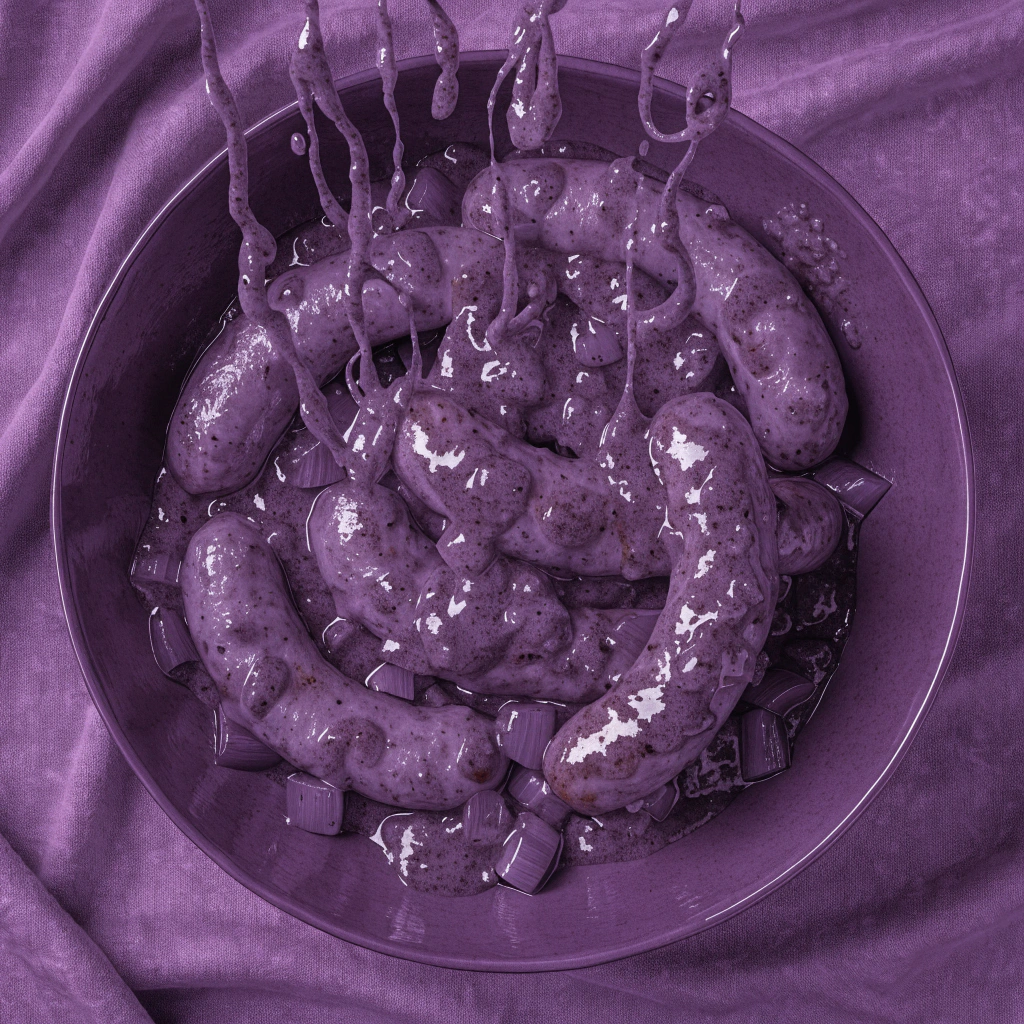
Currywurst: A German Street Food
Currywurst is a very popular food in Germany. It is famous in Berlin. People eat it on the street. It is a sausage with a special sauce.
The sauce has ketchup and curry powder. It is sweet and spicy. People often eat Currywurst with French fries. It is a cheap and tasty meal.
Herta Heuwer made the first Currywurst in 1949. Today, Germans eat millions of Currywurst every year. It is a part of German culture.
نکته دستوری
الگو: Present Simple (to be)
"Currywurst is a very popular food in Germany."
We use 'is' with singular subjects to state facts. It describes what something is or where it is.
الگو: Present Simple (plural verbs)
"People eat it on the street."
When the subject is plural like 'people', we use the base form of the verb. This describes a regular habit.
درک خود را بسنجید
10 سوال · A1 مبتدی · 1 پیشنمایش رایگان
آنچه از این مقاله آموختید را بسنجید. به همه سؤالات پاسخ دهید و XP کسب کنید!
Where is Currywurst very famous?
آیا میخواهید آزمون را تمام کنید؟
9 سؤال دیگر منتظر شماست. ثبتنام رایگان کنید تا آزمون کامل را باز کنید و XP کسب کنید!
ثبتنام رایگانقبلاً ثبتنام کردی؟ ورود
جزئیات سؤالات
Where is Currywurst very famous?
پاسخ شما:
پاسخ درست: Berlin
People usually eat Currywurst in expensive restaurants.
پاسخ شما:
پاسخ درست: نادرست
What does the word 'tasty' mean?
پاسخ شما:
پاسخ درست: Good flavor
Currywurst is a _____ with a special sauce.
پاسخ شما:
پاسخ درست: sausage
Currywurst: The Favorite Snack of Germany
Germany is famous for its food. One of the most popular snacks is the Currywurst. It is a steamed and fried sausage with a special sauce. This sauce has ketchup and curry powder on top. Most people eat it with bread or fries.
The story of Currywurst started in Berlin in 1949. A woman named Herta Heuwer had a small food stall. She met some British soldiers and they gave her ingredients like ketchup and curry powder. She mixed them together and created a new taste. It was a big success because people wanted cheap and tasty food after the war.
Today, Currywurst is more popular than many other snacks in Germany. People eat it at street stalls or in small shops. It is faster than a restaurant meal, but it is very filling. Many cities now have their own versions of this dish. In Berlin, there is even a museum for it! It is a simple dish, but it is an important part of modern German culture.
نکته دستوری
الگو: Past Simple
"A woman named Herta Heuwer had a small food stall."
We use the past simple to talk about completed actions in the past. Here, 'had' is the past form of 'have'.
الگو: Comparatives
"Today, Currywurst is more popular than many other snacks in Germany."
We use 'more + adjective + than' for long adjectives to compare two things. It shows that one thing has more of a quality than another.
درک خود را بسنجید
11 سوال · A2 مقدماتی · 1 پیشنمایش رایگان
آنچه از این مقاله آموختید را بسنجید. به همه سؤالات پاسخ دهید و XP کسب کنید!
Where did the Currywurst story begin?
آیا میخواهید آزمون را تمام کنید؟
10 سؤال دیگر منتظر شماست. ثبتنام رایگان کنید تا آزمون کامل را باز کنید و XP کسب کنید!
ثبتنام رایگانقبلاً ثبتنام کردی؟ ورود
جزئیات سؤالات
Where did the Currywurst story begin?
پاسخ شما:
پاسخ درست: Berlin
Herta Heuwer was a British soldier.
پاسخ شما:
پاسخ درست: نادرست
What does 'cheap' mean?
پاسخ شما:
پاسخ درست: Not costing much money
Currywurst is a steamed and _____ sausage.
پاسخ شما:
پاسخ درست: fried
Why was the dish a success after the war?
پاسخ شما:
پاسخ درست: Because it was cheap and tasty
Currywurst: The Story of Germany’s Favorite Street Food
While many people think of traditional roasts when they imagine German food, the Currywurst represents the modern heart of the country’s cities. This iconic street food has become a symbol of Berlin and is enjoyed by millions of people every year. It is a simple dish, but it tells a fascinating story about how Germany changed after the war.
The story began on September 4, 1949, in the Charlottenburg district of Berlin. Herta Heuwer, who owned a small street stall, obtained ketchup and curry powder from British soldiers. She decided to experiment with these new ingredients because she wanted to offer something unique to her customers. She created a spicy sauce and poured it over a sliced, grilled sausage. This meal, which was both cheap and delicious, was perfect for the construction workers who were rebuilding the city at the time.
Since its invention, the Currywurst has been celebrated in many ways. There have been songs written about it, and a museum was even opened in its honor. Usually, the sausage is served on a paper plate with a side of fries or a small bread roll. Although the recipe started in Berlin, it is now eaten in every corner of Germany, from Hamburg to Munich.
Many different versions of the spicy sauce have been developed over the decades, but the original spirit remains the same. For tourists visiting Germany, eating a Currywurst at a local food stand is considered an essential experience. It is more than just a quick snack; it is a piece of cultural history that has survived for over seventy years. Whether you like it mild or very spicy, the Currywurst remains a favorite for everyone.
نکته دستوری
الگو: Passive Voice
"This iconic street food... is enjoyed by millions of people every year."
The passive voice is formed using 'to be' + past participle. It is used here to focus on the Currywurst (the object) rather than who is eating it.
الگو: Relative Clauses
"Herta Heuwer, who owned a small street stall, obtained ketchup and curry powder..."
The word 'who' starts a relative clause that gives us extra information about Herta Heuwer. This helps combine two ideas into one complex sentence.
درک خود را بسنجید
11 سوال · B1 متوسط · 1 پیشنمایش رایگان
آنچه از این مقاله آموختید را بسنجید. به همه سؤالات پاسخ دهید و XP کسب کنید!
Who is credited with inventing the Currywurst?
آیا میخواهید آزمون را تمام کنید؟
10 سؤال دیگر منتظر شماست. ثبتنام رایگان کنید تا آزمون کامل را باز کنید و XP کسب کنید!
ثبتنام رایگانقبلاً ثبتنام کردی؟ ورود
جزئیات سؤالات
Who is credited with inventing the Currywurst?
پاسخ شما:
پاسخ درست: Herta Heuwer
Currywurst was invented before the end of World War II.
پاسخ شما:
پاسخ درست: نادرست
What does 'essential' mean in the context of the article?
پاسخ شما:
پاسخ درست: Something that is necessary or very important
Herta Heuwer obtained ketchup and curry powder from _____ soldiers.
پاسخ شما:
پاسخ درست: British
Where was Currywurst first created?
پاسخ شما:
پاسخ درست: Berlin
The Culinary Legacy of Post-War Berlin: The Rise of the Currywurst
While traditional dishes like Sauerbraten may embody the historical essence of German gastronomy, the Currywurst represents its dynamic, urban evolution. Emerging from the literal ashes of post-World War II Berlin, this iconic street snack serves as a testament to human ingenuity and the unexpected consequences of cultural exchange. The narrative originated on September 4, 1949, when Herta Heuwer, an enterprising woman operating a street stall in the Charlottenburg district, acquired ketchup and curry powder from British soldiers stationed in the city. By experimenting with these then-exotic ingredients, she devised a unique sauce that would eventually transform the culinary landscape of Germany.
Beyond its nutritional value, the Currywurst has attained a status that transcends social boundaries. It is frequently described as a 'social equalizer,' as it is consumed by construction workers and high-ranking politicians alike. This lack of social pretension is central to its enduring popularity. Had Heuwer not displayed such resourcefulness during a period of extreme scarcity, the modern German street food scene might look remarkably different today. At the time, the availability of traditional ingredients was limited, forcing individuals to innovate with whatever resources they could obtain from the occupying forces.
Despite the increasing prevalence of health-conscious diets and the global expansion of international fast-food chains, the Currywurst remains an enduring staple of German life. Approximately 800 million portions are consumed annually across the nation, with Berlin alone accounting for a significant percentage. This phenomenon suggests that for many Germans, the dish is not merely a convenient meal, but a nostalgic connection to a transformative era in their national history. It exemplifies how global influences can be integrated into a local context to create something entirely novel.
Furthermore, the dish has undergone various adaptations to meet contemporary demands, including vegan versions that reflect the changing dietary habits of the urban population. However, the core elements—steamed, then fried sausage seasoned with curry ketchup—remain largely unchanged. Ultimately, the story of the Currywurst is one of resilience and adaptation, proving that even in the most challenging circumstances, creativity can flourish and leave a lasting cultural mark.
نکته دستوری
الگو: Passive Voice
"It is frequently described as a 'social equalizer,' as it is consumed by construction workers and high-ranking politicians alike."
The passive voice is used here to focus on the dish rather than the people eating it. It is formed using the verb 'to be' plus the past participle.
الگو: Third Conditional (Inverted)
"Had Heuwer not displayed such resourcefulness during a period of extreme scarcity, the modern German street food scene might look remarkably different today."
This structure expresses a hypothetical situation in the past. By starting with 'Had' instead of 'If', the sentence becomes more formal and academic.
الگو: Present Perfect Tense
"Beyond its nutritional value, the Currywurst has attained a status that transcends social boundaries."
This tense connects a past action (attaining status) to the present result. It emphasizes the ongoing relevance of the dish's reputation.
درک خود را بسنجید
11 سوال · B2 بالاتر از متوسط · 1 پیشنمایش رایگان
آنچه از این مقاله آموختید را بسنجید. به همه سؤالات پاسخ دهید و XP کسب کنید!
What was the primary source of the curry powder used in the first Currywurst?
آیا میخواهید آزمون را تمام کنید؟
10 سؤال دیگر منتظر شماست. ثبتنام رایگان کنید تا آزمون کامل را باز کنید و XP کسب کنید!
ثبتنام رایگانقبلاً ثبتنام کردی؟ ورود
جزئیات سؤالات
What was the primary source of the curry powder used in the first Currywurst?
پاسخ شما:
پاسخ درست: British soldiers stationed in Berlin
The article suggests that the Currywurst is only popular among the working class.
پاسخ شما:
پاسخ درست: نادرست
Which word is synonymous with 'the quality of being clever and inventive'?
پاسخ شما:
پاسخ درست: Ingenuity
The Currywurst is often referred to as a social _____ because people from all walks of life eat it.
پاسخ شما:
پاسخ درست: equalizer
According to the text, why did Herta Heuwer have to innovate with new ingredients?
پاسخ شما:
پاسخ درست: Traditional ingredients were in short supply.
The Gastronomic Paradox: Deconstructing the Cultural Hegemony of the Currywurst
Seldom does a culinary invention mirror the sociopolitical upheaval of its era as poignantly as the Currywurst. Emerging from the literal and metaphorical rubble of post-World War II Berlin, this dish serves as a compelling case study in cultural hybridization. It was in 1949 that Herta Heuwer, an enterprising stall owner in the Charlottenburg district, procured curry powder and ketchup from British soldiers stationed in the occupied city. By marrying these exotic imports with the traditional German bratwurst, she didn't merely create a snack; she engineered a symbol of reconstruction and ingenuity that would eventually define a nation’s palate.
The proliferation of the Currywurst throughout the 1950s and 60s coincided with the Wirtschaftswunder, or economic miracle. As West Germany rebuilt its infrastructure, the dish became the quintessential fuel for the industrial workforce. What the Currywurst offered was more than sustenance; it provided a democratic culinary experience that transcended class boundaries. In the shadow of the Cold War, the humble street stall served as a communal hub where laborers and executives alike could partake in a shared ritual. Indeed, so deeply ingrained is the dish in the national psyche that it has spawned its own museum and remains a ubiquitous fixture in both high-end urban centers and gritty industrial zones.
From a sociological perspective, the Currywurst represents a fascinating paradox. While ostensibly a German staple, its defining characteristics—the piquancy of the sauce and the aromatic complexity of the spices—are entirely derivative of global trade routes and colonial history. This synthesis highlights the fluidity of national identity, illustrating how foreign influences can be assimilated to create something uniquely local. Furthermore, the commercialization of the dish has led to a standardized 'Currywurst experience,' yet local variations persist, reflecting regional pride. Whether it is the skinless variety popular in East Berlin or the more traditional versions found in the Ruhr area, the dish remains a subject of intense regional debate.
Critically, one might argue that the Currywurst's enduring popularity is an exercise in nostalgia. In an era increasingly dominated by globalized fast food and health-centric dietary trends, the continued consumption of over 800 million portions annually suggests a refusal to abandon a tangible link to the past. It is the very simplicity of the dish—the sliced sausage, the viscous sauce, the dusting of powder—that allows it to resist the ephemeral nature of food trends. To the modern observer, the Currywurst is not merely a fast-food item but a culinary anchor in a rapidly changing world.
Ultimately, the Currywurst is not just a testament to Herta Heuwer's resourcefulness, but a reflection of Germany's capacity to assimilate disparate influences into a cohesive, albeit spicy, whole. The legacy of the dish lies in its ability to bridge the gap between the traditional and the modern, the local and the global. As long as there are street corners in Berlin and hungry workers in the Ruhr, the Currywurst will likely maintain its status as the heartbeat of German street food culture.
نکته دستوری
الگو: Negative Inversion
"Seldom does a culinary invention mirror the sociopolitical upheaval of its era as poignantly as the Currywurst."
Inversion occurs when the auxiliary verb comes before the subject after certain negative or restrictive adverbs. This is used in formal writing to add emphasis or dramatic effect.
الگو: Cleft Sentences
"It was in 1949 that Herta Heuwer, an enterprising stall owner, procured curry powder and ketchup..."
A cleft sentence divides a single clause into two parts to focus on specific information (in this case, the year 1949). It follows the structure 'It + be + emphasized word/phrase + relative clause'.
الگو: Nominalization
"The proliferation of the Currywurst throughout the 1950s and 60s coincided with the Wirtschaftswunder."
Nominalization is the use of a word which is not a noun (e.g., the verb 'proliferate') as a noun. This creates a more formal, objective, and concise academic tone.
درک خود را بسنجید
12 سوال · C1 پیشرفته · 1 پیشنمایش رایگان
آنچه از این مقاله آموختید را بسنجید. به همه سؤالات پاسخ دهید و XP کسب کنید!
What was the primary source of the 'exotic' ingredients for the first Currywurst?
آیا میخواهید آزمون را تمام کنید؟
11 سؤال دیگر منتظر شماست. ثبتنام رایگان کنید تا آزمون کامل را باز کنید و XP کسب کنید!
ثبتنام رایگانقبلاً ثبتنام کردی؟ ورود
جزئیات سؤالات
What was the primary source of the 'exotic' ingredients for the first Currywurst?
پاسخ شما:
پاسخ درست: British soldiers stationed in Berlin
The article argues that Currywurst is a purely German invention with no foreign influence.
پاسخ شما:
پاسخ درست: نادرست
What does 'ubiquitous' mean in the context of the article?
پاسخ شما:
پاسخ درست: Found everywhere
The _____ of the Currywurst throughout the 1950s coincided with the economic miracle.
پاسخ شما:
پاسخ درست: proliferation
According to the text, why does the Currywurst remain popular despite modern health trends?
پاسخ شما:
پاسخ درست: It serves as a tangible link to the past
Herta Heuwer created the dish in the Charlottenburg district of Berlin.
پاسخ شما:
پاسخ درست: درست
The Culinary Crucible: A Socio-Historical Analysis of the Currywurst
The Currywurst, a culinary phenomenon that ostensibly transcends its humble street-side origins, serves as a profound prism through which the socio-political evolution of post-war Germany may be meticulously scrutinized. Born from the literal and metaphorical ashes of 1949 Berlin, its genesis is inextricably linked to the resourcefulness of Herta Heuwer. Were it not for the serendipitous acquisition of curry powder and ketchup from British military personnel stationed in the Charlottenburg district, the dish—an unlikely amalgamation of sliced bratwurst and a piquant, spice-infused sauce—might never have emerged as the definitive gastronomic emblem of the Wirtschaftswunder. To examine the Currywurst is to engage with the proletarian soul of the nation. It represents a democratic culinary paradigm where the rigid distinctions between social strata are momentarily suspended. Whether consumed by a manual laborer at a standing table or a high-ranking executive navigating the corridors of power in Berlin’s Mitte district, the dish occupies a unique milieu that defies conventional gastronomic hierarchy. Its ubiquity across the German landscape is not merely a testament to its palatability but also to its role as a symbol of resilience and post-war adaptation. The dish was a beacon of flavor in an era defined by scarcity, offering a sense of exoticism to a populace whose horizons had been severely constricted by conflict. The juxtaposition of the traditional German sausage—a staple of Teutonic heritage—with the exotic, colonial-inflected spice of curry reflects a broader historical narrative of global exchange and the softening of cultural boundaries. This hybridity suggests that the modern German identity is not a static monolith but rather a dynamic construct, perpetually evolving through external influences and the integration of the 'other.' Critics might argue that the dish is a relic of a bygone industrial age, a greasy vestige of the 20th century; however, its indelible presence in the contemporary German consciousness suggests a far more complex reality. It is imperative that the dish be viewed not merely as fast food, but as a socio-historical artifact that encapsulates the ingenuity of a people rebuilding their world from the ground up. Furthermore, the Currywurst serves as a linguistic and cultural marker of regional identity. In the academic discourse surrounding food studies, it is often cited as a prime example of 'Glocalization'—the adaptation of international products to local contexts. The sheer diversity of regional variations, from the skinless 'ohne Darm' variety favored in Berlin to the spicier, more robust iterations of the Ruhr area, underscores the localized nuances that define the German culinary tapestry. Each region claims its own secret recipe, its own specific texture, and its own ritualistic approach to consumption. Notwithstanding the rise of health-conscious and plant-based movements that have swept across Europe, the Currywurst retains its status, often reinventing itself in vegan forms to accommodate shifting dietary paradigms without sacrificing its symbolic weight. In conclusion, the Currywurst remains a poignant emblem of German urban life. Its history is a narrative of survival, its consumption a ritual of social cohesion, and its existence a reminder of the transformative power of cultural synthesis. As Germany continues to navigate the complexities of the 21st century, balancing tradition with the exigencies of a globalized world, the Currywurst stands as a testament to the enduring power of innovation born from necessity.
نکته دستوری
الگو: Inverted Conditionals (Third Conditional)
"Were it not for the serendipitous acquisition of curry powder and ketchup from British military personnel, the dish might never have emerged."
This formal structure replaces 'If it had not been for...' by inverting the verb 'were' and the subject. It is used in C2 academic writing to express hypothetical past situations with higher sophistication.
الگو: Present Subjunctive
"It is imperative that the dish be viewed not merely as fast food, but as a socio-historical artifact."
The subjunctive 'be viewed' follows an adjective of necessity (imperative). In formal English, the base form of the verb is used regardless of the subject.
الگو: Concessive Clauses with 'Notwithstanding'
"Notwithstanding the rise of health-conscious and plant-based movements, the Currywurst retains its status."
'Notwithstanding' functions similarly to 'despite' or 'in spite of' but is more academic. It introduces a contrast that does not prevent the main clause from being true.
درک خود را بسنجید
12 سوال · C2 تسلط · 1 پیشنمایش رایگان
آنچه از این مقاله آموختید را بسنجید. به همه سؤالات پاسخ دهید و XP کسب کنید!
According to the text, how does the Currywurst relate to German social classes?
آیا میخواهید آزمون را تمام کنید؟
11 سؤال دیگر منتظر شماست. ثبتنام رایگان کنید تا آزمون کامل را باز کنید و XP کسب کنید!
ثبتنام رایگانقبلاً ثبتنام کردی؟ ورود
جزئیات سؤالات
According to the text, how does the Currywurst relate to German social classes?
پاسخ شما:
پاسخ درست: It acts as a social leveler where class distinctions are temporarily ignored.
The Currywurst was created during the height of World War II to feed soldiers.
پاسخ شما:
پاسخ درست: نادرست
What does the term 'milieu' refer to in the context of the article?
پاسخ شما:
پاسخ درست: A social environment or setting.
The dish is described as a definitive gastronomic emblem of the _____, or the economic miracle.
پاسخ شما:
پاسخ درست: Wirtschaftswunder
What does the 'juxtaposition' of sausage and curry represent in the author's view?
پاسخ شما:
پاسخ درست: A historical narrative of global exchange and cultural synthesis.
The article suggests that the Currywurst has failed to adapt to modern vegan trends.
پاسخ شما:
پاسخ درست: نادرست

