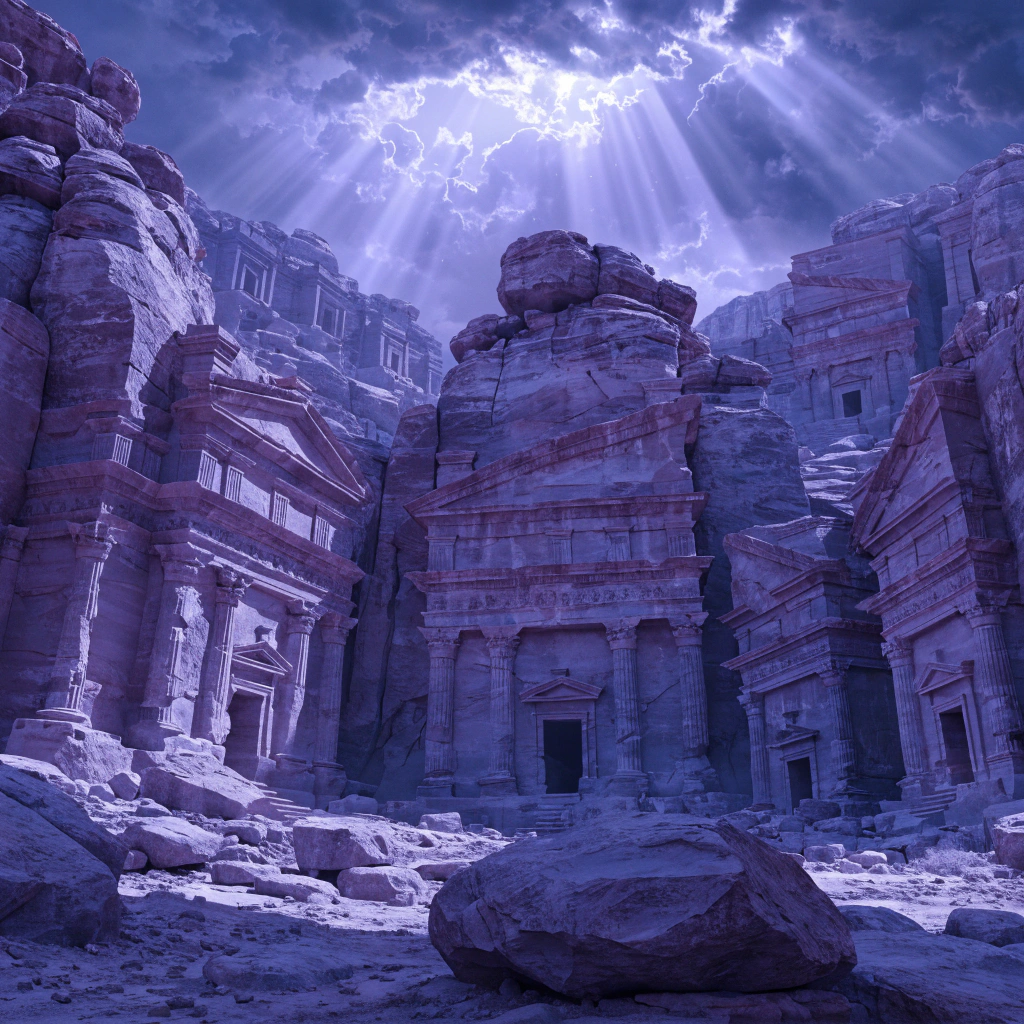
The Old City of Hegra
Hegra is a very old city in Saudi Arabia. It is in the Al-Ula desert. It is a famous place because it has big rocks and old history.
Long ago, people called Nabateans lived here. They carved beautiful tombs into the sandstone mountains. These tombs are very large and tall. The designs on the rocks are amazing.
Today, many people visit Hegra to see these buildings. It is a special place. You can see the desert and walk near the old stones. It is very beautiful at sunset.
نکته دستوری
الگو: Present Simple (to be)
"Hegra is a very old city in Saudi Arabia."
We use 'is' with singular subjects like Hegra. It describes a fact or a state in the present.
الگو: Plural Nouns
"These tombs are very large and tall."
We add '-s' to words like 'tomb' to show there is more than one. We use 'are' with plural subjects.
درک خود را بسنجید
10 سوال · A1 مبتدی · 1 پیشنمایش رایگان
آنچه از این مقاله آموختید را بسنجید. به همه سؤالات پاسخ دهید و XP کسب کنید!
Where is Hegra located?
آیا میخواهید آزمون را تمام کنید؟
9 سؤال دیگر منتظر شماست. ثبتنام رایگان کنید تا آزمون کامل را باز کنید و XP کسب کنید!
ثبتنام رایگانقبلاً ثبتنام کردی؟ ورود
جزئیات سؤالات
Where is Hegra located?
پاسخ شما:
پاسخ درست: Saudi Arabia
Hegra is a modern city built last year.
پاسخ شما:
پاسخ درست: نادرست
What does 'large' mean?
پاسخ شما:
پاسخ درست: Very big
Hegra is in the Al-Ula _____.
پاسخ شما:
پاسخ درست: desert
The Ancient Wonders of Hegra
Hegra is an amazing place in the desert of Saudi Arabia. Long ago, the Nabatean people lived there. They were the same people who built Petra in Jordan. Hegra was a very important city for trade because it was on the spice route.
There are many big rocks in the desert. The Nabatean people carved beautiful tombs into these rocks about 2,000 years ago. These tombs are bigger and more open than the ones in Petra. They have many beautiful decorations on the doors.
Hegra is the first UNESCO World Heritage site in Saudi Arabia. Today, many tourists visit the site to see the history. It is a quiet and peaceful place. It is easier to see the tombs here because the land is flat. Visitors can learn about the past and see how people lived many years ago. It is a special part of Saudi history.
نکته دستوری
الگو: Past Simple
"The Nabatean people lived there."
We use the past simple to talk about actions or states that finished in the past. For regular verbs like 'live', we add '-d' or '-ed' to the end.
الگو: Comparatives
"These tombs are bigger and more open than the ones in Petra."
We use comparatives to compare two things. We add '-er' to short words like 'big' and use 'more' before longer words like 'open'.
درک خود را بسنجید
11 سوال · A2 مقدماتی · 1 پیشنمایش رایگان
آنچه از این مقاله آموختید را بسنجید. به همه سؤالات پاسخ دهید و XP کسب کنید!
Where is the ancient site of Hegra located?
آیا میخواهید آزمون را تمام کنید؟
10 سؤال دیگر منتظر شماست. ثبتنام رایگان کنید تا آزمون کامل را باز کنید و XP کسب کنید!
ثبتنام رایگانقبلاً ثبتنام کردی؟ ورود
جزئیات سؤالات
Where is the ancient site of Hegra located?
پاسخ شما:
پاسخ درست: In the desert of Saudi Arabia
The same people who built Petra also built Hegra.
پاسخ شما:
پاسخ درست: درست
What does 'trade' mean?
پاسخ شما:
پاسخ درست: Buying and selling goods
Hegra is the first UNESCO World Heritage _____ in Saudi Arabia.
پاسخ شما:
پاسخ درست: site
Why was Hegra an important city in the past?
پاسخ شما:
پاسخ درست: Because it was on the spice trade route
Exploring Hegra: Saudi Arabia's Hidden Treasure
Hegra, which is also known as Mada'in Salih, is an incredible archaeological site located in the Al-Ula desert of Saudi Arabia. It is a place where history and art meet in a very special way. This ancient city was built by the Nabatean civilization, the same talented people who created the famous city of Petra in Jordan.
For many years, Hegra served as the southern capital of the Nabatean Kingdom. It was a very busy hub for the incense and spice trade routes that connected different parts of the world. Today, visitors can still see the amazing ingenuity of the people who lived there. More than 100 monumental tombs have been found in the area, and most of them are in excellent condition. These tombs were carved directly into massive sandstone outcrops that rise high above the flat desert floor.
In 2008, Hegra was named a UNESCO World Heritage site because of its historical importance. It was the first site in Saudi Arabia to receive this honor. Unlike Petra, which is hidden inside narrow canyons, the monuments of Hegra are easy to see from a distance across the open landscape.
In recent years, the Saudi government has opened the site to international tourists. Many people have visited Al-Ula to learn about the Nabateans' artistic prowess and their ability to survive in the harsh desert environment. Hegra remains a powerful testament to a civilization that disappeared long ago but left behind a beautiful legacy. Whether you are interested in history or photography, Hegra offers an experience that you will never forget.
نکته دستوری
الگو: Passive Voice
"These tombs were carved directly into massive sandstone outcrops that rise high above the flat desert floor."
The passive voice is used here because the action (carving) is more important than who did it. It is formed using the verb 'to be' (were) and the past participle (carved).
الگو: Present Perfect
"Many people have visited Al-Ula to learn about the Nabateans' artistic prowess."
This pattern connects the past to the present. It is formed with 'have/has' plus the past participle, showing an action that happened at an unspecified time.
درک خود را بسنجید
11 سوال · B1 متوسط · 1 پیشنمایش رایگان
آنچه از این مقاله آموختید را بسنجید. به همه سؤالات پاسخ دهید و XP کسب کنید!
Which civilization built the city of Hegra?
آیا میخواهید آزمون را تمام کنید؟
10 سؤال دیگر منتظر شماست. ثبتنام رایگان کنید تا آزمون کامل را باز کنید و XP کسب کنید!
ثبتنام رایگانقبلاً ثبتنام کردی؟ ورود
جزئیات سؤالات
Which civilization built the city of Hegra?
پاسخ شما:
پاسخ درست: The Nabateans
Hegra was the first site in Saudi Arabia to be named a UNESCO World Heritage site.
پاسخ شما:
پاسخ درست: درست
What does 'heritage' mean?
پاسخ شما:
پاسخ درست: Features belonging to the culture of a society from the past
In 2008, Hegra was named a UNESCO World _____ site.
پاسخ شما:
پاسخ درست: Heritage
Why was Hegra important in the past?
پاسخ شما:
پاسخ درست: It was a hub for incense and spice trade routes.
Hegra: The Desert Legacy of the Nabateans
Located in the heart of the Al-Ula desert, Hegra—also known as Mada'in Salih—stands as a breathtaking testament to the ingenuity and artistic prowess of the Nabatean civilization. While many travelers are familiar with Petra in Jordan, Hegra offers a similarly profound experience, characterized by its unique geological setting and exceptionally preserved structures. Dating back to the 1st century BCE, this ancient city, which served as the southern capital of the Nabatean Kingdom, was a vital hub for the lucrative incense and spice trade routes that once connected the Arabian Peninsula to the Mediterranean.
Unlike the narrow, hidden canyons of Petra, Hegra’s tombs are carved directly into massive sandstone outcrops that rise abruptly from the flat desert floor. These monolithic structures feature intricate facades that blend various architectural styles, including Egyptian, Assyrian, and Hellenistic influences. The Nabateans had mastered the art of hydraulic engineering, allowing them to thrive in an arid environment where water was scarce. Consequently, the prosperity of the city was not merely a result of trade, but also of their ability to manage natural resources effectively.
The archaeological significance of Hegra cannot be overstated. In 2008, it was designated as Saudi Arabia’s first UNESCO World Heritage site, recognized for its outstanding universal value. The site contains over 100 monumental tombs, many of which bear inscriptions that provide insight into the social hierarchy and cultural practices of the people who lived there. These inscriptions have allowed historians to piece together the narrative of a civilization that had otherwise left few written records.
In recent years, the Saudi government has prioritized the preservation and promotion of Hegra as part of its Vision 2030 initiative. This move aims to showcase the country’s rich cultural heritage to the global community while ensuring that the site remains protected for future generations. Visitors are now encouraged to explore the area through guided tours that emphasize the delicate balance between tourism and conservation.
Ultimately, Hegra remains a symbol of human resilience and creativity. The legacy of the Nabateans continues to captivate archaeologists and tourists alike, offering a window into a past where art and commerce flourished amidst the challenging landscape of the desert. As one wanders through the silent, sun-drenched ruins, it becomes clear that the Nabateans were not just traders; they were visionaries who left an indelible mark on history.
نکته دستوری
الگو: Relative Clauses
"this ancient city, which served as the southern capital of the Nabatean Kingdom, was a vital hub"
Non-defining relative clauses provide extra information about a noun. They are separated by commas and use 'which' for things or places.
الگو: Past Perfect Tense
"The Nabateans had mastered the art of hydraulic engineering"
The past perfect is used to describe an action that was completed before another action in the past. It is formed using 'had' plus the past participle.
الگو: Passive Voice
"In 2008, it was designated as Saudi Arabia’s first UNESCO World Heritage site"
The passive voice is used when the action itself is more important than who performed it. It is formed with the verb 'to be' and the past participle.
درک خود را بسنجید
11 سوال · B2 بالاتر از متوسط · 1 پیشنمایش رایگان
آنچه از این مقاله آموختید را بسنجید. به همه سؤالات پاسخ دهید و XP کسب کنید!
What was Hegra's primary economic role in the ancient world?
آیا میخواهید آزمون را تمام کنید؟
10 سؤال دیگر منتظر شماست. ثبتنام رایگان کنید تا آزمون کامل را باز کنید و XP کسب کنید!
ثبتنام رایگانقبلاً ثبتنام کردی؟ ورود
جزئیات سؤالات
What was Hegra's primary economic role in the ancient world?
پاسخ شما:
پاسخ درست: A trade hub for incense and spices
Hegra's tombs are hidden within narrow canyons, much like those in Petra.
پاسخ شما:
پاسخ درست: نادرست
What does the word 'facade' refer to in the context of the article?
پاسخ شما:
پاسخ درست: The external front of a carved tomb
Hegra stands as a breathtaking _____ to the ingenuity of the Nabatean civilization.
پاسخ شما:
پاسخ درست: testament
According to the text, what allowed the Nabateans to thrive in the desert?
پاسخ شما:
پاسخ درست: Their mastery of hydraulic engineering
Hegra: The Silent Sentinel of the Nabatean Incense Route
Rarely does a landscape command such profound reverence as the Al-Ula desert, where the monolithic sandstone structures of Hegra rise like ghosts from the shifting sands. Known historically as Mada’in Salih, this site stands as a testament to the ingenuity and artistic prowess of the Nabatean civilization. While its sister city, Petra, remains shrouded within the labyrinthine canyons of modern-day Jordan, Hegra offers a more exposed, yet equally haunting, glimpse into a forgotten hegemony. It was the strategic positioning of this southern capital that allowed the Nabateans to exert sovereignty over the lucrative incense and spice trade routes between the Mediterranean and southern Arabia. The wealth generated from this monopoly allowed for the patronage of the arts, which is evident in the sheer scale of the necropolis.
The architectural sophistication found here is nothing short of extraordinary. Carved directly into the sandstone outcrops, the 111 monumental tombs display a synthesis of cultural influences. The meticulous preservation of the facades, adorned with eagles, sphinxes, and Medusa-like figures, indicates a society that was both cosmopolitan and deeply rooted in its own traditions. What distinguishes Hegra from other archaeological sites is the clarity of its epigraphic evidence. The inscriptions found on these tombs provide invaluable insights into the social hierarchy and legal frameworks of the era. These inscriptions are not merely decorative; they serve as legal documents, detailing the ownership of the tombs and the penalties for those who would dare to desecrate them.
However, the story of Hegra is not merely one of aesthetic achievement. The consolidation of power in this arid environment required a sophisticated understanding of resource management. Not only did the Nabateans excel in commerce, but they also mastered hydraulic engineering, carving cisterns into the rock to harvest every drop of precious rainwater. This ability to manipulate the environment was central to their survival and prosperity. In the modern era, Hegra has transitioned from a silent vestige of the past to a focal point of global tourism. This shift brings with it a complex discourse regarding conservation versus accessibility. The challenge lies in ensuring that the influx of visitors does not compromise the structural integrity of these ancient monuments. It is the delicate balance between preservation and exposure that will define Hegra’s legacy in the 21st century. As scholars continue to peel back the layers of history, the site remains a profound interstice between the ancient world and our contemporary understanding of human resilience.
نکته دستوری
الگو: Negative Inversion
"Rarely does a landscape command such profound reverence as the Al-Ula desert..."
When using negative or restrictive adverbs like 'rarely' at the start of a sentence for emphasis, the auxiliary verb and subject are inverted.
الگو: Cleft Sentence
"It was the strategic positioning of this southern capital that allowed the Nabateans to exert sovereignty..."
A cleft sentence is used to focus on a specific part of the sentence (the strategic positioning) by introducing it with 'It is/was... that'.
الگو: Nominalisation
"The consolidation of power in this arid environment required a sophisticated understanding of resource management."
Nominalisation turns verbs or adjectives into nouns (e.g., 'consolidate' to 'consolidation') to create a more formal, academic tone typical of C1 level writing.
درک خود را بسنجید
12 سوال · C1 پیشرفته · 1 پیشنمایش رایگان
آنچه از این مقاله آموختید را بسنجید. به همه سؤالات پاسخ دهید و XP کسب کنید!
How does the article contrast Hegra with its sister city, Petra?
آیا میخواهید آزمون را تمام کنید؟
11 سؤال دیگر منتظر شماست. ثبتنام رایگان کنید تا آزمون کامل را باز کنید و XP کسب کنید!
ثبتنام رایگانقبلاً ثبتنام کردی؟ ورود
جزئیات سؤالات
How does the article contrast Hegra with its sister city, Petra?
پاسخ شما:
پاسخ درست: Hegra is more exposed while Petra is hidden in canyons.
The inscriptions on the tombs at Hegra served as legal documents regarding ownership.
پاسخ شما:
پاسخ درست: درست
Which word describes a large ancient cemetery with elaborate monuments?
پاسخ شما:
پاسخ درست: Necropolis
The meticulous _____ of the facades indicates a cosmopolitan society.
پاسخ شما:
پاسخ درست: preservation
What was the primary factor in the Nabateans' ability to survive in the desert environment?
پاسخ شما:
پاسخ درست: Their mastery of hydraulic engineering.
There are exactly 200 monumental tombs found at the Hegra site.
پاسخ شما:
پاسخ درست: نادرست
The Silent Sentinels of Al-Ula: An Analytical Survey of Hegra’s Nabatean Legacy
Were one to traverse the hyper-arid expanses of the Al-Ula desert in northwestern Saudi Arabia, the sudden emergence of Hegra’s monolithic sandstone outcrops would appear as nothing short of a geological mirage. Known to antiquity as Mada’in Salih, this site stands as a profound testament to the Nabatean civilization’s architectural ingenuity and their unparalleled mastery over a landscape that is, by any objective measure, inhospitable. It is not merely a collection of tombs; rather, it is a sophisticated palimpsest of historical narratives, where the ephemeral nature of the incense trade routes intersects with the permanence of rock-cut funerary architecture. Unlike its northern counterpart, Petra, which resides in the secluded embrace of narrow canyons, Hegra’s monuments are defiantly exposed, carved directly into the isolated inselbergs that punctuate the flat desert floor.
The historical significance of Hegra is predicated upon its strategic position as the southern capital of the Nabatean Kingdom. During its zenith in the 1st century BCE, it functioned as a vital node in the lucrative trans-Arabian trade network, facilitating the movement of frankincense, myrrh, and exotic spices from the Arabian Peninsula to the Mediterranean world. The wealth accrued from such mercantilism allowed for the commissioning of the 111 monumental tombs that characterize the site today. These structures, often adorned with Hellenistic pediments and Assyrian-inspired crowsteps, reflect a cosmopolitan aesthetic—a synthesis of cultural influences that suggests a society far more interconnected than its geographical isolation might imply. It is imperative that we recognize the technical prowess required to maintain structural integrity while excavating deep into the porous sandstone.
Should one scrutinize the façades of the Qasr al-Farid, the 'Lonely Castle,' the sheer audacity of the Nabatean stonecutters becomes manifest. Carved from top to bottom from a single, isolated boulder, the tomb remains unfinished, offering an invaluable glimpse into the subtractive techniques employed by ancient artisans. Furthermore, the presence of bilingual inscriptions—Nabatean and Lihyanite—underscores the linguistic diversity and administrative complexity of the region. It is as if the very stones were imbued with a desire to communicate their provenance to future generations. However, the scholarly discourse surrounding Hegra is not without its controversies. There is a degree of academic hedging regarding the exact religious rituals performed within the triclinia—the banquet halls where commemorative feasts were held. While some archaeologists posit that these spaces served purely funerary functions, others argue for a more nuanced interpretation involving ancestral veneration and communal identity formation.
In the contemporary era, the designation of Hegra as a UNESCO World Heritage site has catalyzed a renewed interest in its preservation. Yet, this influx of global attention necessitates a delicate equilibrium between accessibility and conservation. Lest the fragile sandstone succumb to the erosive pressures of mass tourism, rigorous management strategies must be implemented. Hegra remains a silent witness to the rise and fall of empires, a vestigial limb of a once-thriving commercial heart. It challenges the observer to contemplate the transience of human achievement against the backdrop of geological time, reminding us that even the most formidable civilizations are ultimately subject to the inexorable march of the desert sands.
نکته دستوری
الگو: Inversion in Conditional Sentences
"Were one to traverse the hyper-arid expanses of the Al-Ula desert..."
This is a formal alternative to 'If one were to traverse'. It uses the subjunctive 'were' at the beginning of the clause to express a hypothetical or unlikely situation.
الگو: Mandative Subjunctive
"It is imperative that we recognize the technical prowess required..."
Used after adjectives of importance or urgency (imperative, essential, vital). The verb 'recognize' remains in the base form regardless of the subject.
الگو: Negative Purpose Clause with 'Lest'
"Lest the fragile sandstone succumb to the erosive pressures of mass tourism..."
The word 'lest' means 'to avoid the risk of'. It is typically followed by the subjunctive mood (base form of the verb 'succumb') in formal English.
درک خود را بسنجید
12 سوال · C2 تسلط · 1 پیشنمایش رایگان
آنچه از این مقاله آموختید را بسنجید. به همه سؤالات پاسخ دهید و XP کسب کنید!
What primary geographical feature distinguishes Hegra's tombs from those of Petra?
آیا میخواهید آزمون را تمام کنید؟
11 سؤال دیگر منتظر شماست. ثبتنام رایگان کنید تا آزمون کامل را باز کنید و XP کسب کنید!
ثبتنام رایگانقبلاً ثبتنام کردی؟ ورود
جزئیات سؤالات
What primary geographical feature distinguishes Hegra's tombs from those of Petra?
پاسخ شما:
پاسخ درست: They are carved into isolated outcrops on flat ground.
The Qasr al-Farid tomb was completed by the Nabateans before the fall of their empire.
پاسخ شما:
پاسخ درست: نادرست
What does 'palimpsest' mean in the context of the article?
پاسخ شما:
پاسخ درست: A structure with multiple layers of historical meaning.
The historical significance of Hegra is _____ upon its strategic position on trade routes.
پاسخ شما:
پاسخ درست: predicated
According to the text, what does the architectural style of Hegra suggest about Nabatean society?
پاسخ شما:
پاسخ درست: They were a cosmopolitan and interconnected society.
Academic consensus has been fully reached regarding the exact function of the triclinia.
پاسخ شما:
پاسخ درست: نادرست

