









fires در ۳۰ ثانیه
- Fires is the plural of the noun fire, referring to multiple burning events like campfires or wildfires.
- As a verb, fires is the third-person singular form meaning to shoot a weapon or discharge a projectile.
- In a business context, fires is a verb that means to terminate someone's employment or let them go.
- Metaphorically, fires can mean to excite someone's imagination or to start a mechanical engine or a neural signal.
The word fires is a versatile English term that functions as both a plural noun and a third-person singular verb. In its noun form, it refers to multiple instances of combustion or burning, such as forest fires or campfires. As a verb, it describes the action of dismissing an employee, discharging a weapon, or igniting a metaphorical passion or engine. Understanding the context is crucial because the meaning shifts significantly between the workplace, a natural disaster, and a firing range.
- Noun Usage
- When used as a noun, 'fires' typically refers to distinct events of burning. For example, 'The department responded to three separate fires last night.' It can also refer to the heating elements in a house or the controlled flames used for cooking in an outdoor setting.
- Verb Usage: Employment
- In a professional context, 'fires' is the action a manager takes when terminating someone's employment. It is a forceful and often negative term. For instance, 'The CEO fires anyone who breaches the confidentiality agreement.'
- Verb Usage: Ballistics
- In the context of weaponry, 'fires' refers to the act of shooting or discharging a projectile. 'The soldier fires the rifle at the target with precision.'
The arsonist set several fires across the abandoned industrial district.
Furthermore, 'fires' can be used metaphorically to describe the stimulation of the mind or emotions. When we say something 'fires the imagination,' we mean it inspires or excites creative thought. This usage elevates the word from a physical action to a psychological one. In mechanical terms, we also say an engine 'fires' when the spark plugs ignite the fuel-air mixture, allowing the vehicle to start and run efficiently.
The coach fires up the team with a powerful locker room speech before the championship game.
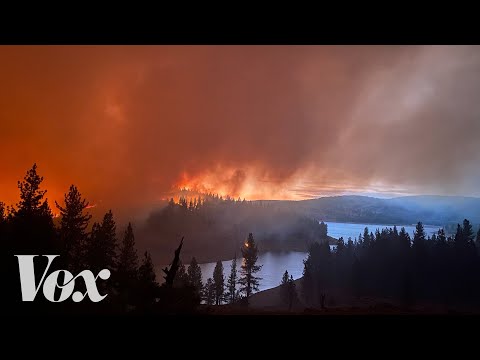
Every summer, the dry valley experiences devastating forest fires that threaten local wildlife.
In summary, whether you are talking about a series of blazes in the woods, a boss letting go of a staff member, or a gun being shot, 'fires' is the word you need. It carries a sense of energy, suddenness, and often, finality. Its broad range of applications makes it a staple of both daily conversation and specialized technical language.
Using 'fires' correctly requires identifying whether it is acting as a noun or a verb. As a noun, it follows articles or adjectives. As a verb, it follows a singular subject. Let us explore the various grammatical structures where 'fires' appears frequently.
- Noun in Subject Position
- 'Fires are common in this region during the dry season.' Here, 'fires' is the plural subject of the sentence.
- Verb with Direct Object
- 'The manager fires the employee for consistent tardiness.' In this case, 'fires' is the action performed on the object 'employee'.
- Phrasal Verb: Fires Up
- 'She fires up the computer every morning at 8 AM.' This phrasal verb means to start or activate a machine.
The artillery unit fires a volley of shells toward the distant ridge.
When discussing natural disasters, 'fires' is often paired with descriptive adjectives like 'uncontrolled,' 'raging,' or 'contained.' These combinations help specify the intensity and status of the burning events. In a workplace setting, the verb 'fires' is often followed by the preposition 'for,' indicating the reason for the termination.
The local government banned all outdoor fires due to the extreme drought conditions.
In literature and poetry, 'fires' might be used to represent passion or internal conflict. 'The fires of ambition burned within him' uses the noun form to create a vivid image of intense desire. Similarly, 'The sunset fires the clouds with a golden glow' uses the verb form to describe the visual effect of light hitting the sky.
A single spark fires the dry grass, leading to a massive blaze.
By practicing these different structures, you will become more comfortable using 'fires' in both literal and figurative senses. Whether you are writing a news report about wildfires or a story about a high-stakes office environment, this word provides the necessary impact and clarity.
You will encounter the word 'fires' in a variety of real-world environments, ranging from the evening news to the breakroom at work. Its frequency in the English language is high because it covers essential aspects of safety, employment, and technology.
- News and Media
- News anchors often report on 'brush fires' or 'structure fires.' You might hear, 'Firefighters are currently battling three major fires in the northern suburbs.'
- Workplace and Business
- In business discussions, 'fires' can refer to urgent problems that need immediate attention. A manager might say, 'I spent all morning putting out fires,' meaning they were solving unexpected crises.
- Sports Commentary
- Commentators use the verb form when a player shoots. 'The striker fires the ball into the top corner of the net!'
The engine fires on all cylinders, indicating it is in perfect working condition.
In casual conversation, 'fires' is often heard in the context of camping or social gatherings. 'We sat around the fires and told ghost stories' implies multiple fire pits were used. In a more modern context, 'firing off an email' is a common expression for sending a message quickly and perhaps without much deliberation.
The director fires questions at the candidate during the intense interview.
Additionally, in the world of photography, a flash 'fires' when it emits light to illuminate a subject. In neural science, neurons 'fire' when they transmit electrical signals. These technical uses show how the word has been adapted to describe any sudden release of energy or signal across various scientific and artistic fields.
The camera's flash fires automatically in low-light environments.
Whether you are listening to a podcast about history, watching a cooking show where the chef 'fires up' the grill, or reading a technical manual about internal combustion engines, 'fires' will appear frequently. Its ability to bridge the gap between literal heat and metaphorical action makes it an indispensable part of the English lexicon.
Even though 'fires' is a common word, learners often make specific errors regarding its countability and verb agreement. Understanding these pitfalls will help you communicate more accurately in both written and spoken English.
- Countable vs. Uncountable
- 'Fire' as a general concept is uncountable. You should not say 'There is many fires' when referring to heat in general. Use 'fires' only when referring to specific, individual instances of burning.
- Subject-Verb Agreement
- A common mistake is using 'fires' with a plural subject. Incorrect: 'They fires the gun.' Correct: 'He fires the gun' or 'They fire the gun.'
- Confusing 'Fire' and 'Fires' in Employment
- Learners sometimes use the noun form when they mean the verb. 'The boss gave him a fires' is incorrect. It should be 'The boss fires him' or 'The boss gave him the sack.'
Incorrect: The police fires a warning shot. (Police is usually treated as plural). Correct: The police fire a warning shot.
Another mistake involves the pronunciation of the 's' at the end. In 'fires,' the 's' is pronounced as a /z/ sound because it follows a voiced vowel sound. Pronouncing it as a sharp /s/ can make the word sound unnatural to native speakers. Additionally, avoid overusing 'fires' in formal writing when 'terminates' or 'discharges' might be more appropriate.
Incorrect: He fires from the job. Correct: He was fired from the job (passive) or The company fires him (active).
Finally, be careful with the phrase 'putting out fires.' While it literally means extinguishing flames, in an office it means solving problems. If you tell a firefighter you are 'putting out fires' at your desk, they might be very confused! Always ensure your metaphorical use matches the setting you are in.
Depending on whether you are using 'fires' as a noun or a verb, there are several alternatives that can add variety and precision to your language. Choosing the right synonym depends on the intensity of the situation and the level of formality required.
- Blazes (Noun)
- 'Blazes' suggests larger, more intense fires. 'Firefighters struggled to contain the blazes that swept through the canyon.'
- Dismisses (Verb - Employment)
- 'Dismisses' is a more formal way to say 'fires.' 'The board of directors dismisses the CEO following the scandal.'
- Discharges (Verb - Weaponry)
- 'Discharges' is the technical term for firing a gun. 'The officer accidentally discharges his weapon during the training exercise.'
The massive conflagrations could be seen from space, highlighting the scale of the disaster.
In the context of inspiration, you might use 'ignites' or 'sparks' instead of 'fires.' For example, 'The teacher's passion ignites the students' interest in science.' These words carry a more positive and creative connotation than the blunt verb 'fires.' In the mechanical sense, 'activates' or 'triggers' can serve as useful alternatives.
The manager terminates the contract of the underperforming vendor.
When comparing 'fires' to 'flames,' remember that 'flames' refers to the visible part of the fire, while 'fires' refers to the event itself. You can have 'flames' without a large 'fire' (like a candle), but a 'fire' almost always involves 'flames.' Understanding these subtle differences will help you choose the most evocative word for your specific needs.
چقدر رسمی است؟
نکته جالب
The use of 'fire' to mean 'dismiss from a job' is relatively modern, originating in the United States in the late 19th century.
راهنمای تلفظ
- Pronouncing the 's' as a sharp 's' instead of a 'z'.
- Merging the two sounds into 'fars'.
- Adding an extra syllable like 'fire-ez'.
- Dropping the 'r' in American English.
- Misplacing the stress in compound words.
سطح دشواری
Easy to recognize but requires context to distinguish noun from verb.
Requires correct subject-verb agreement and understanding of countability.
Pronunciation of the final 'z' sound is the main challenge.
Must distinguish from 'fire' in fast speech.
بعداً چه یاد بگیریم؟
پیشنیازها
بعداً یاد بگیرید
پیشرفته
گرامر لازم
Third-Person Singular -s
He fires (correct) vs They fires (incorrect).
Countable Plurals
Three fires (correct) vs Three fire (incorrect).
Phrasal Verbs
He fires up the crowd.
Passive Voice
He was fired by the manager.
Zero Article with Plurals
Fires are dangerous.
مثالها بر اساس سطح
There are two fires in the garden.
Il y a deux feux dans le jardin.
Plural noun.
He sees the fires from the window.
Il voit les feux par la fenêtre.
Plural noun.
The fires are very hot.
Les feux sont très chauds.
Plural noun with 'are'.
We do not play with fires.
Nous ne jouons pas avec les feux.
Negative sentence.
The big fires are scary.
Les grands feux font peur.
Adjective + plural noun.
Look at the small fires!
Regardez les petits feux !
Imperative sentence.
The fires give us light.
Les feux nous donnent de la lumière.
Subject-verb agreement.
Water stops the fires.
L'eau arrête les feux.
Simple present.
The man fires the gun at the target.
L'homme tire avec le pistolet sur la cible.
3rd person singular verb.
She fires the oven to bake bread.
Elle allume le four pour cuire le pain.
Verb meaning to ignite.
Many forest fires happen in summer.
Beaucoup de feux de forêt arrivent en été.
Compound noun phrase.
The boss fires the bad worker.
Le patron renvoie le mauvais travailleur.
Verb meaning to dismiss.
The engine fires and the car starts.
Le moteur s'allume et la voiture démarre.
Mechanical verb usage.
He fires an arrow into the air.
Il tire une flèche en l'air.
Verb meaning to discharge.
The boy fires up the video game.
Le garçon lance le jeu vidéo.
Phrasal verb 'fires up'.
The city has three house fires today.
La ville a trois incendies de maison aujourd'hui.
Plural noun.
The company fires anyone who steals.
L'entreprise licencie quiconque vole.
General rule in present tense.
The hunter fires his rifle at the deer.
Le chasseur tire avec son fusil sur le cerf.
Transitive verb.
Several fires broke out after the earthquake.
Plusieurs incendies se sont déclarés après le séisme.
Plural noun as subject.
She fires off a quick reply to the email.
Elle envoie une réponse rapide à l'e-mail.
Idiomatic phrasal verb.
The coach fires up the players with a speech.
L'entraîneur motive les joueurs avec un discours.
Metaphorical usage.
The volcano fires rocks into the sky.
Le volcan projette des roches dans le ciel.
Action verb.
He fires the pottery in a large kiln.
Il cuit la poterie dans un grand four.
Technical verb usage.
The sun fires the morning mist.
Le soleil dissipe la brume matinale.
Literary usage.
The manager fires the consultant for breach of contract.
Le manager licencie le consultant pour rupture de contrat.
Formal verb usage.
The engine fires on all cylinders during the race.
Le moteur tourne à plein régime pendant la course.
Idiomatic expression.
The artist's work fires the imagination of the public.
L'œuvre de l'artiste enflamme l'imagination du public.
Abstract object.
Firefighters are monitoring the fires' progress.
Les pompiers surveillent la progression des incendies.
Possessive plural noun.
The neuron fires when it receives a signal.
Le neurone s'active lorsqu'il reçoit un signal.
Scientific usage.
The politician fires back at his critics.
Le politicien réplique à ses détracteurs.
Phrasal verb 'fires back'.
The kiln fires the bricks at a very high temperature.
Le four cuit les briques à une température très élevée.
Technical process.
The ship fires a salute as it enters the harbor.
Le navire tire un salut en entrant dans le port.
Ceremonial usage.
The CEO fires the executive to mitigate the scandal.
Le PDG licencie le cadre pour atténuer le scandale.
Strategic verb usage.
The sun fires the western horizon with crimson hues.
Le soleil embrase l'horizon occidental de teintes cramoisies.
Poetic/Literary usage.
The automatic system fires the sprinklers immediately.
Le système automatique déclenche les extincteurs immédiatement.
Mechanical trigger.
He fires off a series of questions to the witness.
Il pose une série de questions au témoin.
Rapid-fire action.
The internal combustion engine fires intermittently.
Le moteur à combustion interne s'allume par intermittence.
Precise technical description.
The revolution fires the hearts of the oppressed.
La révolution enflamme les cœurs des opprimés.
Metaphorical passion.
The flash fires, capturing the moment in perfect light.
Le flash se déclenche, capturant l'instant sous une lumière parfaite.
Intransitive verb.
The government fires the opening salvo in the trade war.
Le gouvernement lance la première salve de la guerre commerciale.
Idiomatic expression.
The synaptic gap fires with electrical potential.
La fente synaptique s'active avec un potentiel électrique.
Highly specialized scientific usage.
The novelist fires the prose with archaic vocabulary.
Le romancier anime la prose avec un vocabulaire archaïque.
Stylistic verb usage.
The kiln fires the porcelain to a translucent finish.
Le four cuit la porcelaine jusqu'à un fini translucide.
Industrial precision.
The commander fires the heavy ordnance with calculated intent.
Le commandant tire l'artillerie lourde avec une intention calculée.
Formal military terminology.
The sunset fires the peaks of the Himalayas.
Le coucher du soleil embrase les sommets de l'Himalaya.
Sublime literary description.
The manager fires the underperformer, citing a lack of synergy.
Le manager licencie l'employé peu performant, invoquant un manque de synergie.
Jargon-heavy usage.
The brain fires in patterns that reflect deep meditation.
Le cerveau s'active selon des schémas qui reflètent une méditation profonde.
Abstract scientific observation.
The dragon fires a stream of molten heat at the knights.
Le dragon projette un jet de chaleur fondue sur les chevaliers.
Mythological action.
مترادفها
متضادها
ترکیبهای رایج
عبارات رایج
— Dealing with urgent problems as they arise.
I spent all day putting out fires at work.
— Working at full strength or efficiency.
The team is firing on all cylinders.
— Making a situation or emotion more intense.
His comments are stoking the fires of anger.
اغلب اشتباه گرفته میشود با
Learners sometimes confuse the spelling or pronunciation of 'fires' and 'flies'.
The vowel sounds are different, but the 'f' and 's' can cause confusion for beginners.
Fines are money paid as punishment; fires are combustion or job loss.
اصطلاحات و عبارات
— To function at peak performance.
The new marketing campaign is firing on all cylinders.
informal— To make the first move in an argument or conflict.
The lawyer fires the opening salvo in the trial.
formal— If there are signs of a problem, a problem likely exists.
Rumors are everywhere; where there's smoke, there's fires.
neutral— To do something to warn someone to stop.
The fine fires a warning shot to other companies.
neutral— To make a group of people excited or angry.
The speaker fires up the crowd with his words.
informal— Attacked from two sides at once.
The army was caught between two fires.
literary— Intense passion or inherited traits.
He has the fires of a musician in his blood.
poetic— To shoot a single bullet or projectile.
The guard fires off a round into the air.
neutral— To use the same methods as your opponent.
They decided to fight fires with fire by lowering prices.
neutral— To be delayed or slow to act.
The project is hanging fires due to lack of funding.
old-fashionedبهراحتی اشتباه گرفته میشود
Singular vs. Plural.
Fire is the general element; fires refers to specific instances or the verb form.
Fire is hot, but these three fires are small.
Tense confusion.
Fires is present tense; fired is past tense or a participle.
He fires him today; he was fired yesterday.
Homophone-ish spelling.
A fir is a type of tree; fires are burning events.
The fir tree caught fires.
Anagram/Spelling.
Fries are cooked potatoes; fires are burning events.
He eats fries while watching the fires.
Antonym/Spelling.
Hires means giving a job; fires means taking it away.
The company hires ten people and fires one.
الگوهای جملهسازی
The [noun] are [adjective].
The fires are big.
[Subject] fires the [Object].
He fires the gun.
[Subject] fires [Object] for [Reason].
The boss fires him for being late.
[Subject] fires up the [Object].
She fires up the engine.
[Abstract Subject] fires the [Abstract Object].
The speech fires the imagination.
[Technical Subject] fires [Adverb].
The neuron fires rhythmically.
There are [Number] fires in [Location].
There are five fires in the valley.
[Subject] fires back at [Person].
The witness fires back at the lawyer.
خانواده کلمه
اسمها
فعلها
صفتها
مرتبط
نحوه استفاده
Common in news, workplace, and action-oriented media.
-
They fires the gun.
→
They fire the gun.
The subject 'they' is plural, so the verb should not have an 's'.
-
There is many fires.
→
There are many fires.
'Fires' is plural, so it requires the plural verb 'are'.
-
The boss gave him a fires.
→
The boss fired him.
'Fires' is not a noun for the act of losing a job; use the verb form.
-
A fires building.
→
A burning building.
'Fires' cannot be used as an adjective.
-
He fires from his job.
→
He was fired from his job.
The passive voice 'was fired' is needed when the person is the receiver of the action.
نکات
Subject-Verb Agreement
Always check if your subject is singular (he/she/it) before using 'fires' as a verb. If the subject is plural (they/we), use 'fire'.
Use Synonyms
To sound more advanced, use 'blazes' for big fires and 'terminates' for office firing in formal reports.
The 'Z' Sound
Practice saying 'fire-z' to get the correct voiced ending. This makes your English sound more natural.
Phrasal Verbs
Learn 'fires up' and 'fires off'. These are very common in daily conversation and office settings.
Context Matters
In an emergency, 'fires' refers to danger. In an office, it refers to employment. Always be aware of your surroundings.
Metaphors
Don't be afraid to use 'fires' to describe passion or inspiration. It is a powerful literary tool.
Avoid Repetition
If you have already used 'fires' in a paragraph, switch to 'incidents' or 'discharges' to keep the reader engaged.
News Keywords
When you hear 'fires' on the news, listen for 'contained' or 'uncontrolled' to understand the severity.
Softening the Blow
If you are writing about someone losing their job, 'fires' is very blunt. Use 'is no longer with the company' for a softer tone.
Regional Differences
In some places, 'bushfires' is used instead of 'forest fires'. Both are correct but regional.
حفظ کنید
روش یادسپاری
Think of 'Fires' as 'Flame In Real Every Situation' to remember its noun and verb forms.
تداعی تصویری
Imagine a boss holding a flaming torch while pointing at the exit door.
شبکه واژگان
چالش
Write a paragraph using 'fires' as a noun, a verb for a job, and a verb for a weapon.
ریشه کلمه
Derived from the Old English 'fȳr,' which has Proto-Germanic roots. The plural 'fires' and the verb form evolved naturally over centuries.
معنای اصلی: The physical phenomenon of combustion.
Germanicبافت فرهنگی
Be careful using 'fires' (dismissals) around people who have recently lost their jobs, as it is a sensitive topic.
In the US, 'firing' is very direct; in the UK, people might say 'redundant' or 'sacked' more often.
تمرین در زندگی واقعی
موقعیتهای واقعی
Emergency Services
- contain the fires
- respond to fires
- extinguish fires
- fires are raging
Human Resources
- fires for cause
- fires without notice
- the manager fires
- fires the staff
Military
- fires a volley
- fires the cannon
- fires at will
- fires a warning
Mechanics
- engine fires up
- cylinder fires
- spark plug fires
- fires on all cylinders
Creative Writing
- fires the soul
- fires the imagination
- fires the blood
- fires the sky
شروعکنندههای مکالمه
"Have you ever seen large forest fires in your country?"
"Do you think a boss should explain why he fires an employee?"
"What kind of stories fires your imagination the most?"
"How do firefighters stay safe when they go into big fires?"
"What do you do first when you fire up your computer in the morning?"
موضوعات نگارش
Describe a time when a book or movie fires your imagination and changed your perspective.
Write about the impact of forest fires on the environment and what can be done to prevent them.
If you were a manager, what are the top three reasons you would use to justify when someone fires an employee?
Reflect on a situation where you had to 'put out fires' all day. How did you handle the stress?
Imagine a world where no one ever fires a weapon. How would society be different?
سوالات متداول
10 سوالNo, 'fires' is the plural form. If there is only one, you must use 'fire'. However, 'fires' is used for a single person (he/she) as a verb.
It is very direct and can be seen as harsh. Managers often use 'let go' or 'terminate' to sound more professional and less aggressive.
It means to send an email very quickly, often without spending a lot of time thinking about the details.
Yes, in a literary sense, it means the sun makes something look like it is burning or gives it a bright, hot appearance.
Look at the word before it. If it is 'the', 'many', or a number, it is a noun. If it is 'he', 'she', or a name, it is likely a verb.
Yes, 'wildfires' is a common compound noun used to describe uncontrolled fires in nature.
A firing range is a specialized place where people practice shooting weapons safely.
Not always. 'Fires the imagination' or 'fires up the grill' are positive or neutral uses.
The past tense is 'fired'. For example, 'He fired the gun yesterday'.
No, you should use 'fiery' or 'burning' as an adjective instead.
خودت رو بسنج 200 سوال
Write a sentence about two fires in a garden.
خوب نوشتید! تلاش خوبی بود! پاسخ نمونه را ببینید.
Write a sentence about a boss firing a worker.
خوب نوشتید! تلاش خوبی بود! پاسخ نمونه را ببینید.
Write a sentence about forest fires in summer.
خوب نوشتید! تلاش خوبی بود! پاسخ نمونه را ببینید.
Write a sentence using the phrasal verb 'fires up'.
خوب نوشتید! تلاش خوبی بود! پاسخ نمونه را ببینید.
Write a sentence about how a book fires the imagination.
خوب نوشتید! تلاش خوبی بود! پاسخ نمونه را ببینید.
Write a sentence about hot fires.
خوب نوشتید! تلاش خوبی بود! پاسخ نمونه را ببینید.
Write a sentence about a soldier firing a gun.
خوب نوشتید! تلاش خوبی بود! پاسخ نمونه را ببینید.
Write a sentence about putting out fires at work.
خوب نوشتید! تلاش خوبی بود! پاسخ نمونه را ببینید.
Write a sentence about an engine firing.
خوب نوشتید! تلاش خوبی بود! پاسخ نمونه را ببینید.
Write a sentence about the sun firing the sky.
خوب نوشتید! تلاش خوبی بود! پاسخ نمونه را ببینید.
Write a sentence about camp fires.
خوب نوشتید! تلاش خوبی بود! پاسخ نمونه را ببینید.
Write a sentence about an archer firing an arrow.
خوب نوشتید! تلاش خوبی بود! پاسخ نمونه را ببینید.
Write a sentence about house fires.
خوب نوشتید! تلاش خوبی بود! پاسخ نمونه را ببینید.
Write a sentence about a camera flash firing.
خوب نوشتید! تلاش خوبی بود! پاسخ نمونه را ببینید.
Write a sentence about a politician firing back.
خوب نوشتید! تلاش خوبی بود! پاسخ نمونه را ببینید.
Write a sentence about fires giving light.
خوب نوشتید! تلاش خوبی بود! پاسخ نمونه را ببینید.
Write a sentence about firing a cannon.
خوب نوشتید! تلاش خوبی بود! پاسخ نمونه را ببینید.
Write a sentence about firing pottery.
خوب نوشتید! تلاش خوبی بود! پاسخ نمونه را ببینید.
Write a sentence about firing off an email.
خوب نوشتید! تلاش خوبی بود! پاسخ نمونه را ببینید.
Write a sentence about neurons firing.
خوب نوشتید! تلاش خوبی بود! پاسخ نمونه را ببینید.
Say: 'The fires are big.'
این را بلند بخوانید:
تو گفتی:
تشخیص گفتار در مرورگر شما پشتیبانی نمیشود. از کروم یا اج استفاده کنید.
Say: 'The boss fires him.'
این را بلند بخوانید:
تو گفتی:
تشخیص گفتار در مرورگر شما پشتیبانی نمیشود. از کروم یا اج استفاده کنید.
Say: 'We saw many forest fires.'
این را بلند بخوانید:
تو گفتی:
تشخیص گفتار در مرورگر شما پشتیبانی نمیشود. از کروم یا اج استفاده کنید.
Say: 'He fires up the engine.'
این را بلند بخوانید:
تو گفتی:
تشخیص گفتار در مرورگر شما پشتیبانی نمیشود. از کروم یا اج استفاده کنید.
Say: 'The news fires the imagination.'
این را بلند بخوانید:
تو گفتی:
تشخیص گفتار در مرورگر شما پشتیبانی نمیشود. از کروم یا اج استفاده کنید.
Say: 'Look at the fires.'
این را بلند بخوانید:
تو گفتی:
تشخیص گفتار در مرورگر شما پشتیبانی نمیشود. از کروم یا اج استفاده کنید.
Say: 'The hunter fires a shot.'
این را بلند بخوانید:
تو گفتی:
تشخیص گفتار در مرورگر شما پشتیبانی نمیشود. از کروم یا اج استفاده کنید.
Say: 'Firefighters battle the fires.'
این را بلند بخوانید:
تو گفتی:
تشخیص گفتار در مرورگر شما پشتیبانی نمیشود. از کروم یا اج استفاده کنید.
Say: 'The flash fires automatically.'
این را بلند بخوانید:
تو گفتی:
تشخیص گفتار در مرورگر شما پشتیبانی نمیشود. از کروم یا اج استفاده کنید.
Say: 'The sun fires the horizon.'
این را بلند بخوانید:
تو گفتی:
تشخیص گفتار در مرورگر شما پشتیبانی نمیشود. از کروم یا اج استفاده کنید.
Say: 'Fires are very hot.'
این را بلند بخوانید:
تو گفتی:
تشخیص گفتار در مرورگر شما پشتیبانی نمیشود. از کروم یا اج استفاده کنید.
Say: 'The manager fires the worker.'
این را بلند بخوانید:
تو گفتی:
تشخیص گفتار در مرورگر شما پشتیبانی نمیشود. از کروم یا اج استفاده کنید.
Say: 'He fires the clay in the kiln.'
این را بلند بخوانید:
تو گفتی:
تشخیص گفتار در مرورگر شما پشتیبانی نمیشود. از کروم یا اج استفاده کنید.
Say: 'She fires off an email.'
این را بلند بخوانید:
تو گفتی:
تشخیص گفتار در مرورگر شما پشتیبانی نمیشود. از کروم یا اج استفاده کنید.
Say: 'The politician fires back.'
این را بلند بخوانید:
تو گفتی:
تشخیص گفتار در مرورگر شما پشتیبانی نمیشود. از کروم یا اج استفاده کنید.
Say: 'Two fires are burning.'
این را بلند بخوانید:
تو گفتی:
تشخیص گفتار در مرورگر شما پشتیبانی نمیشود. از کروم یا اج استفاده کنید.
Say: 'The soldier fires the cannon.'
این را بلند بخوانید:
تو گفتی:
تشخیص گفتار در مرورگر شما پشتیبانی نمیشود. از کروم یا اج استفاده کنید.
Say: 'We need to stop the fires.'
این را بلند بخوانید:
تو گفتی:
تشخیص گفتار در مرورگر شما پشتیبانی نمیشود. از کروم یا اج استفاده کنید.
Say: 'The engine fires correctly.'
این را بلند بخوانید:
تو گفتی:
تشخیص گفتار در مرورگر شما پشتیبانی نمیشود. از کروم یا اج استفاده کنید.
Say: 'Neurons fire in patterns.'
این را بلند بخوانید:
تو گفتی:
تشخیص گفتار در مرورگر شما پشتیبانی نمیشود. از کروم یا اج استفاده کنید.
Listen and write the word: 'The fires are bright.'
Listen and write the word: 'He fires the gun.'
Listen and write the word: 'The boss fires him.'
Listen and write the word: 'The engine fires up.'
Listen and write the word: 'It fires the imagination.'
Listen and write the word: 'Two fires in the park.'
Listen and write the word: 'The hunter fires.'
Listen and write the word: 'Wild fires are bad.'
Listen and write the word: 'The flash fires.'
Listen and write the word: 'The sun fires the sky.'
Listen and write the word: 'Small fires are safe.'
Listen and write the word: 'The manager fires them.'
Listen and write the word: 'He fires the pottery.'
Listen and write the word: 'She fires off a note.'
Listen and write the word: 'Neurons fire often.'
/ 200 درست
نمره کامل!
Summary
The word 'fires' is a high-impact term used for multiple burning events, shooting weapons, or terminating jobs. For example, 'The manager fires the employee while the forest fires rage nearby' uses both the verb and noun forms effectively.
- Fires is the plural of the noun fire, referring to multiple burning events like campfires or wildfires.
- As a verb, fires is the third-person singular form meaning to shoot a weapon or discharge a projectile.
- In a business context, fires is a verb that means to terminate someone's employment or let them go.
- Metaphorically, fires can mean to excite someone's imagination or to start a mechanical engine or a neural signal.
Subject-Verb Agreement
Always check if your subject is singular (he/she/it) before using 'fires' as a verb. If the subject is plural (they/we), use 'fire'.
Use Synonyms
To sound more advanced, use 'blazes' for big fires and 'terminates' for office firing in formal reports.
The 'Z' Sound
Practice saying 'fire-z' to get the correct voiced ending. This makes your English sound more natural.
Phrasal Verbs
Learn 'fires up' and 'fires off'. These are very common in daily conversation and office settings.
مثال
The company fires dozens of workers every year due to poor performance.
محتوای مرتبط
در ویدیوها ببینید
آن را در متن یاد بگیرید
واژههای بیشتر Environment
ozone
B2اوزون گازی است که زمین را در برابر اشعههای مضر فرابنفش محافظت میکند.
conservation
B2حفاظت به معنای محافظت از محیط زیست طبیعی و منابع است.
microplastics
B2میکروپلاستیکها ذرات بسیار کوچک پلاستیکی هستند که در محیط زیست یافت میشوند.
eco-friendly
B2این اصطلاح توصیفکننده محصولات یا خدماتی است که به محیط زیست آسیب نمیرسانند.
fuels
B1سوختهای فسیلی برای محیط زیست مضر هستند. اشتیاق او به موفقیتش کمک میکند.
freshwater
B2آب شیرین منبعی حیاتی است که در رودخانهها و دریاچهها یافت میشود و برای بقای انسان ضروری است.
ground
A2کلمه 'ground' عمدتاً به سطح جامد زمین اشاره دارد. همچنین میتواند به عنوان فعلی به معنای پایهگذاری یک دلیل یا استدلال بر چیزی، یا ممنوع کردن پرواز یک هواپیما استفاده شود.
emissions
B2کاهش انتشار گازهای گلخانهای برای حفظ محیط زیست ضروری است.
adaptation
B2انطباق فرآیند تغییر چیزی برای مناسب شدن با هدفی جدید است. همچنین میتواند به فیلمی بر اساس یک کتاب اشاره داشته باشد.
sinkhole
B2فروچاله یک گودال طبیعی در سطح زمین است که بر اثر حل شدن سنگهای زیرزمینی یا فروریختن غارها ایجاد میشود.

