









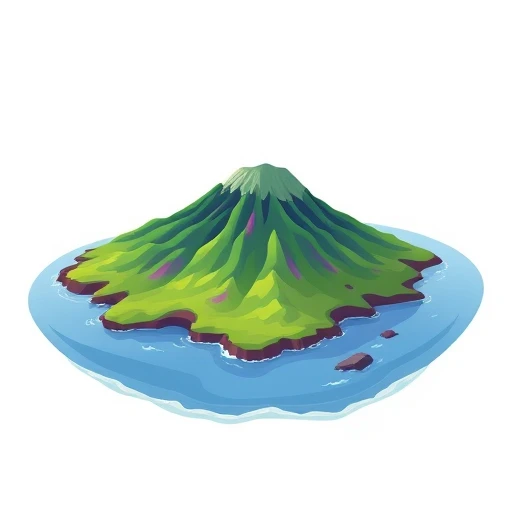
제주도 در ۳۰ ثانیه
- Jeju-do is South Korea's largest island and a premier tourist destination known for its volcanic landscape and unique culture.
- The island is famous for Mt. Halla, Haenyeo (female divers), and the 'Three Abundances' of wind, stones, and women.
- Linguistically, it has a distinct dialect (Jeju-eo) and is grammatically treated as a proper noun place name.
- It holds a special political status as the Jeju Special Self-Governing Province, granting it more autonomy than other provinces.
제주도 (Jeju-do) is much more than just a geographic location; it is the crown jewel of South Korean tourism and a unique cultural entity. Geographically, it is the largest island in South Korea, situated in the Korea Strait, southwest of the Korean Peninsula. Formed by volcanic activity millions of years ago, the island is dominated by Hallasan, the highest mountain in South Korea and a dormant volcano. When Koreans use the word 제주도, they are often referring to a sense of escape, relaxation, and natural beauty. It is the primary destination for honeymoons, school trips, and weekend getaways from the bustling life of Seoul. The 'do' (도) at the end signifies both 'island' (島) and 'province' (道), as Jeju is a Special Self-Governing Province.
- Geographical Context
- As a volcanic island, Jeju-do features unique basalt rock formations, lava tubes, and 'oreum' (parasitic cones) scattered across the landscape. This volcanic heritage has earned it a place as a UNESCO World Natural Heritage site.
- Cultural Symbolism
- The island is famously known for the 'Samda' (Three Abundances): wind, stones, and women. Historically, the island's harsh environment and the frequent absence of men (due to fishing accidents) led to a strong matriarchal influence, epitomized by the Haenyeo (female divers).
이번 여름 휴가는 제주도로 가기로 했어요.
In conversation, 제주도 is used as a proper noun. Because it is a province, it has its own distinct dialect (Jeju-eo), which is often unintelligible to mainland Koreans. However, in standard Korean, the word 제주도 is used to describe the entire region. People use it when discussing travel plans, local products like Hallabong oranges or black pork, and the island's famous Dol Hareubang (stone grandfathers) statues. It carries a connotation of 'exotic yet domestic,' providing a tropical feel without the need for a passport for Korean citizens.
제주도는 바람이 정말 많이 불어요.
- Economic Importance
- Tourism is the backbone of the island's economy. The word is frequently found in business contexts related to hospitality, aviation (the Seoul-Jeju flight route is the busiest in the world), and agriculture.
Furthermore, 제주도 is a hub for international events and summits, often called the 'Island of Peace.' It hosts the Jeju Forum for Peace and Prosperity annually. For English speakers, understanding 제주도 involves recognizing it as Korea's equivalent to Hawaii—a place of myth, natural wonder, and a slower pace of life compared to the high-speed mainland.
제주도 해녀들은 유네스코 인류무형문화유산입니다.
Using 제주도 in a sentence requires an understanding of Korean particles and the island's status as a destination. Most commonly, you will see it paired with the destination particle '에' (to) or the location particle '에서' (at/in). Because it is a place, verbs of movement like 가다 (to go), 오다 (to come), and 방문하다 (to visit) are its most frequent companions. For example, '제주도에 가요' (I am going to Jeju Island) is a foundational sentence for any beginner.
- Directional Usage
- When indicating movement toward the island, use '로' or '으로' to emphasize the direction or the island as a choice among others. Example: '우리는 신혼여행을 제주도로 정했어요' (We decided on Jeju Island for our honeymoon).
제주도에서 한 달 살기를 하고 싶어요.
The phrase '한 달 살기' (living for a month) has become a massive trend in Korea, and 제주도 is the number one location for this. In this context, '에서' is used to denote the location where the action of living occurs. You might also use 제주도 as a subject with the markers '가' or '는'. For instance, '제주도는 날씨가 변덕스러워요' (Jeju Island's weather is fickle). Here, the topic marker '는' highlights the island's specific characteristics compared to other regions.
제주도의 자연경관은 정말 아름답습니다.
Possessive forms are also common. By adding the particle '의' (pronounced 'e' in this context), you can describe things belonging to or associated with the island: '제주도의 특산물' (Jeju Island's local specialties) or '제주도의 역사' (Jeju Island's history). In more advanced sentences, 제주도 can function as an adjective-like noun when combined with other nouns without a particle, such as '제주도 여행' (Jeju Island trip) or '제주도 사투리' (Jeju Island dialect).
- Comparative Usage
- To compare Jeju to the mainland, use '보다' (than). Example: '제주도는 서울보다 따뜻해요' (Jeju Island is warmer than Seoul).
어제 제주도에 도착했습니다.
Finally, when using 제주도 in formal writing or news reports, it is often referred to as '제주특별자치도' (Jeju Special Self-Governing Province) to acknowledge its unique political status. However, in daily conversation, stick to 제주도 for a natural sound. Whether you are describing a past vacation or a future dream, the word acts as a gateway to discussing nature, food, and culture in a Korean context.
If you spend any time in South Korea or consuming Korean media, you will hear the word 제주도 constantly. One of the most common places is Gimpo International Airport in Seoul. The announcements for flights to Jeju are near-constant, as the Seoul-Jeju route is the most traveled air corridor on the planet. You'll hear: '제주도로 가는 대한항공...' (Korean Air going to Jeju Island...). It's the sound of the beginning of a vacation for millions.
- In K-Dramas and Films
- Jeju is a favorite filming location. Dramas like 'Our Blues' (우리들의 블루스) or 'Welcome to Samdal-ri' (웰컴투 삼달리) are set entirely on the island. You will hear characters discussing their lives in 제주도, the hardships of the sea, and the tight-knit community of the islanders.
이번 주말에 제주도 날씨는 맑겠습니다.
Weather reports are another frequent source. Because Jeju is the southernmost part of Korea, its weather is often the first to change. Meteorologists will say, '제주도부터 비가 시작되어...' (Rain will start from Jeju Island and...). It serves as a geographical marker for the entire country's weather patterns. In grocery stores, you'll hear the word used to market premium produce. '제주도산 감귤' (Tangerines produced in Jeju Island) is a phrase that signals high quality and sweetness to shoppers.
제주도행 비행기 표가 매진되었습니다.
In variety shows like 'Hyori's Homestay' (효리네 민박), the word 제주도 is synonymous with a lifestyle shift—moving away from the 'rat race' of the city to a more soulful, nature-oriented existence. You'll hear celebrities talk about their 'Jeju dream.' In restaurants, waiters might recommend '제주도산 은갈치' (Jeju silver scabbardfish), emphasizing the freshness of the island's seafood. Essentially, the word is a brand in itself, representing quality, nature, and peace.
- Daily Conversations
- Friends often ask each other, '제주도 가본 적 있어?' (Have you ever been to Jeju Island?). It is a standard icebreaker and a common topic for sharing travel stories and recommendations.
저는 제주도 사투리를 배우고 싶어요.
Lastly, in educational settings, 제주도 is a key topic in history and geography classes. Students learn about the Tamna Kingdom (the ancient name of Jeju) and the April 3rd Incident (제주 4·3 사건), a significant and tragic event in modern Korean history. Thus, while the word often brings to mind sunny beaches, it also carries deep historical weight that you will hear discussed in more serious documentaries and academic settings.
One of the most common mistakes learners make with 제주도 is confusing the 'do' (도) suffix. In Korean, 'do' can mean 'island' (島), 'province' (道), or even 'degree' (度). While 제주도 is both an island and a province, beginners sometimes try to apply the 'do' suffix to other cities that aren't islands, or they omit it when it's necessary for clarity. While you can say '제주' in casual conversation, '제주도' is the standard way to refer to the location. Using just '제주' can sometimes refer specifically to Jeju City (제주시), the northern half of the island, rather than the whole island.
- Particle Confusion
- Learners often mix up '에' and '에서'. Remember: '제주도에 가요' (Going to Jeju) vs. '제주도에서 살아요' (Living in Jeju). Using '에' with a static action like 'living' or 'working' is a frequent error.
[Wrong] 제주도에 수영해요. (X) -> [Right] 제주도에서 수영해요. (O)
Another mistake is pronunciation. The 'j' sound in 'Jeju' is a soft affricate, not a hard 'z' or a very sharp 'ch'. Also, the 'u' (ㅜ) sound should be a pure 'oo' sound, not a diphthong. Some English speakers mispronounce it as 'Jay-joo,' but it should be 'Che-ju' (with a soft 'ch/j' sound). Furthermore, learners often forget that 제주도 is a proper noun and doesn't need an article like 'the' in Korean, although we use 'the' in English (The Jeju Island). In Korean, just '제주도' is sufficient.
[Wrong] 제주도는 산이에요. (X) -> [Right] 제주도는 섬이에요. (O)
A cultural mistake is assuming 제주도 is just a small tourist town. It is a large island that takes several hours to drive across. Many tourists underestimate the size and try to plan too much in one day. Linguistically, referring to the islanders' speech as just 'broken Korean' is a mistake; it is a recognized, though endangered, language/dialect called 'Jeju-eo' (제주어). Respecting this distinction is important for cultural fluency.
- Spelling Errors
- Writing '재주도' instead of '제주도'. '재주' (jae-ju) means 'talent' or 'skill,' which is a completely different word.
저는 제주도에 비행기로 가요. (I go to Jeju by plane - Correct usage of method particle).
Lastly, avoid using the word 제주도 when you specifically mean the city areas of Jeju-si or Seogwipo-si if you are giving directions. Being specific helps. Also, remember that while Jeju is famous for 'women,' using the term 'Samda-do' (Island of Three Abundances) is a poetic nickname, not the primary name you should use in everyday logistics.
While 제주도 is a unique proper noun, there are several related words you should know to expand your vocabulary. The most basic alternative is simply '제주' (Jeju). This is used in official titles, like '제주 시청' (Jeju City Hall) or '제주 대학교' (Jeju University). In casual conversation, people often drop the 'do' once the context is established. However, for beginners, keeping the 'do' is safer and clearer.
- 섬 (Seom) vs. 제주도
- '섬' is the general Korean word for 'island.' You would use '섬' when talking about islands in general: '한국에는 섬이 많아요' (Korea has many islands). 제주도 is a specific '섬'.
- 육지 (Yuk-ji) - The Mainland
- From the perspective of someone in 제주도, the rest of Korea is called '육지' (mainland). Islanders often say, '육지에서 왔어요?' (Did you come from the mainland?).
제주도는 한국에서 가장 큰 섬입니다.
Another term is '삼다도' (Samda-do), the 'Island of Three Abundances.' This is a poetic and cultural nickname for 제주도. You'll see it in songs, literature, and tourism slogans. It's not used for navigation but for expressing the island's character. Similarly, '탐라' (Tamna) is the ancient name of the kingdom that existed on the island. You might see this in historical contexts or the names of local businesses (e.g., Tamna Bakery).
탐라는 제주도의 옛 이름입니다.
When discussing the administrative divisions of 제주도, you will hear '제주시' (Jeju City) and '서귀포시' (Seogwipo City). These are the two main cities on the island. If someone says they live in 제주도, you might ask, '제주시예요, 서귀포시예요?' to be more specific. For nature lovers, '한라산' (Hallasan) is often used almost interchangeably with the island's identity, as the mountain defines the island's topography.
- Comparison: 제주도 vs. 울릉도 (Ulleungdo)
- Both are volcanic islands, but 제주도 is much larger, more accessible, and has a flatter coastal area, whereas Ulleungdo is rugged and steep.
이번 여행은 제주시보다 서귀포시가 더 좋았어요.
In summary, while 제주도 is the primary term, knowing '섬', '육지', '삼다도', and the city names will make you sound much more fluent and culturally aware. Each word carries a different nuance—from geographical fact to poetic appreciation to administrative precision.
چقدر رسمی است؟
نکته جالب
Before it was called Jeju, it was an independent kingdom called Tamna (耽羅). It was only fully annexed by the Goryeo Dynasty in the 12th century.
راهنمای تلفظ
- Pronouncing 'Je' like 'Jay' (it should be shorter).
- Pronouncing 'do' like 'doo' (it should be 'doh').
- Making the 'J' sound too much like a 'Z'.
- Adding an 's' to make it 'Jeju-dos'.
- Confusing the 'u' with an 'i' sound.
سطح دشواری
Very easy to recognize as a proper noun.
Requires correct spelling of '제' and '주'.
Simple pronunciation for English speakers.
Can be confused with other '-do' locations if not careful.
بعداً چه یاد بگیریم؟
پیشنیازها
بعداً یاد بگیرید
پیشرفته
گرامر لازم
Location Particle '에'
제주도에 가요.
Location of Action Particle '에서'
제주도에서 살아요.
Topic Marker '는' (after vowel)
제주도는 섬이에요.
Method Particle '로' (after vowel)
제주도로 가요.
Possessive Particle '의'
제주도의 바다.
مثالها بر اساس سطح
제주도는 섬이에요.
Jeju Island is an island.
Topic marker '는' + '이에요' (to be).
제주도에 가요.
I go to Jeju Island.
Destination particle '에' + '가요' (go).
제주도가 커요.
Jeju Island is big.
Subject marker '가' + '커요' (big).
제주도는 예뻐요.
Jeju Island is pretty.
Adjective '예뻐요' (pretty).
제주도 귤이에요.
It is a Jeju tangerine.
Noun + Noun + '이에요'.
제주도에 바다가 있어요.
There is a sea in Jeju Island.
Location particle '에' + '있어요' (there is).
제주도 날씨가 좋아요.
The weather in Jeju Island is good.
Noun phrase as subject.
제주도에 비행기로 가요.
I go to Jeju Island by plane.
Method particle '로' (by).
작년에 제주도에 갔어요.
I went to Jeju Island last year.
Past tense '갔어요'.
제주도에서 수영을 했어요.
I swam in Jeju Island.
Location of action particle '에서'.
제주도 여행은 재미있어요.
The Jeju Island trip is fun.
Noun + Noun compound.
제주도에 친구랑 같이 가요.
I go to Jeju Island with a friend.
Comitative particle '랑'.
제주도 흑돼지가 맛있어요.
Jeju black pork is delicious.
Specific local specialty.
제주도에서 사진을 많이 찍었어요.
I took many photos in Jeju Island.
Adverb '많이' (a lot).
제주도에 가본 적이 없어요.
I have never been to Jeju Island.
Experience pattern '-ㄴ 적이 없다'.
제주도는 바람이 많이 불어요.
It is very windy in Jeju Island.
Describing characteristics.
제주도는 유네스코 세계자연유산입니다.
Jeju Island is a UNESCO World Natural Heritage site.
Formal ending '입니다'.
제주도에서 한 달 동안 살고 싶어요.
I want to live in Jeju Island for a month.
Duration '동안' + '-고 싶다'.
제주도의 해녀 문화를 알고 싶어요.
I want to know about the Haenyeo culture of Jeju.
Possessive particle '의'.
제주도는 서울보다 공기가 깨끗해요.
The air in Jeju Island is cleaner than in Seoul.
Comparison '-보다'.
제주도에 가면 한라산에 올라갈 거예요.
If I go to Jeju Island, I will climb Mt. Halla.
Conditional '-면' + Future '-을 거예요'.
제주도 사투리는 이해하기 어려워요.
Jeju dialect is difficult to understand.
Noun phrase + '-기 어렵다'.
제주도는 돌, 바람, 여자가 많기로 유명해요.
Jeju is famous for having many stones, wind, and women.
Reasoning '-기로 유명하다'.
제주도 여행 계획을 세우고 있어요.
I am making a plan for a Jeju Island trip.
Progressive '-고 있다'.
제주도는 특별자치도로서 독자적인 법률이 적용됩니다.
As a Special Self-Governing Province, Jeju has its own laws applied.
Status marker '-로서'.
제주도의 생태계를 보호하기 위해 노력해야 합니다.
We must make an effort to protect Jeju's ecosystem.
Purpose '-기 위해' + Obligation '-해야 하다'.
제주도 4·3 사건은 한국 현대사의 비극입니다.
The Jeju April 3rd Incident is a tragedy in modern Korean history.
Historical reference.
최근 제주도에 유입되는 이주민이 늘고 있습니다.
Recently, the number of migrants moving to Jeju is increasing.
Relative clause '-는' + '늘고 있다'.
제주도는 관광객 과잉 문제로 몸살을 앓고 있어요.
Jeju Island is suffering from the problem of over-tourism.
Idiomatic expression '몸살을 앓다'.
제주도 특유의 가옥 구조는 바람을 막아줍니다.
The unique house structure of Jeju blocks the wind.
Adjective '특유의' (unique/characteristic).
제주도에서만 볼 수 있는 식물들이 많이 있습니다.
There are many plants that can only be seen in Jeju Island.
Exclusionary particle '-만'.
제주도는 국제 자유 도시로서의 위상을 높이고 있습니다.
Jeju is raising its status as an international free city.
Abstract noun '위상' (status/stature).
제주도의 지정학적 위치는 동북아시아에서 매우 중요합니다.
The geopolitical location of Jeju Island is very important in Northeast Asia.
Academic term '지정학적' (geopolitical).
제주어의 소멸 위기는 언어 다양성 측면에서 큰 손실입니다.
The crisis of Jeju language extinction is a great loss in terms of linguistic diversity.
Abstract concept '소멸 위기' (extinction crisis).
제주도의 화산 지형은 지질학적 연구 가치가 매우 높습니다.
Jeju's volcanic terrain has very high geological research value.
Compound noun '지질학적 연구 가치'.
제주도는 탄소 없는 섬을 목표로 신재생 에너지를 확대하고 있습니다.
Jeju is expanding renewable energy with the goal of being a carbon-free island.
Policy-related vocabulary.
제주도 설화에 등장하는 설문대할망은 창조의 신입니다.
Seolmundae Halmang, who appears in Jeju legends, is a goddess of creation.
Mythological reference.
제주도의 자치권 강화는 지방 분권의 핵심 과제 중 하나입니다.
Strengthening Jeju's autonomy is one of the key tasks of local decentralization.
Political terminology.
제주도 해녀의 공동체 의식은 인류학적으로 흥미로운 연구 대상입니다.
The community spirit of Jeju Haenyeo is an anthropologically interesting research subject.
Adverbial '인류학적으로' (anthropologically).
제주도의 경관 보존과 개발 사이의 균형을 맞추는 것이 시급합니다.
It is urgent to balance landscape preservation and development in Jeju.
Nominalization '것이 시급하다'.
제주도의 4·3 사건은 국가 권력에 의한 민간인 희생의 아픈 역사입니다.
The Jeju April 3rd Incident is a painful history of civilian sacrifice by state power.
Complex passive construction.
제주어는 중세 국어의 흔적을 고스란히 간직하고 있는 언어의 보물창고입니다.
The Jeju language is a treasure trove of language that preserves traces of Middle Korean intact.
Metaphorical usage '보물창고'.
제주도의 난개발은 섬의 고유한 정체성을 훼손할 우려가 큽니다.
Indiscriminate development in Jeju poses a great risk of damaging the island's unique identity.
Advanced noun '난개발' (indiscriminate development).
제주도의 평화 정착을 위한 노력은 한반도 정세에도 긍정적인 영향을 미칩니다.
Efforts for establishing peace in Jeju also have a positive impact on the situation of the Korean Peninsula.
Impact expression '영향을 미치다'.
제주도 특유의 궨당 문화는 섬 공동체의 결속력을 유지하는 근간이 되어왔습니다.
Jeju's unique 'Gwendang' culture has been the foundation for maintaining the solidarity of the island community.
Specific cultural term '궨당'.
제주도의 기후 변화 대응 전략은 도서 지역의 모범 사례로 꼽힙니다.
Jeju's climate change response strategy is cited as a model case for island regions.
Passive '꼽힙니다' (is cited/counted).
제주도의 문학적 형상화는 고립과 연대라는 이중적 테마를 자주 다룹니다.
The literary representation of Jeju often deals with the dual themes of isolation and solidarity.
Literary criticism vocabulary.
제주도의 지속 가능한 발전을 위해서는 도민들의 주체적인 참여가 필수적입니다.
For the sustainable development of Jeju, the proactive participation of the residents is essential.
Formal requirement structure.
مترادفها
متضادها
ترکیبهای رایج
عبارات رایج
— Have you been to Jeju Island?
A: 제주도 가봤어요? B: 네, 작년에 가봤어요.
— To leave for Jeju Island.
우리는 내일 제주도로 떠나요.
— To live in Jeju Island.
은퇴 후에 제주도에서 살고 싶어요.
— One round around Jeju Island (usually driving).
제주도 한 바퀴를 돌려면 시간이 꽤 걸려요.
— Famous restaurants in Jeju Island.
제주도 맛집 리스트를 찾아봤어요.
— The sea of Jeju Island.
제주도 바다는 정말 푸르네요.
— The wind of Jeju Island.
제주도 바람이 장난이 아니에요.
— Jeju Island souvenirs.
제주도 기념품으로 초콜릿을 샀어요.
— Jeju Island rental car.
제주도에서는 렌터카가 필수예요.
— Jeju Island accommodation.
제주도 숙소를 예약했어요.
اغلب اشتباه گرفته میشود با
A small island near Incheon. Often confused by beginners due to the similar sound.
Another large island in the south, but located near Busan/Tongyeong.
The easternmost islets, famous for political reasons, but much smaller than Jeju.
اصطلاحات و عبارات
— Mainlanders cannot understand Jeju dialect. Used to describe a huge language gap.
그 할머니의 제주도 말은 육지 사람이 못 알아듣는다.
Informal— Historically, pigs raised in traditional toilets. Now refers to high-quality black pork.
제주도 똥돼지가 유명하죠.
Informal— The three things Jeju has plenty of (wind, stones, women).
제주도 삼다 정신을 이어받아야 합니다.
Literary— To stand still like a Dol Hareubang statue. Used when someone is motionless.
왜 제주도 돌하르방처럼 서 있어?
Slang/Informal— Doing something easily or frequently, like peeling and eating tangerines.
그는 제주도 귤 까먹듯 거짓말을 한다.
Informal— To disappear or be blown away easily, like things in Jeju's wind.
내 계획이 제주도 바람에 날아가 버렸어.
Informal— The sound of a Haenyeo's whistle. Symbolizes resilience and life.
제주도 해녀의 숨비소리가 들려온다.
Poetic— A famous song title, now used to describe the romantic atmosphere of Jeju nights.
제주도 푸른 밤 아래서 산책해요.
Cultural— A small piece of land in Jeju. Often used when discussing real estate investment.
제주도 땅 한 평 갖는 게 꿈이에요.
Neutral— The generosity of Jeju people.
제주도 인심이 참 좋네요.
Neutralبهراحتی اشتباه گرفته میشود
Similar spelling (Jae-ju vs. Je-ju).
재주 means talent or skill, while 제주 is the place name.
그는 재주가 많아요. (He has many talents.)
Same word, different Hanja.
제주 (祭酒) can also mean 'sacrificial wine' in traditional ceremonies.
제주를 올립니다. (Offering the sacrificial wine.)
Similar sound.
지주 (jiju) means a landlord or a support/pillar.
그는 이 마을의 지주입니다. (He is a landlord in this village.)
Similar sound.
제조 (jejo) means manufacturing or production.
자동차 제조 공장. (Car manufacturing factory.)
The 'do' suffix.
Some think 'do' only means island, but here it also means province.
제주도는 섬이자 도입니다.
الگوهای جملهسازی
[Place]에 가요
제주도에 가요.
[Place]는 [Adjective]요
제주도는 예뻐요.
[Place]에서 [Action]해요
제주도에서 수영해요.
[Place]에 [Method]로 가요
제주도에 비행기로 가요.
[Place]에 가 본 적이 있어요
제주도에 가 본 적이 있어요.
[Place]는 [Noun](으)로 유명해요
제주도는 귤로 유명해요.
[Place]를 방문할 계획이에요
제주도를 방문할 계획이에요.
[Place]의 [Abstract Noun]이/가 중요해요
제주도의 생태계 보존이 중요해요.
خانواده کلمه
اسمها
فعلها
صفتها
مرتبط
نحوه استفاده
Extremely frequent in daily life, media, and travel contexts.
-
Using '에' for activities.
→
제주도에서 수영해요.
Use '에서' for actions happening in a location, '에' for movement or existence.
-
Spelling it as '재주도'.
→
제주도
'재' means talent; '제' is the correct character for the island.
-
Thinking Jeju is a small town.
→
제주도는 큰 섬이에요.
It's a large province; don't underestimate travel times between locations.
-
Omitting 'do' in formal writing.
→
제주도
While 'Jeju' is okay casually, 'Jeju-do' is the proper full name.
-
Confusing Hallasan with the island name.
→
제주도에 있는 한라산
Hallasan is the mountain *on* the island, not the island itself.
نکات
Respect the Stones
The stone walls (batdam) in Jeju are a UNESCO Agricultural Heritage. Avoid climbing or damaging them as they are vital for protecting crops from wind.
Rent a Car
While there are buses, renting a car is the most efficient way to see the island's hidden gems and scenic coastal roads.
Try the Hallabong
This specific type of tangerine is named after Mt. Halla and is a must-try for its sweetness and unique shape.
Learn 'Honjeo Opseoye'
This is the Jeju dialect for 'Welcome.' Using it will surely bring a smile to the locals' faces.
Watch the Tides
When walking on beaches or rocky shores, be aware of the tide levels, as they can change quickly in certain areas.
Haenyeo Respect
If you see Haenyeo working, keep a respectful distance and don't take photos without permission, as it is their workplace.
Book Hallasan Early
To hike to the summit of Mt. Halla, you often need to make a reservation online in advance due to daily limits.
Layer Your Clothes
Jeju's weather is famously unpredictable. Even if it's sunny, the wind can make it feel much cooler.
Traditional Markets
Visit Dongmun Market in Jeju City for the best prices on local snacks, fish, and souvenirs.
Golden Hour
The sunset at Suwolbong Peak is considered one of the best in Korea. Arrive early to get a good spot.
حفظ کنید
روش یادسپاری
Think of 'Jeju' as 'Jewel' and 'do' as 'Island'. It's the 'Jewel Island' of Korea.
تداعی تصویری
Imagine a giant orange (tangerine) sitting on top of a volcano in the middle of the sea.
شبکه واژگان
چالش
Try to write three sentences about what you would do if you had one day in 제주도.
ریشه کلمه
The name 'Jeju' comes from Hanja (Chinese characters). 'Je' (濟) means to cross or ferry, and 'Ju' (州) means a state or district. 'Do' (島) means island.
معنای اصلی: A district that you must cross the sea to reach.
Sino-Korean (Hanja-based).بافت فرهنگی
Be respectful when discussing the April 3rd Incident; it is a sensitive historical topic for many islanders.
Think of it as the 'Hawaii of Korea'—similar volcanic origins, distinct local culture, and a top vacation spot.
تمرین در زندگی واقعی
موقعیتهای واقعی
Travel Planning
- 제주도 비행기 표
- 제주도 호텔 예약
- 제주도 렌터카
- 제주도 가볼 만한 곳
Weather Forecast
- 제주도 남쪽 해상
- 제주도 강수량
- 제주도 기온
- 제주도 태풍
Food/Dining
- 제주도산 은갈치
- 제주도 흑돼지 맛집
- 제주도 감귤 초콜릿
- 제주도 고기국수
History/Culture
- 제주도 4·3 평화공원
- 제주도 민속촌
- 제주도 해녀 박물관
- 제주도 돌담
Real Estate/Business
- 제주도 부동산
- 제주도 이주
- 제주도 투자
- 제주도 개발
شروعکنندههای مکالمه
"제주도에 가본 적이 있으세요?"
"제주도에서 가장 좋았던 곳은 어디예요?"
"제주도에 가면 무엇을 먹고 싶어요?"
"제주도 날씨가 서울보다 따뜻하죠?"
"제주도 한 달 살기에 대해 어떻게 생각하세요?"
موضوعات نگارش
내가 제주도에 간다면 가장 먼저 하고 싶은 일은 무엇인가요?
제주도의 자연 경관 중 가장 아름답다고 생각하는 곳을 묘사해 보세요.
제주도 해녀들의 삶에 대해 배우고 느낀 점을 써 보세요.
제주도와 나의 고향을 비교해 보세요.
제주도에서 한 달 동안 살게 된다면 어떤 변화가 있을까요?
سوالات متداول
10 سوالYes, it is the largest island and a province of South Korea. It is located about 60 miles south of the mainland.
For many nationalities, Jeju has a visa-free entry policy that is different from the mainland, though rules changed recently. Always check current regulations.
Spring (April-June) for flowers and mild weather, or Autumn (September-November) for clear skies and fall colors.
You need an International Driving Permit (IDP) along with your valid home country license to rent a car in Jeju-do.
Yes, it is considered a separate language by some linguists. While younger people speak standard Korean, older residents use many unique words.
Wind, stones (basalt), and women (due to the historical role of female divers and the loss of men at sea).
The flight takes approximately one hour from Gimpo or Incheon Airport.
They are large mushroom-like statues carved from basalt rock, considered guardians of the island.
Yes, most trails take between 7 to 9 hours for a round trip. It is a popular day hike for visitors.
It can be more expensive than other rural areas of Korea due to its popularity, but there are options for all budgets.
خودت رو بسنج 185 سوال
Write a sentence in Korean: 'I want to go to Jeju Island.'
خوب نوشتید! تلاش خوبی بود! پاسخ نمونه را ببینید.
Write a sentence in Korean: 'Jeju Island is beautiful.'
خوب نوشتید! تلاش خوبی بود! پاسخ نمونه را ببینید.
Write a sentence in Korean: 'I ate black pork in Jeju Island.'
خوب نوشتید! تلاش خوبی بود! پاسخ نمونه را ببینید.
Write a sentence in Korean: 'Jeju Island is famous for tangerines.'
خوب نوشتید! تلاش خوبی بود! پاسخ نمونه را ببینید.
Write a sentence in Korean: 'I will climb Mt. Halla in Jeju.'
خوب نوشتید! تلاش خوبی بود! پاسخ نمونه را ببینید.
Describe Jeju-do in three sentences using A2 level grammar.
خوب نوشتید! تلاش خوبی بود! پاسخ نمونه را ببینید.
Explain why Jeju is called 'Samda-do' in Korean.
خوب نوشتید! تلاش خوبی بود! پاسخ نمونه را ببینید.
Write a short paragraph about your dream trip to Jeju.
خوب نوشتید! تلاش خوبی بود! پاسخ نمونه را ببینید.
Compare Jeju-do with your hometown in Korean.
خوب نوشتید! تلاش خوبی بود! پاسخ نمونه را ببینید.
Discuss the importance of preserving Jeju's environment.
خوب نوشتید! تلاش خوبی بود! پاسخ نمونه را ببینید.
Write a formal introduction to Jeju for a travel brochure.
خوب نوشتید! تلاش خوبی بود! پاسخ نمونه را ببینید.
Summarize the cultural significance of the Haenyeo.
خوب نوشتید! تلاش خوبی بود! پاسخ نمونه را ببینید.
Write a diary entry about a day spent in Seogwipo.
خوب نوشتید! تلاش خوبی بود! پاسخ نمونه را ببینید.
Discuss the pros and cons of 'living for a month' in Jeju.
خوب نوشتید! تلاش خوبی بود! پاسخ نمونه را ببینید.
Write a letter to a friend recommending Jeju-do.
خوب نوشتید! تلاش خوبی بود! پاسخ نمونه را ببینید.
Describe the taste of a Jeju tangerine using sensory words.
خوب نوشتید! تلاش خوبی بود! پاسخ نمونه را ببینید.
Explain the meaning of Dol Hareubang to a foreigner.
خوب نوشتید! تلاش خوبی بود! پاسخ نمونه را ببینید.
Discuss the impact of tourism on Jeju's local community.
خوب نوشتید! تلاش خوبی بود! پاسخ نمونه را ببینید.
Write a short poem about Jeju's wind.
خوب نوشتید! تلاش خوبی بود! پاسخ نمونه را ببینید.
Analyze the role of Jeju in international diplomacy.
خوب نوشتید! تلاش خوبی بود! پاسخ نمونه را ببینید.
Say 'I am going to Jeju Island' in Korean.
این را بلند بخوانید:
تو گفتی:
تشخیص گفتار در مرورگر شما پشتیبانی نمیشود. از کروم یا اج استفاده کنید.
Say 'Jeju Island is big' in Korean.
این را بلند بخوانید:
تو گفتی:
تشخیص گفتار در مرورگر شما پشتیبانی نمیشود. از کروم یا اج استفاده کنید.
Say 'I like Jeju Island' in Korean.
این را بلند بخوانید:
تو گفتی:
تشخیص گفتار در مرورگر شما پشتیبانی نمیشود. از کروم یا اج استفاده کنید.
Say 'The weather in Jeju is good' in Korean.
این را بلند بخوانید:
تو گفتی:
تشخیص گفتار در مرورگر شما پشتیبانی نمیشود. از کروم یا اج استفاده کنید.
Say 'I went to Jeju last year' in Korean.
این را بلند بخوانید:
تو گفتی:
تشخیص گفتار در مرورگر شما پشتیبانی نمیشود. از کروم یا اج استفاده کنید.
Say 'I want to eat black pork in Jeju' in Korean.
این را بلند بخوانید:
تو گفتی:
تشخیص گفتار در مرورگر شما پشتیبانی نمیشود. از کروم یا اج استفاده کنید.
Say 'Jeju is famous for wind' in Korean.
این را بلند بخوانید:
تو گفتی:
تشخیص گفتار در مرورگر شما پشتیبانی نمیشود. از کروم یا اج استفاده کنید.
Say 'Have you ever been to Jeju?' in Korean.
این را بلند بخوانید:
تو گفتی:
تشخیص گفتار در مرورگر شما پشتیبانی نمیشود. از کروم یا اج استفاده کنید.
Say 'I want to live in Jeju for a month' in Korean.
این را بلند بخوانید:
تو گفتی:
تشخیص گفتار در مرورگر شما پشتیبانی نمیشود. از کروم یا اج استفاده کنید.
Say 'Jeju is a volcanic island' in Korean.
این را بلند بخوانید:
تو گفتی:
تشخیص گفتار در مرورگر شما پشتیبانی نمیشود. از کروم یا اج استفاده کنید.
Describe your favorite place in Jeju in Korean.
این را بلند بخوانید:
تو گفتی:
تشخیص گفتار در مرورگر شما پشتیبانی نمیشود. از کروم یا اج استفاده کنید.
Explain the Samda culture in Korean.
این را بلند بخوانید:
تو گفتی:
تشخیص گفتار در مرورگر شما پشتیبانی نمیشود. از کروم یا اج استفاده کنید.
Talk about the Haenyeo in Korean.
این را بلند بخوانید:
تو گفتی:
تشخیص گفتار در مرورگر شما پشتیبانی نمیشود. از کروم یا اج استفاده کنید.
Discuss the environmental issues of Jeju in Korean.
این را بلند بخوانید:
تو گفتی:
تشخیص گفتار در مرورگر شما پشتیبانی نمیشود. از کروم یا اج استفاده کنید.
Explain the political status of Jeju in Korean.
این را بلند بخوانید:
تو گفتی:
تشخیص گفتار در مرورگر شما پشتیبانی نمیشود. از کروم یا اج استفاده کنید.
Say 'Welcome' in Jeju dialect.
این را بلند بخوانید:
تو گفتی:
تشخیص گفتار در مرورگر شما پشتیبانی نمیشود. از کروم یا اج استفاده کنید.
Recommend a Jeju specialty to a friend in Korean.
این را بلند بخوانید:
تو گفتی:
تشخیص گفتار در مرورگر شما پشتیبانی نمیشود. از کروم یا اج استفاده کنید.
Say 'The air in Jeju is clean' in Korean.
این را بلند بخوانید:
تو گفتی:
تشخیص گفتار در مرورگر شما پشتیبانی نمیشود. از کروم یا اج استفاده کنید.
Say 'I am planning a trip to Jeju' in Korean.
این را بلند بخوانید:
تو گفتی:
تشخیص گفتار در مرورگر شما پشتیبانی نمیشود. از کروم یا اج استفاده کنید.
Say 'Jeju is the Hawaii of Korea' in Korean.
این را بلند بخوانید:
تو گفتی:
تشخیص گفتار در مرورگر شما پشتیبانی نمیشود. از کروم یا اج استفاده کنید.
Listen and identify the place: '한국에서 가장 큰 섬이고 귤이 유명해요.'
Listen and identify the activity: '제주도에서 한라산에 가요.'
Listen and identify the food: '제주도에서 먹는 검은 돼지 고기.'
Listen and identify the person: '제주도 바다에서 물질을 하는 여자.'
Listen and identify the nickname: '돌, 바람, 여자가 많은 섬.'
Listen and identify the transport: '김포공항에서 이것을 타고 제주도에 가요.'
Listen and identify the status: '제주도는 특별___도입니다.'
Listen and identify the mountain: '제주도 중앙에 있는 높은 산.'
Listen and identify the dialect term: '혼저 옵서예.'
Listen and identify the statue: '제주도의 돌 할아버지.'
Listen and identify the cave: '제주도의 유명한 용암 동굴.'
Listen and identify the event: '4월 3일에 일어난 슬픈 사건.'
Listen and identify the fruit: '한라산 모양을 닮은 귤.'
Listen and identify the trail: '제주도를 걷는 길.'
Listen and identify the city: '제주도 남쪽에 있는 시.'
/ 185 درست
نمره کامل!
Summary
제주도 (Jeju-do) is the essential word for Korea's most famous island. Whether you are planning a trip, discussing Korean geography, or exploring unique cultural traditions like the Haenyeo, this word is your primary reference point. Example: 제주도에 꼭 가보세요 (Please make sure to visit Jeju Island).
- Jeju-do is South Korea's largest island and a premier tourist destination known for its volcanic landscape and unique culture.
- The island is famous for Mt. Halla, Haenyeo (female divers), and the 'Three Abundances' of wind, stones, and women.
- Linguistically, it has a distinct dialect (Jeju-eo) and is grammatically treated as a proper noun place name.
- It holds a special political status as the Jeju Special Self-Governing Province, granting it more autonomy than other provinces.
Respect the Stones
The stone walls (batdam) in Jeju are a UNESCO Agricultural Heritage. Avoid climbing or damaging them as they are vital for protecting crops from wind.
Rent a Car
While there are buses, renting a car is the most efficient way to see the island's hidden gems and scenic coastal roads.
Try the Hallabong
This specific type of tangerine is named after Mt. Halla and is a must-try for its sweetness and unique shape.
Learn 'Honjeo Opseoye'
This is the Jeju dialect for 'Welcome.' Using it will surely bring a smile to the locals' faces.
مثال
이번 여름휴가에 제주도로 여행 갈 계획이에요.
محتوای مرتبط
عبارات مرتبط
واژههای بیشتر travel
숙소
B1مکانی که کسی برای مدت کوتاهی در آن اقامت میکند، مانند هتل یا مسافرخانه. 'محل اقامت ما بسیار عالی بود.'
어댑터
A2A device for connecting parts of different sizes or types.
입장료
A1A fee charged for entry to a place or event; an admission fee.
~후에
A2نشان میدهد که یک عمل بعد از عمل دیگری اتفاق میافتد. با اسم یا فعل استفاده میشود.
~ㄴ/은 후에
A2بیانگر عملی است که پس از عمل یا رویداد دیگری رخ می دهد؛ بعد از انجام دادن.
은/는 후에
A2نشاندهنده عملی است که بعد از عمل دیگری رخ میدهد، به معنای 'بعد از انجام دادن'. مثال: بعد از غذا خوردن، میخوابم.
비행기
A1Airplane; a powered flying vehicle with fixed wings.
공항
A1محلی که هواپیماها در آن بلند میشوند و مینشینند. دارای ساختمانهایی برای مسافران جهت انتظار، پذیرش و بازرسی امنیتی قبل از پرواز است.
공항버스
A2اتوبوس فرودگاه کجاست؟ من با اتوبوس فرودگاه به سئول رفتم.
통로
A2یک راهرو یا گذرگاه بین ردیفهای صندلی یا قفسهها. 'لطفاً راهرو را مسدود نکنید.'

