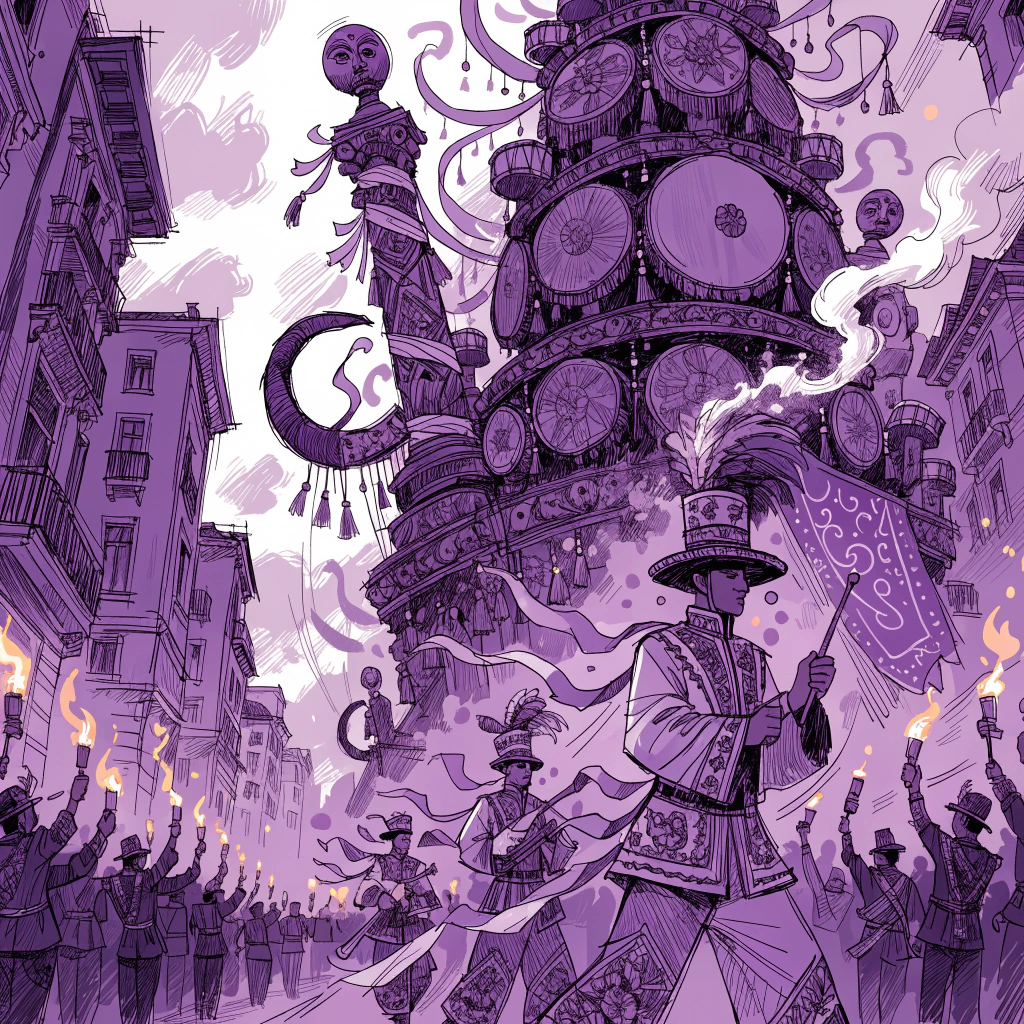
La fête de la République en Turquie
Le 29 octobre est un jour spécial en Turquie. C'est la fête de la République. En 1923, Mustafa Kemal Atatürk déclare la République. La capitale de la Turquie est Ankara. Aujourd'hui, les Turcs célèbrent cette journée avec joie. Il y a beaucoup de drapeaux rouges dans les rues. Les gens chantent et dansent. Les enfants vont à l'école pour des cérémonies. C'est un moment important pour l'identité nationale. Tout le monde est fier de son pays. C'est une grande fête pour tous les citoyens.
Point grammaire
Structure: Le présent de l'indicatif
"Le 29 octobre est un jour spécial en Turquie."
On utilise le présent pour parler de faits généraux ou de vérités. Le verbe 'être' change selon le sujet (je suis, tu es, il est).
Structure: Les articles définis
"La capitale de la Turquie est Ankara."
On utilise 'la' devant un nom féminin singulier comme 'capitale'. L'article s'accorde en genre et en nombre avec le nom.
Teste ta compréhension
10 questions · A1 Débutant · 1 aperçu gratuit
Teste ce que tu as appris dans cet article. Réponds à toutes les questions pour gagner des XP !
Quelle est la date de la fête de la République ?
Tu veux terminer le quiz ?
9 questions supplémentaires t'attendent. Inscris-toi gratuitement pour débloquer le quiz complet et gagner des XP !
S'inscrire gratuitementTu as dj un compte ? Connexion
Bien joué !
Continue à pratiquer !
Déjà terminé — pas de XP supplémentaire
Inscris-toi pour gagner des XPDétail des questions
Quelle est la date de la fête de la République ?
Ta réponse:
Bonne réponse: Le 29 octobre
Ankara est la capitale de la Turquie.
Ta réponse:
Bonne réponse: Vrai
Que signifie le mot 'fier' ?
Ta réponse:
Bonne réponse: Avoir un sentiment de satisfaction
Les enfants vont à l'_____ pour des cérémonies.
Ta réponse:
Bonne réponse: école
Celebrating Republic Day in Turkey
Every year, people in Turkey celebrate Republic Day on October 29th. It is a very important national holiday. This day is special because it is the birthday of the Turkish Republic.
In the past, the country was part of the Ottoman Empire. But on October 29, 1923, Mustafa Kemal Atatürk changed the government. He declared that Turkey was a republic. He also moved the capital city to Ankara. Atatürk wanted to make the country modern and strong. People visit Anıtkabir in Ankara to show respect to Atatürk. It is one of the most important places to see on this day.
Today, the celebrations are bigger and more colorful than usual. People put Turkish flags on their windows and balconies. In the morning, students march in parades and sing songs. In the evening, there are beautiful fireworks in the sky. Families come together and feel very proud of their country. It is a happy day for everyone in Turkey.
Point grammaire
Structure: Past Simple
"He moved the capital city to Ankara."
The past simple is used for actions that finished in the past. To form regular verbs, we usually add -ed to the end of the verb.
Structure: Comparatives
"Today, the celebrations are bigger and more colorful than usual."
We use comparatives to compare two things. For short adjectives like 'big', we add -er. For long adjectives like 'colorful', we use 'more' before the word.
Teste ta compréhension
11 questions · A2 mentaire · 1 aperçu gratuit
Teste ce que tu as appris dans cet article. Réponds à toutes les questions pour gagner des XP !
When is Republic Day celebrated in Turkey?
Tu veux terminer le quiz ?
10 questions supplémentaires t'attendent. Inscris-toi gratuitement pour débloquer le quiz complet et gagner des XP !
S'inscrire gratuitementTu as dj un compte ? Connexion
Bien joué !
Continue à pratiquer !
Déjà terminé — pas de XP supplémentaire
Inscris-toi pour gagner des XPDétail des questions
When is Republic Day celebrated in Turkey?
Ta réponse:
Bonne réponse: October 29th
Atatürk moved the capital city of Turkey to Istanbul.
Ta réponse:
Bonne réponse: Faux
What does the word 'modern' mean?
Ta réponse:
Bonne réponse: Relating to the present time
People put Turkish _____ on their windows and balconies.
Ta réponse:
Bonne réponse: flags
Why is this holiday special for Turkish people?
Ta réponse:
Bonne réponse: It is the birthday of the Turkish Republic
La fête de la République : Le jour où la Turquie est née
Chaque année, le 29 octobre, la Turquie s'habille de rouge et de blanc pour célébrer sa fête nationale la plus importante : le Jour de la République. Cette date commémore un événement historique qui a radicalement changé le destin du pays. En 1923, Mustafa Kemal Atatürk a officiellement déclaré que la Turquie était désormais une République, mettant ainsi fin à l'Empire ottoman qui existait depuis des siècles.
Ce jour-là, la capitale a été déplacée à Ankara, une ville qui est devenue le symbole de la modernisation et de la résistance. Pour les Turcs, cette fête n'est pas seulement un jour férié ordinaire ; c'est une célébration profonde de leur identité nationale et de leur souveraineté retrouvée. Grâce aux réformes courageuses d'Atatürk, la Turquie a commencé sa transformation rapide en un État moderne et laïc, tourné vers l'avenir.
Les célébrations commencent souvent dès la veille avec une excitation visible dans les rues. Le 29 octobre, les villes sont remplies de drapeaux turcs qui flottent fièrement au vent. Dans tout le pays, on organise des défilés militaires impressionnants, des concerts gratuits et des spectacles de danse traditionnelle. Les élèves participent activement à des cérémonies dans les écoles, où ils lisent des poèmes sur la liberté et le futur du pays.
Le soir, l'ambiance devient vraiment magique avec des feux d'artifice qui illuminent le ciel au-dessus du Bosphore à Istanbul ou du mausolée d'Atatürk à Ankara. C'est un moment d'unité nationale où les familles se réunissent pour honorer les valeurs de la République. Même si le pays a beaucoup évolué technologiquement depuis 1923, l'esprit de cette journée reste gravé dans le cœur de chaque citoyen.
Point grammaire
Structure: La voix passive
"Ce jour-là, la capitale a été déplacée à Ankara..."
On utilise la voix passive pour mettre l'accent sur l'objet qui subit l'action. Elle se forme avec l'auxiliaire 'être' conjugué et le participe passé du verbe.
Structure: Le pronom relatif 'où'
"Les élèves participent activement à des cérémonies dans les écoles, où ils lisent des poèmes..."
Le pronom 'où' est utilisé pour remplacer un complément de lieu ou de temps afin d'éviter la répétition. Ici, il remplace 'les écoles'.
Teste ta compréhension
11 questions · B1 Intermédiaire · 1 aperçu gratuit
Teste ce que tu as appris dans cet article. Réponds à toutes les questions pour gagner des XP !
Quelle ville est devenue la capitale de la Turquie en 1923 ?
Tu veux terminer le quiz ?
10 questions supplémentaires t'attendent. Inscris-toi gratuitement pour débloquer le quiz complet et gagner des XP !
S'inscrire gratuitementTu as dj un compte ? Connexion
Bien joué !
Continue à pratiquer !
Déjà terminé — pas de XP supplémentaire
Inscris-toi pour gagner des XPDétail des questions
Quelle ville est devenue la capitale de la Turquie en 1923 ?
Ta réponse:
Bonne réponse: Ankara
La fête de la République célèbre la fin de l'Empire ottoman.
Ta réponse:
Bonne réponse: Vrai
Que signifie le mot 'férié' ?
Ta réponse:
Bonne réponse: Un jour où on ne travaille pas
Le 29 octobre, les villes sont remplies de _____ turcs.
Ta réponse:
Bonne réponse: drapeaux
Où peut-on voir des feux d'artifice le soir du 29 octobre ?
Ta réponse:
Bonne réponse: Au-dessus du Bosphore à Istanbul
The Birth of a Modern Nation: Reflecting on Turkey's Republic Day
Every year on October 29th, Turkish citizens gather to commemorate one of the most significant milestones in their history: Republic Day. This date marks the moment in 1923 when Mustafa Kemal Atatürk officially proclaimed the country a republic, effectively ending the centuries-old rule of the Ottoman Empire. This transition was not merely a change in title; it represented a radical shift in the source of authority, transferring sovereignty from a single monarch to the collective will of the people. Consequently, the capital was moved to Ankara, symbolizing a break from the imperial past and the dawn of a modern, centralized nation-state.
The transformation that followed was unprecedented in its scope. Atatürk introduced a series of structural reforms aimed at modernizing every aspect of Turkish life. Central to this vision was the principle of secularism, which sought to separate religious institutions from state affairs, ensuring that the legal and educational systems were based on contemporary logic and science. Furthermore, the implementation of these reforms required the unification of various political factions under a shared national identity. While the Ottoman Empire, the republic's predecessor, had been a multi-ethnic entity, the new republic emphasized a unified sense of citizenship and belonging.
The legacy of these changes remains deeply embedded in the Turkish consciousness. Today, Republic Day is celebrated with immense pride across the country and in international missions abroad. Major cities are adorned with red and white flags, and parades are held to honor the veterans and the founding fathers. The celebrations serve as a moment for citizens to reflect on the progress made over the last century. If the republic had not been established, the nation’s path might have been entirely different, potentially lacking the democratic foundations that define it today.
Ultimately, Republic Day is more than just a public holiday; it is an annual reaffirmation of the country's commitment to progress and independence. The reforms, which were introduced in the 1920s, reshaped the social fabric so thoroughly that their impact is still felt in every courtroom, classroom, and government office. By celebrating this day, Turks acknowledge that their modern identity is built upon the courage of those who dared to envision a new future from the ashes of the old.
Point grammaire
Structure: Passive Voice
"The Republic was officially proclaimed by the Grand National Assembly."
The passive voice is used here to focus on the historical event (the Republic) rather than the specific person acting, which is common in formal and historical writing.
Structure: Non-defining Relative Clauses
"The reforms, which were introduced in the 1920s, reshaped the social fabric."
This clause adds extra information about the reforms. It is separated by commas because the sentence would still be grammatically complete without it.
Structure: Third Conditional
"If the republic had not been established, the nation’s path might have been entirely different."
This structure is used to talk about an imaginary situation in the past and its hypothetical result. It uses 'if + past perfect' and 'might have + past participle'.
Teste ta compréhension
11 questions · B2 Intermédiaire supérieur · 1 aperçu gratuit
Teste ce que tu as appris dans cet article. Réponds à toutes les questions pour gagner des XP !
What significant change occurred on October 29, 1923?
Tu veux terminer le quiz ?
10 questions supplémentaires t'attendent. Inscris-toi gratuitement pour débloquer le quiz complet et gagner des XP !
S'inscrire gratuitementTu as dj un compte ? Connexion
Bien joué !
Continue à pratiquer !
Déjà terminé — pas de XP supplémentaire
Inscris-toi pour gagner des XPDétail des questions
What significant change occurred on October 29, 1923?
Ta réponse:
Bonne réponse: The declaration of Turkey as a Republic
The capital of the newly formed Republic was moved to Ankara.
Ta réponse:
Bonne réponse: Vrai
What does 'sovereignty' mean in the context of the article?
Ta réponse:
Bonne réponse: The authority of a state to govern itself
The Ottoman Empire is described as the republic's _____.
Ta réponse:
Bonne réponse: predecessor
According to the text, what was a central vision of Atatürk's reforms?
Ta réponse:
Bonne réponse: The principle of secularism
Le 29 octobre : Genèse d'une nation et pérennité de l'idéal républicain en Turquie
Le 29 octobre 1923 ne marque pas seulement une date dans le calendrier civil turc ; il incarne la rupture ontologique avec un passé impérial pluriséculaire. C’est en ce jour mémorable que Mustafa Kemal Atatürk, figure de proue de la résistance nationale, proclama officiellement la République, parachevant ainsi l'effondrement de la Sublime Porte et jetant les bases d'un État-nation moderne, laïque et souverain. Ce basculement institutionnel, loin d'être une simple formalité administrative, fut le catalyseur d'une transformation sociétale sans précédent dans le monde musulman de l'époque.
Rarement aura-t-on vu une transition politique aussi radicale s'opérer en si peu de temps. Sous l'impulsion d'Atatürk, la Turquie s'est engagée dans une voie de modernisation effrénée, visant à s'affranchir des structures archaïques de l'Empire ottoman. Le transfert de la capitale d'Istanbul à Ankara symbolisait cette volonté de rupture géographique et idéologique. Nonobstant les résistances internes, les réformes kémalistes — allant de l'adoption de l'alphabet latin à l'abrogation du califat — ont redéfini l'identité turque. C'est précisément cette audace réformatrice que le peuple célèbre chaque année lors du Cumhuriyet Bayramı.
Au-delà de la liesse populaire et des défilés militaires, cette journée invite à une réflexion approfondie sur les concepts de souveraineté et de citoyenneté. La proclamation de la République a permis de substituer la figure du citoyen à celle du sujet, plaçant ainsi la volonté nationale au sommet de la hiérarchie des normes. Cette souveraineté, que l'on qualifie souvent d'inaliénable, constitue le socle sur lequel repose la légitimité de l'État turc contemporain. Les festivités, qui s'étendent des métropoles cosmopolites aux villages les plus reculés d'Anatolie, témoignent de l'attachement viscéral des Turcs à ces acquis républicains.
Toutefois, l'analyse de cette célébration ne saurait faire l'économie d'une nuance politique. Si le 29 octobre fait l'unanimité quant à son importance historique, l'interprétation de l'héritage kémaliste fait l'objet de débats intellectuels stimulants. Entre la préservation d'une laïcité stricte et les aspirations à une synthèse plus traditionnelle, la société turque navigue entre mémoire et modernité. Il n'en demeure pas moins que la République demeure le cadre indépassable de l'expression politique nationale.
En définitive, le Jour de la République transcende la simple commémoration historique pour devenir un vecteur de cohésion sociale. À travers les discours officiels et les hommages vibrants rendus au mausolée d'Anitkabir, se dessine le portrait d'une nation qui, tout en honorant ses racines, regarde résolument vers l'avenir. La pérennité de cet idéal républicain, un siècle après sa proclamation, atteste de la solidité des fondations posées par Atatürk et de la résilience d'un peuple fier de sa souveraineté reconquise.
Point grammaire
Structure: L'inversion du sujet après certains adverbes de temps ou de manière
"Rarement aura-t-on vu une transition politique aussi radicale s'opérer en si peu de temps."
En français soutenu, l'inversion du sujet est obligatoire ou fréquente après des adverbes comme 'Rarement', 'Peut-être' ou 'À peine' placés en début de phrase pour accentuer l'effet stylistique.
Structure: La mise en relief par la structure clivée (C'est... que/qui)
"C’est en ce jour mémorable que Mustafa Kemal Atatürk... proclama officiellement la République."
Cette structure permet d'insister sur un élément précis de la phrase (ici, la date). Elle sépare l'information nouvelle de l'information connue pour guider l'attention du lecteur.
Structure: La nominalisation pour la densité textuelle
"La proclamation de la République a permis de substituer la figure du citoyen à celle du sujet."
L'usage de noms (proclamation) au lieu de verbes (proclamer) permet de condenser l'information et de donner un ton plus analytique et académique au texte, caractéristique du niveau C1.
Teste ta compréhension
12 questions · C1 Avancé · 1 aperçu gratuit
Teste ce que tu as appris dans cet article. Réponds à toutes les questions pour gagner des XP !
Quelle rupture majeure le 29 octobre 1923 symbolise-t-il pour la Turquie ?
Tu veux terminer le quiz ?
11 questions supplémentaires t'attendent. Inscris-toi gratuitement pour débloquer le quiz complet et gagner des XP !
S'inscrire gratuitementTu as dj un compte ? Connexion
Bien joué !
Continue à pratiquer !
Déjà terminé — pas de XP supplémentaire
Inscris-toi pour gagner des XPDétail des questions
Quelle rupture majeure le 29 octobre 1923 symbolise-t-il pour la Turquie ?
Ta réponse:
Bonne réponse: La fin de l'Empire ottoman et la naissance d'un État-nation
Le texte suggère que la transition vers la République a été un processus lent et sans opposition.
Ta réponse:
Bonne réponse: Faux
Que signifie le terme 'Sublime Porte' dans le contexte historique du texte ?
Ta réponse:
Bonne réponse: Le gouvernement de l'Empire ottoman
Le transfert de la capitale à _____ symbolisait la volonté de rupture avec l'ancien régime.
Ta réponse:
Bonne réponse: Ankara
Selon l'auteur, quel changement la République a-t-elle apporté au statut de l'individu ?
Ta réponse:
Bonne réponse: Le passage de sujet à citoyen
L'interprétation de l'héritage d'Atatürk fait encore l'objet de débats en Turquie aujourd'hui.
Ta réponse:
Bonne réponse: Vrai
The Ontological Metamorphosis: Deconstructing the Epochal Significance of Turkey’s Republic Day
The proclamation of the Republic of Turkey on October 29, 1923, was not merely a change in governance but an epochal shift that redefined the very fabric of Anatolian society. Following the cataclysmic dissolution of the Ottoman Empire, the nascent state found itself at a historical precipice, caught between the vestiges of a dynastic past and the beckoning call of a modern future. Under the stewardship of Mustafa Kemal Atatürk, the transition from a multi-ethnic, dynastic caliphate to a modern, secular nation-state was characterized by an ontological rupture with the past. This metamorphosis was predicated on the Enlightenment ideals of sovereignty and reason, effectively dismantling centuries of imperial hegemony and replacing them with the revolutionary concept of popular will.
The relocation of the capital from the cosmopolitan, yet symbolically burdened, Istanbul to the central Anatolian heartland of Ankara was a seminal decision. It signaled a definitive departure from the Byzantine and Ottoman legacies, positioning the new Republic as a forward-looking entity rooted in the geographic and cultural core of its citizenry. This geographic shift mirrored the internal restructuring of the Turkish zeitgeist, moving away from the complexities of imperial bureaucracy toward a more streamlined, nationalistic identity. Secularism, or laïcité, became the cornerstone of the state, ensuring that the vicissitudes of religious influence would no longer dictate the legal and political trajectory of the nation. Only through the lens of radical modernization can one truly grasp the magnitude of the 1923 reforms, which sought to transform subjects into sovereign citizens.
Scholars argue that the success of the Republic rested upon the radical implementation of reforms that touched every facet of life, from the adoption of the Latin alphabet to the complete overhaul of the legal code. Had the leadership not pivoted toward a secular framework, the socio-political landscape of contemporary Turkey would look markedly different today. It was essential that the new state be established upon the bedrock of popular sovereignty, rather than divine right. This shift necessitated a profound cognitive realignment among the population, fostered through educational initiatives designed to instill a sense of republican duty and national pride. The rhetorical power of the era, most notably captured in Atatürk’s 'Nutuk', served to consolidate this new identity, framing the Republic as the ultimate safeguard of Turkish independence.
The annual celebration of Republic Day (Cumhuriyet Bayramı) serves as a poignant reminder of this transformative journey. It is a day when the collective memory of the nation is invoked to celebrate the resilience of a people who sought to forge a new identity amidst the ruins of empire. While the political climate may fluctuate, the fundamental principles of the Republic remain a point of intense scholarly and public discourse. The enduring legacy of October 29th is not found in the parades alone, but in the continued pursuit of a democratic and secular ideal that seeks to balance tradition with progress. Lest one should view the proclamation as a mere administrative formality, it must be asserted that it was a profound intellectual and structural achievement, requiring a delicate navigation of the global geopolitical landscape.
In conclusion, the establishment of the Republic was a seminal event that continues to resonate through the decades. It required a steadfast commitment to internal renewal and a visionary approach to state-building. As Turkey commemorates this day, it reflects on a century of progress, acknowledging both the triumphs and the ongoing challenges of maintaining a cohesive national identity in an increasingly globalized world. The spirit of 1923 remains a guiding light, a testament to the power of visionary leadership and the collective will of a nation to redefine its destiny on its own terms.
Point grammaire
Structure: Negative Inversion for Emphasis
"Only through the lens of radical modernization can one truly grasp the magnitude of the 1923 reforms."
Inversion occurs when the auxiliary verb comes before the subject after certain restrictive expressions (like 'only through'). This is used to add rhetorical weight and emphasize the condition described.
Structure: Subjunctive Mood in Content Clauses
"It was essential that the new state be established upon the bedrock of popular sovereignty."
The base form 'be established' is used following adjectives of necessity (essential, imperative). This subjunctive form highlights the requirement or importance of the action in formal, academic prose.
Structure: Mixed Conditional
"Had the leadership not pivoted toward a secular framework, the socio-political landscape of contemporary Turkey would look markedly different today."
This structure combines a past hypothetical condition (Third Conditional: 'Had the leadership not pivoted') with a present result (Second Conditional: 'would look'). It is used to analyze how past decisions impact current reality.
Teste ta compréhension
12 questions · C2 Maîtrise · 1 aperçu gratuit
Teste ce que tu as appris dans cet article. Réponds à toutes les questions pour gagner des XP !
What does the author identify as the 'cornerstone' of the new Turkish state?
Tu veux terminer le quiz ?
11 questions supplémentaires t'attendent. Inscris-toi gratuitement pour débloquer le quiz complet et gagner des XP !
S'inscrire gratuitementTu as dj un compte ? Connexion
Bien joué !
Continue à pratiquer !
Déjà terminé — pas de XP supplémentaire
Inscris-toi pour gagner des XPDétail des questions
What does the author identify as the 'cornerstone' of the new Turkish state?
Ta réponse:
Bonne réponse: Secularism (laïcité)
The article suggests that the move to Ankara was merely a logistical decision without symbolic meaning.
Ta réponse:
Bonne réponse: Faux
What does 'epochal' mean in the context of the article?
Ta réponse:
Bonne réponse: Marking a significantly important period in history
The transition was characterized by an _____ rupture with the past.
Ta réponse:
Bonne réponse: ontological
According to the text, what was the purpose of the educational initiatives?
Ta réponse:
Bonne réponse: To instill a sense of republican duty and national pride
The author asserts that the Republic Day celebration is based on more than just administrative formality.
Ta réponse:
Bonne réponse: Vrai

