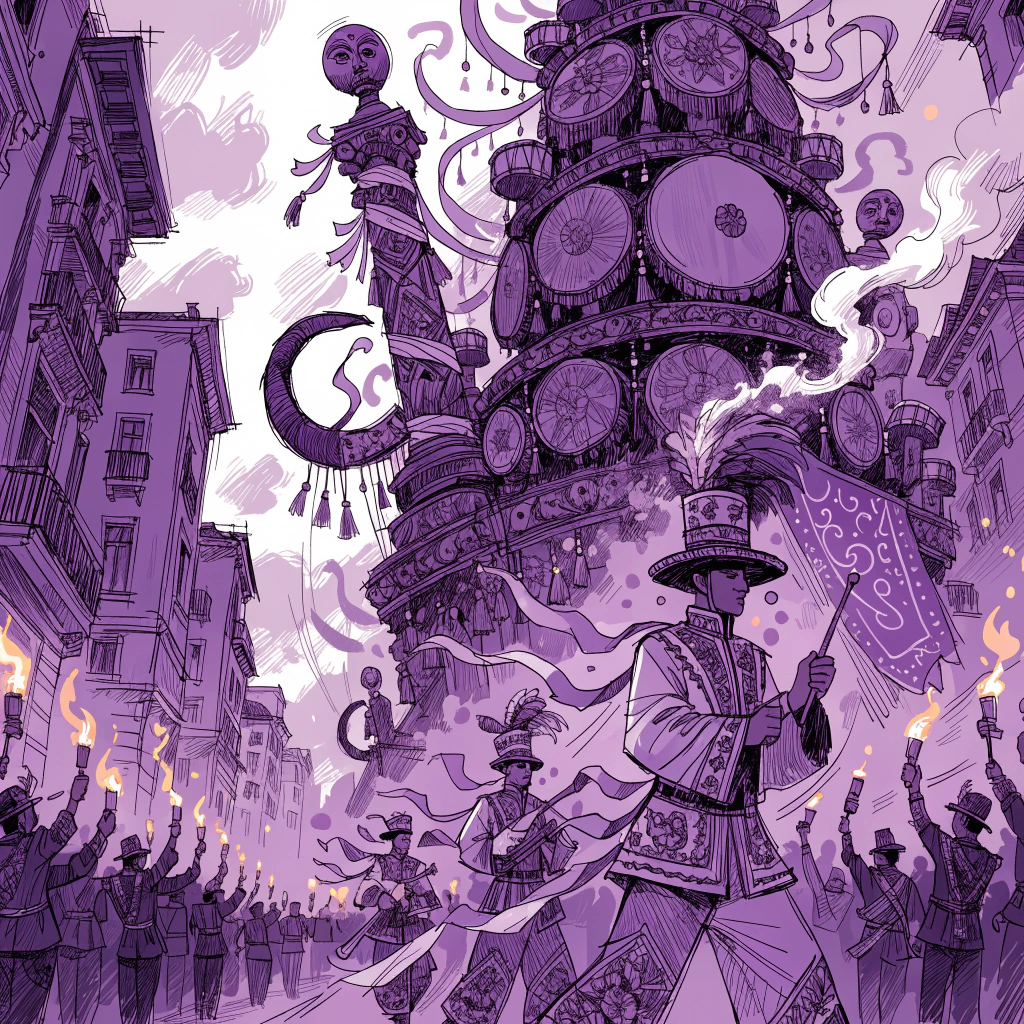
Republic Day in Turkey
Turkey celebrates Republic Day on October 29. It is a very important national holiday. This day is about the start of the Republic of Turkey.
In 1923, Mustafa Kemal Atatürk changed the country. He moved the capital city to Ankara. Now, Turkey is a modern country. People love Atatürk very much.
On this day, there are many flags in the streets. People wear red and white clothes. Children sing songs and dance at school. There are big parades in the cities. It is a happy day for everyone in Turkey.
Grammar Spotlight
Pattern: Present Simple (Be)
"It is a very important national holiday."
We use the verb 'to be' (am, is, are) to describe things. For the singular subject 'It', we use 'is'.
Pattern: Present Simple (Action Verbs)
"Turkey celebrates Republic Day on October 29."
We use the present simple for facts. When the subject is a name or 'it', we add '-s' to the verb.
Test Your Understanding
10 questions · A1 Beginner · 1 free preview
Test what you learned from this article. Answer all questions to earn XP!
When does Turkey celebrate Republic Day?
Want to finish the quiz?
9 more questions are waiting for you. Sign up free to unlock the full quiz and earn XP!
Sign Up FreeAlready have an account? Sign In
Question Breakdown
When does Turkey celebrate Republic Day?
Your answer:
Correct answer: October 29
Ankara is the capital city of Turkey.
Your answer:
Correct answer: True
What is a 'flag'?
Your answer:
Correct answer: A piece of cloth with colors
People wear red and white _____.
Your answer:
Correct answer: clothes
Celebrating Republic Day in Turkey
Every year, people in Turkey celebrate Republic Day on October 29th. It is a very important national holiday. This day is special because it is the birthday of the Turkish Republic.
In the past, the country was part of the Ottoman Empire. But on October 29, 1923, Mustafa Kemal Atatürk changed the government. He declared that Turkey was a republic. He also moved the capital city to Ankara. Atatürk wanted to make the country modern and strong. People visit Anıtkabir in Ankara to show respect to Atatürk. It is one of the most important places to see on this day.
Today, the celebrations are bigger and more colorful than usual. People put Turkish flags on their windows and balconies. In the morning, students march in parades and sing songs. In the evening, there are beautiful fireworks in the sky. Families come together and feel very proud of their country. It is a happy day for everyone in Turkey.
Grammar Spotlight
Pattern: Past Simple
"He moved the capital city to Ankara."
The past simple is used for actions that finished in the past. To form regular verbs, we usually add -ed to the end of the verb.
Pattern: Comparatives
"Today, the celebrations are bigger and more colorful than usual."
We use comparatives to compare two things. For short adjectives like 'big', we add -er. For long adjectives like 'colorful', we use 'more' before the word.
Test Your Understanding
11 questions · A2 Elementary · 1 free preview
Test what you learned from this article. Answer all questions to earn XP!
When is Republic Day celebrated in Turkey?
Want to finish the quiz?
10 more questions are waiting for you. Sign up free to unlock the full quiz and earn XP!
Sign Up FreeAlready have an account? Sign In
Question Breakdown
When is Republic Day celebrated in Turkey?
Your answer:
Correct answer: October 29th
Atatürk moved the capital city of Turkey to Istanbul.
Your answer:
Correct answer: False
What does the word 'modern' mean?
Your answer:
Correct answer: Relating to the present time
People put Turkish _____ on their windows and balconies.
Your answer:
Correct answer: flags
Why is this holiday special for Turkish people?
Your answer:
Correct answer: It is the birthday of the Turkish Republic
Celebrating Republic Day: The Birth of Modern Turkey
Every year on October 29th, people across Turkey celebrate Republic Day, which is known as Cumhuriyet Bayramı in Turkish. This special day marks the anniversary of the declaration of the Turkish Republic in 1923. It has been celebrated for over a century, and it remains the most significant national holiday in the country.
The story of this day began after the War of Independence. Mustafa Kemal Atatürk, who was the leader of the national movement, officially declared that Turkey was a republic. He also moved the capital city from Istanbul to Ankara. This change was very important because it signaled the end of the Ottoman Empire and the start of a modern, secular nation. Since that time, many reforms have been introduced to modernize the country’s legal and education systems.
Republic Day is celebrated with great enthusiasm throughout the country. In every city, streets are decorated with red and white Turkish flags and portraits of Atatürk. Large parades are organized in major cities, where soldiers, students, and local groups march together. In the evenings, there are often torchlight processions and firework displays that light up the night sky.
For Turkish citizens, Republic Day represents their national identity and sovereignty. It is a time when people come together to honor the progress that has been made since 1923. Schools play a vital role in these celebrations, as students perform poems and songs that highlight the importance of freedom and democracy. This holiday reminds everyone that the republic was a gift to the youth, who are responsible for protecting it in the future.
Grammar Spotlight
Pattern: Passive Voice (Present Perfect)
"Since that time, many reforms have been introduced to modernize the country’s legal and education systems."
The passive voice is used here to focus on the reforms (the object) rather than who introduced them. It is formed using 'have/has been' followed by the past participle.
Pattern: Relative Clauses
"Mustafa Kemal Atatürk, who was the leader of the national movement, officially declared that Turkey was a republic."
The relative pronoun 'who' starts a non-defining relative clause that gives extra information about Atatürk. This structure helps combine two thoughts into one complex sentence.
Test Your Understanding
11 questions · B1 Intermediate · 1 free preview
Test what you learned from this article. Answer all questions to earn XP!
In which year was the Turkish Republic officially declared?
Want to finish the quiz?
10 more questions are waiting for you. Sign up free to unlock the full quiz and earn XP!
Sign Up FreeAlready have an account? Sign In
Question Breakdown
In which year was the Turkish Republic officially declared?
Your answer:
Correct answer: 1923
The capital of Turkey was moved from Ankara to Istanbul after the republic was declared.
Your answer:
Correct answer: False
What does 'significant' mean in the context of the article?
Your answer:
Correct answer: Important and meaningful
This holiday reminds everyone that the republic was a _____ to the youth.
Your answer:
Correct answer: gift
What happens in the evenings during Republic Day celebrations?
Your answer:
Correct answer: There are torchlight processions and fireworks
The Birth of a Modern Nation: Reflecting on Turkey's Republic Day
Every year on October 29th, Turkish citizens gather to commemorate one of the most significant milestones in their history: Republic Day. This date marks the moment in 1923 when Mustafa Kemal Atatürk officially proclaimed the country a republic, effectively ending the centuries-old rule of the Ottoman Empire. This transition was not merely a change in title; it represented a radical shift in the source of authority, transferring sovereignty from a single monarch to the collective will of the people. Consequently, the capital was moved to Ankara, symbolizing a break from the imperial past and the dawn of a modern, centralized nation-state.
The transformation that followed was unprecedented in its scope. Atatürk introduced a series of structural reforms aimed at modernizing every aspect of Turkish life. Central to this vision was the principle of secularism, which sought to separate religious institutions from state affairs, ensuring that the legal and educational systems were based on contemporary logic and science. Furthermore, the implementation of these reforms required the unification of various political factions under a shared national identity. While the Ottoman Empire, the republic's predecessor, had been a multi-ethnic entity, the new republic emphasized a unified sense of citizenship and belonging.
The legacy of these changes remains deeply embedded in the Turkish consciousness. Today, Republic Day is celebrated with immense pride across the country and in international missions abroad. Major cities are adorned with red and white flags, and parades are held to honor the veterans and the founding fathers. The celebrations serve as a moment for citizens to reflect on the progress made over the last century. If the republic had not been established, the nation’s path might have been entirely different, potentially lacking the democratic foundations that define it today.
Ultimately, Republic Day is more than just a public holiday; it is an annual reaffirmation of the country's commitment to progress and independence. The reforms, which were introduced in the 1920s, reshaped the social fabric so thoroughly that their impact is still felt in every courtroom, classroom, and government office. By celebrating this day, Turks acknowledge that their modern identity is built upon the courage of those who dared to envision a new future from the ashes of the old.
Grammar Spotlight
Pattern: Passive Voice
"The Republic was officially proclaimed by the Grand National Assembly."
The passive voice is used here to focus on the historical event (the Republic) rather than the specific person acting, which is common in formal and historical writing.
Pattern: Non-defining Relative Clauses
"The reforms, which were introduced in the 1920s, reshaped the social fabric."
This clause adds extra information about the reforms. It is separated by commas because the sentence would still be grammatically complete without it.
Pattern: Third Conditional
"If the republic had not been established, the nation’s path might have been entirely different."
This structure is used to talk about an imaginary situation in the past and its hypothetical result. It uses 'if + past perfect' and 'might have + past participle'.
Test Your Understanding
11 questions · B2 Upper Intermediate · 1 free preview
Test what you learned from this article. Answer all questions to earn XP!
What significant change occurred on October 29, 1923?
Want to finish the quiz?
10 more questions are waiting for you. Sign up free to unlock the full quiz and earn XP!
Sign Up FreeAlready have an account? Sign In
Question Breakdown
What significant change occurred on October 29, 1923?
Your answer:
Correct answer: The declaration of Turkey as a Republic
The capital of the newly formed Republic was moved to Ankara.
Your answer:
Correct answer: True
What does 'sovereignty' mean in the context of the article?
Your answer:
Correct answer: The authority of a state to govern itself
The Ottoman Empire is described as the republic's _____.
Your answer:
Correct answer: predecessor
According to the text, what was a central vision of Atatürk's reforms?
Your answer:
Correct answer: The principle of secularism
The Proclamation of a Republic: A Paradigm Shift in the Turkish Polity
October 29, 1923, stands not merely as a date on the chronological calendar but as the foundational moment of a modern nation-state. Seldom has a nation undergone such a radical metamorphosis in so short a span as Turkey did following the dissolution of the Ottoman Empire. The declaration of the Republic was the culmination of an arduous struggle for independence, spearheaded by Mustafa Kemal Atatürk. This transition represented more than a change in governance; it was a profound ideological pivot toward Western-oriented secularism and national sovereignty.
It was the proclamation of the Republic that fundamentally altered the socio-political landscape of the Anatolian peninsula. By replacing the centuries-old caliphate with a burgeoning democratic structure, the founders sought to strip away the vestiges of imperial bureaucracy. The implementation of these reforms was not without its complexities, as it required the emancipation of the legal system from religious constraints. Central to this vision was the concept of sovereignty, which, as Atatürk famously stated, belongs unconditionally to the nation. This shift necessitated a complete restructuring of the legal, educational, and social spheres to foster a unified national identity.
Furthermore, the strategic relocation of the capital from Istanbul to Ankara was a symbolic gesture of immense weight. While Istanbul represented the grandeur and the weight of the Ottoman past, Ankara served as a blank slate for the burgeoning republic. This move emphasized the shift from a maritime, imperial focus to a centralized, Anatolian-based identity. The synthesis of traditional values with modern aspirations became the cornerstone of the new Turkish identity, allowing for a unique cultural expression that balanced heritage with progress.
Modern celebrations of Republic Day are characterized by a profound sense of national pride and collective memory. Cities are draped in crimson flags, and the streets resonate with the echoes of a transformative era. However, the day also invites a nuanced critical analysis of the republic’s trajectory. The emancipation of the Turkish citizenry from monarchical rule allowed for the development of a unique national consciousness, one that remains inextricably linked to the secular ideals established in 1923.
In contemporary Turkey, Republic Day serves as a poignant reminder of the resilience required to maintain a secular democracy. The ongoing discourse surrounding the balance between religious heritage and secular governance highlights the enduring relevance of the 1923 reforms. Ultimately, the Republic is not a static entity but a dynamic project, constantly evolving while remaining anchored to its foundational principles. The legacy of October 29 continues to shape the geopolitical and cultural identity of Turkey on the global stage, proving that the proclamation was just the beginning of a much larger journey.
Grammar Spotlight
Pattern: Negative Inversion
"Seldom has a nation undergone such a radical metamorphosis in so short a span as Turkey did following the dissolution of the Ottoman Empire."
When using negative or limiting adverbs like 'seldom' at the start of a sentence for emphasis, the subject and auxiliary verb are inverted. This creates a more formal and dramatic tone typical of C1 level writing.
Pattern: Cleft Sentences
"It was the proclamation of the Republic that fundamentally altered the socio-political landscape of the Anatolian peninsula."
Cleft sentences use the structure 'It is/was... that...' to focus on a specific piece of information. Here, it emphasizes that the proclamation itself, rather than any other event, caused the change.
Pattern: Nominalisation
"The strategic relocation of the capital from Istanbul to Ankara was a symbolic gesture of immense weight."
Nominalisation involves turning verbs (relocate) into nouns (relocation). This allows for more concise, abstract, and sophisticated academic writing, focusing on concepts rather than actions.
Test Your Understanding
12 questions · C1 Advanced · 1 free preview
Test what you learned from this article. Answer all questions to earn XP!
What was the primary symbolic purpose of moving the capital to Ankara?
Want to finish the quiz?
11 more questions are waiting for you. Sign up free to unlock the full quiz and earn XP!
Sign Up FreeAlready have an account? Sign In
Question Breakdown
What was the primary symbolic purpose of moving the capital to Ankara?
Your answer:
Correct answer: To provide a blank slate away from imperial history
The transition to a republic was solely a change in governance without ideological shifts.
Your answer:
Correct answer: False
What does 'emancipation' refer to in the context of the article?
Your answer:
Correct answer: The process of setting the legal system free from religious constraints
The concept of _____ belongs unconditionally to the nation according to Atatürk.
Your answer:
Correct answer: sovereignty
How does the author describe the nature of the Republic in the final paragraph?
Your answer:
Correct answer: A dynamic and evolving project
The article suggests that Republic Day is a time for both celebration and critical reflection.
Your answer:
Correct answer: True
The Ontological Metamorphosis: Deconstructing the Epochal Significance of Turkey’s Republic Day
The proclamation of the Republic of Turkey on October 29, 1923, was not merely a change in governance but an epochal shift that redefined the very fabric of Anatolian society. Following the cataclysmic dissolution of the Ottoman Empire, the nascent state found itself at a historical precipice, caught between the vestiges of a dynastic past and the beckoning call of a modern future. Under the stewardship of Mustafa Kemal Atatürk, the transition from a multi-ethnic, dynastic caliphate to a modern, secular nation-state was characterized by an ontological rupture with the past. This metamorphosis was predicated on the Enlightenment ideals of sovereignty and reason, effectively dismantling centuries of imperial hegemony and replacing them with the revolutionary concept of popular will.
The relocation of the capital from the cosmopolitan, yet symbolically burdened, Istanbul to the central Anatolian heartland of Ankara was a seminal decision. It signaled a definitive departure from the Byzantine and Ottoman legacies, positioning the new Republic as a forward-looking entity rooted in the geographic and cultural core of its citizenry. This geographic shift mirrored the internal restructuring of the Turkish zeitgeist, moving away from the complexities of imperial bureaucracy toward a more streamlined, nationalistic identity. Secularism, or laïcité, became the cornerstone of the state, ensuring that the vicissitudes of religious influence would no longer dictate the legal and political trajectory of the nation. Only through the lens of radical modernization can one truly grasp the magnitude of the 1923 reforms, which sought to transform subjects into sovereign citizens.
Scholars argue that the success of the Republic rested upon the radical implementation of reforms that touched every facet of life, from the adoption of the Latin alphabet to the complete overhaul of the legal code. Had the leadership not pivoted toward a secular framework, the socio-political landscape of contemporary Turkey would look markedly different today. It was essential that the new state be established upon the bedrock of popular sovereignty, rather than divine right. This shift necessitated a profound cognitive realignment among the population, fostered through educational initiatives designed to instill a sense of republican duty and national pride. The rhetorical power of the era, most notably captured in Atatürk’s 'Nutuk', served to consolidate this new identity, framing the Republic as the ultimate safeguard of Turkish independence.
The annual celebration of Republic Day (Cumhuriyet Bayramı) serves as a poignant reminder of this transformative journey. It is a day when the collective memory of the nation is invoked to celebrate the resilience of a people who sought to forge a new identity amidst the ruins of empire. While the political climate may fluctuate, the fundamental principles of the Republic remain a point of intense scholarly and public discourse. The enduring legacy of October 29th is not found in the parades alone, but in the continued pursuit of a democratic and secular ideal that seeks to balance tradition with progress. Lest one should view the proclamation as a mere administrative formality, it must be asserted that it was a profound intellectual and structural achievement, requiring a delicate navigation of the global geopolitical landscape.
In conclusion, the establishment of the Republic was a seminal event that continues to resonate through the decades. It required a steadfast commitment to internal renewal and a visionary approach to state-building. As Turkey commemorates this day, it reflects on a century of progress, acknowledging both the triumphs and the ongoing challenges of maintaining a cohesive national identity in an increasingly globalized world. The spirit of 1923 remains a guiding light, a testament to the power of visionary leadership and the collective will of a nation to redefine its destiny on its own terms.
Grammar Spotlight
Pattern: Negative Inversion for Emphasis
"Only through the lens of radical modernization can one truly grasp the magnitude of the 1923 reforms."
Inversion occurs when the auxiliary verb comes before the subject after certain restrictive expressions (like 'only through'). This is used to add rhetorical weight and emphasize the condition described.
Pattern: Subjunctive Mood in Content Clauses
"It was essential that the new state be established upon the bedrock of popular sovereignty."
The base form 'be established' is used following adjectives of necessity (essential, imperative). This subjunctive form highlights the requirement or importance of the action in formal, academic prose.
Pattern: Mixed Conditional
"Had the leadership not pivoted toward a secular framework, the socio-political landscape of contemporary Turkey would look markedly different today."
This structure combines a past hypothetical condition (Third Conditional: 'Had the leadership not pivoted') with a present result (Second Conditional: 'would look'). It is used to analyze how past decisions impact current reality.
Test Your Understanding
12 questions · C2 Mastery · 1 free preview
Test what you learned from this article. Answer all questions to earn XP!
What does the author identify as the 'cornerstone' of the new Turkish state?
Want to finish the quiz?
11 more questions are waiting for you. Sign up free to unlock the full quiz and earn XP!
Sign Up FreeAlready have an account? Sign In
Question Breakdown
What does the author identify as the 'cornerstone' of the new Turkish state?
Your answer:
Correct answer: Secularism (laïcité)
The article suggests that the move to Ankara was merely a logistical decision without symbolic meaning.
Your answer:
Correct answer: False
What does 'epochal' mean in the context of the article?
Your answer:
Correct answer: Marking a significantly important period in history
The transition was characterized by an _____ rupture with the past.
Your answer:
Correct answer: ontological
According to the text, what was the purpose of the educational initiatives?
Your answer:
Correct answer: To instill a sense of republican duty and national pride
The author asserts that the Republic Day celebration is based on more than just administrative formality.
Your answer:
Correct answer: True
