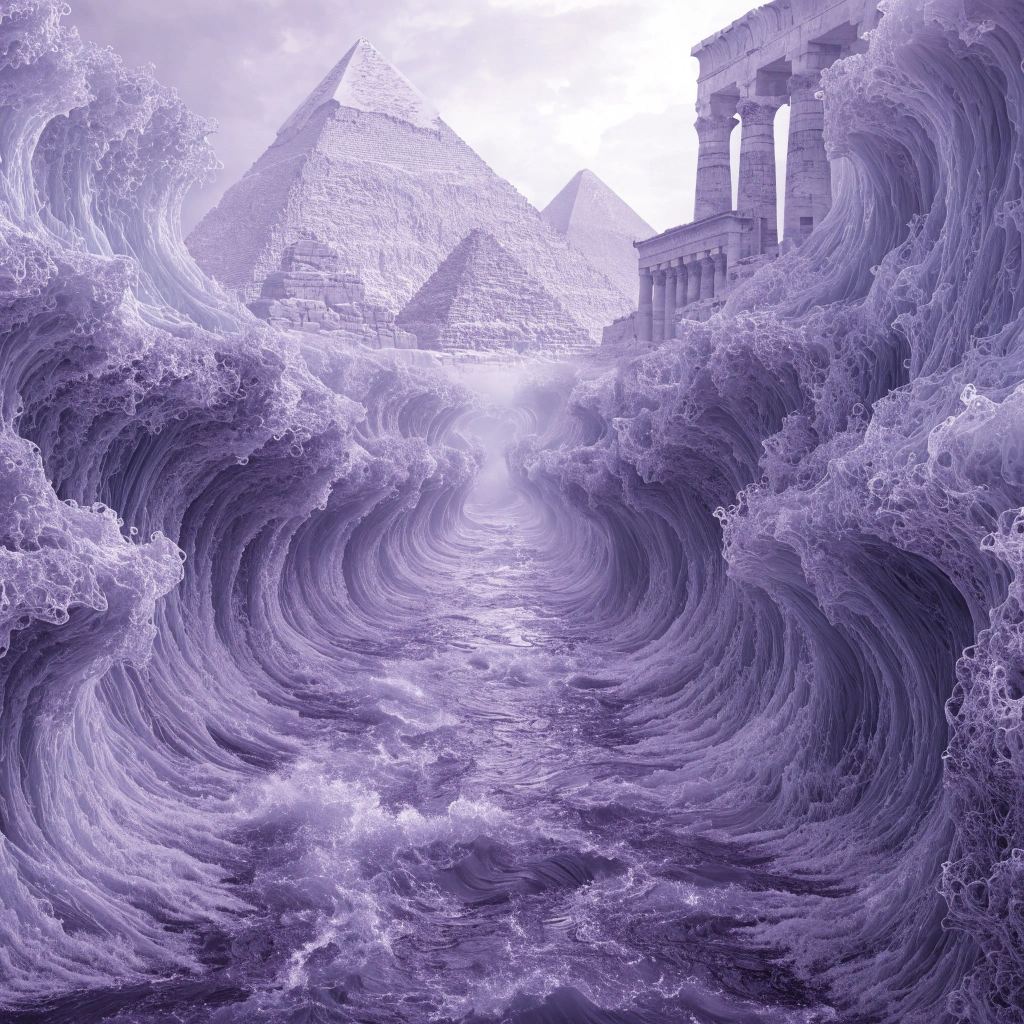
The Nile River in Egypt
The Nile River is in Egypt. It is a very long river. In fact, it is the longest river in the world. The water is blue and beautiful.
The river is important for people. Farmers use the water for their food. They grow vegetables and fruit near the water.
Many animals live in the river. There are big fish and birds. People like to visit the river. They go on small boats. The Nile is the heart of Egypt.
文法スポットライト
パターン: Present Simple (to be)
"The Nile River is in Egypt."
We use 'is' with singular subjects to state facts. This helps describe where things are or what they are like.
パターン: Present Simple (Action Verbs)
"Farmers use the water for their food."
We use the base form of the verb (use) for plural subjects (farmers). This describes a regular activity or truth.
理解度をチェック
10 問 · A1 初級 · 無料プレビュー 1回
この記事で学んだことをテストしよう。全問正解してXPを獲得!
Where is the Nile River?
問題の内訳
Where is the Nile River?
あなたの回答:
正解: In Egypt
The Nile is a very short river.
あなたの回答:
正解: 間違い
What does 'grow' mean?
あなたの回答:
正解: To help a plant live and get bigger
The Nile is the _____ of Egypt.
あなたの回答:
正解: heart
The Nile: The Heart of Egypt
The Nile River is very famous and important. It is the longest river in the world. It flows through many countries in Africa, but it is most famous in Egypt. Most of Egypt is a desert, but the Nile makes the land green and beautiful.
Long ago, Ancient Egyptians lived near the river because they needed water. They called their home the "Black Land." This was because the river brought dark soil every year. This soil was better for farming than the sand in the desert. Farmers grew corn, beans, and wheat.
The river was also a great way to travel. People used boats to carry heavy stones for the pyramids. Today, the Nile is still the heart of Egypt. Millions of people live near its banks. It provides water for drinking and electricity for homes. Without the Nile, life in Egypt would be impossible.
文法スポットライト
パターン: Superlative Adjectives
"It is the longest river in the world."
We use 'the' plus an adjective ending in '-est' to compare one thing to all others in a group. This shows the Nile is number one in length.
パターン: Connectors: Because
"Ancient Egyptians lived near the river because they needed water."
We use 'because' to give a reason for an action. It connects a result with its cause in a single sentence.
理解度をチェック
11 問 · A2 初級 · 無料プレビュー 1回
この記事で学んだことをテストしよう。全問正解してXPを獲得!
Where is the Nile River most famous?
問題の内訳
Where is the Nile River most famous?
あなたの回答:
正解: In Egypt
The Nile is the shortest river in the world.
あなたの回答:
正解: 間違い
What does 'soil' mean?
あなたの回答:
正解: The top layer of earth for plants
People used _____ to carry heavy stones for the pyramids.
あなたの回答:
正解: boats
Why did Egyptians call their home the 'Black Land'?
あなたの回答:
正解: Because the river brought dark soil
エジプトの命、ナイル川
アフリカ大陸を流れるナイル川は、世界で最も長い川の一つとして知られています。その長さは、およそ6,650キロメートルにも及び、エジプトの人々の生活と歴史に深く関わってきました。ナイル川がなければ、エジプトが今のような豊かな国になることはなかったでしょう。
エジプトの大部分は広大な砂漠ですが、ナイル川の周りだけは緑豊かで、人々が住むことができる土地が広がっています。古代エジプトの人々は、毎年ナイル川が氾濫することを知っていました。この氾濫は、川の水を運ぶだけでなく、肥沃な土をもたらしました。この土のおかげで、人々は農業を営み、食料を生産することができたのです。そのため、ナイル川は「エジプトの魂」と呼ばれています。
古代エジプト文明は、このナイル川の恵みによって大きく発展しました。ピラミッドや神殿など、今も残る多くの遺跡は、ナイル川の水を使い、食料を確保できたからこそ建てられたものです。ナイル川は、ただの水源ではなく、文化や信仰の中心でもありました。
現代でも、ナイル川はエジプトの人々にとって非常に重要な役割を担っています。飲料水として、また農業用水として、そして交通手段としても利用されています。エジプトの都市はナイル川沿いに発展し、多くの人々がこの川と共に生きています。ナイル川は、過去から現在、そして未来へと続くエジプトの命そのものなのです。
文法スポットライト
パターン: 〜によって (ni yotte)
"古代エジプト文明は、このナイル川の恵みによって大きく発展しました。"
「〜によって」は、「〜が原因で」や「〜の助けで」という意味を表します。この文では、「ナイル川の恵み」が文明発展の理由や手段であることを示しています。
パターン: 〜と呼ばれています (to yobareteimasu)
"そのため、ナイル川は「エジプトの魂」と呼ばれています。"
「〜と呼ばれています」は、受身形(passive voice)を使って、あるものが「〜という名前で知られている」または「〜と認識されている」ことを表します。誰が呼んでいるかを特定せずに、一般的な認識を伝えるときに使われます。
理解度をチェック
11 問 · B1 中級 · 無料プレビュー 1回
この記事で学んだことをテストしよう。全問正解してXPを獲得!
ナイル川の長さは、およそ何キロメートルですか。
問題の内訳
ナイル川の長さは、およそ何キロメートルですか。
あなたの回答:
正解: 約6,650キロメートル
エジプトの大部分は砂漠ですが、ナイル川の周りだけは緑豊かではありません。
あなたの回答:
正解: 間違い
「肥沃な」とはどういう意味ですか。
あなたの回答:
正解: 土が豊かで、作物がよく育つ
ナイル川の_____のおかげで、人々は農業を営むことができました。
あなたの回答:
正解: 土
古代エジプトの人々がナイル川の氾濫をどのように利用しましたか。
あなたの回答:
正解: 肥沃な土を利用して農業をした
The Lifeline of Civilization: Evaluating the Nile’s Role in Modern Egypt
The Nile River, often described as the backbone of Egyptian civilization, remains a subject of profound geographical and historical fascination. Stretching over 6,600 kilometers through northeastern Africa, it is widely acknowledged as the longest river on the planet. For millennia, this majestic waterway has transformed what would otherwise be a desolate extension of the Sahara Desert into a fertile corridor of life. Ancient Egyptians famously referred to their homeland as 'Kemet,' meaning the 'Black Land,' in reference to the nutrient-rich silt deposited by the river’s annual inundation. This predictable cycle of flooding provided the necessary conditions for agriculture to flourish, thereby allowing one of history's most sophisticated societies to develop and maintain long-term prosperity.
In the modern era, the relationship between Egypt and the Nile has undergone significant shifts due to rapid industrialization and population growth. The construction of the Aswan High Dam in the 1960s was a pivotal moment in this evolution. While the dam was designed to regulate the river's flow, prevent devastating floods, and generate essential hydroelectric power, it also brought about unforeseen ecological consequences. By trapping the silt that once naturally fertilized the fields, the dam forced farmers to rely more heavily on chemical fertilizers to maintain crop yields. Furthermore, the loss of this sediment has led to significant erosion in the Nile Delta, threatening the very land that the river once created over thousands of years.
Despite these environmental challenges, the Nile continues to be the primary source of water for nearly 100 million people, supporting everything from domestic consumption to industrial infrastructure. The river's importance is not merely economic but also deeply cultural and political. Recently, international tensions have risen regarding the construction of the Grand Ethiopian Renaissance Dam (GERD) upstream. Egypt expresses profound concern that any potential diversion of water could severely impact its water security and agricultural output. This highlights the complex geopolitical reality of sharing a resource that transcends national borders.
If the Nile were to disappear, the Egyptian landscape would return to a barren wasteland within a matter of years. Therefore, sustainable management of the river is no longer just a local priority; it is a regional necessity. As climate change poses new threats to water levels and evaporation rates, the international community must collaborate to ensure that this ancient lifeline continues to sustain future generations. Ultimately, the Nile serves as a powerful reminder that even the most technologically advanced civilizations remain dependent on the natural world for their survival.
文法スポットライト
パターン: Passive Voice with Adverbs
"it is widely acknowledged as the longest river on the planet."
This structure is used to express a general belief or fact. It is formed using 'to be' + adverb + past participle to sound more formal and objective.
パターン: Second Conditional
"If the Nile were to disappear, the Egyptian landscape would return to a barren wasteland within a matter of years."
This pattern is used to talk about hypothetical or unlikely situations in the present or future. It uses 'if' + past subjunctive (were to) + 'would' + base verb.
パターン: Concessive Clauses with 'While'
"While the dam was designed to regulate the river's flow, it also brought about unforeseen ecological consequences."
The word 'while' is used at the start of a clause to show contrast between two ideas happening at the same time, similar to 'although'.
理解度をチェック
11 問 · B2 中上級 · 無料プレビュー 1回
この記事で学んだことをテストしよう。全問正解してXPを獲得!
Why did Ancient Egyptians refer to their land as 'Kemet'?
問題の内訳
Why did Ancient Egyptians refer to their land as 'Kemet'?
あなたの回答:
正解: Because of the dark, fertile silt left by floods
The construction of the Aswan High Dam has had exclusively positive effects on Egyptian agriculture.
あなたの回答:
正解: 間違い
What does the word 'inundation' mean in the context of the article?
あなたの回答:
正解: A predictable annual flood
The Nile's _____ cycle of flooding was essential for the growth of Egyptian society.
あなたの回答:
正解: predictable
What is the primary concern regarding the Grand Ethiopian Renaissance Dam (GERD)?
あなたの回答:
正解: It might reduce Egypt's water security
The Lifeline of Antiquity: Navigating the Geopolitics and Ecology of the Nile
The Nile River, an arterial ribbon of blue threading through the desiccated landscapes of North Africa, represents far more than a mere hydrological phenomenon; it serves as the existential foundation of the Egyptian state. For millennia, the river’s rhythmic cycles have governed the pulse of civilization in the region. Seldom has a single geographical feature dictated the destiny of a nation as profoundly as the Nile has for Egypt. The ancient moniker 'Kemet,' or the 'Black Land,' was not merely a poetic descriptor but a literal acknowledgement of the nutrient-rich silt deposited by the annual floods. This sedimentary bounty transformed the harsh Sahara into a verdant corridor of arable land, enabling the proliferation of one of history’s most sophisticated cultures.
It is the predictable inundation of the riverbanks that facilitated the transition from nomadic lifestyles to structured agrarian societies. The subsequent development of centralized administration was a direct consequence of the need to manage these water resources through complex irrigation systems. However, the contemporary reality of the Nile is increasingly defined by complex geopolitical maneuvering rather than seasonal ebbs and flows. The construction of the Grand Ethiopian Renaissance Dam (GERD) has introduced a precarious variable into the regional hydropolitics. Egypt, which has historically enjoyed a degree of hegemony over the river’s waters, now faces the daunting prospect of reduced flow, which could jeopardize its agricultural sustenance and energy security.
The paradox of the Nile lies in its dual identity as both a source of life and a potential catalyst for regional discord. While downstream nations emphasize their historical rights, upstream countries assert their sovereign prerogative to harness the river for developmental purposes. Mitigation of these tensions requires a paradigm shift in how transboundary water resources are perceived. The transition from a zero-sum competition to a model of collective stewardship is essential for long-term regional stability.
Furthermore, the environmental degradation of the Nile Delta poses a significant threat. The legacy of the Aswan High Dam is a double-edged sword; while it provided flood control and hydroelectric power, it also halted the natural deposition of silt. The combination of rising sea levels and the reduction of sedimentary deposits has led to increased soil salinity and coastal erosion. The implementation of modern irrigation systems has altered the natural rhythm of the delta, necessitating a sophisticated technological response to preserve the fertility of the land. Ultimately, the Nile remains a testament to human ingenuity and a reminder of our fundamental dependence on the natural world. Whether the nations of the Nile Basin can navigate these turbulent waters through cooperation remains the defining challenge of the twenty-first century.
文法スポットライト
パターン: Negative Inversion
"Seldom has a single geographical feature dictated the destiny of a nation as profoundly as the Nile has for Egypt."
This structure places a negative or restrictive adverb at the beginning of the sentence for emphasis, followed by an auxiliary verb and then the subject. It is common in formal C1 writing to highlight rarity or significance.
パターン: Cleft Sentences
"It is the predictable inundation of the riverbanks that facilitated the transition from nomadic lifestyles to structured agrarian societies."
Cleft sentences use 'It is/was... that' to focus on a specific part of the information. Here, it emphasizes that the specific cause of social change was the 'inundation' rather than any other factor.
パターン: Nominalisation
"The implementation of modern irrigation systems has altered the natural rhythm of the delta."
Nominalisation involves turning verbs or adjectives into nouns (e.g., 'implement' to 'implementation'). This makes the text more academic and concise, focusing on the concept of the action rather than the person performing it.
理解度をチェック
12 問 · C1 上級 · 無料プレビュー 1回
この記事で学んだことをテストしよう。全問正解してXPを獲得!
What does the author suggest is the 'paradox' of the Nile?
問題の内訳
What does the author suggest is the 'paradox' of the Nile?
あなたの回答:
正解: It provides life while simultaneously serving as a source of political conflict.
The Aswan High Dam has had exclusively positive effects on the Nile Delta's ecology.
あなたの回答:
正解: 間違い
Which word describes land that is suitable for growing crops?
あなたの回答:
正解: Arable
The construction of the GERD has introduced a _____ variable into regional hydropolitics.
あなたの回答:
正解: precarious
What was the primary benefit of the annual floods for ancient Egyptians?
あなたの回答:
正解: They deposited nutrient-rich silt that created fertile land.
The term 'Kemet' refers to the color of the water in the Nile.
あなたの回答:
正解: 間違い
ナイル川:エジプト文明を育んだ生命の源泉とその現代的課題
ナイル川は、単なる水路という範疇を超え、エジプトという国家、ひいては文明そのものの根幹を成す存在であると言っても過言ではないでしょう。約6,650キロメートルにも及ぶその長大な流れは、世界最長の河川として広く認識されており、広大なサハラ砂漠のただ中に、人類が居住可能な地帯を形成し得た唯一無二の要因であることは論を俟ちません。
古代エジプトの人々が自らの国土を「ケメト」、すなわち「黒い土地」と称したのは、ナイル川が毎年もたらす定期的な氾濫が、豊かな黒い泥土を堆積させたことに由来します。この予測可能な氾濫の周期は、単に土地を肥沃にするだけでなく、高度に組織化された農業社会の発展を可能にしました。穀物の安定供給は人口増加を促し、余剰生産は交易を活発化させ、結果として、壮麗なピラミッドや神殿に象徴される、他に類を見ない文化と技術の発展を促したのです。ナイルの恵みがなければ、エジプト文明がその輝かしい歴史を紡ぐことは不可能であったと断言しても差し支えないでしょう。
歴史を紐解けば、ナイル川は常にエジプトの運命を左右する絶対的な存在でした。その流域に沿って都市が築かれ、交通網が発達し、さらには宗教や神話体系においても、ナイルの存在は不可欠な要素として深く根ざしています。毎年訪れる洪水は、生命の再生と豊穣を象徴するものであり、人々はナイルの神々に祈りを捧げ、その恩恵を享受してきました。灌漑技術の発展とともに、人々はナイルの水をより効率的に利用する術を学び、その恵みを最大限に引き出していったのです。
しかし、現代においてナイル川が直面する課題は、決して少なくありません。急速な人口増加に伴う水需要の増大は、水資源の枯渇という深刻な問題を引き起こしかねません。また、エチオピアを始めとする上流国におけるダム建設や水利用計画は、エジプトにとっての水供給の安定性を脅かす潜在的な要因となり得ます。ナイル川の水資源を巡る国際的な対立は、この地域の地政学的安定性にも大きな影響を及ぼし得ると考えられます。
さらに、気候変動の影響も無視できません。降水パターンの変化は、ナイル川の流量に不確実性をもたらし、洪水や干ばつのリスクを増大させる可能性があります。これらの複合的な要因が絡み合い、ナイル川は今、持続可能な水資源管理という喫緊の課題に直面しているのです。古代から文明の基盤であったこの大河が、今後もその役割を果たし続けるためには、流域国間の協調と、革新的な技術、そして何よりも水資源に対する賢明な利用が不可欠であると言えましょう。ナイル川の未来は、人類の知恵と努力にかかっていると言っても過言ではありません。その豊かな流れが、引き続き生命を育む源泉であり続けることを切に願うばかりです。
文法スポットライト
パターン: 〜と言っても過言ではない
"ナイル川は、単なる水路という範疇を超え、エジプトという国家、ひいては文明そのものの根幹を成す存在であると言っても過言ではないでしょう。"
「〜と言っても過言ではない」は、「〜と言っても言い過ぎではない」という意味で、ある事柄を強調する際に使われます。断言に近い強い主張を、しかし断定ではない形で述べることで、聞き手に共感を促す効果があります。動詞の終止形、名詞、形容詞の終止形に接続します。
パターン: 〜に他ならない
"広大なサハラ砂漠のただ中に、人類が居住可能な地帯を形成し得た唯一無二の要因であることは論を俟ちません。"
「〜に他ならない」は、「〜である」という断定を非常に強く表現する際に用いられます。「まさに〜である」「〜以外の何物でもない」という意味合いで、話者の強い確信や結論を示すのに適しています。名詞や動詞の終止形に接続し、客観的な事実や必然性を強調します。
パターン: 〜ざるを得ない
"急速な人口増加に伴う水需要の増大は、水資源の枯渇という深刻な問題を引き起こしかねません。"
「〜ざるを得ない」は、「〜しないわけにはいかない」「やむを得ず〜する」という意味で、自分の意志に反して、あるいは状況上、そうせざるを得ない状況を表します。強い義務感や不可避性を表現する際に使われ、動詞の未然形に「ざる」を付けて接続します。現代日本語では「〜ないわけにはいかない」がより一般的ですが、文語的な表現としてC2レベルでは頻出します。
理解度をチェック
12 問 · C2 マスター · 無料プレビュー 1回
この記事で学んだことをテストしよう。全問正解してXPを獲得!
古代エジプトの人々が自らの国土を「ケメト」と呼んだ理由として最も適切なものはどれですか?
問題の内訳
古代エジプトの人々が自らの国土を「ケメト」と呼んだ理由として最も適切なものはどれですか?
あなたの回答:
正解: ナイル川の氾濫が肥沃な黒い泥土をもたらしたから。
ナイル川の氾濫は、古代エジプトにおいて予測不可能で、常に災害をもたらすものだった。
あなたの回答:
正解: 間違い
「根幹」という言葉の最も近い意味は何ですか?
あなたの回答:
正解: 物事の最も重要で基本的な部分。
穀物の安定供給は人口増加を促し、余剰生産は交易を活発化させ、結果として、壮麗なピラミッドや神殿に象徴される、他に類を見ない文化と技術の発展を______。
あなたの回答:
正解: 促した
現代においてナイル川が直面している課題として、記事で言及されていないものはどれですか?
あなたの回答:
正解: ナイル川の水質汚染の深刻化。
ナイル川の未来は、流域国間の協調と賢明な水資源利用にかかっていると記事は結論付けている。
あなたの回答:
正解: 正しい

