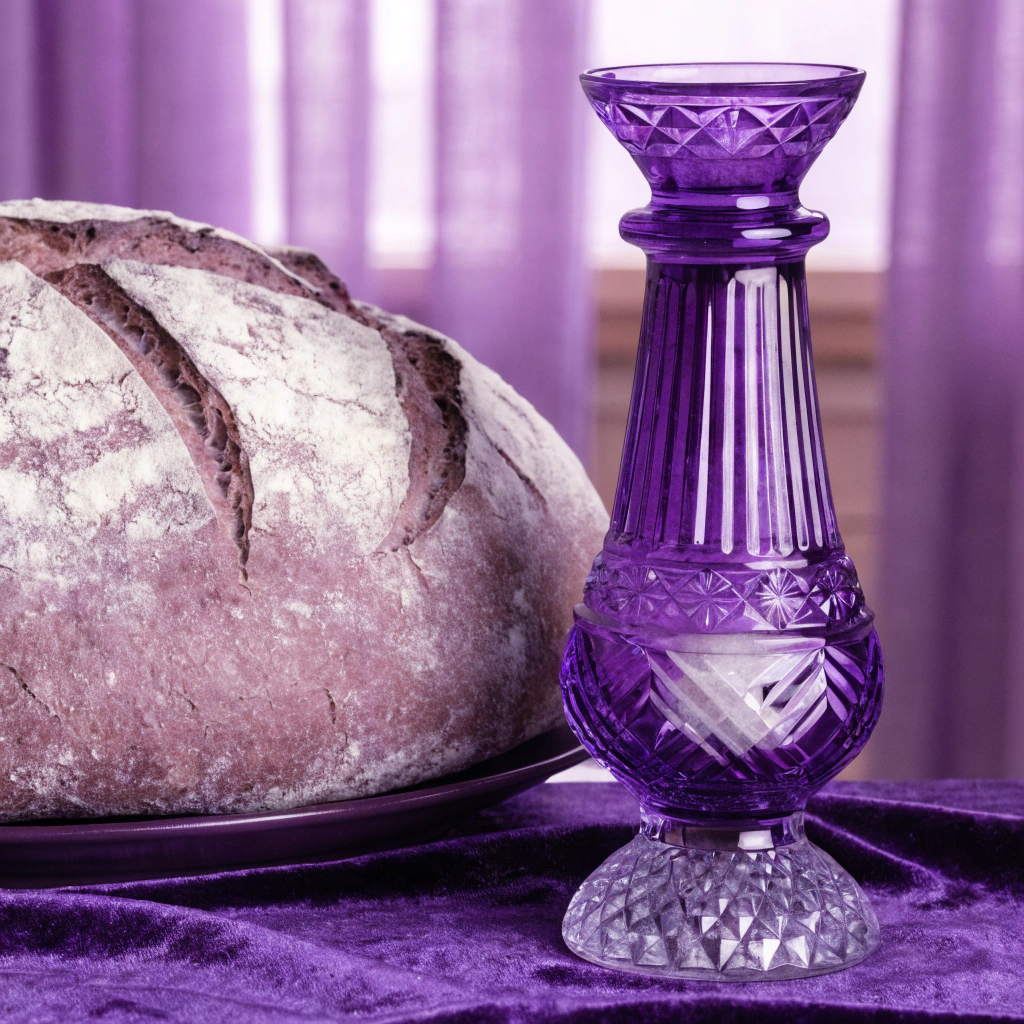
Bread and Salt in Russia
Russian people are very friendly. They love guests. In Russia, people have a special tradition. It is called Bread and Salt.
A host gives a guest a big piece of bread. The bread is on a beautiful towel. There is salt on top of the bread.
Bread means life and money. Salt means a long friendship. The guest takes a small piece of bread. Then, the guest puts the bread in the salt and eats it. This tradition is very old. It shows that the guest is welcome. It is a sign of love and respect.
文法スポットライト
パターン: Present Simple (to be)
"Russian people are very friendly."
We use 'am', 'is', or 'are' to describe facts or people. Use 'are' for plural subjects like 'people'.
パターン: Present Simple (Third Person)
"A host gives a guest a big piece of bread."
In the present simple, we add '-s' to the verb when the subject is singular (he, she, or it).
理解度をチェック
10 問 · A1 初級 · 無料プレビュー 1回
この記事で学んだことをテストしよう。全問正解してXPを獲得!
What two things do Russian hosts give to guests?
問題の内訳
What two things do Russian hosts give to guests?
あなたの回答:
正解: Bread and salt
The Bread and Salt tradition is a new idea in Russia.
あなたの回答:
正解: 間違い
What does 'beautiful' mean?
あなたの回答:
正解: Very nice to look at
The guest takes a small _____ of bread.
あなたの回答:
正解: piece
Bread and Salt: A Russian Welcome
In Russia, welcoming guests is very important. It is a famous tradition called 'Bread and Salt'. This is not just a meal; it is a way to show love and respect. When a special guest arrives, the host carries a large, round bread. In Russian, they call this bread 'Karavay'.
The bread sits on a beautiful towel called a 'rushnik'. This towel has red patterns. There is a small bowl of salt on top of the bread. In the past, salt was more expensive than gold. Bread was also important because it represented life and wealth.
The tradition is simple but beautiful. The guest takes a small piece of bread, dips it into the salt, and eats it. This action means the guest and the host are now friends. This tradition is older than many modern cities. Today, people still use bread and salt at weddings or to welcome world leaders. It is the best way to see Russian hospitality.
文法スポットライト
パターン: Comparatives
"This tradition is older than many modern cities."
We use the comparative form (adjective + -er + than) to compare two things. For short adjectives like 'old', we add '-er' to the end.
パターン: Past Simple of 'To Be'
"In the past, salt was more expensive than gold."
We use 'was' for singular subjects (I, he, she, it) and 'were' for plural subjects (we, you, they) to describe states in the past.
理解度をチェック
11 問 · A2 初級 · 無料プレビュー 1回
この記事で学んだことをテストしよう。全問正解してXPを獲得!
What is the name of the special Russian bread?
問題の内訳
What is the name of the special Russian bread?
あなたの回答:
正解: Karavay
In the past, salt was very cheap in Russia.
あなたの回答:
正解: 間違い
What does 'hospitality' mean?
あなたの回答:
正解: The friendly welcome of guests
The guest takes a piece of bread and dips it into the _____.
あなたの回答:
正解: salt
Where is the salt placed during the ritual?
あなたの回答:
正解: On top of the bread
Bread and Salt: The Heart of Russian Hospitality
In Russia, hospitality is more than just a polite habit; it is a cultural pillar that has survived for centuries. The most famous example of this is the tradition of 'Bread and Salt.' When important guests arrive at a Russian home or a special event, they are often welcomed with a beautiful ceremony that shows the host's respect.
During this ritual, a large, round loaf of bread called 'Karavay' is presented to the visitors. The bread is placed on a 'rushnik,' which is a traditional towel decorated with colorful embroidery. In the center of the bread, there is a small container of salt. The guest is expected to break off a small piece of the bread, dip it into the salt, and eat it. This action confirms the bond between the host and the guest.
This simple act has a deep meaning. Historically, bread has represented wealth and the bounty of the earth. Salt, which was once very expensive and rare, has symbolized a long-lasting friendship. By sharing these items, the host shows that they are offering their best to the guest. It is a sign that the guest is protected and valued in that house. Throughout history, refusing bread and salt was seen as a very rude gesture.
Even today, this custom is still used at weddings and for welcoming foreign leaders who visit the country. It is a tradition that connects the modern world with Russia’s ancient history. If you are lucky enough to visit Russia, you might experience this warm welcome yourself. It is a moment that shows the true heart of Russian culture and the importance of sharing what you have with others.
文法スポットライト
パターン: Present Perfect
"it is a cultural pillar that has survived for centuries."
The present perfect (have/has + past participle) is used here to describe an action that started in the past and continues to the present day.
パターン: Passive Voice
"The bread is placed on a 'rushnik,' which is a traditional towel."
The passive voice is used when the focus is on the action or the object being acted upon (the bread) rather than who is performing the action.
理解度をチェック
11 問 · B1 中級 · 無料プレビュー 1回
この記事で学んだことをテストしよう。全問正解してXPを獲得!
What is a 'Karavay'?
問題の内訳
What is a 'Karavay'?
あなたの回答:
正解: A large, round loaf of bread
In the past, salt was a very cheap and common item in Russia.
あなたの回答:
正解: 間違い
What does 'embroidery' mean?
あなたの回答:
正解: Decorating cloth with needle and thread
The bread is placed on a _____ during the ceremony.
あなたの回答:
正解: rushnik
What does the combination of bread and salt symbolize?
あなたの回答:
正解: Wealth and long-lasting friendship
Bread and Salt: The Pillar of Russian Hospitality
In Russian culture, hospitality is regarded as a fundamental cultural pillar rather than a mere social formality. This concept is most profoundly exemplified by the ancient tradition of 'Khleb-da-sol', or Bread and Salt. This ritual, which has been practiced for centuries, serves as the ultimate gesture of welcome and respect. When guests arrive, they are presented with a round loaf of rye bread, known as a 'Karavay', which is often decorated with elaborate dough shapes representing fertility. The bread rests on a 'rushnik'—a long, intricately embroidered ceremonial towel. A small container of salt is typically placed on top of the bread, symbolizing a deep-rooted connection between the host and the visitor.
To understand the significance of this custom, one must look at the historical value of these two ingredients. Historically, bread was viewed as a symbol of life, wealth, and the bounty of the earth. It was the primary source of nutrition for the population, and thus, sharing it was an act of extreme generosity. Salt, on the other hand, was a precious commodity that was both expensive and difficult to obtain. It was believed to possess purifying qualities, capable of warding off evil spirits. By offering salt, the host was effectively stating that they would go to great lengths to ensure the guest's safety and well-being.
The ritual itself is performed with a specific set of actions. The guest is expected to break off a small piece of the bread, dip it into the salt, and consume it. This act signifies the acceptance of the host's protection and the establishment of a bond between them. If a guest were to refuse the bread and salt, it would be considered a grave insult, suggesting a lack of trust or a rejection of the host's friendship.
While the practice may seem antiquated to some, it remains a vital part of modern Russian life. It is still commonly observed at weddings, where the parents of the bride and groom welcome the new couple with bread and salt to wish them a life of prosperity. Furthermore, the tradition is frequently utilized in diplomatic settings to welcome foreign dignitaries. Ultimately, 'Khleb-da-sol' illustrates how food can transcend its physical form to become a profound symbol of unity and mutual respect.
文法スポットライト
パターン: Present Perfect Passive
"This ritual, which has been practiced for centuries, serves as the ultimate gesture of welcome."
Used to describe an action that started in the past and continues to the present, where the focus is on the object receiving the action. Formed with 'has/have been' + past participle.
パターン: Second Conditional (Hypothetical)
"If a guest were to refuse the bread and salt, it would be considered a grave insult."
Used to talk about imaginary or unlikely situations in the present or future. 'Were to' adds a layer of formality and emphasizes the hypothetical nature.
パターン: Relative Clauses with 'where'
"It is still commonly observed at weddings, where the parents of the bride and groom welcome the new couple."
Used to provide additional information about a place or a specific social occasion. It connects two clauses without starting a new sentence.
理解度をチェック
11 問 · B2 中上級 · 無料プレビュー 1回
この記事で学んだことをテストしよう。全問正解してXPを獲得!
What is the primary purpose of the 'Khleb-da-sol' ritual according to the text?
問題の内訳
What is the primary purpose of the 'Khleb-da-sol' ritual according to the text?
あなたの回答:
正解: To offer a gesture of welcome and respect
Salt was historically used in the ritual because it was cheap and easy to find.
あなたの回答:
正解: 間違い
What does 'grave' mean in the context of the article?
あなたの回答:
正解: Extremely serious or severe
The round loaf of rye bread used in the ceremony is known as a ____.
あなたの回答:
正解: Karavay
What action must the guest take to symbolize the acceptance of the host's protection?
あなたの回答:
正解: Dipping a piece of bread into salt and eating it
The Sacred Bond: Deciphering the Ritual of Bread and Salt in Russian Hospitality
In the vast cultural landscape of Russia, the concept of hospitality is far more than a superficial social courtesy; it is an inalienable pillar of the national identity. This ethos is most quintessentially embodied in the tradition of 'Khleb-da-sol'—the offering of bread and salt. It is through this ritual that the depth of Russian benevolence is truly revealed, transforming a simple meeting into a sacred pact between host and guest. The tradition involves the presentation of a 'Karavay', a large, round loaf of rye bread, meticulously adorned with intricate dough patterns, resting upon a 'rushnik'—a ceremonial towel often embroidered with red motifs that narrate the unspoken history of the host's lineage.
To the Russian mind, bread has historically represented the very essence of life and sustenance. The round shape of the Karavay is not merely aesthetic; it mirrors the sun, symbolizing warmth and the bounty of the earth. Seldom is a guest welcomed into a traditional home without the symbolic offering of salt, which sits nestled in a wooden cellar atop the bread. Historically, salt was a luxury of the highest order, a 'white gold' whose presence at the table signified wealth and the host’s willingness to share their most precious resources. The juxtaposition of the humble grain and the luxurious mineral creates a powerful metaphor for the totality of human existence—the necessary and the precious.
Nominalisation of these cultural values allows for a deeper understanding of the ritual's sanctity. The presentation of the Karavay is not a mere act of feeding; it is a profound manifestation of the host’s desire for the guest’s prosperity. The guest, in turn, must follow a prescribed etiquette: they are expected to break off a piece of the bread, dip it into the salt, and consume it. This act of consumption is a physical seal of the bond of reciprocity. It is the intricate embroidery on the rushnik that serves as a protective barrier, warding off malevolent spirits and ensuring that the interaction remains pure.
Notwithstanding the rapid modernization of Russian society, this tradition persists as a significant vestige of the past. Whether at a state banquet for foreign dignitaries or at a traditional wedding, the ritual transcends the boundaries of time. It serves as a reminder that in a world of fleeting digital connections, the physical sharing of bread and salt remains a potent symbol of genuine human connection. The meticulous preparation of the Karavay serves as a testament to the host’s benevolence, ensuring that the guest feels not just welcomed, but honored.
Critical analysis of the ritual suggests that it functions as a social equalizer. By sharing the same bread and salt, the hierarchical distinctions between host and guest are temporarily suspended. This tradition, albeit ancient, continues to offer a nuanced lens through which we can view the enduring nature of Russian communal values. It is not simply about food; it is about the recognition of the other's humanity through a shared, timeless gesture of peace and goodwill.
文法スポットライト
パターン: Inversion with negative/restrictive adverbs
"Seldom is a guest welcomed into a traditional home without the symbolic offering of salt."
Inversion is used after restrictive adverbs like 'seldom' to add emphasis. The auxiliary verb 'is' moves before the subject 'a guest'.
パターン: Cleft Sentences
"It is the intricate embroidery on the rushnik that narrates the unspoken history of the host's lineage."
Cleft sentences (It + is + subject + that) are used to focus on a specific part of the sentence, in this case, the embroidery.
パターン: Nominalisation
"The meticulous preparation of the Karavay serves as a testament to the host’s benevolence."
Nominalisation involves turning verbs or adjectives into nouns (preparation, benevolence). This creates a more formal, academic tone suitable for C1 analysis.
理解度をチェック
12 問 · C1 上級 · 無料プレビュー 1回
この記事で学んだことをテストしよう。全問正解してXPを獲得!
What does the round shape of the Karavay bread primarily symbolize?
問題の内訳
What does the round shape of the Karavay bread primarily symbolize?
あなたの回答:
正解: The sun, warmth, and the earth's bounty
The 'rushnik' is a plain, unadorned cloth used solely for hygiene.
あなたの回答:
正解: 間違い
What does 'reciprocity' mean in the context of the article?
あなたの回答:
正解: A mutual exchange for benefit
The ritual of bread and salt _____ the boundaries of time, persisting even in modern society.
あなたの回答:
正解: transcends
Why was salt historically significant in the Russian tradition?
あなたの回答:
正解: It was an expensive luxury representing wealth
The guest is expected to dip a piece of bread into the salt as part of the etiquette.
あなたの回答:
正解: 正しい
Sacramental Sustenance: The Socio-Cultural Archetypes of Russian Hospitality
In the grand tapestry of Slavic cultural identity, few motifs resonate with the same ontological weight as the tradition of 'Khleb-da-sol'. This ritualized offering of bread and salt transcends the mundane boundaries of social etiquette, manifesting instead as a profound semiotic gesture that encapsulates the very essence of Russian 'dusha' or soul. To the uninitiated observer, the presentation of a 'Karavay'—a round, ornate loaf of rye bread—atop an intricately embroidered 'rushnik' might appear as a quaint vestige of agrarian folklore. However, were one to delve into the historical and spiritual underpinnings of this practice, it would become evident that the ritual is inextricably linked to a worldview where hospitality is perceived as a sacred obligation, rather than a mere elective courtesy.
The bread, or 'khleb', occupies a central position in this symbolic economy. Historically, in the agrarian heartlands of Russia, grain was the primary metric of survival and prosperity. The 'Karavay' is not merely sustenance; it is a consecrated object, a reification of the earth’s bounty and the labor of the collective. Its circular form mimics the sun, a primordial deity in Slavic paganism, suggesting a continuity of life and the cyclical nature of existence. When a guest is offered bread, they are being invited into a covenant of shared survival. To refuse such an offering is not merely a breach of manners but an ontological rejection of the host’s life-force.
Complementing the bread is salt, a substance whose historical scarcity rendered it a luxury of the highest order. In the Russian cultural imagination, salt is venerated for its imperishable nature and its capacity to preserve and purify. It serves as a prophylactic against the corrosive forces of malevolence and decay. By dipping a piece of bread into salt, the guest partakes in a ritual of purification, cementing a bond of mutual protection. It is imperative that the recipient acknowledge this gesture with equal solemnity, lest the fragile bond of trust be severed by a lack of perceived reverence. This interplay between the perishable bread and the eternal salt creates a dialectic of hospitality that balances the immediate needs of the body with the transcendent requirements of the spirit.
The 'rushnik', the ceremonial towel upon which the bread and salt are proffered, adds another layer of hermeneutic complexity. Far from being a utilitarian textile, the 'rushnik' is a narrative canvas, adorned with talismanic embroidery that often depicts the tree of life or ancestral spirits. These patterns are not merely decorative; they are evocative of a lineage that stretches back through time, positioning the current act of hospitality within a broader historical and familial trajectory. The 'rushnik' acts as a bridge between the domestic space of the host and the external world of the guest, facilitating a transition that is both physical and metaphysical.
In contemporary Russia, while the socio-economic conditions that birthed 'Khleb-da-sol' have largely vanished, the ritual persists with remarkable tenacity. Whether at a wedding, a state visit, or a simple homecoming, the gesture remains a potent symbol of Russian identity. It reflects a proclivity for egalitarian inclusion, where the stranger is temporarily elevated to the status of a sacrosanct entity. Not only does the bread represent the bounty of the earth, but it also serves as a vessel for communal identity, reinforcing the idea that to share one’s resources is to affirm one’s humanity. Ultimately, 'Khleb-da-sol' is a testament to the enduring power of symbolic communication. In an increasingly atomized global society, such rituals provide a necessary anchor, grounding individuals in a shared moral framework. The act of offering bread and salt is a reminder that hospitality, at its pinnacle, is an act of radical vulnerability and profound generosity. It suggests that despite the vicissitudes of history, the fundamental human need for connection remains as imperishable as the salt itself.
文法スポットライト
パターン: Inverted Conditional
"However, were one to delve into the historical and spiritual underpinnings of this practice, it would become evident that the ritual is inextricably linked to a worldview where hospitality is perceived as a sacred obligation."
The 'were one to' structure is a formal alternative to 'if one were to'. It is used to express a hypothetical situation in the present or future, maintaining a scholarly and sophisticated tone.
パターン: The Subjunctive Mood
"It is imperative that the recipient acknowledge this gesture with equal solemnity, lest the fragile bond of trust be severed by a lack of perceived reverence."
The present subjunctive ('acknowledge') follows adjectives of necessity like 'imperative'. The word 'lest' is followed by the base form 'be', indicating a negative purpose or fear.
パターン: Negative Inversion
"Not only does the bread represent the bounty of the earth, but it also serves as a vessel for communal identity."
Starting a sentence with a negative or restrictive phrase like 'Not only' requires the subject and auxiliary verb to switch places (does the bread represent) to emphasize the cumulative nature of the statement.
理解度をチェック
12 問 · C2 マスター · 無料プレビュー 1回
この記事で学んだことをテストしよう。全問正解してXPを獲得!
What does the circular shape of the 'Karavay' primarily symbolize in Russian tradition?
問題の内訳
What does the circular shape of the 'Karavay' primarily symbolize in Russian tradition?
あなたの回答:
正解: The sun and the continuity of life
The article suggests that salt was historically an inexpensive and common commodity in Russia.
あなたの回答:
正解: 間違い
Which word describes a trace of something that is nearly gone?
あなたの回答:
正解: Vestige
The tradition of 'Khleb-da-sol' is _____ linked to the Russian soul.
あなたの回答:
正解: inextricably
According to the text, what is the symbolic function of salt in the ritual?
あなたの回答:
正解: To serve as a prophylactic against malevolence and decay
The 'rushnik' is described as a purely utilitarian object used for hygiene during the meal.
あなたの回答:
正解: 間違い

