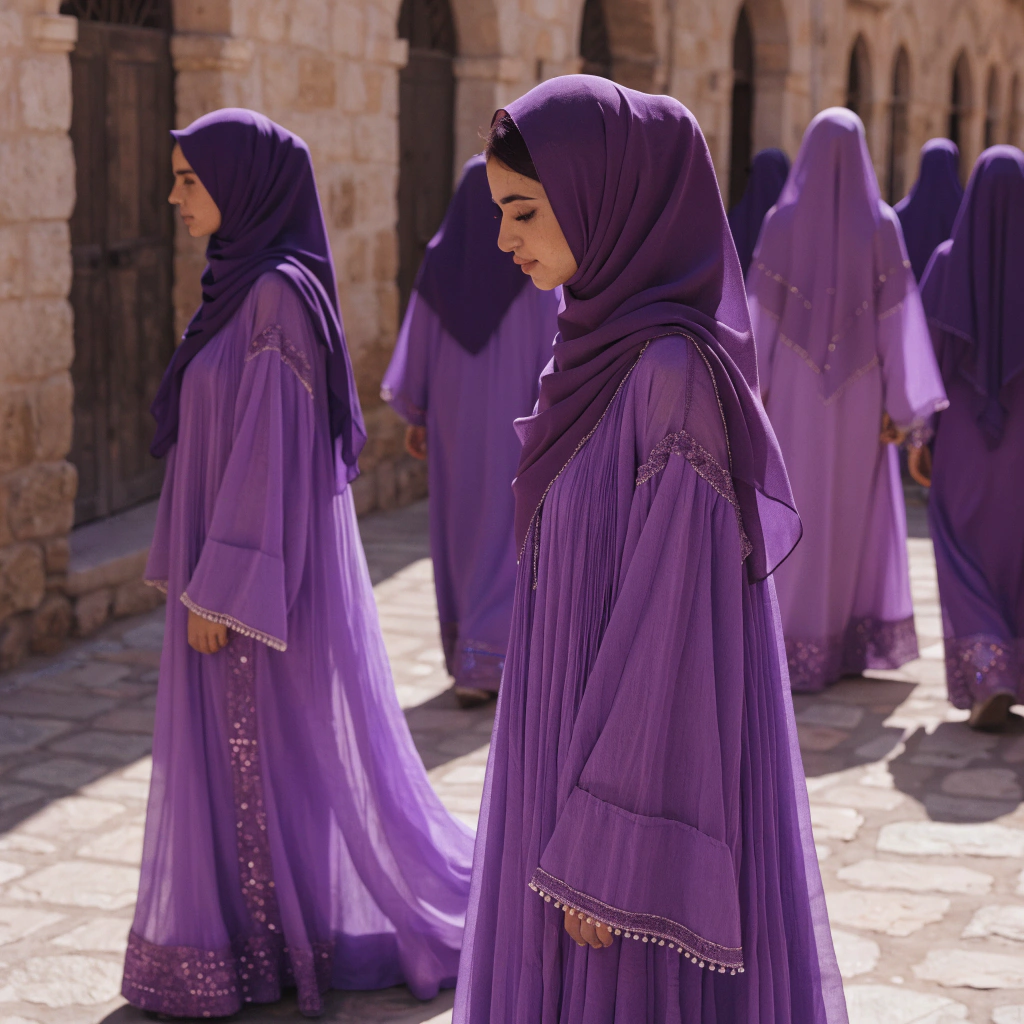
Traditional Clothes in Saudi Arabia
In Saudi Arabia, people wear traditional clothes. Men wear a white thobe. The thobe is a long dress with long sleeves. It is good for the hot sun. In the winter, the weather is cold. Men wear dark thobes. These thobes are blue, brown, or grey. They are made of warm wool.
Women wear a beautiful abaya. It is a long black robe. These clothes are very important. They show the history and culture of Saudi Arabia. People are proud of their clothes.
文法スポットライト
パターン: Present Simple of 'To Be'
"The thobe is a long dress."
We use 'is' for singular subjects to describe facts or states. It helps us explain what something looks like.
パターン: Adjective + Noun
"Men wear a white thobe."
In English, the color or descriptive word comes before the object. We say 'white thobe', not 'thobe white'.
理解度をチェック
10 問 · A1 初級 · 無料プレビュー 1回
この記事で学んだことをテストしよう。全問正解してXPを獲得!
What color thobe do men wear in the summer?
問題の内訳
What color thobe do men wear in the summer?
あなたの回答:
正解: White
Men wear wool thobes when the weather is cold.
あなたの回答:
正解: 正しい
What is an abaya?
あなたの回答:
正解: A long black robe
The thobe has long ____.
あなたの回答:
正解: sleeves
Traditional Clothes in Saudi Arabia
In Saudi Arabia, clothes are very important. They show a person’s culture and history. Most men wear a thobe. This is a long, white robe with long sleeves. It is very comfortable in the hot sun. In the summer, white is the best color because it reflects the light. However, in the winter, men wear darker thobes. These are often brown or blue and are made of heavy wool. Darker clothes are warmer than white clothes.
Women usually wear an abaya. This is a long, black cloak. It is very elegant and traditional. Many people believe that these clothes are a symbol of equality. Everyone looks similar, so it does not matter if you are rich or poor.
In the past, people wore these clothes for protection from the sand and sun. Today, Saudi people still wear them because they are proud of their heritage. Traditional dress is a beautiful part of life in Saudi Arabia.
文法スポットライト
パターン: Comparatives (Adjective + -er)
"Darker clothes are warmer than white clothes."
We use comparatives to compare two things. For short adjectives, add '-er' to the end and use 'than' before the second thing.
パターン: Past Simple (Irregular Verbs)
"In the past, people wore these clothes for protection."
The past simple is used for finished actions in the past. 'Wore' is the irregular past form of the verb 'wear'.
理解度をチェック
11 問 · A2 初級 · 無料プレビュー 1回
この記事で学んだことをテストしよう。全問正解してXPを獲得!
Why do men wear white thobes in the summer?
問題の内訳
Why do men wear white thobes in the summer?
あなたの回答:
正解: Because they reflect the light and stay cool
Men wear the same color thobe all year long.
あなたの回答:
正解: 間違い
What does 'elegant' mean?
あなたの回答:
正解: Graceful and stylish
In the summer, white is the _____ color because it reflects the light.
あなたの回答:
正解: best
What is a symbol of equality in Saudi clothing?
あなたの回答:
正解: The fact that everyone looks similar
サウジアラビアの伝統的な服:文化とアイデンティティ
サウジアラビアでは、服は人々の文化や宗教、社会的な地位を表す大切な手段です。特に、男性の「トーベ」と女性の「アバヤ」は、国のアイデンティティの一部として深く根付いています。これらの服は、ただ体を覆うだけでなく、サウジアラビアの長い歴史と伝統を伝えています。
男性が着るトーベは、足首まで届く長い袖の白いローブです。これは、暑い夏に太陽の光を反射し、涼しく過ごすために着られています。冬になると、男性はネイビーやチャコールグレーのような濃い色の、より厚いウールのトーベを選ぶことが多いです。トーベは実用的なだけでなく、社会的な平等さの象徴としても考えられています。誰もが同じような服を着ることで、地位に関わらず一体感が生まれると言われています。
一方、女性が着るアバヤは、体を覆うゆったりとした黒いローブが一般的です。アバヤは、謙虚さや品位、そして宗教的な伝統を守るための役割を果たしています。最近では、アバヤのデザインや色も多様になり、刺繍や装飾が施されたものも見られますが、基本的な形と目的は変わりません。女性たちは、アバヤを通じて自分たちの文化的なアイデンティティを表現しています。
このように、トーベとアバヤは、サウジアラビアの人々にとって単なる日常の服ではありません。それらは、国の文化、宗教、そして人々のアイデンティティを力強く示す、生きた伝統なのです。
文法スポットライト
パターン: ~と言われています
"誰もが同じような服を着ることで、地位に関わらず一体感が生まれると言われています。"
これは、一般的な意見や、誰かが言ったことを伝えるときに使います。直接聞いたわけではないけれど、広く知られていることや伝えられていることを表します。動詞の普通形や名詞・形容詞の普通形に「と言われています」をつけます。
パターン: ~ために
"これは、暑い夏に太陽の光を反射し、涼しく過ごすために着られています。"
ある行動の目的や理由を説明するときに使います。何をしたいか、何を目指しているかを明確にします。動詞の辞書形や名詞に「のために」をつけます。
理解度をチェック
11 問 · B1 中級 · 無料プレビュー 1回
この記事で学んだことをテストしよう。全問正解してXPを獲得!
サウジアラビアの服は何を表す大切な手段ですか?
問題の内訳
サウジアラビアの服は何を表す大切な手段ですか?
あなたの回答:
正解: すべて
トーベは男性が着る服で、冬にはいつも白い色が選ばれます。
あなたの回答:
正解: 間違い
「平等さ」とはどういう意味ですか?
あなたの回答:
正解: みんなが同じように扱われること
トーベは社会的な(___)の象徴と考えられています。
あなたの回答:
正解: 平等さ
アバヤの主な目的は何ですか?
あなたの回答:
正解: 謙虚さや伝統を守ること
Sartorial Heritage: The Cultural Significance of Traditional Saudi Dress
In Saudi Arabia, clothing transcends mere functionality, serving as a powerful visual language that articulates heritage, social status, and religious devotion. Despite the rapid modernization sweeping across the Kingdom, traditional garments like the thobe and abaya remain central to the national identity. These items are not merely relics of the past; rather, they represent a sophisticated blend of historical continuity and contemporary adaptation. For men, the thobe is the quintessential national dress. This ankle-length, long-sleeved robe is renowned for its crisp appearance and practical design. While white is the standard hue during the sweltering summer months to reflect the intense sunlight, men frequently transition to heavier wool thobes in darker shades—such as charcoal or navy—as temperatures drop in winter. Interestingly, the thobe acts as a democratic garment; by minimizing visible distinctions in wealth, it fosters a sense of equality among citizens. Similarly, the abaya has undergone a significant transformation over the last few decades. Traditionally a simple black cloak designed for modesty, it has evolved into a versatile fashion statement. Modern interpretations often incorporate intricate embroidery, varied fabrics, and a spectrum of colors, reflecting the individuality of the wearer. Although the style has diversified, the core principle of modesty remains intact, illustrating how cultural values can be maintained even as aesthetic preferences shift. Furthermore, the persistence of these garments highlights a deliberate choice to preserve cultural autonomy in a globalized world. While Western-style clothing is common in professional or casual settings, the return to traditional attire for formal occasions signifies a deep-seated respect for ancestral roots. Consequently, the thobe and abaya function as bridges between the Kingdom's storied history and its ambitious future. In conclusion, traditional Saudi dress is much more than a sartorial choice. It is a complex symbol of belonging and a testament to the enduring nature of Saudi culture. By wearing these garments, individuals not only honor their ancestors but also project a confident identity to the world, proving that tradition and progress can coexist harmoniously.
文法スポットライト
パターン: Present Perfect Simple
"Similarly, the abaya has undergone a significant transformation over the last few decades."
The present perfect is used here to describe a change that started in the past and has continuing relevance or results in the present. It is formed with 'has/have' plus the past participle.
パターン: Concessive Clauses (Although)
"Although the style has diversified, the core principle of modesty remains intact."
Concessive clauses are used to contrast two ideas where one makes the other seem surprising. 'Although' introduces a subordinate clause that contrasts with the main clause.
パターン: Passive Voice (Present Simple)
"This ankle-length, long-sleeved robe is renowned for its crisp appearance."
The passive voice is used when the focus is on the object receiving the action or its state rather than the person performing the action. It is formed with 'be' + past participle.
理解度をチェック
11 問 · B2 中上級 · 無料プレビュー 1回
この記事で学んだことをテストしよう。全問正解してXPを獲得!
According to the article, why do men change the color of their thobes in winter?
問題の内訳
According to the article, why do men change the color of their thobes in winter?
あなたの回答:
正解: Because darker colors are more practical for the climate
The thobe is described as a 'democratic garment' because it highlights the wealth of the wearer.
あなたの回答:
正解: 間違い
What does 'intricate' mean in the context of the abaya?
あなたの回答:
正解: Very detailed and complicated
The article suggests that the abaya has become a _____ fashion statement in modern times.
あなたの回答:
正解: versatile
What is the main purpose of the article?
あなたの回答:
正解: To analyze how traditional dress reflects Saudi cultural identity
Sartorial Sovereignty: Decoding the Cultural Semiotics of Saudi Dress
Seldom does a garment encapsulate the ethos of a nation as profoundly as the thobe and abaya do for the Kingdom of Saudi Arabia. Far from being mere utilitarian coverings, these traditional attires function as a sophisticated visual language, articulating a complex narrative of religious veneration, historical continuity, and social cohesion. In the contemporary Saudi landscape, the persistence of these garments amidst the relentless tide of globalization serves as a compelling manifestation of cultural resilience. This adherence to tradition is not a rejection of the future, but rather a deliberate anchoring of identity within a rapidly shifting geopolitical context.
For the Saudi man, the thobe—a crisp, ankle-length robe with long sleeves—represents a striking exercise in egalitarianism. While the garment’s silhouette remains largely uniform across social strata, it is the subtle variations in fabric quality, collar stiffness, and bespoke tailoring that denote the wearer’s attention to detail and status. During the blistering summer months, the omnipresence of white thobes reflects not only the pragmatic need to deflect the sun's intensity but also a collective aesthetic of purity. Conversely, the arrival of winter prompts a transition to heavier wools in somber hues such as navy, charcoal, or chocolate brown. This seasonal shift illustrates how traditional dress adapts to environmental exigencies without sacrificing its core identity.
Parallel to the thobe is the abaya, which has undergone a remarkable transformation in recent decades. Traditionally a simple black cloak designed to ensure modesty and religious compliance, the modern abaya has become a canvas for individual expression and high fashion. It is through the nuanced evolution of the abaya that one can witness the intersection of conservative values and avant-garde design. Today, one might observe a juxtaposition of intricate embroidery, diverse textiles, and contemporary cuts with the garment’s traditional purpose. This evolution does not signal a departure from heritage; rather, it represents the dynamic nature of Saudi identity, where the preservation of modesty coexists with the desire for aesthetic distinction.
The headwear, comprising the ghutra or shemagh held in place by the agal, further complicates this sartorial semiotics. The meticulous arrangement of these elements can signal regional affiliations, social standing, or even personal moods. Such intricacies underscore the fact that Saudi dress is a lived experience, deeply embedded in the social fabric. The preservation of these customs in professional and formal spheres highlights a refusal to equate modernization with Westernization. In the boardrooms of Riyadh, the thobe remains the standard of professional excellence, asserting that progress need not come at the cost of cultural heritage.
Ultimately, the thobe and abaya are more than just fabric; they are symbols of a nation navigating the complexities of the 21st century. The continued relevance of these garments suggests that for Saudis, identity is not something to be discarded in the pursuit of progress. Instead, it is a foundation upon which modernity is built. As the Kingdom continues its rapid socioeconomic transformation, the thobe and abaya remain steadfast, serving as visual anchors in a sea of global change.
文法スポットライト
パターン: Inversion with Negative Adverbials
"Seldom does a garment encapsulate the ethos of a nation as profoundly as the thobe and abaya do for the Kingdom of Saudi Arabia."
When a sentence starts with a negative or restrictive adverb like 'seldom', 'never', or 'rarely', the subject and auxiliary verb are inverted. This is used in formal writing to add emphasis or a sense of gravity to the statement.
パターン: Cleft Sentences
"It is through the nuanced evolution of the abaya that one can witness the intersection of conservative values and avant-garde design."
Cleft sentences use the structure 'It is/was + [focus] + that/who...' to highlight a specific piece of information. Here, it emphasizes the 'nuanced evolution' as the primary means of understanding the cultural shift.
パターン: Nominalisation
"The preservation of these customs in professional and formal spheres highlights a refusal to equate modernization with Westernization."
Nominalisation involves turning verbs (preserve, refuse) or adjectives into nouns (preservation, refusal). This makes the text sound more academic and abstract, focusing on concepts rather than actions.
理解度をチェック
12 問 · C1 上級 · 無料プレビュー 1回
この記事で学んだことをテストしよう。全問正解してXPを獲得!
According to the article, what does the thobe primarily represent for Saudi men?
問題の内訳
According to the article, what does the thobe primarily represent for Saudi men?
あなたの回答:
正解: A striking exercise in egalitarianism
The article suggests that the evolution of the abaya indicates a move away from traditional Saudi heritage.
あなたの回答:
正解: 間違い
What does 'exigencies' mean in the context of the text?
あなたの回答:
正解: Urgent needs or demands of a situation
The thobe and abaya serve as visual _____ in a sea of global change.
あなたの回答:
正解: anchors
What is the function of the white thobe during the summer months?
あなたの回答:
正解: To pragmatically deflect the sun's intensity
Headwear like the ghutra can communicate information about a person's mood or regional background.
あなたの回答:
正解: 正しい
Sartorial Semiotics: The Thobe and Abaya as Cultural Anchors in a Globalized Saudi Arabia
In the contemporary landscape of the Arabian Peninsula, dress serves not merely as a utilitarian shield against the elements but as a profound semiotic system through which identity, piety, and social cohesion are articulated. To the uninitiated observer, the thobe and abaya might appear as monolithic relics of a bygone era; however, a more nuanced analysis reveals them to be dynamic instruments of cultural expression. The thobe, a crisp, ankle-length robe primarily worn by men, functions as a visual equalizer, bridging the chasm between disparate socio-economic strata. Yet, were one to scrutinize the garment more closely, one would discern a sophisticated language of tailoring—the stiffness of the collar, the precision of the cuff, and the weight of the textile—all of which signal a refined sense of social decorum. During the blistering summer months, the preference for white cotton is a testament to functional pragmatism, reflecting the sun’s unyielding rays. Conversely, as the temperature wanes, men transition to heavier wool thobes in somber hues like navy or charcoal, a shift that is as much about aesthetic gravitas as it is about thermal regulation.
Lest one should perceive the abaya as a mere instrument of concealment, it is essential to recognize its recent metamorphosis into a high-fashion canvas. Traditionally a simple black cloak, the modern abaya has undergone a radical re-imagining, reflecting the complex negotiation between religious modesty and individual agency. Contemporary iterations often feature intricate embroidery, diverse silhouettes, and avant-garde fabrics, allowing Saudi women to navigate the globalized fashion sphere without compromising their cultural heritage. It might be posited that these vestimentary choices represent a form of resistance against the homogenizing forces of Westernization. By adhering to traditional silhouettes while integrating modern elements, Saudi society maintains a sense of historical continuity. There exists a discernible, if not entirely quantifiable, tension between the ephemeral nature of global trends and the enduring permanence of the national dress.
Furthermore, the ghutra and shemagh—the traditional head coverings—complement the thobe to form a complete visual narrative. The meticulousness with which these are folded and secured is indicative of a man’s attention to detail and his respect for communal norms. It is imperative that we view these garments not as static artifacts but as living embodiments of 'Saudi-ness.' Were it not for the resilience of these sartorial traditions, the cultural landscape of the Kingdom might have been subsumed by the bland uniformity of global consumerism. Instead, the thobe and abaya stand as bastions of identity, ensuring that even as Saudi Arabia undergoes rapid socio-economic transformation, its people remain tethered to their ancestral roots. This synthesis of the old and the new suggests that tradition is not an impediment to progress, but rather the foundation upon which modernity is constructed. Ultimately, the persistence of the thobe and abaya underscores a profound truth: that dress is the most intimate of cultural boundaries, defining who we are and, perhaps more importantly, who we choose to remain in a world that is constantly in flux.
文法スポットライト
パターン: Inverted Conditional (Second/Third Mixed Style)
"Were one to scrutinize the garment more closely, one would discern a sophisticated language of tailoring."
This formal construction replaces 'If one were to...' with 'Were one to...'. It is used in academic or high-level literary English to express a hypothetical situation with greater elegance and emphasis.
パターン: Negative Subjunctive Clause
"Lest one should perceive the abaya as a mere instrument of concealment, it is essential to recognize its recent metamorphosis."
The word 'lest' introduces a clause expressing fear or a desire to avoid a specific outcome. It is followed by the subjunctive (should + base form or simply the base form) and is characteristic of C2 level scholarly prose.
パターン: Hedged Assertions (Modal + Passive)
"It might be posited that these vestimentary choices represent a form of resistance."
This is a common academic hedging device. Instead of making a direct claim, the author uses 'It might be posited' to introduce a theoretical argument tentatively, inviting intellectual discussion rather than stating an absolute fact.
理解度をチェック
12 問 · C2 マスター · 無料プレビュー 1回
この記事で学んだことをテストしよう。全問正解してXPを獲得!
According to the text, how does the thobe function in terms of social class?
問題の内訳
According to the text, how does the thobe function in terms of social class?
あなたの回答:
正解: It acts as a visual equalizer that bridges different social levels.
The transition to darker thobes in winter is described as being solely for the purpose of keeping warm.
あなたの回答:
正解: 間違い
Which word is synonymous with 'lasting for a very short time' in the context of global trends?
あなたの回答:
正解: Ephemeral
The author argues that the abaya has undergone a _____, evolving from a simple cloak into a fashion canvas.
あなたの回答:
正解: metamorphosis
What does the author suggest would happen if traditional sartorial choices were abandoned?
あなたの回答:
正解: Saudi identity would be absorbed by a generic global culture.
The text suggests that modern abayas can incorporate global fashion trends without losing their cultural roots.
あなたの回答:
正解: 正しい

