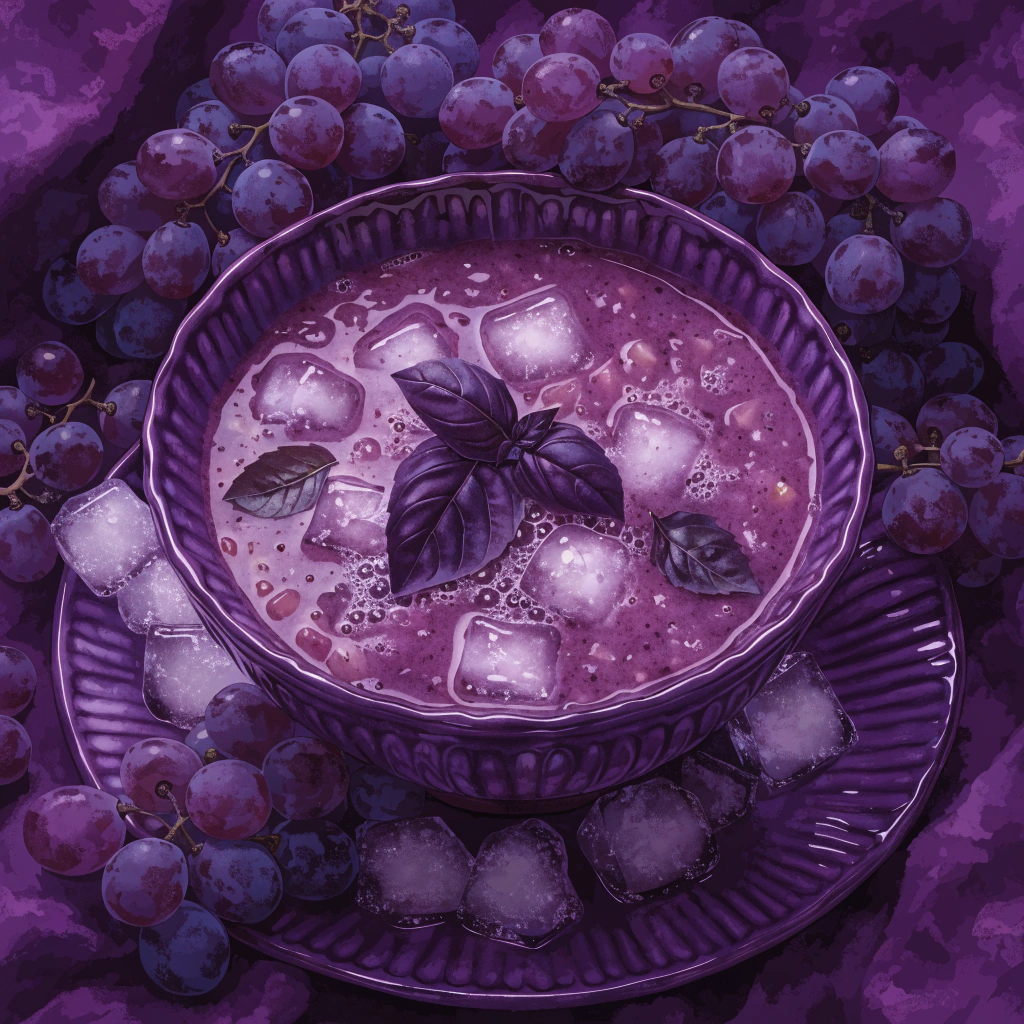
A Cold Soup from Spain
Gazpacho is a cold soup from Spain. It is very popular in the summer. The soup is red and healthy. It has many fresh vegetables. People use tomatoes, cucumbers, and peppers. They also use olive oil, garlic, and bread.
Spanish workers eat this soup in the sun. It is very cold and delicious. You do not cook this soup. You mix the vegetables in a machine. Then, you put the soup in the fridge. Now, it is ready to eat. Gazpacho is the perfect food for a hot day!
文法スポットライト
パターン: Present Simple (be)
"Gazpacho is a cold soup from Spain."
We use 'is' with singular subjects to describe facts or states. It connects the subject to a noun or adjective.
パターン: Negative Present Simple
"You do not cook this soup."
To make a negative sentence with most verbs, use 'do not' or 'does not' before the base verb. This shows an action that does not happen.
理解度をチェック
10 問 · A1 初級 · 無料プレビュー 1回
この記事で学んだことをテストしよう。全問正解してXPを獲得!
Where is Gazpacho from?
問題の内訳
Where is Gazpacho from?
あなたの回答:
正解: Spain
You need to cook Gazpacho on a stove.
あなたの回答:
正解: 間違い
What does 'delicious' mean?
あなたの回答:
正解: Tasting very good
You put the soup in the ______ to make it cold.
あなたの回答:
正解: fridge
A Cold Taste of Spain: Gazpacho Andaluz
In the south of Spain, the summer is very hot. People need something cold to eat and drink. Gazpacho Andaluz is a famous cold soup from this region. It is like a liquid salad and it is full of fresh vegetables.
The history of this soup is very old. Long ago, the recipe was different because there were no tomatoes in Europe. Workers in the fields made it with bread, water, garlic, olive oil, and vinegar. This simple meal helped them stay strong and healthy in the sun.
Later, people added tomatoes and peppers. Today, Gazpacho is more popular than many other Spanish dishes. It is better to serve it very cold in a glass or a bowl. Many people think it is the best food for a sunny day because it is healthy and delicious. If you visit Andalusia, you must try this traditional soup. It is a true taste of the Mediterranean.
文法スポットライト
パターン: Comparatives (More ... than)
"Today, Gazpacho is more popular than many other Spanish dishes."
Use 'more' before long adjectives and 'than' after them to compare two different things. This shows which one has a higher quality.
パターン: Past Simple of 'To Be'
"Long ago, the recipe was different because there were no tomatoes in Europe."
Use 'was' for singular subjects and 'were' for plural subjects to talk about states or facts in the past.
理解度をチェック
11 問 · A2 初級 · 無料プレビュー 1回
この記事で学んだことをテストしよう。全問正解してXPを獲得!
Where is Gazpacho Andaluz from?
問題の内訳
Where is Gazpacho Andaluz from?
あなたの回答:
正解: The south of Spain
Gazpacho is a hot soup eaten in winter.
あなたの回答:
正解: 間違い
What does 'recipe' mean?
あなたの回答:
正解: Instructions for cooking a dish
Gazpacho is a famous _____ soup.
あなたの回答:
正解: cold
Why did workers eat the original soup?
あなたの回答:
正解: To stay strong and healthy in the sun
Gazpacho: The Refreshing Taste of Southern Spain
When the summer sun shines brightly over southern Spain, there is nothing more refreshing than a cold bowl of Gazpacho Andaluz. This famous dish, which is often called a 'liquid salad,' has been enjoyed by locals for centuries. It is a perfect way to stay cool during the hot months in Andalusia.
The history of this soup is quite interesting. The original version was actually invented by the Moors many years ago. Before tomatoes were brought to Europe from the Americas, the soup was made with bread, water, garlic, olive oil, and vinegar. This simple mixture provided essential energy to people who worked in the fields all day. Over time, fresh vegetables like tomatoes, cucumbers, and peppers were added to the recipe to create the vibrant red soup we know today.
In modern Spain, Gazpacho has become a symbol of Mediterranean healthy eating. It is usually prepared by blending raw vegetables until the texture is smooth. No cooking is required, which helps to keep all the vitamins inside. Many people believe that this soup is the best way to get your daily vegetables in one serving.
Today, Gazpacho is served in most Spanish restaurants and is loved by tourists from all over the world. It has been described as a culinary masterpiece of simple cooking. Because it is so easy to prepare at home, many families keep a fresh jug of it in their refrigerators throughout the summer. Whether you drink it from a glass or eat it with a spoon, it remains a delicious part of Spanish culture that has stood the test of time.
文法スポットライト
パターン: Relative Clauses
"This famous dish, which is often called a 'liquid salad,' has been enjoyed by locals for centuries."
Non-defining relative clauses give extra information about a noun. They are separated by commas and use words like 'which' for objects or 'who' for people.
パターン: Passive Voice
"The original version was actually invented by the Moors many years ago."
The passive voice is used when the action is more important than the person doing it. It is formed using 'be' + the past participle.
理解度をチェック
11 問 · B1 中級 · 無料プレビュー 1回
この記事で学んだことをテストしよう。全問正解してXPを獲得!
Where does Gazpacho Andaluz originate from?
問題の内訳
Where does Gazpacho Andaluz originate from?
あなたの回答:
正解: Andalusia, Spain
The original version of Gazpacho always contained tomatoes.
あなたの回答:
正解: 間違い
What does 'vibrant' mean in the context of the article?
あなたの回答:
正解: Bright and strong in color
The soup is usually prepared by _____ raw vegetables until the texture is smooth.
あなたの回答:
正解: blending
Why is Gazpacho considered a healthy meal?
あなたの回答:
正解: It keeps all its vitamins because it is not cooked
The Liquid Gold of Andalusia: A Culinary Evolution
In the sweltering heat of a southern Spanish summer, there is perhaps no greater relief than a chilled glass of Gazpacho Andaluz. This iconic dish, which is often described as a 'liquid salad,' captures the vibrant essence of the Mediterranean garden in a single bowl. While it is now a ubiquitous symbol of Spanish cuisine, its roots are ancient, pre-dating the arrival of the tomato in Europe. Consequently, the dish we recognize today is the result of centuries of culinary evolution.
The original version of this refreshing soup was a Moorish invention. It consisted primarily of bread, water, garlic, olive oil, and vinegar. These ingredients were pounded together in a mortar to create a thick, creamy emulsion. For field workers in the arid plains of Andalusia, this mixture provided essential hydration and electrolytes, allowing them to endure long hours of labor under the punishing sun. It was a practical solution to a biological need, yet it laid the foundation for a sophisticated gastronomic tradition.
The transformation into the vibrant red soup known globally occurred after the 15th century. Following the discovery of the New World, explorers brought tomatoes and peppers back to the Iberian Peninsula. Initially viewed with suspicion, these ingredients were eventually integrated into the local diet. Had the tomato not been introduced to Europe, Gazpacho would have remained a pale, white soup, similar to 'Ajo Blanco,' which is still enjoyed in some regions today. This integration reflects the dynamic nature of food culture, where foreign influences are absorbed to create something entirely new and quintessential.
From a nutritional perspective, Gazpacho is highly regarded by health experts. It is essentially a raw vegetable concentrate, rich in vitamins A, C, and E, as well as minerals. Because the vegetables are not cooked, they retain their full antioxidant properties. Furthermore, the inclusion of olive oil ensures that fat-soluble vitamins are easily absorbed by the body. This combination makes it an ideal meal for maintaining energy levels during the hottest months of the year.
In modern times, Gazpacho has transcended its humble origins as a peasant’s meal. It is now served in high-end restaurants across the globe, often with sophisticated garnishes like diced Serrano ham or hard-boiled eggs. Nevertheless, its heart remains in the rural kitchens of Andalusia. Whether it is sipped from a glass or eaten from a bowl, Gazpacho represents the perfect harmony between history, geography, and nutrition. It is not merely a soup; it is a testament to the ingenuity of the human spirit in adapting to its environment.
文法スポットライト
パターン: Third Conditional
"Had the tomato not been introduced to Europe, Gazpacho would have remained a pale, white soup."
This structure is used to talk about an imaginary situation in the past. It uses 'Had' + subject + past participle in the condition clause, and 'would have' + past participle in the result clause.
パターン: Passive Voice with 'Integrated'
"Initially viewed with suspicion, these ingredients were eventually integrated into the local diet."
The passive voice is used here to focus on the ingredients (the object) rather than who integrated them. It is formed with a form of 'to be' and the past participle.
パターン: Non-defining Relative Clauses
"This iconic dish, which is often described as a 'liquid salad,' captures the vibrant essence..."
This clause provides extra, non-essential information about the noun. It must be separated by commas and uses 'which' for things.
理解度をチェック
11 問 · B2 中上級 · 無料プレビュー 1回
この記事で学んだことをテストしよう。全問正解してXPを獲得!
What was the primary purpose of the original Moorish version of Gazpacho?
問題の内訳
What was the primary purpose of the original Moorish version of Gazpacho?
あなたの回答:
正解: To provide hydration for field workers
Tomatoes were always a part of the traditional Andalusian Gazpacho recipe.
あなたの回答:
正解: 間違い
What does the word 'ubiquitous' mean in the context of the article?
あなたの回答:
正解: Found everywhere
The dish we recognize today is the result of centuries of culinary _____.
あなたの回答:
正解: evolution
Why is Gazpacho considered highly nutritional by health experts?
あなたの回答:
正解: Because raw vegetables retain their antioxidant properties
アンダルシアの魂、ガスパチョ:冷製スープに込められた歴史と文化
南スペインの酷暑を乗り切る上で、これほどまでに心身を癒してくれるものがあるでしょうか。アンダルシア地方の夏の象徴とも言える冷製スープ、ガスパチョ。その起源は古く、トマトがヨーロッパにもたらされる以前にまで遡ると言われています。元来、 Moorish の影響を受けたこの料理は、パン、水、ニンニク、オリーブオイル、そして酢といったシンプルな材料から成り立っており、アンダルシアの畑で働く人々にとって、水分補給と塩分摂取の重要な手段であったとされます。灼熱の太陽の下で長時間労働を強いられる彼らにとって、この「液体サラダ」は、まさに生きるための知恵であり、体を内側から潤す命の泉に他なりませんでした。
しかし、新大陸からのトマトやピーマンの到来は、ガスパチョの歴史に大きな転換点をもたらします。それ以前の素朴な姿から、現代我々が知る鮮やかな赤色と複雑な風味を持つスープへと進化を遂げたのです。トマトの持つ酸味と甘み、ピーマンの清涼感、キュウリの爽やかさ、そしてニンニクと玉ねぎの香りが、オリーブオイルと酢によって見事に調和し、その精髄をなしています。これらの新鮮な野菜が織りなすハーモニーこそが、ガスパチョの醍醐味と言えるでしょう。
現代のガスパチョ作りにおいて最も重要視されるのは、何と言っても素材の質の高さです。完熟したトマトを用いることは言うまでもなく、地元の太陽をたっぷりと浴びた野菜を選ぶことが、その風味を最大限に引き出す鍵となります。ブレンダーで滑らかになるまで攪拌された後、十分に冷やすこと。この冷却のプロセスもまた、ガスパチョがその真価を発揮するための不可欠な要素です。冷たさによって、野菜の持つ甘みと酸味が際立ち、口に含んだ瞬間の清涼感が一層増すのです。
ガスパチョは単なる料理に留まらず、アンダルシアの文化そのものを象徴する存在でもあります。家庭ごとに異なるレシピが存在し、それぞれの「おふくろの味」として脈々と受け継がれてきました。また、地域によってはサルモレホ(Salmorejo)のように、より濃厚でパンを多めに使うバリエーションも存在します。これらは、厳しい自然環境と共存しながら、いかにして食を通じて生活の喜びと活力を生み出してきたかという、アンダルシアの人々の知恵と工夫の結晶に他なりません。
この冷製スープが持つ普遍的な魅力は、そのシンプルさの中にある奥深さにあります。選び抜かれた素材が持つ本来の味を最大限に活かし、それを冷やすというごく簡単な工程を経て、五感を刺激する逸品へと昇華させる。これこそが、長い歴史の中で育まれ、現代に確立されたガスパチョの哲学と言えるでしょう。アンダルシアの太陽と大地、そして人々の温かさが凝縮された一杯は、飲む者の心と体を満たし、その土地の豊かな物語を静かに語りかけてくるかのようです。ガスパチョを味わうことは、アンダルシアの歴史と文化の精髄に触れること、そのものなのです。
文法スポットライト
パターン: 〜に他ならない
"この「液体サラダ」は、まさに生きるための知恵であり、体を内側から潤す命の泉に他なりませんでした。"
「〜に他ならない」は、「〜であると断定できる」「〜以外のものではない」という意味を表します。話し手の強い断定や強調の気持ちを伝える際に用いられる、C1レベルの表現です。通常、名詞や名詞句の後に続きます。
パターン: 〜ことは言うまでもない
"完熟したトマトを用いることは言うまでもなく、地元の太陽をたっぷりと浴びた野菜を選ぶことが、その風味を最大限に引き出す鍵となります。"
「〜ことは言うまでもない」は、「〜は当然のことだ」「改めて言う必要もないほど明白だ」という意味を表します。ある事実や状況が自明であることを強調する際に使われます。文全体を名詞化し、「〜こと」に接続します。
パターン: 〜に至る
"その起源は古く、トマトがヨーロッパにもたらされる以前にまで遡ると言われています。"
「〜に至る」は、「ある状態や結果に達する」「最終的にそうなった」という意味を示します。特に、時間の経過や変化の過程を経てある段階に到達したことを表す際に使われます。動詞の辞書形や名詞に「〜に至る」の形で接続します。
理解度をチェック
12 問 · C1 上級 · 無料プレビュー 1回
この記事で学んだことをテストしよう。全問正解してXPを獲得!
ガスパチョの起源について、記事中で述べられている最も古い材料は何ですか?
問題の内訳
ガスパチョの起源について、記事中で述べられている最も古い材料は何ですか?
あなたの回答:
正解: パン
ガスパチョは、新大陸からトマトがもたらされた後に初めて作られた料理である。
あなたの回答:
正解: 間違い
「脈々と」の意味として最も適切なものはどれですか?
あなたの回答:
正解: 途切れることなく続く様子
現代のガスパチョ作りにおいて最も重要視されるのは、何と言っても素材の質の_____です。
あなたの回答:
正解: 高さ
記事によると、ガスパチョがその真価を発揮するために不可欠な要素は何ですか?
あなたの回答:
正解: 十分に冷やすこと
サルモレホは、ガスパチョとは全く異なる材料で作られる別の料理である。
あなたの回答:
正解: 間違い
The Alchemical Transmutation of the Andalusian Terroir: A Gastronomic Inquiry into Gazpacho
In the sweltering, uncompromising heat of the Andalusian summer, where the sun’s radiance assumes a near-palpable weight, there exists a culinary phenomenon that transcends mere sustenance. Gazpacho Andaluz, often reductionistically described as a cold soup, represents a complex intersection of history, chemistry, and socio-economic adaptation. To understand its essence, one must look beyond the contemporary crimson bowl and delve into the ontological evolution of a dish that pre-dates the very ingredients now deemed essential to its identity. Seldom has a dish so succinctly encapsulated the socio-economic exigencies of its origin while simultaneously achieving such global ubiquity.
Historically, the precursor to the modern gazpacho was a Moorish invention, a pragmatic emulsion of bread, water, garlic, olive oil, and vinegar. This primitive iteration served a purpose that was arguably more pharmacological than purely culinary; it was a vital vector for hydration and electrolytes, sustaining field laborers amidst the arduous harvests of southern Spain. The bread, often stale, acted as a thickening agent, providing the requisite caloric density, while the vinegar and garlic served as antimicrobial preservatives. It is a testament to the ingenuity of the rural proletariat that such a utilitarian concoction could evolve into a refined gastronomic staple. Were it not for the Columbian Exchange—the epochal transfer of flora between the New World and the Old—the vibrant tomato, now the quintessential component of the dish, would be conspicuously absent, rendering the modern gazpacho an anachronistic impossibility.
From a technical perspective, the preparation of an authentic Gazpacho Andaluz requires a meticulous balance of lipid emulsification and aqueous suspension. The viscosity of the soup is not merely a matter of blending but of achieving a stable harmony between the robust pungency of the garlic and the delicate acidity of the Sherry vinegar. Modern culinary theorists might argue that the dish’s success lies in its adherence to the principles of the Mediterranean diet, yet this academic hedging overlooks the sensory immediacy of the experience. The texture must be velvety, devoid of the granular remnants of vegetable fiber, achieved through rigorous straining—a process that elevates the liquid salad to a state of sophisticated potage.
Furthermore, the epistemological status of gazpacho as a cultural artifact cannot be overstated. It is a liquid map of Andalusia’s history, reflecting the successive waves of Roman, Visigothic, and Moorish influence. Each ingredient serves as a historical marker: the olive oil of the Romans, the bread and garlic of the Moors, and the post-16th-century addition of the tomato and bell pepper. One might posit that to consume gazpacho is to ingest the very history of the Iberian Peninsula. Lest one should dismiss the dish as a static relic, it is worth noting its continued evolution in the hands of avant-garde chefs who experiment with fruit infusions and deconstructed textures. Nevertheless, the traditional formula remains the benchmark of excellence. Ultimately, Gazpacho Andaluz is more than a seasonal refreshment; it is a profound synthesis of the Andalusian terroir, a testament to human resilience, and a masterclass in the transformative power of simple, high-quality ingredients.
文法スポットライト
パターン: Negative Inversion for Rhetorical Emphasis
"Seldom has a dish so succinctly encapsulated the socio-economic exigencies of its origin..."
This pattern places a negative or restrictive adverbial at the beginning of the sentence, followed by auxiliary-subject inversion. It is used in formal C2 prose to add dramatic weight and rhetorical flair.
パターン: Inverted Third Conditional (Subjunctive)
"Were it not for the Columbian Exchange... the vibrant tomato... would be conspicuously absent."
This structure replaces 'If it were not for' with 'Were it not for', using the subjunctive 'were' for hypothetical situations. It creates a highly formal, academic tone suitable for theoretical analysis.
パターン: Subjunctive with 'Lest'
"Lest one should dismiss the dish as a static relic, it is worth noting its continued evolution..."
The word 'lest' is followed by a clause in the subjunctive (often using 'should' or the base form of the verb). It expresses a purpose of prevention in a sophisticated, literary manner.
理解度をチェック
12 問 · C2 マスター · 無料プレビュー 1回
この記事で学んだことをテストしよう。全問正解してXPを獲得!
According to the text, what was the primary function of the Moorish precursor to gazpacho?
問題の内訳
According to the text, what was the primary function of the Moorish precursor to gazpacho?
あなたの回答:
正解: A practical method for hydration and caloric intake for laborers
The author argues that the tomato has always been a part of gazpacho's history since its inception.
あなたの回答:
正解: 間違い
What does 'viscosity' refer to in the context of the article?
あなたの回答:
正解: The thickness and consistency of the soup
The article describes gazpacho as a synthesis of the Andalusian _____, reflecting its natural environment.
あなたの回答:
正解: terroir
What chemical process is highlighted as essential for the texture of an authentic gazpacho?
あなたの回答:
正解: Emulsification
The author believes that modern avant-garde versions of gazpacho have rendered the traditional formula obsolete.
あなたの回答:
正解: 間違い

