









cymothoids 30秒で
- Cymothoids are parasitic crustaceans that live on fish, often found in their mouths or gills.
- They are famous for the 'tongue-eating' species that functionally replaces a fish's tongue.
- As isopods, they are related to woodlice but have adapted for a parasitic marine life.
- They are significant in marine biology and aquaculture due to their impact on host health.
The term cymothoids refers to a specialized group of marine and freshwater crustaceans belonging to the family Cymothoidae. These organisms are predominantly known for their lifestyle as obligate ectoparasites, meaning they must live on the exterior or within the cavities of a host—most commonly fish—to survive and complete their life cycles. Within the broader context of marine biology, cymothoids represent a fascinating yet unsettling example of evolutionary adaptation. They are isopods, related to the common woodlouse found in gardens, but they have traded a life of scavenging for one of parasitic precision. When people use this word, they are typically engaging in scientific discourse, ecological studies, or sharing 'strange-but-true' biological facts about the ocean's more macabre inhabitants.
- Biological Classification
- Cymothoids are members of the order Isopoda. They are distinguished by their bilateral symmetry, chitinous exoskeletons, and specialized appendages designed for gripping onto slippery fish scales or mucosal membranes. Their morphology is often flattened dorsoventrally, allowing them to remain streamlined against the host's body to minimize drag while the fish swims.
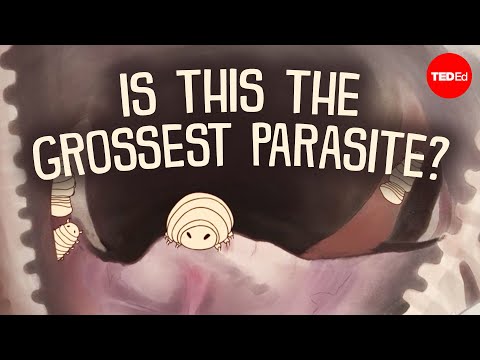
The most notorious aspect of cymothoids, and the reason they frequently appear in popular science media, is the behavior of certain species like Cymothoa exigua. This particular cymothoid enters a fish's gills, migrates to the mouth, and attaches itself to the base of the tongue. By severing the blood vessels, it causes the tongue to atrophy and fall off. The parasite then latches onto the remaining stub, effectively becoming a functional replacement for the fish's tongue. This is the only known instance of a parasite functionally replacing a host's organ. Because of this, the word 'cymothoids' often evokes a sense of 'body horror' in casual conversation, though in a scientific setting, it is used to describe a diverse family with over 40 genera and hundreds of species.
Researchers found that the presence of cymothoids in the gill cavities of the snapper population led to a significant decrease in the host's overall growth rate and reproductive success.
In ecological terms, cymothoids are indicators of environmental health and biodiversity. Their presence can signal a complex food web, as they require specific host species to thrive. However, in aquaculture, they are viewed as significant pests. An infestation of cymothoids in a fish farm can lead to massive economic losses, as the parasites cause physical damage, secondary infections, and chronic stress to the fish. Therefore, when marine biologists or commercial fishers talk about cymothoids, the tone is often one of concern or clinical observation. They might discuss the 'prevalence' or 'intensity' of cymothoid infestations, referring to how many fish are affected and how many parasites are found on each individual.
- Life Cycle
- The life cycle of cymothoids is protandrously hermaphroditic. They typically start their lives as free-swimming males (manca stage) searching for a host. Once they find a suitable fish, they attach and eventually transform into females. If a female is already present on the host, the new arrival may remain male to facilitate reproduction. This complex sexual strategy ensures that the parasite can reproduce even in the isolated environment of a single host fish.
Beyond the 'tongue-eating' variety, many cymothoids attach to the skin, fins, or inside the gill covers. These species use their sharp dactyli (claws) to pierce the host's tissue and feed on blood or mucus. This feeding behavior can lead to anemia in the host. In casual settings, you might hear someone refer to them as 'sea lice,' though this is technically incorrect as true sea lice are copepods, not isopods. Using the correct term, 'cymothoids,' demonstrates a higher level of biological literacy and precision.
The documentary highlighted how cymothoids have evolved to perfectly mimic the shape and function of the organs they replace, a pinnacle of parasitic evolution.
- Geographic Distribution
- Cymothoids are found globally, from tropical coral reefs to temperate coastal waters and even in some freshwater river systems. Their distribution is closely tied to the migration patterns of their specific host fish, making them a subject of interest for scientists studying ocean currents and fish movement.
In summary, 'cymothoids' is a term that bridges the gap between specialized marine biology and the public's fascination with the bizarre. Whether discussed in the context of evolutionary biology, aquaculture management, or ecological monitoring, the word carries weight as a descriptor of one of nature's most extreme parasitic relationships. Understanding cymothoids requires looking past the 'gross' factor to appreciate the complex biological mechanisms that allow these crustaceans to thrive in such a niche environment.
Using the word cymothoids correctly involves understanding its grammatical role as a plural noun and its specific scientific context. It is rarely used in singular form ('cymothoid') unless referring to an individual specimen. Because it is a technical term, it is most at home in academic writing, nature documentaries, and specialized hobbyist circles (like advanced reef-keeping). However, it can be used metaphorically in creative writing to describe something that is deeply parasitic or transformative in a negative way.
- Scientific Context
- In scientific papers, the word is often the subject of a sentence regarding parasitology. Example: 'The prevalence of cymothoids in the Gulf of Mexico has seen a 15% increase over the last decade, possibly due to rising sea temperatures.'
When describing the physical presence of these creatures, verbs like 'infest,' 'attach,' 'parasitize,' and 'colonize' are frequently used. You might say, 'The fish was heavily infested with cymothoids,' or 'Several cymothoids were observed clinging to the operculum of the host.' It is important to note that cymothoids are 'on' or 'in' the fish, depending on whether they are external or internal parasites.
During the necropsy, the biologist identified three distinct species of cymothoids residing within the buccal cavity of the large-mouth bass.
In a more descriptive or narrative sense, you can use 'cymothoids' to set a scene of biological horror or wonder. For instance: 'The diver peered into the mouth of the grouper, only to see the glint of two black eyes belonging to one of the many cymothoids that had made the fish its home.' Here, the word adds a layer of specific detail that 'parasite' or 'bug' would lack. It conveys a sense of expertise and provides a vivid image for the reader.
- Comparative Usage
- You can use the word to compare different types of parasites. 'Unlike leeches, which are annelids, cymothoids are crustaceans, possessing a hard shell and jointed limbs.'
In the context of aquaculture management, the word is used in a more utilitarian way. 'The treatment protocol was designed specifically to target cymothoids without harming the sensitive coral environment.' This shows the word's versatility in moving from pure science to applied industry. When writing about them, it is also common to mention their 'host specificity,' which refers to the particular types of fish they prefer to target.
The evolution of cymothoids suggests a long history of co-adaptation with teleost fishes, resulting in highly specialized attachment mechanisms.
- Metaphorical Use
- While rare, one might say: 'The corrupt officials acted like cymothoids, slowly replacing the very institutions they were meant to serve until the original purpose was entirely gone.'
Ultimately, the key to using 'cymothoids' effectively is to ensure the audience understands the biological nature of the subject. If writing for a general audience, it is often helpful to provide a brief definition or a descriptive phrase like 'tongue-eating parasites' immediately after the first mention. This ensures clarity while maintaining the precision of the technical term.
While cymothoids is not a word you will hear in every conversation at the grocery store, it has several specific 'natural habitats' in the world of language. If you are a student of marine biology, an avid viewer of nature documentaries, or someone who frequents certain corners of the internet, you are likely to encounter this term quite often. It occupies a unique space where scientific rigor meets public curiosity about the 'weird and wonderful' (or 'weird and terrifying') aspects of the natural world.
- Academic and Scientific Circles
- In universities and research institutions, 'cymothoids' is a standard part of the lexicon for those studying invertebrate zoology or parasitology. You will hear it in lectures, see it on exam papers, and read it in peer-reviewed journals like 'The Journal of Parasitology' or 'Marine Biology.' Here, the word is used with clinical detachment, focusing on morphology, phylogeny, and ecological impact.
Nature documentaries are perhaps the most common place for the general public to hear the word. Narrators like David Attenborough or those on the National Geographic channel often use the term when showcasing the bizarre adaptations of marine life. They might use 'cymothoids' to introduce a segment on the tongue-eating isopod, using the scientific name to add authority to the narrative before diving into the more sensational details of the parasite's life.
'And here, nestled within the fish's mouth, we find the cymothoids, nature's most daring hitchhikers,' the narrator explained as the camera zoomed in on the parasite.
The internet is another major hub for the word. On platforms like Reddit (specifically subreddits like r/NatureIsFuckngLit or r/MarineBiology), 'cymothoids' frequently pop up in posts featuring 'creepy' sea creatures. Because of their visually striking and somewhat disturbing appearance, photos of fish with cymothoids in their mouths often go viral. In these contexts, the word is often accompanied by a mix of fascination and revulsion. You'll see it in comments where users are identifying a strange creature found in a catch or explaining the biology to others.
- Aquaculture and Fishing
- Commercial fishers and fish farmers use the word when discussing the health of their stock. If a shipment of fish is rejected due to parasites, 'cymothoids' might be cited in the official report. Similarly, recreational anglers who catch a fish with a 'bug' in its mouth might use the term if they are knowledgeable about marine life, or they might ask a local wildlife officer about the 'cymothoids' they've been seeing lately.
Museums and aquariums also use the term in their educational displays. If you visit a marine exhibit, you might see a preserved specimen of a fish with a cymothoid attached, accompanied by an information plaque that explains the family Cymothoidae. In this setting, the word is used to educate the public about the diversity of life and the various ways organisms have evolved to survive.
The aquarium's new exhibit on 'Extreme Parasites' features a detailed model of how cymothoids interact with their hosts.
- Podcasts and Science Communication
- Science communicators on YouTube or in podcasts (like 'Ologies' or 'SciShow') often use cymothoids as a 'hook' to get people interested in invertebrate biology. They use the word to bridge the gap between 'gross-out' facts and genuine scientific inquiry, often discussing the evolutionary 'arms race' between the parasites and their hosts.
In summary, while 'cymothoids' is a specialized term, its reach is surprisingly wide. It appears wherever there is a need to describe these specific parasitic isopods, whether for the purpose of high-level research, environmental management, or simply to marvel at the stranger-than-fiction realities of the ocean's depths.
Because cymothoids is a technical biological term, it is prone to several common mistakes, ranging from simple misspellings to deeper conceptual misunderstandings. Whether you are a student writing a paper or a curious layperson discussing marine life, avoiding these pitfalls will help you communicate more accurately and professionally.
- Misidentification with Sea Lice
- The most frequent error is calling cymothoids 'sea lice.' While both are marine parasites that affect fish, they belong to entirely different groups. Sea lice are copepods (small, often microscopic crustaceans), whereas cymothoids are isopods (larger, more complex crustaceans). Using the terms interchangeably is scientifically inaccurate and can lead to confusion in ecological or veterinary contexts.
Another common mistake is the assumption that all cymothoids are 'tongue-eaters.' While the tongue-replacing behavior of Cymothoa exigua is the most famous, it is actually a niche behavior within the family. Many cymothoids attach to the skin, burrow into the flesh, or live in the gill chambers. Referring to every member of the family as a 'tongue-eating louse' is a generalization that ignores the vast diversity of the group.
Incorrect: 'The fish had a sea louse replacing its tongue.'
Correct: 'The fish had a cymothoid replacing its tongue.'
Spelling and pronunciation also present challenges. The word is often misspelled as 'cymothids,' 'cymothoids,' or 'cymothodes.' The correct spelling is 'cymothoids,' derived from the family name Cymothoidae. Pronunciation can also be tricky; it is 'sigh-MO-thoyds,' not 'kim-o-thoyds.' Mispronouncing the 'c' as a hard 'k' is a common error for those who have only read the word and never heard it spoken.
- Confusing Parasitism with Commensalism
- Some people mistakenly believe that because the tongue-eating cymothoid 'helps' the fish by acting as a tongue, the relationship is mutualistic or commensal. This is incorrect. The cymothoid is a parasite; it causes significant tissue damage, steals nutrients (blood), and places a metabolic burden on the host. The 'tongue replacement' is a survival strategy for the parasite, not a benefit for the fish.
In writing, a common grammatical mistake is treating 'cymothoids' as a collective singular noun. It is a plural noun. You should not say 'The cymothoids is a group of parasites,' but rather 'Cymothoids are a group of parasites.' If you want to refer to the group as a single entity, use 'the family Cymothoidae.'
Incorrect: 'This cymothoids is very large.'
Correct: 'This cymothoid is very large.' (Singular) or 'These cymothoids are very large.' (Plural)
- Misunderstanding the Host Range
- There is a common misconception that cymothoids only infect saltwater fish. While they are most prevalent in marine environments, there are several species of cymothoids that inhabit freshwater rivers and lakes, particularly in South America and Africa. Ignoring freshwater cymothoids is a common oversight in general discussions about the family.
Finally, avoid using 'cymothoids' as a catch-all for any 'gross' marine invertebrate. Precision is key in biology. If you are unsure if a parasite is a cymothoid, it is better to use a broader term like 'parasitic isopod' or simply 'crustacean parasite' until a positive identification can be made. This maintains the integrity of your communication and prevents the spread of misinformation.
While cymothoids is a very specific term, there are several related words and alternatives that can be used depending on the level of detail required or the specific context of the conversation. Understanding these alternatives helps in choosing the right word for the right audience, whether you are speaking to a group of scientists or a general audience.
- Parasitic Isopods
- This is the most accurate broad alternative. All cymothoids are parasitic isopods, but not all parasitic isopods are cymothoids (though the vast majority are). Using 'parasitic isopods' is helpful if you want to be slightly less technical while still remaining scientifically accurate. It describes both the nature of the creature (parasitic) and its biological group (isopod).
For a more general audience, 'fish parasites' is a common alternative. While this is a very broad category that includes everything from worms to bacteria, in a visual context—such as seeing a bug on a fish—it is a perfectly acceptable descriptive term. However, it lacks the specificity of 'cymothoids' and doesn't convey that the parasite is a crustacean.
'While the researcher noted the presence of various fish parasites, she focused her study specifically on the cymothoids found in the gills.'
In technical literature, you might see the term 'ectoparasitic crustaceans.' This is a high-level descriptor that places cymothoids in their functional and biological group. 'Ectoparasitic' means they live on the outside of the host, and 'crustaceans' identifies their subphylum. This term is often used when comparing cymothoids to other types of parasites, like endoparasitic helminths (worms that live inside the host).
- Tongue-eating Lice
- This is the common name for the most famous subset of cymothoids. While 'lice' is scientifically inaccurate (they are not insects), this is the term most likely to be recognized by the general public. It is highly evocative and descriptive of the behavior of species like Cymothoa exigua. Use this when you want to immediately grab someone's attention or explain the concept to a child.
Another related term is 'bopyrids.' Bopyrids are another family of parasitic isopods (Bopyridae) that typically infest the gill chambers of shrimp and crabs rather than fish. While they are cousins to cymothoids, they are distinct. Mentioning bopyrids can be a good way to show a deeper knowledge of crustacean parasitology and to contrast the different hosts they prefer.
'The study compared the attachment sites of cymothoids on teleost fish with those of bopyrids on decapod crustaceans.'
- Hematophagous Isopods
- This is a very technical term used to describe the feeding habits of cymothoids. 'Hematophagous' means 'blood-feeding.' This is a useful alternative when the focus of the discussion is on the physiological impact the parasite has on the host's blood chemistry or health.
In summary, while 'cymothoids' is the most precise term, you have a variety of options depending on your goal. Whether you need the evocative power of 'tongue-eating lice,' the broad accuracy of 'parasitic isopods,' or the technical depth of 'hematophagous crustaceans,' choosing the right alternative will make your communication more effective and tailored to your audience.
How Formal Is It?
豆知識
Despite being named after a beautiful sea nymph, cymothoids are anything but beautiful to most people. It's a classic example of early biologists using mythological names for newly discovered marine species, regardless of their appearance.
発音ガイド
- Pronouncing the 'c' as a 'k' (e.g., 'ky-mo-thoids').
- Missing the 'o' and saying 'cymothids'.
- Stressing the first syllable instead of the second.
- Pronouncing the 'th' as a hard 't'.
- Confusing the ending with '-odes' instead of '-oids'.
難易度
Requires knowledge of biological terminology and scientific context.
Spelling is difficult and requires precise usage in scientific contexts.
Pronunciation is non-intuitive but manageable once learned.
Can be confused with other 'oid' words if not heard clearly.
次に学ぶべきこと
前提知識
次に学ぶ
上級
知っておくべき文法
Pluralization of Greek-derived scientific terms
Cymothoid (singular) -> Cymothoids (plural).
Subject-Verb Agreement with collective nouns
The family Cymothoidae *is* diverse, but cymothoids *are* found everywhere.
Use of italics for scientific names
The species Cymothoa exigua is a well-known cymothoid.
Adjectival use of nouns
A cymothoid infestation (where 'cymothoid' modifies 'infestation').
Prepositional usage for parasites
Parasites *on* the skin vs. parasites *in* the mouth.
レベル別の例文
The cymothoids are small sea bugs.
Los cymothoids son pequeños bichos marinos.
Plural noun with 'are'.
A cymothoid lives on a fish.
Un cymothoid vive en un pez.
Singular noun with 'lives'.
I see cymothoids in the water.
Veo cymothoids en el agua.
Direct object of the verb 'see'.
Cymothoids have many legs.
Los cymothoids tienen muchas patas.
Simple present tense.
The fish has a cymothoid in its mouth.
El pez tiene un cymothoid en su boca.
Prepositional phrase 'in its mouth'.
Cymothoids are white or gray.
Los cymothoids son blancos o grises.
Adjectives describing the noun.
Do cymothoids swim?
¿Nadan los cymothoids?
Question form with 'do'.
Cymothoids are not for people.
Los cymothoids no son para las personas.
Negative statement.
Cymothoids are parasites that eat fish blood.
Los cymothoids son parásitos que comen sangre de pez.
Relative clause 'that eat fish blood'.
Some cymothoids replace the fish's tongue.
Algunos cymothoids reemplazan la lengua del pez.
Verb 'replace' showing action.
You can find cymothoids in the ocean.
Puedes encontrar cymothoids en el océano.
Modal verb 'can' for possibility.
The cymothoid holds onto the fish tightly.
El cymothoid se agarra al pez fuertemente.
Adverb 'tightly' modifying 'holds'.
Are cymothoids related to garden bugs?
¿Están los cymothoids relacionados con los bichos del jardín?
Passive question form.
Cymothoids grow inside the fish's gills.
Los cymothoids crecen dentro de las agallas del pez.
Preposition 'inside'.
Many fish have cymothoids on their skin.
Muchos peces tienen cymothoids en su piel.
Plural possessive 'their'.
Scientists study how cymothoids live.
Los científicos estudian cómo viven los cymothoids.
Noun clause 'how cymothoids live'.
Cymothoids are a type of isopod that lives in the sea.
Los cymothoids son un tipo de isópodo que vive en el mar.
Defining relative clause.
If a fish has cymothoids, it might grow more slowly.
Si un pez tiene cymothoids, podría crecer más lentamente.
First conditional sentence.
The documentary explained how cymothoids attach to their hosts.
El documental explicó cómo los cymothoids se unen a sus anfitriones.
Reported speech structure.
Cymothoids are often called 'tongue-eating lice' by the public.
El público a menudo llama a los cymothoids 'piojos comedores de lengua'.
Passive voice with 'are called'.
Fishermen sometimes find cymothoids in their catch.
Los pescadores a veces encuentran cymothoids en su captura.
Adverb of frequency 'sometimes'.
It is interesting to learn about the life cycle of cymothoids.
Es interesante aprender sobre el ciclo de vida de los cymothoids.
Infinitive phrase as the subject.
Cymothoids use their sharp claws to stay on the fish.
Los cymothoids usan sus garras afiladas para quedarse en el pez.
Infinitive of purpose 'to stay'.
Most cymothoids do not kill the fish they live on.
La mayoría de los cymothoids no matan al pez en el que viven.
Relative clause with omitted 'that'.
Cymothoids exhibit a parasitic lifestyle that can harm commercial fisheries.
Los cymothoids exhiben un estilo de vida parásito que puede dañar las pesquerías comerciales.
Complex sentence with a relative clause.
The prevalence of cymothoids in this region has increased recently.
La prevalencia de cymothoids en esta región ha aumentado recientemente.
Present perfect tense.
Cymothoids are protandrous hermaphrodites, meaning they change sex.
Los cymothoids son hermafroditas protándricos, lo que significa que cambian de sexo.
Appositive phrase explaining a technical term.
Researchers are investigating the impact of cymothoids on host health.
Los investigadores están investigando el impacto de los cymothoids en la salud del anfitrión.
Present continuous tense.
Cymothoids are highly specialized for attaching to specific fish species.
Los cymothoids están altamente especializados para unirse a especies de peces específicas.
Adverb-adjective combination 'highly specialized'.
The fish's growth was stunted due to a heavy infestation of cymothoids.
El crecimiento del pez se vio atrofiado debido a una fuerte infestación de cymothoids.
Passive voice with 'due to'.
Cymothoids can be found in both marine and freshwater environments.
Los cymothoids se pueden encontrar tanto en ambientes marinos como de agua dulce.
Correlative conjunctions 'both... and'.
Despite their appearance, cymothoids are fascinating to evolutionary biologists.
A pesar de su apariencia, los cymothoids son fascinantes para los biólogos evolutivos.
Prepositional phrase 'Despite their appearance'.
The morphological adaptations of cymothoids allow them to thrive in high-velocity aquatic environments.
Las adaptaciones morfológicas de los cymothoids les permiten prosperar en ambientes acuáticos de alta velocidad.
Complex subject with multiple modifiers.
Cymothoids often induce physiological stress in their hosts, leading to reduced fecundity.
Los cymothoids a menudo inducen estrés fisiológico en sus anfitriones, lo que lleva a una reducción de la fecundidad.
Participle phrase 'leading to...'.
The taxonomic classification of cymothoids remains a subject of ongoing debate among carcinologists.
La clasificación taxonómica de los cymothoids sigue siendo un tema de debate continuo entre los carcinólogos.
Formal academic structure.
Cymothoids serve as excellent models for studying host-parasite co-evolutionary dynamics.
Los cymothoids sirven como excelentes modelos para estudiar la dinámica co-evolutiva anfitrión-parásito.
Gerund phrase 'for studying...'.
The attachment of cymothoids to the buccal cavity is a prime example of extreme niche specialization.
La unión de los cymothoids a la cavidad bucal es un ejemplo primordial de especialización de nicho extrema.
Abstract noun 'attachment' as the subject.
Anthropogenic factors may influence the recruitment and distribution of cymothoids in coastal waters.
Los factores antropogénicos pueden influir en el reclutamiento y la distribución de los cymothoids en las aguas costeras.
Modal verb 'may' expressing possibility in a formal context.
Cymothoids have evolved complex mechanisms to evade the host's immune response.
Los cymothoids han desarrollado mecanismos complejos para evadir la respuesta inmune del anfitrión.
Present perfect with an infinitive of purpose.
The presence of cymothoids can significantly alter the trophic interactions within a marine ecosystem.
La presencia de cymothoids puede alterar significativamente las interacciones tróficas dentro de un ecosistema marino.
Adverb 'significantly' modifying the verb 'alter'.
The ontogenetic transition of cymothoids from a dispersive manca stage to an obligate parasitic adult is a marvel of crustacean development.
La transición ontogénica de los cymothoids de una etapa de manca dispersiva a un adulto parásito obligado es una maravilla del desarrollo de los crustáceos.
Highly technical terminology and complex sentence structure.
Cymothoids exert a selective pressure on their hosts, potentially driving the evolution of specific behavioral or physiological defenses.
Los cymothoids ejercen una presión selectiva sobre sus anfitriones, impulsando potencialmente la evolución de defensas conductuales o fisiológicas específicas.
Parenthetical adverbial phrase 'potentially driving...'.
The functional integration of Cymothoa exigua into the host's anatomy represents a unique case of organ-replacement parasitism among cymothoids.
La integración funcional de Cymothoa exigua en la anatomía del anfitrión representa un caso único de parasitismo de reemplazo de órganos entre los cymothoids.
Scientific nomenclature and precise anatomical terms.
Biogeographical shifts in cymothoid assemblages can provide critical insights into the shifting health of global marine corridors.
Los cambios biogeográficos en los ensamblajes de cymothoids pueden proporcionar información crítica sobre la salud cambiante de los corredores marinos globales.
Use of 'assemblages' and 'biogeographical' in a professional context.
The study elucidates the biochemical pathways through which cymothoids suppress localized host inflammation at the site of attachment.
El estudio dilucida las vías bioquímicas a través de las cuales los cymothoids suprimen la inflamación localizada del anfitrión en el sitio de unión.
Relative clause beginning with 'through which'.
Cymothoids' protandry is a sophisticated reproductive strategy that mitigates the risks associated with low host density.
La protandria de los cymothoids es una estrategia reproductiva sofisticada que mitiga los riesgos asociados con la baja densidad de anfitriones.
Possessive plural noun 'Cymothoids''.
The deleterious effects of cymothoids on host metabolic efficiency are exacerbated by concurrent environmental stressors such as hypoxia.
Los efectos deletéreos de los cymothoids en la eficiencia metabólica del anfitrión se ven exacerbados por factores de estrés ambiental concurrentes como la hipoxia.
Passive voice with 'exacerbated by'.
Linguistic metaphors often draw upon the visceral nature of cymothoids to describe parasitic socio-political structures.
Las metáforas lingüísticas a menudo recurren a la naturaleza visceral de los cymothoids para describir estructuras sociopolíticas parásitas.
Abstract and metaphorical application of the term.
よく使う組み合わせ
よく使うフレーズ
— When a fish has many of these parasites on it.
The wild-caught bass was heavily infested with cymothoids.
— Refers specifically to the species that replace the tongue.
The tongue-eating cymothoid is a viral sensation online.
— The stages of development from egg to adult.
Understanding the cymothoid life cycle is key to controlling them.
— How common they are in a certain area or population.
The prevalence of cymothoids was higher in warmer waters.
— The act or method of the parasite sticking to the fish.
The cymothoid attachment was so firm it left a scar.
— Species that live specifically in the fish's gills.
Gill-dwelling cymothoids can interfere with a fish's breathing.
— The number of parasites a single host is carrying.
A high parasitic load of cymothoids can be fatal.
— The biological interaction between the two species.
The cymothoid-host relationship is a classic example of parasitism.
— Species that live in rivers or lakes instead of the sea.
Amazonian rivers are home to several freshwater cymothoids.
— The process of determining the species of the parasite.
Identifying cymothoids requires a close look at their legs.
よく混同される語
Often called 'sea lice,' these are much smaller and not closely related to cymothoids.
Another family of parasitic isopods that target shrimp and crabs instead of fish.
Giant deep-sea isopods that are scavengers, not parasites like cymothoids.
慣用句と表現
— To be in a position where you have completely replaced something else, often through parasitic means.
He worked his way into the company and now he's like a cymothoid in a fish's mouth, running everything.
Creative/Metaphorical— To speak for someone else in a way that is controlling or exploitative.
The puppet dictator has a cymothoid for a tongue; he only says what the invaders want.
Literary— Extremely difficult to get rid of; very attached.
That old debt is as clingy as a cymothoid.
Informal— A situation where you get what you need (like a tongue) but at a terrible cost (the original is gone).
Accepting that high-interest loan was a cymothoid's bargain.
Metaphorical— To be slowly replaced or pushed out of one's own position.
The original staff felt they were being cymothoided by the new consultants.
Slang/Neologism— To have a secret or a problem that is hidden but very damaging.
The politician's clean image hid a mouth full of cymothoids.
Metaphorical— A method of taking over an organization from the inside.
The tech giant used the cymothoid strategy to dominate the startup's market.
Business/Metaphorical— Doing damage or taking over without being noticed.
The virus spread through the network, silent as a cymothoid.
Descriptive— To take resources from a host until they are depleted.
The corrupt regime continued to feed like a cymothoid on the nation's wealth.
Political/Metaphorical— Something that is naturally exploitative or parasitic.
The invasive vine was nature's cymothoid, strangling the local trees.
Descriptive間違えやすい
Cymothoids are a type of isopod.
Isopod is the order (like 'Mammal'), while Cymothoid is the family (like 'Feline'). All cymothoids are isopods, but not all isopods are cymothoids.
A woodlouse is an isopod, but it is not a cymothoid.
Both are marine parasites.
Sea lice are copepods (Maxillopoda), while cymothoids are isopods (Malacostraca). They have different body structures and life cycles.
The treatment for sea lice might not work on cymothoids.
Both suck blood from fish.
Leeches are worms (Annelids), while cymothoids are crustaceans with hard shells and legs.
Unlike leeches, cymothoids stay attached to their host for long periods.
Both are famous fish parasites.
Lampreys are primitive fish (vertebrates), while cymothoids are invertebrates.
A lamprey leaves a circular wound, but a cymothoid clings to the host.
Names sound similar in function.
Tongue-worms (Pentastomids) are internal parasites often found in the lungs of reptiles, not the tongues of fish.
Despite the name, tongue-worms are not related to cymothoids.
文型パターン
The [noun] is [adjective].
The cymothoid is small.
[Noun] live on [noun].
Cymothoids live on fish.
It is [adjective] to [verb] about [noun].
It is interesting to learn about cymothoids.
The [noun] of [noun] has [verb-ed] recently.
The prevalence of cymothoids has increased recently.
[Noun] serve as [adjective] models for [verb-ing] [noun].
Cymothoids serve as excellent models for studying parasitism.
The [adjective] [noun] of [noun] represents a [adjective] case of [noun].
The functional integration of cymothoids represents a unique case of parasitism.
[Noun] exert a [adjective] pressure on [noun], potentially [verb-ing] [noun].
Cymothoids exert a selective pressure on hosts, potentially driving evolution.
[Noun] is a [adjective] strategy that [verb] the [noun] associated with [noun].
Protandry is a sophisticated strategy that mitigates the risks associated with isolation.
語族
名詞
形容詞
関連
使い方
Rare in general English; high in marine biology and popular science.
-
Calling all cymothoids 'tongue-eaters'.
→
Recognizing that only some species replace the tongue.
The family Cymothoidae is large and diverse. Most species attach to the skin or gills. Only a few genera exhibit the tongue-replacement behavior.
-
Spelling it 'cymothid'.
→
Cymothoid.
The word follows the pattern of family names ending in -idae, becoming -oid in common usage. The 'o' is essential.
-
Thinking they are insects.
→
Knowing they are crustaceans.
While they look like 'bugs,' cymothoids are related to crabs and shrimp, not to flies or beetles. They are aquatic isopods.
-
Using 'cymothoids' as a singular noun.
→
Using 'cymothoid' for one and 'cymothoids' for many.
Like 'dogs' and 'dog,' you must use the singular form when referring to an individual specimen.
-
Assuming they are only in the ocean.
→
Acknowledging freshwater species.
There are several genera of cymothoids that have adapted to life in freshwater rivers and lakes.
ヒント
Use for Precision
Use 'cymothoids' when you want to be scientifically accurate. It sounds much more professional than 'fish bugs' in a formal report or presentation.
Check the Legs
If you find a parasite on a fish, look at the legs. Cymothoids have seven pairs of strong, hooked legs designed for clinging. This is a key identifying feature.
Mention the Host
When discussing cymothoids, always try to mention the host fish. Their lives are so intertwined that the host species provides essential context for the parasite's behavior.
The 'O' is Key
Don't forget the 'o' in 'cymothoid.' It's not 'cymothid.' Thinking of the word 'asteroid' can help you remember the '-oid' ending.
Handle with Care
If you find a live cymothoid, use tweezers to remove it. Their claws are very sharp and can easily pierce human skin if they feel threatened.
Watch Documentaries
Nature documentaries are the best way to see cymothoids in action. Visualizing how they move and attach makes the vocabulary much easier to remember.
Italicize Species
If you mention a specific cymothoid like Cymothoa exigua, always italicize the scientific name. This is a standard rule in biological writing.
Plural vs Singular
Remember that 'cymothoids' is plural. If you are talking about just one, use 'cymothoid.' This is a common mistake in student essays.
Distinguish from Sea Lice
In a professional setting, never call them sea lice. Distinguishing between isopods and copepods shows a high level of expertise in marine science.
Explore the Diversity
Don't just focus on the tongue-eaters. Researching the gill-dwelling or skin-attaching species will give you a much fuller understanding of the family.
暗記しよう
記憶術
Think of a 'Sigh' (Cy-) at a 'Moth' (-moth-) that is 'Oid' (-oid). 'Sigh-Moth-Oid'. Or: 'See My Mouth' (Cy-Mo) - because that's where they live!
視覚的連想
Imagine a fish opening its mouth to speak, but instead of a tongue, there is a little white bug with black eyes looking back at you.
Word Web
チャレンジ
Try to explain the life cycle of a cymothoid to a friend using the words 'protandrous', 'isopod', and 'attachment' in under one minute.
語源
The word 'cymothoids' is derived from the genus name 'Cymothoa', which was established by the Danish zoologist Johan Christian Fabricius in 1793. The name 'Cymothoa' itself comes from Greek mythology.
元の意味: Cymothoe (Κυμοθόη) was one of the Nereids, or sea nymphs, in Greek mythology. Her name means 'running wave' (kyma 'wave' + thoe 'quick/running').
Greek (via Latin and Scientific Nomenclature)文化的な背景
No specific cultural sensitivities, but be aware that images or detailed descriptions can trigger 'disgust' reactions or 'trypophobia' in some individuals.
Commonly referred to as 'tongue-eating lice' in popular media like National Geographic or BBC Earth.
実生活で練習する
実際の使用場面
Marine Biology Research
- specimen collection
- morphological analysis
- host specificity
- prevalence rates
Aquaculture Management
- parasite control
- stock health
- economic impact
- infestation management
Nature Documentaries
- bizarre adaptations
- nature's hitchhikers
- evolutionary marvels
- tongue replacement
Recreational Fishing
- cleaning the catch
- mouth parasites
- fish health
- strange findings
Environmental Science
- bioindicators
- ecosystem health
- species distribution
- anthropogenic impact
会話のきっかけ
"Have you ever heard of cymothoids, the parasites that replace a fish's tongue?"
"I was reading about cymothoids today; nature is truly stranger than fiction."
"Do you think cymothoids have a significant impact on the health of wild fish populations?"
"If you found a cymothoid in a fish you caught, would you still eat the fish?"
"How do you think cymothoids evolved such a specific and extreme parasitic strategy?"
日記のテーマ
Reflect on the concept of 'organ replacement' in cymothoids. What does this say about the limits of biological adaptation?
Imagine you are a marine biologist discovering a new species of cymothoid. Describe its appearance and its host.
Write a short story from the perspective of a cymothoid looking for its first host.
Discuss the ethical implications of controlling cymothoid populations in the wild versus in aquaculture.
Why do you think humans find cymothoids so disturbing? Is it a biological instinct or a cultural reaction?
よくある質問
10 問No, cymothoids are not dangerous to humans. They are specialized parasites that only target fish. However, if you handle a live one, it might give you a small, painful nip with its sharp claws or mouthparts, but they do not carry diseases that affect humans.
Generally, yes. If the fish is otherwise healthy and properly cooked, the presence of a cymothoid in the mouth or on the skin does not make the meat toxic. However, many people find it unappetizing and choose to discard the fish or at least remove the parasite before cooking.
Usually, they do not kill the host immediately. A parasite's goal is to keep the host alive to continue feeding. However, a heavy infestation can weaken the fish, make it grow slower, or lead to secondary infections that eventually cause death.
They start as free-swimming larvae called mancas. They use chemical sensors and vision to find a suitable fish host in the water. Once they land on a fish, they crawl to their preferred spot (gills, mouth, or skin) and attach themselves.
Yes, while most are marine, there are several species found in freshwater environments, particularly in the rivers of South America, Africa, and Southeast Asia. They behave similarly to their saltwater cousins.
Only certain species, like Cymothoa exigua, do this. They cut off the blood supply to the tongue, causing it to fall off, and then they attach themselves to the remaining muscle to act as a replacement.
Their lifespan varies by species, but many can live for several years on a single host. They often stay with the host for the remainder of the fish's life once they have reached adulthood.
Yes, it is common to find multiple cymothoids on a single fish, especially in the gills. However, usually only one female will occupy the mouth, sometimes accompanied by a smaller male.
The word 'isopod' comes from Greek roots meaning 'equal feet.' This refers to the fact that, unlike many other crustaceans, most of their legs are similar in size and shape.
Scientists study cymothoids by collecting fish samples, performing necropsies (animal autopsies), and using DNA sequencing to understand their evolution and how they are related to other crustaceans.
自分をテスト 200 問
Describe the appearance of a cymothoid in three sentences.
Well written! Good try! Check the sample answer below.
Explain why cymothoids are considered parasites.
Well written! Good try! Check the sample answer below.
Discuss the impact of cymothoids on commercial fishing.
Well written! Good try! Check the sample answer below.
Compare cymothoids with land-based isopods like woodlice.
Well written! Good try! Check the sample answer below.
Write a short paragraph about the tongue-eating species <i class='italic'>Cymothoa exigua</i>.
Well written! Good try! Check the sample answer below.
Explain the term 'protandrous hermaphroditism' in relation to cymothoids.
Well written! Good try! Check the sample answer below.
Describe the life cycle of a cymothoid from egg to adult.
Well written! Good try! Check the sample answer below.
How do cymothoids affect the host's physiology?
Well written! Good try! Check the sample answer below.
Why is the study of cymothoids important for marine ecology?
Well written! Good try! Check the sample answer below.
Write a dialogue between two scientists discussing a cymothoid discovery.
Well written! Good try! Check the sample answer below.
Summarize the main characteristics of the family Cymothoidae.
Well written! Good try! Check the sample answer below.
Explain the difference between cymothoids and sea lice.
Well written! Good try! Check the sample answer below.
What are the signs of a cymothoid infestation in a fish population?
Well written! Good try! Check the sample answer below.
Describe a metaphorical use of the word 'cymothoid'.
Well written! Good try! Check the sample answer below.
How do cymothoids avoid being removed by the host?
Well written! Good try! Check the sample answer below.
Discuss the geographic range of cymothoids.
Well written! Good try! Check the sample answer below.
What are the challenges in identifying different cymothoid species?
Well written! Good try! Check the sample answer below.
Explain the role of the manca stage in cymothoid dispersal.
Well written! Good try! Check the sample answer below.
How does the presence of cymothoids affect a fish's ability to compete for resources?
Well written! Good try! Check the sample answer below.
Write a short poem about a cymothoid.
Well written! Good try! Check the sample answer below.
Pronounce 'cymothoids' correctly.
Read this aloud:
あなたの回答:
Speech recognition is not supported in your browser. Try Chrome or Edge.
Explain what a cymothoid is in your own words.
Read this aloud:
あなたの回答:
Speech recognition is not supported in your browser. Try Chrome or Edge.
Describe the tongue-eating behavior of some cymothoids.
Read this aloud:
あなたの回答:
Speech recognition is not supported in your browser. Try Chrome or Edge.
Why are cymothoids interesting to scientists?
Read this aloud:
あなたの回答:
Speech recognition is not supported in your browser. Try Chrome or Edge.
Where would you expect to find cymothoids?
Read this aloud:
あなたの回答:
Speech recognition is not supported in your browser. Try Chrome or Edge.
What is the difference between a cymothoid and a woodlouse?
Read this aloud:
あなたの回答:
Speech recognition is not supported in your browser. Try Chrome or Edge.
How do cymothoids affect fish farms?
Read this aloud:
あなたの回答:
Speech recognition is not supported in your browser. Try Chrome or Edge.
Use 'cymothoids' in a sentence about a documentary.
Read this aloud:
あなたの回答:
Speech recognition is not supported in your browser. Try Chrome or Edge.
What does 'ectoparasite' mean?
Read this aloud:
あなたの回答:
Speech recognition is not supported in your browser. Try Chrome or Edge.
How do cymothoids reproduce?
Read this aloud:
あなたの回答:
Speech recognition is not supported in your browser. Try Chrome or Edge.
Are cymothoids dangerous to people?
Read this aloud:
あなたの回答:
Speech recognition is not supported in your browser. Try Chrome or Edge.
What is a 'manca'?
Read this aloud:
あなたの回答:
Speech recognition is not supported in your browser. Try Chrome or Edge.
Why is the name 'Cymothoa' mythological?
Read this aloud:
あなたの回答:
Speech recognition is not supported in your browser. Try Chrome or Edge.
Describe the physical features of a cymothoid.
Read this aloud:
あなたの回答:
Speech recognition is not supported in your browser. Try Chrome or Edge.
How does a cymothoid stay on a fish?
Read this aloud:
あなたの回答:
Speech recognition is not supported in your browser. Try Chrome or Edge.
What is 'host specificity'?
Read this aloud:
あなたの回答:
Speech recognition is not supported in your browser. Try Chrome or Edge.
Can you find cymothoids in the Amazon?
Read this aloud:
あなたの回答:
Speech recognition is not supported in your browser. Try Chrome or Edge.
What is the plural of 'cymothoid'?
Read this aloud:
あなたの回答:
Speech recognition is not supported in your browser. Try Chrome or Edge.
How do cymothoids affect a fish's health?
Read this aloud:
あなたの回答:
Speech recognition is not supported in your browser. Try Chrome or Edge.
What would you do if you found a cymothoid in your fish?
Read this aloud:
あなたの回答:
Speech recognition is not supported in your browser. Try Chrome or Edge.
Listen and identify the word: 'The researcher found three cymothoids in the gills.'
What is the parasite doing? 'The cymothoid is replacing the fish's tongue.'
Where is the parasite? 'We observed a cymothoid attached to the dorsal fin.'
What stage is mentioned? 'The manca stage is highly dispersive.'
What is the family name? 'Cymothoidae is a large family of isopods.'
What is the host? 'This cymothoid only infects red snapper.'
How many legs? 'Adult cymothoids have seven pairs of pereopods.'
What is the effect? 'The infestation caused severe anemia.'
What is the reproductive strategy? 'They are protandrous hermaphrodites.'
What is the environment? 'These are freshwater cymothoids.'
What is the genus? 'Cymothoa exigua is the most famous species.'
What are they called informally? 'People often call them tongue-eating lice.'
What is the shape? 'The body is dorsoventrally flattened.'
What is the impact on aquaculture? 'Cymothoids cause economic damage.'
What is the origin of the name? 'The name comes from Greek mythology.'
/ 200 correct
Perfect score!
Summary
Cymothoids represent a unique family of parasitic isopods that demonstrate extreme evolutionary adaptation, most notably the ability of some species to functionally replace a host's organ, such as the tongue of a fish.
- Cymothoids are parasitic crustaceans that live on fish, often found in their mouths or gills.
- They are famous for the 'tongue-eating' species that functionally replaces a fish's tongue.
- As isopods, they are related to woodlice but have adapted for a parasitic marine life.
- They are significant in marine biology and aquaculture due to their impact on host health.
Use for Precision
Use 'cymothoids' when you want to be scientifically accurate. It sounds much more professional than 'fish bugs' in a formal report or presentation.
Check the Legs
If you find a parasite on a fish, look at the legs. Cymothoids have seven pairs of strong, hooked legs designed for clinging. This is a key identifying feature.
Mention the Host
When discussing cymothoids, always try to mention the host fish. Their lives are so intertwined that the host species provides essential context for the parasite's behavior.
The 'O' is Key
Don't forget the 'o' in 'cymothoid.' It's not 'cymothid.' Thinking of the word 'asteroid' can help you remember the '-oid' ending.
例文
Researchers collected samples of cymothoids to study their reproductive cycles.
関連コンテンツ
Animalsの関連語
albatross
B2アホウドリ(大型の海鳥); 比喩的に、大きな負担や障害。
animal
A1動物は、植物や菌類とは異なる、動くことができる生命体です。
animals
A1動物は、多細胞で有機物を食べて生きる生物のグループです。
ant
A1アリは、コロニーと呼ばれる組織的な集団で生活する小さな社会性昆虫です。
antelope
C1アンテロープは、シカに似た俊敏な哺乳類で、一生生え変わらない角が特徴です。主にアフリカの草原に生息しています。
antiarchal
C1デボン紀に生息していた板皮類の絶滅した目、胴甲目(アンティアルキ類)に関するさま。
antler
C2枝角はシカ科の動物の頭に生える、毎年抜け替わる骨質の組織です。角(つの)とは異なり、枝分かれしているのが特徴です。
ants
A1アリは、高度に組織化されたコロニーで生活する小さな社会性昆虫です。
ape
B2誰かや何かを、しばしば不器用に、あるいは考えなしに模倣すること。
arboreal
B2樹上性の動物は、一生のほとんどを木の上で過ごします。

