









smoky 30秒で
- Smoky describes things filled with smoke, like a room or the outdoor air during a fire.
- It also refers to a specific wood-fired flavor in foods like bacon, cheese, and barbecue.
- In fashion and art, it describes a dark, hazy, or blurred appearance, such as 'smoky eyes'.
- It can describe a deep, slightly raspy voice, often considered soulful or attractive in singers.
The word smoky is a versatile adjective primarily used to describe things that are filled with, smelling of, or resembling smoke. At its most literal level, it describes the physical state of the air in a place where something is burning. However, its usage extends far beyond the literal into the realms of culinary arts, fashion, and atmospheric description. When you walk into a room where a fireplace is crackling, the air is smoky. When you taste a piece of bacon that has been cured over wood chips, it has a smoky flavor. Even in the world of beauty, a specific style of dark, blended eyeshadow is famously known as a smoky eye.
- Literal Environment
- Used to describe air quality or visibility affected by fire, pollution, or exhaust. For example, a city might have a smoky haze during wildfire season.
- Sensory Flavor
- Commonly used in gastronomy to describe foods like smoked salmon, gouda, or barbecue that carry the distinct aroma of burnt wood.
The old jazz club was filled with a smoky atmosphere that made everything feel mysterious and timeless.
In a metaphorical or aesthetic sense, smoky describes colors that are muted, greyish, or hazy. A 'smoky blue' is not a bright sky blue, but rather a blue that looks like it has been mixed with a bit of charcoal or fog. This nuance is essential for learners to grasp because it allows for more descriptive and evocative language in both writing and speaking. Whether you are describing the charred taste of a grilled steak or the hazy look of a mountain range at dawn, this word provides a specific sensory bridge for your audience.
I love the smoky scent of Lapsang Souchong tea; it reminds me of winter nights by the fire.
- Visual Aesthetics
- Refers to a blurred, dark, or hazy appearance, often seen in photography filters or makeup styles.
The mountains were a smoky purple in the distance as the sun began to set.
Furthermore, the word is often associated with a certain kind of 'cool' or 'noir' vibe. In literature and film, a smoky room often signifies a place of secrets, deep conversation, or intense emotion. It is a word that carries weight and texture, moving beyond a simple visual descriptor to a mood-setter. Understanding the breadth of smoky helps you navigate menus, fashion magazines, and atmospheric novels with much greater ease.
The chef added a smoky paprika to the stew to give it an earthy depth.
She mastered the smoky eye look using a blend of charcoal and silver shadows.
Using smoky correctly involves understanding its placement as an adjective and the nouns it typically modifies. It can appear before a noun (attributive) or after a linking verb like 'is' or 'smells' (predicative). Because it describes a sensory quality, it is frequently paired with words related to taste, sight, and smell. When you use it, you are providing a specific detail that helps the listener visualize or imagine the sensation you are describing.
- Describing Taste
- Place it before the food item or the word 'flavor'. Example: 'I love the smoky flavor of this cheese.'
- Describing Atmosphere
- Use it to describe rooms, bars, or outdoor air. Example: 'The air in the valley was smoky due to the nearby forest fire.'
The kitchen became smoky after I left the toast in the oven for too long.
One important grammatical note is that smoky is the adjective form of the noun 'smoke'. While 'smoking' is a participle often used to describe the action of a fire or a person with a cigarette, smoky describes the lingering quality of the environment or the object. For instance, a 'smoking gun' is a gun that is currently emitting smoke, whereas a 'smoky room' is a room that is filled with smoke. This distinction is subtle but vital for clear communication.
Her voice had a smoky, husky quality that made her a perfect jazz singer.
- Describing Colors
- Use it as a modifier for colors like grey, blue, or quartz. Example: 'She wore a dress of smoky grey silk.'
The smoky glass of the skyscraper reflected the setting sun.
When describing people, smoky is almost exclusively used for voices or eyes. A 'smoky voice' is deep, slightly raspy, and often considered attractive or soulful. It suggests a history of singing in clubs or perhaps just a natural, low-pitched resonance. When you use smoky in this way, you are moving into more advanced, descriptive English that adds flavor and character to your descriptions.
The brisket had a deep, smoky ring that proved it had been cooked low and slow for hours.
We could see the smoky trail of the steam engine long before the train arrived.
In daily life, you will encounter the word smoky in several specific contexts. One of the most common is in weather and news reports, especially during the summer months in regions prone to wildfires. Meteorologists often describe the air as 'smoky' or mention a 'smoky haze' that reduces visibility and affects health. In these cases, the word is used with a serious, cautionary tone. It helps the public understand that the air is not just cloudy, but filled with particulate matter from fires.
- Culinary Media
- Food critics and chefs on TV frequently use 'smoky' to describe the profile of a dish. It is a positive attribute in barbecue, smoked meats, and certain cocktails.
- Beauty and Fashion
- In makeup tutorials and magazines, the 'smoky eye' is a staple term. It refers to a technique of blending dark colors around the eyes for a dramatic effect.
The news anchor warned residents that the smoky conditions would persist until the wind changed direction.
Another place you will hear this word is in the world of music and entertainment. Critics often describe a singer's voice as 'smoky' if it has a rich, breathy, or slightly gravelly texture. This is particularly common in jazz, blues, and soul music reviews. It is considered a compliment, suggesting a voice that is full of soul and experience. Similarly, a film noir might be described as having a 'smoky' aesthetic, referring to the frequent use of shadows and literal cigarette smoke in the cinematography of the 1940s and 50s.
The bartender prepared a smoky Old Fashioned by trapping wood smoke inside the glass before pouring the drink.
- Interior Design
- Used to describe paint colors or glass finishes that have a muted, dark, or translucent quality.
The designer chose smoky quartz for the countertops to give the kitchen a sophisticated look.
Finally, in everyday conversation, you might use 'smoky' to describe the smell of your clothes after a bonfire or the state of your house if you accidentally burned something on the stove. It is a very practical word for describing common sensory experiences. Whether you are talking about the 'smoky' taste of a peaty Islay scotch or the 'smoky' mirrors in a vintage hotel, the word helps you communicate specific textures and atmospheres that other words simply cannot capture.
After the camping trip, all of our sleeping bags had a distinct smoky odor that took weeks to wash out.
The smoky mountains of Tennessee are named for the natural mist that often clings to their peaks.
One of the most frequent errors learners make with smoky is confusing it with the word 'smoked'. While they are related, they serve different functions. 'Smoked' is the past participle of the verb 'to smoke' and is almost always used to describe the process something has undergone. For example, 'smoked salmon' is salmon that has been preserved using smoke. 'Smoky', on the other hand, describes the quality or result. You would say the salmon has a 'smoky flavor'. You wouldn't say the air is 'smoked'; you would say the air is 'smoky'.
- Smoky vs. Smoked
- Use 'smoked' for the process (smoked ribs) and 'smoky' for the description (smoky aroma).
- Smoky vs. Smoking
- Use 'smoking' for an active fire or person (a smoking chimney) and 'smoky' for the state of the air (a smoky room).
Incorrect: The kitchen was smoked after the fire.
Correct: The kitchen was smoky after the fire.
Another common pitfall is the spelling. While 'smokey' is a recognized variant (most famously in 'Smokey Bear'), the standard, more widely accepted spelling in modern English is smoky. Using 'smokey' in an academic or professional context might be seen as a minor error or an archaic preference. It is always safer to stick with the 'y' ending without the 'e'.
Incorrect: I love the smokey eyes look.
Correct: I love the smoky eye look.
- Smoky vs. Hazy
- 'Hazy' is more general and can be caused by heat or moisture. 'Smoky' specifically implies the presence of smoke particles.
The smoky air made my eyes water, which doesn't happen when it's just hazy from the heat.
Finally, be careful with the intensity of the word. Calling a room 'smoky' can range from a pleasant atmosphere in a pub to a dangerous, life-threatening situation in a burning building. Ensure your surrounding sentences provide enough context so the reader knows whether you are describing a cozy scene or a disaster. Using 'smoky' to describe a person's personality is also rare and might be confusing; it is almost always reserved for physical attributes like voice or appearance.
The smoky flavor was so strong it overwhelmed the other ingredients in the dish.
The smoky finish of the wine was a surprise to the tasters.
While smoky is a great general-purpose word, English offers many alternatives that can provide more precision depending on what you are describing. If you are talking about the air, you might use 'hazy' or 'misty'. If you are talking about a smell, 'acrid' or 'pungent' might be more appropriate if the smoke is unpleasant. Understanding these synonyms allows you to paint a more vivid picture for your reader.
- Hazy
- Used for a general lack of clarity in the air. Unlike 'smoky', 'hazy' doesn't necessarily mean there is a fire; it could be humidity or dust.
- Sooty
- Describes something covered in the black powder (soot) that smoke leaves behind. It is more tactile and dirty than 'smoky'.
The smoky air was replaced by an acrid smell as the plastic began to melt.
In the culinary world, 'smoky' is often contrasted with 'charred' or 'burnt'. 'Charred' implies that the food has been physically touched by flame, creating black marks and a specific bitter-sweet taste. 'Smoky' is more about the infusion of the wood's aroma. You can have a smoky flavor without any charring, and you can have charring without a smoky flavor (if using a gas grill, for example). Choosing the right word shows a high level of English proficiency.
The smoky quartz stone had a beautiful, translucent brown hue.
- Fumid
- A very formal, rare word meaning smoky or steamy. You will mostly see this in older literature or scientific contexts.
The smoky atmosphere of the pub was a welcome relief from the cold rain outside.
When describing colors, alternatives like 'charcoal', 'slate', or 'ash' can be used. These are more specific than 'smoky'. 'Charcoal' is a very dark grey, almost black. 'Ash' is a lighter, cooler grey. 'Smoky' is unique because it implies a certain level of translucency or 'fuzziness' in the color, like looking through actual smoke. This makes it a favorite word for designers and artists who want to convey a sense of depth and mystery.
The smoky tendrils of incense curled toward the ceiling of the temple.
The smoky residue on the walls was a reminder of the house's long history with coal heating.
How Formal Is It?
豆知識
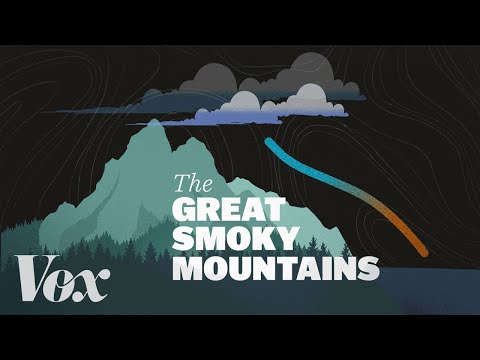
The 'Great Smoky Mountains' in the USA are named 'smoky' because of the natural fog that looks like smoke, produced by the vegetation.
発音ガイド
- Pronouncing it like 'smok-eye' (confusing it with the makeup term).
- Making the 'o' too short, like in 'sock'.
- Adding an extra syllable at the end.
- Confusing the 'sm' sound with 'sn' (snoky).
- Forgetting to pronounce the 'k' clearly.
難易度
Easy to recognize in most texts.
Spelling (smoky vs smokey) can be tricky.
Commonly used in daily conversation.
Distinct sound, easy to hear.
次に学ぶべきこと
前提知識
次に学ぶ
上級
知っておくべき文法
Adjective Suffix -y
Smoke becomes smoky, just like salt becomes salty.
Dropping the final 'e'
When adding -y to 'smoke', the 'e' is dropped.
Attributive Position
The smoky (adj) air (noun) was thick.
Predicative Position
The air (noun) was smoky (adj).
Comparative and Superlative
This room is smokier than the other. This is the smokiest kitchen ever.
レベル別の例文
The kitchen is very smoky.
La cuisine est très enfumée.
Subject + is + adjective.
I see smoky air near the fire.
Je vois de l'air enfumé près du feu.
Adjective before a noun.
Is the room smoky?
La pièce est-elle enfumée ?
Question form.
The smoky bacon smells good.
Le bacon fumé sent bon.
Attributive adjective.
It is a smoky day.
C'est une journée enfumée.
Describing weather.
My clothes are smoky.
Mes vêtements sentent la fumée.
Predicative adjective.
The forest is smoky.
La forêt est enfumée.
Simple description.
Don't go into the smoky house.
N'entre pas dans la maison enfumée.
Imperative with adjective.
This tea has a smoky taste.
Ce thé a un goût fumé.
Describing flavor.
The sky looks smoky because of the fire.
Le ciel a l'air enfumé à cause du feu.
Using 'looks' as a linking verb.
We sat in a smoky corner of the cafe.
Nous nous sommes assis dans un coin enfumé du café.
Describing a specific area.
I like smoky barbecue sauce.
J'aime la sauce barbecue fumée.
Compound noun phrase.
The smoky air made me cough.
L'air enfumé m'a fait tousser.
Cause and effect.
Her eyes were a smoky grey color.
Ses yeux étaient d'une couleur gris fumé.
Describing color.
The mountains are smoky in the morning.
Les montagnes sont brumeuses/enfumées le matin.
Describing nature.
The grill produced a smoky aroma.
Le gril dégageait un arôme fumé.
Describing smell.
The restaurant had a cozy, smoky atmosphere.
Le restaurant avait une atmosphère chaleureuse et enfumée.
Multiple adjectives.
She learned how to do a smoky eye for the party.
Elle a appris à faire un smoky eye pour la fête.
Common phrase 'smoky eye'.
The smoky flavor of the cheese is very strong.
Le goût fumé du fromage est très fort.
Focus on intensity.
A smoky haze hung over the valley all week.
Une brume de fumée a plané sur la vallée toute la semaine.
Noun phrase 'smoky haze'.
The walls were painted a smoky blue.
Les murs étaient peints en bleu fumé.
Color description.
He has a deep, smoky voice that is very relaxing.
Il a une voix grave et fumée qui est très relaxante.
Describing a person's voice.
The smoky mirrors in the hotel gave it a vintage feel.
Les miroirs fumés de l'hôtel lui donnaient une allure vintage.
Describing texture/finish.
We could smell the smoky scent of burning leaves.
Nous pouvions sentir l'odeur de fumée des feuilles qui brûlent.
Sensory description.
The detective entered the smoky backroom of the bar.
Le détective est entré dans l'arrière-salle enfumée du bar.
Atmospheric setting.
The whiskey has a distinct smoky finish that lingers.
Le whisky a une finale fumée distincte qui persiste.
Culinary terminology.
Despite the smoky conditions, the firefighters continued their work.
Malgré les conditions d'enfumage, les pompiers ont continué leur travail.
Using 'despite' with an adjective.
The smoky quartz crystal was the centerpiece of her collection.
Le cristal de quartz fumé était la pièce maîtresse de sa collection.
Specific mineral name.
Her smoky performance at the jazz club was unforgettable.
Sa performance envoûtante au club de jazz était inoubliable.
Metaphorical use for performance.
The city's skyline was obscured by a smoky pall of pollution.
La silhouette de la ville était obscurcie par un manteau de fumée de pollution.
Advanced noun phrase 'smoky pall'.
The smoky aroma of the wood fire filled the entire cabin.
L'arôme de fumée du feu de bois remplissait toute la cabane.
Describing an all-encompassing scent.
He preferred the smoky, muted tones of 1940s photography.
Il préférait les tons fumés et feutrés de la photographie des années 1940.
Artistic description.
The wine's smoky undertones were balanced by a hint of cherry.
Les nuances fumées du vin étaient équilibrées par une pointe de cerise.
Complex flavor profile.
A smoky residue had settled on the antique furniture over the decades.
Un résidu de fumée s'était déposé sur les meubles anciens au fil des décennies.
Describing long-term effects.
The author used smoky imagery to convey the protagonist's confusion.
L'auteur a utilisé une imagerie vaporeuse pour transmettre la confusion du protagoniste.
Literary analysis.
The glass panels had a smoky tint to provide privacy for the office.
Les panneaux de verre avaient une teinte fumée pour assurer l'intimité du bureau.
Technical description.
The smoky atmosphere of the negotiations made everyone feel uneasy.
L'atmosphère trouble des négociations mettait tout le monde mal à l'aise.
Metaphorical atmosphere.
The artist captured the smoky light of a London afternoon.
L'artiste a capturé la lumière vaporeuse d'un après-midi londonien.
Describing light quality.
The smoky scent of the incense was almost overwhelming in the small temple.
L'odeur de fumée de l'encens était presque accablante dans le petit temple.
Describing intensity.
The valley's smoky microclimate is perfect for growing certain grapes.
Le microclimat brumeux de la vallée est parfait pour la culture de certains raisins.
Scientific/Agricultural context.
The film's smoky noir aesthetic was achieved through masterful lighting.
L'esthétique noir vaporeuse du film a été obtenue grâce à un éclairage magistral.
Film criticism terminology.
His prose was thick with smoky metaphors and elusive meanings.
Sa prose était truffée de métaphores vaporeuses et de significations insaisissables.
Abstract metaphorical use.
The smoky quality of the dusk lent an ethereal air to the ruins.
La qualité vaporeuse du crépuscule prêtait un air éthéré aux ruines.
High-level descriptive prose.
The perfumer sought to replicate the smoky aroma of a library in winter.
Le parfumeur a cherché à reproduire l'arôme fumé d'une bibliothèque en hiver.
Niche sensory description.
The smoky, translucent layers of the painting created a sense of immense depth.
Les couches fumées et translucides de la peinture créaient un sentiment de profondeur immense.
Artistic technique description.
The smoky veil of history often obscures the true motives of past leaders.
Le voile vaporeux de l'histoire obscurcit souvent les véritables motivations des anciens dirigeants.
Philosophical metaphor.
The smoky, gravelly timbre of her voice was her most distinctive feature.
Le timbre fumé et grave de sa voix était son trait le plus distinctif.
Precise linguistic description.
The smoky, peat-heavy malts of Islay are an acquired taste for many.
Les malts fumés et riches en tourbe d'Islay sont un goût qui s'apprend pour beaucoup.
Specialized culinary knowledge.
類義語
反対語
よく使う組み合わせ
よく使うフレーズ
— A place where the air is thick with smoke.
The kitchen was filled with smoky air after the accident.
— A specific shade of blue that is muted and greyish.
The curtains had a beautiful smoky blue hue.
— Mountains that often have mist or haze around them.
We hiked through the smoky mountain range in the fall.
— Having a very clear and noticeable smoke quality.
The tea was distinctly smoky and earthy.
— A play on 'smoke and mirrors', suggesting something deceptive.
The politician's plan was all smoky and mirrors.
— A dark, blended appearance in art or makeup.
The drawing had a smoky charcoal look.
— Having just a small amount of smoke quality.
The fish was only lightly smoky, not overpowering.
— A stereotypical setting for jazz music.
He spent his youth playing in every smoky jazz club in the city.
よく混同される語
Smoked is the process; smoky is the quality. You eat smoked salmon with a smoky flavor.
Smoking is the action; smoky is the state. A smoking fire makes a smoky room.
Smokey is a common misspelling or a proper name, but smoky is the standard adjective.
慣用句と表現
— Something that is meant to confuse or deceive people.
The company's profits were just smoke and mirrors.
informal— If there are rumors, there is usually a reason for them.
People say he's leaving; there's no smoke without fire.
neutral— To be completely destroyed or to fail suddenly.
All my hard work went up in smoke when the computer crashed.
informal— To smoke cigarettes very frequently.
My grandfather used to smoke like a chimney.
informal— To say things that are not true in order to impress someone.
He's just blowing smoke about his famous friends.
slang— A rude way to tell someone to accept a fact they don't like.
I'm the boss now, so put that in your pipe and smoke it!
informal— To force someone out of a hiding place.
The police tried to smoke out the suspect.
neutral— Something used to hide your real activities or intentions.
The charity was just a smoke screen for his illegal business.
neutral— To watch someone move very fast or be very successful.
Once she starts running, just watch her smoke!
old-fashioned間違えやすい
Both describe unclear air.
Smoky specifically implies smoke from fire; hazy can be dust, heat, or moisture.
The smoky air from the fire made it hard to see, unlike the hazy summer heat.
Both relate to fire.
Sooty refers to the black powder left behind; smoky refers to the air or smell.
The smoky room left my clothes sooty.
Both describe low visibility.
Foggy is caused by water droplets; smoky is caused by combustion.
It wasn't a foggy morning; it was smoky from the nearby forest fire.
Both look like thin clouds.
Mist is water-based and usually cool; smoke is carbon-based and often warm/smelly.
The smoky tendrils of the fire rose through the morning mist.
Both describe smoke smells.
Acrid is specifically sharp, bitter, and irritating; smoky can be pleasant.
The smoky smell of the wood was nice, but the acrid smell of burning plastic was not.
文型パターン
The [noun] is smoky.
The room is smoky.
I like [smoky] [noun].
I like smoky cheese.
There is a [smoky] [noun] in the [place].
There is a smoky haze in the valley.
The [noun] has a [smoky] [noun].
The whiskey has a smoky finish.
Characterized by [smoky] [noun], the [place]...
Characterized by smoky light, the studio was perfect for painting.
The [noun] was obscured by a [smoky] [noun].
The truth was obscured by a smoky veil of lies.
She wore [smoky] [color].
She wore smoky grey.
His [noun] was [smoky].
His voice was smoky.
語族
名詞
動詞
形容詞
関連
使い方
Common in food, weather, and fashion domains.
-
The air was smoking.
→
The air was smoky.
The air doesn't 'smoke' (action); it is 'smoky' (state).
-
I love smokey bacon.
→
I love smoky bacon.
While 'smokey' is sometimes seen, 'smoky' is the standard spelling.
-
The room was very smoked.
→
The room was very smoky.
'Smoked' is for things that have been processed with smoke, like meat.
-
She has a smoking voice.
→
She has a smoky voice.
'Smoking' implies she is currently smoking a cigarette; 'smoky' describes the sound.
-
The sky was smoky of dust.
→
The sky was hazy with dust.
'Smoky' should only be used if there is actual smoke from fire.
ヒント
Cooking Tip
Use 'smoky' to describe spices like smoked paprika or chipotle to explain the flavor profile to others.
Atmosphere
When writing a story, use 'smoky' to create a sense of mystery or age in a setting like an old library or a tavern.
The 'E' Rule
Remember to drop the 'e' from 'smoke' when you add 'y'. This applies to many English adjectives.
Precision
If the smoke is very thin, use 'wispy'. If it is very thick, use 'dense' or 'heavy' along with 'smoky'.
Voice Description
Compliment a singer by saying they have a 'lovely smoky voice' to sound sophisticated.
Haze vs Smoke
In weather reports, 'smoky' is more serious than 'hazy' because it implies actual fire particles in the air.
Makeup Talk
The 'smoky eye' is a classic look. It's a great phrase to know for fashion and beauty contexts.
Old English
The word is very old, showing how long humans have been describing the effects of fire.
Smell Association
We often associate 'smoky' with autumn and winter because of fireplaces and burning leaves.
Avoid Repetition
If you've already used 'smoky', try 'charred' for food or 'hazy' for the sky to keep your writing interesting.
暗記しよう
記憶術
Think of 'Smoke' + 'Y' (Yes, there is smoke). SMOKY.
視覚的連想
Imagine a grey cloud inside a glass jar. That jar is smoky.
Word Web
チャレンジ
Try to use 'smoky' to describe three different things today: a food, a color, and a place.
語源
Derived from the Old English 'smoca' (smoke) and the suffix '-y', which means 'characterized by'. It has been used in English since the 14th century.
元の意味: Emitting smoke or filled with smoke.
Germanic文化的な背景
Be careful using 'smoky' to describe air in areas recently affected by tragic fires, as it may be a sensitive topic.
Commonly used in food reviews and weather reports.
実生活で練習する
実際の使用場面
Cooking
- smoky paprika
- smoky barbecue
- smoky aroma
- smoky aftertaste
Weather
- smoky haze
- smoky skies
- smoky air alert
- smoky conditions
Fashion
- smoky eye look
- smoky eyeshadow
- smoky palette
- smoky finish
Music
- smoky vocals
- smoky jazz
- smoky timbre
- smoky club
Home
- smoky fireplace
- smoky chimney
- smoky kitchen
- smoky smell
会話のきっかけ
"Do you like the smoky flavor of barbecue food?"
"Have you ever seen a smoky sunset during the summer?"
"What do you think of the smoky eye makeup trend?"
"Does your house ever get smoky when you are cooking?"
"Do you prefer a smoky voice or a clear voice in singers?"
日記のテーマ
Describe a time you were in a very smoky place. What happened?
Write about your favorite smoky food and why you enjoy it.
Imagine a 'smoky' character. What do they look and sound like?
How does a smoky sky make you feel compared to a clear one?
Describe the atmosphere of a smoky jazz club using all five senses.
よくある質問
10 問The standard spelling is 'smoky'. 'Smokey' is a variant often used in names (like Smokey Bear) or older English, but 'smoky' is preferred in modern writing.
Usually only for their voice ('a smoky voice') or their eyes ('smoky eyes' referring to makeup). It is rarely used to describe a person's personality.
It depends on the context! In food (barbecue) or music (jazz), it is often positive. In weather (wildfires) or a house fire, it is negative.
It is a makeup style where dark eyeshadow is blended around the eyes to create a hazy, dramatic effect.
No. 'Smoky' means it has the aroma or quality of smoke. 'Burnt' means it has been damaged by fire or overcooked.
No, you should say 'the air is smoky'. 'Smoking' is used for the source, like 'the fire is smoking'.
It is a type of crystal that is translucent but has a grey, brown, or black tint, looking like it has smoke inside it.
No, 'smoky' is an adjective. The adverb form is 'smokily', though it is not very common.
You can call it a 'smoky aroma' (if pleasant) or a 'smoky odor' (if unpleasant).
There isn't one direct opposite, but 'fresh', 'clean', or 'plain' are often used to describe food without smoky notes.
自分をテスト 187 問
Write a sentence describing a smoky kitchen.
Well written! Good try! Check the sample answer below.
Describe the taste of smoky barbecue ribs.
Well written! Good try! Check the sample answer below.
Use 'smoky haze' in a sentence about the weather.
Well written! Good try! Check the sample answer below.
Write a short paragraph about a jazz singer with a smoky voice.
Well written! Good try! Check the sample answer below.
Explain the difference between 'smoky' and 'smoked'.
Well written! Good try! Check the sample answer below.
Describe a 'smoky eye' makeup look.
Well written! Good try! Check the sample answer below.
Write a sentence using 'smoky' to describe a color.
Well written! Good try! Check the sample answer below.
Describe the atmosphere of a smoky pub.
Well written! Good try! Check the sample answer below.
Use 'smoky' in a sentence about a mountain range.
Well written! Good try! Check the sample answer below.
Write a sentence about a smoky scent.
Well written! Good try! Check the sample answer below.
Describe a 'smoky backroom' in a detective story.
Well written! Good try! Check the sample answer below.
Use 'smoky quartz' in a sentence.
Well written! Good try! Check the sample answer below.
Write a sentence about a smoky sunset.
Well written! Good try! Check the sample answer below.
Describe a smoky tea.
Well written! Good try! Check the sample answer below.
Use 'smoky' to describe a person's eyes (metaphorically).
Well written! Good try! Check the sample answer below.
Write a sentence about smoky conditions on a road.
Well written! Good try! Check the sample answer below.
Describe the 'smoky finish' of a drink.
Well written! Good try! Check the sample answer below.
Use 'smoky' in a sentence about a chimney.
Well written! Good try! Check the sample answer below.
Write a sentence about a smoky mirror.
Well written! Good try! Check the sample answer below.
Describe a smoky forest after a fire.
Well written! Good try! Check the sample answer below.
Pronounce the word 'smoky' clearly.
Read this aloud:
あなたの回答:
Speech recognition is not supported in your browser. Try Chrome or Edge.
Describe a smoky room using two sentences.
Read this aloud:
あなたの回答:
Speech recognition is not supported in your browser. Try Chrome or Edge.
Talk about your favorite smoky food for 30 seconds.
Read this aloud:
あなたの回答:
Speech recognition is not supported in your browser. Try Chrome or Edge.
Explain what a 'smoky eye' is to a friend.
Read this aloud:
あなたの回答:
Speech recognition is not supported in your browser. Try Chrome or Edge.
Describe a singer with a smoky voice.
Read this aloud:
あなたの回答:
Speech recognition is not supported in your browser. Try Chrome or Edge.
Describe the weather during a smoky day.
Read this aloud:
あなたの回答:
Speech recognition is not supported in your browser. Try Chrome or Edge.
Use 'smoky' to describe a color in your house.
Read this aloud:
あなたの回答:
Speech recognition is not supported in your browser. Try Chrome or Edge.
Tell a story about a smoky campfire experience.
Read this aloud:
あなたの回答:
Speech recognition is not supported in your browser. Try Chrome or Edge.
Discuss the 'smoky finish' of a drink you've tried.
Read this aloud:
あなたの回答:
Speech recognition is not supported in your browser. Try Chrome or Edge.
Describe the 'smoky mountains' to someone who hasn't seen them.
Read this aloud:
あなたの回答:
Speech recognition is not supported in your browser. Try Chrome or Edge.
How would you describe a smoky atmosphere in a movie?
Read this aloud:
あなたの回答:
Speech recognition is not supported in your browser. Try Chrome or Edge.
Explain why a kitchen might become smoky.
Read this aloud:
あなたの回答:
Speech recognition is not supported in your browser. Try Chrome or Edge.
Describe the scent of a smoky candle.
Read this aloud:
あなたの回答:
Speech recognition is not supported in your browser. Try Chrome or Edge.
Talk about the visual quality of smoky quartz.
Read this aloud:
あなたの回答:
Speech recognition is not supported in your browser. Try Chrome or Edge.
Use 'smoky' in a sentence about a vintage hotel.
Read this aloud:
あなたの回答:
Speech recognition is not supported in your browser. Try Chrome or Edge.
Describe a smoky trail in the sky.
Read this aloud:
あなたの回答:
Speech recognition is not supported in your browser. Try Chrome or Edge.
Discuss the pros and cons of smoky food.
Read this aloud:
あなたの回答:
Speech recognition is not supported in your browser. Try Chrome or Edge.
Describe a smoky blue dress.
Read this aloud:
あなたの回答:
Speech recognition is not supported in your browser. Try Chrome or Edge.
How do you feel in a smoky room?
Read this aloud:
あなたの回答:
Speech recognition is not supported in your browser. Try Chrome or Edge.
Describe the 'smoky light' of a winter afternoon.
Read this aloud:
あなたの回答:
Speech recognition is not supported in your browser. Try Chrome or Edge.
Listen for the word 'smoky' in this sentence: 'The smoky air was hard to breathe.' (Self-check)
Identify the adjective in: 'I love smoky barbecue.'
Listen to: 'The sky is smoky today.' What is the sky like?
In the phrase 'smoky eye makeup', which word describes the style?
Listen to: 'His voice had a smoky quality.' What part of him is being described?
Listen to: 'The valley was filled with a smoky haze.' Where was the haze?
Listen to: 'The cheese has a smoky aftertaste.' When do you taste the smoke?
Listen to: 'The smoky quartz ring was expensive.' What was the ring made of?
Listen to: 'The conditions were smoky and dangerous.' Were the conditions safe?
Listen to: 'She sang with a smoky timbre.' What kind of timbre did she have?
Listen to: 'The smoky trail led us to the fire.' What did the trail lead to?
Listen to: 'The kitchen is getting smoky.' What should you do?
Listen to: 'The smoky blue paint is beautiful.' What is beautiful?
Listen to: 'The mirrors were smoky and old.' What two words describe the mirrors?
Listen to: 'The smoky aroma of pine filled the room.' What was the scent?
/ 187 correct
Perfect score!
Summary
The word 'smoky' is a sensory adjective that covers sight, smell, and taste. It is essential for describing everything from environmental hazards like wildfires to luxury items like aged scotch and high-fashion makeup looks. Example: 'The smoky aroma of the campfire lingered on our clothes.'
- Smoky describes things filled with smoke, like a room or the outdoor air during a fire.
- It also refers to a specific wood-fired flavor in foods like bacon, cheese, and barbecue.
- In fashion and art, it describes a dark, hazy, or blurred appearance, such as 'smoky eyes'.
- It can describe a deep, slightly raspy voice, often considered soulful or attractive in singers.
Cooking Tip
Use 'smoky' to describe spices like smoked paprika or chipotle to explain the flavor profile to others.
Atmosphere
When writing a story, use 'smoky' to create a sense of mystery or age in a setting like an old library or a tavern.
The 'E' Rule
Remember to drop the 'e' from 'smoke' when you add 'y'. This applies to many English adjectives.
Precision
If the smoke is very thin, use 'wispy'. If it is very thick, use 'dense' or 'heavy' along with 'smoky'.
例文
The kitchen was smoky after I burned the toast.
関連コンテンツ

文脈で学ぶ
Otherの関連語
case
A2筆箱やスーツケースのような、物を入れるための容器。
ultimate
B2最終的な結果や最高点に達すること。長年の努力が成功に結実した。
demon’s
B1「悪魔(demon)」の単数所有格で、何かが悪魔に属していることを示します。
range
A2製品の範囲 (A range of products).
lot
B1たくさんの本があります。
kink
B2ホースにねじれがあって、水がうまく流れません。
beauty
B1美しさとは、感覚や精神に喜びを与える性質のことです。
round
B1円形または球形の。競技のラウンドや、飲み物の一巡。
height
B1その建物の高さは50メートルです。
loaded
B2トラックには荷物が満載されていた。

