Chapter in 30 Seconds
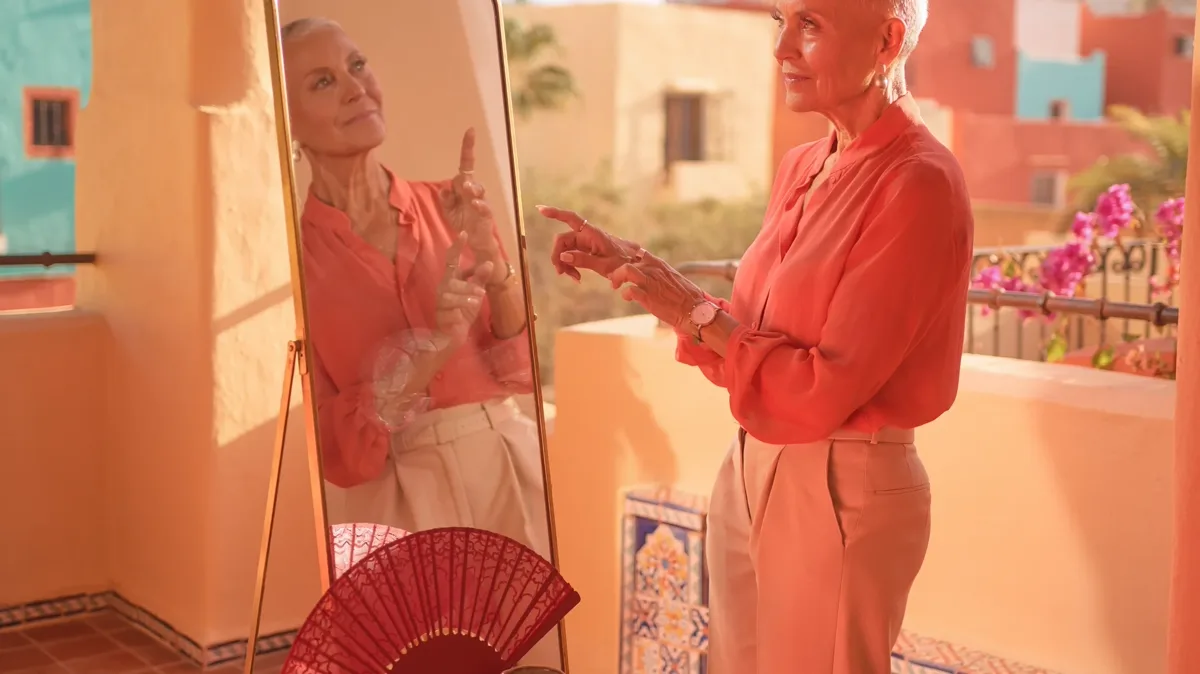
Master the 'grammatical mirror' to describe your daily life and actions performed on yourself.
- Identify and use the six reflexive pronouns in Spanish.
- Conjugate common daily routine verbs like 'to wake up' and 'to get dressed'.
- Distinguish how 'se' changes the meaning of basic verbs like 'to go'.
学べること
Hey there, language learner! Ready to unlock a super useful secret of Spanish? You've already built a fantastic foundation, and now we're diving into a topic that will instantly make your Spanish sound more natural and fluent: reflexive verbs! In this chapter, you'll master how to talk about actions you perform on yourself. Ever wondered how to say 'I wash myself' or 'you get dressed'? You'll learn all about the special 'me, te, se, nos, os, se' pronouns. Think of them as a grammatical mirror, reflecting the action of the verb right back to the person doing it. We'll explore common verbs that naturally use these pronouns, and then we'll uncover a fascinating twist: how adding 'se' can completely transform a verb's meaning. For example, while 'ir' means 'to go,' 'irse' means 'to leave' – a subtle but crucial difference you'll confidently grasp. Imagine describing your morning routine – 'I wake up,' 'I brush my teeth,' 'I get ready.' Or asking a friend, 'When are you leaving?' These everyday situations are packed with reflexive verbs. Mastering them isn't just about grammar; it's about speaking like a native and truly expressing yourself. By the end of this chapter, you'll effortlessly describe your daily habits, talk about personal care, and accurately use verbs to indicate departure or changes in state. Get ready to elevate your Spanish conversations and feel much more confident in real-life interactions!
-
スペイン語の再帰代名詞:自分自身を指す言葉 (me, te, se)動作をする人と、その動作を受ける人が同じ時に、再帰代名詞を使います。まるで「自分自身」に何かをする時みたいにね。
-
スペイン語の再帰動詞:Me, Te, Se(よく使われる動詞)行動をする人と、その行動を受ける人が同じ時に、この「me」「te」「se」などの«再帰代名詞»を使います。
-
「行く」か「立ち去る」か: 'Se' で意味が変わるスペイン語の動詞「se」を動詞に加えると、出発、「状態の変化」、または「完了」といった意味に焦点が移ることが多いんだ。
Learning Objectives
By the end of this chapter, you will be able to:
-
1
By the end you will be able to: correctly match reflexive pronouns to subject pronouns in all forms.
-
2
By the end you will be able to: describe your entire morning routine using at least five reflexive verbs.
-
3
By the end you will be able to: explain the difference between 'ir' and 'irse' in a situational context.
チャプターガイド

Overview
I wash myself or you get dressed. This concept is fundamental to everyday conversations and will significantly improve your fluency and comprehension. By the end of this chapter, you’ll not only understand the mechanics of these verbs but also feel confident using them in real-life interactions.How This Grammar Works
reflects back onto the person performing it.
Common Mistakes
- 1✗ Wrong:
Yo lavo las manos.
(I wash the hands.)
Yo me lavo las manos.(I wash my hands.)
my.- 1✗ Wrong:
¿Cuándo vas?(When are you going?) - when meaningWhen are you leaving?
¿Cuándo te vas?(When are you leaving?)
you.
Real Conversations
A
B
A
B
A
B
Quick FAQ
What is a reflexive verb in Spanish and why is it important for A2 learners?
A Spanish reflexive verb is one where the subject performs the action on itself, indicated by a reflexive pronoun (e.g., me, te, se). For A2 learners, mastering these verbs is crucial for describing daily routines, personal care, and expressing nuanced meanings like leaving instead of just going, making your Spanish more natural.
How do I know when to use 'se' in Spanish?
You use se when the action reflects back on the third person singular (él, ella, usted) or plural (ellos, ellas, ustedes), or when you want to express an impersonal action (e.g., Se habla español - Spanish is spoken). It's also used for verbs that change meaning with reflexivity, like ir (to go) vs. irse (to leave).
Are all verbs that end in -se reflexive?
Yes, verbs listed with -se at the end of their infinitive form (e.g., lavarse, vestirse) are reflexive verbs. This -se is the infinitive form of the reflexive pronoun, indicating that the verb is typically used reflexively.
What's the main difference between 'ir' and 'irse' in Spanish grammar?
Ir means to go (movement towards a destination), while irse means to leave or to go away (movement away from a place). The addition of the reflexive pronoun se completely shifts the focus from simply moving to the act of departing.

Cultural Context
I get up, Spanish often uses the reflexive me levanto, highlighting the self-directed action. This reflects a common linguistic pattern where Spanish often uses reflexive structures more frequently than English for similar concepts.重要な例文 (6)
Me despierto a las siete todos los días para ir a trabajar.
私は毎日、仕事に行くために7時に起きます。
スペイン語の再帰代名詞:自分自身を指す言葉 (me, te, se)¿Te duchas por la mañana o por la noche después del gimnasio?
朝シャワーを浴びる?それともジムの後、夜に浴びる?
スペイン語の再帰代名詞:自分自身を指す言葉 (me, te, se)Mañana voy a Madrid, pero ahora `me voy` de la fiesta.
明日マドリードに行くけど、今パーティーを出るよ。
「行く」か「立ち去る」か: 'Se' で意味が変わるスペイン語の動詞Siempre duermo ocho horas, pero anoche `me dormí` viendo Netflix.
いつも8時間寝るんだけど、昨夜はNetflixを見てて寝落ちしちゃった。
「行く」か「立ち去る」か: 'Se' で意味が変わるスペイン語の動詞ヒントとコツ (3)
「鏡のルール」
体の部位のルール
「帰る」のルール
me voy」を使ってね。「voy」だけだと、相手のところへ向かっているように聞こえちゃうから気をつけて。「If you are translating 'I'm out!' or 'I'm leaving!', always go for me voy. Just voy sounds like you are walking towards the person you are talking to.」重要な語彙 (7)
Real-World Preview
Morning Routine Chat
Leaving the Party
Review Summary
- [Subject] + [me/te/se/nos/os/se] + [Verb]
- Verbo + Se = New Meaning
よくある間違い
In Spanish, if you are doing the action to yourself, you MUST use the reflexive pronoun 'me'. Without it, the sentence sounds incomplete.
Learners often use 'se' for everyone. Remember: 'se' is only for third-person (él, ella, usted, ellos, ustedes).
To say you are 'leaving' a place, you must use the reflexive 'irse'. 'Ir' just means 'to go' to a destination.
このチャプターのルール (3)
Next Steps
You've just conquered one of the most essential building blocks of Spanish conversation. Keep practicing your routine, and soon these pronouns will feel like second nature!
Record yourself describing your morning routine in Spanish.
Write 5 sentences comparing what you do (reflexive) vs what you do to others (non-reflexive).
クイック練習 (9)
Find and fix the mistake:
Yo quedo en casa todo el día.
frontend.learn_grammar.from_rule: 「行く」か「立ち去る」か: 'Se' で意味が変わるスペイン語の動詞
Choose the correct sentence:
frontend.learn_grammar.from_rule: 「行く」か「立ち去る」か: 'Se' で意味が変わるスペイン語の動詞
Find and fix the mistake:
Juan lava se cada mañana.
frontend.learn_grammar.from_rule: スペイン語の再帰動詞:Me, Te, Se(よく使われる動詞)
「私たちは手を洗う」を意味する文として文法的に正しいのはどれですか?
frontend.learn_grammar.from_rule: スペイン語の再帰動詞:Me, Te, Se(よく使われる動詞)
Find and fix the mistake:
Tú se duchas en la noche.
frontend.learn_grammar.from_rule: スペイン語の再帰代名詞:自分自身を指す言葉 (me, te, se)
Ya ___ (irse) de la oficina. ¡Hasta mañana!
frontend.learn_grammar.from_rule: 「行く」か「立ち去る」か: 'Se' で意味が変わるスペイン語の動詞
Yo ___ levanto temprano todos los días.
frontend.learn_grammar.from_rule: スペイン語の再帰代名詞:自分自身を指す言葉 (me, te, se)
Yo ___ levanto a las ocho.
frontend.learn_grammar.from_rule: スペイン語の再帰動詞:Me, Te, Se(よく使われる動詞)
Choose the correct way to say 'They are washing their hands':
frontend.learn_grammar.from_rule: スペイン語の再帰代名詞:自分自身を指す言葉 (me, te, se)
Score: /9

