









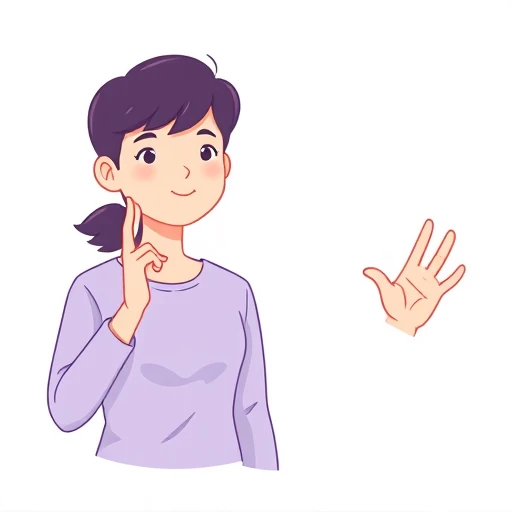
이렇게 30秒で
- 이렇게 means 'like this' or 'in this way,' used to demonstrate a method or describe a degree of something close to the speaker.
- It is the adverbial form of the verb 이렇다 and is a core part of the Korean demonstrative system (i-geu-jeo).
- Commonly used to emphasize adjectives (so hot, so big) or provide instructions (do it like this).
- Pronounced as [이러케] due to the aspiration of 'ㅎ' and 'ㄱ' merging into 'ㅋ'.
The Korean word 이렇게 (ireoke) is a fundamental adverb that functions as a demonstrative of manner or degree. At its core, it translates to 'in this way,' 'like this,' or 'so.' It is derived from the descriptive verb 이렇다 (ireota), which means 'to be like this.' In Korean linguistics, this word belongs to the 'i-geu-jeo' (이-그-저) system, where 'i' (이) indicates something close to the speaker. Therefore, 이렇게 specifically refers to an action, state, or method that is physically or psychologically near the person speaking. When you use this word, you are usually pointing to a specific method you are currently demonstrating, a situation you are currently experiencing, or a degree of intensity that is immediately apparent.
- Demonstrative Manner
- Used when showing someone how to perform a task. For example, 'Fold the paper like this.'
- Degree of Intensity
- Used to emphasize 'how much' of something there is. For example, 'I didn't know it would be this cold.'
- Emotional Stance
- Used to express surprise or frustration regarding a current state. For example, 'How can you say that to me (in this way)?'
In daily conversation, 이렇게 is ubiquitous. Whether you are a beginner learning how to order food or an advanced speaker discussing complex social phenomena, this word provides the necessary spatial and conceptual anchoring. It allows the speaker to draw the listener's attention to the immediate context. If you are holding a heavy bag, you might say, 'Why is it this heavy?' using 이렇게 to emphasize the immediate physical sensation. If you are teaching a friend a dance move, you say, 'Move your arms like this,' while performing the action. It is a bridge between physical reality and verbal communication.
김치를 이렇게 썰어주세요. (Please slice the kimchi like this.)
오늘 날씨가 왜 이렇게 더워요? (Why is the weather so hot like this today?)
이렇게 만나서 정말 반갑습니다. (I am so glad to meet you like this/in this manner.)
일이 이렇게 될 줄 몰랐어요. (I didn't know things would turn out like this.)
너를 이렇게 사랑해. (I love you this much/in this way.)
Furthermore, 이렇게 acts as a logical connector in discourse. When summarizing a previous point or transitioning to a conclusion based on immediate evidence, a speaker might start a sentence with '이렇게...' to mean 'Given this situation...' or 'In this manner...'. It is essential for creating flow in both spoken and written Korean. It helps the listener understand that the following information is directly tied to the current context or the method just described. Without 이렇게, Korean conversation would lack the specific 'pointing' quality that makes it so contextual and efficient. Mastering this word allows you to navigate physical demonstrations, emotional expressions, and logical summaries with ease.
Using 이렇게 correctly requires understanding its role as an adverb. Adverbs in Korean typically precede the verb or adjective they modify. Because 이렇게 is a demonstrative adverb, its placement is relatively flexible but most commonly found right before the action or state it is describing. It can modify a wide range of words, from simple verbs like 'do' (하다) and 'say' (말하다) to complex adjectives like 'beautiful' (아름답다) or 'difficult' (어렵다).
- Modifying Verbs
- When modifying a verb, it describes the method. '이렇게 하세요' (Do it like this). Here, '이렇게' tells the listener the specific way to perform the action '하세요'.
- Modifying Adjectives
- When modifying an adjective, it functions as an intensifier or a degree marker. '이렇게 예뻐요?' (Is it this pretty?). It compares the beauty to the current visible state.
- Sentence Initial Position
- Starting a sentence with '이렇게' often serves to summarize or emphasize the current situation. '이렇게 해서 성공했습니다' (By doing it this way, we succeeded).
One of the most common patterns is 이렇게 + [Verb]-면, which means 'If you do it like this...' or 'If it is like this...'. This is used constantly in instructions. For example, '이렇게 하면 돼요' (It works if you do it like this). Another important pattern is 이렇게 + [Adjective]-ㄴ/은, used to describe a noun in a specific state, such as '이렇게 큰 수박' (A watermelon this big). Notice how the adverb '이렇게' provides the scale for the adjective '큰' (big).
이렇게 하면 정말 맛있어요. (If you do it like this, it is really delicious.)
사람이 이렇게 많을 줄 몰랐어요. (I didn't know there would be this many people.)
왜 이렇게 늦게 왔어요? (Why did you come so late like this?)
In more formal or written contexts, 이렇게 can be replaced by 이와 같이 or 이처럼 to add variety and a more sophisticated tone. However, in spoken Korean, 이렇게 is the undisputed king of demonstrative adverbs. It is also used in rhetorical questions to express disbelief. For instance, '어떻게 이렇게 할 수 있어?' (How can you do [it] like this?) implies that the speaker is shocked by the specific manner of the action. The nuance here is not just 'how' but 'how in this specific, unacceptable way.' Understanding these subtle shifts in meaning based on context is key to sounding natural in Korean.
If you spend a day in Korea or watch a single episode of a Korean drama, you will hear 이렇게 dozens of times. It is one of the most 'functional' words in the language, appearing in almost every social scenario imaginable. In a restaurant, you might hear a waiter explaining how to cook a certain dish: '고기를 이렇게 구우시면 됩니다' (You can grill the meat like this). In a clothing store, a customer might point to a mannequin and say, '이렇게 입고 싶어요' (I want to dress like this). It is the verbal equivalent of pointing your finger.
One of the most frequent places you'll encounter 이렇게 is in the world of K-Pop lyrics and K-Dramas. It is often used to express intense emotion. Phrases like '이렇게 아픈데' (Even though it hurts this much) or '이렇게 널 사랑해' (I love you this much) are staples of romantic ballads. In these contexts, 이렇게 isn't just describing a method; it's quantifying the depth of a feeling by relating it to the current, overwhelming moment the singer is experiencing. It adds a sense of immediacy and 'hereness' to the emotion.
드라마 대사: "어떻게 나한테 이렇게 할 수 있어?" (Drama line: "How can you do this to me?")
유튜브 요리 채널: "양파를 이렇게 잘게 다져주세요." (YouTube Cooking: "Please mince the onion finely like this.")
In professional settings, 이렇게 is used during presentations to refer to data or charts currently being shown. A presenter might say, '이렇게 보시면 매출이 증가했습니다' (If you look at it like this, sales have increased). It directs the audience's focus to the specific visual evidence at hand. It is also common in technical support or teaching, where step-by-step guidance is necessary. '컴퓨터를 이렇게 켜세요' (Turn on the computer like this) is a simple but essential instruction. The word acts as a linguistic pointer that ensures both the speaker and the listener are on the same page.
Finally, you will hear 이렇게 in complaints or expressions of surprise about the weather or environment. '날씨가 왜 이렇게 습해요?' (Why is the weather so humid like this?). In this case, the speaker is reacting to the immediate sensation of humidity. It's not just 'very humid' (아주 습해요); it's 'humid in this specific, currently felt way.' This nuance makes the speaker's reaction feel more authentic and grounded in the present moment. Learning to use 이렇게 in these varied contexts will make your Korean sound much more natural and less like a textbook.
While 이렇게 is a common word, English speakers often make several predictable mistakes when using it. The most frequent error is confusing 이렇게 (in this way) with 이것 (this thing). In English, the word 'this' can be both a pronoun ('I like this') and an adverbial modifier ('It is this big'). In Korean, these are strictly separated. You cannot say '이렇게 좋아요' to mean 'I like this'; you must say '이게 좋아요' (This thing is good) or '이것을 좋아해요' (I like this thing). 이렇게 must modify a verb or adjective, never stand alone as the object of a sentence.
- Confusion with '그렇게' and '저렇게'
- Learners often use '이렇게' when they should use '그렇게' (like that - near the listener). If you are talking about something the other person just did, you should use '그렇게', not '이렇게'.
- Misuse as a Noun
- Avoid saying things like '이렇게는 비싸요'. While '이렇게' can take particles in advanced grammar, beginners often try to use it as a subject, which is incorrect. It should be '이것은 비싸요' (This thing is expensive) or '이렇게 비싸요?' (Is it this expensive?).
Another common mistake is the pronunciation of the 'ㅎ' (h) sound. In 이렇게, the 'ㅎ' in the stem '이렇-' meets the 'ㄱ' in the suffix '-게'. In Korean phonology, 'ㅎ' + 'ㄱ' results in a 'ㅋ' (k) sound. Therefore, it is pronounced [이러케] (i-reo-ke), not [이렇-게] (i-reot-ge). Beginners who try to pronounce every letter distinctly often sound unnatural. Remembering the aspiration rule is crucial for sounding like a native speaker.
Incorrect: 이렇게 좋아해요. (I like like this.)
Correct: 이것을 좋아해요. (I like this thing.)
Incorrect: 이렇게 하면 안 돼요? (referring to what the listener did)
Correct: 그렇게 하면 안 돼요? (Can't you do it like that?)
Lastly, learners sometimes over-rely on 이렇게 to mean 'very.' While it can mean 'this much,' it always carries a demonstrative nuance. If there is nothing to 'point' to (either physically or in the immediate context), using '매우' (very) or '정말' (really) is often more appropriate. For example, if you are talking about a movie you saw last week, you wouldn't say it was '이렇게' interesting unless you are currently comparing it to something else or emphasizing the degree in a very vivid way. Use 이렇게 when the 'this' part of the meaning is actually relevant to the conversation.
To truly master Korean, you need to know the alternatives to 이렇게 and when to use them. The most direct relatives are 그렇게 (like that) and 저렇게 (like that over there). These form the 'i-geu-jeo' trinity. Use 그렇게 when referring to a method the listener just mentioned or an object near them. Use 저렇게 when referring to something far from both of you, like a person across the street or a famous celebrity's lifestyle.
- 이리 (I-ri)
- A more directional or slightly more poetic version of '이렇게'. It often means 'this way' or 'to this place'. Example: '이리 오세요' (Come this way/Come here).
- 이처럼 (I-cheo-reom)
- A formal version meaning 'like this' or 'as such'. It is frequently used in essays, news reports, or formal speeches to summarize a preceding point.
- 이와 같이 (I-wa gat-i)
- Literally 'together with this' or 'in the same manner as this'. This is very formal and common in academic writing or legal documents.
For those looking to sound more 'cute' or informal, there is 요렇게 (yo-reoke). The 'yo' prefix in Korean often makes words feel smaller, more delicate, or more endearing. You might use 요렇게 when showing someone a tiny, intricate detail or when speaking in a playful manner. Conversely, if you want to emphasize a large scale or a serious manner, sticking to 이렇게 is safer. Understanding these variations allows you to adjust your register based on who you are talking to and what you are describing.
Comparison:
- 이렇게 하세요. (Standard: Do it like this.)
- 요렇게 해봐요~ (Cute/Small: Try it just like this~)
- 이처럼 경제는 변화합니다. (Formal: As such, the economy changes.)
In summary, while 이렇게 is the most versatile and common choice, knowing when to switch to 그렇게, 저렇게, or more formal alternatives like 이처럼 will greatly enhance your fluency. Each of these words carries a specific spatial or social nuance that helps clarify your meaning. Pay attention to how native speakers choose between these options in different settings, and you'll soon find yourself using them instinctively.
How Formal Is It?
豆知識
The 'h' (ㅎ) in the middle of '이렇게' is a remnant of an ancient Korean adjective stem that causes aspiration in following consonants, which is why it's pronounced with a 'k' sound.
発音ガイド
- Pronouncing it as 'i-reot-ge' (distinctly saying the 'h' and 'g').
- Using a hard English 'R' instead of the Korean flap 'ㄹ'.
- Forgetting the aspiration on the last syllable.
- Pronouncing 'eo' as 'oh' instead of an open 'uh' sound.
- Making the 'i' sound too short.
難易度
Very easy to recognize once you know the 'i-geu-jeo' system.
Simple to write, but remember the 'ㅎ' in the spelling.
Requires practice with the aspirated 'k' sound.
Very common and usually clear in speech.
次に学ぶべきこと
前提知識
次に学ぶ
上級
知っておくべき文法
Aspiration (ㅎ + ㄱ = ㅋ)
이렇- + -게 = 이렇게 [이러케]
Adverbial Suffix -게
예쁘다 -> 예쁘게, 이렇다 -> 이렇게
Demonstrative System (이/그/저)
이것 (this), 그것 (that), 저것 (that over there)
Conditional -면 with Adverbs
이렇게 하면 (If you do it like this)
Degree Modifiers
이렇게 + Adjective (this much [adjective])
レベル別の例文
이렇게 하세요.
Do it like this.
이렇게 modifies the verb 하세요 (do).
이렇게 써요?
Do I write it like this?
A question asking about the method of writing.
이게 이렇게 커요?
Is this thing this big?
이렇게 modifies the adjective 커요 (big).
이렇게 먹어봐요.
Try eating it like this.
이렇게 modifies the verb 먹어봐요 (try eating).
사과가 이렇게 많아요.
There are this many apples.
이렇게 modifies the adjective 많아요 (many).
이렇게 앉으세요.
Please sit like this.
이렇게 modifies the verb 앉으세요 (sit).
와, 이렇게 예뻐요?
Wow, is it this pretty?
Used as an intensifier for the adjective 예뻐요 (pretty).
이렇게 만들어요.
Make it like this.
이렇게 modifies the verb 만들어요 (make).
날씨가 왜 이렇게 더워요?
Why is the weather so hot like this?
Expressing surprise at the degree of heat.
이렇게 하면 정말 맛있어요.
If you do it like this, it's really delicious.
Using the -면 (if) pattern with 이렇게.
길이 왜 이렇게 막혀요?
Why is the road so blocked (traffic) like this?
Expressing frustration about a current state.
이렇게 늦게 오면 안 돼요.
You shouldn't come this late.
Using 이렇게 to modify the adverb 늦게 (late).
이렇게 작은 가방이 필요해요.
I need a bag this small.
이렇게 modifies the adjective 작은 (small) describing the noun 가방.
공부를 이렇게 열심히 해요?
Do you study this hard?
이렇게 modifies the adverb 열심히 (hard/diligently).
이렇게 만나서 반가워요.
I'm glad to meet you like this.
Common greeting used when meeting in a specific context.
이걸 이렇게 옮겨주세요.
Please move this like this.
이렇게 modifies the verb 옮겨주세요 (move).
일이 이렇게 될 줄은 몰랐어요.
I didn't know things would turn out like this.
Expressing unexpected outcomes.
이렇게까지 해주셔서 감사합니다.
Thank you for doing this much for me.
이렇게까지 adds the nuance of 'to this extreme extent'.
어떻게 나한테 이렇게 말할 수 있어?
How can you speak to me like this?
Rhetorical question expressing hurt or anger.
이렇게 하면 문제가 해결될 거예요.
If we do it this way, the problem will be solved.
Proposing a solution based on a specific method.
왜 이렇게 기분이 좋아 보여요?
Why do you look so happy like this?
Inquiring about someone's visible emotional state.
이렇게 더운 날에는 냉면이 최고예요.
On a day this hot, cold noodles are the best.
Using 이렇게 to set the context for a recommendation.
벌써 이렇게 시간이 지났네요.
Time has passed this much already.
Expressing surprise at the passage of time.
이렇게 예쁜 옷은 처음 봐요.
It's my first time seeing clothes this pretty.
Using 이렇게 for superlative emphasis in a specific context.
이렇게 해서 얻는 게 무엇입니까?
What do you gain by doing it this way?
Challenging the purpose of a specific method.
상황이 이렇게 된 이상 어쩔 수 없어요.
Now that things have turned out like this, there's no choice.
Accepting a situation as it is.
이렇게 많은 사람 앞에서 말하기 떨려요.
I'm nervous to speak in front of this many people.
Quantifying the source of nervousness.
이렇게 좋은 기회를 놓치지 마세요.
Don't miss out on such a good opportunity like this.
Using 이렇게 to emphasize the value of an opportunity.
이렇게 추운 날씨에도 밖에서 일하세요?
Do you work outside even in weather this cold?
Expressing concern or surprise at someone's perseverance.
어떻게 이렇게까지 완벽할 수 있죠?
How can it be perfect to this extent?
Expressing extreme admiration.
이렇게 말하면 오해할 수도 있어요.
If you say it like this, they might misunderstand.
Warning about the consequences of a specific way of speaking.
이렇게 살 수는 없다고 생각해요.
I think I can't live like this.
Expressing a desire for change in lifestyle or situation.
이렇게 기술이 발전할 줄 누가 알았겠어요?
Who would have known technology would develop like this?
Rhetorical question about historical progress.
이렇게 함으로써 우리는 비용을 절감했습니다.
By doing this, we have reduced costs.
Using '함으로써' (by doing) with '이렇게' in a formal report.
사태가 이렇게까지 악화된 원인이 무엇입니까?
What is the cause of the situation worsening to this extent?
Investigating the root of a severe problem.
이렇게 아름다운 풍경을 보니 마음이 편안해지네요.
Seeing a landscape this beautiful makes my mind feel at ease.
Connecting environmental beauty to psychological state.
이렇게 복잡한 문제를 단번에 해결하시다니 대단해요.
It's amazing that you solved such a complex problem all at once.
Expressing high praise for intellectual achievement.
이렇게 사소한 일로 다투지 맙시다.
Let's not argue over such trivial matters like this.
Encouraging perspective and reconciliation.
이렇게 변화하는 시장에 적응해야 합니다.
We must adapt to a market that is changing like this.
Discussing the necessity of adaptation in a dynamic environment.
이렇게 정성을 다해 준비해주셔서 감동받았습니다.
I am moved that you prepared this with such sincerity.
Acknowledging and appreciating someone's effort.
인간의 삶이 이렇게 허무할 수도 있다는 것을 깨달았습니다.
I realized that human life can be this futile.
Philosophical reflection on the nature of existence.
이렇게 섬세한 묘사는 문학적 가치가 매우 높습니다.
Such delicate description has very high literary value.
Evaluating artistic or literary quality.
역사는 이렇게 반복되며 우리에게 교훈을 줍니다.
History repeats itself like this, giving us lessons.
Making a broad generalization about historical patterns.
이렇게 급변하는 시대에 본질을 잃지 않는 것이 중요합니다.
In an era changing this rapidly, it is important not to lose one's essence.
Discussing core values amidst rapid societal change.
이렇게 깊은 뜻이 담겨 있을 줄은 미처 몰랐습니다.
I didn't realize it contained such a deep meaning.
Expressing a deep realization or epiphany.
이렇게 조화로운 선율은 영혼을 울리는 힘이 있습니다.
A melody this harmonious has the power to move the soul.
Describing the transcendent power of art.
이렇게 철저한 준비가 성공의 밑거름이 되었습니다.
Such thorough preparation became the foundation for success.
Analyzing the factors behind a major achievement.
이렇게 숭고한 희생을 우리는 잊지 말아야 합니다.
We must not forget such a noble sacrifice.
Commemorating a significant moral or heroic act.
よく使う組み合わせ
よく使うフレーズ
— Since things have turned out like this. Used to accept a situation and move to the next step.
이렇게 된 거, 그냥 여기서 먹자. (Since it's turned out like this, let's just eat here.)
— This way and that way. Used to describe doing various things or trying different methods.
이렇게 저렇게 해봤는데 안 돼요. (I tried this and that, but it doesn't work.)
— This much (with emphasis). Used to express surprise at a large quantity.
이렇게나 많이 주셨어요? (You gave me this much?)
— It might be awkward to say it like this, but... Used as a polite hedge before saying something blunt.
이렇게 말하면 좀 그렇지만, 그건 아닌 것 같아요. (It's awkward to say this, but I don't think that's right.)
— Even if I have to do it this way. Expresses determination to achieve a goal through a specific method.
이렇게 해서라도 성공하고 싶어요. (I want to succeed even if I have to do it this way.)
— Not to this extent. Used to set a limit on degree or intensity.
이렇게까지는 안 비쌀 줄 알았어요. (I didn't think it would be this expensive.)
— Even like this (at least). Used when a situation isn't ideal but is better than nothing.
이렇게라도 볼 수 있어서 다행이에요. (I'm glad I can see you even like this.)
— Looking at it like this (now that I see it). Used when a new perspective changes one's mind.
이렇게 보니까 정말 크네요. (Now that I look at it like this, it's really big.)
— How about doing it like this? Used to make a suggestion.
이렇게 하면 어때요? 더 빠를 것 같은데. (How about doing it like this? I think it'll be faster.)
— If I/we keep living like this. Used to warn about the future consequences of a current lifestyle.
이렇게 살다가는 건강을 해칠 거예요. (If you keep living like this, you'll ruin your health.)
よく混同される語
English speakers use 'this' for both. In Korean, '이것' is a noun (this thing), while '이렇게' is an adverb (in this way).
Use '이렇게' for things near you, '그렇게' for things near the listener.
'이리' is more about direction (this way/here), whereas '이렇게' is about manner (in this way).
慣用句と表現
— For things to get tangled up/complicated like this.
일이 왜 이렇게 꼬였는지 모르겠어요. (I don't know why things got so complicated like this.)
Neutral— No matter how you look at it; from any angle.
이렇게 보나 저렇게 보나 그게 최선이에요. (No matter how you look at it, that's the best.)
Neutral— To make various excuses; to talk one's way out of something.
그는 이렇게 저렇게 둘러대며 위기를 모면했다. (He escaped the crisis by making various excuses.)
Neutral— On such a beautiful day like this (often used ironically or to emphasize a mood).
이렇게 좋은 날에 왜 집에만 있어요? (Why are you only at home on such a beautiful day?)
Neutral— To require a lot of work/effort like this (literally: 'many hands go').
이 요리는 이렇게 손이 많이 가요. (This dish requires this much work.)
Neutral— Is it really necessary to go this far? (Expressing doubt about the level of effort).
이렇게까지 해야 하나 싶을 정도로 힘들었어요. (It was so hard I wondered if I really had to go this far.)
Neutral— To get along so well like this; to be on the same wavelength.
우리가 이렇게 마음이 잘 맞을 줄 몰랐어요. (I didn't know we would get along so well like this.)
Neutral— To have such high standards like this (literally: 'eyes are high').
그녀가 이렇게 눈이 높은 줄 몰랐어요. (I didn't know her standards were this high.)
Neutral— To be such a big mouth like this (literally: 'mouth is light').
그 사람이 이렇게 입이 가벼울 줄이야! (I can't believe he's such a big mouth!)
Informal— To have such a wide social circle like this (literally: 'feet are wide').
민수 씨가 이렇게 발이 넓은 줄 몰랐어요. (I didn't know Minsu had such a wide social circle.)
Neutral間違えやすい
Both start with '이' and relate to 'this'.
'이런' is a determiner that must be followed by a noun (this kind of [noun]), while '이렇게' is an adverb that modifies verbs or adjectives.
이런 사람 (this kind of person) vs 이렇게 하다 (do it like this)
They share the same root.
'이렇다' is the dictionary form of the adjective (to be like this), while '이렇게' is the adverbial form.
상황이 이렇다 (The situation is like this) vs 이렇게 상황이 변했다 (The situation changed like this)
Both mean 'this way' in some contexts.
'이리' usually implies movement toward the speaker (Come here), while '이렇게' implies a method or degree.
이리 오세요 (Come here) vs 이렇게 하세요 (Do it like this)
They are both demonstrative adverbs.
'이렇게' is proximal (near speaker), '그렇게' is medial (near listener or previously mentioned).
이렇게 (like this - what I'm doing) vs 그렇게 (like that - what you're doing)
They are both demonstrative adverbs.
'이렇게' is near the speaker, '저렇게' is far from both speaker and listener.
이렇게 (like this) vs 저렇게 (like that over there)
文型パターン
이렇게 + Verb-세요
이렇게 하세요.
왜 이렇게 + Adjective-아요/어요?
왜 이렇게 비싸요?
이렇게 + Verb-면 + 돼요
이렇게 하면 돼요.
이렇게 + Adjective-ㄴ/은 + Noun
이렇게 큰 수박
이렇게 + Verb-ㄴ/은 이상
이렇게 된 이상
어떻게 이렇게 + Verb-ㄹ 수 있어요?
어떻게 이렇게 할 수 있어요?
이렇게 + Verb-ㅁ으로써
이렇게 함으로써
이렇게 + Adjective-다니
이렇게 아름답다니
語族
動詞
形容詞
関連
使い方
Extremely high in both spoken and written Korean.
-
Using '이렇게' as a noun.
→
이것을 좋아해요.
You cannot say '이렇게 좋아해요' to mean 'I like this.' '이렇게' is an adverb, not a pronoun.
-
Pronouncing it as 'i-reot-ge'.
→
이러케 (i-reo-ke)
The 'ㅎ' and 'ㄱ' must merge into a 'ㅋ' sound. Distinctly pronouncing both is a common beginner error.
-
Using '이렇게' for the listener's actions.
→
그렇게 하세요.
If you are telling someone to keep doing what they are already doing, use '그렇게'. Use '이렇게' for what you are doing.
-
Confusing '이렇게' with '이런'.
→
이런 스타일 (This kind of style).
'이런' modifies nouns, '이렇게' modifies verbs/adjectives. Don't say '이렇게 스타일'.
-
Overusing '이렇게' in formal writing.
→
이처럼 / 이와 같이
While '이렇게' is grammatically correct, it can sound too casual in a formal essay or business report.
ヒント
Point and Speak
When you're a beginner and don't know the word for an action, just point and say '이렇게?' Native speakers will understand you're asking 'Like this?'
Adverb Placement
Always place '이렇게' before the word it modifies. For example, '이렇게 빨리' (this fast) or '이렇게 먹다' (eat like this).
The 'K' Sound
Remember the aspiration rule. It's 'i-reo-KE'. If you say 'i-reot-ge', it sounds very stiff and unnatural.
Gestures Matter
Koreans often use their hands to show size or method while saying '이렇게'. Don't be afraid to be expressive with your hands!
The 'Yo' Version
Use '요렇게' instead of '이렇게' when you want to sound extra cute or when you're talking about something very small and delicate.
Formal Alternatives
In essays, use '이처럼' or '이와 같이' to avoid repeating '이렇게' too many times and to raise the level of your writing.
Listen for Emphasis
When someone says '이~렇게' with a long 'i', they are really emphasizing the degree of something (e.g., 'It's SO big').
Polite Hedge
Use '이렇게 말하면 좀 그렇지만...' to soften a potentially harsh or awkward opinion. It shows you're being considerate.
Connecting Ideas
Use '이렇게 해서' at the start of a sentence to summarize a process you just described. It makes your Korean sound more logical.
Don't confuse with Nouns
Never use '이렇게' as the subject or object of a sentence. It's always an adverb. Use '이것' if you need a noun.
暗記しよう
記憶術
Think of 'I-REO-KE' as 'I REally OKAY' - 'I am really okay doing it LIKE THIS.'
視覚的連想
Imagine someone pointing at their own feet and showing a dance step while saying '이렇게'.
Word Web
チャレンジ
Try to use '이렇게' at least five times today: once for a method, once for a degree, and once for an emotion.
語源
Derived from the demonstrative root '이' (this) combined with the descriptive stem '-렇-' (indicating state or quality) and the adverbial suffix '-게'.
元の意味: To be in this state or manner.
Koreanic文化的な背景
Be careful with '이따위로' (a derogatory version of '이렇게'), as it can be very offensive.
English speakers often use 'so' (e.g., 'so hot') where Koreans use '이렇게' (this much hot). Understanding this shift from a general intensifier to a demonstrative one is key.
実生活で練習する
実際の使用場面
Giving Directions/Instructions
- 이렇게 가세요.
- 이렇게 만드세요.
- 이렇게 쓰면 돼요.
- 이렇게 연결하세요.
Expressing Surprise/Emotion
- 왜 이렇게 예뻐요?
- 어떻게 이렇게 빨라요?
- 이렇게 좋을 수가!
- 이렇게 슬픈 영화는 처음이에요.
Shopping/Ordering
- 이렇게 작은 거 있어요?
- 이렇게 포장해 주세요.
- 이렇게 비싸요?
- 이렇게 두 개 주세요.
Daily Complaints
- 차가 왜 이렇게 많아?
- 날씨가 왜 이렇게 습해?
- 일이 왜 이렇게 안 끝나?
- 왜 이렇게 시끄러워요?
Logical Summary
- 이렇게 해서 끝났습니다.
- 이렇게 보면 알 수 있어요.
- 이렇게 생각하시면 됩니다.
- 이렇게 결론을 내렸습니다.
会話のきっかけ
"오늘 날씨가 왜 이렇게 좋을까요?"
"한국어 공부가 왜 이렇게 재미있어요?"
"이렇게 맛있는 음식은 어디서 팔아요?"
"우리 이렇게 만난 것도 인연이네요."
"이렇게 하면 더 빨리 배울 수 있을까요?"
日記のテーマ
오늘 하루가 왜 이렇게 빨리 지나갔는지 써보세요.
이렇게 기분 좋은 날에 하고 싶은 일을 적어보세요.
일이 이렇게 잘 풀렸을 때의 느낌을 설명해보세요.
친구가 나에게 이렇게 말했을 때 어떤 기분이었나요?
앞으로 이렇게 살고 싶다는 목표를 세워보세요.
よくある質問
10 問No, you cannot. '이렇게' is an adverb meaning 'in this way.' To say 'I like this,' you should use '이것을 좋아해요' or '이게 좋아요.' Use '이렇게' only when you are describing *how* you like something or if it is 'this much' good.
You don't pronounce it as a separate 'h'. In Korean, when 'ㅎ' (h) is followed by 'ㄱ' (g), they combine to form the aspirated 'ㅋ' (k) sound. So, '이렇게' is pronounced exactly like [이러케] (i-reo-ke).
'이런' is an adjective/determiner that describes a noun (e.g., '이런 책' - this kind of book). '이렇게' is an adverb that describes a verb or adjective (e.g., '이렇게 읽어요' - read it like this).
Use '그렇게' when you are talking about something the person you are speaking to just did or said, or something near them. Use '이렇게' for things you are currently doing or things near you.
'이렇게' itself is neutral. Its formality depends on the verb ending that follows it. For example, '이렇게 하세요' is polite/formal, while '이렇게 해' is informal.
Yes, it often is! Starting a sentence with '이렇게' usually means 'In this way...' or 'By doing this...' and serves to connect the new sentence to the previous context.
'왜 이렇게' literally means 'Why like this?' but it is most commonly used to mean 'Why so...?' as in 'Why is it so expensive?' (왜 이렇게 비싸요?).
In very casual speech, '이리' is sometimes used, but '이렇게' is rarely shortened further. However, the root '이렇다' can be conjugated into '이래' (it's like this) in casual speech.
Yes, '이렇게' is frequently used to indicate degree. For example, '이렇게 많이?' means 'This much?' or 'This many?' while gesturing to a quantity.
Depending on the context, the opposite could be '그렇게' (that way), '저렇게' (that way over there), or '다르게' (differently).
自分をテスト 200 問
Write 'Do it like this' in Korean.
Well written! Good try! Check the sample answer below.
Write 'Why is it so hot?' in Korean.
Well written! Good try! Check the sample answer below.
Write 'I didn't know it would be this big' in Korean.
Well written! Good try! Check the sample answer below.
Write 'If you do it like this, it's delicious' in Korean.
Well written! Good try! Check the sample answer below.
Write 'I'm glad to meet you like this' in Korean.
Well written! Good try! Check the sample answer below.
Write 'How can you say that to me?' in Korean.
Well written! Good try! Check the sample answer below.
Write 'I didn't know things would turn out like this' in Korean.
Well written! Good try! Check the sample answer below.
Write 'Thank you for doing this much for me' in Korean.
Well written! Good try! Check the sample answer below.
Write 'Time has passed this much already' in Korean.
Well written! Good try! Check the sample answer below.
Write 'Don't miss such a good opportunity' in Korean.
Well written! Good try! Check the sample answer below.
Write 'I think I can't live like this' in Korean.
Well written! Good try! Check the sample answer below.
Write 'By doing this, we reduced costs' in Korean.
Well written! Good try! Check the sample answer below.
Write 'Let's not fight over such trivial matters' in Korean.
Well written! Good try! Check the sample answer below.
Write 'Human life can be this futile' in Korean.
Well written! Good try! Check the sample answer below.
Write 'History repeats itself like this' in Korean.
Well written! Good try! Check the sample answer below.
Write 'Please write it like this' in Korean.
Well written! Good try! Check the sample answer below.
Write 'Why is there so much traffic?' in Korean.
Well written! Good try! Check the sample answer below.
Write 'I need a bag this small' in Korean.
Well written! Good try! Check the sample answer below.
Write 'I love you this much' in Korean.
Well written! Good try! Check the sample answer below.
Write 'Looking at it like this, it's different' in Korean.
Well written! Good try! Check the sample answer below.
Say 'Like this?' while pointing to a task.
Read this aloud:
あなたの回答:
Speech recognition is not supported in your browser. Try Chrome or Edge.
Say 'Why is it so expensive?' with surprise.
Read this aloud:
あなたの回答:
Speech recognition is not supported in your browser. Try Chrome or Edge.
Explain how to do something: 'Do it like this.'
Read this aloud:
あなたの回答:
Speech recognition is not supported in your browser. Try Chrome or Edge.
Express surprise at a large quantity: 'This many?'
Read this aloud:
あなたの回答:
Speech recognition is not supported in your browser. Try Chrome or Edge.
Say 'I'm glad to meet you like this.'
Read this aloud:
あなたの回答:
Speech recognition is not supported in your browser. Try Chrome or Edge.
Ask 'Do I write it like this?'
Read this aloud:
あなたの回答:
Speech recognition is not supported in your browser. Try Chrome or Edge.
Complain about the weather: 'Why is it so cold?'
Read this aloud:
あなたの回答:
Speech recognition is not supported in your browser. Try Chrome or Edge.
Say 'If you do it like this, it's easy.'
Read this aloud:
あなたの回答:
Speech recognition is not supported in your browser. Try Chrome or Edge.
Express disbelief: 'How can you do this to me?'
Read this aloud:
あなたの回答:
Speech recognition is not supported in your browser. Try Chrome or Edge.
Say 'I didn't know time would pass this much.'
Read this aloud:
あなたの回答:
Speech recognition is not supported in your browser. Try Chrome or Edge.
Say 'Thank you for doing this much for me.'
Read this aloud:
あなたの回答:
Speech recognition is not supported in your browser. Try Chrome or Edge.
Say 'Since things have turned out like this, let's go.'
Read this aloud:
あなたの回答:
Speech recognition is not supported in your browser. Try Chrome or Edge.
Ask 'What do you gain by doing it this way?'
Read this aloud:
あなたの回答:
Speech recognition is not supported in your browser. Try Chrome or Edge.
Say 'I can't believe it's this beautiful.'
Read this aloud:
あなたの回答:
Speech recognition is not supported in your browser. Try Chrome or Edge.
Say 'We must adapt to this changing market.'
Read this aloud:
あなたの回答:
Speech recognition is not supported in your browser. Try Chrome or Edge.
Say 'I realized life can be this futile.'
Read this aloud:
あなたの回答:
Speech recognition is not supported in your browser. Try Chrome or Edge.
Say 'History repeats itself like this.'
Read this aloud:
あなたの回答:
Speech recognition is not supported in your browser. Try Chrome or Edge.
Say 'Try eating it like this.'
Read this aloud:
あなたの回答:
Speech recognition is not supported in your browser. Try Chrome or Edge.
Say 'Why are there so many people?'
Read this aloud:
あなたの回答:
Speech recognition is not supported in your browser. Try Chrome or Edge.
Say 'I need a phone this small.'
Read this aloud:
あなたの回答:
Speech recognition is not supported in your browser. Try Chrome or Edge.
Listen and write the word: [Audio: ireoke]
Identify the meaning: '왜 이렇게 비싸요?'
Identify the meaning: '이렇게 하세요.'
Identify the meaning: '이렇게 하면 돼요.'
Identify the meaning: '이렇게 만나서 반가워요.'
Identify the emotion: '어떻게 나한테 이렇게 할 수 있어?'
Identify the meaning: '벌써 시간이 이렇게 됐네.'
Identify the meaning: '이렇게까지 안 하셔도 되는데.'
Identify the meaning: '이렇게 된 이상 끝까지 가보자.'
Identify the meaning: '이렇게 보니까 정말 다르네요.'
Identify the meaning: '이렇게 함으로써 문제를 해결했습니다.'
Identify the meaning: '이렇게 사소한 일에 목숨 걸지 마.'
Identify the meaning: '역사는 이렇게 되풀이됩니다.'
Identify the meaning: '이렇게 숭고한 희생이 어디 있겠습니까?'
Identify the meaning: '왜 이렇게 기분이 좋아?'
/ 200 correct
Perfect score!
Summary
Mastering '이렇게' is essential for connecting your speech to the immediate physical and emotional context. For example, '이렇게 하세요' (Do it like this) is the most natural way to give a demonstration.
- 이렇게 means 'like this' or 'in this way,' used to demonstrate a method or describe a degree of something close to the speaker.
- It is the adverbial form of the verb 이렇다 and is a core part of the Korean demonstrative system (i-geu-jeo).
- Commonly used to emphasize adjectives (so hot, so big) or provide instructions (do it like this).
- Pronounced as [이러케] due to the aspiration of 'ㅎ' and 'ㄱ' merging into 'ㅋ'.
Point and Speak
When you're a beginner and don't know the word for an action, just point and say '이렇게?' Native speakers will understand you're asking 'Like this?'
Adverb Placement
Always place '이렇게' before the word it modifies. For example, '이렇게 빨리' (this fast) or '이렇게 먹다' (eat like this).
The 'K' Sound
Remember the aspiration rule. It's 'i-reo-KE'. If you say 'i-reot-ge', it sounds very stiff and unnatural.
Gestures Matter
Koreans often use their hands to show size or method while saying '이렇게'. Don't be afraid to be expressive with your hands!
関連コンテンツ
この単語を他の言語で
generalの関連語
몇몇
A2いくつか; 幾つかの; 数人の.
조금
A1少しだけ待ってください。 (조금만 기다려 주세요.)
적게
A1少なく、少量で。動作の分量が少ないことを表す副詞です。
약간
A2少し、わずかに。少量や程度の低さを表すときに使われます。
많이
A1たくさん / 多く。 「たくさん食べました」(많이 먹었어요)。 「とても忙しいです」(많이 바빠요)。
잠시
A2しばらく;少しの間。「少々お待ちください。」(잠시만 기다려 주세요。)「後ほど戻ります。」(잠시 후에 돌아오겠습니다。)
잠깐
A2For a short time; a moment.
아까
A2さっき、少し前に。さっき彼に会いました。
대해
A2「〜について」や「〜に関して」を意味します。会話や思考のトピックを導入する際に使われます。
~에 대해서
A2〜について;〜に関して。

