









surtsey 30초 만에
- Surtsey is a volcanic island off Iceland's south coast, famously born from a 1963-1967 eruption, serving as a pristine site for scientific research.
- Named after the Norse fire giant Surtr, the island is a UNESCO World Heritage site and is strictly off-limits to the general public.
- It is a primary location for studying ecological succession, allowing scientists to observe how life naturally colonizes a brand-new, sterile landmass.
- Geologically, it is the namesake for 'Surtseyan' eruptions and is currently undergoing significant marine erosion that is slowly reducing its size.
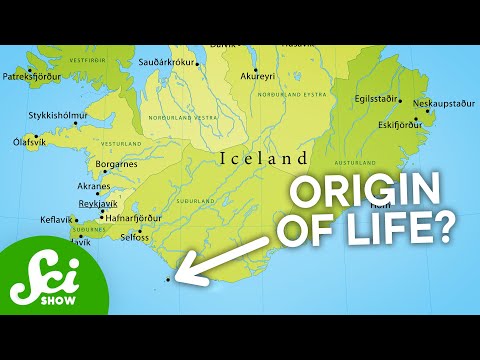
The term Surtsey refers to a volcanic island located in the Vestmannaeyjar archipelago off the southern coast of Iceland. It is not just any island; it is one of the youngest landmasses on Earth, having been created by a series of volcanic eruptions that began 130 meters below sea level and reached the surface on November 14, 1963. The eruption lasted until June 5, 1967, by which time the island reached a maximum size of 2.7 square kilometers. Since then, wind and wave erosion have caused the island to steadily diminish in size, a process that provides geologists with invaluable data on the lifespan of volcanic landforms. The name itself is derived from Norse mythology, specifically from Surtr, a fire giant who plays a significant role in the events of Ragnarök. In modern English and scientific discourse, the word is used primarily as a proper noun to identify this specific location, but it also serves as a benchmark for 'primary succession'—the process by which life colonizes previously uninhabited land.
- Geological Context
- Surtsey is the type locality for 'Surtseyan eruptions,' which occur when magma interacts explosively with shallow water.
- Biological Significance
- The island is a strictly protected nature reserve where scientists observe how plants, insects, and birds arrive and establish an ecosystem without human interference.
The birth of Surtsey provided a rare opportunity for scientists to witness the very beginning of life on a new landmass.
When people use the word Surtsey, they are often discussing topics related to volcanology, ecology, or Icelandic geography. It is a word that carries a sense of wonder and scientific purity. Because the island is off-limits to the general public, the word often appears in the context of exclusive research or UNESCO World Heritage discussions. It symbolizes the raw power of nature to create and the resilience of life to adapt. For instance, a biologist might say, 'We are looking for Surtsey-like conditions to study microbial colonization.' In this sense, the proper noun starts to function almost as an adjective for 'pristine and newly formed.' The island's existence has allowed researchers to move from theoretical models of island biogeography to empirical observation, making the name synonymous with 'natural laboratory.'
Researchers traveling to Surtsey must undergo rigorous cleaning to ensure no foreign seeds are introduced.
- Mythological Origin
- Named after Surtr, the giant who brings fire to the world, reflecting the island's violent volcanic birth.
Furthermore, the word is used in historical contexts when discussing the 1960s. The eruption was a global media event, being one of the first times a volcanic birth was captured so clearly on film. It represents a moment in history where humanity realized how dynamic the Earth's crust truly is. In Iceland, Surtsey is a point of national pride and a symbol of the country's unique geological identity. It is often mentioned alongside other famous Icelandic volcanoes like Hekla or Katla, but Surtsey remains unique because it is an island. The word evokes images of black basalt, steam rising from the ocean, and the first green shoots of sea rocket pushing through volcanic ash. It is a testament to the fact that the Earth is still 'under construction.'
Only a handful of scientists are permitted to set foot on Surtsey each year.
The erosion of Surtsey is a slow but inevitable process governed by the North Atlantic waves.
- Conservation Status
- The island is one of the most protected places on Earth to prevent contamination by non-native species.
Watching the 1963 footage of Surtsey emerging from the sea is a mesmerizing experience for any geology student.
Using the word Surtsey correctly involves understanding its role as a specific proper noun. Because it refers to a unique geographical entity, it is almost always capitalized and usually functions as the subject or object of a sentence. It does not typically take an article (like 'the') unless you are using it as an adjective (e.g., 'the Surtsey eruption'). For example, you would say 'Surtsey is located south of Iceland,' rather than 'The Surtsey is located...' This is a common rule for islands that are not part of a plural group (like 'The Bahamas'). When writing about Surtsey, it is important to maintain a tone of scientific accuracy or geographical description, as the word is rarely used in slang or informal contexts unless referring to the island itself.
- As a Subject
- 'Surtsey provides a unique case study for primary succession.'
- As an Object
- 'UNESCO designated Surtsey as a World Heritage site in 2008.'
During the lecture, the professor explained how Surtsey was formed by phreatomagmatic activity.
In more descriptive writing, Surtsey can be used to evoke themes of isolation, newness, or the power of the Earth. You might see it in a sentence like, 'The newly formed sandbar was a miniature Surtsey, a tiny world waiting for its first inhabitant.' Here, the word is used metaphorically to compare a small, new landmass to the famous island. However, such metaphorical use is relatively rare. Most often, you will find Surtsey in academic papers, travel guides about Iceland (warning people they cannot visit), and documentaries. When discussing the island's history, it is common to use verbs like 'emerged,' 'erupted,' 'colonized,' and 'eroded.' These verbs capture the dynamic lifecycle of the island from its birth in the 1960s to its current state of gradual disappearance.
The Surtsey Research Society oversees all scientific expeditions to the island.
- Prepositional Phrases
- 'Life on Surtsey began with the arrival of seeds carried by ocean currents.'
Another way to use the word is in the context of comparative geology. Scientists might compare Surtsey to other volcanic islands like Anak Krakatau in Indonesia or Nishinoshima in Japan. In these sentences, Surtsey acts as a standard of measurement for how quickly a new island can be colonized by life. For example: 'Unlike the rapid colonization seen on Surtsey, the development of soil on Nishinoshima has been slower due to different lava compositions.' This demonstrates the word's utility in high-level scientific discourse. Even in simpler sentences, the word carries weight. 'I saw Surtsey from a plane window' is a powerful statement because it highlights the island's isolation and the rarity of seeing it, given its protected status and remote location.
If you fly from Reykjavik to the Westman Islands, you might catch a glimpse of Surtsey in the distance.
The ecological data from Surtsey has redefined our understanding of how species migrate across oceans.
- Historical Reference
- 'In 1963, the world watched in awe as Surtsey rose from the depths of the Atlantic.'
Because of its fragility, human presence on Surtsey is kept to an absolute minimum.
You are most likely to encounter the word Surtsey in educational and scientific environments. It is a staple of secondary school and university-level biology and geology curricula. If you are watching a documentary about volcanoes, Iceland, or the history of the Earth, Surtsey will almost certainly be mentioned as a prime example of island formation. It is also a frequent topic in environmental news, particularly when discussing UNESCO World Heritage sites or the impacts of climate change and rising sea levels on coastal landforms. In Iceland itself, the word is part of the national vocabulary, appearing in museums, textbooks, and even in the names of local businesses or research initiatives, although the island itself remains a restricted zone.
- Documentaries
- Programs by David Attenborough or National Geographic often feature Surtsey when discussing evolution and colonization.
- Academic Lectures
- Professors use Surtsey to illustrate the concept of 'primary succession' in ecology classes.
'And here we see Surtsey, an island born of fire, now a sanctuary for life,' the narrator whispered.
In the world of travel, you might hear the word Surtsey when booking a tour of the Westman Islands (Vestmannaeyjar). Tour guides will point toward the horizon and explain that Surtsey lies further south, invisible to the naked eye from the main inhabited island of Heimaey, but present in the collective consciousness of the locals. You might also hear it in discussions about 'volcano tourism,' usually as a cautionary tale or an example of a place that is intentionally kept 'anti-tourist' to preserve its scientific integrity. For those interested in Norse mythology, the name Surtsey might come up in literary circles or fantasy gaming, as it links a real-world location to the ancient stories of the fire giant Surtr, bridging the gap between myth and geology.
The museum exhibit featured a time-lapse video of Surtsey growing from a small reef into a full island.
- Scientific Publications
- Journals like 'Nature' or 'Science' frequently publish updates on the flora and fauna of Surtsey.
Finally, the word appears in international policy discussions regarding conservation. When experts talk about the 'Surtsey model' of protection, they are referring to the strict 'look but don't touch' policy that has kept the island free of invasive species for over 50 years. This makes Surtsey a common reference point in debates about how to manage other sensitive ecosystems around the world. Whether you are a student, a nature lover, or a policy maker, the word Surtsey represents a unique intersection of Earth's creative power and humanity's commitment to scientific observation. It is a word that reminds us that the world is still changing, and that we have a front-row seat to the processes that shaped our planet billions of years ago.
'We must protect this site as fiercely as the Icelanders protect Surtsey,' the environmentalist argued.
The news report highlighted the discovery of a new moss species on Surtsey.
- Photography Circles
- Aerial photographers often seek special permits to capture the stark beauty of Surtsey from above.
During the climate summit, Surtsey was cited as an example of land vulnerability to erosion.
One of the most frequent mistakes people make with the word Surtsey is failing to capitalize it. As a proper noun referring to a specific geographic location, it must always start with an uppercase 'S'. Another common error is treating it as a common noun, such as saying 'a surtsey' to describe any new island. While scientists might use 'Surtseyan' as an adjective to describe a type of eruption, the word 'Surtsey' itself is reserved for the Icelandic island. Additionally, many people mistakenly believe that Surtsey is open to tourists. In reality, it is one of the most restricted places on the planet, and even mentioning 'visiting Surtsey' in a travel context can be a factual error unless you are a licensed researcher with a very specific permit.
- Capitalization
- Incorrect: 'The new island was named surtsey.' Correct: 'The new island was named Surtsey.'
- Article Usage
- Incorrect: 'I want to see the Surtsey.' Correct: 'I want to see Surtsey.'
Many students confuse Surtsey with the fire giant Surtr himself, but the '-ey' suffix means 'island'.
Pronunciation is another area where mistakes occur. In English, it is often pronounced 'SURT-see,' but the Icelandic pronunciation is closer to 'SURT-say.' While 'SURT-see' is generally accepted in English-speaking academic circles, being aware of the native pronunciation is important for those working closely with Icelandic colleagues. Furthermore, people often confuse Surtsey with other famous volcanic islands, such as Krakatoa or Santorini. While they share a volcanic origin, Surtsey is unique because of its recent formation and its status as a pristine ecological laboratory. Confusing these islands in a scientific or geographical discussion can lead to misunderstandings about the specific types of volcanic activity and ecological succession being discussed.
It is a mistake to think that Surtsey will last forever; it is actually shrinking due to erosion.
- Geographical Confusion
- Avoid confusing Surtsey with Heimaey, the nearby inhabited island that also experienced a famous eruption in 1973.
Finally, a subtle mistake is overestimating the size of Surtsey. While it was quite large at the end of its eruption in 1967, it has since lost about half of its area to the relentless waves of the North Atlantic. Referring to it as a 'large island' in a modern context would be inaccurate. It is a small, rugged landmass. Writers should also be careful not to imply that life on Surtsey happened 'by magic.' It is a result of documented scientific processes—seeds arriving via birds, ocean currents, and wind. Using the word Surtsey requires a balance of respecting its mythological namesake while adhering to the rigorous scientific reality of its existence. By avoiding these common pitfalls, you can use the word with the precision and authority it deserves in both academic and general contexts.
The textbook corrected the error that Surtsey was formed by a single explosion; it was actually a years-long process.
A common spelling mistake is 'Surtsey island' (redundant) or 'Surtsay' (phonetic misspelling).
- Contextual Error
- Using Surtsey as a synonym for 'volcano' is incorrect; it is the island created by the volcano.
The guide clarified that Surtsey is part of the Vestmannaeyjar group, not a standalone island in the deep ocean.
While Surtsey is a unique proper noun, there are several words and terms that are closely related or can serve as alternatives depending on the context. If you are discussing the geological nature of the island, you might use terms like 'volcanic island,' 'islet,' or 'landmass.' If the focus is on its ecological role, terms like 'natural laboratory,' 'pristine ecosystem,' or 'succession site' are appropriate. In scientific literature, Surtsey is often compared to other 'new' islands, so words like 'Anak Krakatau' (Indonesia), 'Nishinoshima' (Japan), or 'Home Reef' (Tonga) might appear in the same paragraph. Understanding these alternatives helps to provide a broader context for why Surtsey is so significant in the fields of earth and life sciences.
- Volcanic Island
- A general term for any island formed by volcanic activity. Surtsey is a specific example of this.
- Primary Succession Site
- An ecological term for a place where life begins to grow for the first time on new land.
While Hawaii is a collection of volcanic islands, Surtsey is unique because we witnessed its entire birth.
In terms of mythology, the name is tied to 'Surtr,' but you might also hear references to 'Muspelheim,' the realm of fire in Norse myth. However, these are literary rather than geographical alternatives. In a more poetic or metaphorical sense, Surtsey can be called a 'cradle of life' or a 'phoenix from the waves.' These phrases capture the dramatic emergence of the island from the cold North Atlantic. When comparing Surtsey to other Icelandic locations, you might mention 'Heimaey,' which is the largest and only inhabited island in the same archipelago. While Heimaey is a community, Surtsey is a sanctuary. This distinction is crucial for anyone studying the region. Using the right term ensures that the reader understands whether you are talking about a human settlement or a strictly scientific zone.
The term 'Surtseyan' is now used globally to describe similar explosive eruptions in shallow water.
- Islet
- A very small island. Surtsey is often referred to as an islet as it continues to erode.
Another set of related words includes 'tephra,' 'basalt,' and 'tuff.' These are the geological materials that make up Surtsey. Instead of just saying 'the island's ground,' a more precise writer would say 'the Surtseyan tephra.' This level of detail is common in scientific writing. Furthermore, the term 'UNESCO World Heritage Site' is a formal alternative that highlights the island's global importance. When you call Surtsey a 'World Heritage Site,' you are emphasizing its value to all of humanity, not just to Iceland. This broadens the scope of the conversation from local geography to international conservation. Whether you use the specific name or one of these alternatives, the goal is to convey the island's significance as a rare, evolving, and protected piece of our planet's history.
As a natural laboratory, the island offers insights that no man-made experiment could replicate.
Scientists often refer to Surtsey as a 'pristine' environment because of the lack of human impact.
- Succession
- The sequence of biological changes in a community over time, perfectly illustrated by Surtsey.
The Surtsey case study is essential for understanding how life spreads across the globe.
How Formal Is It?
재미있는 사실
Before the name Surtsey was finalized, some people suggested naming it after other mythological figures, but the connection to the fire giant Surtr was considered the most appropriate for a volcanic birth.
발음 가이드
- Pronouncing it as 'Surt-SAY' (though this is closer to Icelandic, it's rare in English).
- Adding an extra 'e' sound: 'Surt-uh-sey'.
- Confusing the 'ey' with 'eye'.
- Mumbling the 't' sound.
- Over-emphasizing the second syllable.
난이도
The word itself is easy, but the context often involves complex scientific terms.
Requires correct capitalization and understanding of its status as a proper noun.
Pronunciation is straightforward in English, though native Icelandic is harder.
Easily recognizable in documentaries and lectures.
다음에 무엇을 배울까
선수 학습
다음에 배울 것
고급
알아야 할 문법
Proper Nouns for Islands
Surtsey (No 'the'), but 'The Westman Islands' (Plural group).
Adjectives from Proper Nouns
Surtseyan (Capitalized adjective).
Prepositions of Place
On Surtsey (Not 'in Surtsey').
Passive Voice for Natural Events
Surtsey was formed by a volcano.
Capitalization of Mythological Names
Surtr, the fire giant.
수준별 예문
Surtsey is a new island in Iceland.
Surtsey est une nouvelle île en Islande.
Proper noun, no article.
A volcano made Surtsey in 1963.
Un volcan a créé Surtsey en 1963.
Past tense verb 'made'.
No people live on Surtsey.
Personne ne vit sur Surtsey.
Negative sentence with 'no people'.
Scientists go to Surtsey to study plants.
Les scientifiques vont à Surtsey pour étudier les plantes.
Infinitive of purpose 'to study'.
Surtsey is very small now.
Surtsey est très petite maintenant.
Adjective 'small' with intensifier 'very'.
Birds fly to Surtsey every year.
Les oiseaux volent vers Surtsey chaque année.
Present simple for a regular action.
The name Surtsey comes from a giant.
Le nom Surtsey vient d'un géant.
Preposition 'from' showing origin.
I can see Surtsey from the airplane.
Je peux voir Surtsey depuis l'avion.
Modal verb 'can' for ability/possibility.
Surtsey was born from a volcanic eruption under the sea.
Surtsey est née d'une éruption volcanique sous la mer.
Passive voice 'was born'.
The island was named after a famous fire giant.
L'île a été nommée d'après un célèbre géant du feu.
Phrasal verb 'named after'.
You cannot visit Surtsey because it is a nature reserve.
Vous ne pouvez pas visiter Surtsey car c'est une réserve naturelle.
Conjunction 'because' showing reason.
Scientists found the first seeds on Surtsey in 1965.
Les scientifiques ont trouvé les premières graines sur Surtsey en 1965.
Past simple 'found'.
The ocean waves are making Surtsey smaller every day.
Les vagues de l'océan rendent Surtsey plus petite chaque jour.
Present continuous for a current process.
Surtsey is part of a group of islands called Vestmannaeyjar.
Surtsey fait partie d'un groupe d'îles appelé Vestmannaeyjar.
Phrase 'part of' showing belonging.
It is important to protect Surtsey from human influence.
Il est important de protéger Surtsey de l'influence humaine.
Dummy subject 'It' with adjective 'important'.
The eruption of Surtsey lasted for about four years.
L'éruption de Surtsey a duré environ quatre ans.
Preposition 'for' showing duration.
Surtsey provides a unique opportunity to study how life begins on new land.
Surtsey offre une occasion unique d'étudier comment la vie commence sur une nouvelle terre.
Present simple for a general fact.
Since its formation, Surtsey has been strictly off-limits to tourists.
Depuis sa formation, Surtsey est strictement interdite aux touristes.
Present perfect passive 'has been'.
The island was declared a UNESCO World Heritage site in 2008.
L'île a été déclarée site du patrimoine mondial de l'UNESCO en 2008.
Past simple passive 'was declared'.
Researchers must clean their clothes before landing on Surtsey.
Les chercheurs doivent nettoyer leurs vêtements avant de débarquer sur Surtsey.
Modal verb 'must' for obligation.
The erosion of Surtsey is a major concern for geologists.
L'érosion de Surtsey est une préoccupation majeure pour les géologues.
Noun phrase 'The erosion of Surtsey'.
If the eruption had happened elsewhere, Surtsey might not exist today.
Si l'éruption s'était produite ailleurs, Surtsey n'existerait peut-être pas aujourd'hui.
Third conditional 'If... had happened... might not exist'.
Surtsey is often used as a textbook example of primary succession.
Surtsey est souvent utilisée comme un exemple classique de succession primaire.
Adverb 'often' with passive voice.
Many different species of birds have now nested on Surtsey.
De nombreuses espèces d'oiseaux différentes ont maintenant niché sur Surtsey.
Present perfect 'have nested'.
The Surtsey eruption was one of the first to be documented so thoroughly by scientists.
L'éruption de Surtsey a été l'une des premières à être documentée de manière aussi approfondie par les scientifiques.
Superlative 'one of the first' with infinitive.
The island's ecosystem is developing at a surprisingly rapid pace.
L'écosystème de l'île se développe à un rythme étonnamment rapide.
Present continuous with adverbial phrase.
Surtsey serves as a benchmark for comparing other volcanic islands around the world.
Surtsey sert de référence pour comparer d'autres îles volcaniques à travers le monde.
Verb 'serves as' meaning 'acts as'.
The process of palagonitization has helped stabilize the rocks on Surtsey.
Le processus de palagonitisation a aidé à stabiliser les roches sur Surtsey.
Present perfect with specialized terminology.
Despite the harsh conditions, life has managed to thrive on Surtsey.
Malgré les conditions difficiles, la vie a réussi à prospérer sur Surtsey.
Concession with 'Despite' followed by a noun phrase.
The Surtsey Research Society was established to oversee all scientific work on the island.
La Société de recherche de Surtsey a été créée pour superviser tous les travaux scientifiques sur l'île.
Passive voice with purpose infinitive.
Surtsey is a testament to the Earth's ongoing geological activity.
Surtsey est un témoignage de l'activité géologique continue de la Terre.
Metaphorical use of 'testament to'.
Researchers are interested in how insects first reached Surtsey.
Les chercheurs s'intéressent à la manière dont les insectes ont atteint Surtsey pour la première fois.
Adjective 'interested in' with a 'how' clause.
The emergence of Surtsey provided an empirical basis for the study of island biogeography.
L'émergence de Surtsey a fourni une base empirique pour l'étude de la biogéographie insulaire.
Formal academic vocabulary 'empirical basis'.
Marine erosion continues to reshape the coastline of Surtsey at an alarming rate.
L'érosion marine continue de remodeler le littoral de Surtsey à un rythme alarmant.
Present simple with 'continues to' + infinitive.
The island's strictly enforced isolation is paramount to its scientific integrity.
L'isolement strictement appliqué de l'île est primordial pour son intégrité scientifique.
Adjective 'paramount' for high importance.
Surtseyan eruptions are characterized by the explosive interaction of magma and seawater.
Les éruptions surtseyennes se caractérisent par l'interaction explosive du magma et de l'eau de mer.
Passive voice with 'characterized by'.
The colonization of Surtsey by vascular plants has been meticulously documented since 1965.
La colonisation de Surtsey par les plantes vasculaires a été méticuleusement documentée depuis 1965.
Present perfect passive with adverb 'meticulously'.
Few places on Earth offer such a pristine environment for ecological observation as Surtsey.
Peu d'endroits sur Terre offrent un environnement aussi vierge pour l'observation écologique que Surtsey.
Comparative structure 'such a... as'.
The gradual subsidence of Surtsey is a natural part of its geological lifecycle.
L'affaissement progressif de Surtsey est une partie naturelle de son cycle de vie géologique.
Noun 'subsidence' referring to sinking land.
Surtsey's inscription on the World Heritage List underscores its global significance.
L'inscription de Surtsey sur la liste du patrimoine mondial souligne son importance mondiale.
Verb 'underscores' meaning 'emphasizes'.
The Surtseyan eruption style serves as a fundamental paradigm in modern volcanology.
Le style d'éruption surtseyen sert de paradigme fondamental dans la volcanologie moderne.
Advanced noun 'paradigm'.
The island's geomorphological evolution is a testament to the dynamic interplay between volcanic construction and marine denudation.
L'évolution géomorphologique de l'île témoigne de l'interaction dynamique entre la construction volcanique et la dénudation marine.
Complex noun phrases and academic terminology.
Anthropogenic contamination is the primary threat to the scientific validity of the Surtsey experiments.
La contamination anthropique est la principale menace pour la validité scientifique des expériences de Surtsey.
Adjective 'anthropogenic' (human-caused).
The successional trajectory of Surtsey's flora has deviated from initial predictions in several key aspects.
La trajectoire successionnelle de la flore de Surtsey a dévié des prédictions initiales sur plusieurs aspects clés.
Advanced vocabulary 'successional trajectory'.
Surtsey provides an unparalleled longitudinal study of primary succession in a sub-arctic environment.
Surtsey offre une étude longitudinale inégalée de la succession primaire dans un environnement subarctique.
Adjective 'longitudinal' (over a long time).
The chemical transformation of tephra into palagonite tuff has conferred a degree of resilience upon the island's core.
La transformation chimique du téphra en tuf palagonitique a conféré un certain degré de résilience au cœur de l'île.
Verb 'conferred upon' (given to).
Surtsey's isolation serves as a rigorous control in the natural experiment of trans-oceanic dispersal.
L'isolement de Surtsey sert de témoin rigoureux dans l'expérience naturelle de dispersion transocéanique.
Noun 'control' in a scientific sense.
The island remains an enigmatic beacon for those studying the primordial forces of our planet.
L'île reste un phare énigmatique pour ceux qui étudient les forces primordiales de notre planète.
Metaphorical and evocative language.
자주 쓰는 조합
자주 쓰는 구문
— Refers to the island's emergence from the sea in 1963.
The birth of Surtsey was a global sensation.
— Used as a comparison for something new and untouched.
The new garden was like Surtsey, waiting for life.
— Describes the waters surrounding the island.
Seals are often seen off the coast of Surtsey.
— Refers to the strict conservation rules used on the island.
We should apply the Surtsey model to other parks.
— Refers to the scientific knowledge gained from the island.
Lessons from Surtsey to the world are invaluable.
— The lasting scientific impact of the island.
Surtsey's legacy is found in biology textbooks.
— Refers to the nearby islands or the influence of the eruption.
Heimaey lives in the shadow of Surtsey's history.
— The image of the island emerging from the ocean.
The film showed Surtsey rising from the waves.
— Viewing the island as a large-scale natural experiment.
The Surtsey experiment has lasted over 50 years.
— The ongoing efforts to keep the island pristine.
Protecting Surtsey is a national priority for Iceland.
자주 혼동되는 단어
Surtr is the giant; Surtsey is the island named after him.
Heimaey is the inhabited island nearby; Surtsey is uninhabited.
Krakatoa is in Indonesia; Surtsey is in Iceland.
관용어 및 표현
— A problem that appears suddenly and grows rapidly.
This bug in the software is a Surtsey of a problem.
Informal/Creative— To emerge quickly and dramatically from obscurity.
The new startup is rising like Surtsey in the tech world.
Metaphorical— Completely pure and free from human influence.
The data was as untouched as Surtsey.
Literary— Something that is happening naturally but hidden from view.
The forest's growth was Surtsey's secret.
Poetic— The rapid colonization of a new market or area.
The Surtsey effect saw the brand take over the city.
Business/Slang— A combination of extreme opposites.
Their relationship was fire and ice like Surtsey.
Literary— A sudden, explosive beginning to a project.
She had a Surtseyan spark of inspiration.
Creative— Something that is slowly but surely disappearing.
Our privacy is vanishing like Surtsey in the digital age.
Metaphorical— A place where things are allowed to develop without help.
The classroom was a Surtsey lab for social skills.
Educational— A reference to volcanic heat or intense creative energy.
The oven felt like Surtr's breath.
Mythological/Slang혼동하기 쉬운
It sounds almost the same as Surtsey.
Surtsey is the noun (the island); Surtseyan is the adjective (the eruption style).
The Surtseyan eruption created Surtsey.
Both are Icelandic names for islands in the same area.
Vestmannaeyjar is the name of the whole archipelago; Surtsey is just one island in it.
Surtsey is the southernmost island of the Vestmannaeyjar.
Both are famous Icelandic volcanic features.
Eyjafjallajökull is a glacier-covered volcano on the mainland; Surtsey is an island.
Unlike Eyjafjallajökull, Surtsey is entirely surrounded by sea.
Often used together with Surtsey.
Primary succession is the process; Surtsey is the place where it happens.
Surtsey is a great place to study primary succession.
Commonly mentioned when discussing Surtsey's geology.
Tephra is the material (ash/rock); Surtsey is the landmass made of it.
The tephra on Surtsey is turning into hard rock.
문장 패턴
Surtsey is [adjective].
Surtsey is new.
Surtsey was born in [year].
Surtsey was born in 1963.
Scientists study [noun] on Surtsey.
Scientists study plants on Surtsey.
Surtsey is known for [noun/gerund].
Surtsey is known for its ecological research.
The [noun] of Surtsey provides [noun].
The emergence of Surtsey provides empirical data.
Surtsey stands as a [noun] of [noun].
Surtsey stands as a paradigm of primary succession.
Life on Surtsey...
Life on Surtsey began with seeds.
The name Surtsey...
The name Surtsey comes from Norse myth.
어휘 가족
명사
형용사
관련
사용법
Low in daily conversation, but high in specific scientific and geographical contexts.
-
surtsey
→
Surtsey
Surtsey is a proper noun and must always be capitalized, regardless of where it appears in a sentence.
-
The Surtsey
→
Surtsey
Singular islands in English typically do not take the definite article 'the'.
-
Visiting Surtsey as a tourist.
→
Viewing Surtsey from a distance.
Surtsey is a restricted nature reserve; claiming you can visit it as a regular tourist is a factual error.
-
Surtsey is a volcano.
→
Surtsey is an island formed by a volcano.
While created by volcanic activity, Surtsey refers to the resulting landmass, not the volcanic vent itself.
-
Surtsey is in the Pacific.
→
Surtsey is in the Atlantic.
Surtsey is located off the coast of Iceland in the North Atlantic Ocean.
팁
Capitalize the 'S'
Always remember that Surtsey is a proper noun. Like 'London' or 'Mars,' it must always start with a capital letter. This shows respect for its status as a specific geographical location.
Eruption Style
If you are writing about volcanoes, use the term 'Surtseyan eruption' to sound more professional. It refers specifically to the explosive mix of magma and water seen during Surtsey's birth.
No Tourists Allowed
When talking about travel to Iceland, don't tell people they can visit Surtsey. It's a common mistake. Instead, mention that they can see it from a plane or a boat tour that stays at a distance.
The Fire Giant
To remember the name, think of 'Surt' as 'Short' for Surtr (the fire giant) and 'sey' as 'sea.' The fire giant in the sea! This links the name to its mythological and volcanic origins.
No 'The'
In English, we usually don't say 'the Surtsey.' We just say 'Surtsey.' For example: 'Surtsey is beautiful' is correct. 'The Surtsey is beautiful' is incorrect. This is the standard for most singular islands.
Primary Succession
Use Surtsey as your 'go-to' example when discussing primary succession. It is the most famous real-world case study of life starting from scratch on new land.
English vs. Icelandic
In English, 'SURT-see' is fine. But if you want to impress an Icelander, try 'SURT-say.' The 'ey' in Icelandic sounds like the 'ay' in 'day.' This shows a deeper cultural awareness.
The 'ey' Suffix
Remember that many Icelandic islands end in '-ey' (like Heimaey). This means 'island.' If you remember this, you'll never forget how to spell the end of Surtsey.
Southernmost Point
Remember that Surtsey is the southernmost point of Iceland. This helps you place it on a map and understand why it's so isolated from the mainland.
Surtr's Island
Knowing that Surtsey means 'Surtr's Island' helps you connect the geography to the mythology. It makes the word more meaningful and easier to remember in the long term.
암기하기
기억법
Think of a 'Surt' (shirt) floating in the 'sey' (sea). A fire giant dropped his shirt and it turned into an island.
시각적 연상
Imagine a giant black rock rising out of cold blue water with a single green plant growing on top.
Word Web
챌린지
Try to explain the birth of Surtsey to a friend using only five sentences. Make sure to mention the year it started and why it is important for science.
어원
The name 'Surtsey' was officially given to the island shortly after its emergence in 1963. It follows the Icelandic tradition of naming geographical features after figures from Norse mythology.
원래 의미: The name literally translates to 'Surtr's Island.' 'Surtr' is the name of a fire giant, and '-ey' is the Icelandic word for island.
North Germanic / Old Norse.문화적 맥락
There are no major sensitivities, but it is important to respect the 'no-visit' rule when discussing it with Icelanders.
In the English-speaking world, Surtsey is primarily known through nature documentaries and science textbooks.
실생활에서 연습하기
실제 사용 상황
Science Class
- Primary succession on Surtsey
- The Surtseyan eruption style
- Colonization by pioneer species
- Geological formation of Surtsey
Travel Documentary
- Rising from the North Atlantic
- A pristine nature reserve
- Off-limits to the public
- The fire giant's island
Environmental Policy
- UNESCO World Heritage status
- Strict conservation measures
- Protecting scientific integrity
- The Surtsey Research Society
History Lesson
- The 1963 eruption
- Documenting the birth of an island
- A global media event
- Naming the new landmass
Mythology Discussion
- Named after Surtr
- The fire giant of Ragnarök
- Myth meets geology
- Old Norse influence
대화 시작하기
"Have you ever heard of Surtsey, the island in Iceland that was born in the 1960s?"
"If you could visit any restricted place, would Surtsey be on your list?"
"Why do you think it's important for scientists to keep Surtsey off-limits to tourists?"
"Do you think Surtsey will eventually disappear because of the ocean waves?"
"What kind of plants do you think were the first to grow on Surtsey's volcanic ash?"
일기 주제
Imagine you are the first scientist to land on Surtsey in 1965. Describe what you see and feel.
Write a story about the fire giant Surtr watching his island grow from the bottom of the sea.
Why is it important to have 'natural laboratories' like Surtsey in our modern world?
If you were a bird flying to Surtsey for the first time, what would you bring with you?
Discuss the balance between human curiosity and the need to protect pristine environments like Surtsey.
자주 묻는 질문
10 질문No, you cannot visit Surtsey. It is a strictly protected nature reserve and a UNESCO World Heritage site. Only scientists with special permits are allowed to land on the island to conduct research. This is to ensure that the natural ecological processes are not disturbed by human presence or the accidental introduction of foreign species.
Surtsey was formed by a volcanic eruption that began on November 14, 1963. The eruption started deep under the ocean and eventually broke the surface. The volcanic activity continued for nearly four years, finally ending on June 5, 1967. Since then, the island has been slowly eroding due to the action of the wind and waves.
No, Surtsey is no longer growing. Since the eruption ended in 1967, the island has been steadily decreasing in size. The soft volcanic material is easily eroded by the powerful waves of the North Atlantic. While some parts of the island have hardened into rock, geologists estimate that the island will continue to shrink over the coming centuries.
Despite being a relatively new island, Surtsey is home to a variety of life forms. The first to arrive were mosses and lichens, followed by vascular plants like sea rocket and lyme grass. Today, there are dozens of plant species. Many birds also nest there, including puffins, gulls, and fulmars. Insects and seals are also found on and around the island.
The island is named after Surtr, a fire giant from Norse mythology. In the myths, Surtr is a powerful being who brings fire to the world during Ragnarök. The name 'Surtsey' literally means 'Surtr's Island.' It was chosen to reflect the fiery and dramatic way the island was born from a volcanic eruption in the middle of the ocean.
Surtsey is located in the Vestmannaeyjar (Westman Islands) archipelago, which is off the southern coast of Iceland. It is the southernmost point of Iceland. It is about 32 kilometers from the mainland and can sometimes be seen from the air or from a distance on a very clear day from the other Westman Islands.
A Surtseyan eruption is a type of volcanic eruption that takes place in shallow water. It is characterized by violent explosions caused by the interaction between hot magma and cold water. This creates large clouds of steam and ash. The term was named after Surtsey because the 1963 eruption provided the first clear scientific documentation of this specific process.
Surtsey was designated as a UNESCO World Heritage site in 2008 because of its 'outstanding universal value' to science. It is one of the few places on Earth where the process of primary biological succession can be studied in a pristine environment without human interference. It provides a unique record of how life colonizes new land and how volcanic islands evolve over time.
Plants reach Surtsey through three main natural methods: wind, water, and animals. Some seeds are light enough to be carried by the wind. Others are buoyant and float on ocean currents until they wash up on the beach. Many seeds are also carried by birds, either stuck to their feathers or passed through their digestive systems after being eaten elsewhere.
It is possible that Surtsey will eventually disappear, but not for a long time. While the soft ash and tephra are eroding quickly, the core of the island has undergone a chemical process called palagonitization, which turns volcanic glass into hard rock. This hardened core is much more resistant to erosion. Scientists believe Surtsey will remain as a small, rocky island for many centuries to come.
셀프 테스트 195 질문
Describe Surtsey in three sentences for a young child.
Well written! Good try! Check the sample answer below.
Explain why Surtsey is important for science.
Well written! Good try! Check the sample answer below.
Write a short paragraph about the origin of the name Surtsey.
Well written! Good try! Check the sample answer below.
Compare Surtsey with a normal tourist island.
Well written! Good try! Check the sample answer below.
Discuss the impact of erosion on Surtsey's future.
Well written! Good try! Check the sample answer below.
Imagine you are a scientist on Surtsey. Write a diary entry for one day.
Well written! Good try! Check the sample answer below.
Why is the 'no-tourist' rule so strict on Surtsey?
Well written! Good try! Check the sample answer below.
What does Surtsey tell us about the Earth's history?
Well written! Good try! Check the sample answer below.
Summarize the Surtseyan eruption style.
Well written! Good try! Check the sample answer below.
Write a formal letter requesting permission to study on Surtsey.
Well written! Good try! Check the sample answer below.
Describe the first plants to grow on Surtsey.
Well written! Good try! Check the sample answer below.
What is the role of birds in Surtsey's ecosystem?
Well written! Good try! Check the sample answer below.
How has Surtsey's size changed since 1967?
Well written! Good try! Check the sample answer below.
What is the significance of the year 2008 for Surtsey?
Well written! Good try! Check the sample answer below.
Explain the term 'natural laboratory' in relation to Surtsey.
Well written! Good try! Check the sample answer below.
Describe the visual appearance of Surtsey from the air.
Well written! Good try! Check the sample answer below.
What are the main challenges for life on Surtsey?
Well written! Good try! Check the sample answer below.
Discuss the mythological connection of the name Surtsey.
Well written! Good try! Check the sample answer below.
How does Surtsey help us understand other volcanic islands?
Well written! Good try! Check the sample answer below.
Write a short poem about Surtsey.
Well written! Good try! Check the sample answer below.
Say the word: Surtsey.
Read this aloud:
당신의 답변:
Speech recognition is not supported in your browser. Try Chrome or Edge.
Tell me one fact about Surtsey.
Read this aloud:
당신의 답변:
Speech recognition is not supported in your browser. Try Chrome or Edge.
Why can't people visit Surtsey?
Read this aloud:
당신의 답변:
Speech recognition is not supported in your browser. Try Chrome or Edge.
Who is the island named after?
Read this aloud:
당신의 답변:
Speech recognition is not supported in your browser. Try Chrome or Edge.
What is primary succession?
Read this aloud:
당신의 답변:
Speech recognition is not supported in your browser. Try Chrome or Edge.
Describe the eruption of Surtsey.
Read this aloud:
당신의 답변:
Speech recognition is not supported in your browser. Try Chrome or Edge.
How do plants get to Surtsey?
Read this aloud:
당신의 답변:
Speech recognition is not supported in your browser. Try Chrome or Edge.
What is a Surtseyan eruption?
Read this aloud:
당신의 답변:
Speech recognition is not supported in your browser. Try Chrome or Edge.
Why is Surtsey a UNESCO site?
Read this aloud:
당신의 답변:
Speech recognition is not supported in your browser. Try Chrome or Edge.
What will happen to Surtsey in the future?
Read this aloud:
당신의 답변:
Speech recognition is not supported in your browser. Try Chrome or Edge.
Pronounce 'Surtseyan' correctly.
Read this aloud:
당신의 답변:
Speech recognition is not supported in your browser. Try Chrome or Edge.
Explain the importance of palagonitization.
Read this aloud:
당신의 답변:
Speech recognition is not supported in your browser. Try Chrome or Edge.
What is the southernmost point of Iceland?
Read this aloud:
당신의 답변:
Speech recognition is not supported in your browser. Try Chrome or Edge.
Name two things that live on Surtsey.
Read this aloud:
당신의 답변:
Speech recognition is not supported in your browser. Try Chrome or Edge.
When did the eruption end?
Read this aloud:
당신의 답변:
Speech recognition is not supported in your browser. Try Chrome or Edge.
Is Surtsey in the north or south of Iceland?
Read this aloud:
당신의 답변:
Speech recognition is not supported in your browser. Try Chrome or Edge.
What does the name Surtsey mean?
Read this aloud:
당신의 답변:
Speech recognition is not supported in your browser. Try Chrome or Edge.
How long has Surtsey been studied?
Read this aloud:
당신의 답변:
Speech recognition is not supported in your browser. Try Chrome or Edge.
Why is Surtsey called a 'natural laboratory'?
Read this aloud:
당신의 답변:
Speech recognition is not supported in your browser. Try Chrome or Edge.
Would you like to be a scientist on Surtsey? Why?
Read this aloud:
당신의 답변:
Speech recognition is not supported in your browser. Try Chrome or Edge.
Listen to the description: 'An island born in 1963 in Iceland.' What is the island?
Listen: 'Named after a fire giant.' What is the name of the giant?
Listen: 'The eruption lasted four years.' How long was the eruption?
Listen: 'It is a UNESCO World Heritage site.' What kind of site is it?
Listen: 'Erosion is caused by waves.' What causes erosion?
Listen: 'Scientists study primary succession.' What do they study?
Listen: 'Surtsey is off-limits to tourists.' Can tourists go there?
Listen: 'The island is part of the Westman Islands.' Which group is it in?
Listen: 'Magma meets seawater in a Surtseyan eruption.' What two things meet?
Listen: 'Palagonite tuff is very hard.' What is hard?
Listen: 'The first seeds arrived by ocean currents.' How did the first seeds arrive?
Listen: 'Surtsey is the southernmost point.' Where is it?
Listen: 'The Research Society was founded in 1965.' When was it founded?
Listen: 'The island is made of basalt.' What material is the island?
Listen: 'Birds help the plants grow.' What helps the plants?
/ 195 correct
Perfect score!
Summary
Surtsey is more than just an island; it is a living laboratory that demonstrates the Earth's creative power and the resilience of life. For example, by studying Surtsey, scientists have learned how quickly birds and ocean currents can bring life to a barren rock.
- Surtsey is a volcanic island off Iceland's south coast, famously born from a 1963-1967 eruption, serving as a pristine site for scientific research.
- Named after the Norse fire giant Surtr, the island is a UNESCO World Heritage site and is strictly off-limits to the general public.
- It is a primary location for studying ecological succession, allowing scientists to observe how life naturally colonizes a brand-new, sterile landmass.
- Geologically, it is the namesake for 'Surtseyan' eruptions and is currently undergoing significant marine erosion that is slowly reducing its size.
Capitalize the 'S'
Always remember that Surtsey is a proper noun. Like 'London' or 'Mars,' it must always start with a capital letter. This shows respect for its status as a specific geographical location.
Eruption Style
If you are writing about volcanoes, use the term 'Surtseyan eruption' to sound more professional. It refers specifically to the explosive mix of magma and water seen during Surtsey's birth.
No Tourists Allowed
When talking about travel to Iceland, don't tell people they can visit Surtsey. It's a common mistake. Instead, mention that they can see it from a plane or a boat tour that stays at a distance.
The Fire Giant
To remember the name, think of 'Surt' as 'Short' for Surtr (the fire giant) and 'sey' as 'sea.' The fire giant in the sea! This links the name to its mythological and volcanic origins.
관련 콘텐츠
Geography 관련 단어
abgeoency
C1지리적 기원에 따라 체계적으로 분석하거나 분류하다.
adjacency
B2주차장과 건물의 인접성 덕분에 출퇴근이 매우 편리합니다.
africa
A1아프리카는 세계에서 두 번째로 큰 대륙이며 54개의 국가가 있습니다.
agrarian
B2경작지, 그 소유권 또는 농업에 기반한 사회 시스템과 관련된. 예: '그 나라는 여전히 강력한 농경 사회의 전통을 유지하고 있다.'
agricultural
B2농업의, 또는 농사와 관련된 것을 의미합니다.
alpine
B2특히 그 풍경, 식물 또는 동물을 포함하여 높은 산과 관련된 것입니다. / 나무가 자랄 수 있는 고도 위의 높은 산에서 발견되는 식물, 동물 또는 풍경과 같은 것을 설명합니다.
altitude
B2비행기는 고도 만 미터에 도달했습니다.
america
B1아메리카는 북미에 위치한 국가로, 보통 미국을 의미합니다.
antarctic
B2남극 또는 그 주변 지역과 관련된. '남극 탐험은 매우 위험한 일이었습니다.'
antarctica
A2남극 대륙은 지구의 가장 남쪽에 위치한 대륙으로, 지리적 남극점을 포함하고 있습니다.

