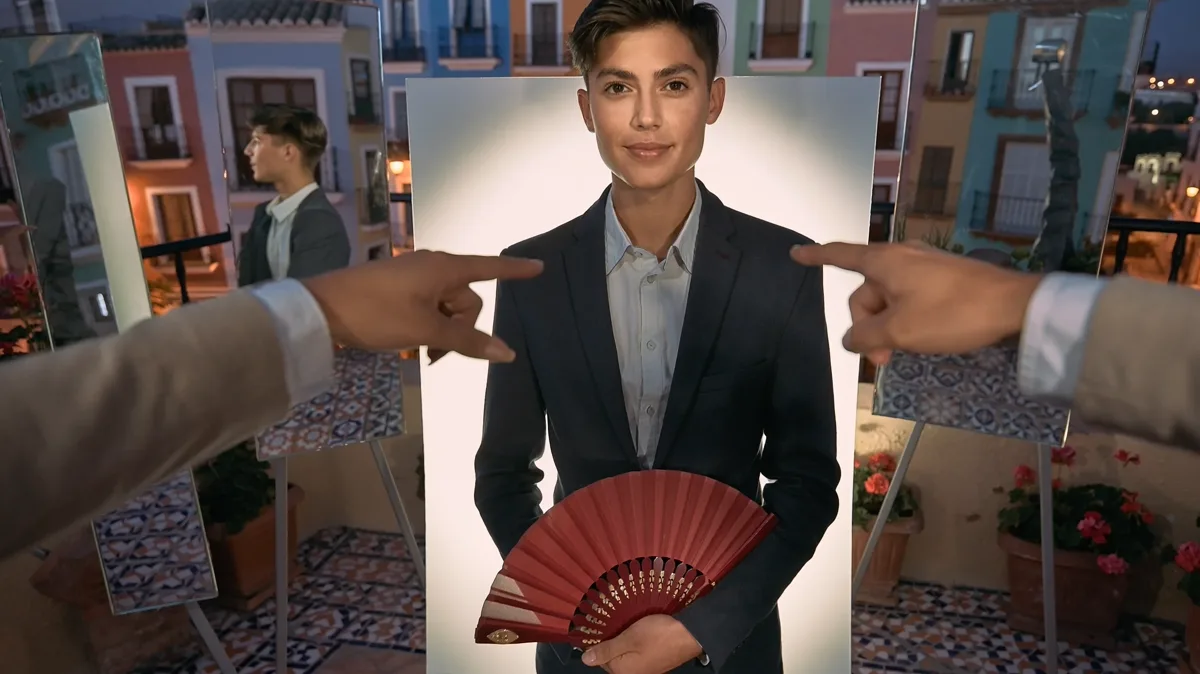
Chapter in 30 Seconds
Master the art of reflexive actions, possession, and complex pronoun sequencing to sound like a native Spanish speaker.
- Identify and use reflexive pronouns for daily routines.
- Distinguish between possessive adjectives and pronouns.
- Sequence multiple pronouns correctly to avoid common errors.
배울 내용
Hey there, language explorer! Ready to take your Spanish to the next level? This chapter is where we dive deep into the fascinating world of pronouns and possession. It might seem tricky at first, but trust me, by the end, you'll be sounding much more like a native speaker!
What will you learn? You'll learn precisely how to use reflexive pronouns like me, te, and se when an action 'reflects' back on the person doing it—think I wash myself. Then, we'll conquer possessive pronouns such as el mío and la tuya, so you can confidently say this is mine or
that book is yours.The cool trick here is that they agree with the gender and number of the object, not the owner! We'll also explore neuter pronouns (
Esto, Eso, Aquello), which are perfect for referring to abstract ideas or unidentified objects.
Why does all this matter? Because these pronouns are the secret sauce to truly sounding natural and expressive in Spanish. Without them, your sentences can feel stiff and textbook-like. Imagine you're at a bustling Spanish market, trying to say, Give it to me, please,or you're telling a friend, "I'm getting ready to go out." These small linguistic details make a huge difference in how authentically you communicate. A crucial part of this journey is mastering pronoun placement (
me, te, lo, se) and their specific order, especially when you have multiple pronouns in a sentence. You'll uncover the Me, Te, Se Lo sequence and understand why le sometimes transforms into se to avoid awkward sounds. Finally, we'll polish your skills with a look at accent marks for affirmation (sí vs. si) and when pronouns attach to affirmative commands, ensuring your pronunciation is spot-on.
By the time you complete this chapter, you'll be able to confidently describe daily routines, clearly indicate ownership, refer to abstract concepts, and—most importantly—construct complex, multi-pronoun sentences with ease and accuracy. No more fumbling when you want to say, Give it to her!Ready to master these nuances? Let's go!
-
스페인어 재귀 대명사: 자신을 위한 행동 (me, te, se)어떤 행동이 나 자신에게 다시 돌아올 때 재귀대명사를 써요. 마치 거울을 보는 것처럼요!
me,te,se같은 단어들이 마법처럼 쓰인답니다. -
스페인어 소유 대명사: 내 거, 네 거, 그 사람 거 (el mío, la tuya)주인이 아니라 '물건'의 성별과 수에 맞추는 게 핵심!
el mío,la tuya처럼 관사를 챙겨주면 완벽해요. -
스페인어 중성 대명사 (Esto, Eso, Aquello)이름 모를 물건이나 추상적인 상황을 가리킬 때 쓰는
esto,eso,aquello는 명사 없이 단독으로만 쓰이는 특별한 친구들이에요. -
대명사 위치: 어디에 놓나요? (me, te, lo, se)간접 대명사는 항상 직접 대명사 앞에 오고, 동사원형, 현재분사, 긍정 명령형 뒤에만 붙여요. 기억하세요:
RID순서,le lo금지, «악센트» 중요! -
대명사 순서: 나에게, 너에게, 그에게 그것을 (Orden de pronombres)항상 '사람'(간접 대명사)을 '사물'(직접 대명사)보다 먼저 두고, 'le'나 'les' 뒤에 'lo/la'가 오면 'se'로 바꿔주세요.
-
스페인어 이중 목적 대명사: 나에게 그것을 (se lo)항상 '누구에게' (간접 목적어)를 '무엇을' (직접 목적어)보다 먼저 두고, 'le lo'처럼 어색한 소리를 피하기 위해 'le'는 'se'로 바꿔주세요. 세 가지 중요한 규칙: «간접 먼저», «직접 다음»,
le는 se. -
스페인어 액센트 기호: 긍정과 대명사 (Sí vs. Si)
sí는 «긍정»을 나타내고, 명령형 동사에 대명사가 붙어 «강세»가 이동할 때도 악센트를 꼭 써야 해요.
Learning Objectives
By the end of this chapter, you will be able to:
-
1
By the end you will be able to: describe your morning routine using reflexive verbs.
-
2
By the end you will be able to: differentiate ownership using possessive pronouns in social contexts.
-
3
By the end you will be able to: construct sentences with double object pronouns without confusion.
챕터 가이드

Overview
I wash myself, this is mine, or give it to mein English? These small but mighty words are the glue that holds sentences together and makes your speech dynamic. Mastering them will unlock a whole new level of expression and understanding, moving you beyond simple phrases to more complex and nuanced communication.
Se Lo construction. Understanding these rules is not just about correctness; it's about gaining the confidence to participate fully in real-life Spanish interactions.How This Grammar Works
me, te, se, nos, os, se. These are used when the subject performs an action on itself.Me lavo las manos(I wash my hands) or
Se visten rápidamente(They get dressed quickly). The pronoun agrees with the subject.
el mío, la tuya, los suyos, las nuestras, etc. These replace a noun and indicate possession, agreeing in gender and number with the *item possessed*, not the owner. Mi coche es rojo, el tuyo es azul(My car is red, yours is blue).
coche is masculine singular.este/esta (this one) or ese/esa (that one), these refer to abstract concepts, ideas, or unidentified objects, and they never change gender or number. Esto es muy difícil(This [idea/situation] is very difficult) or
Eso no me gusta(That [thing/concept] doesn't please me).
Te veo- I see you) but *attach* to infinitives, gerunds, and affirmative commands (
Quiero verte- I want to see you;
Estás viéndote- You are seeing yourself;
¡Hazlo!- Do it!).
me, te, se, nos, os (IOPs) usually come before lo, la, los, las (DOPs).Me lo dio(He gave it to me).
le/les and lo/la/los/las), le or les transforms into se to avoid the awkward le lo sound. So, Le di el libro(I gave him the book) becomes
Se lo di(I gave it to him).
sí (yes) from si (if). Also, when pronouns attach to verbs, especially commands, an accent mark might be needed to maintain the original stress of the verb.Dime (Tell me) vs. Dímelo (Tell it to me).
Common Mistakes
- 1✗ Wrong:
Le lo di.
Se lo di.(I gave it to him/her/them.)
le/les for the indirect object and lo/la/los/las for the direct object) together, le or les *always* changes to se. This avoids the clunky le lo sound.- 1✗ Wrong:
Yo me cepillar los dientes.
Yo me cepillo los dientes.(I brush my teeth.)
me, te, se, etc.) must agree with the subject and the verb must be conjugated. The pronoun usually comes *before* the conjugated verb. You can also say Voy a cepillarme los dientes(I'm going to brush my teeth), attaching it to the infinitive.
- 1✗ Wrong:
¿Es tuya libro?
¿Es tuyo el libro?(Is the book yours?)
el mío, la tuya, los suyos must agree in gender and number with the *noun they replace or refer to*, not the owner. Since libro (book) is masculine singular, the possessive pronoun should also be masculine singular: el tuyo.
Real Conversations
A
B
A
B
A
B
Quick FAQ
What's the main difference between esto and este in Spanish?
Esto is a neuter pronoun used for abstract ideas, situations, or unidentified objects, never changing form. Este is a masculine demonstrative adjective or pronoun meaning this one, and it agrees in gender and number with a specific noun.
Why does le sometimes change to se in Spanish sentences?
This happens in Spanish double object pronouns when both the indirect object pronoun (le/les) and the direct object pronoun (lo/la/los/las) are third person. Le lo sounds awkward, so le (or les) is replaced by se to make it flow better.
How do I know where to place accent marks when pronouns attach to verbs, especially commands?
When pronouns attach to verbs, especially affirmative commands, an accent mark is often added to the original stressed syllable of the verb to maintain its pronunciation. For example, di (tell) becomes dime (tell me), and da (give) becomes dáselo (give it to him/her).
Can I use mi (my) and el mío (mine) interchangeably?
No. Mi is a possessive adjective that always precedes a noun (e.g., mi libro). El mío is a Spanish possessive pronoun that replaces a noun and includes the definite article (e.g., el libro es mío or el mío es rojo). They serve different grammatical functions.

Cultural Context
I wash, but Me lavo(I wash myself). This reflects a slightly different way of conceptualizing actions.
Dámelo - Give it to me) is very natural and efficient. While core Spanish grammar rules for pronouns are consistent across regions, you might notice slight variations in informal speech or emphasis, but the fundamental structure of pronoun order and the se lo construction remains universal for clear communication.주요 예문 (8)
Todos los días `me despierto` a las siete para ir a clase.
매일 아침 7시에 수업 가려고 일어나요.
스페인어 재귀 대명사: 자신을 위한 행동 (me, te, se)¡`Te ves` genial en esa foto de Instagram!
인스타그램 사진에서 정말 멋져 보여요!
스페인어 재귀 대명사: 자신을 위한 행동 (me, te, se)Tu coche es rápido, pero el mío es más moderno.
네 차는 빠르지만, 내 건 더 최신식이야.
스페인어 소유 대명사: 내 거, 네 거, 그 사람 거 (el mío, la tuya)팁과 요령 (4)
거울 규칙
I wash myself는 Me lavo가 되죠.성별 일치 함정
la suya라고 해야 해요. 물건의 성별이 우선이에요!T의 법칙
esto, 네 옆에 있는 건 eso예요.'RID' 순서 기억하기
Dámelo처럼요.핵심 어휘 (5)
Real-World Preview
At the Market
Review Summary
- Reflexive Pronoun + Verb
- Definite Article + Possessive Pronoun
- Me-Te-Se-Lo-La-Los-Las
자주 하는 실수
When using both indirect and direct objects starting with 'l', change the indirect object to 'se'.
Use possessive pronouns (el mío) instead of possessive adjectives (mi) when the noun is omitted.
Reflexive verbs require the reflexive pronoun to indicate the action is done to oneself.
이 챕터의 규칙 (7)
Next Steps
You have navigated the complexities of pronouns like a pro! Keep practicing these sequences, and they will soon become second nature.
Write a diary entry using only reflexive verbs to describe your day.
빠른 연습 (10)
He told it to me: Él ___ dijo.
frontend.learn_grammar.from_rule: 대명사 순서: 나에게, 너에게, 그에게 그것을 (Orden de pronombres)
'They wake up early'에 대한 올바른 문장을 선택하세요:
frontend.learn_grammar.from_rule: 스페인어 재귀 대명사: 자신을 위한 행동 (me, te, se)
___ doy mañana sin falta.
frontend.learn_grammar.from_rule: 대명사 위치: 어디에 놓나요? (me, te, lo, se)
Find and fix the mistake:
Nosotros lavamos las manos antes de comer.
frontend.learn_grammar.from_rule: 스페인어 재귀 대명사: 자신을 위한 행동 (me, te, se)
Find and fix the mistake:
Le lo compré para su cumpleaños.
frontend.learn_grammar.from_rule: 대명사 위치: 어디에 놓나요? (me, te, lo, se)
¡___ (traer + me + lo) ahora!
frontend.learn_grammar.from_rule: 스페인어 액센트 기호: 긍정과 대명사 (Sí vs. Si)
'los libros'(그 책들)를 가리키는 올바른 표현은?
frontend.learn_grammar.from_rule: 스페인어 소유 대명사: 내 거, 네 거, 그 사람 거 (el mío, la tuya)
Find and fix the mistake:
Le lo voy a explicar a mi jefe.
frontend.learn_grammar.from_rule: 스페인어 이중 목적 대명사: 나에게 그것을 (se lo)
Compré un regalo para mi hermano. ___ di ayer.
frontend.learn_grammar.from_rule: 스페인어 이중 목적 대명사: 나에게 그것을 (se lo)
Yo ___ cepillo los dientes tres veces al día.
frontend.learn_grammar.from_rule: 스페인어 재귀 대명사: 자신을 위한 행동 (me, te, se)
Score: /10
자주 묻는 질문 (6)
Me lavo las manos(나는 내 손을 씻는다)처럼요.
Me voy는 '나 이제 갈게!' 같은 느낌이라고 생각하면 돼요.El mío está frío(내 건 식었어)처럼 명사를 완전히 대신할 수 있어요.
Este는 남성 명사 앞에 붙여 쓰지만(este libro), esto는 이름 모를 물건이나 아이디어를 단독으로 가리킬 때 써요. Esto es raro처럼요.esta나 ella를 써야 해요. 사람에게 esto를 쓰면 물건 취급을 하는 무례한 표현이 됩니다.
