









gears in 30 Seconds
- Gears are toothed wheels that interlock to transmit motion and power in machines.
- They are essential for controlling speed and torque in vehicles and bicycles.
- Metaphorically, 'gears' refers to the pace of work or the internal workings of a system.
- Commonly used in phrases like 'shifting gears' or 'grinding someone's gears'.
At its most fundamental level, the term gears refers to mechanical components consisting of toothed wheels that mesh with others to transmit motion, change speed, or alter direction within a machine. This physical definition is the cornerstone of mechanical engineering, dating back to ancient civilizations where wooden pegs served as the first teeth. In modern contexts, when we speak of gears, we are often referring to the complex transmission systems in automobiles, bicycles, and industrial machinery. The beauty of gears lies in their ability to provide mechanical advantage; for instance, a small gear driving a larger one increases torque (turning power) while reducing speed, a principle essential for a car starting from a standstill or a cyclist tackling a steep incline. Beyond the purely mechanical, the word has evolved into a powerful metaphor for the internal workings of systems, organizations, and even the human mind. When someone speaks of the 'gears of government' or the 'gears of the economy,' they are describing the interconnected, often invisible processes that keep a large entity functioning. The term is ubiquitous in technical manuals, automotive reviews, and casual conversations about DIY repairs. It is also a staple in professional settings when discussing productivity and transitions, such as 'shifting gears' to move from one project to another. Understanding gears requires a grasp of both the physical interaction of metal teeth and the abstract concept of momentum and transition.
- Mechanical Function
- Gears transmit power through torque. By varying the number of teeth on interlocking wheels, engineers can precisely control the output speed and power of an engine or motor.
- Metaphorical Application
- In business and psychology, gears represent the pace of work or the mental state of an individual, often used to describe a change in focus or intensity.
The clockmaker carefully oiled the tiny brass gears to ensure the timepiece would run accurately for another decade.
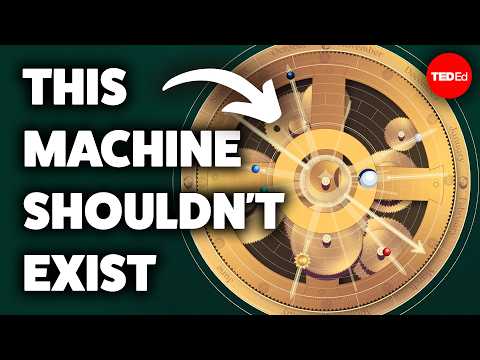
Historically, the development of gears was a revolutionary leap in human technology. From the Antikythera mechanism—an ancient Greek analogue computer—to the massive steel gears found in industrial mills, these components have been the silent drivers of progress. In a vehicle, the 'gears' are the specific ratios available in the transmission. A driver shifts into a lower gear to gain power for climbing and into a higher gear to achieve high speeds on a highway. This specific usage has led to the common phrase 'in gear,' meaning that the mechanism is engaged and ready to perform. Conversely, being 'out of gear' suggests a lack of connection or readiness. The terminology extends into the realm of specialized equipment as well; while 'gear' (singular) often refers to equipment or clothing, 'gears' (plural) almost exclusively refers to the toothed wheels or the transmission settings. This distinction is crucial for learners to avoid confusion in technical or sports-related contexts.
As the mountain steepened, the cyclist shifted through her gears to find a comfortable cadence.
In the modern era, gears are not just metal; they can be made of high-strength plastics, composites, or even nanostructures in advanced robotics. The variety is immense: spur gears for simple parallel shafts, helical gears for quieter operation, bevel gears for intersecting shafts, and worm gears for high reduction ratios. Each type serves a specific purpose in the grand architecture of machines. When we observe a complex machine, we see a symphony of gears working in unison. This visual complexity is why gears are often used in art and graphic design to represent industry, intelligence, and the passage of time. They are the literal and figurative teeth of the industrial age, continuing to drive our world forward even as we transition into more digital and electronic systems. Even in a world of software, the 'settings' icon is almost universally represented by a gear, symbolizing the underlying mechanics that the user can adjust to control the system's behavior.
The factory was a cacophony of grinding gears and hissing steam as the morning shift began.
- Automotive Context
- In a manual car, the driver uses a clutch and a stick to change gears. In an automatic, the car's computer handles the gears based on speed and load.
The engineer pointed to the worn gears as the primary cause of the machine's failure.
The project manager asked the team to shift gears and focus on the urgent client request instead of the long-term roadmap.
Using the word gears correctly requires an understanding of its grammatical role as a plural noun and its diverse semantic applications. Most commonly, it appears in contexts involving machinery, vehicles, and physical mechanisms. For instance, when describing the operation of a bicycle, one might say, 'The bike has 21 gears, making it easy to ride on any terrain.' Here, 'gears' refers to the specific combinations of front and rear sprockets. In automotive language, 'gears' is often used with verbs like 'shift,' 'change,' 'engage,' or 'grind.' A common sentence might be, 'He struggled to shift gears because the clutch was slipping.' This usage is literal, referring to the transmission system. However, the word is equally prevalent in idiomatic and metaphorical expressions. The phrase 'to shift gears' is a classic example, used to describe a change in activity, pace, or thought process. For example, 'After a long day of technical coding, I need to shift gears and do something creative like painting.' In this case, the word functions as a bridge between the physical world of mechanics and the abstract world of human behavior.
- Physical Interaction
- Describes how parts of a machine touch. Example: 'The gears must be perfectly aligned to avoid friction.'
- Action Verbs
- Commonly paired with: shift, mesh, engage, grind, slip, rotate, lubricate.
The transmission's gears were stripped after years of aggressive driving.
Another important aspect of using 'gears' is understanding its collective sense. While 'gears' are individual wheels, they are often spoken of as a single system. You might hear, 'The gears of the clock are made of solid gold,' where the focus is on the entire internal mechanism. In a professional environment, you might encounter the phrase 'the gears are in motion,' which means that a process has started and is now progressing steadily. This usage is particularly common in project management and politics. For example, 'Now that the contract is signed, the gears of the legal department are in motion to finalize the paperwork.' Here, 'gears' symbolizes the various departments or steps required to complete a task. It's also worth noting the difference between 'gear' (singular) and 'gears' (plural). 'Gear' often refers to equipment (camping gear, sports gear), while 'gears' refers to the mechanical wheels. Confusing these can lead to awkward sentences like 'I packed my fishing gears,' which is incorrect; it should be 'I packed my fishing gear.'
You can hear the gears turning in his head as he tries to solve the complex riddle.
In creative writing, 'gears' can be used to create vivid imagery of industrial settings or to describe the feeling of a machine coming to life. 'The rusted gears groaned as the ancient elevator began its slow ascent.' This use of personification ('groaned') combined with 'gears' evokes a sense of age and mechanical effort. In scientific writing, the focus shifts to precision. 'The planetary gears allow for a high reduction ratio in a compact space.' Here, the term is used with technical modifiers to describe specific engineering configurations. Whether you are writing a technical report, a novel, or a casual email, choosing the right context for 'gears'—whether literal or figurative—is key to clear communication. Remember that 'gears' implies interaction; a single gear by itself is often useless, but 'gears' together create power and motion. This inherent connectivity is what makes the word so versatile across different domains of the English language.
The watchmaker used a magnifying glass to inspect the microscopic gears.
- Idiomatic Use
- 'Grinding someone's gears' means to annoy them. Example: 'It really grinds my gears when people don't use their turn signals.'
We need to find a way to make the different gears of this organization work together more smoothly.
The new software update aims to grease the gears of our internal communication system.
The word gears is a staple in several distinct environments, ranging from the highly technical to the everyday casual. Perhaps the most common place to hear it is in an automotive repair shop or during a driving lesson. Mechanics will discuss 'stripped gears,' 'gear ratios,' and 'gearbox fluid.' If you are learning to drive a manual transmission car, your instructor will constantly talk about 'shifting gears' at the right RPM to avoid stalling or damaging the engine. Even in the world of electric vehicles, which often have single-speed transmissions, the concept of 'gearing' remains relevant in discussions about motor efficiency and torque delivery. Beyond the garage, you will frequently hear 'gears' in the context of cycling. Enthusiasts and professional racers alike obsess over their 'gear range' and how many 'gears' their derailleur can handle. In a bike shop, you might hear a customer ask, 'Is this bike better for climbing? How are the low gears?' This usage is very specific to the physical components of the bicycle that allow the rider to maintain a steady effort regardless of the slope.
- Professional Settings
- In corporate meetings, 'shifting gears' is a common idiom used to transition between topics or to indicate a change in strategy.
- Engineering Labs
- Engineers discuss 'meshing,' 'backlash,' and 'pitch' when designing gear systems for robotics or aerospace applications.
'You can really feel the gears engage when you put this tractor into four-wheel drive,' the farmer remarked.
In the world of horology (the study of timekeeping), 'gears' are the very heart of the conversation. Watchmakers and collectors talk about the 'train of gears' that connects the mainspring to the hands of the watch. In this context, the word carries a sense of precision and craftsmanship. You might hear a collector admire the 'finely finished gears' of a high-end Swiss movement. Similarly, in industrial manufacturing, factory floor managers might discuss the 'maintenance of the drive gears' to prevent costly downtime. The sound of gears is also a frequent topic; 'grinding gears' is a sound no operator wants to hear, as it signifies imminent mechanical failure. This auditory association has bled into common slang; if someone says, 'That really grinds my gears,' they are expressing intense irritation, likening the feeling to the harsh, damaging sound of metal teeth clashing improperly. This idiom is widely used in American English and was famously popularized by the character Peter Griffin in the show *Family Guy*.
'Okay, let's shift gears and talk about the budget for next quarter,' the CEO said during the board meeting.
Furthermore, you will encounter 'gears' in the digital world. Software developers and UI/UX designers use the gear icon as the universal symbol for 'Settings' or 'Preferences.' While they aren't talking about physical gears, the word is used to describe the underlying configurations of an app. 'Go into the gears and change your notification settings,' a tech support agent might say. In the realm of physics and education, teachers use gears to demonstrate principles of work, energy, and mechanical advantage. Students might hear, 'When the driving gear has ten teeth and the driven gear has twenty, the speed is halved but the torque is doubled.' This educational context is where many first learn the formal properties of gears. Whether it's the literal grease-covered wheels of a truck or the metaphorical 'gears of change' in a political speech, the word is deeply embedded in how we describe how things work, how they change, and how they interact.
The old windmill's wooden gears creaked loudly as they turned in the coastal breeze.
- Slang and Idioms
- 'High gear': To be operating at maximum speed or efficiency. 'The campaign is now in high gear.'
'I can see the gears turning,' she said, noticing his deep concentration on the puzzle.
The clock's gears were so small they had to be handled with precision tweezers.
One of the most frequent errors English learners make with the word gears is confusing it with its singular form, 'gear,' which has a much broader and often uncountable meaning. While 'gears' refers specifically to toothed wheels or transmission settings, 'gear' (singular) is a collective noun for equipment, tools, or clothing required for a specific activity. For example, it is incorrect to say, 'I need to buy new hiking gears.' The correct form is 'hiking gear.' Conversely, if you are talking about the transmission of a car, you should say 'the gears are slipping,' not 'the gear is slipping' (unless you are referring to one specific gear, like third gear). This distinction is subtle but important for sounding natural. Another common mistake involves the metaphorical use of 'shifting gears.' Some learners might say 'changing gears' or 'switching gears,' which are technically correct and understood, but 'shifting gears' is the standard idiomatic expression. Using 'moving gears' in a metaphorical sense sounds unnatural and may confuse native speakers who are expecting the idiomatic 'shift.'
- Gear vs. Gears
- 'Gear' = Equipment (uncountable). 'Gears' = Toothed wheels (countable plural).
- Preposition Errors
- Incorrect: 'Shift to a gear.' Correct: 'Shift into a gear' or 'Shift gears.'
Incorrect: I put my camping gears in the trunk. Correct: I put my camping gear in the trunk.
In technical writing, a common mistake is failing to specify the type of gear when the context requires it. Simply saying 'the gears failed' might be too vague in an engineering report. Professionals usually specify if they are spur gears, helical gears, or planetary gears. Furthermore, there is often confusion between 'gears' and 'cogs.' While they are often used as synonyms in casual speech, in engineering, a 'cog' is technically a single tooth on a gear wheel, or a wheel with very simple teeth. Using 'cogs' when you mean a complex transmission system can make you sound less precise. Another area of confusion is the phrase 'grinds my gears.' Learners sometimes say 'grinds my gear' (singular), which loses the idiomatic punch. The plural 'gears' is essential here because the idiom refers to the sound of multiple metal teeth clashing together. Additionally, some people confuse 'gears' with 'brakes' or 'clutch' when discussing car mechanics. Remember: gears provide the power and speed, the clutch engages the gears, and the brakes stop the movement.
The student mistakenly said the car was 'out of gears' when they meant it was 'in neutral.'
Pronunciation can also be a pitfall. The 'g' in 'gears' is a hard 'g' (like in 'goat'), not a soft 'j' (like in 'germ'). Mispronouncing it as 'jears' is a common mistake for speakers of languages where 'g' before 'e' is always soft. Furthermore, when using the word in the context of 'gearing up,' it's important to remember that this is a phrasal verb meaning to prepare. While related to the concept of engaging a machine, 'gearing up' is almost always used for people or organizations preparing for an event. 'The team is gearing up for the playoffs.' In this specific phrasal verb, 'gearing' is the present participle of the verb 'to gear,' not the plural noun 'gears.' Confusing the noun 'gears' with the verb 'to gear' can lead to grammatical errors in sentence structure. Lastly, ensure that when you use 'gears' in a plural sense, your verbs agree. 'The gears *are* turning,' not 'The gears *is* turning.'
The mechanic explained that the gears were not the problem; it was the drive belt.
- Agreement Errors
- 'These gears' (correct) vs. 'This gears' (incorrect).
He tried to force the gears into place, which only caused more damage.
The report mentioned the 'gears of the economy,' but the student wrote 'gears of the economic,' which is grammatically incomplete.
While gears is the most common and versatile term for toothed wheels, several other words can be used depending on the specific context or level of formality. The most frequent synonym is cogs. In everyday language, 'cogs' and 'gears' are often interchangeable, but 'cogs' often carries a more metaphorical or slightly old-fashioned weight. For example, 'a cog in the machine' is a very common idiom for someone who feels like an insignificant part of a large organization. In technical terms, a cog is often just one tooth on a gear wheel, but in casual British English, 'cogs' is very common for the wheels themselves. Another related term is sprockets. While gears mesh directly with other gears, sprockets are toothed wheels designed to engage with a chain, such as those found on a bicycle or a chainsaw. If you are talking about the chain-driven part of a bike, 'sprockets' is technically more accurate than 'gears,' though 'gears' is still widely used by laypeople.
- Cogs
- Often used metaphorically. 'He's just a cog in the corporate machine.' More common in British English for physical wheels.
- Sprockets
- Toothed wheels that work with chains or belts rather than meshing directly with another wheel.
The sprockets on the motorcycle were worn down, causing the chain to slip.
In more formal or engineering-heavy contexts, you might encounter terms like pinions or transmission. A 'pinion' is specifically the smaller of two meshing gears in a gear train. You often hear about 'rack and pinion' steering in cars. 'Transmission' refers to the entire system of gears and shafts that transmits power from the engine to the wheels. Instead of saying 'the gears are broken,' an engineer might say 'the transmission has failed.' Another alternative in a broad mechanical sense is mechanism or machinery. If you want to describe the internal workings of something without focusing specifically on the toothed wheels, 'mechanism' is a great choice. For example, 'The mechanism of the lock is quite complex.' In metaphorical use, if you want to avoid 'shifting gears,' you could use 'changing pace,' 'switching focus,' or 'transitioning.' These alternatives are often better in formal writing where mechanical metaphors might feel too clichéd.
The pinion gear must be replaced to restore the steering's responsiveness.
For learners, it's also useful to know the term gearbox. This is the housing that contains the gears in a vehicle or industrial machine. In British English, 'gearbox' is the standard term, while in American English, 'transmission' is more common, though both are understood. Another specific term is derailleur, which is the specific mechanism on a bicycle that moves the chain between different gears. Using 'derailleur' instead of 'gears' shows a higher level of vocabulary in a cycling context. In the realm of physics, you might hear about gear trains, which refers to a series of two or more gears working together. Understanding these nuances allows you to choose the most precise word for your situation. Whether you're describing the 'intricate gears' of a watch or the 'massive gears' of a dam's turbine, having a range of synonyms like 'cogs,' 'pinions,' and 'sprockets' will make your English more descriptive and accurate.
The clock's internal mechanism was a marvel of 18th-century engineering.
- Transmission
- The whole system of gears in a vehicle. 'The car's transmission is automatic.'
We need to switch focus and address the marketing strategy immediately.
The gearbox was leaking oil, which caused the gears to overheat.
How Formal Is It?
Fun Fact
The word 'gear' originally had nothing to do with wheels; it was all about the 'gear' (equipment) a knight would wear into battle.
Pronunciation Guide
- Pronouncing the 'g' as a 'j' (like 'jeers').
- Using a soft 's' at the end instead of a 'z' sound.
- Confusing the vowel sound with 'geese'.
Difficulty Rating
The word itself is simple, but technical contexts can be complex.
Requires distinguishing between 'gear' and 'gears'.
Commonly used in everyday idioms.
Easily recognizable in context.
What to Learn Next
Prerequisites
Learn Next
Advanced
Grammar to Know
Plural vs. Singular 'Gear'
Use 'gears' for wheels, 'gear' for equipment.
Phrasal Verbs with Gear
'Gear up' means to prepare.
Prepositions with Vehicles
You are 'in' a gear (e.g., 'in second gear').
Countable Nouns
I can see three distinct gears.
Idiomatic Agreement
Always 'grinds my gears' (plural).
Examples by Level
The bike has many gears.
La bicicleta tiene muchas marchas.
Plural noun.
Gears help the car move.
Los engranajes ayudan a que el coche se mueva.
Subject of the sentence.
I see the gears in the clock.
Veo los engranajes en el reloj.
Object of the verb 'see'.
These gears are small.
Estos engranajes son pequeños.
Demonstrative 'these' with plural noun.
The toy has plastic gears.
El juguete tiene engranajes de plástico.
Noun phrase.
Can you turn the gears?
¿Puedes girar los engranajes?
Question form.
The gears are made of metal.
Los engranajes son de metal.
Passive description.
Look at the gears go!
¡Mira cómo giran los engranajes!
Imperative sentence.
You need to change gears now.
Tienes que cambiar de marcha ahora.
Verb 'change' + 'gears'.
The gears are grinding loudly.
Los engranajes están chirriando fuerte.
Present continuous.
This bicycle has ten gears.
Esta bicicleta tiene diez velocidades.
Countable noun.
The gears help us go up the hill.
Las marchas nos ayudan a subir la colina.
Purpose clause.
He fixed the broken gears.
Él arregló los engranajes rotos.
Past tense.
The watch has very tiny gears.
El reloj tiene engranajes muy diminutos.
Adjective 'tiny' modifying 'gears'.
Don't force the gears to turn.
No fuerces los engranajes a girar.
Negative imperative.
The gears mesh together perfectly.
Los engranajes encajan perfectamente.
Verb 'mesh' used with 'gears'.
I had to shift gears to climb the steep mountain.
Tuve que cambiar de marcha para subir la montaña empinada.
Infinitive of purpose.
The gears in his mind were finally starting to turn.
Los engranajes de su mente finalmente estaban empezando a girar.
Metaphorical usage.
If the gears are not lubricated, they will wear out.
Si los engranajes no están lubricados, se desgastarán.
First conditional.
She understands how the gears of the machine work.
Ella entiende cómo funcionan los engranajes de la máquina.
Indirect question.
The car has an automatic system for shifting gears.
El coche tiene un sistema automático para cambiar de marcha.
Gerund phrase.
The gears are the most important part of the transmission.
Los engranajes son la parte más importante de la transmisión.
Superlative adjective.
He spent all afternoon cleaning the bicycle gears.
Pasó toda la tarde limpiando los piñones de la bicicleta.
Spend time + gerund.
The old mill uses giant wooden gears.
El viejo molino usa engranajes de madera gigantes.
Compound noun phrase.
The constant grinding of gears indicated a serious mechanical failure.
El constante chirrido de los engranajes indicaba un fallo mecánico grave.
Gerund as subject.
Let's shift gears and discuss the marketing strategy for a moment.
Cambiemos de tercio y hablemos de la estrategia de marketing por un momento.
Idiomatic 'shift gears'.
The project is finally in high gear after months of delays.
El proyecto finalmente está a toda marcha tras meses de retrasos.
Idiomatic 'in high gear'.
The interlocking gears ensure that the movement is synchronized.
Los engranajes entrelazados aseguran que el movimiento esté sincronizado.
Participle as adjective.
It really grinds my gears when people are late for meetings.
Realmente me saca de quicio cuando la gente llega tarde a las reuniones.
Idiomatic 'grinds my gears'.
The technician replaced the worn gears in the gearbox.
El técnico reemplazó los engranajes desgastados de la caja de cambios.
Past tense with specific terminology.
Gears are used to provide mechanical advantage in heavy lifting.
Los engranajes se utilizan para proporcionar ventaja mecánica en el levantamiento de cargas pesadas.
Passive voice.
The complexity of the gears made the repair very expensive.
La complejidad de los engranajes hizo que la reparación fuera muy cara.
Noun of quality.
The gears of bureaucracy move slowly, often frustrating those in need of quick decisions.
Los engranajes de la burocracia se mueven lentamente, a menudo frustrando a quienes necesitan decisiones rápidas.
Abstract metaphor.
By altering the gear ratios, the engineers optimized the vehicle's fuel efficiency.
Al alterar las relaciones de transmisión, los ingenieros optimizaron la eficiencia de combustible del vehículo.
Prepositional phrase with gerund.
The intricate gears of the Antikythera mechanism suggest a high level of ancient technology.
Los intrincados engranajes del mecanismo de Anticitera sugieren un alto nivel de tecnología antigua.
Technical historical reference.
The company is gearing up for a major product launch next quarter.
La empresa se está preparando para un importante lanzamiento de producto el próximo trimestre.
Phrasal verb 'gear up'.
The failure of a single gear can bring the entire production line to a standstill.
El fallo de un solo engranaje puede detener por completo toda la línea de producción.
Conditional implication.
We need to ensure that the gears of our supply chain are well-oiled and efficient.
Debemos asegurarnos de que los engranajes de nuestra cadena de suministro estén bien engrasados y sean eficientes.
Metaphorical 'well-oiled'.
The transition between the different gears of the economy requires careful policy management.
La transición entre los diferentes engranajes de la economía requiere una gestión política cuidadosa.
Complex noun phrase.
The watchmaker's precision in aligning the gears is what defines the brand's quality.
La precisión del relojero al alinear los engranajes es lo que define la calidad de la marca.
Possessive with gerund.
The gears of history turn inexorably, often rendering individual efforts seemingly insignificant.
Los engranajes de la historia giran inexorablemente, a menudo haciendo que los esfuerzos individuales parezcan insignificantes.
Grand philosophical metaphor.
The planetary gear system allows for high torque density in a remarkably compact envelope.
El sistema de engranajes planetarios permite una alta densidad de par en una envolvente notablemente compacta.
Highly technical engineering jargon.
There is a palpable sense that the gears of the geopolitical landscape are shifting toward a new era.
Hay una sensación palpable de que los engranajes del panorama geopolítico se están desplazando hacia una nueva era.
Abstract systemic shift.
The infinitesimal backlash between the gears was corrected to ensure sub-micron precision.
El huelgo infinitesimal entre los engranajes se corrigió para asegurar una precisión de submicras.
Precision technical description.
The novel explores how the gears of fate trap the protagonists in an inescapable tragedy.
La novela explora cómo los engranajes del destino atrapan a los protagonistas en una tragedia ineludible.
Literary metaphor.
The industrialist viewed his workers as mere gears in a profit-generating machine.
El industrial veía a sus trabajadores como meros engranajes en una máquina generadora de beneficios.
Dehumanizing metaphor.
The seamless meshing of the gears is a testament to the manufacturing tolerances achieved.
El perfecto engranaje de las ruedas es un testimonio de las tolerancias de fabricación alcanzadas.
Abstract noun as subject.
As the gears of the campaign began to grind, the candidate realized the scale of the opposition.
A medida que los engranajes de la campaña empezaron a chirriar, el candidato se dio cuenta de la magnitud de la oposición.
Metaphor for systemic friction.
Synonyms
Antonyms
Common Collocations
Common Phrases
— Connected and ready to operate; functioning properly.
The organization is finally in gear.
— Not connected; not functioning or organized correctly.
My plans are all out of gear today.
— To change the speed or direction of an activity.
Let's change gears and talk about something else.
— To start working effectively or efficiently.
We need to get into gear if we want to finish on time.
— To fail to engage properly; to make a mistake.
The company slipped a gear during the transition.
— To work together effectively (derived from gears meshing).
The new team members mesh well together.
— A person who is very interested in cars and machinery.
He's a total gear head and spends all weekend in the garage.
Often Confused With
Singular 'gear' usually means equipment, while 'gears' means the wheels.
Very similar, but 'cogs' is more common in British English and metaphors.
Sprockets work with chains; gears work with other gears.
Idioms & Expressions
— Something that is extremely annoying or irritating.
It really grinds my gears when people talk during movies.
Informal— To suddenly change what you are doing or how you are thinking.
I was writing a report, but I had to shift gears to answer a call.
Neutral— A small part of a large and complex system.
He felt like just another cog in the gears of the corporation.
Neutral— Someone is thinking deeply or a process is starting to happen.
You can see the gears turning as she solves the puzzle.
Informal— At the peak of activity or speed.
The holiday shopping season is now in high gear.
Neutral— To cause a problem that stops a process from working.
The new regulations threw a wrench in the gears of our expansion.
Informal— To make a process happen more smoothly, often with money or influence.
They had to grease the gears of the local government to get the permit.
Informal— Disordered or not working correctly.
The whole schedule was thrown out of gear by the rain.
Neutral— To start working or operating suddenly and effectively.
My brain doesn't kick into gear until I've had my coffee.
Informal— To change a decision or go back to a previous state.
The company had to reverse gears on its pricing policy.
NeutralEasily Confused
Singular vs Plural
Gear is equipment (uncountable); gears are toothed wheels (countable).
I have my camping gear, but my bike's gears are broken.
Both are car parts
The clutch connects the engine to the gears; the gears change the speed.
Press the clutch before you shift gears.
Both control speed
Brakes stop the car; gears manage the engine's power.
Use the gears to slow down on a hill, then use the brakes.
Both have teeth
Sprockets use a chain; gears mesh directly.
A bicycle has sprockets and a chain, not just gears.
Specific type of gear
A pinion is just the smaller gear in a pair.
The pinion drives the larger gear.
Sentence Patterns
The [noun] has [number] gears.
The bike has six gears.
I need to change [gears].
I need to change gears.
Shift into [ordinal] gear.
Shift into first gear.
It grinds my gears when [clause].
It grinds my gears when it rains.
The gears of [abstract noun] are [verb].
The gears of justice are turning.
A [adjective] interplay of gears.
A sophisticated interplay of gears.
The gears are [participle].
The gears are meshing.
To be in [adjective] gear.
The project is in high gear.
Word Family
Nouns
Verbs
Adjectives
Related
How to Use It
Very common in both technical and everyday English.
-
I packed my camping gears.
→
I packed my camping gear.
Equipment is uncountable in this context.
-
The car is in the first gear.
→
The car is in first gear.
We usually omit 'the' when naming specific gears.
-
It grinds my gear.
→
It grinds my gears.
The idiom is always plural.
-
He is shifting his gears.
→
He is shifting gears.
We don't usually use a possessive pronoun with this idiom.
-
The gears is broken.
→
The gears are broken.
Gears is a plural noun and needs a plural verb.
Tips
Equipment is Singular
Always use 'gear' for equipment like 'sports gear' or 'camping gear'. Never add an 's'.
Bike Talk
When talking about bikes, 'gears' is fine, but 'shifting' is the verb you want.
Annoyance
Use 'grinds my gears' when you want to sound expressive about a pet peeve.
Hard G
Remember the 'G' is hard. Think of the word 'Go'.
Business Transitions
Use 'Let's shift gears' to politely move a meeting to a new topic.
Maintenance
Gears need 'lubrication' or 'grease' to work well.
Car Talk
In a manual car, you 'shift' gears. In an automatic, the car does it for you.
Metaphors
Gears are great for describing complex systems like 'the gears of government'.
Sound Clues
If you hear 'grinding,' something is wrong with the gears.
Teeth
Associate gears with 'teeth' to remember they interlock.
Memorize It
Mnemonic
Think of 'Gears Engage And Rotate Systems'. The first letters spell GEARS and describe exactly what they do.
Visual Association
Imagine two circles with teeth biting into each other. When one turns, the other must turn too. That 'bite' is the gear.
Word Web
Challenge
Try to explain how a bicycle works to a friend using the word 'gears' at least three times.
Word Origin
The word 'gear' comes from the Middle English 'gere', which referred to equipment, apparatus, or armor. It likely has Old Norse roots ('gervi'), meaning 'preparation' or 'equipment'. The specific sense of 'toothed wheel' developed much later, around the 16th century, as mechanical engineering became more complex.
Original meaning: Equipment, tools, or clothing for a specific purpose.
GermanicCultural Context
No specific sensitivities, but be careful using 'cog in the machine' as it can sound derogatory toward employees.
The idiom 'grinds my gears' is very common in the US, while 'a cog in the machine' is common across all English-speaking countries.
Practice in Real Life
Real-World Contexts
Automotive
- manual gears
- automatic transmission
- gear stick
- shift up/down
Cycling
- derailleur
- cassette
- chainring
- low gear for climbing
Business
- shift gears
- gears are in motion
- cog in the machine
- grease the gears
Engineering
- gear ratio
- meshing
- backlash
- spur gears
Clocks
- clockwork
- escapement
- mainspring
- gear train
Conversation Starters
"Do you prefer driving a car with manual or automatic gears?"
"What's something that really grinds your gears at work or school?"
"Have you ever had to fix the gears on your own bicycle?"
"Why do you think the gear icon is used for settings in almost every app?"
"If you could shift gears in your career right now, what would you do?"
Journal Prompts
Describe a time when you had to 'shift gears' quickly in your life. What happened?
Write about a person you know who is like a 'well-oiled gear' in a larger organization.
Think of a habit that 'grinds your gears.' Why does it bother you so much?
If your mind was a machine, what would the gears look like today? Are they moving fast or slow?
Explain the importance of gears in modern society from your perspective.
Frequently Asked Questions
10 questions'Gear' usually refers to a collection of equipment (like 'fishing gear'), while 'gears' refers to the specific toothed wheels in a machine.
It means changing the topic, pace, or focus of what you are doing. For example, moving from a serious discussion to a joke.
Not always, but we usually use the plural because gears work in pairs. You can say 'first gear' or 'a gear,' but 'the gears' refers to the whole system.
It is an idiom meaning that something is very annoying. It comes from the sound of metal gears hitting each other incorrectly.
No, you should say 'hiking gear.' 'Gear' as equipment is uncountable.
They are often called 'gears,' but technically they are 'sprockets' or 'cogs' on a 'cassette'.
They work by interlocking teeth. A small gear turning a large one gives more power; a large one turning a small one gives more speed.
A 'gearhead' is a slang term for someone who is very interested in and knowledgeable about cars and machinery.
Literally, it's the setting for high speeds. Idiomatically, it means working at maximum efficiency or speed.
In casual talk, yes. In engineering, a cog is a single tooth or a very simple wheel.
Test Yourself 200 questions
Describe how you use gears when riding a bicycle.
Well written! Good try! Check the sample answer below.
Explain the metaphorical meaning of 'shifting gears' with an example.
Well written! Good try! Check the sample answer below.
What 'grinds your gears' in daily life? Write a short paragraph.
Well written! Good try! Check the sample answer below.
Compare manual and automatic gears in cars.
Well written! Good try! Check the sample answer below.
Write a story about a clockmaker and his gears.
Well written! Good try! Check the sample answer below.
Discuss the importance of gears in the Industrial Revolution.
Well written! Good try! Check the sample answer below.
Explain the concept of gear ratios to a child.
Well written! Good try! Check the sample answer below.
Describe a situation where a project 'kicked into high gear'.
Well written! Good try! Check the sample answer below.
What are the advantages of using gears in machinery?
Well written! Good try! Check the sample answer below.
Write a dialogue between a mechanic and a car owner about broken gears.
Well written! Good try! Check the sample answer below.
How does the 'gear' icon represent 'settings' in software?
Well written! Good try! Check the sample answer below.
Describe the sound and feeling of 'grinding gears'.
Well written! Good try! Check the sample answer below.
Discuss the metaphor 'a cog in the gears of the economy'.
Well written! Good try! Check the sample answer below.
Write a technical description of how two gears mesh.
Well written! Good try! Check the sample answer below.
Explain the difference between 'gear' and 'gears' to a learner.
Well written! Good try! Check the sample answer below.
What would happen to the world if all gears suddenly disappeared?
Well written! Good try! Check the sample answer below.
Describe the 'gears of fate' in a fictional story.
Well written! Good try! Check the sample answer below.
How do gears help in heavy lifting? Use the term 'mechanical advantage'.
Well written! Good try! Check the sample answer below.
Write about a time you felt like a 'cog in the machine'.
Well written! Good try! Check the sample answer below.
Describe the maintenance required for industrial gears.
Well written! Good try! Check the sample answer below.
Pronounce the word 'gears' correctly.
Read this aloud:
You said:
Speech recognition is not supported in your browser. Try Chrome or Edge.
Tell a story about a time you had car trouble involving gears.
Read this aloud:
You said:
Speech recognition is not supported in your browser. Try Chrome or Edge.
Explain how to change gears on a bike.
Read this aloud:
You said:
Speech recognition is not supported in your browser. Try Chrome or Edge.
Use 'grinds my gears' in a sentence about a pet peeve.
Read this aloud:
You said:
Speech recognition is not supported in your browser. Try Chrome or Edge.
Discuss the pros and cons of manual vs automatic gears.
Read this aloud:
You said:
Speech recognition is not supported in your browser. Try Chrome or Edge.
Describe a complex machine and the role of gears in it.
Read this aloud:
You said:
Speech recognition is not supported in your browser. Try Chrome or Edge.
Roleplay: You are a mechanic explaining a gear problem to a customer.
Read this aloud:
You said:
Speech recognition is not supported in your browser. Try Chrome or Edge.
How would you use 'shift gears' in a business meeting?
Read this aloud:
You said:
Speech recognition is not supported in your browser. Try Chrome or Edge.
Talk about the importance of precision in making gears.
Read this aloud:
You said:
Speech recognition is not supported in your browser. Try Chrome or Edge.
Explain the metaphor 'a cog in the machine' and your opinion on it.
Read this aloud:
You said:
Speech recognition is not supported in your browser. Try Chrome or Edge.
Describe the visual appearance of a gear.
Read this aloud:
You said:
Speech recognition is not supported in your browser. Try Chrome or Edge.
What does 'in high gear' mean to you? Give an example.
Read this aloud:
You said:
Speech recognition is not supported in your browser. Try Chrome or Edge.
Discuss the future of gears in an electric vehicle world.
Read this aloud:
You said:
Speech recognition is not supported in your browser. Try Chrome or Edge.
How do gears represent 'time' in a clock?
Read this aloud:
You said:
Speech recognition is not supported in your browser. Try Chrome or Edge.
Describe the sound of a machine with many gears.
Read this aloud:
You said:
Speech recognition is not supported in your browser. Try Chrome or Edge.
Explain 'gear ratio' in your own words.
Read this aloud:
You said:
Speech recognition is not supported in your browser. Try Chrome or Edge.
Talk about a hobby where you use 'gear' (equipment) and 'gears' (mechanics).
Read this aloud:
You said:
Speech recognition is not supported in your browser. Try Chrome or Edge.
What happens when gears 'slip'?
Read this aloud:
You said:
Speech recognition is not supported in your browser. Try Chrome or Edge.
Why are gears essential for industrialization?
Read this aloud:
You said:
Speech recognition is not supported in your browser. Try Chrome or Edge.
Create a slogan for a company that makes high-quality gears.
Read this aloud:
You said:
Speech recognition is not supported in your browser. Try Chrome or Edge.
Listen to the mechanic's description and identify which gear is broken.
What idiom did the speaker use to express their frustration?
How many gears does the speaker say their new bike has?
In the dialogue, why does the driver need to shift gears?
Listen for the word 'gear' vs 'gears'. Which one was used for the backpack?
What technical term did the engineer use for the small gear?
According to the speaker, what is 'gearing up' for the weekend?
Listen to the sound clip. Is it the sound of smooth gears or grinding gears?
What metaphor did the CEO use regarding the company's progress?
Identify the three types of gears mentioned in the lecture.
Why does the speaker say the gears need oil?
What does 'neutral' mean in the context of the conversation?
Listen for the pronunciation of 'gears'. Was it correct?
What is the 'gear ratio' mentioned in the car review?
How does the speaker describe the 'gears of history'?
I need to buy new camping gears for the trip.
The car is in the first gear.
It really grind my gears when you do that.
The gears is turning slowly.
He shifted his gears to climb the hill.
I can't find my fishing gears.
The machine has a broken gearwheel and some other gears.
Let's shift the gears and talk about lunch.
The gears of the clock is made of gold.
He is a total gearshead.
/ 200 correct
Perfect score!
Summary
Gears are the fundamental building blocks of mechanical systems, allowing for the precise control of power and speed. Whether you are driving a car, riding a bike, or describing a mental transition, 'gears' is the go-to word for interconnected movement and change.
- Gears are toothed wheels that interlock to transmit motion and power in machines.
- They are essential for controlling speed and torque in vehicles and bicycles.
- Metaphorically, 'gears' refers to the pace of work or the internal workings of a system.
- Commonly used in phrases like 'shifting gears' or 'grinding someone's gears'.
Equipment is Singular
Always use 'gear' for equipment like 'sports gear' or 'camping gear'. Never add an 's'.
Bike Talk
When talking about bikes, 'gears' is fine, but 'shifting' is the verb you want.
Annoyance
Use 'grinds my gears' when you want to sound expressive about a pet peeve.
Hard G
Remember the 'G' is hard. Think of the word 'Go'.
Example
He shifted gears smoothly as the car accelerated onto the highway.
Related Content
See it in Videos
More Tools words
adhesive
B2Describes a substance or surface that has the quality of sticking fast to another object or surface. It is commonly used to describe materials like tape, glue, or bandages that are designed to create a bond between two items.
thermometer
B2A thermometer is an instrument used to measure temperature or a temperature gradient. It is commonly used in medical settings to check for fever or in weather stations to monitor atmospheric conditions.
tool
A2A device or implement, especially one held in the hand, used to carry out a particular function. It can also refer to anything used as a means of achieving a specific task or goal.
shim
B1A thin and often tapered piece of material, such as wood, metal, or plastic, used to fill small gaps or spaces between objects. It is typically used to level a surface or provide a better fit in construction and mechanical work.
scissors
A2A handheld tool used for cutting thin materials like paper, cloth, or hair, consisting of two metal blades pivoted so that the sharpened edges slide against each other. It is typically operated by inserting fingers into loops at the ends of the handles to open and close the blades.
chain
B1A connected flexible series of metal links used for fastening or securing objects and pulling loads. It also refers to a sequence of items of the same type forming a line, such as a group of shops owned by the same company.
kit
B1A set of tools, equipment, or clothes used for a particular purpose or activity. It can also refer to a collection of parts sold together to be assembled into a finished product.
funnel
B2A tube or pipe that is wide at the top and narrow at the bottom, used for guiding liquid or powder into a small opening. As a verb, it means to guide or channel something through a restricted space or towards a central point.
tools
B1Tools are physical objects or digital instruments used to perform a specific task or achieve a particular goal. They range from simple hand-held devices like hammers to complex software programs used for data analysis.
emery
C1Emery is a very hard, granular mineral substance used as an abrasive agent for grinding and polishing surfaces. It is most commonly encountered in everyday life as the coating on an 'emery board' used for filing fingernails.

