









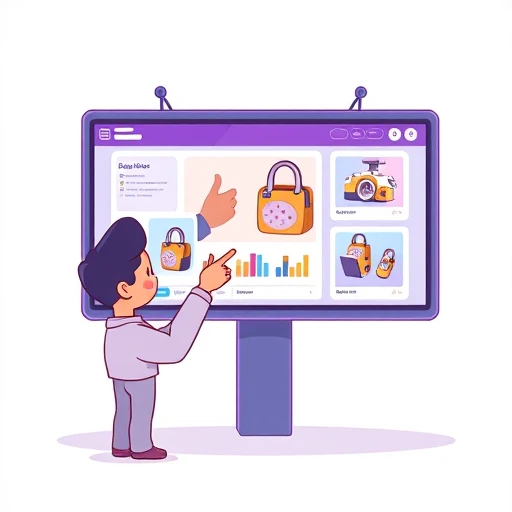
marketing in 30 Seconds
- Marketing is the strategic process of promoting and selling products or services through research, advertising, and distribution to meet customer needs and drive growth.
- It encompasses the '4 Ps': Product, Price, Place, and Promotion, ensuring that a brand's value proposition aligns perfectly with its target audience's desires.
- In the digital age, marketing has expanded to include social media, SEO, and content creation, focusing on building long-term relationships rather than just transactions.
- Marketing is a versatile business field that combines creative storytelling with data analysis to influence consumer behavior and build strong brand identities.
- Strategic Alignment
- Marketing ensures that every aspect of a product, from its design to its price point, aligns with the expectations and desires of the target market. It involves deep psychological insights into human behavior and decision-making processes.
The success of the new smartphone was largely attributed to an aggressive and innovative marketing campaign that targeted young professionals.
- Market Research
- Before a single ad is created, marketing professionals conduct extensive research to understand demographics, psychographics, and current market trends to minimize risk and maximize impact.
Effective marketing requires a delicate balance between creative storytelling and rigorous data analysis.
- Brand Equity
- Marketing builds brand equity, which is the value that a brand name adds to a product beyond its functional benefits. This is why people are willing to pay more for a recognized brand name.
Without proper marketing, even the most revolutionary invention might fail to find its audience and disappear from the market.
Digital marketing has leveled the playing field, allowing small businesses to compete with global corporations through targeted social media ads.
Ethical marketing focuses on transparency and honesty, ensuring that consumers are not misled by exaggerated claims or hidden costs.
- Attributive Usage
- When 'marketing' describes another noun, it defines the purpose or nature of that noun, such as a 'marketing plan' or a 'marketing executive.'
She decided to pursue a career in marketing because she enjoyed the blend of creativity and psychology.
- Verb-Object Relationship
- Verbs like 'improve,' 'overhaul,' 'study,' and 'fund' often take 'marketing' as their direct object in business discussions.
The company spent millions on marketing during the Super Bowl to ensure maximum visibility.
- Professional Networking
- On platforms like LinkedIn, 'marketing' is one of the most common skills listed, with sub-specialties like 'content marketing,' 'email marketing,' and 'performance marketing' being highly sought after.
During the conference, the keynote speaker emphasized that marketing is no longer about the stuff you make, but the stories you tell.
- Educational Settings
- In universities, 'Marketing 101' is a foundational course for business students, covering the basic principles of consumer behavior and market analysis.
The documentary explored how political marketing influences voter behavior through targeted messaging.
- Retail and E-commerce
- When shopping online, you are constantly interacting with 'marketing' in the form of 'recommended for you' sections and 'limited time offer' banners.
Social media influencers often use the hashtag #ad to disclose that their post is a form of paid marketing.
The local bakery's word-of-mouth marketing was so effective that they didn't need to pay for advertising.
Affiliate marketing allows bloggers to earn a commission by promoting products they genuinely use and love.
The rise of 'green marketing' reflects a growing consumer demand for environmentally friendly products and practices.
- Confusing Marketing with Sales
- Sales is transactional and short-term; marketing is relational and long-term. Using 'marketing' when you mean 'sales' can lead to confusion in a business setting.
Incorrect: We are doing a marketing to sell our cars. Correct: We are using marketing strategies to sell our cars.
- Overusing the Term
- Sometimes people use 'marketing' as a buzzword for anything related to business. Be specific—are you talking about 'branding,' 'public relations,' or 'market research'?
Mistaking marketing for manipulation is a common cynical viewpoint, but ethical marketing aims to provide genuine value.
- Grammar: Gerund vs. Noun
- While 'marketing' is a noun, it comes from the verb 'to market.' Don't forget that you can use the verb form for actions: 'They are marketing the new app.'
The marketing of the product was flawed because they didn't understand the local culture.
Many people think marketing is just about making things look pretty, but it's actually deeply rooted in data.
Using 'marketings' as a plural is a major error; always use the singular form for the general concept.
Don't confuse 'market research' with 'marketing research'; the former is about a specific market, the latter about the marketing process itself.
- Marketing vs. Advertising
- Marketing is the umbrella; advertising is one of the spokes. Marketing includes research and strategy; advertising is the execution of a paid message.
While the marketing was solid, the specific advertising creative failed to capture the audience's attention.
- Marketing vs. PR (Public Relations)
- Marketing focuses on the consumer and the sale; PR focuses on the general public and the reputation of the organization.
The company's marketing team worked closely with PR to ensure a consistent message across all channels.
- Marketing vs. Sales
- Marketing creates the demand; sales fulfills it. They are two sides of the same coin but require different skill sets.
Good marketing makes the sales process much easier by pre-educating the customer.
Content marketing is often a better alternative to traditional advertising for building long-term trust.
Direct marketing involves communicating directly with the customer via mail, email, or phone.
Influencer marketing has become a powerful alternative to celebrity endorsements for reaching younger audiences.
How Formal Is It?
Fun Fact
The modern sense of 'marketing' as a professional business discipline only began to emerge in the early 20th century. Before that, it was just a synonym for 'shopping' or 'trading.'
Pronunciation Guide
- Pronouncing the 'g' at the end too harshly.
- Putting the stress on the second syllable.
- Confusing the vowel sound in 'mark' with 'merk'.
- Failing to pronounce the 'r' in American English.
- Over-emphasizing the 't' sound.
Difficulty Rating
The word itself is easy, but technical marketing texts can be quite complex.
Using it correctly as an uncountable noun and in compound forms requires practice.
Commonly used in business English; pronunciation is generally straightforward.
Very easy to recognize in both British and American accents.
What to Learn Next
Prerequisites
Learn Next
Advanced
Grammar to Know
Gerunds as Subjects
Marketing is a vital part of any business.
Uncountable Nouns
They have done a lot of marketing this month.
Attributive Nouns
She is a marketing executive.
Present Continuous Tense
We are marketing our new services to local clients.
Prepositional Phrases
He is an expert in social media marketing.
Examples by Level
He has a job in marketing.
Il a un emploi dans le marketing.
Used as a noun indicating a field of work.
I like the marketing for this movie.
J'aime le marketing pour ce film.
Refers to the promotional materials.
Marketing helps sell products.
Le marketing aide à vendre des produits.
General statement about the function of marketing.
Is marketing difficult?
Le marketing est-il difficile ?
Subject of a question.
They use marketing to find customers.
Ils utilisent le marketing pour trouver des clients.
Used as the object of the verb 'use'.
The marketing is very colorful.
Le marketing est très coloré.
Refers to the visual aspect of promotion.
She studies marketing at school.
Elle étudie le marketing à l'école.
Refers to an academic subject.
Marketing is a big business.
Le marketing est une grosse affaire.
Used as the subject of the sentence.
We need a better marketing plan.
Nous avons besoin d'un meilleur plan de marketing.
Used as an adjective to modify 'plan'.
The marketing team is very small.
L'équipe de marketing est très petite.
Used as an adjective to modify 'team'.
They spend a lot of money on marketing.
Ils dépensent beaucoup d'argent en marketing.
Used after the preposition 'on'.
Online marketing is very popular now.
Le marketing en ligne est très populaire maintenant.
Specific type of marketing.
What is your marketing strategy?
Quelle est votre stratégie de marketing ?
Used as an adjective to modify 'strategy'.
The marketing for the new car was great.
Le marketing pour la nouvelle voiture était génial.
Refers to the promotion of a specific product.
He is a marketing manager.
Il est responsable marketing.
Used as an adjective to modify 'manager'.
Good marketing makes people happy.
Un bon marketing rend les gens heureux.
General observation about marketing's effect.
Marketing involves understanding what customers need.
Le marketing implique de comprendre ce dont les clients ont besoin.
Subject of a sentence describing a process.
Social media marketing is essential for modern brands.
Le marketing sur les réseaux sociaux est essentiel pour les marques modernes.
Specific compound noun.
The company increased its marketing budget this year.
L'entreprise a augmenté son budget marketing cette année.
Used as an adjective to modify 'budget'.
Effective marketing requires a lot of research.
Un marketing efficace nécessite beaucoup de recherche.
Subject modified by the adjective 'effective'.
She is looking for a career in digital marketing.
Elle cherche une carrière dans le marketing numérique.
Refers to a specific professional path.
The marketing of the product was very clever.
Le marketing du produit était très ingénieux.
Refers to the specific promotional efforts for an item.
They use email marketing to reach their customers.
Ils utilisent le marketing par courriel pour atteindre leurs clients.
Specific method of marketing.
Marketing is not just about advertising.
Le marketing ne se résume pas seulement à la publicité.
Used to distinguish between related concepts.
The marketing mix consists of product, price, place, and promotion.
Le mix marketing se compose du produit, du prix, de la place et de la promotion.
Technical term 'marketing mix'.
They are marketing the new eco-friendly line to conscious consumers.
Ils commercialisent la nouvelle gamme écologique auprès des consommateurs conscients.
Verb form 'marketing' (present continuous).
Inbound marketing focuses on attracting customers through content.
Le marketing entrant se concentre sur l'attraction des clients par le contenu.
Specific technical strategy.
The marketing department is analyzing the latest consumer trends.
Le département marketing analyse les dernières tendances de consommation.
Refers to a specific organizational unit.
Aggressive marketing can sometimes alienate potential customers.
Un marketing agressif peut parfois aliéner les clients potentiels.
Subject modified by 'aggressive'.
Their marketing strategy relies heavily on influencer partnerships.
Leur stratégie marketing repose largement sur des partenariats avec des influenceurs.
Describing the basis of a strategy.
She has a master's degree in international marketing.
Elle a une maîtrise en marketing international.
Academic specialization.
Marketing research helps companies minimize the risk of failure.
La recherche marketing aide les entreprises à minimiser le risque d'échec.
Refers to the analytical part of marketing.
The pervasive nature of digital marketing has transformed consumer expectations.
La nature omniprésente du marketing numérique a transformé les attentes des consommateurs.
Subject of a complex sentence about industry change.
Ethical marketing practices are crucial for building long-term brand equity.
Les pratiques de marketing éthique sont cruciales pour renforcer le capital de marque à long terme.
Refers to moral standards in the field.
The marketing of the candidate was criticized for being overly simplistic.
Le marketing du candidat a été critiqué pour être excessivement simpliste.
Applied to politics and personal branding.
Neuromarketing uses brain imaging to study consumer responses to stimuli.
Le neuromarketing utilise l'imagerie cérébrale pour étudier les réponses des consommateurs aux stimuli.
Highly specialized sub-field.
The company's failure was due to a lack of coherent marketing across regions.
L'échec de l'entreprise était dû à un manque de marketing cohérent entre les régions.
Discussing global strategy.
Affiliate marketing has become a significant source of revenue for bloggers.
Le marketing d'affiliation est devenu une source de revenus importante pour les blogueurs.
Specific economic model.
The marketing of nostalgia can be a powerful tool for heritage brands.
Le marketing de la nostalgie peut être un outil puissant pour les marques patrimoniales.
Abstract psychological concept.
They are rethinking their marketing approach in light of new privacy laws.
Ils repensent leur approche marketing à la lumière des nouvelles lois sur la protection de la vie privée.
Discussing regulatory impact.
The subtle marketing of lifestyle choices often bypasses conscious scrutiny.
Le marketing subtil des choix de mode de vie échappe souvent à l'examen conscient.
Abstract and philosophical usage.
In the attention economy, marketing is the primary driver of platform growth.
Dans l'économie de l'attention, le marketing est le principal moteur de la croissance des plateformes.
Used within a high-level economic framework.
The marketing of the event was a masterclass in psychological manipulation.
Le marketing de l'événement était une leçon de manipulation psychologique.
Critical and evaluative usage.
Omnichannel marketing ensures a seamless experience across all touchpoints.
Le marketing omnicanal garantit une expérience fluide sur tous les points de contact.
Advanced technical terminology.
The commodification of social movements through marketing is a contentious issue.
La marchandisation des mouvements sociaux par le marketing est une question litigieuse.
Sociological and critical context.
Data-driven marketing has raised profound questions about individual autonomy.
Le marketing axé sur les données a soulevé des questions profondes sur l'autonomie individuelle.
Discussing ethical and philosophical implications.
The marketing of 'authenticity' is one of the great paradoxes of modern branding.
Le marketing de l'« authenticité » est l'un des grands paradoxes du branding moderne.
Abstract conceptual analysis.
He argued that the marketing of scarcity is a fundamental tactic of luxury brands.
Il a soutenu que le marketing de la rareté est une tactique fondamentale des marques de luxe.
Economic and strategic analysis.
Common Collocations
Common Phrases
— The combination of factors (4 Ps) that a company uses to influence consumers.
Adjusting the marketing mix can help reach a new demographic.
— When customers tell others about a product, creating free promotion.
Word-of-mouth marketing is the most trusted form of advertising.
— Targeting a very specific, specialized segment of the market.
They found success through niche marketing for vegan pet food.
— Communicating directly with individual customers to get a response.
Direct marketing via mail can be very effective for local businesses.
— A strategy that encourages people to pass on a marketing message to others.
The video went viral, providing millions in free marketing.
— Creating and sharing online material that does not explicitly promote a brand but stimulates interest.
Our content marketing blog provides helpful tips for our users.
— Using people with large social media followings to promote products.
Influencer marketing has changed how fashion brands reach teens.
— Unconventional and low-cost marketing tactics used to get maximum exposure.
The flash mob was a great piece of guerrilla marketing.
— Business-to-business marketing, where one company sells to another.
B2B marketing requires a more professional and data-driven approach.
— Business-to-consumer marketing, where a company sells directly to individuals.
B2C marketing often focuses on emotions and lifestyle.
Often Confused With
Advertising is just one part of marketing. Marketing includes research, pricing, and distribution.
Sales is the transaction; marketing is the process of creating interest before the sale.
PR is about reputation; marketing is about promoting products and driving sales.
Idioms & Expressions
— To launch a new product and make it available for purchase.
It took three years to bring the new software to market.
Professional— To get enough control of a particular type of business so that others cannot compete.
They have managed to corner the market on organic fertilizers.
Neutral— An opportunity to sell a product or service that is not currently available.
She identified a gap in the market for high-quality, affordable childcare.
Neutral— To see if there is a demand for a product before fully launching it.
We are releasing a beta version to test the market.
Professional— The company or product that has the largest share of the market.
They are the undisputed market leader in the smartphone industry.
Professional— The specific group of consumers at which a product or service is aimed.
Our target market is health-conscious individuals aged 25-40.
Professional— To charge so much for a product or service that no one will buy it.
If they raise the price again, they will price themselves out of the market.
Neutral— Referring to products that are expensive/high quality or cheap/low quality.
The brand is trying to move up-market to attract wealthier clients.
Neutral— To invest in the stock market in the hope of making a profit.
He made a fortune by playing the market during the tech boom.
InformalEasily Confused
Both relate to trade.
A 'market' is a place or a group of people; 'marketing' is the activity of promoting to them.
The market is growing, so we need better marketing.
Both involve company image.
Branding is about identity (who you are); marketing is about communication (how you tell people).
Our branding is classic, but our marketing is modern.
Often used as synonyms.
Promotion is a specific activity (like a sale); marketing is the whole strategic process.
The holiday promotion was part of our overall marketing.
Both relate to selling.
Merchandising is about how products look in a store; marketing is about the broader strategy.
Great merchandising in the store supports our digital marketing.
Both involve getting attention.
Publicity is often free media coverage; marketing is usually planned and paid for by the company.
The viral video gave us more publicity than our paid marketing.
Sentence Patterns
I like [adjective] marketing.
I like good marketing.
They use marketing to [verb].
They use marketing to sell cars.
The marketing strategy focuses on [noun].
The marketing strategy focuses on young adults.
Marketing is essential for [gerund].
Marketing is essential for building brand awareness.
The evolution of marketing has led to [noun].
The evolution of marketing has led to more personalized consumer experiences.
The ethical implications of [adjective] marketing are [adjective].
The ethical implications of algorithmic marketing are profound.
She has a career in [type] marketing.
She has a career in digital marketing.
Despite the [adjective] marketing, the product [verb].
Despite the aggressive marketing, the product failed to sell.
Word Family
Nouns
Verbs
Adjectives
Related
How to Use It
Very high in business, media, and educational contexts.
-
I need a new marketing.
→
I need a new marketing strategy.
Marketing is uncountable and refers to the general field. You need a countable noun like 'strategy' or 'plan' to use with 'a'.
-
The marketing is for sell products.
→
Marketing is for selling products.
After 'for,' you should use the gerund form (-ing) of the verb.
-
He works in the advertising department, so he does marketing.
→
He works in advertising, which is a part of marketing.
While related, advertising is a specific activity within the broader field of marketing.
-
We have many marketings to do.
→
We have a lot of marketing to do.
Marketing does not have a plural form when referring to the activity. Use 'a lot of' or 'much'.
-
The marketing for the movie was very hype.
→
The marketing for the movie was very hyped / created a lot of hype.
'Hype' is usually a noun or a verb, not an adjective to describe marketing directly in this way.
Tips
Learn Collocations
Don't just learn the word 'marketing'; learn it with its partners like 'strategy,' 'campaign,' and 'research.' This will make you sound much more natural when speaking about business.
Uncountable Rule
Always remember that 'marketing' is uncountable. If you want to use 'a,' you must add a countable noun after it, like 'a marketing plan' or 'a marketing executive.'
Be Specific
In a professional setting, try to use more specific terms like 'content marketing' or 'performance marketing.' This shows that you have a deeper understanding of the field.
Stress the First Syllable
The stress is on the 'MAR.' Practicing this will help you avoid the common mistake of stressing the middle of the word, which can make it hard for others to understand.
Use Active Verbs
When writing about marketing, use active verbs like 'drives,' 'engages,' and 'targets.' For example: 'Our marketing drives sales' is stronger than 'Our marketing is for sales.'
Localization
Understand that marketing styles vary by country. What works in the US might not work in Japan. Always consider the cultural context when using or analyzing marketing.
Think of the 4 Ps
If you are stuck on how to describe a marketing situation, think of the 4 Ps (Product, Price, Place, Promotion). It provides a great structure for any business discussion.
Digital Focus
Most 'marketing' today is 'digital marketing.' Familiarize yourself with digital terms like 'SEO' and 'social media' to stay relevant in modern conversations.
Transparency
In modern marketing, honesty is a trend. Use words like 'authentic' and 'transparent' when discussing successful modern marketing strategies.
Memorize It
Mnemonic
Think of 'MARKET-ING' as 'MARKET-ING' (Putting things IN the MARKET). It's the action of getting your product into the world.
Visual Association
Imagine a colorful bridge connecting a factory (the product) to a happy person (the customer). The bridge is labeled 'Marketing'.
Word Web
Challenge
Try to identify three different marketing messages you see today—one on your phone, one on the street, and one on a product you own.
Word Origin
The word 'marketing' comes from the noun 'market,' which entered Middle English from the Old North French 'market.' This, in turn, derived from the Latin 'mercatus,' meaning 'trading' or 'marketplace.' The suffix '-ing' was added to create a gerund describing the act of doing business in a market.
Original meaning: Originally, it referred simply to the act of buying and selling in a physical marketplace.
Indo-European > Italic > Latin > Romance > Germanic (via French influence on English).Cultural Context
Be careful with 'greenwashing' (fake environmental marketing) and 'pinkwashing' (using social causes just for profit), as these are highly sensitive topics.
In the UK and US, 'marketing' is a very common degree choice and a massive industry centered in cities like New York and London.
Practice in Real Life
Real-World Contexts
Business Meetings
- What's the marketing budget?
- We need to refine our marketing strategy.
- How is the marketing campaign performing?
- Let's look at the marketing data.
Job Interviews
- I have experience in digital marketing.
- I'm looking for a role in the marketing department.
- I've managed several marketing projects.
- My background is in marketing research.
University / Education
- I'm majoring in marketing.
- We are studying marketing theory.
- This case study focuses on marketing failures.
- Marketing 101 is a prerequisite.
Casual Conversation
- The marketing for that movie was great.
- I'm tired of all this political marketing.
- That's just clever marketing.
- Their marketing is really annoying.
E-commerce / Shopping
- They use targeted marketing.
- I saw their marketing on Instagram.
- The marketing made it look better than it is.
- Affiliate marketing links are in the description.
Conversation Starters
"What do you think is the most effective marketing campaign you've seen recently?"
"Do you think marketing has a positive or negative impact on our daily lives?"
"If you had to start a business, what kind of marketing would you use first?"
"How has social media changed the way companies do their marketing?"
"Do you believe that good marketing can sell a bad product?"
Journal Prompts
Describe a time when a marketing message actually convinced you to buy something you didn't need.
Write about the ethics of marketing products like sugary drinks or fast food to children.
If you were in charge of marketing your own city to tourists, what three things would you highlight?
How do you feel about the amount of personal data used in modern digital marketing?
Reflect on how 'personal marketing' or branding affects how people present themselves on social media.
Frequently Asked Questions
10 questionsMarketing is a broad term that covers the entire process of bringing a product to a consumer, including research, design, pricing, and distribution. Advertising is a specific part of marketing that involves paying for space to promote a message. Think of marketing as the whole pie and advertising as just one slice. You can have marketing without advertising, but you rarely have advertising without a marketing goal.
Yes, marketing is a very popular and diverse career choice because it combines creativity with data analysis. It offers many different paths, such as social media management, market research, or brand strategy. As long as businesses exist, they will need people to help them reach customers. It is also a field that is constantly evolving with new technology, making it exciting for those who like to learn.
The 4 Ps are Product, Price, Place, and Promotion. 'Product' refers to what you are selling and its features. 'Price' is how much you charge. 'Place' is where the product is sold, such as online or in a physical store. 'Promotion' is how you tell people about it, like through ads or social media. Together, these form the 'marketing mix' that determines a product's success.
Absolutely! This is often called 'personal branding' or 'self-marketing.' Individuals use marketing when they create a professional LinkedIn profile, write a resume, or build a following on social media. It is the process of presenting yourself and your skills in a way that makes others (like employers or clients) want to work with you. In the modern world, almost everyone does some form of personal marketing.
Digital marketing refers to any marketing efforts that happen on the internet or on electronic devices. This includes social media marketing, email marketing, search engine optimization (SEO), and pay-per-click advertising. It is different from traditional marketing (like billboards or TV) because it allows companies to target very specific groups of people and track the results in real-time. It is currently the fastest-growing area of the marketing industry.
Market research is the foundation of good marketing because it helps you understand your customers. Without research, you are just guessing what people want, which can lead to expensive mistakes. Research tells you who your customers are, what they like, how much they are willing to pay, and what your competitors are doing. This information allows you to create a marketing strategy that is much more likely to be successful.
While some people view marketing as a way to trick people into buying things, ethical marketing is about providing value. It aims to connect people with products or services that actually solve their problems or improve their lives. Good marketing is honest and transparent. However, like any tool, it can be misused, which is why there are laws and ethical guidelines to prevent misleading or harmful marketing practices.
Social media marketing is the use of platforms like Instagram, Facebook, TikTok, and Twitter to promote a brand or product. It is unique because it allows for two-way communication between the brand and the customer. Companies can post content, run ads, and respond to comments or messages. It is a powerful tool for building a community and creating a more 'human' image for a business.
A marketing manager is responsible for overseeing the marketing strategy for a product, service, or entire company. They manage the marketing budget, lead a team of creatives and analysts, and ensure that all promotional activities are consistent with the brand's goals. They also analyze data to see which campaigns are working and which need to be changed. It is a leadership role that requires both strategic thinking and people skills.
Outbound marketing is the traditional way of 'pushing' a message to a large audience, like through TV commercials or cold calls. Inbound marketing is about 'pulling' customers in by creating valuable content that they are already looking for, such as helpful blog posts or informative videos. Inbound marketing is often seen as more effective in the digital age because it builds trust and provides value before asking for a sale.
Test Yourself 200 questions
Write a short paragraph about a marketing campaign you like.
Well written! Good try! Check the sample answer below.
Describe the difference between marketing and sales in your own words.
Well written! Good try! Check the sample answer below.
How would you market a new type of healthy snack to teenagers?
Well written! Good try! Check the sample answer below.
Write three sentences using the word 'marketing' as a noun.
Well written! Good try! Check the sample answer below.
Explain why digital marketing is more popular than traditional marketing today.
Well written! Good try! Check the sample answer below.
What are the ethical problems with marketing to children?
Well written! Good try! Check the sample answer below.
Write a formal email to a marketing manager asking for a job.
Well written! Good try! Check the sample answer below.
Describe a 'gap in the market' you have noticed recently.
Well written! Good try! Check the sample answer below.
How can a small business use marketing without spending much money?
Well written! Good try! Check the sample answer below.
Reflect on how marketing influences your own shopping habits.
Well written! Good try! Check the sample answer below.
Write a slogan for a new marketing agency.
Well written! Good try! Check the sample answer below.
Discuss the impact of influencer marketing on modern culture.
Well written! Good try! Check the sample answer below.
What are the 4 Ps of marketing? Explain each one briefly.
Well written! Good try! Check the sample answer below.
How does marketing research help a company minimize risk?
Well written! Good try! Check the sample answer below.
Write a social media post marketing a new book.
Well written! Good try! Check the sample answer below.
Compare 'inbound' and 'outbound' marketing.
Well written! Good try! Check the sample answer below.
Describe the 'marketing mix' for a product you use every day.
Well written! Good try! Check the sample answer below.
Is marketing a form of art or a science? Defend your answer.
Well written! Good try! Check the sample answer below.
Write a short dialogue between two people discussing a marketing strategy.
Well written! Good try! Check the sample answer below.
How has the internet changed the definition of marketing?
Well written! Good try! Check the sample answer below.
Pronounce the word 'marketing' three times, focusing on the first syllable.
Read this aloud:
You said:
Speech recognition is not supported in your browser. Try Chrome or Edge.
Explain what you think 'good marketing' looks like.
Read this aloud:
You said:
Speech recognition is not supported in your browser. Try Chrome or Edge.
Talk for one minute about a brand you think has great marketing.
Read this aloud:
You said:
Speech recognition is not supported in your browser. Try Chrome or Edge.
Discuss with a partner: Is social media marketing better than TV ads?
Read this aloud:
You said:
Speech recognition is not supported in your browser. Try Chrome or Edge.
Describe a marketing campaign that you found annoying.
Read this aloud:
You said:
Speech recognition is not supported in your browser. Try Chrome or Edge.
How would you market yourself for a dream job?
Read this aloud:
You said:
Speech recognition is not supported in your browser. Try Chrome or Edge.
What are the benefits of 'word-of-mouth' marketing?
Read this aloud:
You said:
Speech recognition is not supported in your browser. Try Chrome or Edge.
Explain the '4 Ps' to someone who doesn't know them.
Read this aloud:
You said:
Speech recognition is not supported in your browser. Try Chrome or Edge.
Do you think marketing should be regulated by the government?
Read this aloud:
You said:
Speech recognition is not supported in your browser. Try Chrome or Edge.
How has marketing changed in the last ten years?
Read this aloud:
You said:
Speech recognition is not supported in your browser. Try Chrome or Edge.
Roleplay: You are a marketing manager presenting a new plan to your boss.
Read this aloud:
You said:
Speech recognition is not supported in your browser. Try Chrome or Edge.
What is the role of data in modern marketing?
Read this aloud:
You said:
Speech recognition is not supported in your browser. Try Chrome or Edge.
Can you market a product that is bad for people's health?
Read this aloud:
You said:
Speech recognition is not supported in your browser. Try Chrome or Edge.
What is your favorite marketing slogan? Why?
Read this aloud:
You said:
Speech recognition is not supported in your browser. Try Chrome or Edge.
How do you feel about targeted ads on your phone?
Read this aloud:
You said:
Speech recognition is not supported in your browser. Try Chrome or Edge.
Is influencer marketing more authentic than celebrity ads?
Read this aloud:
You said:
Speech recognition is not supported in your browser. Try Chrome or Edge.
Describe the marketing of a local business in your town.
Read this aloud:
You said:
Speech recognition is not supported in your browser. Try Chrome or Edge.
What skills do you need to work in marketing?
Read this aloud:
You said:
Speech recognition is not supported in your browser. Try Chrome or Edge.
How does marketing affect the price of products?
Read this aloud:
You said:
Speech recognition is not supported in your browser. Try Chrome or Edge.
What is the future of marketing?
Read this aloud:
You said:
Speech recognition is not supported in your browser. Try Chrome or Edge.
Listen for the word 'marketing' in a business news clip. What was the context?
How many times did the speaker use the word 'marketing' in the podcast?
Identify if the speaker is using a British or American accent for 'marketing'.
Listen to a commercial. What marketing techniques are they using?
Listen to a lecture on marketing. What are the '4 Ps' mentioned?
Can you hear the 'r' in the American pronunciation of 'marketing'?
Listen to a dialogue. Is the person happy with their marketing job?
What is the main point of the speaker's marketing strategy?
Listen for the term 'digital marketing'. What examples do they give?
Does the speaker think marketing is manipulative or helpful?
Listen to a presentation. What is the marketing budget for next year?
What specific type of marketing is being discussed (e.g., email, social media)?
Listen for the word 'marketer'. How is it used?
What is the 'target audience' mentioned in the audio?
Listen to a critique of a marketing campaign. What went wrong?
/ 200 correct
Perfect score!
Summary
Marketing is the essential bridge between a business and its customers, involving everything from initial market research to final promotion. For example, a company might use social media marketing to build a community around its brand before launching a new product.
- Marketing is the strategic process of promoting and selling products or services through research, advertising, and distribution to meet customer needs and drive growth.
- It encompasses the '4 Ps': Product, Price, Place, and Promotion, ensuring that a brand's value proposition aligns perfectly with its target audience's desires.
- In the digital age, marketing has expanded to include social media, SEO, and content creation, focusing on building long-term relationships rather than just transactions.
- Marketing is a versatile business field that combines creative storytelling with data analysis to influence consumer behavior and build strong brand identities.
Learn Collocations
Don't just learn the word 'marketing'; learn it with its partners like 'strategy,' 'campaign,' and 'research.' This will make you sound much more natural when speaking about business.
Uncountable Rule
Always remember that 'marketing' is uncountable. If you want to use 'a,' you must add a countable noun after it, like 'a marketing plan' or 'a marketing executive.'
Be Specific
In a professional setting, try to use more specific terms like 'content marketing' or 'performance marketing.' This shows that you have a deeper understanding of the field.
Stress the First Syllable
The stress is on the 'MAR.' Practicing this will help you avoid the common mistake of stressing the middle of the word, which can make it hard for others to understand.
Example
Our company needs to invest more in digital marketing.
Related Content
This Word in Other Languages
More Business words
abmercship
C1Pertaining to a state of total independence from commercial markets and mercantile influences. It describes systems, behaviors, or entities that operate entirely outside the traditional framework of trade and monetary exchange.
account
A2To provide an explanation or reason for something that has happened. It is also used to describe making up a particular amount or part of a whole, especially when talking about money or statistics.
accountant
B2An accountant is a professional responsible for maintaining, inspecting, and analyzing financial records. They ensure that individuals and businesses comply with tax laws and manage their budgets and financial reporting accurately.
acquisition
B2Acquisition refers to the process of obtaining or gaining something, such as a new skill, a physical object, or a company. It is frequently used to describe how people learn languages naturally or how businesses buy other businesses.
acumen
B2Acumen is the ability to make quick, accurate judgments and wise decisions, especially in a specific domain such as business or politics. it implies a combination of mental sharpness, insight, and practical experience.
administrate
B2To manage, supervise, or oversee the operations and activities of an organization, program, or system. It involves the practical execution of policies and the organization of resources to achieve specific goals.
administration
C1The process or activity of running a business, organization, or government, involving the management of operations and resources. It can also refer to the specific group of people who are in charge or the period of time during which a particular leader is in power.
administrative
C1Relating to the organization and management of a business, institution, or government. It describes the practical tasks, systems, and procedures required to keep an entity running efficiently behind the scenes.
advertisement
A1An advertisement is a notice, picture, or short film that tells people about a product, service, or job. Its main purpose is to persuade people to buy something or to provide information to the public.
advertiser
B2A person or company that pays for advertisements to promote their products, services, or ideas to the public. They act as the source or sponsor of promotional content across various media platforms like TV, the internet, or print.
Comments (0)
Login to CommentExplore Our Learning Content
Languages
Vocabulary
Phrases
Grammar Rules
We use essential cookies for sign-in, security, and preferences. Optional analytics starts only if you accept.

Install SubLearn
Add to your home screen for a faster, app-like experience
Sign In Create Account
Fastest option

Chat History
No past conversations yet.
SubLearn Assistant
AI-powered support
Would you like to create a support ticket? A human agent will help you.
You've used your free messages
Sign up for unlimited AI chatAI-powered — answers may not always be accurate