









rural in 30 Seconds
- Rural is an adjective that describes anything related to the countryside, farms, or small villages far from big cities and urban centers.
- It is primarily used to characterize geographic areas with low population density, abundant natural landscapes, and a focus on agricultural or primary industries.
- Commonly paired with nouns like 'area,' 'community,' 'lifestyle,' and 'development,' it helps distinguish non-urban environments in both casual and formal contexts.
- Understanding 'rural' is key for discussing topics ranging from simple travel and nature to complex social issues like the rural-urban divide and economic policy.
The word rural is an adjective that serves as a primary descriptor for anything related to the countryside. When we speak of rural environments, we are moving our focus away from the concrete jungles of metropolitan hubs and toward the expansive, open landscapes where nature and agriculture take center stage. This term is not merely a geographical marker; it carries with it a set of cultural, economic, and social connotations. In a rural setting, the population density is significantly lower than in urban areas. You won't find skyscrapers, bustling subway systems, or massive shopping malls. Instead, you will find rolling hills, vast fields of crops, dense forests, and small, tight-knit communities where people often know their neighbors by name. The pace of life in a rural area is frequently described as slower and more deliberate, dictated more by the seasons and the requirements of the land than by the ticking of a corporate clock.
- Geographic Context
- Rural areas are defined by their distance from urban centers and their reliance on natural resources. This includes farmland, ranchland, and wilderness areas.
- Economic Context
- Economically, rural regions often depend on primary industries such as agriculture, forestry, mining, and fishing, which provide the raw materials for the rest of the world.
- Social Context
- Socially, rural life is characterized by smaller populations, which can lead to a stronger sense of community but also potential isolation from modern services.
People use the word rural when they want to emphasize the rustic or non-city nature of a place. For example, a government might discuss 'rural development' to talk about improving roads and internet access in far-off villages. A traveler might describe their 'rural retreat' to highlight the peace and quiet they found away from the city. It is a word that evokes imagery of green pastures, fresh air, and a connection to the earth that is often lost in urban environments. However, it is important to note that 'rural' does not necessarily mean 'undeveloped' or 'primitive.' Many rural areas are highly sophisticated, utilizing advanced technology in farming and maintaining modern standards of living, even if they are physically distant from the city lights.
The government is investing millions to improve healthcare services in rural communities across the nation.
Growing up in a rural setting taught me the value of hard work and the beauty of nature.
The rural landscape was dotted with old barns and grazing cattle.
Many people are moving to rural areas to escape the stress of city life.
The bus route provides a vital link between the rural villages and the nearest town.
In academic and sociological discussions, the 'rural-urban divide' is a frequent topic of study. This refers to the differences in lifestyle, political views, and economic opportunities between people living in the country and those in the city. Understanding the nuances of rural life is essential for anyone working in fields like public policy, environmental science, or sociology, as these areas face unique challenges such as limited transportation, different educational needs, and a closer relationship with environmental changes. By using the word rural correctly, you can accurately describe these environments and the specific experiences of the people who inhabit them, acknowledging the vital role they play in the broader ecosystem of human society.
Using the word rural effectively requires an understanding of its grammatical role as an adjective. It almost always precedes a noun, modifying it to indicate a connection to the countryside. Common nouns that follow 'rural' include 'area,' 'community,' 'population,' 'development,' and 'landscape.' For example, saying 'I live in a rural area' is a standard way to describe one's home location. It provides immediate clarity about the environment without needing further explanation. You can also use it to describe abstract concepts, such as 'rural life' or 'rural traditions,' which refers to the customs and ways of living specific to people in the country.
- Modifying Places
- Use 'rural' to describe physical locations like villages, counties, or regions that are not urbanized.
- Describing People
- While less common, you can refer to 'rural residents' or 'rural voters' to categorize people based on where they live.
- Policy and Economics
- In formal contexts, 'rural' is used in terms like 'rural electrification' or 'rural poverty' to discuss specific societal issues.
One common mistake is using 'rural' as a noun. You should not say 'I am going to the rural.' Instead, you should say 'I am going to a rural area' or 'I am going to the countryside.' Another nuance involves the intensity of the word. 'Rural' can range from a small town just outside a city to a 'remote rural' area that is hours away from the nearest hospital or supermarket. When you want to emphasize how far away a place is, you might use modifiers like 'deeply rural' or 'extremely rural.' This helps the listener understand the level of isolation or the extent of the natural surroundings being described.
The rural school had only three classrooms for all the students in the village.
She preferred the quiet of rural living to the noise of the city.
The map showed several rural roads that were not paved.
Agricultural subsidies are vital for maintaining the rural economy.
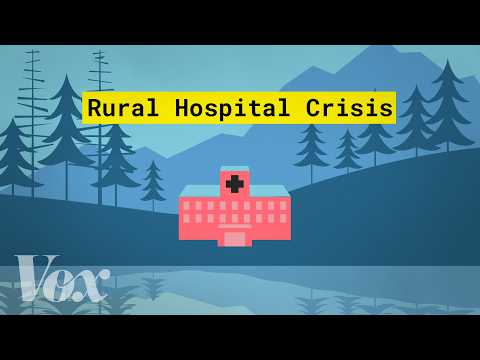
The documentary explored the challenges faced by rural hospitals.
In creative writing, 'rural' can be used to contrast with 'urban' to highlight themes of simplicity versus complexity, or nature versus technology. In a sentence like, 'The transition from the urban sprawl to the rural quiet was sudden,' the word 'rural' acts as a pivot point for the reader's imagination. It's also useful in technical writing, where precise definitions of land use are required. For instance, a census report might classify a region as 'rural' based on a specific population threshold. By mastering these different applications, you can use 'rural' in a variety of contexts, from casual conversation about your weekend plans to formal reports on demographics and land management.
The word rural is a staple in many different types of communication, ranging from everyday news reports to specialized academic journals. You will frequently hear it in news broadcasts when journalists discuss issues that affect people living outside of cities. This might include reports on farming conditions, changes in rural infrastructure, or the impact of weather events on countryside communities. In these contexts, 'rural' serves as a clear, professional way to identify the geographic focus of the story. It is also a common term in political discourse, as politicians often talk about their plans for 'rural voters' or 'rural development' to appeal to those living in less populated areas.
- In the News
- Journalists use 'rural' to describe locations of events that happen away from cities, such as 'a rural farmhouse' or 'a rural highway'.
- In Education
- Geography and social studies teachers use the term to explain different types of settlements and land use patterns.
- In Travel and Tourism
- Travel guides often promote 'rural tourism' or 'rural getaways' for people looking for a peaceful vacation in nature.
In addition to formal settings, you might hear 'rural' in casual conversations, though people often use synonyms like 'the country' or 'the sticks' in very informal speech. However, 'rural' remains the preferred term when someone wants to be precise or slightly more formal. For example, if someone is describing their childhood, they might say, 'I grew up in a very rural part of the state.' This sounds more descriptive and slightly more educated than simply saying 'the country.' In the workplace, especially in industries like logistics, telecommunications, or healthcare, 'rural' is used to describe the challenges of reaching customers or patients who are not in urban centers.
The news report focused on the lack of high-speed internet in rural areas.
Our geography teacher explained the difference between urban and rural settlements.
The travel brochure advertised a rural retreat in the heart of the mountains.
The politician promised to create more jobs for rural workers.
Doctors in rural clinics often have to travel long distances to see patients.
Furthermore, 'rural' is a key term in environmental and conservation discussions. You will hear it when people talk about protecting 'rural landscapes' from over-development or when discussing the 'rural-urban fringe,' which is the area where the city meets the country. In these contexts, the word carries a sense of value and protection, highlighting the importance of preserving non-urban spaces for their ecological and aesthetic benefits. Whether you are watching a documentary about wildlife, reading a government report on agriculture, or simply chatting with a friend about their weekend hike, 'rural' is a versatile and essential word that helps you navigate and describe the world outside the city limits.
While rural is a relatively straightforward word, there are several common mistakes that learners often make. The most frequent error is confusing 'rural' with its noun counterpart, 'countryside.' Remember that 'rural' is an adjective, which means it must describe a noun. You cannot say 'I love the rural.' Instead, you should say 'I love the rural landscape' or 'I love the countryside.' Another common confusion is between 'rural' and 'rustic.' While they are related, 'rustic' usually refers to a style or appearance that is simple, unsophisticated, or typical of the country (e.g., 'rustic furniture' or 'a rustic cabin'), whereas 'rural' is a more neutral, geographic term.
- Rural vs. Countryside
- 'Rural' is an adjective (describes something); 'countryside' is a noun (the place itself).
- Rural vs. Rustic
- 'Rural' refers to the location; 'rustic' refers to the style or quality of being simple and country-like.
- Rural vs. Remote
- 'Rural' means countryside; 'remote' means far away from other people or places. A place can be rural but not remote (like a farm near a city).
Another mistake involves the pronunciation of 'rural.' It can be a difficult word for many non-native speakers because of the double 'r' and the 'l' sound at the end. Some people might accidentally say something that sounds like 'rule' or 'rore-ul.' Practicing the transition between the 'r' and the 'l' is key to being understood. Additionally, learners sometimes use 'rural' when they actually mean 'suburban.' Suburban areas are the residential districts on the outskirts of a city, which have more houses and people than a rural area but fewer than the city center. If there are many houses and a local supermarket, it's likely suburban, not rural.
Incorrect: I want to live in the rural. Correct: I want to live in a rural area.
Incorrect: The hotel had a rural charm. Correct: The hotel had a rustic charm.
Incorrect: This rural neighborhood has many shops. Correct: This suburban neighborhood has many shops.
Incorrect: He lives in a rural city. Correct: He lives in a rural village.
Incorrect: The rural of France is beautiful. Correct: The countryside of France is beautiful.
Finally, be careful with the word 'country.' While 'the country' is a common synonym for rural areas, 'country' on its own usually refers to a nation (like France or Japan). To avoid confusion, always use the article 'the' when referring to the countryside: 'I'm going to the country.' However, 'rural' is even more precise because it specifically excludes the idea of a nation and focuses entirely on the type of environment. By being aware of these distinctions and practicing the correct usage and pronunciation, you can avoid common pitfalls and use 'rural' with confidence in any situation.
The word rural has several synonyms and related terms that can help you add variety to your language. Depending on the context, you might choose a word that emphasizes a specific aspect of the countryside, such as its beauty, its agricultural nature, or its isolation. For example, 'rustic' is a great alternative when you want to describe something that has a charming, simple, or old-fashioned country feel. 'Pastoral' is often used in literature and art to describe a peaceful, idealized version of country life, particularly involving shepherds or livestock. 'Bucolic' is a more formal, slightly poetic word that also describes a pleasant, peaceful rural scene.
- Rustic
- Focuses on the simple, unrefined, or traditional style of the country. Often used for furniture or architecture.
- Pastoral
- Evokes a sense of peace and simplicity, often related to farming or herding animals in a beautiful setting.
- Agrarian
- A more technical or political term that specifically refers to the cultivation of land and the social systems based on farming.
If you want to emphasize the distance from civilization, you might use 'remote' or 'isolated.' These words don't necessarily mean 'rural,' but they are often used together (e.g., 'a remote rural village'). On the other hand, if you are talking about the area just outside a city that still has some country-like qualities, 'suburban' or 'semi-rural' might be more appropriate. 'Semi-rural' is a particularly useful term for areas that are starting to be developed but still have a lot of open space and farms. In a more informal context, you might hear people say 'out in the sticks' or 'the backwoods,' though these can sometimes have a slightly negative or mocking tone.
The bucolic setting of the valley was perfect for a summer picnic.
They lived in an agrarian society where everyone worked on the land.
The cabin had a rustic feel with its wooden beams and stone fireplace.
The poem described a pastoral scene of sheep grazing on a hillside.
The area is semi-rural, with a mix of small housing estates and large farms.
When choosing an alternative to 'rural,' always consider the tone you want to convey. 'Rural' is neutral and professional. 'Rustic' is often positive and charming. 'Agrarian' is technical. 'Remote' can be neutral or slightly negative depending on whether you like being far from people. By expanding your vocabulary with these similar words, you can more precisely describe the different facets of life outside the city and better express your thoughts and observations about the world around you.
How Formal Is It?
Fun Fact
The Latin root 'rus' is also the source of the word 'rustic'. In ancient Rome, 'rus' was the opposite of 'urbs' (the city), which gives us the word 'urban'.
Pronunciation Guide
- Pronouncing it like 'rule'.
- Difficulty with the double 'r' sound.
- Making it sound like 'royal'.
- Skipping the final 'l' sound.
- Over-emphasizing the second syllable.
Difficulty Rating
Easy to recognize in context, often appearing in travel and news texts.
Requires care to use as an adjective and not a noun.
Pronunciation can be tricky due to the double 'r' and 'l' sounds.
Can sometimes be confused with 'rule' or 'royal' if spoken quickly.
What to Learn Next
Prerequisites
Learn Next
Advanced
Grammar to Know
Adjective placement
The *rural* (adj) area (noun) is quiet.
Hyphenating compound adjectives
A *rural-urban* divide.
Using 'the' with 'countryside' vs 'rural'
I love the *countryside* (noun). I love *rural* (adj) life.
Comparative adjectives with 'rural'
This area is *more rural* than the last one.
Adverbs from adjectives
The house was *rurally* located.
Examples by Level
The farm is in a rural area.
La ferme est dans une zone rurale.
Simple adjective-noun structure.
I like the rural quiet.
J'aime le calme rural.
'Rural' describes the noun 'quiet'.
They live in a rural village.
Ils vivent dans un village rural.
Adjective modifying a place name.
Rural life is very different.
La vie rurale est très différente.
'Rural' as part of a subject phrase.
We saw a rural school today.
Nous avons vu une école rurale aujourd'hui.
Adjective describing a building.
Is this a rural place?
Est-ce un endroit rural ?
Question form with an adjective.
The rural roads are small.
Les routes rurales sont petites.
Plural noun modified by 'rural'.
She loves rural nature.
Elle adore la nature rurale.
Adjective describing a concept.
Many people move to rural areas for peace.
Beaucoup de gens s'installent dans les zones rurales pour la paix.
Common phrase 'rural areas'.
The rural landscape is beautiful in summer.
Le paysage rural est magnifique en été.
Descriptive adjective.
Rural communities often help each other.
Les communautés rurales s'entraident souvent.
Adjective describing a group of people.
He grew up in a rural part of the country.
Il a grandi dans une partie rurale du pays.
Prepositional phrase with 'rural'.
There are fewer shops in rural towns.
Il y a moins de magasins dans les villes rurales.
Comparative sentence using 'rural'.
The bus only goes to the rural village twice a day.
Le bus ne va au village rural que deux fois par jour.
Adjective modifying a specific location.
Rural schools sometimes have small classes.
Les écoles rurales ont parfois de petites classes.
General statement about rural institutions.
I enjoy the fresh air of rural life.
J'apprécie l'air frais de la vie rurale.
Possessive-like structure 'of rural life'.
Rural development is essential for the national economy.
Le développement rural est essentiel pour l'économie nationale.
Formal term 'rural development'.
The government is trying to improve rural internet access.
Le gouvernement essaie d'améliorer l'accès à Internet en milieu rural.
Compound-like structure 'rural internet access'.
Many rural residents work in agriculture.
De nombreux résidents ruraux travaillent dans l'agriculture.
Formal term for people: 'rural residents'.
The rural-urban divide is a major political issue.
La fracture rurale-urbaine est un problème politique majeur.
Hyphenated compound 'rural-urban'.
We need to protect rural landscapes from over-development.
Nous devons protéger les paysages ruraux du surdéveloppement.
Using 'rural' in an environmental context.
Rural poverty can be harder to see than urban poverty.
La pauvreté rurale peut être plus difficile à voir que la pauvreté urbaine.
Comparing two types of a social issue.
The documentary explored the challenges of rural healthcare.
Le documentaire a exploré les défis des soins de santé en milieu rural.
Adjective modifying a service sector.
She decided to leave her rural home to find work in the city.
Elle a décidé de quitter sa maison rurale pour trouver du travail en ville.
Narrative use of 'rural'.
The rural economy is heavily dependent on seasonal tourism.
L'économie rurale est fortement dépendante du tourisme saisonnier.
Economic terminology.
Living in a rural area requires a high degree of self-sufficiency.
Vivre dans une zone rurale nécessite un haut degré d'autosuffisance.
Complex sentence structure.
The policy aims to revitalize rural communities through innovation.
La politique vise à revitaliser les communautés rurales par l'innovation.
Formal policy language.
Rural depopulation is a serious concern for many European countries.
Le dépeuplement rural est une préoccupation sérieuse pour de nombreux pays européens.
Specific demographic term 'rural depopulation'.
The author uses rural imagery to contrast with the industrial setting.
L'auteur utilise l'imagerie rurale pour contraster avec le cadre industriel.
Literary analysis context.
The rural-urban fringe is where most new housing is built.
La frange rurale-urbaine est l'endroit où la plupart des nouveaux logements sont construits.
Technical geographic term.
Agricultural subsidies are a lifeline for many rural families.
Les subventions agricoles sont une bouée de sauvetage pour de nombreuses familles rurales.
Socio-economic context.
The study highlights the unique environmental challenges faced by rural areas.
L'étude souligne les défis environnementaux uniques auxquels sont confrontées les zones rurales.
Academic reporting style.
The rural-urban continuum suggests that the distinction between the two is increasingly blurred.
Le continuum rural-urbain suggère que la distinction entre les deux est de plus en plus floue.
Advanced sociological concept.
Rural gentrification can lead to the displacement of long-term residents.
L'embourgeoisement rural peut conduire au déplacement des résidents de longue date.
Specific socio-economic term.
The decentralization of services is vital for the sustainability of rural outposts.
La décentralisation des services est vitale pour la durabilité des avant-postes ruraux.
High-level policy discussion.
The film critiques the romanticized notion of the rural idyll.
Le film critique la notion romancée de l'idylle rurale.
Critical analysis terminology.
Rural livelihoods are often the most vulnerable to the impacts of climate change.
Les moyens de subsistance ruraux sont souvent les plus vulnérables aux impacts du changement climatique.
Global issue context.
The project aims to foster social cohesion within fragmented rural communities.
Le projet vise à favoriser la cohésion sociale au sein de communautés rurales fragmentées.
Advanced social science terminology.
The inherent isolation of rural life can exacerbate mental health issues.
L'isolement inhérent à la vie rurale peut exacerber les problèmes de santé mentale.
Psychological and social analysis.
The study explores the intersection of rurality, gender, and economic opportunity.
L'étude explore l'intersection de la ruralité, du genre et des opportunités économiques.
Interdisciplinary academic context.
The ontological status of the 'rural' is frequently contested in contemporary geography.
Le statut ontologique du « rural » est fréquemment contesté dans la géographie contemporaine.
Highly academic, philosophical usage.
The author deconstructs the rural-urban binary, arguing for a more fluid understanding of space.
L'auteur déconstruit le binaire rural-urbain, plaidant pour une compréhension plus fluide de l'espace.
Post-structuralist literary/social critique.
The restructuring of the rural economy has profound implications for regional identity.
La restructuration de l'économie rurale a des implications profondes pour l'identité régionale.
Advanced economic and cultural analysis.
The rural landscape is a palimpsest of historical land-use practices.
Le paysage rural est un palimpseste de pratiques historiques d'utilisation des terres.
Metaphorical and highly sophisticated description.
The pervasive myth of rural homogeneity ignores the vast diversity of countryside experiences.
Le mythe envahissant de l'homogénéité rurale ignore la vaste diversité des expériences à la campagne.
Critique of cultural stereotypes.
The dialectic between rural tradition and urban modernity is a central theme in the novel.
La dialectique entre tradition rurale et modernité urbaine est un thème central du roman.
Philosophical/literary theme analysis.
The government's failure to address rural disenfranchisement has led to significant political upheaval.
L'incapacité du gouvernement à remédier à la désaffection rurale a entraîné des bouleversements politiques importants.
Complex political and social commentary.
The commodification of the rural aesthetic has led to a surge in 'lifestyle' farming.
La marchandisation de l'esthétique rurale a entraîné une augmentation de l'agriculture « de loisir ».
Sociological critique of modern trends.
Synonyms
Antonyms
Common Collocations
Common Phrases
— A peaceful place in the country where someone goes to relax.
We spent the weekend at a lovely rural retreat.
— The social, economic, and political differences between city and country.
The election results highlighted the growing rural-urban divide.
— An area that is very far into the countryside and very isolated.
The village is located in a deeply rural part of the mountains.
— The process of bringing electricity to country areas.
Rural electrification changed the lives of many farmers in the 1930s.
— Poverty that exists in countryside areas, often hidden from view.
Rural poverty is a significant issue that needs more attention.
— An idealized, perfect vision of life in the country.
Many city dwellers dream of finding a rural idyll.
— The movement of people from the country to the city.
Rural-urban migration has led to the growth of mega-cities.
— Medical services provided in countryside areas.
Access to rural healthcare is a major challenge in remote regions.
— Tourism that focuses on visiting the countryside and experiencing nature.
Rural tourism provides an important source of income for local villages.
— A small, isolated settlement or station in the country.
The research station was a lonely rural outpost.
Often Confused With
Rustic refers to a style (simple/country-like), while rural refers to the location itself.
Countryside is a noun (the place), while rural is an adjective (describing the place).
Suburban is the area between the city and the country, not the country itself.
Idioms & Expressions
— Returning to the countryside where one or one's family originally came from.
After years in the city, he decided to go back to his rural roots.
neutral— In a very remote rural area, far from any city or town.
They live way out in the sticks, miles from the nearest shop.
informal— An extremely remote and isolated rural place.
Their cottage is in the back of beyond; you can't even get a phone signal.
informal— A place that is very far from any city or civilization.
The car broke down in the middle of nowhere on a rural road.
informal— A negative term for an unsophisticated person from a rural area.
He felt like a country bumpkin when he first moved to the big city.
informal/offensive— Often used when city people think rural life is better, or vice versa.
She wants to move to the country, but the grass is always greener on the other side.
neutral— Someone who is new to the city and perhaps a bit naive.
He was fresh off the farm and didn't know how to use the subway.
informal— Surviving by farming, hunting, or gathering in a rural area.
They moved to a rural plot to try living off the land.
neutral— While not strictly rural, it refers to the divide between a university and the local (often rural) community.
The town and gown relationship in the rural university town was strained.
formal— Very slow, often used to describe the pace of rural life.
Progress on the new road was slow as a country mile.
informalEasily Confused
Both relate to the country.
Rural is a neutral geographic term. Rustic describes a style or charm that is simple and old-fashioned.
He lives in a rural area in a house with rustic furniture.
Many rural places are remote.
Rural means 'countryside'. Remote means 'far away from other places'. A farm can be rural but close to a city (not remote).
The village is rural but not remote; it's only ten minutes from the town.
Rural is general. Pastoral is specifically peaceful and often used in art or literature to describe a perfect country scene.
The rural county is known for its pastoral beauty.
Rural is the general area. Agrarian specifically refers to the farming economy or land ownership.
The rural community is part of an agrarian society.
Rural is neutral. Bucolic is a more formal and positive word used to describe a lovely, quiet country scene.
They enjoyed the bucolic atmosphere of the rural valley.
Sentence Patterns
It is a rural [noun].
It is a rural farm.
I live in a rural [noun].
I live in a rural village.
[Noun] is important for rural [noun].
Internet is important for rural development.
Despite being rural, [clause].
Despite being rural, the town has a great hospital.
The [noun] of rural [noun] is [adjective].
The sustainability of rural communities is vital.
The [abstract noun] of the rural [noun] [verb].
The commodification of the rural aesthetic continues.
Rural [noun] vs Urban [noun].
Rural schools vs Urban schools.
A [adjective] rural [noun].
A beautiful rural landscape.
Word Family
Nouns
Verbs
Adjectives
Related
How to Use It
Common in news, geography, and travel contexts.
-
I live in the rural.
→
I live in a rural area.
Rural is an adjective, not a noun. You need a noun like 'area' or 'village' after it.
-
The house has a rural style.
→
The house has a rustic style.
While 'rural' relates to the location, 'rustic' is the correct word for describing a country-like style or appearance.
-
It's a rural city.
→
It's a rural town / village.
A 'city' is by definition urban. Use 'town' or 'village' for smaller settlements in rural areas.
-
I like the rural of this country.
→
I like the countryside of this country.
Again, 'rural' cannot be used as a noun. 'Countryside' is the noun you are looking for.
-
The area is very remote and rural.
→
The area is very rural and remote.
This isn't strictly 'wrong', but 'rural' describes the type of place, while 'remote' describes its distance. They are often used together correctly.
Tips
Adjective Only
Always remember that 'rural' is an adjective. Use it to describe a place or a thing, like a 'rural village' or 'rural traditions'. Never use it as a noun on its own.
Master the 'R's
If you find 'rural' hard to say, practice the 'r' sounds separately. It's the transition from the first 'r' to the second that is most difficult for many learners.
Use Synonyms
To sound more advanced, try using 'bucolic' or 'pastoral' when you want to describe a beautiful country scene. Use 'rural' for more general or neutral descriptions.
Urban vs Rural
Think of 'urban' and 'rural' as a pair. Whenever you learn something about cities, try to think about how that same thing would be described in a rural context.
Set the Scene
In your writing, use 'rural' early on to help the reader imagine the setting. It's a very efficient word for creating a specific mental image of the countryside.
Check Your Nouns
Make sure the noun you are describing with 'rural' actually makes sense. You can have a 'rural road', but a 'rural skyscraper' would be a contradiction!
News Reports
Listen for 'rural' in news stories about farming, weather, or elections. It's a key word for understanding the geographic focus of many reports.
Be Precise
If you live in a small town near a city, you might say you live in a 'semi-rural' area. This is more precise than just saying 'rural'.
Avoid Stereotypes
When using 'rural', try to avoid assuming that all rural areas are the same. Some are very wealthy, some are struggling, and they all have unique cultures.
Visual Cues
Associate 'rural' with a specific image, like a tractor or a green field. This mental link will help you remember the word much faster.
Memorize It
Mnemonic
Think of 'RUral' as 'RUstic' and 'REal' nature. Or remember: Rural has two 'R's like 'Rolling Rocks' in the countryside.
Visual Association
Imagine a green field with a single red barn and a cow. This is the classic 'rural' image.
Word Web
Challenge
Try to use the word 'rural' three times today when describing a place you see in a movie or a book.
Word Origin
The word 'rural' comes from the Old French word 'rural', which was derived from the Latin word 'ruralis'. This Latin term comes from 'rus', meaning 'open land' or 'the country'. It has been used in English since the late 14th century to describe things pertaining to the countryside.
Original meaning: Relating to the country or to farming.
Indo-European (Latin branch)Cultural Context
Be careful not to use 'rural' in a way that implies a place is 'backward' or 'unintelligent'. It should be used as a neutral geographic term.
In the UK and US, 'rural' is often used in political discussions about 'the rural vote' and how to balance city and country needs.
Practice in Real Life
Real-World Contexts
Travel and Tourism
- rural getaway
- scenic rural route
- rural charm
- explore the rural side
Geography and Education
- rural settlement
- rural land use
- rural population density
- urban vs rural
Government and Policy
- rural infrastructure
- rural grants
- rural health services
- rural planning
Environment
- rural conservation
- rural habitat
- rural ecosystem
- rural preservation
Personal Background
- rural upbringing
- rural childhood
- rural lifestyle
- moving to a rural area
Conversation Starters
"Would you prefer to live in a rural area or a big city?"
"What is the most beautiful rural place you have ever visited?"
"Do you think rural life is easier or harder than city life?"
"What are some challenges that people in rural communities face?"
"Have you ever spent time on a rural farm?"
Journal Prompts
Describe your ideal rural retreat. What would it look like and what would you do there?
Compare and contrast the advantages of rural living versus urban living based on your own experience.
Write about a time you visited a rural area. What was the most surprising thing you noticed?
How do you think technology is changing life in rural communities today?
Imagine you had to move to a rural village for a year. What things would you miss most about the city?
Frequently Asked Questions
10 questionsRural is an adjective. It is used to describe nouns, such as 'rural area' or 'rural life'. You should not use it as a noun (e.g., 'I live in the rural' is incorrect; use 'I live in a rural area' or 'I live in the countryside').
The direct opposite of rural is 'urban', which refers to cities and towns. Another related opposite is 'suburban', which refers to the residential areas on the edge of a city.
It is pronounced /ˈrʊə.rəl/. It can be difficult because of the two 'r' sounds. Try saying 'roar' and then a soft 'uhl' sound at the end. Practice slowly to get the transition right.
Yes, a small town can be described as rural if it is located in the countryside, has a small population, and is surrounded by farms or nature. However, larger towns are usually considered urban or suburban.
Rural development refers to the process of improving the quality of life and economic well-being of people living in relatively isolated and sparsely populated areas. This often involves building better roads, schools, and hospitals.
Not necessarily. While many people associate 'rural' with peace and beauty, it can also be used in contexts describing challenges, such as 'rural poverty' or 'rural isolation'. It is a neutral term.
Rural is a geographic term meaning 'relating to the countryside'. Rustic is a stylistic term meaning 'simple, unsophisticated, or typical of the country'. You can have a rustic table in a city apartment, but you can't have a rural apartment in the city center.
Common collocations include 'rural area', 'rural community', 'rural landscape', 'rural development', and 'rural life'. These are the words most frequently used alongside 'rural'.
In politics, 'rural' is often used to discuss the needs and voting patterns of people living outside of cities. Terms like 'rural voters' or 'the rural-urban divide' are very common in political news.
Yes, 'the sticks' is an informal, slightly slang way to say a rural area. However, 'the sticks' can sometimes sound a bit negative or mocking, whereas 'rural' is a neutral and professional word.
Test Yourself 190 questions
Describe a rural area you know or have seen in a movie.
Well written! Good try! Check the sample answer below.
What are the pros and cons of living in a rural area?
Well written! Good try! Check the sample answer below.
How does the 'rural-urban divide' affect politics in your country?
Well written! Good try! Check the sample answer below.
Write a short story about someone moving from a city to a rural village.
Well written! Good try! Check the sample answer below.
Explain the concept of 'rural development' and why it is important.
Well written! Good try! Check the sample answer below.
Discuss the impact of climate change on rural livelihoods.
Well written! Good try! Check the sample answer below.
Compare 'rural' and 'rustic'. Use both words in a paragraph.
Well written! Good try! Check the sample answer below.
What is the 'rural idyll' and is it realistic?
Well written! Good try! Check the sample answer below.
Describe a rural landscape in four sentences using different adjectives.
Well written! Good try! Check the sample answer below.
How can technology help bridge the rural-urban divide?
Well written! Good try! Check the sample answer below.
Write a letter to a friend inviting them to a rural retreat.
Well written! Good try! Check the sample answer below.
Explain the term 'rural depopulation' and its consequences.
Well written! Good try! Check the sample answer below.
What does 'living off the land' mean in a rural context?
Well written! Good try! Check the sample answer below.
Describe the difference between a rural school and an urban school.
Well written! Good try! Check the sample answer below.
Why is 'rural tourism' becoming more popular?
Well written! Good try! Check the sample answer below.
Discuss the importance of rural electrification in history.
Well written! Good try! Check the sample answer below.
What is 'rural gentrification' and how does it affect local people?
Well written! Good try! Check the sample answer below.
Write a paragraph about a rural festival or tradition.
Well written! Good try! Check the sample answer below.
How do rural and urban populations differ in their views on the environment?
Well written! Good try! Check the sample answer below.
Describe the 'rural-urban fringe' in your own words.
Well written! Good try! Check the sample answer below.
Describe a rural place you have visited. Use the word 'rural' at least twice.
Read this aloud:
You said:
Speech recognition is not supported in your browser. Try Chrome or Edge.
Would you rather live in a rural area or a city? Why?
Read this aloud:
You said:
Speech recognition is not supported in your browser. Try Chrome or Edge.
What are the biggest challenges facing rural communities today?
Read this aloud:
You said:
Speech recognition is not supported in your browser. Try Chrome or Edge.
Explain the difference between 'rural' and 'urban' to a child.
Read this aloud:
You said:
Speech recognition is not supported in your browser. Try Chrome or Edge.
How do you think rural life will change in the next 50 years?
Read this aloud:
You said:
Speech recognition is not supported in your browser. Try Chrome or Edge.
Describe a 'rural retreat' you would like to go on.
Read this aloud:
You said:
Speech recognition is not supported in your browser. Try Chrome or Edge.
What does 'the rural idyll' mean to you?
Read this aloud:
You said:
Speech recognition is not supported in your browser. Try Chrome or Edge.
How can governments support rural development?
Read this aloud:
You said:
Speech recognition is not supported in your browser. Try Chrome or Edge.
Is it important to preserve rural landscapes? Why or why not?
Read this aloud:
You said:
Speech recognition is not supported in your browser. Try Chrome or Edge.
Tell a story about a time you got lost in a rural area.
Read this aloud:
You said:
Speech recognition is not supported in your browser. Try Chrome or Edge.
What are the stereotypes of people who live in rural areas?
Read this aloud:
You said:
Speech recognition is not supported in your browser. Try Chrome or Edge.
How does rural life differ in your country compared to others?
Read this aloud:
You said:
Speech recognition is not supported in your browser. Try Chrome or Edge.
What is the role of farming in a rural community?
Read this aloud:
You said:
Speech recognition is not supported in your browser. Try Chrome or Edge.
Describe a rural tradition or festival you are familiar with.
Read this aloud:
You said:
Speech recognition is not supported in your browser. Try Chrome or Edge.
How has the internet changed rural life?
Read this aloud:
You said:
Speech recognition is not supported in your browser. Try Chrome or Edge.
What are the advantages of growing up in a rural area?
Read this aloud:
You said:
Speech recognition is not supported in your browser. Try Chrome or Edge.
Discuss the concept of 'rural poverty'. Why is it often hidden?
Read this aloud:
You said:
Speech recognition is not supported in your browser. Try Chrome or Edge.
What is 'rural tourism' and why do people do it?
Read this aloud:
You said:
Speech recognition is not supported in your browser. Try Chrome or Edge.
How do rural areas contribute to the national economy?
Read this aloud:
You said:
Speech recognition is not supported in your browser. Try Chrome or Edge.
What is your favorite rural landscape? Describe it in detail.
Read this aloud:
You said:
Speech recognition is not supported in your browser. Try Chrome or Edge.
Listen to the description: 'The area is filled with rolling hills, small farms, and very few people. It's a perfect example of a ______ setting.' What is the missing word?
Listen to the news report: 'The government has announced new funding for rural development.' What is the funding for?
Listen to the conversation: 'I'm so tired of the city noise. I need a rural retreat.' What does the speaker need?
Listen to the lecture: 'Rural depopulation is a major issue in many parts of the world.' What is the major issue?
Listen to the instructions: 'Drive past the city limits until you reach the rural roads.' Where should you drive?
Listen to the speaker: 'I grew up in a deeply rural area where the nearest neighbor was a mile away.' How does the speaker describe the area?
Listen to the podcast: 'The rural-urban divide is more than just geography; it's about culture.' What is the divide about besides geography?
Listen to the travel guide: 'This rural village is famous for its traditional festivals.' What is the village famous for?
Listen to the scientist: 'Rural livelihoods are at risk due to the changing climate.' What is at risk?
Listen to the politician: 'We must not forget our rural communities.' Who must not be forgotten?
Listen to the story: 'The city mouse found the rural quiet quite unsettling.' How did the city mouse feel about the rural quiet?
Listen to the report: 'Rural electrification was a turning point for the farming industry.' What was a turning point?
Listen to the description: 'The hotel has a rustic feel, perfectly matching its rural location.' What two things match?
Listen to the warning: 'Be careful on the rural roads; they can be very narrow.' What should you be careful of?
Listen to the analysis: 'The restructuring of the rural economy is a complex process.' What is a complex process?
/ 190 correct
Perfect score!
Summary
The word 'rural' is the essential adjective for describing the countryside. Use it whenever you want to refer to places, people, or lifestyles that are far from the city and connected to nature or farming. Example: 'The rural landscape was filled with golden wheat fields.'
- Rural is an adjective that describes anything related to the countryside, farms, or small villages far from big cities and urban centers.
- It is primarily used to characterize geographic areas with low population density, abundant natural landscapes, and a focus on agricultural or primary industries.
- Commonly paired with nouns like 'area,' 'community,' 'lifestyle,' and 'development,' it helps distinguish non-urban environments in both casual and formal contexts.
- Understanding 'rural' is key for discussing topics ranging from simple travel and nature to complex social issues like the rural-urban divide and economic policy.
Adjective Only
Always remember that 'rural' is an adjective. Use it to describe a place or a thing, like a 'rural village' or 'rural traditions'. Never use it as a noun on its own.
Master the 'R's
If you find 'rural' hard to say, practice the 'r' sounds separately. It's the transition from the first 'r' to the second that is most difficult for many learners.
Use Synonyms
To sound more advanced, try using 'bucolic' or 'pastoral' when you want to describe a beautiful country scene. Use 'rural' for more general or neutral descriptions.
Urban vs Rural
Think of 'urban' and 'rural' as a pair. Whenever you learn something about cities, try to think about how that same thing would be described in a rural context.
Example
I grew up in a rural area where the nearest neighbor was a mile away.
Related Content

Learn it in Context
This Word in Other Languages
More Geography words
ridges
B2Ridges are long, narrow, elevated sections of land, such as the crest of a mountain range. The term also refers to raised strips or bands on a flat surface, like the patterns on fingertips or the texture of corduroy fabric.
cities
A1Cities are large and permanent human settlements characterized by high population density, diverse infrastructure, and administrative importance. They serve as primary hubs for commerce, culture, and social interaction within a region.
towns
B1Towns refer to multiple urban areas that are larger than villages but typically smaller and less populated than cities. They function as centers for commerce, local administration, and community life within a specific region.
oklahoma
B1Oklahoma is a landlocked state in the South Central region of the United States. It is characterized by its diverse geography, including prairies and hills, and is well-known for its significant Native American heritage and history.
parks
B1As a noun, 'parks' are public areas of land with grass and trees, often used for recreation and enjoyment. As a verb, 'parks' is the third-person singular present tense of 'park,' meaning to stop and leave a vehicle in a particular place.
pyramid
B1A solid shape with a square or triangular base and triangular sides that meet in a point at the top. It also refers to a hierarchical system or organization where there are many people at the bottom and very few at the top.
coast
B1The land along or near a sea or ocean. As a verb, it means to move easily without using power or to progress with very little effort.
lagos
B1The largest city and former capital of Nigeria, situated on the Atlantic coast. It is a major financial, commercial, and cultural hub for Africa, known for its bustling energy and significant economic influence.
land
B1As a noun, 'land' refers to the part of the Earth's surface that is not covered by water, as opposed to the sea or the air. As a verb, it means to arrive on the ground or another surface after moving down through the air or over water.
oceans
A2Oceans are vast bodies of salt water that cover approximately 71% of the Earth's surface. They separate the continents and are interconnected, forming a continuous world ocean.

