Style and Register: From Formal Prose to Spoken Flow
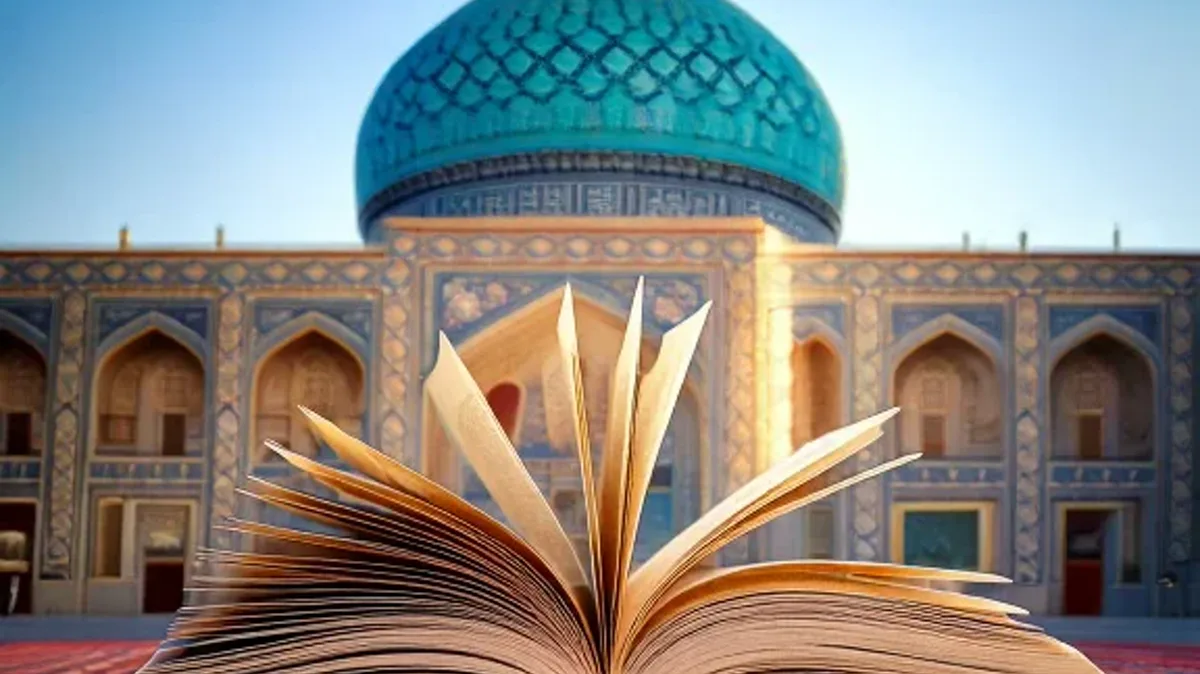
Chapter in 30 Seconds
Master the nuanced art of Persian discourse, from professional elegance to the rhythmic flow of the street.
- Manipulate sentence word order to emphasize specific topics.
- Identify and apply ellipsis in natural, rapid-fire spoken Persian.
- Distinguish between formal registers and casual colloquial speech.
What You'll Learn
Alright, champ, we've reached the point where we're going to take your Persian from great to truly exceptional! In this advanced C1 chapter, we're diving deep into the
Secrets of Persian Nuance– those subtle touches that make your speech sound utterly natural, just like a native speaker. First up, we'll tackle the distinctions between
Formal and Informal Persian. No more speaking exclusively from textbooks! You'll master how to seamlessly switch between these registers, choosing the perfect tone for any situation. Imagine confidently navigating a formal meeting or crafting a professional email, then effortlessly shifting to a relaxed, casual chat with friends at a cafe or a quick conversation with a taxi driver.
Next, we'll explore Persian Sentence Spice: how to emphasize exactly what you mean by strategically reordering words. Want to say, It was *I* who did this task,or
I bought that book *yesterday*? With the
Topic-Comment rule, you'll learn to bring anything you want into immediate focus at the beginning of a sentence, grabbing your listener's attention. This is advanced-level sentence construction, allowing for precision and impact.
Finally, we'll uncover the Invisible Words – the art of ellipsis in spoken Persian. You've probably noticed how fast native speakers sound, sometimes seemingly skipping words. You'll learn to omit conjunctions and prepositions in rapid conversation without losing clarity or meaning. This key skill will help you speak fluently, without hesitation, and truly blend in with native rhythms.
By the end of this chapter, you won't just know Persian; you'll live it! You'll be able to communicate effectively and appropriately in any context, convey your exact message with stylistic precision, and captivate your audience. Ready? Let's go!
-
Persian Sentence Spice: Putting the Focus First (Topic-Comment)Fronting allows you to highlight specific information by moving it to the beginning of a Persian sentence.
-
Ghost Words: Ellipsis in Spoken PersianIn rapid spoken Persian, structural particles like prepositions and conjunctions are often omitted to speed up communication without losing meaning.
-
Formal vs. Informal Persian: From 'Book' to 'Street' TalkSwitching between formal (written) and informal (spoken) Persian is key to sounding natural and context-aware.
Learning Objectives
By the end of this chapter, you will be able to:
-
1
By the end you will be able to: Reorder complex Persian sentences to shift focus onto the topic of your choice.
Chapter Guide

Overview
How This Grammar Works

Common Mistakes
- 1✗ Wrong: "سلام، شما چطور هستید؟" (Salām, shomā chetor hastīd? - Hello, how are you? - said to a close friend)
- 1✗ Wrong: "من دیروز آن کتاب را خریدم." (Man dīrūz ān ketāb rā kharīdam. - I bought that book yesterday.) - when the speaker wants to emphasize "yesterday"

Real Conversations
A
B
A
B
A
B
Quick FAQ
How do I know when to use formal versus informal Persian?
The choice depends on context, your relationship with the person, and the setting. Use formal for strangers, elders, superiors, official situations, and written communication. Use informal for friends, family, children, and casual settings. When in doubt, start formal and adjust if the other person uses informal.
Is reordering sentences for emphasis common in everyday Persian?
Absolutely! The "Topic-Comment" structure is a very natural and frequently used aspect of Persian sentence structure in both spoken and written language. It's essential for conveying precise meaning and sounding natural.
What are the most common "invisible words" to omit in spoken Persian?
The most common omissions in spoken Persian ellipsis include the conjunction و (va - and), certain prepositions like به (be - to) or از (az - from) when the meaning is clear, and often subject pronouns (like من (man - I) or تو (to - you)) when the verb conjugation already indicates the subject.

Cultural Context
Key Examples (6)
این کلید رو من پیدا کردم.
This key, I found it.
Persian Sentence Spice: Putting the Focus First (Topic-Comment)کباب رو تند میخورم.
The kebab, I eat it spicy.
Persian Sentence Spice: Putting the Focus First (Topic-Comment)دارم میرم بازار، چیزی لازم نداری؟
I'm going to the market, do you need anything?
Ghost Words: Ellipsis in Spoken Persianفکر کنم امشب بارون بیاد.
I think (that) it will rain tonight.
Ghost Words: Ellipsis in Spoken Persianآنها فردا میآیند.
They are coming tomorrow.
Formal vs. Informal Persian: From 'Book' to 'Street' Talkاین فیلم خیلی خوب است.
This movie is very good!
Formal vs. Informal Persian: From 'Book' to 'Street' TalkTips & Tricks (3)
Use 'را' correctly
Listen first
Listen to music
Key Vocabulary (5)
Real-World Preview
The Cafe Catch-up
Review Summary
- Topic + Comment
- Verb stem + informal ending
- Formal: Full forms / Informal: Contracted forms
Common Mistakes
Using full formal forms in casual settings makes you sound robotic.
Failing to use topic-fronting misses the opportunity to emphasize location.
Over-articulating conjunctions like 'ke' is unnatural in rapid speech.
Rules in This Chapter (3)
Next Steps
You have mastered the nuances of Persian! Continue to listen, observe, and engage with native speakers to keep refining your unique voice.
Watch a Persian movie and note register shifts
Quick Practice (6)
Find and fix the mistake:
کتاب علی خواند.
frontend.learn_grammar.from_rule: Persian Sentence Spice: Putting the Focus First (Topic-Comment)
___ khasteh-am.
frontend.learn_grammar.from_rule: Ghost Words: Ellipsis in Spoken Persian
میروم -> ___
frontend.learn_grammar.from_rule: Formal vs. Informal Persian: From 'Book' to 'Street' Talk
Which is more emphatic?
frontend.learn_grammar.from_rule: Persian Sentence Spice: Putting the Focus First (Topic-Comment)
Which is correct?
frontend.learn_grammar.from_rule: Persian Sentence Spice: Putting the Focus First (Topic-Comment)
___ را علی خواند. (The book)
frontend.learn_grammar.from_rule: Persian Sentence Spice: Putting the Focus First (Topic-Comment)
Score: /6

