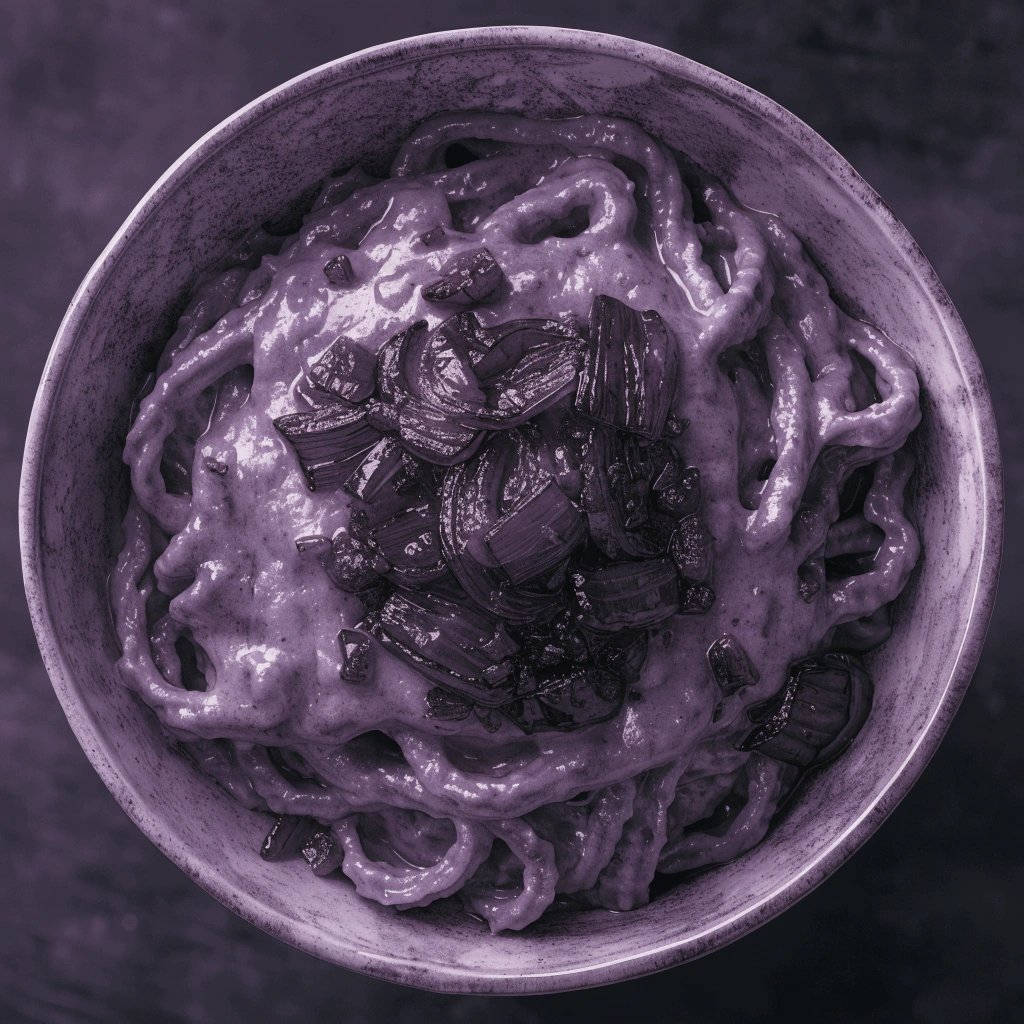
A Special Food from Germany
Käsespätzle is a famous food from Germany. People in the south of Germany love this dish. It is a type of pasta with cheese.
To make it, you need eggs, flour, and water. These make the noodles. The noodles have a special shape. They are not like Italian pasta.
The most important part is the cheese. People use a lot of hot cheese. They also put fried onions on top. It is very delicious and warm. Many families eat this together at home or in restaurants. It is the perfect meal for a cold day.
Gramática em destaque
Padrão: Present Simple: 'to be'
"Käsespätzle is a famous food from Germany."
We use 'is' for singular subjects to state facts. In this sentence, it connects the name of the food to its description.
Padrão: Present Simple: Action Verbs
"People use a lot of hot cheese."
We use the base form of the verb 'use' with plural subjects like 'people'. This describes a regular action or a general truth.
Teste sua compreensão
10 perguntas · A1 Iniciante · 1 pré-visualização grátis
Teste o que aprendeu neste artigo. Responda todas as perguntas para ganhar XP!
Where is Käsespätzle from?
Quer finalizar o quiz?
9 perguntas a mais estão esperando por você. Cadastre-se grátis para desbloquear o quiz completo e ganhar XP!
Cadastrar grátisJá tem conta? Entrar
Detalhamento das perguntas
Where is Käsespätzle from?
Sua resposta:
Resposta correta: Germany
Käsespätzle is a type of pasta with cheese.
Sua resposta:
Resposta correta: Verdadeiro
What does 'dish' mean?
Sua resposta:
Resposta correta: A type of food
They also put fried _____ on top.
Sua resposta:
Resposta correta: onions
Käsespätzle: Germany's Favorite Comfort Food
In Southern Germany, there is a famous dish called Käsespätzle. People often call it 'German macaroni and cheese,' but it is more special. Spätzle are soft egg noodles. They are not like Italian pasta because they have irregular shapes. Farmers in the mountainous regions first made this food many years ago because it was cheap and filling.
To make it, you mix flour, eggs, and salt. Then, you cook the dough in hot water. After that, you add a lot of cheese. Usually, people use Emmentaler or Bergkäse. These cheeses are stronger than normal cheese. Finally, you put fried onions on top.
Käsespätzle is very popular in winter. It is warmer and heavier than a salad, so it is perfect for cold days. Many people eat it in restaurants in the Alps. It is the ultimate comfort food for many Germans.
Gramática em destaque
Padrão: Comparatives
"These cheeses are stronger than normal cheese."
We use comparatives to compare two things. For short adjectives like 'strong', we add -er and use the word 'than'.
Padrão: Past Simple
"Farmers in the mountainous regions first made this food many years ago."
We use the past simple for finished actions in the past. 'Made' is the irregular past form of the verb 'make'.
Teste sua compreensão
11 perguntas · A2 Elementar · 1 pré-visualização grátis
Teste o que aprendeu neste artigo. Responda todas as perguntas para ganhar XP!
Where is Käsespätzle from?
Quer finalizar o quiz?
10 perguntas a mais estão esperando por você. Cadastre-se grátis para desbloquear o quiz completo e ganhar XP!
Cadastrar grátisJá tem conta? Entrar
Detalhamento das perguntas
Where is Käsespätzle from?
Sua resposta:
Resposta correta: Southern Germany
Spätzle noodles have the same shape as Italian pasta.
Sua resposta:
Resposta correta: Falso
What does 'dough' mean?
Sua resposta:
Resposta correta: A mix of flour and liquid
Finally, you put fried _____ on top.
Sua resposta:
Resposta correta: onions
Why did farmers first make this dish?
Sua resposta:
Resposta correta: Because it was cheap and filling
The Heart of German Comfort Food: Käsespätzle
If you travel to the mountainous regions of Southern Germany, you will find a dish that feels like a warm hug. This dish is called Käsespätzle. Although it has often been compared to "macaroni and cheese," it is much more than a simple pasta dish. It is a symbol of tradition in areas like Swabia and the Allgäu.
Spätzle are a special type of egg noodle that have an irregular shape. Unlike Italian pasta, which is usually rolled out or cut into perfect shapes, Spätzle are made by hand. The dough is mixed until it is smooth, and then it is pushed through a tool called a Spätzlehobel. In the past, the dough was scraped off a wooden board directly into boiling water, a technique which is still used by professional chefs today.
The magic happens when the noodles are finished. They are layered in a large dish with plenty of grated cheese, such as Emmental or mountain cheese. This mixture is heated until the cheese has melted into a creamy sauce. Finally, the dish is topped with crispy, caramelized onions, which add a sweet and salty flavor.
Käsespätzle has been served in mountain huts for centuries. It is the perfect meal for hikers who have spent the whole day walking in the Alps. Because it is so heavy and filling, it is usually served with a fresh green salad to balance the flavors. Whether you are at a local festival or a cozy restaurant, this traditional meal is something that must be experienced.
Gramática em destaque
Padrão: Passive Voice
"The dough is mixed until it is smooth, and then it is pushed through a tool called a Spätzlehobel."
The passive voice is used here to focus on the action being done to the dough rather than who is doing it. It is formed using the verb 'to be' and the past participle.
Padrão: Relative Clauses
"It is the perfect meal for hikers who have spent the whole day walking in the Alps."
The relative clause 'who have spent...' provides essential information about the hikers. 'Who' is used for people, while 'which' or 'that' are used for things.
Teste sua compreensão
11 perguntas · B1 Intermediário · 1 pré-visualização grátis
Teste o que aprendeu neste artigo. Responda todas as perguntas para ganhar XP!
Where does Käsespätzle traditionally come from?
Quer finalizar o quiz?
10 perguntas a mais estão esperando por você. Cadastre-se grátis para desbloquear o quiz completo e ganhar XP!
Cadastrar grátisJá tem conta? Entrar
Detalhamento das perguntas
Where does Käsespätzle traditionally come from?
Sua resposta:
Resposta correta: Southern Germany
Spätzle noodles are usually made in perfect, identical shapes.
Sua resposta:
Resposta correta: Falso
What does 'grated' mean in the context of cheese?
Sua resposta:
Resposta correta: Shredded into small pieces
The dish is topped with crispy, _____ onions.
Sua resposta:
Resposta correta: caramelized
Why is the dish usually served with a green salad?
Sua resposta:
Resposta correta: To balance the heavy and filling flavors
The Artisanal Heritage of Käsespätzle: More Than Just Comfort Food
While international fast food chains continue to expand across Europe, the traditional culinary heritage of Southern Germany remains remarkably resilient. Among the most cherished dishes is Käsespätzle, a specialty that originates from the Swabian and Allgäu regions. Although it is frequently compared to the ubiquitous American 'macaroni and cheese,' such a simplification overlooks the intricate craftsmanship and regional pride embedded in its preparation. This dish serves as a testament to how simple ingredients can be transformed into a sophisticated cultural icon.
The foundation of the dish lies in the Spätzle itself—a unique variety of egg noodle. Unlike Italian pasta, which is typically extruded through metal dies or rolled into precise sheets, Spätzle are characterized by their irregular shapes and soft, chewy consistency. Traditionally, the dough is scraped by hand from a wooden board directly into boiling water, a technique known as 'Spätzle-schaben.' This artisanal approach ensures that no two noodles are identical, providing a rustic texture that is highly valued by connoisseurs. The manual labor involved reflects a commitment to quality that mass-produced alternatives simply cannot replicate.
Furthermore, the selection of cheese is a matter of significant debate among locals. A sophisticated blend of Emmentaler and Bergkäse is generally preferred, as these varieties offer a balance between melting quality and a sharp, pungent flavor profile. The dish is assembled in layers, alternating the fresh noodles with generous amounts of cheese, and is subsequently baked until the surface reaches a golden hue. The final touch, which is considered indispensable, consists of a topping of crispy, caramelized onions that provide a sweet contrast to the savory base. This combination of textures and flavors creates a complex sensory experience.
From a cultural perspective, Käsespätzle represents more than just a substantial meal; it serves as a symbol of 'Gemütlichkeit'—a German concept encompassing warmth, friendliness, and good cheer. In the mountainous landscapes of the Alps, it has historically functioned as a vital source of energy for laborers and hikers alike. Even in contemporary society, where dietary trends often favor lighter fare, this calorie-dense dish maintains its status as a quintessential comfort food. Consequently, it illustrates how traditional recipes can withstand the pressures of globalization by remaining deeply rooted in local identity and communal ritual.
Gramática em destaque
Padrão: Passive Voice
"Spätzle are characterized by their irregular shapes and soft, chewy consistency."
The passive voice is used here to focus on the object (the noodles) rather than the person making them. It is formed using the verb 'to be' followed by the past participle.
Padrão: Concessive Clauses (Although)
"Although it is frequently compared to the ubiquitous American 'macaroni and cheese,' such a simplification overlooks the intricate craftsmanship."
This structure is used to introduce a contrast or a surprising fact. 'Although' is followed by a subject and a verb to show that despite one fact, another fact remains true.
Padrão: Non-defining Relative Clauses
"The final touch, which is considered indispensable, consists of a topping of crispy, caramelized onions."
These clauses provide extra information about a noun but are not essential to the sentence's meaning. They are always separated by commas and use relative pronouns like 'which' or 'who'.
Teste sua compreensão
11 perguntas · B2 Intermediário superior · 1 pré-visualização grátis
Teste o que aprendeu neste artigo. Responda todas as perguntas para ganhar XP!
Which regions in Germany are specifically mentioned as the origin of Käsespätzle?
Quer finalizar o quiz?
10 perguntas a mais estão esperando por você. Cadastre-se grátis para desbloquear o quiz completo e ganhar XP!
Cadastrar grátisJá tem conta? Entrar
Detalhamento das perguntas
Which regions in Germany are specifically mentioned as the origin of Käsespätzle?
Sua resposta:
Resposta correta: Swabia and Allgäu
The article suggests that Spätzle are identical in shape because they are made using metal dies.
Sua resposta:
Resposta correta: Falso
What does the word 'connoisseurs' mean in the context of the article?
Sua resposta:
Resposta correta: Expert judges with refined taste
Unlike Italian pasta, Spätzle have a soft and chewy _____.
Sua resposta:
Resposta correta: consistency
What role do caramelized onions play in the dish according to the text?
Sua resposta:
Resposta correta: They provide a sweet contrast to the savory base.
Käsespätzle: A Alma Queijeira da Culinária Alemã Meridional
No coração das regiões montanhosas do sul da Alemanha, notadamente na Suábia (Schwaben) e na Algovia (Allgäu), reside um prato que é a epítome do conforto gastronômico: o Käsespätzle. Embora, para os forasteiros, seja frequentemente descrito como o "macarrão com queijo alemão", tal comparação, por mais que evoque uma familiaridade, subestima intrinsecamente a complexidade e a singularidade da versão autêntica deste manjar. É precisamente na sua confecção artesanal e no seu perfil de sabor matizado que se revela a verdadeira essência do Käsespätzle.
Os Spätzle, por si só, constituem uma categoria singular de massa de ovo, cuja característica mais marcante é a sua forma irregular e uma textura macia, porém mastigável. Diferentemente das massas italianas, que são extrudadas ou laminadas com precisão geométrica, os Spätzle são tradicionalmente raspados ou prensados sobre água fervente, resultando em pedaços de tamanhos e formatos diversos. Esta irregularidade não é um defeito, mas sim uma virtude, pois cada pedaço oferece uma superfície única para a aderência do molho de queijo, contribuindo para uma experiência sensorial mais rica e envolvente.
A componente "Käse" (queijo) é tão crucial quanto o próprio Spätzle. A autenticidade do prato demanda a utilização de queijos robustos e aromáticos, como o Emmentaler, o Bergkäse ou, em algumas variações regionais, o Allgäuer. Estes queijos, quando derretidos e misturados aos Spätzle recém-cozidos, formam uma emulsão cremosa e profundamente saborosa, que é a base da identidade do prato. A alternância de camadas de Spätzle e queijo ralado, levadas ao forno para gratinar, é uma prática comum que intensifica ainda mais a fusão dos sabores e a crocância superficial.
Contudo, seria uma omissão imperdoável ignorar o elemento que eleva o Käsespätzle de um prato saboroso a uma experiência sublime: as Röstzwiebeln, ou cebolas fritas crocantes. Estas cebolas, douradas até atingirem uma caramelização perfeita, conferem não apenas um contraste textural indispensável, mas também uma doçura e um aroma que complementam magistralmente a riqueza do queijo. A sua adição final, polvilhada generosamente sobre o prato fumegante, é a assinatura que consubstancia o perfil de sabor único do Käsespätzle, tornando-o inconfundível.
Mais do que uma simples refeição, o Käsespätzle é um emblema cultural nas regiões onde é reverenciado. Representa a culinária regional em sua forma mais reconfortante e autêntica, evocando memórias de invernos rigorosos e reuniões familiares. É um prato que transcende a mera nutrição, transformando-se em um elo com a tradição e a identidade local. A sua simplicidade aparente dissimula uma profundidade de sabor que só a combinação de ingredientes de qualidade e uma técnica apurada pode proporcionar. Apreciá-lo é mergulhar em uma parte essencial da alma gastronômica alemã, um convite irrecusável ao paladar.
Gramática em destaque
Padrão: Nominalização
"É precisamente na sua confecção artesanal e no seu perfil de sabor matizado que se revela a verdadeira essência do Käsespätzle."
A nominalização transforma verbos ou adjetivos em substantivos, tornando a frase mais formal e concisa. Neste exemplo, o verbo "confecionar" (fazer) vira "confecção" (o ato de fazer), e o adjetivo "matizado" (nuanced) vira parte do substantivo "perfil de sabor matizado", focando na característica do perfil e não na ação de matizar. É comum em textos acadêmicos e formais para expressar ideias complexas de forma compacta.
Padrão: Inversão da Ordem Sintática (Cleft Sentence)
"É precisamente na sua confecção artesanal e no seu perfil de sabor matizado que se revela a verdadeira essência do Käsespätzle."
Esta é uma construção de "frase clivada" (cleft sentence) que enfatiza uma parte específica da oração. Começa com "É... que..." para destacar o que vem entre essas palavras. A ordem usual seria "A verdadeira essência do Käsespätzle se revela na sua confecção artesanal...". A inversão com "É... que..." dá foco e sofisticação ao elemento enfatizado.
Padrão: Voz Passiva Sintética com 'se'
"É precisamente na sua confecção artesanal e no seu perfil de sabor matizado que se revela a verdadeira essência do Käsespätzle."
A voz passiva sintética, formada com o pronome "se" antes do verbo na terceira pessoa, é usada para indicar que a ação é praticada por um agente não especificado ou generalizado. Neste caso, "se revela" significa "é revelada" por alguém ou algo, sem precisar dizer quem ou o quê. É uma forma elegante de expressar passividade, comum em textos formais em português.
Teste sua compreensão
12 perguntas · C1 Avançado · 1 pré-visualização grátis
Teste o que aprendeu neste artigo. Responda todas as perguntas para ganhar XP!
Qual é a principal diferença entre Spätzle e massas italianas mencionada no texto?
Quer finalizar o quiz?
11 perguntas a mais estão esperando por você. Cadastre-se grátis para desbloquear o quiz completo e ganhar XP!
Cadastrar grátisJá tem conta? Entrar
Detalhamento das perguntas
Qual é a principal diferença entre Spätzle e massas italianas mencionada no texto?
Sua resposta:
Resposta correta: Spätzle tem forma irregular e textura mastigável, ao contrário das massas italianas extrudadas ou laminadas.
O texto sugere que a descrição de Käsespätzle como 'macarrão com queijo alemão' é uma comparação justa e completa.
Sua resposta:
Resposta correta: Falso
O que significa a palavra 'matizado' no contexto do artigo?
Sua resposta:
Resposta correta: Que possui pequenas diferenças de tom, significado ou característica; sutil.
As __________ fritas crocantes, ou Röstzwiebeln, são consideradas um elemento que eleva o Käsespätzle.
Sua resposta:
Resposta correta: cebolas
Quais tipos de queijo são recomendados para a preparação autêntica do Käsespätzle?
Sua resposta:
Resposta correta: Emmentaler, Bergkäse ou Allgäuer.
A irregularidade da forma do Spätzle é considerada um defeito que prejudica a aderência do molho.
Sua resposta:
Resposta correta: Falso
The Alchemical Synthesis of the Allgäu: A Sociological Deconstruction of Käsespätzle
To the uninitiated observer, the dish known as Käsespätzle might appear to be a mere regional iteration of the ubiquitous macaroni and cheese. However, such a reductive assessment fails to encapsulate the profound cultural provenance and the intricate artisanal craftsmanship inherent in this Swabian staple. Were one to traverse the undulating topography of the Swabian Alps or the verdant pastures of the Allgäu, one would inevitably encounter the olfactory signature of this dish—a pungent yet inviting amalgamation of aged mountain cheese and caramelized onions. It is not merely a meal; it is a visceral manifestation of Southern German identity, a gastronomic anchor in an increasingly globalized culinary landscape.
The genesis of Spätzle lies in the idiosyncratic preparation of the dough. Unlike Italian pasta, which often demands a rigid adherence to durum wheat and extrusion, Spätzle are predicated on a softer, more elastic composition of flour, eggs, and sparkling water. The preeminence of the 'Schaben' technique—the manual scraping of the dough from a wooden board into boiling water—cannot be overstated. This method ensures an irregular morphology, providing a textured surface area that facilitates the optimal adhesion of the melted cheese. Should the dough lack the requisite elasticity, the resulting noodles would fail to provide the chewy, substantial mouthfeel that characterizes the quintessential authentic version.
Central to the dish's complexity is the selection of cheese, typically a robust dichotomy between the sharp, nutty notes of Allgäuer Bergkäse and the milder, more supple Emmentaler. The melding of these elements occurs not in a vacuum, but through a layered assembly process that requires meticulous temperature control. It is imperative that the cheese be integrated while the noodles retain their residual heat, allowing for a cohesive emulsification without the oil separating—a common pitfall for the amateur cook. Furthermore, the addition of fried onions provides a crucial textural counterpoint, offering a crisp, saccharine contrast to the savory density of the noodles.
From a sociological perspective, Käsespätzle functions as a communal lubricant. It is a dish traditionally served in large ceramic bowls, designed for shared consumption in the rustic 'Gasthof' setting. This collective experience reinforces social cohesion, bridging the gap between generations through the shared appreciation of a recipe that has remained largely unchanged for centuries. While modern gastronomic trends might advocate for the inclusion of 'fusion' elements or avant-garde presentations, the enduring popularity of the traditional form suggests a deep-seated psychological need for culinary continuity. Indeed, it would seem that the dish’s very simplicity is its most sophisticated attribute, requiring a mastery of timing and ingredient quality that belies its humble appearance.
In conclusion, Käsespätzle represents a confluence of geography, history, and technique. To analyze it through a purely nutritional lens would be to ignore its role as a cultural artifact. It serves as a testament to the ingenuity of rural populations who, with a limited palette of local ingredients, created a dish of such enduring appeal. Whether it is consumed as a restorative meal after a day of alpine hiking or as a celebratory centerpiece, Käsespätzle remains an indispensable facet of the German culinary lexicon, embodying a sense of 'Heimat'—a concept of home and belonging that transcends mere geographical boundaries.
Gramática em destaque
Padrão: Second Conditional with Inversion (Subjunctive)
"Were one to traverse the undulating topography of the Swabian Alps, one would inevitably encounter the olfactory signature of this dish."
This formal structure replaces 'If one were to traverse...' with the inverted 'Were one to...'. It is used in C2 level writing to express hypothetical scenarios with a scholarly or literary tone.
Padrão: Cleft Sentence for Emphasis
"It is not merely a meal; it is a visceral manifestation of Southern German identity."
Cleft sentences (It is + [emphasized part] + that/which/who...) are used to focus on a specific piece of information. Here, it emphasizes the symbolic nature of the food over its literal function as sustenance.
Padrão: First Conditional with Inversion (Formal/Academic)
"Should the dough lack the requisite elasticity, the resulting noodles would fail to provide the chewy, substantial mouthfeel."
Using 'Should' instead of 'If' at the beginning of a conditional sentence creates a more formal, analytical tone common in academic prose. It describes a potential condition and its consequence.
Teste sua compreensão
12 perguntas · C2 Domínio · 1 pré-visualização grátis
Teste o que aprendeu neste artigo. Responda todas as perguntas para ganhar XP!
What is the author's primary critique of comparing Käsespätzle to macaroni and cheese?
Quer finalizar o quiz?
11 perguntas a mais estão esperando por você. Cadastre-se grátis para desbloquear o quiz completo e ganhar XP!
Cadastrar grátisJá tem conta? Entrar
Detalhamento das perguntas
What is the author's primary critique of comparing Käsespätzle to macaroni and cheese?
Sua resposta:
Resposta correta: It overlooks the complex craftsmanship and cultural significance of the dish.
The 'Schaben' technique is described as an automated process used in modern factories.
Sua resposta:
Resposta correta: Falso
What does 'idiosyncratic' mean in the context of the article?
Sua resposta:
Resposta correta: Unique and peculiar to a specific tradition
The author suggests that the dish's simplicity is actually its most _____ attribute.
Sua resposta:
Resposta correta: sophisticated
According to the text, why is temperature control vital during the assembly of the dish?
Sua resposta:
Resposta correta: To achieve a cohesive emulsification of the cheese without oil separation.
The article argues that modern fusion trends have successfully replaced traditional Käsespätzle in popularity.
Sua resposta:
Resposta correta: Falso

