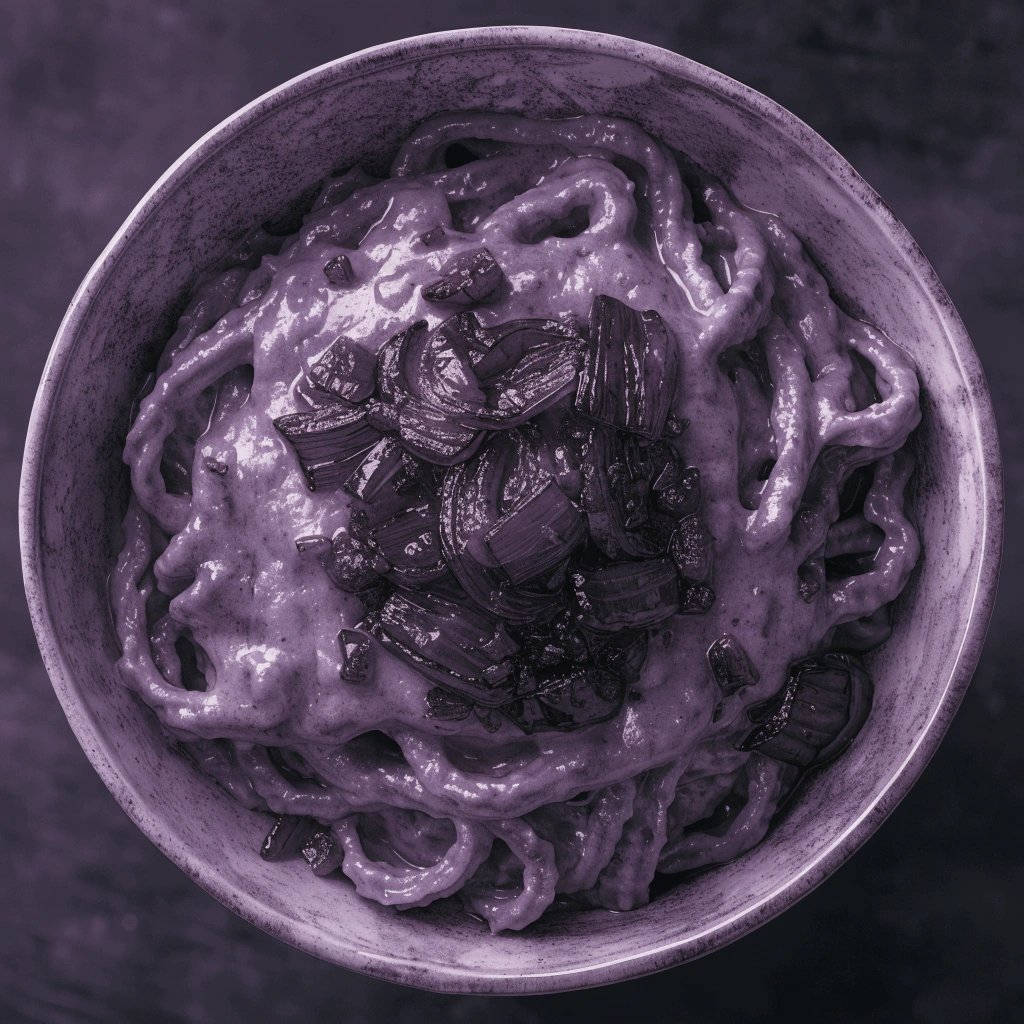
A Special Food from Germany
Käsespätzle is a famous food from Germany. People in the south of Germany love this dish. It is a type of pasta with cheese.
To make it, you need eggs, flour, and water. These make the noodles. The noodles have a special shape. They are not like Italian pasta.
The most important part is the cheese. People use a lot of hot cheese. They also put fried onions on top. It is very delicious and warm. Many families eat this together at home or in restaurants. It is the perfect meal for a cold day.
语法聚焦
句型: Present Simple: 'to be'
"Käsespätzle is a famous food from Germany."
We use 'is' for singular subjects to state facts. In this sentence, it connects the name of the food to its description.
句型: Present Simple: Action Verbs
"People use a lot of hot cheese."
We use the base form of the verb 'use' with plural subjects like 'people'. This describes a regular action or a general truth.
测试你的理解
10 个问题 · A1 初学 · 1 次免费预览
测试你从这篇文章中学到的知识。回答所有问题即可获得经验值!
题目详情
Where is Käsespätzle from?
你的回答:
正确答案: Germany
Käsespätzle is a type of pasta with cheese.
你的回答:
正确答案: 正确
What does 'dish' mean?
你的回答:
正确答案: A type of food
They also put fried _____ on top.
你的回答:
正确答案: onions
Käsespätzle: Germany's Favorite Comfort Food
In Southern Germany, there is a famous dish called Käsespätzle. People often call it 'German macaroni and cheese,' but it is more special. Spätzle are soft egg noodles. They are not like Italian pasta because they have irregular shapes. Farmers in the mountainous regions first made this food many years ago because it was cheap and filling.
To make it, you mix flour, eggs, and salt. Then, you cook the dough in hot water. After that, you add a lot of cheese. Usually, people use Emmentaler or Bergkäse. These cheeses are stronger than normal cheese. Finally, you put fried onions on top.
Käsespätzle is very popular in winter. It is warmer and heavier than a salad, so it is perfect for cold days. Many people eat it in restaurants in the Alps. It is the ultimate comfort food for many Germans.
语法聚焦
句型: Comparatives
"These cheeses are stronger than normal cheese."
We use comparatives to compare two things. For short adjectives like 'strong', we add -er and use the word 'than'.
句型: Past Simple
"Farmers in the mountainous regions first made this food many years ago."
We use the past simple for finished actions in the past. 'Made' is the irregular past form of the verb 'make'.
测试你的理解
11 个问题 · A2 基础 · 1 次免费预览
测试你从这篇文章中学到的知识。回答所有问题即可获得经验值!
题目详情
Where is Käsespätzle from?
你的回答:
正确答案: Southern Germany
Spätzle noodles have the same shape as Italian pasta.
你的回答:
正确答案: 错误
What does 'dough' mean?
你的回答:
正确答案: A mix of flour and liquid
Finally, you put fried _____ on top.
你的回答:
正确答案: onions
Why did farmers first make this dish?
你的回答:
正确答案: Because it was cheap and filling
The Heart of German Comfort Food: Käsespätzle
If you travel to the mountainous regions of Southern Germany, you will find a dish that feels like a warm hug. This dish is called Käsespätzle. Although it has often been compared to "macaroni and cheese," it is much more than a simple pasta dish. It is a symbol of tradition in areas like Swabia and the Allgäu.
Spätzle are a special type of egg noodle that have an irregular shape. Unlike Italian pasta, which is usually rolled out or cut into perfect shapes, Spätzle are made by hand. The dough is mixed until it is smooth, and then it is pushed through a tool called a Spätzlehobel. In the past, the dough was scraped off a wooden board directly into boiling water, a technique which is still used by professional chefs today.
The magic happens when the noodles are finished. They are layered in a large dish with plenty of grated cheese, such as Emmental or mountain cheese. This mixture is heated until the cheese has melted into a creamy sauce. Finally, the dish is topped with crispy, caramelized onions, which add a sweet and salty flavor.
Käsespätzle has been served in mountain huts for centuries. It is the perfect meal for hikers who have spent the whole day walking in the Alps. Because it is so heavy and filling, it is usually served with a fresh green salad to balance the flavors. Whether you are at a local festival or a cozy restaurant, this traditional meal is something that must be experienced.
语法聚焦
句型: Passive Voice
"The dough is mixed until it is smooth, and then it is pushed through a tool called a Spätzlehobel."
The passive voice is used here to focus on the action being done to the dough rather than who is doing it. It is formed using the verb 'to be' and the past participle.
句型: Relative Clauses
"It is the perfect meal for hikers who have spent the whole day walking in the Alps."
The relative clause 'who have spent...' provides essential information about the hikers. 'Who' is used for people, while 'which' or 'that' are used for things.
测试你的理解
11 个问题 · B1 中级 · 1 次免费预览
测试你从这篇文章中学到的知识。回答所有问题即可获得经验值!
Where does Käsespätzle traditionally come from?
题目详情
Where does Käsespätzle traditionally come from?
你的回答:
正确答案: Southern Germany
Spätzle noodles are usually made in perfect, identical shapes.
你的回答:
正确答案: 错误
What does 'grated' mean in the context of cheese?
你的回答:
正确答案: Shredded into small pieces
The dish is topped with crispy, _____ onions.
你的回答:
正确答案: caramelized
Why is the dish usually served with a green salad?
你的回答:
正确答案: To balance the heavy and filling flavors
The Artisanal Heritage of Käsespätzle: More Than Just Comfort Food
While international fast food chains continue to expand across Europe, the traditional culinary heritage of Southern Germany remains remarkably resilient. Among the most cherished dishes is Käsespätzle, a specialty that originates from the Swabian and Allgäu regions. Although it is frequently compared to the ubiquitous American 'macaroni and cheese,' such a simplification overlooks the intricate craftsmanship and regional pride embedded in its preparation. This dish serves as a testament to how simple ingredients can be transformed into a sophisticated cultural icon.
The foundation of the dish lies in the Spätzle itself—a unique variety of egg noodle. Unlike Italian pasta, which is typically extruded through metal dies or rolled into precise sheets, Spätzle are characterized by their irregular shapes and soft, chewy consistency. Traditionally, the dough is scraped by hand from a wooden board directly into boiling water, a technique known as 'Spätzle-schaben.' This artisanal approach ensures that no two noodles are identical, providing a rustic texture that is highly valued by connoisseurs. The manual labor involved reflects a commitment to quality that mass-produced alternatives simply cannot replicate.
Furthermore, the selection of cheese is a matter of significant debate among locals. A sophisticated blend of Emmentaler and Bergkäse is generally preferred, as these varieties offer a balance between melting quality and a sharp, pungent flavor profile. The dish is assembled in layers, alternating the fresh noodles with generous amounts of cheese, and is subsequently baked until the surface reaches a golden hue. The final touch, which is considered indispensable, consists of a topping of crispy, caramelized onions that provide a sweet contrast to the savory base. This combination of textures and flavors creates a complex sensory experience.
From a cultural perspective, Käsespätzle represents more than just a substantial meal; it serves as a symbol of 'Gemütlichkeit'—a German concept encompassing warmth, friendliness, and good cheer. In the mountainous landscapes of the Alps, it has historically functioned as a vital source of energy for laborers and hikers alike. Even in contemporary society, where dietary trends often favor lighter fare, this calorie-dense dish maintains its status as a quintessential comfort food. Consequently, it illustrates how traditional recipes can withstand the pressures of globalization by remaining deeply rooted in local identity and communal ritual.
语法聚焦
句型: Passive Voice
"Spätzle are characterized by their irregular shapes and soft, chewy consistency."
The passive voice is used here to focus on the object (the noodles) rather than the person making them. It is formed using the verb 'to be' followed by the past participle.
句型: Concessive Clauses (Although)
"Although it is frequently compared to the ubiquitous American 'macaroni and cheese,' such a simplification overlooks the intricate craftsmanship."
This structure is used to introduce a contrast or a surprising fact. 'Although' is followed by a subject and a verb to show that despite one fact, another fact remains true.
句型: Non-defining Relative Clauses
"The final touch, which is considered indispensable, consists of a topping of crispy, caramelized onions."
These clauses provide extra information about a noun but are not essential to the sentence's meaning. They are always separated by commas and use relative pronouns like 'which' or 'who'.
测试你的理解
11 个问题 · B2 中高级 · 1 次免费预览
测试你从这篇文章中学到的知识。回答所有问题即可获得经验值!
Which regions in Germany are specifically mentioned as the origin of Käsespätzle?
题目详情
Which regions in Germany are specifically mentioned as the origin of Käsespätzle?
你的回答:
正确答案: Swabia and Allgäu
The article suggests that Spätzle are identical in shape because they are made using metal dies.
你的回答:
正确答案: 错误
What does the word 'connoisseurs' mean in the context of the article?
你的回答:
正确答案: Expert judges with refined taste
Unlike Italian pasta, Spätzle have a soft and chewy _____.
你的回答:
正确答案: consistency
What role do caramelized onions play in the dish according to the text?
你的回答:
正确答案: They provide a sweet contrast to the savory base.
Gastronomic Identity and the Cultural Tapestry of the Allgäu: A Study of Käsespätzle
The culinary landscape of Southern Germany, particularly the alpine reaches of Swabia and the Allgäu, is defined by a dish that transcends mere sustenance. Käsespätzle, often erroneously simplified by international observers as a Teutonic iteration of macaroni and cheese, represents a sophisticated confluence of artisanal craftsmanship and regional history. To perceive it as a simple comfort food is to overlook the intricate socio-cultural nuances embedded within its preparation. The elevation of this humble egg-based noodle into a symbol of regional pride illustrates the profound connection between geography and gastronomy in the German south.
Central to the authenticity of the dish is the Spätzle itself. Unlike Italian pasta, which predominantly relies on mechanical extrusion or rolling, Spätzle are characterized by their irregular, hand-wrought morphology. This unique texture is achieved through 'Schaben'—the rhythmic scraping of wet dough from a wooden board directly into boiling water. Not only does this technique require significant manual dexterity, but it also ensures a varied surface area, which is optimal for the subsequent absorption of melted cheese. Never before has the tactile quality of a noodle been so integral to the structural integrity of a meal; the craggy edges of the Spätzle provide a structural framework that holds the dish together.
The selection of cheese is equally paramount, often sparking heated debates among purists regarding the ideal blend. Authentic Allgäuer Käsespätzle necessitates the inclusion of Bergkäse or Emmentaler, cheeses known for their pungent aromatic profiles and superior melting properties. It is the specific interplay between the sharpness of the aged cheese and the sweetness of the fried onions that provides the dish with its characteristic depth. This synergy is further enhanced by the meticulous layering process, which allows the ambient heat to permeate the noodles, creating a cohesive, indulgent whole that is far greater than the sum of its parts.
From a sociological perspective, the ubiquity of Käsespätzle in alpine huts and urban gasthouses alike speaks to its role as a unifying cultural artifact. In an era dominated by globalized fast food, the persistence of such labor-intensive traditions reflects a conscious preservation of local identity against the tide of homogenization. However, the commercialization of the dish—often involving pre-packaged, factory-made noodles—presents a significant challenge to this heritage. Critics argue that the dilution of traditional methods leads to a loss of 'Heimat', or a sense of home, suggesting that the soul of the dish resides in its manual execution and the temporal investment required to prepare it.
Ultimately, the consumption of Käsespätzle is a sensory immersion into the German soul. It demands a slow pace, contrasting sharply with the frantic, transactional nature of modern life. Whether enjoyed amidst the bracing, thin air of the Alps or the cozy, dimly lit confines of a Swabian tavern, the dish serves as a reminder that culinary excellence is frequently found in the refinement of simplicity. Through the lens of Käsespätzle, one can discern the broader narrative of a region clinging tenaciously to its roots while navigating the multifaceted complexities of the twenty-first century. It is not merely a meal, but a testament to the enduring power of tradition.
语法聚焦
句型: Inversion with Negative Adverbials
"Never before has the tactile quality of a noodle been so integral to the structural integrity of a meal."
When a sentence starts with a negative or restrictive adverbial like 'Never before', the auxiliary verb is placed before the subject. This is used for dramatic emphasis in formal writing.
句型: Cleft Sentences (It-clefts)
"It is the specific interplay between the sharpness of the aged cheese and the sweetness of the fried onions that provides the dish with its characteristic depth."
Cleft sentences focus on a specific part of the information by using 'It + be + focus + relative clause'. This structure emphasizes the specific factors being discussed.
句型: Nominalization
"The persistence of such labor-intensive traditions reflects a conscious preservation of local identity against the tide of homogenization."
Nominalization involves turning verbs (persist, preserve) into nouns (persistence, preservation). This makes the writing more abstract, objective, and sophisticated.
测试你的理解
12 个问题 · C1 高级 · 1 次免费预览
测试你从这篇文章中学到的知识。回答所有问题即可获得经验值!
What primary technique distinguishes Spätzle from Italian pasta according to the text?
题目详情
What primary technique distinguishes Spätzle from Italian pasta according to the text?
你的回答:
正确答案: Rhythmic scraping of dough
The article claims that Käsespätzle is identical to American macaroni and cheese.
你的回答:
正确答案: 错误
What does 'dexterity' mean in the context of 'Schaben'?
你的回答:
正确答案: Skill in performing tasks with the hands
The selection of cheese is equally _____ to the dish's success.
你的回答:
正确答案: paramount
Why is the use of Bergkäse or Emmentaler emphasized?
你的回答:
正确答案: Because of their pungent profiles and melting qualities
Critics believe commercialization and pre-packaged noodles lead to a loss of 'Heimat'.
你的回答:
正确答案: 正确
The Alchemical Synthesis of the Allgäu: A Sociological Deconstruction of Käsespätzle
To the uninitiated observer, the dish known as Käsespätzle might appear to be a mere regional iteration of the ubiquitous macaroni and cheese. However, such a reductive assessment fails to encapsulate the profound cultural provenance and the intricate artisanal craftsmanship inherent in this Swabian staple. Were one to traverse the undulating topography of the Swabian Alps or the verdant pastures of the Allgäu, one would inevitably encounter the olfactory signature of this dish—a pungent yet inviting amalgamation of aged mountain cheese and caramelized onions. It is not merely a meal; it is a visceral manifestation of Southern German identity, a gastronomic anchor in an increasingly globalized culinary landscape.
The genesis of Spätzle lies in the idiosyncratic preparation of the dough. Unlike Italian pasta, which often demands a rigid adherence to durum wheat and extrusion, Spätzle are predicated on a softer, more elastic composition of flour, eggs, and sparkling water. The preeminence of the 'Schaben' technique—the manual scraping of the dough from a wooden board into boiling water—cannot be overstated. This method ensures an irregular morphology, providing a textured surface area that facilitates the optimal adhesion of the melted cheese. Should the dough lack the requisite elasticity, the resulting noodles would fail to provide the chewy, substantial mouthfeel that characterizes the quintessential authentic version.
Central to the dish's complexity is the selection of cheese, typically a robust dichotomy between the sharp, nutty notes of Allgäuer Bergkäse and the milder, more supple Emmentaler. The melding of these elements occurs not in a vacuum, but through a layered assembly process that requires meticulous temperature control. It is imperative that the cheese be integrated while the noodles retain their residual heat, allowing for a cohesive emulsification without the oil separating—a common pitfall for the amateur cook. Furthermore, the addition of fried onions provides a crucial textural counterpoint, offering a crisp, saccharine contrast to the savory density of the noodles.
From a sociological perspective, Käsespätzle functions as a communal lubricant. It is a dish traditionally served in large ceramic bowls, designed for shared consumption in the rustic 'Gasthof' setting. This collective experience reinforces social cohesion, bridging the gap between generations through the shared appreciation of a recipe that has remained largely unchanged for centuries. While modern gastronomic trends might advocate for the inclusion of 'fusion' elements or avant-garde presentations, the enduring popularity of the traditional form suggests a deep-seated psychological need for culinary continuity. Indeed, it would seem that the dish’s very simplicity is its most sophisticated attribute, requiring a mastery of timing and ingredient quality that belies its humble appearance.
In conclusion, Käsespätzle represents a confluence of geography, history, and technique. To analyze it through a purely nutritional lens would be to ignore its role as a cultural artifact. It serves as a testament to the ingenuity of rural populations who, with a limited palette of local ingredients, created a dish of such enduring appeal. Whether it is consumed as a restorative meal after a day of alpine hiking or as a celebratory centerpiece, Käsespätzle remains an indispensable facet of the German culinary lexicon, embodying a sense of 'Heimat'—a concept of home and belonging that transcends mere geographical boundaries.
语法聚焦
句型: Second Conditional with Inversion (Subjunctive)
"Were one to traverse the undulating topography of the Swabian Alps, one would inevitably encounter the olfactory signature of this dish."
This formal structure replaces 'If one were to traverse...' with the inverted 'Were one to...'. It is used in C2 level writing to express hypothetical scenarios with a scholarly or literary tone.
句型: Cleft Sentence for Emphasis
"It is not merely a meal; it is a visceral manifestation of Southern German identity."
Cleft sentences (It is + [emphasized part] + that/which/who...) are used to focus on a specific piece of information. Here, it emphasizes the symbolic nature of the food over its literal function as sustenance.
句型: First Conditional with Inversion (Formal/Academic)
"Should the dough lack the requisite elasticity, the resulting noodles would fail to provide the chewy, substantial mouthfeel."
Using 'Should' instead of 'If' at the beginning of a conditional sentence creates a more formal, analytical tone common in academic prose. It describes a potential condition and its consequence.
测试你的理解
12 个问题 · C2 精通 · 1 次免费预览
测试你从这篇文章中学到的知识。回答所有问题即可获得经验值!
What is the author's primary critique of comparing Käsespätzle to macaroni and cheese?
题目详情
What is the author's primary critique of comparing Käsespätzle to macaroni and cheese?
你的回答:
正确答案: It overlooks the complex craftsmanship and cultural significance of the dish.
The 'Schaben' technique is described as an automated process used in modern factories.
你的回答:
正确答案: 错误
What does 'idiosyncratic' mean in the context of the article?
你的回答:
正确答案: Unique and peculiar to a specific tradition
The author suggests that the dish's simplicity is actually its most _____ attribute.
你的回答:
正确答案: sophisticated
According to the text, why is temperature control vital during the assembly of the dish?
你的回答:
正确答案: To achieve a cohesive emulsification of the cheese without oil separation.
The article argues that modern fusion trends have successfully replaced traditional Käsespätzle in popularity.
你的回答:
正确答案: 错误

