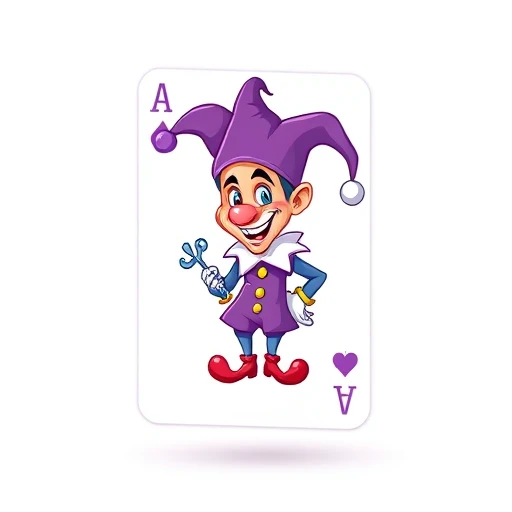
joker em 30 segundos
- A person who tells jokes or plays pranks to entertain others.
- A specific playing card in a deck, often featuring a jester.
- An unpredictable factor or person that can change a situation.
- Informal slang for a person who is acting foolishly or stupidly.
- Social Context
- In a group of friends, the joker is the one who always has a funny story or a practical joke ready to go. This person uses humor as a social lubricant to ease tensions or simply to entertain.
Every office has a joker who keeps everyone smiling during long meetings.
- Gaming Context
- In a standard deck of 52 cards, the joker is an extra card, usually depicting a court jester. It often serves as a wild card, meaning it can represent any other card the player chooses.
I managed to win the hand because I drew the joker at the last second.
The class joker was sent to the principal's office for his latest stunt.
- Metaphorical Use
- The phrase 'the joker in the pack' refers to an unexpected person or factor that can change a situation completely, much like the wild card in a game.
The new evidence proved to be the joker in the pack that overturned the court's decision.
Some joker blocked my driveway with his car this morning.
- Descriptive Noun
- You can use it to identify someone's role within a social hierarchy. 'He is the resident joker of our department.'
Stop being such a joker and focus on the task at hand.
- Card Game Usage
- In games, it acts as a specific entity. 'The rules state that the joker can be used to complete any sequence.'
He pulled the joker from the deck and smiled, knowing he had won.
The joker in the deck was missing, so we couldn't play the game properly.
- Informal Criticism
- In some dialects, it is used to dismiss someone. 'Don't listen to that joker; he doesn't know what he's talking about.'
Which joker left the fridge door open all night?
His unpredictable temper makes him the joker in the pack for the upcoming negotiations.
- At the Card Table
- Whether in a professional casino or a kitchen table game of Rummy, players will frequently mention the joker. It is the card that changes everything, and hearing 'Who has the joker?' is a common refrain.
'I'm using the joker as an Ace,' he declared as he laid down his cards.
- In the Workplace
- While offices are generally professional, the 'office joker' is a recognized archetype. Colleagues might say, 'Don't mind him, he's just being a joker,' to explain away a lighthearted comment that might otherwise be taken too seriously.
The manager warned the office joker to keep the pranks for after-hours.
Heath Ledger's portrayal of the joker is considered one of the greatest performances in cinema history.
- In British Slang
- In the UK, you might hear it used as a mild insult. If someone cuts you off in traffic, you might mutter, 'Look at this joker,' implying they are foolish or incompetent.
'What a joker!' he exclaimed when the waiter dropped the tray.
The substitute striker proved to be the joker in the pack, scoring the winning goal in the final minute.
- Confusion with 'Joke'
- Learners sometimes use 'joker' when they mean 'joke'. You 'tell a joke', but you 'are a joker'. You cannot 'tell a joker'.
Incorrect: He told a very funny joker during dinner.
- Misunderstanding Tone
- Another mistake is failing to recognize the potentially negative tone. Calling someone a 'joker' in a serious business meeting can be an insult, implying they are not professional.
'We need a serious leader, not a joker,' the board member argued.
British English: 'Some joker has taken my seat!'
- Pluralization Errors
- When referring to the cards, remember that a deck usually has two jokers. Learners often forget to use the plural 'jokers' when discussing the deck as a whole.
Make sure to remove both jokers before shuffling the deck for Bridge.
The word joker comes from the verb 'to joke'.
- Prankster
- A prankster specifically focuses on physical jokes or tricks. While a joker might just tell funny stories, a prankster is the one putting salt in the sugar bowl.
The school's biggest joker was also its most notorious prankster.
- Wit
- A 'wit' is someone who is funny in a clever, intellectual way. This is a more formal and complimentary term than joker. It implies a high level of intelligence behind the humor.
She was known as a great joker, but her friends admired her more as a sharp-tongued wit.
He's not just a joker; he's a professional comedian who tours the country.
- Wag
- This is an old-fashioned, British term for a joker. It describes someone who is fond of making jokes and is generally well-liked for it.
The village joker was a bit of a wag, always ready with a quip at the local pub.
The young politician was the joker in the race, acting as a wild card that no one saw coming.
How Formal Is It?
Curiosidade
The joker card was actually an American invention! It was added to the deck around 1860 for the game of Euchre, where it was called the 'Best Bower'. The name 'joker' likely came from a mispronunciation of 'Euchre' or from the 'jester' image printed on the card.
Guia de pronúncia
- Pronouncing the 'j' like a 'y' (yoker).
- Making the 'o' sound too short (jocker).
- Adding an extra syllable at the end.
- Confusing the 'er' sound with 'ar'.
- Stress on the second syllable.
Nível de dificuldade
Easy to recognize in most texts.
Requires understanding of different contexts (person vs. card).
Common in casual speech but needs correct tone.
Distinct sound, easy to hear.
O que aprender depois
Pré-requisitos
Aprenda a seguir
Avançado
Gramática essencial
Countable Nouns
I have two jokers.
Articles with Roles
He is the class joker.
Gerunds after 'Stop'
Stop being a joker.
Adjectives before Nouns
He is a funny joker.
Possessive Nouns
The joker's hat was red.
Exemplos por nível
He is a funny joker.
Il est un plaisantin drôle.
Simple subject + verb + adjective + noun.
I have one joker card.
J'ai une carte joker.
Use of 'one' with a countable noun.
The joker makes me laugh.
Le joker me fait rire.
Third person singular 'makes'.
Is he a joker?
Est-il un plaisantin ?
Question form with 'is'.
The joker is red.
Le joker est rouge.
Simple description.
My brother is a joker.
Mon frère est un plaisantin.
Possessive 'my'.
Look at the joker!
Regarde le joker !
Imperative mood.
A joker is in the deck.
Un joker est dans le jeu.
Preposition 'in'.
He is the class joker.
Il est le plaisantin de la classe.
Definite article 'the' for a specific role.
We found two jokers in the box.
Nous avons trouvé deux jokers dans la boîte.
Plural form 'jokers'.
Don't be a joker, be serious.
Ne sois pas un plaisantin, sois sérieux.
Negative imperative.
The joker is a special card.
Le joker est une carte spéciale.
Adjective 'special' before the noun.
He likes being a joker.
Il aime être un plaisantin.
Gerund 'being' after 'likes'.
The joker told a funny story.
Le plaisantin a raconté une histoire drôle.
Past simple 'told'.
Who is the joker here?
Qui est le plaisantin ici ?
Interrogative 'who'.
I don't like that joker.
Je n'aime pas ce plaisantin.
Demonstrative 'that'.
He's a bit of a joker, isn't he?
C'est un peu un plaisantin, n'est-ce pas ?
Question tag 'isn't he?'.
The joker in the pack was the new evidence.
L'élément imprévisible était la nouvelle preuve.
Idiomatic use of 'joker in the pack'.
Stop playing the joker and listen.
Arrête de faire le plaisantin et écoute.
Verb phrase 'playing the joker'.
The joker card can be anything you want.
La carte joker peut être tout ce que vous voulez.
Modal verb 'can'.
Every group has its own joker.
Chaque groupe a son propre plaisantin.
Possessive 'its'.
He was known as a practical joker.
Il était connu comme un farceur.
Passive voice 'was known as'.
The joker made the party much better.
Le plaisantin a rendu la fête bien meilleure.
Causative 'made'.
I think he's just a joker.
Je pense que c'est juste un plaisantin.
Opinion phrase 'I think'.
The company's success was the joker in the pack.
Le succès de l'entreprise était l'élément imprévisible.
Metaphorical usage in a business context.
Some joker left his car in the middle of the road.
Un imbécile a laissé sa voiture au milieu de la route.
Informal/slang use meaning 'fool'.
He uses his reputation as a joker to hide his intelligence.
Il utilise sa réputation de plaisantin pour cacher son intelligence.
Infinitive of purpose 'to hide'.
The joker is often the most complex character.
Le joker est souvent le personnage le plus complexe.
Superlative 'most complex'.
We need to decide if he's a serious candidate or just a joker.
Nous devons décider s'il est un candidat sérieux ou juste un plaisantin.
Conditional 'if'.
The joker card was removed to make the game harder.
La carte joker a été retirée pour rendre le jeu plus difficile.
Passive voice with infinitive of purpose.
He’s a joker, but he knows when to stop.
C'est un plaisantin, mais il sait quand s'arrêter.
Conjunction 'but' showing contrast.
The film explores the dark side of the joker archetype.
Le film explore le côté sombre de l'archétype du joker.
Noun phrase 'joker archetype'.
The political landscape was disrupted by a joker in the pack.
Le paysage politique a été perturbé par un élément imprévisible.
Sophisticated metaphorical usage.
His persona as a joker is a carefully constructed mask.
Son personnage de plaisantin est un masque soigneusement construit.
Complex noun phrase with past participle 'constructed'.
The joker in the deck represents the chaos of the universe.
Le joker dans le jeu représente le chaos de l'univers.
Abstract philosophical usage.
I'm not sure which joker thought this was a good idea.
Je ne sais pas quel imbécile a pensé que c'était une bonne idée.
Sarcastic use of 'joker'.
The jester was the only one allowed to be a joker in the king's court.
Le bouffon était le seul autorisé à être un plaisantin à la cour du roi.
Historical context and specific role.
The joker's unpredictability makes him a formidable opponent.
L'imprévisibilité du joker en fait un adversaire redoutable.
Possessive 'joker's'.
He played the joker, revealing a secret that changed everything.
Il a joué son va-tout, révélant un secret qui a tout changé.
Idiomatic 'played the joker'.
The term 'joker' has evolved significantly over the centuries.
Le terme 'joker' a considérablement évolué au fil des siècles.
Present perfect 'has evolved'.
The existential dread of the joker is a recurring theme in modern noir.
L'angoisse existentielle du joker est un thème récurrent dans le noir moderne.
Highly academic/literary usage.
To play the joker is to embrace the inherent absurdity of the situation.
Jouer le joker, c'est embrasser l'absurdité inhérente de la situation.
Infinitive as subject.
The joker in the pack of international relations is often a non-state actor.
L'élément imprévisible dans le jeu des relations internationales est souvent un acteur non étatique.
Complex metaphorical application.
He dismissed the critic as a mere joker with no real understanding of art.
Il a écarté le critique comme un simple plaisantin n'ayant aucune réelle compréhension de l'art.
Dismissive register.
The archetype of the joker serves to subvert established hierarchies.
L'archétype du joker sert à renverser les hiérarchies établies.
Sociological/literary analysis.
In the grand theater of life, everyone must occasionally play the joker.
Dans le grand théâtre de la vie, tout le monde doit occasionnellement jouer le plaisantin.
Metaphorical and poetic.
The joker card's fluidity mirrors the shifting nature of truth.
La fluidité de la carte joker reflète la nature changeante de la vérité.
Abstract comparison.
The sudden appearance of a joker in the pack threw the entire strategy into disarray.
L'apparition soudaine d'un élément imprévisible a jeté toute la stratégie dans le désarroi.
Advanced narrative structure.
Colocações comuns
Frases Comuns
— He enjoys making jokes and being funny.
Don't take him seriously; he's a bit of a joker.
— An unexpected person or factor.
The weather might be the joker in the pack for our trip.
— Stop acting silly and be serious.
Stop being a joker and help me with this homework.
— Someone who plays physical tricks on people.
My uncle is a practical joker who loves fake spiders.
— To act in a funny way to change a situation.
He played the joker to make his sister stop crying.
— The person in a group who is always funny.
He is the resident joker of the football team.
— Someone who is very funny or very annoying.
That guy is a real joker; I can't stand him.
Frequentemente confundido com
A clown is a performer in costume; a joker is a personality type.
A comedian is a professional; a joker is anyone who is funny.
A joke is the thing you say; a joker is the person who says it.
Expressões idiomáticas
— An unexpected person or factor that can change a situation.
The new striker was the joker in the pack for the team.
neutral— To use an unexpected tactic or to behave in a humorous way to gain an advantage.
He played the joker by bringing up a topic no one expected.
neutral— Someone who naturally loves humor and fun.
Even at eighty, he was still a joker at heart.
informal— Someone who is very serious and does not joke.
The new boss is no joker; he means business.
neutral— A situation where the rules are flexible or unpredictable.
In this market, the joker's wild and anything can happen.
informal— To laugh in a loud, perhaps slightly manic or mischievous way.
He started laughing like a joker when he saw the mess.
informal— A wide, often mischievous or suspicious smile.
He had a joker's grin on his face as he hid the gift.
literary— To introduce a chaotic or unexpected element into a plan.
The manager dealt the joker by announcing a sudden merger.
metaphorical— Similar to 'joker in the pack', an unpredictable element.
His unpredictable mood is the joker in the deck.
neutral— When a joke has gone too far and is no longer funny.
That prank was beyond a joker; it was actually dangerous.
informalFácil de confundir
Both involve humor and historical roles.
A jester is a specific historical job; a joker is a general term.
The jester entertained the king, but my brother is just a joker.
Both involve making people laugh through actions.
A prankster specifically does physical tricks; a joker can just be funny with words.
The prankster put glue on the chair, but the joker just told a story.
Both describe funny people.
A wit is intellectual and clever; a joker can be silly or simple.
She is a great wit, while he is just a silly joker.
Both describe someone who makes people laugh.
Buffoon is usually an insult for someone stupid; joker is often friendly.
Don't be a buffoon! You're acting like a joker.
Both refer to unpredictable elements.
Wild card is the function; joker is the specific card name.
The joker is the wild card in this game.
Padrões de frases
He is a [adjective] joker.
He is a funny joker.
The [noun] joker is [adjective].
The class joker is happy.
He is a bit of a joker.
My uncle is a bit of a joker.
Stop being a joker.
Stop being a joker and work.
The joker in the pack is [noun].
The joker in the pack is the rain.
Known as a [adjective] joker.
He was known as a practical joker.
Playing the joker, he [verb].
Playing the joker, he told a secret.
The archetype of the joker [verb].
The archetype of the joker subverts order.
Família de palavras
Substantivos
Verbos
Adjetivos
Relacionado
Como usar
Common in daily life and media.
-
He told a joker.
→
He told a joke.
A 'joker' is a person; a 'joke' is the thing said.
-
The joker of the pack.
→
The joker in the pack.
The correct preposition for this idiom is 'in'.
-
He is a jocker.
→
He is a joker.
The spelling is 'joker' with one 'k'.
-
Stop joking around, you joker!
→
Stop acting like a joker!
While 'joking around' is a verb, 'you joker' can be repetitive.
-
The joker card is a wilding card.
→
The joker card is a wild card.
The correct term in gaming is 'wild card'.
Dicas
Countable Noun
Remember to use 'a' or 'the' before 'joker'.
Synonym Choice
Use 'prankster' if they play tricks and 'wit' if they are clever.
Pop Culture
Knowing the 'Batman Joker' helps you understand many modern references.
Card Games
In many games, the joker is the most powerful card.
The Pack
Use 'joker in the pack' to describe a surprise factor in your writing.
The 'O' Sound
Make sure the 'o' sounds like 'go', not 'got'.
Silent E
Don't forget the 'e' before the 'r'.
Office Life
Being the 'office joker' can be good for morale but bad for promotions.
Jesters
Think of medieval jesters to understand the word's deeper meaning.
Memorize
Mnemônico
Think of a 'Joker' as a 'Joke-er'—someone who makes a 'Joke'. The 'er' at the end tells you it's a person.
Associação visual
Imagine a colorful playing card with a man in a bell-covered hat laughing loudly.
Word Web
Desafio
Try to use the word 'joker' in three different ways today: once for a person, once for a card, and once as an idiom.
Origem da palavra
The word 'joker' comes from the noun 'joke', which appeared in English in the late 17th century. 'Joke' itself is derived from the Latin word 'jocus', meaning 'jest, pastime, or sport'. The suffix '-er' was added to denote a person who performs the action of joking.
Significado original: Originally, it simply meant a person who tells jokes.
Indo-European (Latin branch).Contexto cultural
Be careful when calling someone a 'joker' in a professional setting, as it can imply they are not serious or competent.
In the UK, 'joker' can be a mild insult for a foolish man. In the US, it's more commonly used for a funny person or the card.
Pratique na vida real
Contextos reais
Social Gatherings
- Who's the joker?
- He's a real joker.
- Stop being a joker.
- Always the joker.
Card Games
- Is the joker wild?
- I have the joker.
- Remove the jokers.
- The joker wins.
Movies/Comics
- The Joker's origin.
- A Joker-like laugh.
- The dark joker.
- Playing the Joker.
Workplace
- The office joker.
- Don't be a joker.
- He's just a joker.
- A bit of a joker.
Driving/Traffic
- Look at this joker.
- What a joker!
- Some joker blocked me.
- That joker in the van.
Iniciadores de conversa
"Who was the class joker when you were in school?"
"Do you like playing with the joker card in games?"
"What's the best prank a practical joker ever played on you?"
"Do you think it's good to have a joker in every office?"
"Who is your favorite version of the Joker from the movies?"
Temas para diário
Describe a time when you had to play the joker to make someone feel better.
Write about a person you know who is a real joker. What makes them funny?
If you were a joker in a deck of cards, what special power would you have?
How do you feel when someone is being a joker in a serious situation?
Discuss the difference between being a joker and being a comedian.
Perguntas frequentes
10 perguntasIt can be. In British English, it's often used to describe someone who is acting stupidly. In a professional setting, it might imply someone isn't serious enough.
It's an idiom meaning an unpredictable person or factor that can change everything. For example, 'The rain was the joker in the pack for the race.'
Not usually. We say 'to joke' or 'to joke around'. 'To joker' is very rare and usually incorrect.
Yes, most standard 52-card decks come with two jokers, often one in color and one in black and white.
The most famous is likely the DC Comics villain, the Joker, who is Batman's main enemy.
No. A clown is a performer with makeup and a costume. A joker is someone who is funny in their daily life.
It means using humor or an unexpected tactic to change a situation or gain an advantage.
Yes, it is a very common word in English, used in many different situations.
It is spelled 'jokers'.
It is generally considered a B1 level word because it has several meanings and idiomatic uses.
Teste-se 182 perguntas
Describe a person you know who is a joker.
Well written! Good try! Check the sample answer below.
Explain how a joker card is used in a game you know.
Well written! Good try! Check the sample answer below.
Write a short story about a 'joker in the pack' situation.
Well written! Good try! Check the sample answer below.
Compare a 'joker' with a 'comedian'.
Well written! Good try! Check the sample answer below.
Discuss the importance of humor in the workplace.
Well written! Good try! Check the sample answer below.
Write a dialogue between a joker and a serious person.
Well written! Good try! Check the sample answer below.
Describe the 'Joker' character from a movie you have seen.
Well written! Good try! Check the sample answer below.
What are the pros and cons of being the 'class joker'?
Well written! Good try! Check the sample answer below.
How does the 'joker' archetype appear in your culture's folklore?
Well written! Good try! Check the sample answer below.
Write a formal complaint about 'some joker' who did something wrong.
Well written! Good try! Check the sample answer below.
Describe a practical joke that went wrong.
Well written! Good try! Check the sample answer below.
Explain the idiom 'the joker in the pack' to a friend.
Well written! Good try! Check the sample answer below.
Why is the joker card often removed from card games?
Well written! Good try! Check the sample answer below.
Write a poem about a lonely joker.
Well written! Good try! Check the sample answer below.
Discuss whether calling someone a 'joker' is always an insult.
Well written! Good try! Check the sample answer below.
Describe the visual appearance of a typical joker card.
Well written! Good try! Check the sample answer below.
How can a joker help to relieve stress in a group?
Well written! Good try! Check the sample answer below.
Write a review of a movie featuring a joker-like character.
Well written! Good try! Check the sample answer below.
What does 'playing the joker' mean in a business context?
Well written! Good try! Check the sample answer below.
Create a new idiom using the word 'joker'.
Well written! Good try! Check the sample answer below.
Tell a story about a time you were a joker.
Read this aloud:
Você disse:
Speech recognition is not supported in your browser. Try Chrome or Edge.
Explain the rules of a card game that uses a joker.
Read this aloud:
Você disse:
Speech recognition is not supported in your browser. Try Chrome or Edge.
Discuss why some people don't like jokers.
Read this aloud:
Você disse:
Speech recognition is not supported in your browser. Try Chrome or Edge.
Role-play a conversation where you call someone a 'joker' (affectionately).
Read this aloud:
Você disse:
Speech recognition is not supported in your browser. Try Chrome or Edge.
Role-play a conversation where you call someone a 'joker' (angrily).
Read this aloud:
Você disse:
Speech recognition is not supported in your browser. Try Chrome or Edge.
Describe your favorite funny person using the word 'joker'.
Read this aloud:
Você disse:
Speech recognition is not supported in your browser. Try Chrome or Edge.
Debate whether the joker card should be allowed in Poker.
Read this aloud:
Você disse:
Speech recognition is not supported in your browser. Try Chrome or Edge.
Give a short presentation on the history of the word 'joker'.
Read this aloud:
Você disse:
Speech recognition is not supported in your browser. Try Chrome or Edge.
Explain the idiom 'the joker in the pack' to the class.
Read this aloud:
Você disse:
Speech recognition is not supported in your browser. Try Chrome or Edge.
Talk about a movie character who is a joker.
Read this aloud:
Você disse:
Speech recognition is not supported in your browser. Try Chrome or Edge.
Discuss the difference between a joker and a prankster.
Read this aloud:
Você disse:
Speech recognition is not supported in your browser. Try Chrome or Edge.
How do you handle a 'joker' in a serious meeting?
Read this aloud:
Você disse:
Speech recognition is not supported in your browser. Try Chrome or Edge.
Describe a joker card without using the word 'jester'.
Read this aloud:
Você disse:
Speech recognition is not supported in your browser. Try Chrome or Edge.
Tell a joke and then explain why you are a joker.
Read this aloud:
Você disse:
Speech recognition is not supported in your browser. Try Chrome or Edge.
Discuss the 'joker' archetype in modern television.
Read this aloud:
Você disse:
Speech recognition is not supported in your browser. Try Chrome or Edge.
What would the world be like without any jokers?
Read this aloud:
Você disse:
Speech recognition is not supported in your browser. Try Chrome or Edge.
Describe a 'joker's grin' using other vocabulary.
Read this aloud:
Você disse:
Speech recognition is not supported in your browser. Try Chrome or Edge.
Talk about a time a 'joker in the pack' changed your plans.
Read this aloud:
Você disse:
Speech recognition is not supported in your browser. Try Chrome or Edge.
Role-play an interview with the 'office joker'.
Read this aloud:
Você disse:
Speech recognition is not supported in your browser. Try Chrome or Edge.
Explain the etymology of 'joker' to a friend.
Read this aloud:
Você disse:
Speech recognition is not supported in your browser. Try Chrome or Edge.
Listen to a recording of a card game and identify when the joker is played.
Listen to a description of three people and identify which one is the joker.
Listen to a movie clip and identify the Joker's laugh.
Listen to a podcast about idioms and note the meaning of 'joker in the pack'.
Listen to a conversation and determine if 'joker' is used as an insult.
Listen to a lecture on medieval history and the role of the jester.
Listen to a stand-up comedy routine and identify the 'joker' elements.
Listen to a news report about a political 'wild card' or 'joker'.
Listen to a child describing their favorite card and identify if it's the joker.
Listen to a dialogue between two friends about a prankster.
Listen to a poem being read and identify the word 'joker'.
Listen to a radio show discussing 'The Joker' movie.
Listen to a set of instructions for a game and note the joker's value.
Listen to a story about a 'joker at heart'.
Listen to an academic discussion on the trickster archetype.
/ 182 correct
Perfect score!
Summary
The word 'joker' is a versatile noun that bridges the gap between social humor and strategic unpredictability. Whether describing a funny friend, a wild card in a game, or a chaotic factor in a plan, it always implies something that stands outside the normal rules.
- A person who tells jokes or plays pranks to entertain others.
- A specific playing card in a deck, often featuring a jester.
- An unpredictable factor or person that can change a situation.
- Informal slang for a person who is acting foolishly or stupidly.
Context is Key
Always look at whether the person is being funny (positive) or foolish (negative).
Countable Noun
Remember to use 'a' or 'the' before 'joker'.
Synonym Choice
Use 'prankster' if they play tricks and 'wit' if they are clever.
Pop Culture
Knowing the 'Batman Joker' helps you understand many modern references.