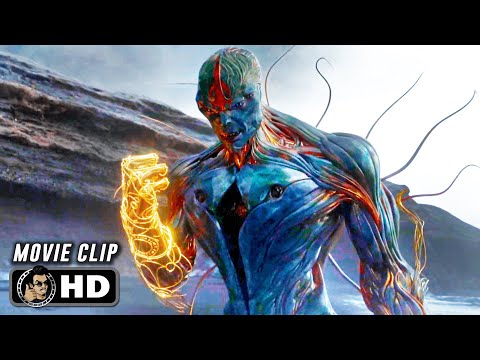
eternals 30秒了解
- Eternals are immortal beings or unchanging truths that exist forever without end.
- The word is a plural noun often used in mythology, sci-fi, and philosophy.
- It contrasts with 'mortals' or 'ephemerals,' which are things that eventually die or fade.
- In modern culture, it is widely known as the name of a group of Marvel superheroes.
The term eternals refers to entities, beings, or abstract concepts that are perceived to exist outside the constraints of linear time. Unlike mortals, who are defined by their birth, growth, and eventual decay, eternals represent a state of permanent existence. In the realm of philosophy, particularly Platonic thought, the 'eternals' are the ideal forms—perfect versions of things that exist in a higher reality, unchanging while the physical world shifts. In contemporary pop culture, most notably within the Marvel Cinematic Universe, the term has gained significant traction to describe a specific race of cosmic beings tasked with protecting Earth over millennia. When people use this word, they are often reaching for a concept that transcends the temporary nature of human life. It is a word of high register, frequently appearing in theological discussions regarding the nature of the divine, or in poetic contexts where a writer wishes to contrast the fleeting beauty of a flower with the 'eternals' of the stars or the human soul.
- Philosophical Context
- In metaphysics, the eternals are those truths or entities that do not change regardless of the era or culture, such as mathematical principles or moral absolutes.
The ancient Greeks believed that the gods were the true eternals, watching the rise and fall of empires with indifferent eyes.
Beyond the literal sense of living forever, 'eternals' can also describe artistic works or historical figures whose influence never fades. A classic piece of literature might be grouped among the 'literary eternals' because its themes remain relevant across centuries. The word carries a weight of solemnity and grandeur. It is rarely used in casual conversation about mundane things; you wouldn't call a long-lasting battery an 'eternal' in a literal sense, but you might use it metaphorically in high-concept storytelling. In science fiction, the term often implies a biological or technological transcendence where death has been engineered out of the species. Thus, the word sits at the intersection of science, myth, and deep human longing for permanence.
In the silent halls of the museum, the marble statues stood like eternals, frozen in their youthful perfection.
- Theological Usage
- Many religions posit the existence of eternals—angels, deities, or spirits—who inhabit a realm where time does not flow as it does on Earth.
Furthermore, the pluralization 'eternals' specifically suggests a collective or a class. While 'eternity' is the state, 'eternals' are the participants in that state. This distinction is vital for writers. When describing a group of stars that never seem to move, calling them 'the eternals of the night sky' gives them a personified, sentient quality that 'eternal stars' lacks. It suggests they are watchers or guardians. This nuance is why the term is so beloved in epic poetry and speculative fiction. It bridges the gap between a noun and a quality, turning a concept into a character. Whether discussing the 'eternals' of the human condition—love, grief, and hope—or literal immortal beings, the word evokes a sense of awe and scale that few other nouns can match.
The poet wrote of the eternals, those values that survive even when civilizations crumble into dust.
- Scientific Metaphor
- Physicists sometimes refer to the fundamental laws of physics as the 'eternals' of our universe, as they are believed to have remained constant since the Big Bang.
To the short-lived mayfly, the ancient oaks of the forest must seem like eternals.
In the comic book lore, the eternals were created by the Celestials to defend the planet from the Deviants.
Using 'eternals' correctly requires an understanding of its weight. Because it is a plural noun, it usually refers to a group. You will often see it preceded by the definite article 'the'. For example, 'The eternals of the pantheon were gathered in council.' Here, it acts as a synonym for gods or immortals. It is also used in more abstract sentences to describe unchanging principles. 'We must focus on the eternals of justice and mercy rather than the temporary laws of men.' In this case, 'eternals' functions as a substantive adjective turned noun, representing things that are eternal. This usage is common in formal essays and philosophical treatises. It is important to distinguish between the adjective 'eternal' (e.g., 'eternal life') and the noun 'eternals' (e.g., 'the beings known as eternals').
- Grammatical Role
- As a plural noun, 'eternals' takes a plural verb. Example: 'The eternals are coming.' It is rarely used in the singular 'eternal' as a noun, though 'The Eternal' can sometimes refer to God in religious texts.
In the epic poem, the eternals look down upon the battlefield with a mixture of pity and detachment.
In science fiction contexts, 'eternals' often refers to a specific species. 'The Eternals have lived among us for centuries, hidden in plain sight.' This usage is very specific and usually capitalized if it refers to a proper name of a group (like the Marvel characters). However, in a general sense, it remains lowercase. You can also use it to describe natural phenomena that seem never-ending. 'The mountains were the true eternals of the landscape, outlasting every forest and river.' This metaphorical use is highly effective in descriptive writing. It helps the reader visualize the immense age and stability of the subject. When using it this way, ensure the context supports the idea of permanence. You wouldn't call 'the eternals of the fashion world' unless you were being deeply ironic, as fashion is notoriously fleeting.
He sought to understand the eternals—those laws of nature that do not bend to human will.
- Comparison with 'Immortals'
- While 'immortals' simply means they cannot die, 'eternals' suggests they have always existed and are part of the fabric of time itself.
Another common usage is in the context of 'the great eternals' of literature or philosophy. These are the works that are considered timeless. 'Shakespeare's plays are among the literary eternals, speaking to the human heart in every age.' This usage treats the works as living entities that do not age. In academic writing, you might encounter the phrase 'the eternals of the mind,' referring to innate ideas or logical structures that are independent of experience. This is a very specific, high-level usage. When writing for a general audience, it is best to stick to the mythological or metaphorical senses. Always ensure that the plural 's' is present, as 'eternal' without the 's' is almost always an adjective. 'The eternals' are the 'who' or the 'what', while 'eternal' is the 'how'.
The stars were seen as eternals by the sailors, fixed points in an ever-changing sea.
- Modern Media Usage
- In the 2021 film 'Eternals', the word is used as a proper noun for a group of superpowered beings from another planet.
The philosopher argued that we should strive for the eternals of truth and beauty.
Legends tell of the eternals who sleep beneath the mountains, waiting for the world to need them.
In the modern day, you are most likely to hear 'eternals' in the context of entertainment and pop culture. Since the release of the Marvel Studios film *Eternals*, the word has moved from the dusty shelves of philosophy books into the mainstream. Fans discuss the 'Eternals' as a specific group of characters with unique powers. However, outside of superhero fandom, the word still holds its place in high-brow cultural commentary. You might hear a film critic describe certain movies as 'cinematic eternals'—films that will never go out of style. In religious sermons or spiritual podcasts, 'the eternals' might be used to refer to the afterlife or the divine beings that inhabit it. It is a word that signals a shift from the mundane to the monumental. If someone uses 'eternals' in a conversation, they are usually trying to make a point about something's lasting value or its cosmic significance.
- Pop Culture
- Movies, comic books, and fantasy novels frequently use 'eternals' to name ancient, powerful races.
'The eternals have a different perspective on time than we do,' the professor explained during the lecture on mythology.
You will also find this word in the titles of classic literature and poetry. Romantic poets like Keats or Shelley often alluded to 'the eternals' when discussing nature or the arts. In these contexts, it evokes a sense of longing for something that doesn't die. In academic settings, particularly in philosophy or theology departments, 'the eternals' is a standard term for things that are non-contingent—things that don't depend on anything else for their existence. For instance, a mathematician might argue that numbers are 'the eternals' of the universe. If you are reading a high-level editorial in a newspaper like *The New Yorker* or *The Guardian*, the author might use 'the eternals' to describe fundamental human rights or democratic values that they believe should never change. It is a word of authority and permanence.
The documentary explored the 'stone eternals'—the pyramids of Giza that have survived for millennia.
- Academic Discourse
- In philosophy, 'the eternals' refers to the Platonic Forms or universal truths that exist independently of the physical world.
In the world of gaming, especially RPGs (Role-Playing Games), 'eternals' is a common name for high-level NPCs (Non-Player Characters) or legendary items. Players might quest to find the 'Tomb of the Eternals'. Here, the word adds a layer of mystery and epic scale to the game's lore. Similarly, in high-end fashion or luxury branding, a company might name a collection 'The Eternals' to suggest that their products are timeless and will never go out of style. This is a more commercial application of the word, but it still relies on the core meaning of lasting forever. Whether it's a Marvel movie, a Platonic dialogue, or a luxury watch collection, 'eternals' always points toward something that stands the test of time, refusing to fade away like everything else.
The monk spoke of the eternals of the spirit, which remain long after the body has returned to the earth.
- Marketing and Branding
- Luxury brands use the term to imply that their products are 'timeless' and an investment that lasts a lifetime.
The sci-fi novel depicted the eternals as beings made of pure energy, traveling between galaxies.
He believed that the great works of art were the only eternals humans could ever create.
One of the most frequent mistakes learners make is confusing the noun 'eternals' with the adjective 'eternal'. While they share the same root, their grammatical functions are entirely different. 'Eternal' describes a quality (e.g., 'eternal sunshine'), whereas 'eternals' are the things or beings themselves. You cannot say 'He is an eternals'; you must say 'He is one of the eternals' or 'He is an eternal being'. Another common error is using 'eternals' when 'immortals' would be more appropriate. While often used as synonyms, 'eternals' usually implies a deeper, more cosmic connection to time itself. An 'immortal' might just be someone who doesn't age, but an 'eternal' often implies they have existed since the beginning of time. Using 'eternals' for someone who just has a long lifespan (like a 200-year-old turtle) would be an exaggeration and technically incorrect in a formal context.
- Noun vs. Adjective
- Incorrect: 'They are very eternals.' Correct: 'They are eternal.' or 'They are eternals.'
Don't confuse the state of eternity with the beings known as eternals.
Another mistake is overusing the word in mundane contexts. 'Eternals' is a 'heavy' word. Using it to describe your 'eternals' friends might sound poetic, but it's more likely to sound confusing or overly dramatic. It is best reserved for themes of philosophy, mythology, or grand-scale storytelling. Additionally, be careful with capitalization. If you are talking about the Marvel characters, 'Eternals' should be capitalized. If you are talking about the general concept of immortal beings or unchanging truths, it should be lowercase. Mixing these up can confuse readers about whether you are making a cultural reference or a philosophical point. Lastly, some people use 'eternals' to mean 'forever', which is wrong. 'Eternals' are the *beings*, not the *duration*. You can't say 'I will love you for eternals'; you would say 'I will love you for eternity'.
The student mistakenly wrote 'The eternals of the lecture was boring,' instead of 'The length of the lecture...'
- Capitalization Rule
- Use 'Eternals' for the Marvel movie/characters. Use 'eternals' for general immortal beings or philosophical concepts.
Finally, watch out for redundancy. Saying 'the immortal eternals' is redundant because the definition of an eternal is that they are immortal. Instead, use more descriptive adjectives like 'the silent eternals' or 'the cosmic eternals'. Also, ensure that the plural verb agreement is correct. 'The eternals is...' is a common slip-up for those whose native languages don't use plural markers in the same way. Always use 'The eternals are...'. By avoiding these common pitfalls—confusing the noun with the adjective, overusing it in small contexts, and failing to capitalize correctly—you will be able to use this powerful word with the precision and gravity it deserves. It is a word that should shine in your writing, not clutter it.
Avoid saying 'the eternals truth'; the correct form is 'the eternal truth' or 'the eternals of truth'.
- Redundancy Check
- Avoid 'forever eternals'. 'Eternals' already implies 'forever'.
Correct: 'The eternals are watching.' Incorrect: 'The eternals is watching.'
Misuse: 'I have eternals homework.' Correction: 'I have eternal homework' (metaphorical) or 'endless homework'.
When looking for alternatives to 'eternals', it is important to consider the specific nuance you want to convey. If you are talking about beings that simply do not die, 'immortals' is the most direct synonym. However, 'immortals' can sometimes imply beings that were once mortal but achieved a state of non-dying (like through a potion or a curse), whereas 'eternals' usually implies they have always been that way. If you are discussing gods, 'deities' or 'divinities' are excellent choices, though they carry a more religious connotation. For abstract concepts that don't change, 'constants' or 'absolutes' are better suited for scientific or logical contexts. 'Perennials' is a lovely, more poetic alternative often used in the phrase 'perennial truths', suggesting things that return or remain relevant year after year, much like the flowers they are named after.
- Eternals vs. Immortals
- 'Eternals' suggests existence without beginning or end. 'Immortals' specifically means they cannot die, but they might have had a beginning.
While the immortals of Greek myth could be wounded, the eternals of philosophy are beyond all physical harm.
In more literary or archaic settings, you might use 'the everlastings'. This has a slightly more biblical or folk-tale quality. If you are referring to things that last a long time but aren't necessarily infinite, 'durables' or 'permanents' might work, though they lack the majesty of 'eternals'. In the context of the soul or spirit, 'the infinitives' is a rare but beautiful term. When describing people who seem never to age or go out of style, 'the ageless' is a perfect substitute. For example, 'The ageless stars of the silver screen.' This conveys the same sense of permanence without the cosmic or religious baggage. Choosing the right word depends on whether you want to sound scientific ('constants'), religious ('deities'), mythological ('eternals'), or simply descriptive ('the ageless').
The constants of physics are the eternals of the material world.
- Eternals vs. Deities
- 'Deities' implies they are worshipped. 'Eternals' just implies they exist forever; they might be indifferent to humans.
Finally, consider the term 'the unchangeables'. This is often used in legal or moral discussions to describe laws that should never be altered. While 'eternals' has a more mystical air, 'unchangeables' is grounded and firm. If you are writing a story about ancient beings, you might alternate between 'eternals', 'the ancient ones', and 'the timeless'. This variety keeps the prose engaging. Remember that 'eternals' is a powerful word—use it when you want to evoke the infinite, the cosmic, and the unchanging. For everything else, there are plenty of other words that can describe long duration or lack of death without reaching for the stars. By understanding these subtle differences, you can choose the word that fits your context like a glove.
He preferred the term 'the timeless' to 'eternals' when describing his favorite jazz records.
- Eternals vs. Perennials
- 'Perennials' suggests something that recurs or lasts a long time (like a philosophy). 'Eternals' suggests something that never stops existing.
The ephemerals of the morning dew stood in stark contrast to the eternals of the granite peaks.
Some call them gods, some call them eternals, but to the stars, they are just neighbors.
How Formal Is It?
趣味小知识
The Latin root 'aevum' is also the source of the English word 'age' and 'eon.' So, 'eternals' and 'ages' are distant linguistic cousins!
发音指南
- Stressing the first syllable (EE-ternals).
- Pronouncing the 's' as an 's' instead of a 'z' sound.
- Missing the schwa sound in the third syllable (i-tern-lz).
- Over-emphasizing the 'e' at the beginning.
- Confusing the pronunciation with 'externals'.
难度评级
The word is easy to read but requires context to understand if it is literal or metaphorical.
Using it correctly as a noun rather than an adjective can be tricky for intermediate learners.
Pronunciation is straightforward, but it is rarely used in casual conversation.
Can be confused with 'externals' or 'eternity' if not heard clearly.
接下来学什么
前置知识
接下来学习
高级
需要掌握的语法
Substantive Adjectives
Using 'the eternals' instead of 'eternal beings' is an example of an adjective acting as a noun.
Plural Verb Agreement
Always use 'The eternals ARE' rather than 'The eternals IS'.
Definite Article Usage
We usually say 'THE eternals' when referring to a specific or known group.
Capitalization of Proper Nouns
Capitalize 'Eternals' when referring to the Marvel characters, but not for general concepts.
Collective Nouns
'Eternals' functions as a collective noun for a group of immortal entities.
按水平分级的例句
The eternals are heroes who live forever.
Los eternos son héroes que viven para siempre.
Uses 'are' because 'eternals' is plural.
I saw a movie about the eternals.
Vi una película sobre los eternos.
The word is a noun here.
Eternals do not get old.
Los eternos no envejecen.
Negative form 'do not' with plural noun.
The stars are like eternals in the sky.
Las estrellas son como eternos en el cielo.
Simile using 'like'.
Are the eternals real or magic?
¿Son los eternos reales o mágicos?
Question form with 'Are'.
The eternals help the people.
Los eternos ayudan a la gente.
Simple present tense.
Many stories tell of the eternals.
Muchas historias hablan de los eternos.
Preposition 'of' shows the subject.
The eternals have many powers.
Los eternos tienen muchos poderes.
Plural 'have'.
The eternals lived on Earth for a long time.
Los eternos vivieron en la Tierra durante mucho tiempo.
Past tense 'lived'.
Some people think the gods were eternals.
Algunas personas piensan que los dioses eran eternos.
Past tense 'were'.
The mountains are the eternals of our world.
Las montañas son los eternos de nuestro mundo.
Metaphorical use of the noun.
They are called eternals because they never die.
Se llaman eternos porque nunca mueren.
Conjunction 'because' explains the name.
The eternals watched the cities grow.
Los eternos vieron crecer las ciudades.
Verb 'watch' followed by object and infinitive.
Do you believe in the eternals?
¿Crees en los eternos?
Question with 'Do you believe in'.
The eternals are stronger than humans.
Los eternos son más fuertes que los humanos.
Comparative 'stronger than'.
We read about the eternals in history class.
Leímos sobre los eternos en la clase de historia.
Prepositional phrase 'in history class'.
The eternals of the forest are the ancient trees.
Los eternos del bosque son los árboles antiguos.
Using 'eternals' to describe long-lived nature.
In the story, the eternals must protect the planet.
En la historia, los eternos deben proteger el planeta.
Modal verb 'must' for obligation.
Philosophers often discuss the eternals of truth.
Los filósofos a menudo discuten los eternos de la verdad.
Abstract use of the noun.
The eternals do not feel time like we do.
Los eternos no sienten el tiempo como nosotros.
Comparison 'like we do'.
She wrote a poem about the eternals of the night.
Ella escribió un poema sobre los eternos de la noche.
Poetic usage.
The eternals are often hidden from human eyes.
Los eternos a menudo están ocultos a los ojos humanos.
Passive voice 'are hidden'.
If the eternals exist, where are they now?
Si los eternos existen, ¿dónde están ahora?
First conditional structure.
The eternals represent the things that never change.
Los eternos representan las cosas que nunca cambian.
Relative clause 'that never change'.
The novel explores the lonely lives of the eternals.
La novela explora las vidas solitarias de los eternos.
Focus on the psychological aspect.
He argued that the eternals of justice are universal.
Argumentó que los eternos de la justicia son universales.
Substantive use in a formal argument.
The eternals of the pantheon were often at war.
Los eternos del panteón estaban a menudo en guerra.
Collective noun usage.
To the eternals, a human life is just a blink of an eye.
Para los eternos, una vida humana es solo un parpadeo.
Perspective-shifting prepositional phrase.
The artist sought to capture the eternals in his paintings.
El artista buscó capturar los eternos en sus pinturas.
Direct object of the verb 'capture'.
The eternals are bound by laws older than the world.
Los eternos están ligados por leyes más antiguas que el mundo.
Passive voice with 'bound by'.
Why would the eternals care about our small problems?
¿Por qué los eternos se preocuparían por nuestros pequeños problemas?
Rhetorical question with 'would'.
The eternals of the mind are the focus of this study.
Los eternos de la mente son el foco de este estudio.
Academic register.
Plato’s eternals are the perfect forms of reality.
Los eternos de Platón son las formas perfectas de la realidad.
Possessive 'Plato's' modifying the noun.
The eternals of the cosmic order remain indifferent to us.
Los eternos del orden cósmico permanecen indiferentes a nosotros.
Subject-verb agreement with complex subject.
The poet lamented the loss of the eternals in modern life.
El poeta lamentó la pérdida de los eternos en la vida moderna.
Abstract noun phrase.
The eternals are those truths that transcend cultural shifts.
Los eternos son aquellas verdades que trascienden los cambios culturales.
Defining relative clause.
In the film, the eternals struggle with their own purpose.
En la película, los eternos luchan con su propio propósito.
Reflexive pronoun 'their own'.
The eternals of mathematics are the same in every galaxy.
Los eternos de las matemáticas son los mismos en cada galaxia.
Scientific metaphor.
Are we merely shadows of the eternals that truly exist?
¿Somos simplemente sombras de los eternos que realmente existen?
Interrogative with 'merely'.
The eternals of the spirit are found in quiet moments.
Los eternos del espíritu se encuentran en momentos de quietud.
Spiritual context.
The discourse centered on the eternals of the human condition.
El discurso se centró en los eternos de la condición humana.
High-level academic noun phrase.
The eternals represent a 'nunc stans' in a world of flux.
Los eternos representan un 'nunc stans' en un mundo de flujo.
Use of Latin philosophical terms.
He critiqued the notion that the eternals are reachable by man.
Criticó la noción de que los eternos son alcanzables por el hombre.
Complex clausal structure.
The eternals of the law are often at odds with political whims.
Los eternos de la ley están a menudo en desacuerdo con los caprichos políticos.
Idiomatic 'at odds with'.
The eternals of the artistic canon are constantly debated.
Los eternos del canon artístico son debatidos constantemente.
Passive voice with adverbial modification.
One must distinguish the eternals from the mere ephemerals.
Uno debe distinguir los eternos de los meros efímeros.
Formal 'one' as subject.
The eternals of the faith provided comfort during the crisis.
Los eternos de la fe brindaron consuelo durante la crisis.
Theological register.
The eternals of the stars mocked the brevity of his reign.
Los eternos de las estrellas se burlaron de la brevedad de su reinado.
Personification and irony.
常见搭配
常用短语
— A member of a group of immortal beings.
He felt like one of the eternals as he watched the sunrise from the peak.
— Being among gods or very famous, lasting people.
By winning the award, she joined the company of eternals in her field.
— Something even more permanent or mysterious than known immortals.
The secret lay in a place beyond the eternals, where time itself began.
— A way of life or a journey that leads to immortality or lasting fame.
He chose the path of the eternals, dedicating his life to his art.
— Located in the same group or category as immortal things.
His name will forever be among the eternals of history.
— A message or truth that seems to come from a higher, unchanging place.
The old scriptures were seen as the voice of the eternals.
— The watchful eyes of gods or ancient beings.
The sailors felt the gaze of the eternals upon them as they crossed the ocean.
— The things left behind by ancient, lasting beings or civilizations.
We are still living with the legacy of the eternals who came before us.
— Knowledge that is timeless and always true.
She sought the wisdom of the eternals to solve her modern problems.
— A conflict between powerful, immortal forces.
The myth describes the war of the eternals at the dawn of time.
容易混淆的词
Eternity is the *time* (noun), while eternals are the *beings* (noun).
Eternal is usually an *adjective* (describing something), while eternals is a *noun*.
Externals refers to things on the outside, which sounds similar but has a completely different meaning.
习语与表达
— To die (euphemism) or to become famous forever.
The great poet has finally joined the eternals.
literary— To be remembered forever.
His bravery is etched among the eternals of our nation's history.
formal— Waiting for a very long time for something that may never happen.
I've been waiting for this promotion so long, I feel like I'm waiting for the eternals.
informal/humorous— A reminder that one's actions have lasting consequences or are being judged by a higher power.
Be careful with your choices; the eternals are watching.
dramatic— Extremely old; ancient.
That mountain is as old as the eternals themselves.
poetic— The key to immortality or long-lasting success.
The brand claims to have found the secret of the eternals in their new anti-aging cream.
marketing— Something incredibly valuable or lucky that seems divine.
The rain after the long drought was seen as a gift from the eternals.
literary— To have deep, philosophical thoughts or to pray.
He went to the mountains to speak with the eternals in silence.
spiritual— The movement of the stars and planets.
The astronomer spent his nights watching the dance of the eternals.
poetic— A small or temporary version of something that is usually permanent.
Our little garden is just a shadow of the eternals found in the wild.
literary容易混淆
Both refer to beings that don't die.
'Immortals' focus on the lack of death; 'eternals' focus on existence across all time (past and future).
The immortals were once human, but the eternals have always existed.
Both are often powerful and everlasting.
'Deities' implies a religious context of worship; 'eternals' can be secular (like in sci-fi).
The Greek deities were considered the eternals of their era.
Both mean things that last forever.
'Everlastings' is more archaic and often refers to flowers or religious concepts.
She placed everlastings on the grave of the eternals.
Both refer to things that don't change.
'Constants' is scientific/mathematical; 'eternals' is mythological/philosophical.
Gravity is one of the constants, but the gods are the eternals.
Both refer to things that last a long time.
'Perennials' often implies something that returns or recurs; 'eternals' implies it never stops.
Spring is a perennial, but the sun is one of the eternals.
句型
The eternals are [Adjective].
The eternals are strong.
They are called [Noun].
They are called eternals.
The eternals of [Noun] are [Noun].
The eternals of the forest are the trees.
[Noun] is among the [Noun].
This book is among the eternals.
While [Noun] is [Adjective], the eternals are [Adjective].
While life is short, the eternals are endless.
The notion of the eternals [Verb] [Noun].
The notion of the eternals challenges our view of time.
I believe in the [Noun].
I believe in the eternals.
The [Adjective] eternals [Verb].
The silent eternals watch.
词族
名词
动词
形容词
相关
如何使用
The word has seen a massive spike in frequency since 2021 due to the Marvel film, but remains a 'low-frequency' word in general academic English.
-
The eternals is very old.
→
The eternals are very old.
'Eternals' is a plural noun and requires a plural verb.
-
He is an eternals.
→
He is one of the eternals.
You cannot use the plural 'eternals' for a single person. Use 'one of the...' or 'an eternal being.'
-
I will love you for eternals.
→
I will love you for eternity.
'Eternals' refers to beings; 'eternity' refers to the infinite time.
-
The eternals truth is important.
→
The eternal truth is important.
Use the adjective 'eternal' to describe the noun 'truth.'
-
We are talking about the eternals of the movie.
→
We are talking about the Eternals of the movie.
When referring to the specific Marvel characters or movie, the word should be capitalized.
小贴士
Use for Scale
Use 'the eternals' when you want to make your subject feel ancient and massive. It works great for stars, mountains, or ancient ruins.
Pair with 'Mortals'
To highlight the power of the eternals, contrast them with 'mortals' in the same sentence. This is a classic literary technique.
Check Your Verbs
Since 'eternals' is plural, always double-check that your verb is also plural (e.g., 'the eternals are' not 'the eternals is').
Avoid Overuse
Because it's such a heavy word, using it too much can make your writing feel melodramatic. Save it for the most important moments.
Cultural Awareness
Be aware that many people will immediately think of the Marvel movie. If you don't mean the movie, provide enough context to show you're talking about philosophy or myth.
Stress the 'TER'
Make sure you put the emphasis on the middle syllable. This makes the word sound more natural and authoritative.
Look for the 'S'
When reading, always check if there is an 's' at the end. 'Eternal' (adjective) and 'Eternals' (noun) change the meaning of the sentence.
Personify Nature
Try calling natural elements like 'the wind' or 'the sea' the 'eternals' to give your creative writing a mythological feel.
Use for Truths
In essays, use 'the eternals' to refer to concepts like 'justice' or 'mathematics' to show they are universal and unchanging.
The 'E' Rule
Remember: Eternals = Endless Existence. Both start with 'E'!
记住它
记忆技巧
Think of 'E' for 'Endless' and 'T' for 'Time'. E-T-ernals are beings who have Endless Time.
视觉联想
Imagine a giant golden statue that never cracks or gets dirty, even as a city grows and falls around it. That statue is like one of the eternals.
Word Web
挑战
Try to use the word 'eternals' in a sentence describing something in nature, like the ocean or the stars, and then in a sentence about a famous person's legacy.
词源
The word 'eternals' is the plural noun form of 'eternal,' which comes from the Old French 'eternal' (14th century). This, in turn, derives from the Late Latin 'aeternalis,' from the Latin 'aeternus' meaning 'of a great age, everlasting, eternal.'
原始含义: The root 'aeternus' is a contraction of 'aeviternus,' from 'aevum' meaning 'age' or 'lifetime.' Thus, the original sense was something that lasts for an entire age or forever.
Indo-European (Latin branch).文化背景
The word is generally neutral but can carry religious weight. Be mindful when using it in strictly secular or scientific contexts where 'constants' might be more accurate.
In English-speaking countries, 'eternals' often has a slightly 'epic' or 'high-fantasy' feel. It is used more in books and movies than in daily speech.
在生活中练习
真实语境
Mythology
- The eternals of the pantheon
- Ancient myths of the eternals
- Gods as the true eternals
- Worship of the eternals
Science Fiction
- A race of cosmic eternals
- The technology of the eternals
- Eternals from another galaxy
- The war between eternals
Philosophy
- The eternals of truth
- Platonic eternals
- Unchanging philosophical eternals
- Searching for the eternals
Art and Literature
- The literary eternals
- Eternals of the silver screen
- Artistic works as eternals
- Joining the ranks of the eternals
Nature
- The eternals of the landscape
- Mountains as silent eternals
- The stars, those distant eternals
- Nature's unchanging eternals
对话开场白
"If you could be one of the eternals, would you want to live forever?"
"Do you think there are any 'eternals' in our modern world, like values or ideas?"
"Which movie characters do you think deserve to be called 'the eternals' of cinema?"
"If you had to pick one book to be among the 'literary eternals,' which would it be?"
"Do you find the idea of 'the eternals' comforting or scary?"
日记主题
Write about what you think the 'eternals' of your own life are—the things that never change for you.
Imagine you are one of the eternals watching the world change over 1,000 years. What do you see?
Discuss the difference between being 'immortal' and being one of 'the eternals.'
If you could create a group of 'eternals' to protect the world today, what powers would they have?
Reflect on a piece of art that you believe belongs among the 'eternals' of human history.
常见问题
10 个问题No. You only capitalize it when referring to the specific Marvel characters or a specific book title. In general philosophical or mythological use, it is lowercase.
It is better to say 'one of the eternals' or 'an eternal being.' Using 'an eternal' as a singular noun is rare and can sound awkward.
'Immortals' simply cannot die. 'Eternals' often implies they have no beginning and no end, being a fundamental part of the universe.
It is common in literature, philosophy, and pop culture, but you won't hear it often in daily conversations about chores or work.
Yes, metaphorically. You can call the mountains or the stars 'the eternals of the earth' to emphasize their extreme age.
Yes, it has a high register and is often used in academic, poetic, or religious writing.
It is pronounced i-TER-nalz, with the stress on the second syllable.
The most direct philosophical opposite is 'ephemerals' (things that last a very short time) or 'mortals' (beings that die).
It is sometimes used metaphorically to describe the fundamental laws of physics that never change.
In the form 'eternals,' it is a plural noun. 'Eternal' is the adjective form.
自我测试 200 个问题
Write a sentence using 'eternals' to describe the stars.
Well written! Good try! Check the sample answer below.
Describe a character who is one of the 'eternals'.
Well written! Good try! Check the sample answer below.
Use 'eternals' in a philosophical sentence about truth.
Well written! Good try! Check the sample answer below.
Explain why the mountains might be called 'eternals'.
Well written! Good try! Check the sample answer below.
Write a short dialogue about the movie 'Eternals'.
Well written! Good try! Check the sample answer below.
Compare 'eternals' and 'mortals' in one sentence.
Well written! Good try! Check the sample answer below.
Use the phrase 'join the eternals' in a sentence.
Well written! Good try! Check the sample answer below.
Write a sentence about 'the eternals of mathematics'.
Well written! Good try! Check the sample answer below.
Use 'eternals' to describe a long-lasting friendship.
Well written! Good try! Check the sample answer below.
Write a sentence using 'the silent eternals'.
Well written! Good try! Check the sample answer below.
Explain the difference between 'eternal' and 'eternals'.
Well written! Good try! Check the sample answer below.
Write a sentence about 'the eternals of the cosmic order'.
Well written! Good try! Check the sample answer below.
Use 'eternals' in a sentence about ancient Egypt.
Well written! Good try! Check the sample answer below.
Write a sentence about 'the eternals of the human condition'.
Well written! Good try! Check the sample answer below.
Use 'eternals' in a sentence about a luxury watch.
Well written! Good try! Check the sample answer below.
Write a sentence about 'the gaze of the eternals'.
Well written! Good try! Check the sample answer below.
Use 'eternals' to describe the laws of nature.
Well written! Good try! Check the sample answer below.
Write a sentence about 'the ranks of the eternals'.
Well written! Good try! Check the sample answer below.
Use 'eternals' in a sentence about a fantasy novel.
Well written! Good try! Check the sample answer below.
Write a sentence about 'the wisdom of the eternals'.
Well written! Good try! Check the sample answer below.
Talk about whether you would like to be one of the eternals.
Read this aloud:
你说的:
Speech recognition is not supported in your browser. Try Chrome or Edge.
Describe the 'eternals' of your favorite movie or book.
Read this aloud:
你说的:
Speech recognition is not supported in your browser. Try Chrome or Edge.
Explain the concept of 'the eternals of truth' to a friend.
Read this aloud:
你说的:
Speech recognition is not supported in your browser. Try Chrome or Edge.
Discuss the 'eternals' of nature in your country.
Read this aloud:
你说的:
Speech recognition is not supported in your browser. Try Chrome or Edge.
Debate whether art can truly be one of the 'eternals'.
Read this aloud:
你说的:
Speech recognition is not supported in your browser. Try Chrome or Edge.
Pronounce the word 'eternals' correctly three times.
Read this aloud:
你说的:
Speech recognition is not supported in your browser. Try Chrome or Edge.
Tell a short story about a group of eternals living in a modern city.
Read this aloud:
你说的:
Speech recognition is not supported in your browser. Try Chrome or Edge.
Explain the difference between 'eternals' and 'mortals' to a child.
Read this aloud:
你说的:
Speech recognition is not supported in your browser. Try Chrome or Edge.
Discuss the 'eternals of the human condition' (love, fear, etc.).
Read this aloud:
你说的:
Speech recognition is not supported in your browser. Try Chrome or Edge.
Describe a famous person you think belongs among the 'eternals'.
Read this aloud:
你说的:
Speech recognition is not supported in your browser. Try Chrome or Edge.
How do you think the 'eternals' would view our modern technology?
Read this aloud:
你说的:
Speech recognition is not supported in your browser. Try Chrome or Edge.
Talk about the 'eternals' of your family—traditions that never change.
Read this aloud:
你说的:
Speech recognition is not supported in your browser. Try Chrome or Edge.
Discuss the 'eternals of the law' in your society.
Read this aloud:
你说的:
Speech recognition is not supported in your browser. Try Chrome or Edge.
What would you ask one of the eternals if you met them?
Read this aloud:
你说的:
Speech recognition is not supported in your browser. Try Chrome or Edge.
Describe the 'silent eternals' of the night sky in your own words.
Read this aloud:
你说的:
Speech recognition is not supported in your browser. Try Chrome or Edge.
Discuss why people are fascinated by the idea of 'the eternals'.
Read this aloud:
你说的:
Speech recognition is not supported in your browser. Try Chrome or Edge.
Explain the 'nunc stans' concept of the eternals.
Read this aloud:
你说的:
Speech recognition is not supported in your browser. Try Chrome or Edge.
Talk about the 'eternals of the spirit' in your culture.
Read this aloud:
你说的:
Speech recognition is not supported in your browser. Try Chrome or Edge.
Describe the 'eternals' of the silver screen (classic actors).
Read this aloud:
你说的:
Speech recognition is not supported in your browser. Try Chrome or Edge.
How does the word 'eternals' make you feel? Why?
Read this aloud:
你说的:
Speech recognition is not supported in your browser. Try Chrome or Edge.
Listen to the sentence: 'The eternals are coming.' What is the subject?
Listen to the sentence: 'He is one of the eternals.' Is he mortal or immortal?
Listen to the sentence: 'The eternals of truth are unchanging.' What is unchanging?
Listen to the sentence: 'They lived like the eternals of old.' When did these eternals live?
Listen to the sentence: 'The stars are the silent eternals.' What adjective describes them?
Listen to the sentence: 'She sought the wisdom of the eternals.' What did she want?
Listen to the sentence: 'The eternals of the mind are innate.' What does 'innate' mean here?
Listen to the sentence: 'The war of the eternals lasted for ages.' How long was the war?
Listen to the sentence: 'The eternals are bound by law.' Are they free to do anything?
Listen to the sentence: 'The gaze of the eternals is cold.' How is their gaze described?
Listen to the sentence: 'Join the ranks of the eternals.' What does 'ranks' imply?
Listen to the sentence: 'The eternals of the faith provided hope.' What did they provide?
Listen to the sentence: 'The eternals of the cosmic order are indifferent.' Do they care about us?
Listen to the sentence: 'The eternals watched the world burn.' What were they doing?
Listen to the sentence: 'The eternals of the human condition are universal.' Where are they found?
/ 200 correct
Perfect score!
Summary
The word 'eternals' represents the ultimate state of permanence. Whether referring to cosmic heroes, ancient gods, or mathematical truths, it describes entities that stand outside the reach of time and decay. Example: 'The eternals of the night sky have guided travelers for centuries.'
- Eternals are immortal beings or unchanging truths that exist forever without end.
- The word is a plural noun often used in mythology, sci-fi, and philosophy.
- It contrasts with 'mortals' or 'ephemerals,' which are things that eventually die or fade.
- In modern culture, it is widely known as the name of a group of Marvel superheroes.
Use for Scale
Use 'the eternals' when you want to make your subject feel ancient and massive. It works great for stars, mountains, or ancient ruins.
Pair with 'Mortals'
To highlight the power of the eternals, contrast them with 'mortals' in the same sentence. This is a classic literary technique.
Check Your Verbs
Since 'eternals' is plural, always double-check that your verb is also plural (e.g., 'the eternals are' not 'the eternals is').
Avoid Overuse
Because it's such a heavy word, using it too much can make your writing feel melodramatic. Save it for the most important moments.