interview 30秒了解
- An interview is a formal meeting for questioning and information gathering.
- Commonly used for job applications, media reporting, and academic research.
- Involves an interviewer (questioner) and an interviewee (respondent).
- Can be conducted in person, over the phone, or via video call.
The word interview primarily functions as a noun referring to a structured conversation where one participant (the interviewer) asks questions, and the other (the interviewee) provides answers. This exchange is not merely a casual chat; it is a goal-oriented interaction designed to extract specific information, assess qualifications, or gather qualitative data for various professional and academic purposes. In the modern world, the most common association with this term is the employment or job interview, a critical gatekeeping process where employers evaluate potential candidates for a role. However, the scope of an interview extends far beyond the corporate boardroom. It is a fundamental tool in journalism, where reporters seek insights from public figures or witnesses; in research, where sociologists or psychologists gather data on human behavior; and in legal contexts, where investigators speak to witnesses.
- Professional Context
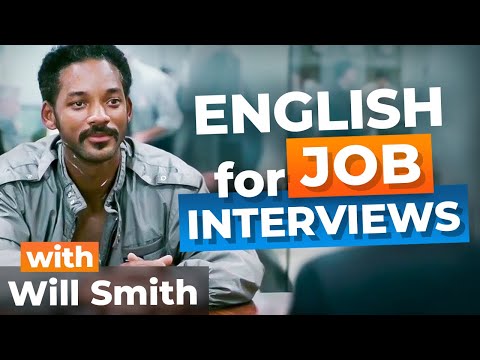
- A formal meeting where a candidate is evaluated for a position. Example: 'The HR manager scheduled a second-round interview to discuss salary expectations.'
- Media Context
- A recorded or live conversation between a journalist and a subject for public consumption. Example: 'The celebrity gave an exclusive interview to the late-night talk show host.'
The essence of an interview lies in its asymmetrical nature. One party holds the agenda and directs the flow of the conversation through inquiries, while the other responds. This structure allows for a deep dive into a person's experiences, thoughts, and personality. In a job setting, the interview serves as a platform for the candidate to demonstrate their 'soft skills'—communication, confidence, and problem-solving—which cannot be fully captured on a resume. For the employer, it is an opportunity to gauge 'cultural fit' and verify the technical claims made in the application documents. In the digital age, the format of the interview has evolved significantly. We now frequently encounter video interviews via platforms like Zoom or Microsoft Teams, as well as asynchronous interviews where candidates record their answers to pre-set questions. Despite these technological shifts, the core objective remains the same: the pursuit of information through direct verbal engagement.
'The most important part of the interview is not just what you say, but how you listen to the questions being asked,' the career coach advised.
Furthermore, the term can describe the process of screening or vetting. For instance, a university might conduct an interview with prospective students to determine their passion for a specific field of study. In research, an 'in-depth interview' is a qualitative method used to explore complex issues in detail, allowing the researcher to probe deeper into the respondent's feelings and motivations. This versatility makes 'interview' a high-frequency word in both academic and everyday English. Understanding the nuances of an interview—such as the difference between a structured, semi-structured, and unstructured format—is crucial for anyone navigating professional or academic landscapes. A structured interview follows a strict script, ensuring consistency across different subjects, while an unstructured one feels more like a free-flowing conversation, allowing for spontaneous discovery.
In social science, the 'interview' is a bridge between the researcher and the lived experience of the participant. It requires empathy, active listening, and the ability to ask open-ended questions that encourage detailed responses. Whether it is a high-stakes job interview or a casual podcast interview, the dynamics of power, preparation, and presentation are always at play. The word carries a weight of expectation and often a degree of anxiety for the interviewee, as it usually precedes a significant decision or public revelation. Consequently, the term is often paired with adjectives like 'grueling,' 'nerve-wracking,' 'insightful,' or 'exclusive,' reflecting the emotional and professional intensity of the event.
- Research Context
- A method of data collection involving direct questioning of participants. Example: 'The sociologist conducted fifty interviews to understand the impact of urban development on local communities.'
'During the exit interview, the employee provided valuable feedback about the company culture,' the HR report stated.
Using the word interview correctly requires an understanding of its grammatical role as a countable noun. It is frequently preceded by articles ('an interview') or possessive adjectives ('my interview', 'their interview'). Because it describes an event, it often interacts with verbs of action like 'conduct,' 'hold,' 'attend,' 'schedule,' or 'undergo.' For example, 'The committee will conduct the final interview tomorrow morning.' In this sentence, 'conduct' emphasizes the formal management of the process. Conversely, if you are the person being questioned, you might say, 'I have to attend an interview at 2 PM,' or more passively, 'I am being interviewed for the position.'
- Common Verb Pairings
- Conduct an interview, give an interview, grant an interview, fail an interview, ace an interview.
The word is often modified by adjectives that describe the nature or the medium of the conversation. You might hear about a 'phone interview,' a 'panel interview' (where multiple people question one person), or a 'technical interview' (focusing on specific skills). In journalism, an 'exclusive interview' is one that is given to only one news outlet, making it highly valuable. When describing the atmosphere of the event, words like 'formal,' 'informal,' 'stiff,' or 'relaxed' are common. For instance, 'The informal interview took place over coffee, which helped the candidate feel more at ease.' This descriptive flexibility allows the speaker to convey not just the fact of the meeting, but its tone and significance.
'She was so well-prepared that she managed to ace the interview despite her initial nerves,' her mentor remarked.
Prepositional usage is also vital. One has an interview with someone (the interviewer) for something (the job or position) at a place (the company). For example: 'I have an interview with the CEO for the marketing director role at Google.' If the interview is about a topic, we use 'about' or 'on.' 'The scientist gave an interview about her latest discovery.' In a more formal or academic sense, we might say 'an interview regarding the recent policy changes.' Understanding these prepositions helps in constructing clear and professional sentences that accurately describe the situation.
In plural forms, 'interviews' is used to describe a series of meetings. 'The company is holding interviews all week.' It can also be used as a compound noun, such as 'interview techniques' or 'interview skills.' These phrases refer to the specific abilities required to perform well in such a setting. For example, 'Improving your interview skills can significantly increase your chances of getting hired.' By using 'interview' as a modifier, you can create a wide range of professional terminology that is essential for career development and workplace communication.
- Compound Nouns
- Interview panel, interview process, interview questions, interview stage, interview preparation.
'The first stage of the interview process involves a brief screening call with a recruiter,' the email explained.
The word interview is ubiquitous in modern life, appearing in various media, professional environments, and everyday conversations. Perhaps the most frequent place you will hear it is in the context of employment. In office buildings, career centers, and recruitment agencies, the 'interview' is the central event around which much activity revolves. You will hear phrases like 'interview prep,' 'mock interview,' and 'post-interview follow-up.' It is the primary topic of discussion for job seekers and human resources professionals alike. In these settings, the word carries a sense of opportunity and evaluation.
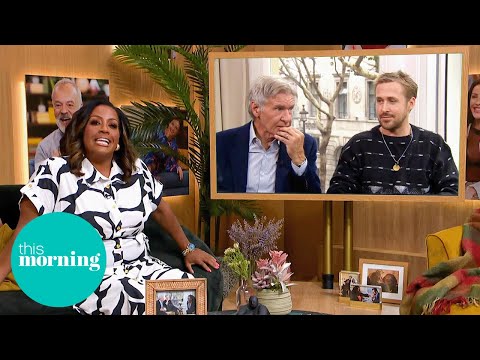
Beyond the workplace, the media is a massive consumer and producer of 'interviews.' On television news programs, late-night talk shows, and podcasts, the interview is the primary format for storytelling and information sharing. Hosts like Oprah Winfrey or Larry King became legendary specifically for their 'interview style.' When a major news event occurs, journalists rush to get an 'interview' with survivors, experts, or officials. In the world of entertainment, fans eagerly await 'exclusive interviews' with their favorite actors or musicians to learn about their personal lives or upcoming projects. Here, the word signifies access and revelation.
'Tonight, we have a very special interview with the author of the year's best-selling novel,' the TV host announced.
In academic and scientific circles, 'interview' is a technical term for a data collection method. You will hear it in university lectures on qualitative research methods or read it in the 'Methodology' section of a research paper. Researchers discuss 'semi-structured interviews,' 'focus group interviews,' and 'narrative interviews.' In this context, the word is associated with rigor, ethics, and the systematic gathering of human perspectives. It is a tool for discovery, used to understand everything from consumer behavior to the psychological effects of trauma.
Finally, the word appears in everyday social interactions. Friends might ask each other, 'How did your interview go?' or 'Are you ready for your big interview?' It is a common milestone in life that people share with their social circles. It also appears in literature and film as a plot device—the 'interview' is often the scene where a character's secrets are revealed or where they must prove their worth. From the high-stakes 'exit interview' when leaving a company to the 'admissions interview' for a prestigious school, the word is woven into the fabric of our social and professional progression.
- Media Formats
- Talk shows, podcasts, news segments, documentary features, magazine profiles.
'The podcast features a weekly interview with entrepreneurs who share their success stories,' the description read.
One of the most frequent mistakes learners make with the word interview is confusing the roles of the 'interviewer' and the 'interviewee.' The interviewer is the person asking the questions (usually the employer or journalist), while the interviewee is the person answering them (the candidate or subject). Misusing these terms can lead to significant confusion in professional correspondence. For example, saying 'I was the interviewer for the job' when you were actually the applicant would be a major error. Always remember: the suffix '-er' often denotes the person performing the action, while '-ee' denotes the person receiving it.
- Interviewer vs. Interviewee
- Interviewer = The Questioner. Interviewee = The Respondent.
Another common error involves the use of prepositions. Many learners mistakenly say 'an interview to a job' or 'an interview of a job.' The correct preposition is for. You have an 'interview for a position' or 'an interview for a scholarship.' Similarly, when talking about the person you are meeting, use with. 'I have an interview with the manager.' Using 'to' or 'at' in these specific instances can sound unnatural to native speakers. Additionally, when using 'interview' as a verb, it does not require a preposition before the object. You 'interview someone,' you do not 'interview with someone' (unless you mean you are both conducting the interview together).
Incorrect: 'I am going to an interview to the manager.'
Correct: 'I am going to an interview with the manager.'
Confusing 'interview' with 'interrogation' is another nuance-based mistake. While both involve questioning, an 'interrogation' is typically forceful, aggressive, and associated with police questioning a suspect. Using 'interrogation' to describe a job interview would imply a very negative and scary experience. Unless the questioning was hostile and accusatory, stick to 'interview.' Similarly, don't confuse it with a 'meeting.' While an interview is a type of meeting, 'meeting' is much broader and usually implies a collaborative discussion rather than a one-way questioning process.
Finally, spelling can sometimes be an issue, particularly the double 'e' in 'interviewee.' Some learners forget the second 'e' or misplace the 'i' and 'e' in 'interview.' A good way to remember the spelling is to break it down: 'inter-' (between) and 'view' (to see). You are 'viewing' each other 'between' yourselves. Also, ensure you don't use 'interview' as a synonym for 'survey.' A survey usually involves a written questionnaire, whereas an interview is almost always spoken.
- Common Spelling Errors
- Interveiw (Wrong), Interview (Correct), Interviewy (Wrong), Interviewee (Correct).
While interview is the standard term for most formal questioning sessions, several alternatives can be used depending on the context and the level of formality. Meeting is the most common synonym, but it is much less specific. A meeting could be for any purpose—planning, brainstorming, or socializing—whereas an interview is specifically for gathering information or evaluation. If you want to sound more casual, you might use the phrase chat or talk. For example, 'The boss wants to have a quick chat with you about your application.' This reduces the pressure associated with the word 'interview.'
- Interview vs. Consultation
- An interview is for gathering info/evaluating; a consultation is for seeking expert advice or discussing a professional service.
- Interview vs. Audition
- An interview is verbal; an audition involves performing a skill (acting, singing, dancing) to get a role.
In more formal or specialized contexts, other words might be more appropriate. Consultation is often used in medical or legal fields. You have a 'consultation' with a doctor, not usually an 'interview' (though the doctor does interview you for symptoms). Audition is the specific term used in the performing arts. An actor doesn't just have an interview; they have an audition where they must perform. In academic research, you might hear the term debriefing, which is a specific type of interview conducted after an experiment or task to explain the purpose and gather the participant's reactions.
'Instead of a standard interview, the tech company required a coding assessment to prove my technical abilities,' the developer explained.
If the questioning is very intense or formal, examination or interrogation might be used. An 'oral examination' (often called a 'viva' in the UK) is a formal interview to test a student's knowledge. 'Interrogation,' as mentioned before, is usually reserved for legal or military contexts and implies a lack of willingness from the person being questioned. For a more collaborative and equal exchange, dialogue or discussion might be better choices. These words suggest that both parties are contributing equally to the conversation, rather than one person leading with questions.
Finally, in the context of journalism, you might see the word profile or feature. While these refer to the final written or broadcast piece, they are the result of an extensive interview process. A 'profile' is an in-depth look at a person's life and character, often based on multiple interviews. Understanding these subtle differences helps you choose the most precise word for the situation, making your English sound more natural and sophisticated.
- Summary of Alternatives
- Meeting (General), Chat (Informal), Audition (Performance), Consultation (Professional advice), Interrogation (Forced/Legal).
How Formal Is It?
趣味小知识
The modern sense of a 'meeting for the purpose of formal questioning' didn't become common until the mid-19th century, specifically in journalism.
发音指南
- Putting the stress on the second syllable.
- Pronouncing the 'view' part like 'vow'.
- Forgetting the 'r' sound in American English.
- Confusing the pronunciation with 'intervene'.
- Saying 'inter-view' as two separate, equally stressed words.
难度评级
Common word, easy to recognize in text.
Spelling (double 'e' in interviewee) can be tricky.
Pronunciation of the 't' varies by accent.
Distinct sound, usually easy to hear.
接下来学什么
前置知识
接下来学习
高级
需要掌握的语法
Reported Speech
He said that the interview had gone well.
Passive Voice
The candidates are being interviewed right now.
Conditionals
If I get an interview, I will buy a new suit.
Gerunds after prepositions
He is good at interviewing people.
Relative Clauses
The man who interviewed me was very kind.
按水平分级的例句
I have a job interview today.
Tengo una entrevista de trabajo hoy.
Use 'a' before 'job interview' because it is a countable noun.
The interview is at 9:00 AM.
La entrevista es a las 9:00 AM.
Use 'the' when referring to a specific interview already mentioned.
Is the interview difficult?
¿Es difícil la entrevista?
Question form: Verb 'to be' comes before the subject.
She has an interview at the bank.
Ella tiene una entrevista en el banco.
Use 'an' before 'interview' because it starts with a vowel sound.
My interview was very short.
Mi entrevista fue muy corta.
Past tense of 'to be' (was) used to describe a past event.
He needs a suit for his interview.
Él necesita un traje para su entrevista.
Preposition 'for' shows the purpose of the suit.
They are waiting for the interview.
Ellos están esperando para la entrevista.
Present continuous 'are waiting' for an action happening now.
The interview is in that room.
La entrevista es en esa habitación.
Preposition 'in' shows the location.
I am preparing for my job interview.
Me estoy preparando para mi entrevista de trabajo.
Verb 'prepare' is followed by the preposition 'for'.
The manager will interview three people.
El gerente entrevistará a tres personas.
Here 'interview' is used as a verb in the future tense.
Did you enjoy the interview?
¿Disfrutaste la entrevista?
Past simple question using 'did' + base verb.
I had a phone interview yesterday.
Tuve una entrevista telefónica ayer.
'Phone interview' is a common compound noun.
She was nervous before the interview.
Ella estaba nerviosa antes de la entrevista.
Adjective 'nervous' describes the person's state.
The interview lasted for one hour.
La entrevista duró una hora.
Verb 'last' describes the duration of the event.
He forgot the time of his interview.
Él olvidó la hora de su entrevista.
Past simple 'forgot' is the irregular past of 'forget'.
The interview went very well.
La entrevista salió muy bien.
The phrase 'go well' is used to describe success.
The interviewer asked some very tough questions.
El entrevistador hizo algunas preguntas muy difíciles.
'Interviewer' refers to the person asking the questions.
I need to improve my interview skills.
Necesito mejorar mis habilidades de entrevista.
'Interview skills' is a compound noun.
She was offered the job after the second interview.
Le ofrecieron el trabajo después de la segunda entrevista.
Passive voice 'was offered' focuses on the recipient.
It is important to dress professionally for an interview.
Es importante vestirse profesionalmente para una entrevista.
Adverb 'professionally' modifies the verb 'dress'.
The celebrity gave an exclusive interview to the magazine.
La celebridad dio una entrevista exclusiva a la revista.
'Exclusive' means no one else has the interview.
I have an interview with the head of the department.
Tengo una entrevista con el jefe del departamento.
Preposition 'with' indicates the person you are meeting.
The interview process can take several weeks.
El proceso de entrevista puede tomar varias semanas.
'Interview process' refers to all the steps involved.
During the interview, try to remain calm.
Durante la entrevista, trata de mantener la calma.
Preposition 'during' indicates the time period.
The research involved conducting fifty semi-structured interviews.
La investigación implicó realizar cincuenta entrevistas semiestructuradas.
'Semi-structured' is a technical term for research interviews.
He managed to build a good rapport with the interviewer.
Logró establecer una buena relación con el entrevistador.
'Rapport' means a friendly, understanding relationship.
The politician's interview was criticized for being evasive.
La entrevista del político fue criticada por ser evasiva.
'Evasive' means avoiding giving direct answers.
She felt that the interview panel was quite intimidating.
Sintió que el panel de la entrevista era bastante intimidante.
'Interview panel' refers to a group of interviewers.
An exit interview is a great way to get honest feedback.
Una entrevista de salida es una excelente manera de obtener comentarios honestos.
'Exit interview' is held when an employee leaves a company.
The documentary features several interviews with local residents.
El documental presenta varias entrevistas con residentes locales.
Verb 'features' means to include as a prominent part.
The candidate's performance in the interview was outstanding.
El desempeño del candidato en la entrevista fue sobresaliente.
'Performance' refers to how well they did.
I'm nervous about the technical part of the interview.
Estoy nervioso por la parte técnica de la entrevista.
'Technical' refers to specific skills or knowledge.
The interviewer's probing questions revealed a lot about the company's culture.
Las preguntas inquisitivas del entrevistador revelaron mucho sobre la cultura de la empresa.
'Probing' means intended to get secret or hidden information.
Ethical considerations are paramount when conducting interviews with vulnerable groups.
Las consideraciones éticas son primordiales al realizar entrevistas con grupos vulnerables.
'Paramount' means more important than anything else.
The interview was a masterclass in diplomatic communication.
La entrevista fue una clase magistral de comunicación diplomática.
'Masterclass' is used metaphorically for an excellent example.
She provided a nuanced account of the events during her interview.
Ella proporcionó un relato matizado de los hechos durante su entrevista.
'Nuanced' means having subtle shades of meaning.
The validity of the study depends on the quality of the interviews.
La validez del estudio depende de la calidad de las entrevistas.
'Validity' refers to the logical or factual soundness.
He was able to navigate the hostile interview with remarkable poise.
Pudo navegar la entrevista hostil con una compostura notable.
'Poise' means graceful and elegant bearing in a person.
The interview transcript was analyzed for recurring themes.
La transcripción de la entrevista fue analizada en busca de temas recurrentes.
'Transcript' is a written version of a spoken interview.
The podcast offers an in-depth interview with the reclusive author.
El podcast ofrece una entrevista en profundidad con el autor solitario.
'In-depth' means thorough and detailed.
The interview served as a poignant reminder of the fragility of peace.
La entrevista sirvió como un recordatorio conmovedor de la fragilidad de la paz.
'Poignant' means evoking a keen sense of sadness or regret.
The journalist's confrontational interview style is both lauded and loathed.
El estilo de entrevista confrontativo del periodista es tanto alabado como detestado.
'Lauded and loathed' is a rhetorical device (alliteration).
There is a subtle power dynamic at play in every clinical interview.
Hay una dinámica de poder sutil en juego en cada entrevista clínica.
'Power dynamic' refers to the way power is shared or used.
The interview was meticulously transcribed to ensure no detail was lost.
La entrevista fue transcrita meticulosamente para asegurar que no se perdiera ningún detalle.
'Meticulously' means with great attention to detail.
The candidate's failure to address the core issues during the interview was telling.
El hecho de que el candidato no abordara los problemas centrales durante la entrevista fue revelador.
'Telling' here means revealing significant information.
The oral history project relies on the subjective narratives captured in interviews.
El proyecto de historia oral se basa en las narrativas subjetivas capturadas en las entrevistas.
'Subjective narratives' are stories based on personal feelings.
The interview disintegrated into a series of petty grievances.
La entrevista se desintegró en una serie de quejas insignificantes.
'Disintegrated' means to break up into small parts.
Her interview technique involves a sophisticated blend of empathy and inquiry.
Su técnica de entrevista involucra una mezcla sofisticada de empatía e indagación.
'Inquiry' is the act of asking for information.
近义词
反义词
常见搭配
常用短语
— To perform exceptionally well in an interview.
She really aced the interview and got the job.
— To agree to be interviewed by someone.
The President finally granted an interview to the press.
— To perform very poorly in an interview (informal).
I was so nervous that I completely bombed the interview.
— The part of a process where interviews take place.
Only five candidates reached the interview stage.
— Communication sent after an interview has finished.
A post-interview follow-up email is always a good idea.
— During the course of an interview.
He mentioned his previous experience in an interview.
— The reason or position for the interview.
I'm here for an interview for the teaching position.
— The person or organization conducting the interview.
My interview with NASA was the highlight of my career.
— A follow-up interview for candidates who passed the first round.
I've been invited back for a second interview.
— An interview where several candidates are interviewed at once.
The retail store uses group interviews to see how people interact.
容易混淆的词
Interrogation is much more aggressive and usually legal/military.
A meeting is more general and collaborative; an interview is for questioning.
A survey is usually a written list of questions; an interview is spoken.
习语与表达
— To be in a position where you are being questioned intensely.
During the interview, I felt like I was on the hot seat.
informal— To question someone intensely and relentlessly.
The interviewers really grilled him about his past mistakes.
informal— To subject someone to a long and intensive questioning.
My parents gave me the third degree after I came home late.
informal— To test someone's abilities thoroughly.
The technical interview really put me through my paces.
neutral— To interview someone informally to get their expert opinion.
Can I pick your brain in a short interview about marketing?
informal— To talk about work, often during an interview or professional meeting.
Even at lunch, the interviewers continued to talk shop.
informal— To highlight one's own skills and qualities during an interview.
You need to learn how to sell yourself in a job interview.
neutral— To understand the hidden meaning in an interviewer's questions.
I tried to read between the lines to see what they really wanted.
neutral— To remain serious during an interview, even if something is funny.
It was hard to keep a straight face when the interviewer's cat jumped on the desk.
informal— To get an initial interview that might lead to a bigger opportunity.
This internship interview is my way to get a foot in the door.
informal容易混淆
Both start with 'interview'.
The interviewer is the one asking the questions.
The interviewer was very professional.
Both start with 'interview'.
The interviewee is the one answering the questions.
The interviewee looked nervous.
Similar spelling at the start.
Intervene means to get involved in a situation to change it.
The police had to intervene in the fight.
Similar spelling at the start.
An interval is a period of time between events.
There was a short interval between the acts of the play.
Similar spelling at the start.
Inventory is a list of items or goods in stock.
The store takes inventory every month.
句型
I have an interview.
I have an interview today.
I have an interview for [job].
I have an interview for a sales job.
I am preparing for my [type] interview.
I am preparing for my phone interview.
The [noun] was interviewed by [person].
The author was interviewed by the BBC.
Conducting an interview requires [skill].
Conducting an interview requires active listening.
The interview was characterized by [quality].
The interview was characterized by its intellectual depth.
The interviewer asked me [question].
The interviewer asked me about my goals.
Having aced the interview, [result].
Having aced the interview, she was offered the role immediately.
词族
名词
动词
形容词
相关
如何使用
Very common in professional and media contexts.
-
Confusing interviewer and interviewee.
→
Interviewer (asks), Interviewee (answers).
Learners often swap these, which can make professional emails very confusing.
-
Using 'interview to' a job.
→
Interview 'for' a job.
The preposition 'for' indicates the purpose or target of the interview.
-
Saying 'I interviewed with the manager' when you were the applicant.
→
I 'had an interview with' the manager.
Using 'interview' as a verb often implies you were the one asking the questions.
-
Forgetting the 'an' before 'interview'.
→
An interview.
Since 'interview' starts with a vowel sound, 'an' must be used.
-
Using 'interrogation' for a job interview.
→
Interview.
'Interrogation' sounds very aggressive and is usually related to crime.
小贴士
Research the Company
Always spend time learning about the organization's mission and values before your interview. This shows you are truly interested.
Be Concise
Try to answer questions clearly and directly. Avoid rambling or giving too much irrelevant information during the interview.
Maintain Eye Contact
In many cultures, eye contact is a sign of confidence and honesty. It helps build rapport with your interviewer.
Send a Thank-You Note
Sending a brief email after the interview to thank the interviewer for their time is a professional touch that can set you apart.
Stay Calm
It is natural to be nervous, but try to take deep breaths and remember that an interview is just a conversation between people.
Prepare Examples
Use the STAR method (Situation, Task, Action, Result) to provide specific examples of your past achievements during the interview.
Listen Carefully
Make sure you fully understand the question before you start answering. It's okay to ask for clarification if needed.
Arrive Early
Aim to arrive at least 10-15 minutes before your scheduled interview time to show that you are reliable and organized.
Ask Your Own Questions
An interview is a two-way street. Prepare a few questions to ask the interviewer about the role or the team.
Test Your Tech
If you have a video interview, test your camera, microphone, and internet connection well in advance.
记住它
记忆技巧
Think of 'INTER' (between) and 'VIEW' (to see). An interview is when two people 'see' each other 'between' a conversation.
视觉联想
Imagine two people sitting across a table with a microphone or a resume between them.
Word Web
挑战
Write a short paragraph about your dream interview. Who would you interview and what three questions would you ask?
词源
The word comes from the Middle French word 'entrevoir', which means 'to see each other' or 'to have a glimpse of'.
原始含义: A mutual sight or meeting.
Romance (via French) to Germanic (English).文化背景
Be aware that 'interrogation' has very different connotations than 'interview' and can be offensive if used in the wrong context.
In the UK and US, punctuality for an interview is critical; arriving late is often an automatic disqualification.
在生活中练习
真实语境
Job Search
- Tell me about yourself.
- Why do you want this job?
- What are your strengths?
- Do you have any questions for us?
Journalism
- Thank you for joining us.
- Can you comment on...?
- Our guest today is...
- In an exclusive interview...
Academic Research
- The interview was recorded.
- Participants were interviewed individually.
- Semi-structured interview guide.
- Data from the interviews...
Police/Legal
- The witness was interviewed.
- During the police interview...
- Statements made in the interview.
- Interviewing the suspect.
School Admissions
- University interview.
- Why did you choose this major?
- Tell us about your hobbies.
- The interview is part of the application.
对话开场白
"How do you usually prepare for a job interview?"
"What was the most difficult interview question you ever had to answer?"
"If you could interview any famous person, who would it be?"
"Do you prefer being the interviewer or the interviewee?"
"What is the most important thing to do during an interview?"
日记主题
Describe your very first job interview. How did you feel?
Write about a time you had to interview someone else. What did you learn?
If you were a journalist, what questions would you ask your favorite musician in an interview?
Reflect on a 'bad' interview experience. What would you do differently now?
How has the move to video interviews changed the way people find jobs?
常见问题
10 个问题An interview is specifically designed for one person to ask questions and the other to provide information, often for evaluation. A meeting is a broader term for any gathering of people to discuss topics, plan, or collaborate. All interviews are meetings, but not all meetings are interviews.
Yes, 'interview' is both a noun and a verb. As a verb, it means the act of questioning someone. For example: 'I will interview the candidates tomorrow.' As a noun, it refers to the event itself: 'The interview went well.'
In most professional settings, you should wear formal business attire, such as a suit or a dress. However, this depends on the company culture. It is always better to be slightly over-dressed than under-dressed for an interview.
Preparation involves researching the company, practicing answers to common questions, preparing your own questions for the interviewer, and ensuring you have professional attire ready. Mock interviews with friends can also be very helpful.
A panel interview is an interview where a group of people (the panel) questions a single candidate. This is common in academic, government, and high-level corporate roles to ensure a fair and multi-perspective evaluation.
An exit interview is a meeting between an employee who is leaving a company and the HR department. The goal is to get feedback on the employee's experience and understand why they are leaving to improve the company culture.
Yes, 'interview' is a countable noun. You can say 'one interview,' 'two interviews,' or 'many interviews.' For example: 'She had three interviews last week.'
This is an idiomatic expression meaning to perform exceptionally well. If you 'ace' an interview, you answered all questions perfectly and likely impressed the interviewers enough to get the job.
A mock interview is a practice session that mimics a real interview. It is used for training purposes, allowing candidates to practice their skills and receive feedback before the actual event.
The interviewer is the person who asks the questions (the employer, journalist, or researcher). The interviewee is the person who answers the questions (the job candidate, celebrity, or research participant).
自我测试 200 个问题
Write a short email to a manager asking for a job interview.
Well written! Good try! Check the sample answer below.
Describe your ideal job interview in three sentences.
Well written! Good try! Check the sample answer below.
What are three questions you would ask in an interview?
Well written! Good try! Check the sample answer below.
Write a thank-you note to an interviewer after a meeting.
Well written! Good try! Check the sample answer below.
Explain the difference between an interviewer and an interviewee.
Well written! Good try! Check the sample answer below.
Describe a time you felt nervous before an important meeting.
Well written! Good try! Check the sample answer below.
Write a short paragraph about the importance of body language in an interview.
Well written! Good try! Check the sample answer below.
What are the pros and cons of video interviews?
Well written! Good try! Check the sample answer below.
Write a summary of a famous interview you have seen.
Well written! Good try! Check the sample answer below.
How do you prepare for a technical interview?
Well written! Good try! Check the sample answer below.
Write a dialogue between an interviewer and a candidate.
Well written! Good try! Check the sample answer below.
What is an 'exit interview' and why is it useful?
Well written! Good try! Check the sample answer below.
Describe the most difficult interview question you can imagine.
Well written! Good try! Check the sample answer below.
How has technology changed the interview process?
Well written! Good try! Check the sample answer below.
Write a list of tips for someone going to their first interview.
Well written! Good try! Check the sample answer below.
Compare a job interview to a first date.
Well written! Good try! Check the sample answer below.
What is a 'panel interview' and how do you handle it?
Well written! Good try! Check the sample answer below.
Write a short story about someone who 'aced' an interview.
Well written! Good try! Check the sample answer below.
Why is punctuality important for an interview?
Well written! Good try! Check the sample answer below.
What does 'selling yourself' mean in an interview context?
Well written! Good try! Check the sample answer below.
Introduce yourself as if you were at the start of an interview.
Read this aloud:
你说的:
Speech recognition is not supported in your browser. Try Chrome or Edge.
Answer the question: 'Why do you want to work for this company?'
Read this aloud:
你说的:
Speech recognition is not supported in your browser. Try Chrome or Edge.
Practice saying 'interview' with both UK and US pronunciations.
Read this aloud:
你说的:
Speech recognition is not supported in your browser. Try Chrome or Edge.
Tell a story about a successful interview you had.
Read this aloud:
你说的:
Speech recognition is not supported in your browser. Try Chrome or Edge.
Role-play a short interview with a partner.
Read this aloud:
你说的:
Speech recognition is not supported in your browser. Try Chrome or Edge.
Describe the clothes you would wear to a formal interview.
Read this aloud:
你说的:
Speech recognition is not supported in your browser. Try Chrome or Edge.
Explain your greatest strength in an interview-style answer.
Read this aloud:
你说的:
Speech recognition is not supported in your browser. Try Chrome or Edge.
Give a short presentation on 'How to Ace an Interview'.
Read this aloud:
你说的:
Speech recognition is not supported in your browser. Try Chrome or Edge.
Discuss the differences between phone and video interviews.
Read this aloud:
你说的:
Speech recognition is not supported in your browser. Try Chrome or Edge.
How would you handle a very difficult or 'probing' question?
Read this aloud:
你说的:
Speech recognition is not supported in your browser. Try Chrome or Edge.
Interview a partner about their favorite hobby.
Read this aloud:
你说的:
Speech recognition is not supported in your browser. Try Chrome or Edge.
What is the most important 'soft skill' for an interview?
Read this aloud:
你说的:
Speech recognition is not supported in your browser. Try Chrome or Edge.
Describe a 'panel interview' you have seen or experienced.
Read this aloud:
你说的:
Speech recognition is not supported in your browser. Try Chrome or Edge.
How do you build rapport with an interviewer?
Read this aloud:
你说的:
Speech recognition is not supported in your browser. Try Chrome or Edge.
What are the common mistakes people make in interviews?
Read this aloud:
你说的:
Speech recognition is not supported in your browser. Try Chrome or Edge.
Talk about a famous interview that changed your opinion on someone.
Read this aloud:
你说的:
Speech recognition is not supported in your browser. Try Chrome or Edge.
Practice answering: 'Where do you see yourself in five years?'
Read this aloud:
你说的:
Speech recognition is not supported in your browser. Try Chrome or Edge.
How do you handle 'stress interviews'?
Read this aloud:
你说的:
Speech recognition is not supported in your browser. Try Chrome or Edge.
Explain the concept of an 'exit interview' to a friend.
Read this aloud:
你说的:
Speech recognition is not supported in your browser. Try Chrome or Edge.
What questions would you ask a potential employer?
Read this aloud:
你说的:
Speech recognition is not supported in your browser. Try Chrome or Edge.
Listen to a short audio clip and count how many times 'interview' is said.
Listen to an interview and identify the candidate's main skill.
Listen to a manager talk about a candidate and decide if they liked them.
Listen to a phone interview and write down the date of the next meeting.
Listen to an expert give interview tips and list three of them.
Listen to a podcast interview and summarize the guest's background.
Listen to a news report about an 'exclusive interview' and identify the subject.
Listen to a dialogue and identify if it's a job interview or a casual chat.
Listen to an interviewer's tone and describe their attitude.
Listen to a candidate's answer and identify a 'STAR' example.
Listen to a recording of a panel interview and count the number of speakers.
Listen to a mock interview and identify one mistake the candidate made.
Listen to an exit interview and identify why the person is leaving.
Listen to a radio interview and identify the interviewer's style.
Listen to a series of interview questions and write them down.
/ 200 correct
Perfect score!
Summary
An interview is a structured dialogue designed to evaluate a person or gather specific information. For example, 'The job interview allowed the manager to assess the candidate's communication skills and professional experience.'
- An interview is a formal meeting for questioning and information gathering.
- Commonly used for job applications, media reporting, and academic research.
- Involves an interviewer (questioner) and an interviewee (respondent).
- Can be conducted in person, over the phone, or via video call.
Research the Company
Always spend time learning about the organization's mission and values before your interview. This shows you are truly interested.
Be Concise
Try to answer questions clearly and directly. Avoid rambling or giving too much irrelevant information during the interview.
Maintain Eye Contact
In many cultures, eye contact is a sign of confidence and honesty. It helps build rapport with your interviewer.
Send a Thank-You Note
Sending a brief email after the interview to thank the interviewer for their time is a professional touch that can set you apart.