









prey 30秒了解
- Prey is a noun describing an animal hunted by another for food, essential for understanding food chains and the natural world's balance.
- The word is frequently used metaphorically to describe people who are vulnerable to being cheated, exploited, or harmed by others in society.
- Common phrases include 'bird of prey' for hunting birds and 'fall prey to' for becoming a victim of something negative like a scam.
- It is a homophone of 'pray' but has a completely different meaning and spelling, making it a common point of confusion for English learners.
The word prey is a fundamental noun in the English language, primarily used to describe an animal that is hunted and killed by another for food. This concept is the cornerstone of biological studies and ecological understanding. In every ecosystem, from the deepest parts of the ocean to the highest mountain peaks, there exists a relationship between those who hunt and those who are hunted. The animal that does the hunting is known as the predator, while the animal that is the target of the hunt is the prey. This relationship is not just a simple act of eating; it is a complex interaction that drives the evolution of species. For instance, prey animals often develop incredible adaptations to survive, such as the camouflage of a chameleon, the speed of a gazelle, or the hard shell of a turtle. These features exist specifically to help the animal avoid becoming prey.
- Biological Context
- In biology, prey refers to any organism that is consumed by a predator. This can include insects being eaten by birds, or small mammals being eaten by larger carnivores.
- Metaphorical Context
- In a human context, prey can refer to a person who is vulnerable to being deceived or exploited by others, such as a victim of a financial scam.
- Collective Usage
- The word is often used as an uncountable noun when referring to the animals hunted by a specific predator, such as saying 'The eagle is searching for prey.'
The small rabbit remained perfectly still, hoping to avoid becoming prey for the circling hawk above.
Beyond the wild, we use this word to describe power dynamics in society. When someone is described as 'easy prey,' it means they are perceived as weak or easily manipulated. This could be in a business negotiation, a political struggle, or even in personal relationships. The word carries a heavy weight, suggesting a lack of balance where one side has significant power over the other. It is also common in literature and film to describe the tension between a hero and a villain. The villain might view the hero or innocent civilians as their prey, creating a sense of danger and urgency in the narrative. Furthermore, the term 'bird of prey' is a specific category in ornithology, referring to birds like eagles, falcons, and owls that hunt and feed on other animals. These birds are admired for their sharp vision and powerful talons, which are tools specifically designed to capture their prey with precision.
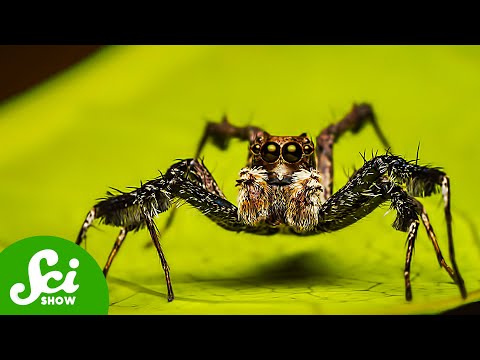
The spider waited patiently in the center of its web for any unsuspecting prey to fly into the trap.
In environmental science, the balance between predators and their prey is a key indicator of the health of an ecosystem. If the population of prey decreases significantly, the predators may starve or be forced to move to new territories. Conversely, if the predators are removed, the prey population might grow too large and deplete the local food resources, such as plants or smaller insects. This delicate balance is often referred to as a 'predator-prey cycle.' Scientists study these cycles to understand how to protect endangered species and manage wildlife preserves. The word 'prey' thus appears frequently in documentaries, scientific journals, and educational materials. It is a word that reminds us of the raw and often brutal reality of nature, where survival is the ultimate goal for every living creature.
Vulnerable elderly people often fall prey to telephone scammers who use high-pressure tactics.
- Common Collocation
- 'Fall prey to' is a very common idiomatic expression meaning to be harmed or affected by something bad.
Plankton serves as the primary prey for many species of whales in the cold arctic waters.
The detective realized that the criminal was choosing his prey from people who lived alone.
Using the word prey correctly involves understanding its role as a noun and its specific grammatical patterns. Most commonly, it functions as an uncountable noun when referring to the general concept of animals being hunted. For example, you might say, 'The owl is hunting for prey.' In this instance, 'prey' does not need an 'a' or an 's' because it represents a category of food for the owl. However, it can also be used in more specific ways. One of the most important phrases to learn is 'fall prey to.' This phrase is used when someone or something is negatively affected by a disease, a bad habit, or a dishonest person. For instance, 'Many small businesses fall prey to economic downturns.' Here, the word 'prey' highlights the vulnerability of the businesses in the face of a larger, uncontrollable force.
- Sentence Pattern 1
- [Predator] + hunts/seeks/catches + [prey]. Example: The shark hunts its prey in the shallow reef.
- Sentence Pattern 2
- [Subject] + falls prey to + [Danger/Scam/Disease]. Example: He fell prey to a clever internet scam.
Cats are natural hunters that often bring their prey back to their owners as a gift.
Another common usage is the term 'bird of prey.' This is a fixed expression used to classify specific types of birds. You would not usually say 'a hunting bird' when you can use the more professional and accurate 'bird of prey.' When writing about nature, you can also use 'prey' as a modifier, as in 'prey species' or 'prey animals.' This helps to distinguish these animals from 'predator species.' For example, 'The conservation of prey species is vital for the survival of the Siberian tiger.' In this sentence, 'prey' acts like an adjective to describe the type of species being discussed. It is also important to note that 'prey' is rarely used in the plural form 'preys' as a noun. While 'preys' exists as a verb form (e.g., 'he preys on the weak'), the noun remains 'prey' whether you are talking about one mouse or a hundred mice being hunted by a hawk.
The documentary showed how the cheetah uses its incredible speed to overtake its prey.
In more advanced writing, you might encounter the phrase 'easy prey.' This describes someone who is very easy to attack or cheat. For example, 'Tourists who carry large amounts of cash are easy prey for pickpockets.' This usage is very common in news reports and safety warnings. Additionally, the word can be used in the context of 'the prey' to refer to a specific animal that has already been mentioned. 'The wolf stalked the deer for hours; finally, the prey stumbled, and the wolf attacked.' Here, 'the prey' serves as a synonym for 'the deer,' helping to avoid repetition while maintaining the focus on the hunting relationship. Understanding these nuances allows you to use the word with precision in both scientific and everyday contexts.
- Usage in Literature
- Authors often use 'prey' to create a sense of victimhood or to emphasize the power of a character.
Without a strong password, your personal data may fall prey to hackers.
The eagle's sharp eyes can spot its prey from over a mile away.
You will encounter the word prey in a variety of real-world settings, ranging from educational media to serious news broadcasts. One of the most common places to hear it is in nature documentaries, such as those narrated by David Attenborough. In these programs, the word is used constantly to describe the struggle for survival in the wild. You might hear a narrator say, 'The lioness creeps through the tall grass, her eyes fixed on her prey.' In this context, the word helps to build drama and explain the biological necessity of hunting. It is a central term in any discussion about wildlife, ecology, or the environment. If you visit a zoo or a national park, you will likely see the word on educational signs explaining the diet and behavior of the animals on display.
- Nature Documentaries
- Used to describe the hunting habits of carnivores and the survival tactics of herbivores.
- News and Crime Reports
- Used metaphorically to describe victims of scams, predators, or exploitation.
The news anchor warned that elderly citizens are often the primary prey for financial fraudsters.
Another common place to hear 'prey' is in the news, particularly when reporters are discussing crime or social issues. In these cases, the word is almost always used metaphorically. A reporter might talk about how a particular criminal 'preyed on' a neighborhood, or how certain groups 'fall prey to' specific types of social injustice. This usage emphasizes the vulnerability of the victims and the predatory nature of the harm being done. It is a powerful word that evokes a sense of unfairness and danger. You might also hear it in political speeches, where a leader might promise to protect the 'weak' from those who would treat them as 'prey.' This rhetorical use of the word is designed to stir emotion and highlight the speaker's role as a protector.
In the movie, the dragon flew over the village looking for its next prey.
In literature and film, 'prey' is a staple of the thriller and horror genres. Characters are often described as being 'hunted like prey,' which creates a feeling of intense suspense. This language taps into a primal human fear of being hunted. Whether it is a monster in a sci-fi movie or a serial killer in a suspense novel, the concept of the protagonist as 'prey' is a classic storytelling device. Furthermore, in the world of finance and business, you might hear about 'predatory lending' or 'predatory pricing.' While these use the adjective form, the underlying noun 'prey' is what gives these terms their meaning—they describe situations where a powerful entity takes advantage of a weaker one. Understanding this word helps you navigate these different types of media and grasp the deeper meanings of the stories and reports you encounter.
The scientist explained that the decline in the prey population would eventually affect the entire forest.
He felt like prey as he walked through the dark, unfamiliar streets of the city.
One of the most frequent mistakes learners make with the word prey is confusing it with its homophone, 'pray.' Because they sound identical, it is very easy to type the wrong one. 'Pray' is a verb that means to speak to a god or to hope strongly for something. 'Prey,' as we have discussed, is a noun (or verb) related to hunting. A helpful way to remember the difference is to look at the letter 'e' in 'prey.' You can think of the 'e' as standing for 'eat'—prey is something that a predator wants to eat. Conversely, the 'a' in 'pray' can be associated with 'altar' or 'asking.' Making this distinction is crucial for clear writing, especially in formal or academic contexts where such a spelling error can undermine your credibility.
- Spelling Error
- Incorrect: The lion caught its pray. Correct: The lion caught its prey.
- Pluralization Error
- Incorrect: The forest is full of many preys. Correct: The forest is full of much prey (or many prey animals).
You must be careful not to fall prey to the common mistake of confusing these two words.
Another common error involves the pluralization of the word. As mentioned earlier, 'prey' is typically an uncountable noun. Many students try to add an 's' to make it plural, but this is usually incorrect when using it as a noun. If you want to talk about multiple animals that are hunted, you should still use 'prey' or use the phrase 'prey animals.' For example, 'The predator hunts various types of prey' is correct. Saying 'various types of preys' sounds unnatural to a native speaker. However, it is important to remember that 'preys' is a correct form when used as a verb in the third person singular, such as 'The owl preys on mice.' Distinguishing between the noun and the verb forms will help you avoid these grammatical pitfalls.
The hunter did not want to kill the prey if it was too small or young.
Finally, some learners use 'prey' when they actually mean 'victim.' While they are similar, 'prey' specifically implies a hunting or predatory relationship. You would use 'victim' for someone hurt in an accident or a natural disaster, but 'prey' is more appropriate when there is a 'predator' involved, whether literal or metaphorical. For instance, you wouldn't say 'the prey of the earthquake,' but you would say 'the prey of the swindler.' Choosing the right word depends on the context of how the harm occurred. By paying attention to these subtle differences, you can improve the accuracy and sophistication of your English usage. Always double-check your spelling and consider the relationship between the parties involved before deciding to use the word 'prey.'
It is a mistake to think that only small animals are prey; even large buffalo can be hunted by lions.
The bird of prey dived into the water to catch a fish.
While prey is a very specific term, there are several other words you can use depending on the context. Understanding these alternatives will help you avoid repetition and make your writing more precise. The most common synonym is 'victim,' but as we noted, 'victim' is broader and can apply to many situations where someone is harmed, not just predatory ones. In a biological context, you might use the word 'quarry.' This is a more formal or old-fashioned word often used in the context of hunting for sport. For example, 'The hunters followed their quarry through the woods.' Using 'quarry' instead of 'prey' can give your writing a more literary or traditional feel.
- Prey vs. Victim
- 'Prey' implies a predator-prey relationship (hunting). 'Victim' is general for anyone harmed by any cause.
- Prey vs. Quarry
- 'Quarry' is often used in the context of a formal hunt or a chase, whereas 'prey' is the standard biological term.
- Prey vs. Target
- 'Target' is used when the focus is on the act of aiming or selecting, common in military or marketing contexts.
The detective described the missing woman as the killer's primary prey.
Another alternative is 'target.' This word is frequently used in modern contexts, such as marketing or crime. A company might have a 'target audience,' or a thief might have a 'target house.' While 'target' doesn't have the same biological connotations as 'prey,' it still suggests that someone has been singled out for a specific purpose. In scientific writing, you might also see the term 'food source.' While less dramatic than 'prey,' it is very accurate when describing the role an animal plays in a food web. For instance, 'Insects are a major food source for many small mammals.' This phrasing is neutral and objective, making it ideal for technical reports or textbooks.
The fox's prey managed to escape into a small hole in the ground.
In some cases, you might use the word 'kill' as a noun to refer to the animal that has been caught. For example, 'The pride of lions gathered around their kill.' This word is very specific to the moment after the hunt has been successful. It emphasizes the result of the predatory act rather than the animal itself. Finally, 'game' is another word used by hunters to refer to the animals they hunt, especially those hunted for meat or sport, like deer or pheasants. However, 'game' is usually reserved for human hunting rather than animal-on-animal interactions. By knowing these different words, you can choose the one that best fits the tone and subject of your conversation or writing, making you a more effective communicator in English.
The owl is a silent hunter that surprises its prey in the dark.
Vulnerable people are often the prey of those who seek to profit from their misfortune.
How Formal Is It?
趣味小知识
The word 'predator' and 'prey' both come from the same Latin root 'praeda,' showing how closely linked the two concepts are in language history.
发音指南
- Pronouncing it like 'pry' (with a long 'i' sound).
- Confusing it with 'pray' in speech (though they sound the same, context must clarify).
- Adding an extra syllable at the end.
- Not clearly pronouncing the 'r' sound.
- Making the 'p' sound too soft.
难度评级
The word is easy to recognize in context but can be confused with 'pray' in text.
Spelling is the main challenge for learners.
Pronunciation is very simple and consistent.
Context is needed to distinguish it from 'pray' when heard.
接下来学什么
前置知识
接下来学习
高级
需要掌握的语法
Uncountable Nouns
The owl is searching for prey (not preys).
Homophones
I will pray for you. The lion caught its prey.
Phrasal Verbs
The wolf preys on the sheep.
Compound Nouns
A hawk is a bird of prey.
Adjectives as Modifiers
The prey animal ran fast.
按水平分级的例句
The cat is looking for its prey.
The cat is hunting a small animal.
Prey is a noun here.
A mouse is prey for a cat.
The mouse is the animal the cat eats.
Prey is used as a subject complement.
The owl catches its prey at night.
The owl hunts when it is dark.
Possessive 'its' before 'prey'.
Big fish eat small fish as prey.
Small fish are the food for big fish.
Prey is used as an object.
The zebra is the lion's prey.
The lion hunts the zebra.
Possessive 'lion's' modifies 'prey'.
Birds look for insects as prey.
Birds eat insects.
Prey is a noun.
The spider waits for its prey.
The spider is waiting for a bug to hit its web.
Prey is the object of the preposition 'for'.
The frog caught a fly as prey.
The fly was the frog's food.
Prey is a noun.
Eagles are famous birds of prey.
Eagles are birds that hunt.
'Birds of prey' is a fixed phrase.
The rabbit hid so it would not be prey.
The rabbit did not want to be caught.
Prey is a noun.
The tiger stalks its prey silently.
The tiger moves quietly to catch an animal.
Stalks is the verb, prey is the object.
Many animals are prey for larger hunters.
Many animals get eaten by bigger ones.
Prey is used as a noun.
The hawk dived to catch its prey.
The hawk flew down fast to get food.
Prey is a noun.
Snakes often swallow their prey whole.
Snakes eat the entire animal at once.
Prey is the object.
The hunter followed the tracks of his prey.
The person looked at footprints of the animal.
Prey refers to the animal being hunted.
Small animals are easy prey for foxes.
Foxes can catch small animals easily.
'Easy prey' is a common collocation.
She fell prey to a very clever scam.
She was cheated by a dishonest trick.
'Fall prey to' is an idiomatic expression.
The owl is a nocturnal bird of prey.
The owl hunts during the night.
Nocturnal modifies bird of prey.
Vulnerable people often fall prey to bad habits.
Weak people can start doing bad things easily.
'Fall prey to' is used metaphorically.
The documentary explains the life of a prey animal.
The film is about animals that are hunted.
'Prey' acts as a modifier for 'animal'.
He felt like prey as the bullies surrounded him.
He felt like a victim who was being hunted.
Simile using 'like prey'.
The company fell prey to a hostile takeover.
The company was bought by another against its will.
Metaphorical use in business.
The spider's web is designed to trap prey.
The web is a tool for catching food.
Prey is the object of 'trap'.
They are studying the behavior of prey in the wild.
They are watching how hunted animals act.
Prey is an uncountable noun here.
The predator-prey relationship is essential for balance.
The link between hunters and hunted keeps nature stable.
Compound noun 'predator-prey relationship'.
Small businesses often fall prey to larger corporations.
Big companies often destroy or buy small ones.
Metaphorical use in economics.
The eagle's talons are adapted for gripping prey.
The eagle's claws are made for holding animals.
Prey is the object of the gerund 'gripping'.
The suspect was known to prey on elderly victims.
The criminal targeted old people.
'Prey on' is a phrasal verb.
The sudden decrease in prey led to a famine for the wolves.
Fewer animals to eat caused the wolves to starve.
Prey is the subject of the prepositional phrase.
He was warned not to fall prey to his own fears.
He should not let his fears control or hurt him.
Abstract metaphorical use.
The cheetah's speed is its main tool for catching prey.
The cheetah runs fast to get its food.
Prey is the object of 'catching'.
The island has no natural predators for its prey species.
There are no hunters on the island for the local animals.
'Prey species' is a technical term.
The narrative explores how the protagonist becomes prey.
The story shows the main character becoming a victim.
Prey is used as a subject complement.
Predatory lenders often prey upon those in financial distress.
Bad banks take advantage of poor people.
'Prey upon' is a formal version of 'prey on'.
The evolution of camouflage is a response to being prey.
Animals change color so they are not eaten.
Prey is the object of the gerund 'being'.
She refused to fall prey to the cynicism of her colleagues.
She did not let her coworkers' negative attitudes affect her.
Abstract metaphorical use.
The bird of prey circled majestically above the valley.
The hunting bird flew in circles over the land.
Fixed phrase 'bird of prey'.
The documentary highlighted the plight of the prey in a changing climate.
The film showed the problems for hunted animals due to weather changes.
Prey is used as a collective noun.
The con artist identified his prey with chilling precision.
The liar chose his victim very carefully.
Prey is the object of 'identified'.
The intricate dance between predator and prey is a marvel of nature.
The complex way they interact is amazing.
Parallel structure 'predator and prey'.
The philosophical treatise examines the concept of man as prey.
The deep book looks at how humans can be victims.
Prey is used in an abstract philosophical sense.
The market's volatility meant that small investors were easy prey.
Changing prices made it easy for small investors to lose money.
'Easy prey' used in a financial context.
The poem uses the imagery of prey to evoke a sense of mortality.
The poem talks about being hunted to show that we all die.
Prey is the object of the preposition 'of'.
Societies must guard against those who would prey upon the vulnerable.
Countries must stop people from hurting the weak.
'Prey upon' is used as a verb phrase.
The intricate dynamics of the predator-prey cycle are still being studied.
The complex way their numbers change is a research topic.
Compound adjective 'predator-prey'.
The novel depicts a dystopian world where the weak are mere prey.
The book shows a bad future where weak people are just victims.
Prey is a subject complement.
He analyzed the way certain ideologies prey on the disenfranchised.
He looked at how some ideas take advantage of people with no power.
'Prey on' used in a sociological context.
The silent approach of the predator left the prey with no chance of escape.
The hunter was so quiet that the animal could not get away.
Prey is the object of the sentence.
常见搭配
常用短语
— To be influenced by or harmed by something bad. It often implies vulnerability.
Many young people fall prey to peer pressure.
— A bird that hunts and eats other animals. They have sharp claws and beaks.
Owls are birds of prey that hunt at night.
— Someone or something that is very easy to attack or cheat. They lack protection.
The small company was easy prey for the larger competitor.
— Animals that hunt other animals for food. This is a more literary term.
The forest was full of dangerous beasts of prey.
— To end up being hunted or victimized. It describes a change in status.
Without a leader, the group might become prey to their enemies.
— To search for something to hunt or exploit. It implies an active search.
The shark swam slowly, looking for prey.
— The act of following an animal quietly before attacking it. It is a slow process.
The photographer captured a lion stalking prey.
— An animal that is naturally hunted by others. It is a biological classification.
Rabbits are a classic example of a prey animal.
— Being the victim of a specific person or thing. It identifies the source of harm.
He was the prey of his own ambition.
— To recognize or pick out an animal or person to target. It is the first step of a hunt.
The hawk can identify prey from a great height.
容易混淆的词
A verb meaning to speak to a god. It sounds the same but is spelled differently.
A broader term for anyone harmed. Prey specifically implies a predator.
A more formal or old-fashioned word for an animal being hunted.
习语与表达
— To be victimized or harmed by someone or something. It is the most common idiom.
She fell prey to a fraudulent investment scheme.
neutral— A person who is easily deceived or taken advantage of. It implies a lack of defense.
Inexperienced travelers are often easy prey for local scammers.
informal— To make someone worry or feel stressed for a long time. It is a mental burden.
The mistake he made continued to prey on his mind.
neutral— To take advantage of people who cannot defend themselves. It is a moral criticism.
The bully likes to prey on the weak students in the school.
neutral— Used metaphorically to describe a person who is predatory or aggressive.
The lawyer was like a bird of prey, waiting for any mistake.
literary— To chase someone with the intent to harm them, as if they were an animal.
The police hunted the criminal like prey through the city.
dramatic— To be constantly affected by something negative, like an emotion or a disease.
He was prey to deep bouts of depression.
formal— The person or thing that is currently being targeted or talked about.
The celebrity became the prey of the moment for the paparazzi.
informal— To survive by hunting other animals. It is a literal biological description.
Most large cats live on prey that they catch themselves.
scientific— To turn someone into a victim or to exploit them. It is an active process.
The invaders made prey of the local villagers.
literary容易混淆
They are homophones (sound the same).
Pray is a religious verb; prey is a biological noun or verb related to hunting. You pray in a church, but a lion hunts its prey.
I will pray for your health. The lion caught its prey.
They are two sides of the same relationship.
The predator is the hunter; the prey is the one being hunted. One eats, the other is eaten.
The wolf is the predator, and the deer is the prey.
Both refer to hunted animals.
Quarry is often used for sport hunting or a long, difficult chase. Prey is the general biological term.
The hunter finally found his quarry. The hawk dived for its prey.
Both refer to animals that are killed.
Game refers to animals hunted by humans for food or sport. Prey refers to animals hunted by other animals.
The king went out to hunt big game. The eagle looked for prey.
Both describe someone who is harmed.
Victim is used for accidents, crimes, or disasters. Prey is used when there is a specific 'predator' involved.
He was a victim of the flood. He fell prey to a con artist.
句型
The [animal] is [predator]'s prey.
The mouse is the cat's prey.
[Predator] hunts for prey.
The hawk hunts for prey.
[Person] fell prey to [Scam/Problem].
He fell prey to a clever trick.
The [Predator] stalks its prey.
The tiger stalks its prey.
The evolution of [Trait] is a response to being prey.
The evolution of speed is a response to being prey.
[Ideology] preys upon the [Group].
The ideology preys upon the disenfranchised.
[Animal] is a bird of prey.
The falcon is a bird of prey.
The [Predator] catches its prey.
The spider catches its prey.
词族
名词
动词
形容词
相关
如何使用
Common in nature, news, and literature.
-
The lion caught its pray.
→
The lion caught its prey.
You have used the religious word 'pray' instead of the hunting word 'prey.'
-
The forest has many preys.
→
The forest has much prey.
Prey is typically an uncountable noun and does not take an 's' in the plural.
-
He fell prey for the scam.
→
He fell prey to the scam.
The correct preposition to use with 'fall prey' is 'to,' not 'for.'
-
The bird of preys flew high.
→
The bird of prey flew high.
The fixed phrase is 'bird of prey,' even if you are talking about one bird.
-
The prey was hunting the lion.
→
The predator was hunting the prey.
You have reversed the roles. The prey is the one being hunted, not the one doing the hunting.
小贴士
The 'E' Rule
Remember that 'prey' with an 'e' is for 'eating.' This will prevent you from writing 'pray' by mistake.
Uncountable Noun
Treat 'prey' as an uncountable noun in most cases. Use 'prey animals' if you need to emphasize plurality.
Fall Prey To
This is the most useful phrase for non-animal contexts. Use it to describe becoming a victim of a scam or a bad habit.
Predator Pair
Whenever you use the word 'predator,' the other animal in the story should be called the 'prey.'
Bird of Prey
Use this specific term for hunting birds like eagles and owls. It sounds much more professional than 'hunting bird.'
Easy Prey
Use 'easy prey' to describe someone who is clearly vulnerable, such as a tourist with an open bag.
Prey Species
In scientific writing, use 'prey species' to refer to a group of animals that are hunted by a specific predator.
Nature Docs
Watch nature documentaries to hear the word 'prey' used in its most natural and frequent context.
Avoid Repetition
If you have already mentioned the animal's name (like 'deer'), use 'the prey' in the next sentence to keep your writing interesting.
Noun vs Verb
Be careful: 'prey' is a noun (the animal) but 'prey on' is a verb (the action). Do not mix them up.
记住它
记忆技巧
Think of the 'e' in 'prey' as standing for 'eat.' Prey is what predators eat. This helps you distinguish it from 'pray' (with an 'a' for 'asking').
视觉联想
Imagine a small, brown rabbit hiding in green grass while a large hawk circles in the blue sky. The rabbit is the prey.
Word Web
挑战
Try to write three sentences about a nature documentary you have seen, using the word 'prey' in each one. Make sure one sentence is about a bird.
词源
The word 'prey' comes from the Old French word 'preie,' which was derived from the Latin word 'praeda,' meaning 'booty' or 'plunder.' This origin reflects the idea of something taken by force. It entered the English language in the 13th century.
原始含义: Something taken in war or by force; booty or plunder.
Indo-European (Latin -> Old French -> English)文化背景
Be careful when using 'prey' to describe people, as it can sound very victimizing or dehumanizing if not used carefully.
The term 'bird of prey' is highly respected and often associated with national symbols like the Bald Eagle in the USA.
在生活中练习
真实语境
Nature and Wildlife
- hunting for prey
- bird of prey
- stalking its prey
- prey species
Crime and Safety
- fall prey to a scam
- easy prey for thieves
- target their prey
- predatory behavior
Business and Finance
- fall prey to market trends
- predatory lending
- easy prey for competitors
- prey on small investors
Psychology and Emotions
- fall prey to fear
- prey on one's mind
- feeling like prey
- vulnerable prey
Literature and Stories
- the hunter and the prey
- beasts of prey
- hunted like prey
- the victim and the prey
对话开场白
"Have you ever seen a bird of prey, like an eagle or a hawk, hunting in the wild?"
"Do you think it is easy for people to fall prey to internet scams these days?"
"What are some ways that animals protect themselves from becoming prey?"
"Why do you think some people are described as 'easy prey' in business?"
"In your favorite movie, who is the predator and who is the prey?"
日记主题
Describe a time when you felt like you might fall prey to a bad decision. How did you handle it?
Write a short story from the perspective of a prey animal, like a rabbit, trying to stay safe.
Do you think society does enough to protect people from falling prey to financial exploitation?
Explain the importance of birds of prey in our environment and why we should protect them.
Reflect on the phrase 'easy prey.' What characteristics make someone vulnerable in your opinion?
常见问题
10 个问题It can be both. As a noun, it means the animal being hunted. As a verb (usually 'prey on'), it means the act of hunting or taking advantage of someone. For example, 'The owl's prey is a mouse' (noun) and 'The owl preys on mice' (verb).
It is better to avoid 'preys' as a noun. 'Prey' is usually uncountable. You should say 'many prey animals' or 'various types of prey.' 'Preys' is only common as a verb form, like 'he preys on people.'
A bird of prey is a type of bird that hunts and eats other animals. Examples include eagles, hawks, falcons, and owls. They are known for their sharp vision, strong beaks, and powerful talons.
It means to be harmed, cheated, or negatively influenced by something. For example, if you 'fall prey to a scam,' it means you were tricked by a dishonest person. It highlights your vulnerability in that situation.
Think of the 'e' in 'prey' as standing for 'eat.' Prey is something that is eaten. The 'a' in 'pray' stands for 'asking' or 'altar.' This simple trick helps most students remember the difference.
Yes, but usually in a metaphorical sense. If a person is being targeted by a criminal or a scammer, they might be called 'prey' or 'easy prey.' It is also used in horror movies where humans are hunted by monsters.
Prey is the standard word for any animal hunted by another. Quarry is a more formal or old-fashioned word, often used when talking about humans hunting for sport or a very long and difficult chase.
In nature, yes, it usually ends in the death of the animal. However, in metaphorical use, like 'falling prey to a bad habit,' it means being harmed or controlled, not necessarily dying.
Yes, absolutely. An insect that is eaten by a bird or a spider is considered prey. Any living organism that is hunted and eaten by another is prey.
It is a biological concept describing how the populations of predators and prey affect each other. If there is more prey, the predator population grows. If there are too many predators, the prey population falls, which then causes the predator population to fall.
自我测试 200 个问题
Write a sentence using 'prey' to describe a cat and a mouse.
Well written! Good try! Check the sample answer below.
Explain what a 'bird of prey' is in your own words.
Well written! Good try! Check the sample answer below.
Write a sentence using the phrase 'fall prey to.'
Well written! Good try! Check the sample answer below.
Describe a scene in the wild using the words 'predator' and 'prey.'
Well written! Good try! Check the sample answer below.
Why is the balance between predator and prey important?
Well written! Good try! Check the sample answer below.
Write a short story (3 sentences) about a hawk hunting.
Well written! Good try! Check the sample answer below.
How can people avoid becoming 'easy prey' for criminals?
Well written! Good try! Check the sample answer below.
Compare the literal and metaphorical meanings of 'prey.'
Well written! Good try! Check the sample answer below.
Write a sentence using 'prey' as an uncountable noun.
Well written! Good try! Check the sample answer below.
Use the word 'prey' in a sentence about a spider.
Well written! Good try! Check the sample answer below.
Write a sentence about a shark and its prey.
Well written! Good try! Check the sample answer below.
What are some adaptations that prey animals have?
Well written! Good try! Check the sample answer below.
Write a sentence using 'easy prey.'
Well written! Good try! Check the sample answer below.
How does a predator find its prey?
Well written! Good try! Check the sample answer below.
Write a sentence about 'predatory lending.'
Well written! Good try! Check the sample answer below.
Use 'prey' in a sentence about a documentary.
Well written! Good try! Check the sample answer below.
Write a sentence about a snake and its prey.
Well written! Good try! Check the sample answer below.
Explain the difference between 'prey' and 'pray.'
Well written! Good try! Check the sample answer below.
Write a sentence about a 'prey species.'
Well written! Good try! Check the sample answer below.
Use 'prey' in a sentence about a detective.
Well written! Good try! Check the sample answer below.
Pronounce the word 'prey' out loud.
Read this aloud:
你说的:
Speech recognition is not supported in your browser. Try Chrome or Edge.
Say the phrase 'bird of prey' clearly.
Read this aloud:
你说的:
Speech recognition is not supported in your browser. Try Chrome or Edge.
Explain the difference between 'prey' and 'predator' to a partner.
Read this aloud:
你说的:
Speech recognition is not supported in your browser. Try Chrome or Edge.
Use 'fall prey to' in a sentence about a computer virus.
Read this aloud:
你说的:
Speech recognition is not supported in your browser. Try Chrome or Edge.
Describe a nature documentary you saw using the word 'prey.'
Read this aloud:
你说的:
Speech recognition is not supported in your browser. Try Chrome or Edge.
Tell a short story about an owl and a mouse using 'prey.'
Read this aloud:
你说的:
Speech recognition is not supported in your browser. Try Chrome or Edge.
Explain why tourists might be 'easy prey' for thieves.
Read this aloud:
你说的:
Speech recognition is not supported in your browser. Try Chrome or Edge.
Discuss the 'predator-prey relationship' in a forest.
Read this aloud:
你说的:
Speech recognition is not supported in your browser. Try Chrome or Edge.
Use 'prey' in a sentence about a spider.
Read this aloud:
你说的:
Speech recognition is not supported in your browser. Try Chrome or Edge.
Say 'The lion caught its prey' three times quickly.
Read this aloud:
你说的:
Speech recognition is not supported in your browser. Try Chrome or Edge.
Describe a hawk hunting using the word 'prey.'
Read this aloud:
你说的:
Speech recognition is not supported in your browser. Try Chrome or Edge.
Explain the phrase 'prey on one's mind.'
Read this aloud:
你说的:
Speech recognition is not supported in your browser. Try Chrome or Edge.
Give an example of a bird of prey.
Read this aloud:
你说的:
Speech recognition is not supported in your browser. Try Chrome or Edge.
Use 'prey' in a sentence about a shark.
Read this aloud:
你说的:
Speech recognition is not supported in your browser. Try Chrome or Edge.
What is 'easy prey' in a business context?
Read this aloud:
你说的:
Speech recognition is not supported in your browser. Try Chrome or Edge.
Explain the 'e' for 'eat' mnemonic for 'prey.'
Read this aloud:
你说的:
Speech recognition is not supported in your browser. Try Chrome or Edge.
Describe a zebra's role in the savanna using 'prey.'
Read this aloud:
你说的:
Speech recognition is not supported in your browser. Try Chrome or Edge.
Use 'prey' in a sentence about a snake.
Read this aloud:
你说的:
Speech recognition is not supported in your browser. Try Chrome or Edge.
What is a 'prey animal'?
Read this aloud:
你说的:
Speech recognition is not supported in your browser. Try Chrome or Edge.
Explain why a mouse is prey for a cat.
Read this aloud:
你说的:
Speech recognition is not supported in your browser. Try Chrome or Edge.
Listen to the sentence: 'The hawk caught its prey.' What did the hawk catch?
Listen to the sentence: 'She fell prey to a scam.' Was she the hunter or the victim?
Listen for the word 'prey' in this clip: [Audio of a nature documentary]. What animal is being discussed?
Listen to the phrase: 'bird of prey.' Is this about a bird that is hunted?
Listen to the sentence: 'The prey escaped.' Did the predator catch it?
Listen to the sentence: 'He is easy prey.' Does he have good protection?
Listen to the sentence: 'The spider waited for its prey.' Where was the spider?
Listen to the sentence: 'The owl is a bird of prey.' What does the owl eat?
Listen to the sentence: 'Don't fall prey to fear.' Is fear a person?
Listen to the sentence: 'The lion stalks its prey.' Is the lion being loud?
Listen to the sentence: 'The shark caught its prey.' What environment is this in?
Listen to the sentence: 'The prey was a rabbit.' What was the hunter?
Listen to the sentence: 'The bird of prey circled.' What was it doing?
Listen to the sentence: 'They fell prey to the virus.' What happened to them?
Listen to the sentence: 'The prey hid in the grass.' Why did it hide?
/ 200 correct
Perfect score!
Summary
The word 'prey' identifies the victim in a hunting relationship, whether in nature (a mouse) or in human society (a scam victim). It highlights vulnerability and is most commonly used in the phrase 'fall prey to.'
- Prey is a noun describing an animal hunted by another for food, essential for understanding food chains and the natural world's balance.
- The word is frequently used metaphorically to describe people who are vulnerable to being cheated, exploited, or harmed by others in society.
- Common phrases include 'bird of prey' for hunting birds and 'fall prey to' for becoming a victim of something negative like a scam.
- It is a homophone of 'pray' but has a completely different meaning and spelling, making it a common point of confusion for English learners.
The 'E' Rule
Remember that 'prey' with an 'e' is for 'eating.' This will prevent you from writing 'pray' by mistake.
Uncountable Noun
Treat 'prey' as an uncountable noun in most cases. Use 'prey animals' if you need to emphasize plurality.
Fall Prey To
This is the most useful phrase for non-animal contexts. Use it to describe becoming a victim of a scam or a bad habit.
Predator Pair
Whenever you use the word 'predator,' the other animal in the story should be called the 'prey.'
例句
The cat watched its prey from behind the sofa.
相关内容

相关表达
更多nature词汇
algae
A1藻类是生活在水中或潮湿地方、通过光合作用制造食物的简单生物。
amphibian
A1两栖动物是既能在水中生活又能在陆地上生活的动物。
asteroid
A1小行星是围绕太阳运行的小型岩石物体。大多数小行星位于火星和木星之间的小行星带中。
astronomy
A1天文学是研究恒星、行星和宇宙的科学。
atmospheric pressure
A1Atmospheric pressure is the weight of the air in the sky pressing down on the Earth. It changes depending on the weather and how high you are above the sea.
bear
A2熊是一种体型巨大、毛发浓密、尾巴短小的哺乳动物。
camel
A2骆驼是一种背上有 一个或两个驼峰的大型动物。
camouflage
A1伪装就是通过模仿周围的环境来隐藏自己。这能让动物或人与背景融为一体,从而保护自己不被发现。
canopy
A1顶篷或华盖。在森林中,树冠层是指树木的最顶层。
canyon
A1峡谷是一个深邃的谷地,两侧有非常陡峭的悬崖。它通常是由流经其中的河流经过漫长岁月形成的。

