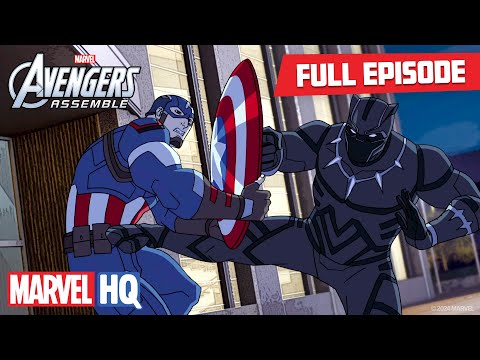
wakanda 30秒了解
- Wakanda is a fictional, hyper-advanced African nation from Marvel Comics and the Black Panther films, symbolizing African excellence and uncolonized potential.
- The term represents a blend of traditional African heritage and futuristic technology, serving as a cornerstone of the Afrofuturism movement.
- It is famously associated with the 'Wakanda Forever' salute, a gesture of solidarity and pride used globally by fans and activists.
- While fictional, Wakanda has a real-world impact on fashion, media representation, and academic discussions about post-colonial African identity.
Wakanda is a complex and multifaceted term that primarily refers to a fictional sovereign state located in sub-Saharan Africa. Within the Marvel Cinematic Universe and the original Marvel Comics, Wakanda is depicted as the most technologically advanced nation on Earth. However, the word has transcended its fictional origins to become a powerful cultural touchstone. When people use the word Wakanda today, they are often referring to a vision of African excellence that exists independent of colonial influence. It represents a sanctuary of innovation, tradition, and self-determination. The concept of Wakanda is central to the movement of Afrofuturism, which blends elements of science fiction, historical fiction, and fantasy to explore the African-American experience and celebrate African culture through a futuristic lens.
- Cultural Symbolism
- Wakanda serves as a symbol of what African nations might have achieved without the devastating impact of the transatlantic slave trade and European colonization. It is a manifestation of unburdened potential.
The fans at the convention were shouting 'Long live Wakanda' as the actors walked onto the stage.
In everyday conversation, particularly within the Black diaspora, Wakanda is used to express pride in heritage. It is common to hear the phrase 'Wakanda Forever' accompanied by a gesture where the arms are crossed over the chest. This gesture and the word itself have become shorthand for solidarity and strength. The word is also used in academic settings to discuss the politics of representation in media. Scholars analyze Wakanda as a 'third space' where traditional African customs, such as the use of the Xhosa language and Lipombo head elongation, coexist seamlessly with hyper-advanced technology like maglev trains and vibranium-powered medical tools. This juxtaposition challenges the Western stereotype of Africa as a place that is perpetually 'behind' the rest of the world.
- Technological Context
- In tech circles, 'Wakanda-like' is sometimes used to describe a hidden or proprietary technology that is far ahead of the current market standards.
The hidden laboratory was so advanced it felt like stepping into Wakanda.
Furthermore, the word is used to describe the aesthetic of the film itself. The 'Wakandan' aesthetic is characterized by vibrant colors, intricate beadwork, and architectural designs that incorporate natural elements with metallic finishes. This has influenced fashion designers, architects, and digital artists globally. The word also carries a weight of responsibility; in the narrative, Wakanda must decide whether to remain isolated to protect its resources or to share its knowledge with the world to help those in need. This mirrors real-world debates about isolationism versus globalism. Therefore, using the word can invoke deep philosophical questions about the ethics of power and the duty of wealthy nations toward the marginalized.
Many people look to Wakanda as a beacon of hope for a future where technology serves humanity without erasing culture.
- Geopolitical Metaphor
- Political commentators sometimes use the term to describe countries that possess vast natural resources but choose to limit foreign intervention.
The diplomat joked that the secret negotiations were taking place in a modern-day Wakanda.
The success of the movie put Wakanda on the map of global pop culture permanently.
In summary, Wakanda is more than just a place in a comic book. It is a dream of a better world, a celebration of African identity, and a critique of historical injustices. It is used by fans, activists, scholars, and creators to evoke a sense of wonder and a commitment to a future where heritage and progress are one and the same.
Using the word Wakanda effectively requires an understanding of its dual nature as both a literal setting and a figurative ideal. When speaking about the Marvel universe, it functions as a standard proper noun. For example, you might say, 'The King of Wakanda is a title passed down through generations.' In this context, it follows all the standard rules of geography and sovereignty. However, the more interesting usage occurs when it is used metaphorically. To use Wakanda as a metaphor, you are usually highlighting a place or a situation that is surprisingly advanced, culturally rich, or fiercely independent. You might describe a new, high-tech neighborhood in Lagos or Nairobi as 'the Wakanda of the future.' This implies that the location is a hub of innovation that maintains its local soul.
- Literal Usage
- Referring to the fictional country in the context of film, literature, or comics.
In the story, Wakanda is hidden from the world by a sophisticated holographic cloak.
Another common way to use the word is in the phrase 'Wakanda Forever.' This is used as an exclamation of pride, solidarity, or resilience. It is often seen on social media as a hashtag (#WakandaForever) to celebrate Black achievements in any field, from science to sports. When using this phrase, the speaker is aligning themselves with the values of the fictional nation: courage, intelligence, and loyalty to one's community. It is also used in a more somber tone to honor the late actor Chadwick Boseman, who portrayed King T'Challa. In this sense, the word becomes a memorial and a tribute to his legacy. It is important to note that while the word is fictional, the emotions it evokes are very real and should be treated with respect.
- Metaphorical Usage
- Using the name to describe a real-world place that exhibits excellence and innovation.
The Silicon Savannah in Kenya is often called the Wakanda of the tech world.
Grammatically, Wakanda can be used as a noun adjunct, where it modifies another noun. For instance, 'Wakandan technology' or 'Wakandan fashion.' This usage describes things that are inspired by or characteristic of the fictional nation. You might say, 'The designer's new collection has a distinct Wakandan flair,' referring to the use of bold patterns and futuristic silhouettes. In academic writing, you might see the term used to describe a 'Wakandan paradigm'—a way of thinking that prioritizes indigenous knowledge alongside scientific advancement. This demonstrates the word's versatility in moving from a simple name to a complex descriptor of a specific worldview.
She described her vision for the community center as a 'mini-Wakanda' where children could learn both coding and traditional drumming.
- Exclamatory Usage
- Using the word as a shout of encouragement or a declaration of identity.
After the team won the championship, the captain raised his arms and yelled, 'Wakanda Forever!'
The vibrant colors of the festival made me feel like I had been transported straight to Wakanda.
Finally, the word is often used in the context of 'finding Wakanda.' This is a more abstract usage that refers to the search for a place where one feels truly at home, respected, and empowered. It is a journey of self-discovery and cultural reclamation. In this sense, Wakanda is not just a place on a map, but a state of mind that anyone can strive to achieve by embracing their roots and aiming for excellence.
The word Wakanda is ubiquitous in modern popular culture, but its presence is most concentrated in specific environments. Naturally, you will hear it most frequently in discussions about the Marvel Cinematic Universe. Whether it is in a movie theater, a comic book shop, or an online forum like Reddit, fans use the word to discuss plot points, character arcs, and the lore of the Black Panther series. However, its reach extends far beyond the realm of fandom. You will hear it in news reports discussing the impact of the film on the global box office and its significance as a cultural milestone. Journalists often use Wakanda as a shorthand for the 'Black Panther effect,' which refers to the increased demand for diverse representation in Hollywood.
- In Entertainment
- The primary source of the word is the Marvel franchise, where it is spoken by characters and fans alike.
The trailer for the new movie showed the beautiful landscapes of Wakanda in stunning detail.
In the world of sports, the word and its associated salute have become a common sight. Professional athletes across various disciplines—from tennis players like Naomi Osaka to soccer stars like Pierre-Emerick Aubameyang—have used the 'Wakanda Forever' salute to celebrate victories. In these moments, the word is not spoken but is visually communicated, representing a shared sense of pride and a nod to the cultural power of the film. You might also hear the word in music, particularly in hip-hop and R&B. Artists often reference Wakanda in their lyrics to evoke themes of royalty, wealth, and African pride. For example, Kendrick Lamar’s soundtrack for the first Black Panther film is filled with references that cement the word’s place in the musical zeitgeist.
- In Academic Discourse
- Scholars use the term to discuss Afrofuturism, post-colonialism, and the sociology of media.
The professor's lecture focused on Wakanda as a critique of Western developmental narratives.
Social media is perhaps the place where you will encounter the word most frequently. On platforms like Twitter, Instagram, and TikTok, the word is used in hashtags to celebrate Black joy, excellence, and creativity. During Black History Month, the frequency of the word increases significantly as people share stories of real-life 'Wakandans'—innovators and leaders who are making a difference in their communities. You might also hear it in political speeches. Some politicians have used the word to describe their vision for a more equitable and technologically advanced society. Even the United States Department of Agriculture (USDA) once accidentally listed Wakanda as a free-trade partner on its website, leading to a viral moment that showed just how much the word has permeated the public consciousness.
The viral tweet about Wakanda being on the trade list caused a lot of laughter online.
- In Fashion and Design
- The term is used to describe a specific aesthetic that blends traditional African motifs with futuristic elements.
The runway show featured several outfits that were clearly inspired by the ' Wakanda look'.
Every time a new Marvel movie comes out, the word Wakanda trends on social media for days.
Finally, you will hear the word in educational settings. Teachers use the concept of Wakanda to engage students in geography, history, and science. By comparing the fictional nation to real African kingdoms like the Mali Empire or the Kingdom of Aksum, educators can provide a more nuanced and exciting view of African history. In this way, Wakanda serves as a bridge between the imagination and the classroom, making it a word that is heard in places of learning as much as in places of play.
One of the most frequent mistakes people make with the word Wakanda is assuming that it is a real country. While the film and comics go to great lengths to make the nation feel grounded in reality—using real languages like Xhosa and basing the geography in East Africa—it remains entirely fictional. This misconception can sometimes lead to awkward situations, such as when people try to find Wakanda on a physical map or ask about its visa requirements. It is important to maintain the distinction between the fictional ideal and the actual 54 countries that make up the African continent. Conflating the two can inadvertently diminish the real-world complexities and achievements of African nations.
- Misconception of Reality
- Believing that Wakanda is a real geographical location in Africa.
It is a common mistake for young children to think that Wakanda is a place they can visit on vacation.
Another mistake is the mispronunciation of the word. The correct pronunciation is 'wah-KAHN-dah,' with the emphasis on the second syllable. Some people mistakenly put the emphasis on the first syllable ('WAH-kahn-dah') or the last ('wah-kahn-DAH'). While this might seem like a minor point, correct pronunciation is a sign of respect for the source material and the cultures that inspired it. Additionally, some people use the 'Wakanda Forever' salute in contexts that are inappropriate or mocking. The salute is a symbol of serious cultural pride and should not be used as a joke or a punchline. Using it flippantly can be seen as insensitive to the deep meaning it holds for many people.
- Misuse of the Salute
- Using the cross-armed gesture in a way that is disrespectful or trivializing.
The comedian faced backlash for using the Wakanda salute during a segment that mocked African traditions.
There is also the mistake of using Wakanda as a monolith for all of Africa. Africa is a vast continent with thousands of different ethnic groups, languages, and cultures. While Wakanda draws inspiration from many of these (such as the Basotho blankets of Lesotho or the Mursi and Surma lip plates of Ethiopia), it is a composite. Using the word to describe anything and everything related to Africa is a form of 'othering' that ignores the specificities of real African cultures. It is better to use the specific names of real countries and cultures when referring to real-world events or artifacts. For example, instead of saying 'that's a Wakandan dress,' if the dress is actually a Kente cloth from Ghana, you should use the correct term.
The journalist was criticized for calling the entire continent a 'real-life Wakanda' in her travel article.
- Spelling Errors
- Common misspellings include 'Waconda', 'Wakunda', or 'Wakhanda'.
The student lost points on his essay for consistently misspelling Wakanda as 'Waconda'.
Using the term Wakanda to describe a real political situation requires careful nuance to avoid being reductive.
Finally, a subtle mistake is ignoring the comic book history of the word. While the 2018 film popularized it, Wakanda has existed in Marvel Comics since 1966. Forgetting this history can lead to a shallow understanding of the character of Black Panther and the evolution of the nation. When discussing the word in a literary or historical context, acknowledging its creators, Stan Lee and Jack Kirby, provides a more complete picture of its origins and its journey through American pop culture.
When looking for words similar to Wakanda, one must consider the specific aspect of the word they wish to replicate. If the goal is to describe a hidden, perfect society, then 'Utopia' is the most direct academic equivalent. Derived from Sir Thomas More’s 1516 book, a Utopia is an imagined place or state of things in which everything is perfect. However, unlike Wakanda, a Utopia is often criticized for being unattainable or even secretly dystopian. Another similar concept is 'El Dorado,' the legendary city of gold. Like Wakanda, El Dorado was a hidden place of immense wealth that explorers spent centuries searching for. However, El Dorado is purely about material wealth, whereas Wakanda is about technological and cultural richness.
- Utopia
- A perfect society. While Wakanda is a specific cultural utopia, the general term can apply to any ideal world.
The author described a digital Wakanda where all information was free and accessible.
For a more mystical or spiritual hidden land, 'Shangri-La' is a frequent comparison. Shangri-La is a fictional place described in James Hilton's 1933 novel 'Lost Horizon.' It is a hidden paradise in the Himalayas where people live for hundreds of years. While Shangri-La emphasizes peace and longevity, Wakanda emphasizes power and progress. In the context of Afrofuturism, another term to consider is 'Zion' as used in the Matrix films or in Rastafarian culture. Zion represents a promised land or a place of liberation for the oppressed. This aligns with the 'sanctuary' aspect of Wakanda. However, Zion is often depicted as a place of struggle or a final refuge, whereas Wakanda is a place of proactive strength and leadership.
- Shangri-La
- A hidden paradise. It is more focused on spiritual peace than technological advancement.
To the weary travelers, the small oasis felt like a desert Wakanda.
If you are looking for a more grounded, non-fictional alternative to describe a center of innovation, 'Silicon Valley' is the standard. However, calling a place the 'Silicon Valley of Africa' has been criticized for being Eurocentric. This is why many people prefer to use 'Wakanda' or 'Silicon Savannah' to describe tech hubs in Africa. These terms acknowledge the local context and the unique ways technology is being developed on the continent. In terms of synonyms for the 'Wakanda Forever' salute, terms like 'solidarity,' 'unity,' and 'defiance' capture the essence of the gesture. While no single word can replace the specific cultural weight of Wakanda, these alternatives can help provide variety in your writing and speaking.
The activists stood in a circle, their shared silence a powerful Wakanda-style show of unity.
- Technopolis
- A city that is a center of high-tech manufacturing and research. This is a more clinical alternative to the term.
The new capital city was designed to be a sustainable Wakanda for the next generation.
He dreamed of building a Wakanda in the heart of the city, a place where art and science could thrive together.
Ultimately, the choice of word depends on whether you want to emphasize the fictional setting, the technological prowess, or the cultural symbolism. Wakanda remains unique because it combines all three into a single, powerful name that resonates across the globe. Using it correctly allows you to tap into a rich vein of modern mythology and social commentary.
How Formal Is It?
"The fictional state of Wakanda provides a unique framework for discussing Afrofuturism in contemporary cinema."
"Wakanda is the setting for the Black Panther movies."
"That new tech lab is totally giving me Wakanda vibes."
"Wakanda is a cool secret place where superheroes live and have flying cars!"
"We out here building Wakanda, for real."
趣味小知识
The language spoken in the movie version of Wakanda is actually Xhosa, a real South African language. The actor John Kani, who played King T'Chaka, suggested using his native language to give the fictional nation an authentic African sound. This decision helped ground the fantasy in real linguistic tradition.
发音指南
- Putting the stress on the first syllable: WAH-kanda.
- Pronouncing the 'k' as a soft 'ch' sound.
- Using a long 'e' sound at the end: Wakan-dee.
- Misspelling it as 'Waconda' due to phonetic confusion.
- Omission of the 'n' sound: Wakada.
难度评级
The word is easy to recognize but requires cultural context to fully understand its meaning in text.
Spelling is straightforward, but using it metaphorically requires a higher level of nuance.
Pronunciation is key; once mastered, it is a very common and useful pop culture term.
Very easy to hear and identify in movies and media due to its distinct sound.
接下来学什么
前置知识
接下来学习
高级
需要掌握的语法
Proper Nouns for Fictional Places
Always capitalize 'Wakanda' just as you would 'France' or 'Japan'.
Noun Adjuncts
Using 'Wakandan' as an adjective to modify another noun, like 'Wakandan architecture'.
Zero Article with Proper Nouns
Usually, we say 'I am in Wakanda' rather than 'I am in the Wakanda'.
Possessive Proper Nouns
Use an apostrophe-s to show ownership: 'Wakanda's resources are vast'.
Exclamatory Phrases
'Wakanda Forever' functions as a standalone exclamation, often requiring an exclamation mark.
按水平分级的例句
I like the movie about Wakanda.
J'aime le film sur le Wakanda.
Proper noun 'Wakanda' is capitalized.
Wakanda is a secret place in Africa.
Le Wakanda est un endroit secret en Afrique.
Use 'is' for a singular location.
The king of Wakanda is very brave.
Le roi du Wakanda est très courageux.
Prepositional phrase 'of Wakanda'.
Wakanda has many flying cars.
Le Wakanda a beaucoup de voitures volantes.
Verb 'has' for possession.
People say 'Wakanda Forever'.
Les gens disent 'Wakanda Forever'.
Quotation marks for a famous phrase.
Is Wakanda a real country?
Le Wakanda est-il un vrai pays ?
Question form with 'is'.
I want to see Wakanda one day.
Je veux voir le Wakanda un jour.
Infinitive 'to see' followed by the noun.
Wakanda is very beautiful in the film.
Le Wakanda est très beau dans le film.
Adjective 'beautiful' describing the noun.
Wakanda is famous for its special metal called Vibranium.
Le Wakanda est célèbre pour son métal spécial appelé Vibranium.
Passive construction 'called Vibranium'.
The people of Wakanda use technology to help everyone.
Le peuple du Wakanda utilise la technologie pour aider tout le monde.
Present simple for general facts.
Wakanda was hidden from the world for a long time.
Le Wakanda a été caché du monde pendant longtemps.
Past passive 'was hidden'.
The movie shows the amazing culture of Wakanda.
Le film montre l'incroyable culture du Wakanda.
Adjective 'amazing' modifying 'culture'.
Many fans wear clothes inspired by Wakanda.
De nombreux fans portent des vêtements inspirés par le Wakanda.
Past participle 'inspired' used as an adjective.
Wakanda is not a real place, but it is very important.
Le Wakanda n'est pas un vrai endroit, mais il est très important.
Contrastive conjunction 'but'.
The Black Panther protects the nation of Wakanda.
La Panthère Noire protège la nation du Wakanda.
Third person singular verb 'protects'.
We learned about Wakanda in our media class today.
Nous avons appris l'existence du Wakanda dans notre cours sur les médias aujourd'hui.
Past simple 'learned'.
Wakanda serves as a powerful symbol of African excellence and innovation.
Le Wakanda sert de symbole puissant de l'excellence et de l'innovation africaines.
Verb 'serves as' to indicate a function.
The success of the film made Wakanda a household name across the globe.
Le succès du film a fait du Wakanda un nom connu dans le monde entier.
Causative structure 'made [object] [complement]'.
By staying isolated, Wakanda was able to protect its natural resources.
En restant isolé, le Wakanda a pu protéger ses ressources naturelles.
Gerund phrase 'By staying isolated' showing means.
The 'Wakanda Forever' salute is used to show solidarity among fans.
Le salut 'Wakanda Forever' est utilisé pour montrer la solidarité entre les fans.
Passive voice 'is used' for purpose.
In the story, Wakanda decides to share its technology with the rest of the world.
Dans l'histoire, le Wakanda décide de partager sa technologie avec le reste du monde.
Infinitive 'to share' after the verb 'decides'.
Many people find inspiration in the fictional history of Wakanda.
Beaucoup de gens trouvent l'inspiration dans l'histoire fictive du Wakanda.
Noun phrase 'fictional history'.
Wakanda is often compared to other legendary hidden cities like El Dorado.
Le Wakanda est souvent comparé à d'autres cités cachées légendaires comme l'Eldorado.
Comparison using 'compared to'.
The aesthetic of Wakanda blends traditional patterns with futuristic designs.
L'esthétique du Wakanda mélange des motifs traditionnels avec des designs futuristes.
Subject-verb agreement with 'aesthetic'.
Wakanda represents a unique intersection of Afrofuturism and mainstream cinema.
Le Wakanda représente une intersection unique entre l'afrofuturisme et le cinéma grand public.
Noun 'intersection' followed by 'of'.
The portrayal of Wakanda challenged many long-standing stereotypes about the African continent.
La représentation du Wakanda a remis en question de nombreux stéréotypes de longue date sur le continent africain.
Past simple 'challenged' with a direct object.
Despite being fictional, Wakanda has had a tangible impact on real-world fashion and art.
Bien qu'il soit fictif, le Wakanda a eu un impact tangible sur la mode et l'art du monde réel.
Concessive phrase 'Despite being' followed by a main clause.
The internal politics of Wakanda are a central theme in the Black Panther narrative.
La politique interne du Wakanda est un thème central du récit de Black Panther.
Plural verb 'are' because 'politics' is often treated as plural.
Wakanda's reliance on Vibranium raises interesting questions about resource management.
La dépendance du Wakanda vis-à-vis du Vibranium soulève des questions intéressantes sur la gestion des ressources.
Possessive 'Wakanda's' modifying 'reliance'.
The global community in the film is shocked to discover the true extent of Wakanda's power.
La communauté mondiale dans le film est choquée de découvrir la véritable étendue de la puissance du Wakanda.
Adjective 'shocked' followed by an infinitive phrase.
Wakanda functions as a 'third space' where tradition and modernity coexist harmoniously.
Le Wakanda fonctionne comme un 'tiers-espace' où tradition et modernité coexistent harmonieusement.
Adverb 'harmoniously' modifying the verb 'coexist'.
Critics often analyze Wakanda through the lens of post-colonial theory.
Les critiques analysent souvent le Wakanda à travers le prisme de la théorie postcoloniale.
Prepositional phrase 'through the lens of'.
The emergence of Wakanda in popular culture has revitalized interest in Afrofuturist literature.
L'émergence du Wakanda dans la culture populaire a revitalisé l'intérêt pour la littérature afrofuturiste.
Present perfect 'has revitalized' showing a continuing effect.
Wakanda's strategic isolationism is a subject of intense debate among fictional political scientists.
L'isolationnisme stratégique du Wakanda est un sujet de débat intense parmi les politologues de fiction.
Complex noun phrase as the subject.
The film meticulously crafted the linguistics of Wakanda by incorporating the Xhosa language.
Le film a méticuleusement élaboré la linguistique du Wakanda en y incorporant la langue xhosa.
Adverb 'meticulously' modifying the verb 'crafted'.
Wakanda serves as a poignant reminder of the creative potential inherent in the African diaspora.
Le Wakanda sert de rappel poignant du potentiel créatif inhérent à la diaspora africaine.
Adjective 'inherent' used post-positively.
The subversion of Western tropes in the depiction of Wakanda is its most revolutionary aspect.
La subversion des tropes occidentaux dans la représentation du Wakanda est son aspect le plus révolutionnaire.
Gerund 'subversion' as the head of the subject phrase.
Wakanda's narrative arc explores the tension between national security and global altruism.
L'arc narratif du Wakanda explore la tension entre la sécurité nationale et l'altruisme mondial.
Noun 'tension' followed by 'between... and'.
The cultural resonance of Wakanda transcends the boundaries of traditional superhero fandom.
La résonance culturelle du Wakanda transcende les frontières du fandom traditionnel des super-héros.
Third person singular verb 'transcends'.
Scholars argue that Wakanda provides a necessary space for imagining a decolonized future.
Les chercheurs soutiennent que le Wakanda offre un espace nécessaire pour imaginer un avenir décolonisé.
That-clause as a direct object of 'argue'.
Wakanda's socio-political framework offers a compelling critique of contemporary developmental paradigms.
Le cadre sociopolitique du Wakanda offre une critique convaincante des paradigmes de développement contemporains.
Adjective 'compelling' modifying 'critique'.
The ontological status of Wakanda as a 'real' cultural force despite its fictionality is a fascinating study.
Le statut ontologique du Wakanda en tant que force culturelle 'réelle' malgré sa fictionnalité est une étude fascinante.
Prepositional phrase 'despite its fictionality' acting as a concession.
By centering an uncolonized African narrative, Wakanda effectively deconstructs the hegemony of Western storytelling.
En centrant un récit africain non colonisé, le Wakanda déconstruit efficacement l'hégémonie de la narration occidentale.
Participial phrase 'By centering...' showing method.
The intricate world-building of Wakanda facilitates a nuanced exploration of indigenous knowledge systems.
La construction complexe du monde du Wakanda facilite une exploration nuancée des systèmes de connaissances autochtones.
Subject-verb agreement with 'world-building'.
Wakanda's impact on the collective consciousness has necessitated a re-evaluation of diversity in media production.
L'impact du Wakanda sur la conscience collective a nécessité une réévaluation de la diversité dans la production médiatique.
Present perfect 'has necessitated' for a completed action with present relevance.
The juxtaposition of ancestral rites and quantum technology in Wakanda serves to normalize non-Western progress.
La juxtaposition des rites ancestraux et de la technologie quantique au Wakanda sert à normaliser le progrès non occidental.
Infinitive 'to normalize' expressing purpose.
Wakanda's existence as a cultural phenomenon underscores the profound yearning for authentic representation.
L'existence du Wakanda en tant que phénomène culturel souligne le profond désir d'une représentation authentique.
Verb 'underscores' meaning to emphasize.
The discourse surrounding Wakanda often oscillates between celebratory appraisal and critical interrogation of its capitalist underpinnings.
Le discours entourant le Wakanda oscille souvent entre une évaluation festive et une interrogation critique de ses fondements capitalistes.
Verb 'oscillates' followed by 'between... and'.
常见搭配
常用短语
Wakanda Forever
The Wakanda of...
Finding your Wakanda
Wakandan-style
A real-life Wakanda
The secret of Wakanda
Wakanda-like secrecy
Long live Wakanda
The gates of Wakanda
Wakanda's gift
容易混淆的词
A real country in East Africa. People sometimes confuse the names because they sound similar and are in the same region.
A common misspelling. It is also the name of a lake in Kansas, which has no relation to the Marvel nation.
A real ethnic group in Kenya. While they may have inspired the name, they are a real people with their own distinct history.
习语与表达
"Wakanda Forever"
A declaration of eternal pride and unity. It has become a modern idiom for Black resilience.
No matter the challenges, we stand together. Wakanda Forever!
Informal/Cultural"Hidden in plain sight like Wakanda"
Something that is very valuable or powerful but is not noticed by others because it is disguised.
The solution to the problem was hidden in plain sight like Wakanda.
Informal"The Vibranium of the situation"
The most important or powerful element that makes everything else work.
Her leadership was the Vibranium of the entire project.
Slang/Metaphorical"Crossing arms for Wakanda"
Showing support or agreement with a movement for social justice or representation.
The athletes were crossing arms for Wakanda on the podium.
Informal"Building a Wakanda"
Creating a community or space that is self-sufficient and culturally rich.
They are building a Wakanda in the inner city through urban farming and tech labs.
Informal"The Shuri of the group"
The person who is the smartest and most technologically savvy in a team.
If you have a coding problem, ask Marcus; he's the Shuri of the group.
Slang"A Wakanda moment"
A moment of realization where one sees the true potential or beauty of something previously ignored.
Seeing the new art gallery was a real Wakanda moment for the neighborhood.
Informal"Guarding the borders of Wakanda"
Being very protective of one's culture, ideas, or community from outside interference.
The elders are strictly guarding the borders of Wakanda when it comes to their traditions.
Metaphorical"The heart-shaped herb of..."
The source of someone's strength or inspiration.
Music is the heart-shaped herb of his creativity.
Informal"Wakanda is a state of mind"
The idea that the excellence and pride of Wakanda can be carried by anyone, anywhere.
You don't need to be in Africa to feel empowered; Wakanda is a state of mind.
Philosophical/Informal容易混淆
Both refer to perfect societies.
Utopia is a general term for any perfect place, while Wakanda is a specific, culturally-rooted African nation in fiction.
While the book described a generic utopia, the movie showed the specific beauty of Wakanda.
Wakanda is the most famous example of Afrofuturism.
Afrofuturism is the entire artistic and cultural movement; Wakanda is just one fictional setting within that movement.
Wakanda is a brilliant manifestation of the principles of Afrofuturism.
They are always mentioned together.
Wakanda is the place; Vibranium is the resource found there.
Without Vibranium, Wakanda would not have its advanced technology.
He is the face of the nation.
T'Challa is the individual person (the King); Wakanda is the country he rules.
T'Challa fought to protect the future of Wakanda.
They are a key part of the Wakandan identity.
The Dora Milaje are the elite female warriors; Wakanda is the nation they serve.
The Dora Milaje are the fiercest defenders of Wakanda.
句型
I like [Noun].
I like Wakanda.
[Noun] is a [Adjective] place.
Wakanda is a secret place.
[Noun] is known for [Noun/Gerund].
Wakanda is known for having advanced technology.
Despite [Gerund], [Main Clause].
Despite being fictional, Wakanda inspires many people.
The [Noun] of [Noun] serves to [Verb].
The depiction of Wakanda serves to challenge stereotypes.
By [Gerund], [Noun] effectively [Verb] the [Noun].
By centering an uncolonized narrative, Wakanda effectively deconstructs the hegemony of Western media.
The [Noun] of [Proper Noun] is [Adjective].
The king of Wakanda is strong.
It is [Adjective] to [Verb] [Proper Noun].
It is interesting to study Wakanda.
词族
名词
形容词
相关
如何使用
High in pop culture, media, and social justice circles; low in traditional scientific or historical texts.
-
Thinking Wakanda is a real country.
→
Knowing it is a fictional nation from Marvel.
Many people, especially children or those not familiar with Marvel, might mistake it for a real place due to its realistic portrayal.
-
Misspelling it as 'Waconda'.
→
Spelling it 'Wakanda'.
The phonetic spelling can be tricky, but 'Wakanda' is the only correct form in the Marvel universe.
-
Using the salute as a joke.
→
Using the salute with respect and pride.
The 'Wakanda Forever' salute is a meaningful cultural gesture and should not be used to mock or trivialize.
-
Pronouncing it 'WAH-kanda'.
→
Pronouncing it 'wa-KAHN-da'.
The stress should be on the second syllable to match the authentic pronunciation used in the films.
-
Assuming all of Africa is like Wakanda.
→
Recognizing the diversity of the 54 real African nations.
Wakanda is a fictional ideal; real African countries have their own unique and varied cultures and levels of development.
小贴士
Capitalization
Always capitalize the 'W' in Wakanda. As a proper noun referring to a specific nation, it follows the same rules as 'London' or 'Nigeria'.
Respect the Symbol
Understand that for many, Wakanda is a serious symbol of empowerment. Use the term with respect, especially when using the 'Wakanda Forever' salute.
Adjective Form
Use 'Wakandan' when you want to describe something from the country, such as 'Wakandan art' or 'Wakandan citizens'.
Movie vs. Comics
If you are in a deep discussion, specify if you are talking about the movie version or the comic book version, as there are some differences in the lore.
Emphasis
Remember to put the stress on the middle syllable: wa-KAHN-da. This is how it is pronounced in the films and by the creators.
Hashtags
When using #WakandaForever, it is usually to celebrate excellence or a positive moment in Black culture. It is a very positive and uplifting tag.
Metaphorical Use
When calling a place a 'real-life Wakanda', make sure to highlight the specific technological or cultural achievements that justify the comparison.
Explore Xhosa
Since Wakanda uses the Xhosa language, learning a few words of Xhosa can deepen your appreciation for the fictional nation's roots.
Stan Lee's Vision
Remember that Wakanda was created in 1966, a time of great social change. Knowing this helps you understand the revolutionary nature of the concept.
Related Terms
Familiarize yourself with words like 'Afrofuturism' and 'Vibranium' to better navigate conversations about Wakanda.
记住它
记忆技巧
Think of 'Water' and 'Panda'. A 'Water Panda' lives in a secret garden. Wa-kan-da. It's a place of wonder and strength.
视觉联想
Imagine a high-tech city made of purple glowing metal hidden behind a giant waterfall in a green jungle.
Word Web
挑战
Try to use the word 'Wakanda' in a sentence that describes a real-world achievement you are proud of. For example: 'Our team's new app is the Wakanda of the education market.'
词源
The word was created by Stan Lee and Jack Kirby for Marvel Comics in 1966. It is believed to be inspired by several real-world sources. One possibility is the 'Wakamba' tribe of Kenya, also known as the Kamba people. Another potential source is the word 'Wakanda' from the Siouan languages of Native Americans, which means 'possessing magical power' or 'Great Spirit'.
原始含义: In its fictional context, it has always meant the name of the hidden African nation.
Fictional/Constructed (with roots in Bantu and Siouan sounds).文化背景
While it is a fun pop culture term, be mindful that for many, it represents a serious desire for better representation. Avoid using it in a way that makes fun of African cultures.
In the United States and the United Kingdom, Wakanda is a major part of the pop culture lexicon, often referenced in late-night talk shows and social media.
在生活中练习
真实语境
Movie Discussion
- Did you see the scenes in Wakanda?
- The visuals of Wakanda were stunning.
- I love the Wakandan characters.
- Wakanda is my favorite Marvel location.
Cultural Pride
- Wakanda Forever!
- Representing Wakanda today.
- That's the spirit of Wakanda.
- Celebrating our own Wakanda.
Technology/Innovation
- This is some Wakanda-level tech.
- We need to build a Wakanda for our industry.
- Is it as advanced as Wakanda?
- The Wakanda of the future.
Fashion
- I'm going for a Wakandan look.
- This pattern is very Wakanda-inspired.
- The Wakanda aesthetic is trending.
- Where can I find Wakandan-style jewelry?
Academic/Social Analysis
- The impact of Wakanda on media.
- Analyzing Wakanda through Afrofuturism.
- The politics of Wakanda.
- Wakanda as a cultural signifier.
对话开场白
"If Wakanda were a real country, do you think its isolationist policy would be justified in today's world?"
"What part of Wakandan technology would you most like to see become a reality in our lifetime?"
"How do you think the portrayal of Wakanda has changed the way people view African nations in general?"
"Do you remember the first time you saw Wakanda on screen? What was your initial reaction to the visuals?"
"In what ways can we build a 'real-life Wakanda' in our own local communities or professional fields?"
日记主题
Describe what your personal 'Wakanda' would look like. What values would it hold, and what technology would it use?
Reflect on the 'Wakanda Forever' salute. What does it mean to you personally, and when do you feel most like using it?
Write about a time you felt a sense of pride in your heritage that reminded you of the spirit of Wakanda.
If you were the King or Queen of Wakanda, would you choose to keep the nation's secrets or share them with the world?
How has the concept of Wakanda influenced your understanding of Afrofuturism and the importance of representation in stories?
常见问题
10 个问题No, Wakanda is a fictional country created for Marvel Comics. It does not exist on any real-world map, although it is set in the real region of East Africa. Its popularity has led some to wish it were real, but it remains a product of creative imagination.
In the Marvel Universe, Wakanda is located in East Africa. Its neighbors are often cited as Ethiopia, South Sudan, Uganda, and Kenya. It is usually depicted as being near Lake Turkana.
In the 'Black Panther' movies, the official language of Wakanda is Xhosa. This is a real language spoken by millions of people in South Africa and Zimbabwe. The actors learned Xhosa to give the fictional nation an authentic African voice.
It is a slogan that represents the eternal strength and unity of the Wakandan people. In the real world, it has become a symbol of Black pride, solidarity, and the celebration of African heritage.
Wakanda was created by writer Stan Lee and artist Jack Kirby. It first appeared in the comic book 'Fantastic Four' #52 in July 1966. Since then, many other writers and artists have expanded its history.
Wakanda is advanced because it sits on a massive deposit of Vibranium, a rare metal from a meteorite. The Wakandans used this metal to power their inventions and stayed isolated to prevent other nations from stealing it.
The salute—crossing the arms over the chest—was developed for the movie. It was inspired by several sources, including Egyptian pharaohs and West African sculptures, but the specific gesture as we know it is a cinematic creation.
Wakanda is the most mainstream example of Afrofuturism. It shows a future where African people are the leaders of science and technology, which is a powerful image that challenges historical prejudices.
You cannot visit the real Wakanda, but you can visit the filming locations! Much of the movie was filmed in Georgia, USA, and some aerial shots were taken in South Africa, Zambia, and Uganda.
The capital city of Wakanda is Birnin Zana. It is often referred to as the 'Golden City' because of its beautiful architecture and advanced technology.
自我测试 200 个问题
Write a short paragraph about why you would like to visit Wakanda.
Well written! Good try! Check the sample answer below.
Describe the technology of Wakanda using at least three adjectives.
Well written! Good try! Check the sample answer below.
Explain the significance of the 'Wakanda Forever' salute in modern culture.
Well written! Good try! Check the sample answer below.
Compare Wakanda to a real-world tech hub like Silicon Valley.
Well written! Good try! Check the sample answer below.
Analyze how Wakanda challenges traditional stereotypes of Africa.
Well written! Good try! Check the sample answer below.
Discuss the ethical implications of Wakanda's isolationist policy.
Well written! Good try! Check the sample answer below.
Write a dialogue between two fans discussing the movie Black Panther.
Well written! Good try! Check the sample answer below.
Create a slogan for a new project inspired by Wakanda.
Well written! Good try! Check the sample answer below.
Summarize the history of Wakanda in the Marvel Comics.
Well written! Good try! Check the sample answer below.
Explain the concept of Afrofuturism using Wakanda as an example.
Well written! Good try! Check the sample answer below.
Draft a short speech for a leader of a 'real-life Wakanda'.
Well written! Good try! Check the sample answer below.
Describe a character from Wakanda.
Well written! Good try! Check the sample answer below.
What does the word 'sovereign' mean in relation to Wakanda?
Well written! Good try! Check the sample answer below.
How does Vibranium affect the daily life of Wakandans?
Well written! Good try! Check the sample answer below.
Reflect on the impact of Chadwick Boseman's portrayal of the King of Wakanda.
Well written! Good try! Check the sample answer below.
Describe the architecture of Wakanda.
Well written! Good try! Check the sample answer below.
Why is the Xhosa language important to the film?
Well written! Good try! Check the sample answer below.
What is the role of the five tribes in Wakanda?
Well written! Good try! Check the sample answer below.
How does Wakanda represent a 'third space'?
Well written! Good try! Check the sample answer below.
Write a sentence using 'Wakanda' as a metaphor.
Well written! Good try! Check the sample answer below.
Pronounce 'Wakanda' correctly.
Read this aloud:
你说的:
Speech recognition is not supported in your browser. Try Chrome or Edge.
Say 'Wakanda Forever' with the correct salute.
Read this aloud:
你说的:
Speech recognition is not supported in your browser. Try Chrome or Edge.
Tell a friend about the movie Black Panther in three sentences.
Read this aloud:
你说的:
Speech recognition is not supported in your browser. Try Chrome or Edge.
Explain what Vibranium is and why it is important.
Read this aloud:
你说的:
Speech recognition is not supported in your browser. Try Chrome or Edge.
Discuss why representation in movies like Black Panther matters.
Read this aloud:
你说的:
Speech recognition is not supported in your browser. Try Chrome or Edge.
Give a short presentation on the concept of Afrofuturism.
Read this aloud:
你说的:
Speech recognition is not supported in your browser. Try Chrome or Edge.
Debate the pros and cons of Wakanda's isolationism.
Read this aloud:
你说的:
Speech recognition is not supported in your browser. Try Chrome or Edge.
Describe the landscape of Wakanda as if you were there.
Read this aloud:
你说的:
Speech recognition is not supported in your browser. Try Chrome or Edge.
Who is your favorite character from Wakanda and why?
Read this aloud:
你说的:
Speech recognition is not supported in your browser. Try Chrome or Edge.
What would you do if you found a piece of Vibranium?
Read this aloud:
你说的:
Speech recognition is not supported in your browser. Try Chrome or Edge.
How would you describe Wakanda to someone who has never heard of it?
Read this aloud:
你说的:
Speech recognition is not supported in your browser. Try Chrome or Edge.
What does 'Wakanda Forever' mean to you?
Read this aloud:
你说的:
Speech recognition is not supported in your browser. Try Chrome or Edge.
Do you think a real-life Wakanda is possible?
Read this aloud:
你说的:
Speech recognition is not supported in your browser. Try Chrome or Edge.
What is the most impressive thing about Wakanda?
Read this aloud:
你说的:
Speech recognition is not supported in your browser. Try Chrome or Edge.
If you could have one Wakandan gadget, what would it be?
Read this aloud:
你说的:
Speech recognition is not supported in your browser. Try Chrome or Edge.
How does Wakanda change the narrative of Africa?
Read this aloud:
你说的:
Speech recognition is not supported in your browser. Try Chrome or Edge.
Why is the Dora Milaje important to the story?
Read this aloud:
你说的:
Speech recognition is not supported in your browser. Try Chrome or Edge.
What is the 'Black Panther effect'?
Read this aloud:
你说的:
Speech recognition is not supported in your browser. Try Chrome or Edge.
Is Wakanda a utopia?
Read this aloud:
你说的:
Speech recognition is not supported in your browser. Try Chrome or Edge.
How do you say 'Wakanda' in a sentence?
Read this aloud:
你说的:
Speech recognition is not supported in your browser. Try Chrome or Edge.
Listen to the word: 'Wakanda'. Which syllable is stressed?
Listen to the phrase: 'Wakanda Forever'. What is the emotion behind it?
Listen to a description of Wakanda. Is it a real place?
Listen to the name of the metal. How do you spell it?
Listen to a character speaking Xhosa. Which country is this language from?
Listen to a news report about the movie. What was its impact?
Listen to a scholar discuss Afrofuturism. How does she define Wakanda?
Listen to a debate about isolationism. What is the main argument for Wakanda?
Listen to the pronunciation of 'Wakandan'. Is it an adjective or a noun?
Listen to the sound of the 'Wakanda Forever' salute. What does it sound like?
Listen to the name 'T'Challa'. How many syllables does it have?
Listen to the word 'Birnin Zana'. What is it?
Listen to a description of the Dora Milaje. Who do they protect?
Listen to the phrase 'Silicon Savannah'. What is it being compared to?
Listen to the word 'Vibranium'. What is its primary characteristic?
/ 200 correct
Perfect score!
Summary
Wakanda is more than a movie setting; it is a powerful cultural metaphor for a world where African tradition and cutting-edge innovation thrive together without the scars of colonization. Example: 'The project aims to create a digital Wakanda for young African entrepreneurs.'
- Wakanda is a fictional, hyper-advanced African nation from Marvel Comics and the Black Panther films, symbolizing African excellence and uncolonized potential.
- The term represents a blend of traditional African heritage and futuristic technology, serving as a cornerstone of the Afrofuturism movement.
- It is famously associated with the 'Wakanda Forever' salute, a gesture of solidarity and pride used globally by fans and activists.
- While fictional, Wakanda has a real-world impact on fashion, media representation, and academic discussions about post-colonial African identity.
Capitalization
Always capitalize the 'W' in Wakanda. As a proper noun referring to a specific nation, it follows the same rules as 'London' or 'Nigeria'.
Respect the Symbol
Understand that for many, Wakanda is a serious symbol of empowerment. Use the term with respect, especially when using the 'Wakanda Forever' salute.
Adjective Form
Use 'Wakandan' when you want to describe something from the country, such as 'Wakandan art' or 'Wakandan citizens'.
Movie vs. Comics
If you are in a deep discussion, specify if you are talking about the movie version or the comic book version, as there are some differences in the lore.