william 30秒了解
- William is a timeless male name of Germanic origin meaning 'resolute protector'.
- It is historically significant, especially in England following the Norman Conquest of 1066.
- Common nicknames include Will, Bill, Billy, and the modern variant Liam.
- The name is widely used in formal, historical, and casual contexts globally.
The name William is one of the most enduring and historically significant male given names in the English-speaking world. Originating from the Old High German name Willahelm, it is a compound of two powerful elements: wil (meaning 'will' or 'desire') and helm (meaning 'helmet' or 'protection'). Therefore, the name is often interpreted as 'resolute protector' or 'one who wears the helmet of will.' This etymological foundation paints a picture of a person who is both determined and defensive, a leader who guards others with a strong sense of purpose. Throughout history, the name has been synonymous with leadership, strength, and cultural stability. It gained immense popularity in England after the Norman Conquest of 1066, led by William the Conqueror, who became the first Norman King of England. Since that pivotal moment, the name has been a constant fixture in the British royal family and among the general population alike. In modern times, William remains a top choice for parents, appreciated for its classic sound and the versatility of its nicknames, such as Will, Bill, Billy, and Liam. It is used in various contexts, from formal historical documents to casual everyday conversations. When you hear the name William, it often evokes a sense of tradition, reliability, and timelessness. It is a name that fits a king just as well as it fits a neighbor, making it a truly universal identifier.
- Etymological Root
- Derived from the Germanic 'Willahelm', signifying a person of strong will and protective nature.
- Historical Significance
- Introduced to England by the Normans, it has been the name of four English kings and numerous historical figures.
- Cultural Reach
- Widely used across Europe in various forms like Guillaume (French), Guillermo (Spanish), and Wilhelm (German).
King William the Conqueror changed the course of English history forever.
In addition to its royal and historical weight, William is a name that carries a certain 'everyman' quality. In the mid-20th century, the nickname 'Bill' was so common in the United States that it became a generic term for a guy, similar to 'Jack' or 'Joe'. This duality—being both regal and common—is what gives the name its unique staying power. It is a name that can be shortened to 'Billy' for a playful child, 'Will' for a modern professional, or 'Liam' for a trendy alternative. The name also appears frequently in literature and the arts, most notably with William Shakespeare, whose influence on the English language is unparalleled. When using the name William in a sentence, it is treated as a proper noun and should always be capitalized. It can function as a subject, an object, or a possessive (William's). Despite its age, the name never feels dated; it is a 'perennial' name that consistently ranks high in popularity charts across the globe, from Australia to Canada to the United Kingdom. Its enduring nature suggests that it will continue to be a cornerstone of English nomenclature for centuries to come.
Young William decided to go by the name Liam once he started university.
The document was signed by William Jefferson Clinton, the 42nd President of the United States.
Prince William, the Prince of Wales, attended the charity gala last night.
In the novel, the protagonist William Darcy is known for his pride and eventual humility.
Using the name William in a sentence is straightforward because it follows the standard rules for proper nouns. However, its versatility allows it to appear in various grammatical structures and contexts. Whether you are writing a formal biography, a casual email, or a fictional story, understanding the nuances of how to integrate this name can enhance your writing. In formal contexts, the full name 'William' is almost always used, often accompanied by a middle name or a title. For example, in legal documents or academic papers, you might see 'William R. Smith' or 'Professor William Thompson.' This conveys a sense of professionalism and respect. In more casual settings, you might use the name as a simple subject: 'William is coming over for dinner.' Here, the name acts as the primary focus of the sentence. You can also use the possessive form to indicate ownership or association: 'William's car is parked outside' or 'The legacy of William the Conqueror is still felt today.' Notice that when adding an 's' to a name ending in 'm', you simply add an apostrophe and an 's'.
- Subjective Use
- William decided to pursue a career in architecture after visiting Rome.
- Possessive Form
- The teacher was impressed by William's dedication to his studies.
- Direct Object
- I saw William at the grocery store yesterday, but he didn't see me.
Despite his fame, William remained a very private person throughout his life.
Another interesting way to use the name is in the context of historical epithets. An epithet is a descriptive phrase expressing a quality characteristic of the person mentioned. The most famous example is 'William the Conqueror.' In this structure, the name is followed by 'the' and an adjective or noun that defines the person's legacy. Other examples include 'William the Silent' or 'William the Lion.' This usage is primarily historical or literary. In modern English, you might also use the name in a comparative sense: 'He is a real William Shakespeare when it comes to writing poetry.' Here, the name is used as a metaphor for talent or genius. Furthermore, the name can be used in the plural when referring to multiple people with that name: 'There are three Williams in my class.' In this case, you simply add an 's' to the end of the name. Understanding these different patterns allows you to use the name William with precision and creativity in your writing.
Is William short for something, or is that his full legal name?
The letter was addressed to William and Mary, the joint monarchs of England.
Every time William speaks, the entire room falls silent to listen.
We named our first son William after his great-grandfather.
You will encounter the name William in a vast array of settings, ranging from the most formal institutions to the most casual social circles. In the realm of news and current events, the name is frequently heard in relation to the British Royal Family. Prince William, the Prince of Wales, is a global figure whose activities are covered by media outlets worldwide. Whether he is attending a state funeral, a charity event, or a sporting match, his name is a constant in the headlines. Similarly, in the United States, the name appears in political history with figures like William McKinley, William Howard Taft, and William Jefferson Clinton. In these contexts, the name carries a weight of authority and public service. If you are a student of history, you will find the name William on almost every page of European history books. From William the Conqueror's invasion of England to William of Orange's role in the Glorious Revolution, the name is inextricably linked to the shaping of modern nations. In academic settings, you might hear professors discuss the works of William Wordsworth, William Faulkner, or William Butler Yeats, highlighting the name's prominence in the literary canon.
- In Media
- News reports often feature Prince William or celebrities like William Shatner and William Levy.
- In Literature
- Classic authors like William Shakespeare and William Blake are essential study in English classes.
- In Everyday Life
- It is a common name for colleagues, friends, and family members across English-speaking countries.
'To be, or not to be,' wrote William Shakespeare in his famous play, Hamlet.
In popular culture, the name William is everywhere. In movies and television, characters named William (or Will) are common protagonists. Think of Will Hunting in 'Good Will Hunting' or Will Byers in 'Stranger Things.' The name is often chosen for characters who are meant to be relatable, heroic, or intellectually gifted. In the music industry, you have artists like will.i.am, who uses a stylized version of the name, and legendary composers like William Byrd. Even in the world of science and technology, the name is present with figures like William Harvey, who discovered the circulation of blood, or William Gates (better known as Bill Gates), the co-founder of Microsoft. This broad presence means that as an English learner, you will hear and see the name 'William' in almost every domain of life. It is not just a name; it is a cultural touchstone that appears in songs, movies, history books, and daily interactions. Whether you are reading a classic novel or watching the evening news, the name William is a word you are guaranteed to encounter frequently.
The documentary explored the life of William Wallace and his fight for Scottish independence.
'Please welcome our guest speaker, William Davis,' the host announced.
The street was named William Street in honor of the city's founder.
I just finished reading a biography of William the Silent, the leader of the Dutch Revolt.
While William is a common name, there are several pitfalls that English learners (and even native speakers) sometimes fall into. The most frequent mistake is spelling. The name is spelled with two 'l's and an 'iam' at the end. Common misspellings include 'Willaim,' 'Wiliam,' or 'Willam.' It is important to remember the 'i' before the 'a' in the final syllable. Another common area of confusion involves nicknames. While 'Will' and 'Bill' are both standard nicknames for William, they are not always interchangeable based on personal preference. Calling a William 'Bill' when he prefers 'Will' can be a minor social faux pas. It is always best to use the name the person introduced themselves with. Additionally, some learners confuse 'William' with its diminutive 'Liam.' While Liam originated as a short form of William (specifically from the Irish 'Uilliam'), it is now considered a completely independent name. You shouldn't assume every Liam is actually a William, or vice versa.
- Spelling Error
- Incorrect: Willaim. Correct: William. Remember the 'i' comes before the 'a'.
- Nickname Confusion
- Don't assume 'Bill' is okay; some Williams only like the full name or 'Will'.
- Capitalization
- As a proper noun, 'William' must always be capitalized, even in informal texts.
He wrote william with a lowercase 'w', which is a grammatical error.
Another mistake involves the pronunciation of the name. In English, 'William' is typically pronounced as two syllables: 'WIL-yum.' Some learners try to pronounce it as three syllables ('WIL-lee-um'), which sounds unnatural in most modern dialects. The 'ia' blend is very quick. Furthermore, when using the name in a possessive sense, remember the apostrophe. Writing 'Williams car' instead of 'William's car' is a common grammatical slip. It is also worth noting that 'Williams' (with an 's') is a very common surname. Confusing the first name William with the last name Williams can lead to misunderstandings in professional contexts. For example, if someone says 'Contact Williams,' they are likely referring to a person whose last name is Williams, whereas 'Contact William' refers to someone's first name. Being mindful of these small details will help you use the name correctly and confidently in all your communications.
Is it William or Williams? I need to know for the employee directory.
The student misspelled William as 'Willyam' on his exam paper.
Many people think William and Bill are different names, but they are related.
Don't forget the apostrophe in William's name when writing about his achievements.
If you are looking for alternatives to the name William, or if you want to understand its variations across different languages and styles, there are many options to consider. The most direct alternatives are the various nicknames and diminutive forms. 'Will' is the most common modern short form, often perceived as friendly and approachable. 'Bill' is a more traditional nickname that was extremely popular in the 20th century. 'Billy' and 'Willy' are often used for children or as terms of endearment. 'Liam,' as mentioned before, is a very popular modern alternative that feels fresh and trendy while still being rooted in the original name. For those interested in international versions, 'Guillaume' is the French equivalent, 'Guillermo' is Spanish, 'Wilhelm' is German, and 'Guglielmo' is Italian. Each of these carries the same 'resolute protector' meaning but with a distinct linguistic flair. In terms of names with similar meanings, you might consider 'Alexander' (defender of men) or 'Edward' (wealthy guardian). These names share the 'protector' or 'guardian' theme that is central to William's definition.
- William vs. Will
- William is formal and traditional; Will is casual and modern. Use William for official documents and Will for friends.
- William vs. Liam
- Liam is shorter and currently more popular in many countries. It feels more contemporary than the classic William.
- William vs. Bill
- Bill is a classic 20th-century nickname. It feels more 'old-fashioned' compared to the sleekness of 'Will'.
While William is his legal name, everyone at the office calls him Bill.
When choosing between these alternatives, consider the 'register' or level of formality you wish to convey. 'William' is the highest register, suitable for formal introductions and professional writing. 'Will' and 'Liam' are neutral and work well in most social and work environments. 'Billy' and 'Willy' are low register, best reserved for family or very close friends. If you are naming a character in a story, the choice of name can signal a lot about their background. A character named 'Wilhelm' might be perceived as having German heritage or a more rigid personality, while a 'Billy' might be seen as youthful or innocent. Understanding these nuances helps you navigate the rich landscape of English names and choose the one that best fits your context. Whether you stick with the classic William or opt for one of its many variations, you are using a name with deep roots and a wealth of cultural associations.
The Spanish explorer was named Guillermo, which is the equivalent of William.
Many parents today prefer Liam because it sounds more modern than William.
In the movie, the character Will Hunting is a mathematical genius.
The historical treaty was signed by Wilhelm II of Germany.
How Formal Is It?
"William R. Thompson has been appointed as the new CEO."
"William is coming to the meeting at 3 PM."
"Hey Will, do you want to grab a coffee?"
"Little Billy played with his toy cars all afternoon."
"He's a real Bill, always following the rules."
趣味小知识
The name became so popular in England after 1066 that by the 13th century, it was the most common name for men.
发音指南
- Pronouncing it as three syllables: WIL-lee-um.
- Over-emphasizing the 'i' sound.
- Confusing it with the pronunciation of 'Wilhelm'.
- Mumbling the 'm' at the end.
- Swapping the 'i' and 'a' sounds.
难度评级
Very easy to recognize as a common name.
Requires attention to the double 'l' and 'iam' ending.
Simple two-syllable pronunciation.
Distinctive sound, easy to identify.
接下来学什么
前置知识
接下来学习
高级
需要掌握的语法
Proper Nouns
William is always capitalized.
Possessive Nouns
William's hat is red.
Pluralizing Names
There are two Williams in my family.
Appositives
William, my oldest friend, is moving away.
Articles with Names
The William I know is very kind.
按水平分级的例句
My name is William.
Je m'appelle William.
Proper noun, always capitalized.
William is my brother.
William est mon frère.
Subject of the sentence.
I see William at school.
Je vois William à l'école.
Direct object.
This is William's book.
C'est le livre de William.
Possessive form with 's.
William likes to play soccer.
William aime jouer au football.
Third-person singular verb 'likes'.
Where is William?
Où est William ?
Question form.
William is a tall boy.
William est un grand garçon.
Adjective 'tall' describing the noun.
Hello, William!
Bonjour, William !
Greeting.
William lives in a big house in London.
William habite dans une grande maison à Londres.
Present simple tense.
Did you see William at the party last night?
As-tu vu William à la fête hier soir ?
Past simple question.
William's favorite color is blue.
La couleur préférée de William est le bleu.
Possessive noun.
I am going to meet William at the park.
Je vais rencontrer William au parc.
Future with 'going to'.
William has two dogs and a cat.
William a deux chiens et un chat.
Verb 'has' for third person.
William is older than his sister.
William est plus âgé que sa sœur.
Comparative adjective 'older than'.
Can William help us with the homework?
Est-ce que William peut nous aider pour les devoirs ?
Modal verb 'can'.
William was born in July.
William est né en juillet.
Passive voice 'was born'.
William, who is a doctor, works at the city hospital.
William, qui est médecin, travaille à l'hôpital de la ville.
Relative clause.
If William arrives on time, we can start the meeting.
Si William arrive à l'heure, nous pourrons commencer la réunion.
First conditional.
William has been studying English for five years.
William étudie l'anglais depuis cinq ans.
Present perfect continuous.
The name William is common in many European countries.
Le prénom William est courant dans de nombreux pays européens.
Adjective 'common' describing the name.
William decided to change his nickname to Will.
William a décidé de changer son surnom en Will.
Infinitive after 'decided'.
I've known William since we were children.
Je connais William depuis que nous sommes enfants.
Present perfect with 'since'.
William's speech was very inspiring to the audience.
Le discours de William était très inspirant pour le public.
Possessive with an abstract noun.
Is William the person you were talking about?
Est-ce que William est la personne dont tu parlais ?
Preposition at the end of a clause.
William's contribution to the project was invaluable.
La contribution de William au projet a été inestimable.
Abstract noun 'contribution'.
Despite the challenges, William managed to finish the marathon.
Malgré les défis, William a réussi à terminer le marathon.
Concession with 'despite'.
William is often regarded as a leader in his field.
William est souvent considéré comme un leader dans son domaine.
Passive voice 'is regarded as'.
Had William known about the delay, he would have called.
Si William avait été au courant du retard, il aurait appelé.
Third conditional with inversion.
The biography of William the Conqueror is a fascinating read.
La biographie de Guillaume le Conquérant est une lecture fascinante.
Epithet 'the Conqueror'.
William's artistic style is characterized by bold colors.
Le style artistique de William se caractérise par des couleurs vives.
Passive voice with 'characterized by'.
It was William who first suggested the new policy.
C'est William qui a suggéré la nouvelle politique en premier.
Cleft sentence for emphasis.
William's reputation preceded him wherever he went.
La réputation de William le précédait partout où il allait.
Idiomatic expression 'reputation preceded him'.
William's meticulous attention to detail ensured the success of the mission.
L'attention méticuleuse de William aux détails a assuré le succès de la mission.
Complex noun phrase.
The legacy of William Shakespeare continues to influence modern drama.
L'héritage de William Shakespeare continue d'influencer le théâtre moderne.
Abstract concept 'legacy'.
William's arguments were both cogent and persuasive.
Les arguments de William étaient à la fois convaincants et persuasifs.
Sophisticated adjectives 'cogent' and 'persuasive'.
Hardly had William entered the room when the applause began.
À peine William était-il entré dans la pièce que les applaudissements ont commencé.
Negative inversion for emphasis.
William's approach to management is somewhat idiosyncratic.
L'approche de William en matière de gestion est quelque peu idiosyncrasique.
Advanced vocabulary 'idiosyncratic'.
The name William evokes a sense of historical continuity.
Le nom William évoque un sentiment de continuité historique.
Verb 'evokes' with an abstract object.
William's penchant for adventure led him to explore the Amazon.
Le penchant de William pour l'aventure l'a amené à explorer l'Amazone.
Noun 'penchant' meaning a strong liking.
To understand the era, one must study the reign of William III.
Pour comprendre l'époque, il faut étudier le règne de Guillaume III.
Formal 'one' as a subject.
William's stoic demeanor in the face of adversity was truly remarkable.
Le comportement stoïque de William face à l'adversité était vraiment remarquable.
Advanced vocabulary 'stoic' and 'adversity'.
The polysemy of the name William in literature is a subject of much debate.
La polysémie du nom William dans la littérature est un sujet de grand débat.
Academic term 'polysemy'.
William's oratorical skills were such that he could sway any crowd.
Les talents d'orateur de William étaient tels qu'il pouvait influencer n'importe quelle foule.
Structure 'such that' for result.
The historical William of Orange remains a polarizing figure in certain regions.
Le personnage historique de Guillaume d'Orange reste une figure polarisante dans certaines régions.
Adjective 'polarizing'.
William's intellectual prowess was evident from a very young age.
Les prouesses intellectuelles de William étaient évidentes dès son plus jeune âge.
Noun 'prowess'.
The nuances of William's poetry require careful hermeneutic analysis.
Les nuances de la poésie de William nécessitent une analyse herméneutique minutieuse.
Academic term 'hermeneutic'.
William's steadfast commitment to justice never wavered.
L'engagement inébranlable de William envers la justice n'a jamais faibli.
Adjective 'steadfast'.
In the grand tapestry of history, William is but one thread, yet a vital one.
Dans la grande tapisserie de l'histoire, William n'est qu'un fil, mais un fil vital.
Metaphorical language.
常见搭配
常用短语
William the Conqueror
Prince William
William Shakespeare
Bill Gates
Sweet William
William and Mary
William of Orange
Will.i.am
William Wallace
William Tell
容易混淆的词
Williams is usually a surname (last name), while William is a first name.
This is the German version; use William in English contexts.
This is a common misspelling; the 'i' must come before the 'a'.
习语与表达
"A real William Shakespeare"
Someone who is very good at writing or using language.
He's a real William Shakespeare when it comes to love letters.
Informal"To be a Bill"
A very old-fashioned way to say someone is a typical guy.
He's just a regular Bill from down the street.
Slang (Dated)"Sweet William"
Sometimes used as a term of endearment for a kind man.
He's my Sweet William, always helping others.
Informal"William the Silent"
Used to describe someone who is very quiet or secretive.
In meetings, he's a bit of a William the Silent.
Literary"The Will of William"
A playful way to describe someone's strong determination.
Nothing can stop the Will of William.
Informal"A William Tell shot"
An extremely accurate shot, usually with a bow or gun.
That was a William Tell shot right into the bullseye.
Informal"To pull a William"
To act in a very traditional or formal manner.
He's pulling a William by wearing a tuxedo to a casual dinner.
Slang"William's way"
Doing things in a very specific, perhaps stubborn, manner.
It's William's way or the highway.
Informal"A Prince William"
A person who is seen as a perfect gentleman or very charming.
He's a real Prince William, always opening doors for people.
Informal"The William legacy"
Refers to a long line of tradition or a strong family name.
He carries the William legacy with great pride.
Formal容易混淆
It is a derivative of William.
Liam is now a distinct name, while William is the traditional full form.
William and Liam are both in the same class.
It is both a nickname and a common verb/noun.
As a name, it refers to a person; as a verb, it indicates the future.
Will will go to the store.
It is both a nickname and a word for money/laws.
Context usually makes it clear if you are talking about a person or a document.
Bill paid the bill.
It sounds similar and is a related surname.
Wilson means 'son of Will', but it is rarely used as a first name.
William Wilson is his full name.
A similar-sounding Germanic name.
Willard is much less common and has a different historical background.
Willard and William are cousins.
句型
My name is [Name].
My name is William.
[Name] is [Adjective].
William is tall.
[Name], who is [Description], [Verb].
William, who is my cousin, lives in London.
It was [Name] who [Action].
It was William who found the lost keys.
The legacy of [Name] [Verb].
The legacy of William Shakespeare continues to grow.
[Name]'s [Abstract Noun] was [Adjective].
William's steadfastness was legendary.
I've known [Name] for [Time].
I've known William for ten years.
This is [Name]'s [Object].
This is William's car.
词族
名词
动词
形容词
相关
如何使用
Extremely high in English-speaking countries.
-
Willaim
→
William
The 'i' must come before the 'a'. This is the most common spelling error.
-
william
→
William
Proper nouns must always be capitalized.
-
Wiliam
→
William
The name requires two 'l's in the middle.
-
William's as a plural
→
Williams
Use 'Williams' for more than one person; 'William's' is for possession.
-
Pronouncing as 3 syllables
→
2 syllables
Saying 'Wil-lee-am' is technically correct but sounds very old-fashioned or non-native.
小贴士
The 'i' before 'a'
Always remember that in William, the 'i' comes before the 'a'. Think of 'I am William' to remember the 'iam' ending.
Ask for Nicknames
If you meet a William, it's polite to ask, 'Do you go by William or a nickname?' This shows respect for their personal identity.
1066 Connection
Remember the year 1066. That's when William the Conqueror brought the name to England, making it famous.
Capitalize Always
Never write 'william' with a small 'w'. Names are proper nouns and always need a capital letter.
Two Syllables
Don't say 'Wil-lee-am'. Say 'Wil-yum'. It sounds much more natural to native speakers.
Resolute Protector
Knowing the meaning 'resolute protector' can help you remember the name's strong and traditional 'vibe'.
International Forms
Recognizing Guillaume (French) or Guillermo (Spanish) can help you see the connections between European languages.
Formal vs Informal
Use 'William' in your essays and 'Will' in your text messages to friends. Register matters!
Listen for the 'L'
The double 'l' in the middle is distinct. Focus on that clear 'l' sound when listening to the name.
Shakespeare Association
Associate William with Shakespeare. If you can remember the world's most famous writer, you'll never forget the name William.
记住它
记忆技巧
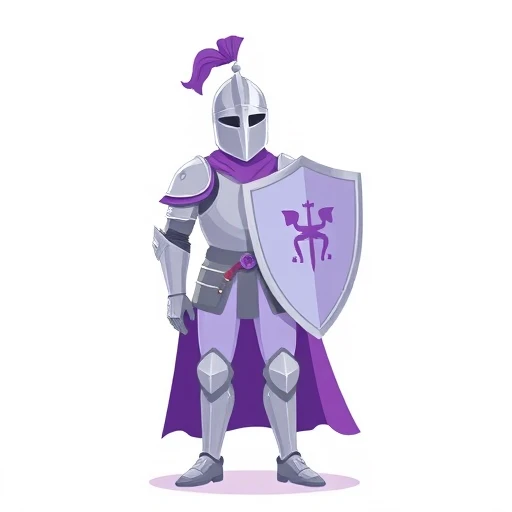
Think of a 'Will' (determination) and a 'Helmet' (protection). A William is a person with the 'Will' to wear a 'Helmet' to protect others.
视觉联想
Imagine a knight in shining armor named William, holding a shield that says 'Will'.
Word Web
挑战
Try to find three famous people named William in three different fields (e.g., history, music, sports).
词源
Derived from the Old High German name Willahelm. It was introduced to England by the Normans in the 11th century.
原始含义: Willa (will/desire) + Helm (helmet/protection), meaning 'resolute protector'.
Germanic文化背景
No specific sensitivities, though some may prefer specific nicknames over others.
A very common name that spans all social classes and regions.
在生活中练习
真实语境
Introductions
- My name is William.
- This is William.
- Nice to meet you, William.
- Do you go by William or Will?
History Class
- William the Conqueror
- The reign of William III
- William of Orange
- The Norman Conquest
Literature
- William Shakespeare
- William Wordsworth
- William Faulkner
- William Blake
Royal News
- Prince William
- The Prince of Wales
- William and Catherine
- Royal duties
Family
- Uncle William
- Grandpa Bill
- Little Billy
- William's birthday
对话开场白
"Do you know anyone named William who goes by a funny nickname?"
"Who is the most famous William in history, in your opinion?"
"Is the name William common in your home country or culture?"
"If you had to choose between the nicknames Will and Bill, which would you pick?"
"Why do you think the name William has remained popular for over a thousand years?"
日记主题
Write about a fictional character named William. What is his personality like?
Describe the historical impact of William the Conqueror on the English language.
If you could change your name to William (or a variation), would you? Why or why not?
Reflect on the meaning 'resolute protector'. How can someone embody this today?
Compare the names William and Liam. Which one do you prefer and why?
常见问题
10 个问题Yes, William has been one of the most popular male names in the English-speaking world for centuries. It consistently ranks in the top 20 names for boys in the US and UK.
The name William comes from the Germanic words 'wil' (will) and 'helm' (helmet), meaning 'resolute protector' or 'determined guardian'.
The most common nicknames are Will, Bill, Billy, and Willy. Liam is also a popular variant that is now used as an independent name.
It is spelled W-I-L-L-I-A-M. A common mistake is to forget the second 'l' or to swap the 'i' and 'a' at the end.
There are many, but William Shakespeare (the playwright) and William the Conqueror (the king) are perhaps the most historically significant.
Historically, yes. It originated as an Irish short form of 'Uilliam' (William). However, today it is widely used as a standalone name.
William is traditionally a male name. The female versions are usually Wilhelmina, Willa, or Billie.
In the Middle Ages, people often swapped the first letters of names to create nicknames. 'Will' became 'Bill', just as 'Richard' became 'Dick'.
Yes, there have been four Kings of England named William, and the current Prince of Wales is named William.
It is pronounced as two syllables: 'WIL-yum'. The 'ia' sound is blended together quickly.
自我测试 200 个问题
Write a sentence using the name William as the subject.
Well written! Good try! Check the sample answer below.
Write a sentence using the possessive form of William.
Well written! Good try! Check the sample answer below.
Write a short paragraph about a famous person named William.
Well written! Good try! Check the sample answer below.
Explain the meaning of the name William in your own words.
Well written! Good try! Check the sample answer below.
Write a dialogue between two friends, one of whom is named William.
Well written! Good try! Check the sample answer below.
Describe the historical importance of William the Conqueror.
Well written! Good try! Check the sample answer below.
List three nicknames for William and use one in a sentence.
Well written! Good try! Check the sample answer below.
Write a sentence using the name William in a formal context.
Well written! Good try! Check the sample answer below.
Compare the name William with its modern variant Liam.
Well written! Good try! Check the sample answer below.
Write a sentence using 'William the Conqueror'.
Well written! Good try! Check the sample answer below.
Write a sentence about Prince William.
Well written! Good try! Check the sample answer below.
Write a sentence about William Shakespeare.
Well written! Good try! Check the sample answer below.
Write a sentence about a character named William in a story.
Well written! Good try! Check the sample answer below.
Explain why 'Bill' is a nickname for William.
Well written! Good try! Check the sample answer below.
Write a sentence using the plural form 'Williams'.
Well written! Good try! Check the sample answer below.
Write a sentence using 'Sweet William'.
Well written! Good try! Check the sample answer below.
Write a sentence using the name William in the past tense.
Well written! Good try! Check the sample answer below.
Write a sentence using the name William in a question.
Well written! Good try! Check the sample answer below.
Write a sentence about William of Orange.
Well written! Good try! Check the sample answer below.
Write a sentence using the name William as a middle name.
Well written! Good try! Check the sample answer below.
Pronounce the name 'William' clearly.
Read this aloud:
你说的:
Speech recognition is not supported in your browser. Try Chrome or Edge.
Introduce yourself using the name William (pretend it's your name).
Read this aloud:
你说的:
Speech recognition is not supported in your browser. Try Chrome or Edge.
Say 'William Shakespeare' three times quickly.
Read this aloud:
你说的:
Speech recognition is not supported in your browser. Try Chrome or Edge.
Ask someone if they know anyone named William.
Read this aloud:
你说的:
Speech recognition is not supported in your browser. Try Chrome or Edge.
Explain the meaning of the name William to a friend.
Read this aloud:
你说的:
Speech recognition is not supported in your browser. Try Chrome or Edge.
Say 'William the Conqueror' with correct emphasis.
Read this aloud:
你说的:
Speech recognition is not supported in your browser. Try Chrome or Edge.
Discuss your favorite famous William.
Read this aloud:
你说的:
Speech recognition is not supported in your browser. Try Chrome or Edge.
Pronounce the nickname 'Bill' and 'Will'.
Read this aloud:
你说的:
Speech recognition is not supported in your browser. Try Chrome or Edge.
Tell a short story about a boy named William.
Read this aloud:
你说的:
Speech recognition is not supported in your browser. Try Chrome or Edge.
Ask someone if they prefer the name William or Liam.
Read this aloud:
你说的:
Speech recognition is not supported in your browser. Try Chrome or Edge.
Say 'William Jefferson Clinton' clearly.
Read this aloud:
你说的:
Speech recognition is not supported in your browser. Try Chrome or Edge.
Describe the personality of someone you might imagine named William.
Read this aloud:
你说的:
Speech recognition is not supported in your browser. Try Chrome or Edge.
Say 'Sweet William' and explain what it is.
Read this aloud:
你说的:
Speech recognition is not supported in your browser. Try Chrome or Edge.
Pronounce the French version 'Guillaume'.
Read this aloud:
你说的:
Speech recognition is not supported in your browser. Try Chrome or Edge.
Pronounce the Spanish version 'Guillermo'.
Read this aloud:
你说的:
Speech recognition is not supported in your browser. Try Chrome or Edge.
Say 'William of Orange' and mention his role in history.
Read this aloud:
你说的:
Speech recognition is not supported in your browser. Try Chrome or Edge.
Pronounce 'William' and 'Williams' to show the difference.
Read this aloud:
你说的:
Speech recognition is not supported in your browser. Try Chrome or Edge.
Ask a question about William Shakespeare's plays.
Read this aloud:
你说的:
Speech recognition is not supported in your browser. Try Chrome or Edge.
Say 'William the Silent' and explain why he was called that.
Read this aloud:
你说的:
Speech recognition is not supported in your browser. Try Chrome or Edge.
Discuss why William is a popular name for kings.
Read this aloud:
你说的:
Speech recognition is not supported in your browser. Try Chrome or Edge.
Listen to the sentence: 'William is my best friend.' Who is the best friend?
Listen to the sentence: 'William's car is red.' What color is the car?
Listen to the sentence: 'William Shakespeare was born in 1564.' When was he born?
Listen to the sentence: 'Prince William visited the hospital today.' Who visited the hospital?
Listen to the sentence: 'The name William means resolute protector.' What does the name mean?
Listen to the sentence: 'William the Conqueror won the Battle of Hastings.' Which battle did he win?
Listen to the sentence: 'I've known William for ten years.' How long have they known each other?
Listen to the sentence: 'William's favorite book is Hamlet.' What is his favorite book?
Listen to the sentence: 'William of Orange led the revolution.' Who led the revolution?
Listen to the sentence: 'Sweet William is a beautiful flower.' What is Sweet William?
Listen to the sentence: 'William Faulkner won the Nobel Prize.' What prize did he win?
Listen to the sentence: 'There are three Williams in the class.' How many Williams are there?
Listen to the sentence: 'William's dog is named Max.' What is the dog's name?
Listen to the sentence: 'William the Silent was a Dutch leader.' What was his nationality?
Listen to the sentence: 'William and Mary founded the college.' Who founded the college?
/ 200 correct
Perfect score!
Summary
William is a versatile and historically rich name that signifies strength and protection. For example: 'William the Conqueror was a pivotal figure in British history.'
- William is a timeless male name of Germanic origin meaning 'resolute protector'.
- It is historically significant, especially in England following the Norman Conquest of 1066.
- Common nicknames include Will, Bill, Billy, and the modern variant Liam.
- The name is widely used in formal, historical, and casual contexts globally.
The 'i' before 'a'
Always remember that in William, the 'i' comes before the 'a'. Think of 'I am William' to remember the 'iam' ending.
Ask for Nicknames
If you meet a William, it's polite to ask, 'Do you go by William or a nickname?' This shows respect for their personal identity.
1066 Connection
Remember the year 1066. That's when William the Conqueror brought the name to England, making it famous.
Capitalize Always
Never write 'william' with a small 'w'. Names are proper nouns and always need a capital letter.