battlefield في 30 ثانية
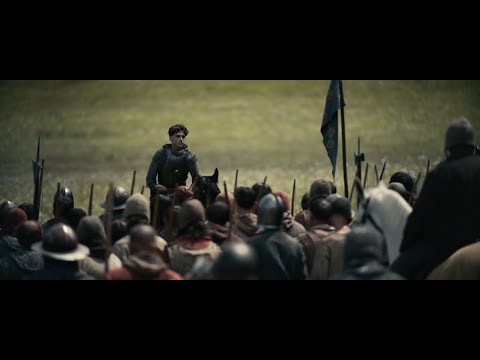
- A battlefield is literally the ground where a military fight occurs, historically often an open field where armies met for combat.
- Metaphorically, it describes any area of intense struggle or competition, such as the 'political battlefield' or the 'corporate battlefield'.
- The word is a compound noun formed from 'battle' and 'field', and it is almost always used with the preposition 'on'.
- It carries a tone of seriousness and high stakes, making it suitable for describing significant conflicts in history, business, or personal life.
The term battlefield is a compound noun that primarily refers to the physical ground where a battle is fought. Historically, this meant open fields, hillsides, or plains where armies met to engage in combat. However, the modern application of the word has expanded significantly beyond the literal geography of war. In contemporary English, a battlefield can be any environment characterized by intense struggle, competition, or conflict. This includes the 'political battlefield' where parties vie for power, the 'corporate battlefield' where companies compete for market dominance, and even the 'digital battlefield' where cyber warfare and information campaigns occur. Understanding this word requires recognizing both its visceral, historical roots and its metaphorical versatility in describing human conflict in all its forms.
- Literal Meaning
- The specific geographical area where military forces engage in combat during a war or conflict. It implies a defined space where physical violence occurs between opposing groups.
The historian walked across the silent battlefield, imagining the chaos that had occurred there centuries ago.
When using the word metaphorically, it often conveys a sense of high stakes and aggressive competition. For instance, a courtroom is frequently described as a battlefield for lawyers, where the weapons are evidence and rhetoric rather than swords and guns. This usage highlights the adversarial nature of the situation. It suggests that the participants are not merely collaborating or discussing, but are actively trying to defeat one another. The word carries a weight of seriousness; you wouldn't usually call a friendly board game a battlefield unless you were being hyperbolic or humorous. It is reserved for situations where the outcome has significant consequences for the winners and losers.
- Metaphorical Usage
- An area of activity or conflict that is not military but involves a similar level of intensity, competition, or struggle between opposing sides.
In the modern economy, the smartphone market has become a global battlefield for tech giants.
The evolution of the word also reflects changes in technology and society. In the past, a battlefield was a clear, physical location. Today, we speak of the 'battlefield of ideas,' suggesting that the most important conflicts happen in the realm of philosophy, ethics, and public opinion. This abstract usage is very common in academic and journalistic writing. It implies that ideas are in competition for survival and dominance, much like soldiers on a field. Furthermore, the term is often used in the context of medicine, specifically regarding the 'battlefield' of the human body fighting a disease, where the immune system and pathogens engage in a life-or-death struggle.
- Abstract Context
- The conceptual space where conflicting ideologies, theories, or scientific approaches compete for acceptance or dominance.
Social media has transformed into a primary battlefield for political discourse and public influence.
In summary, 'battlefield' is a powerful word that bridges the gap between physical reality and metaphorical struggle. Whether describing the muddy trenches of World War I or the high-pressure environment of a corporate merger, it evokes images of strategy, courage, loss, and victory. It is a word that demands respect for the intensity of the situation it describes. When you use it, you are signaling to your audience that the topic at hand is not just a simple disagreement, but a significant confrontation with meaningful stakes.
The surgeon felt that the operating table was his personal battlefield against death.
The ruins of the ancient city served as a haunting battlefield for archaeologists seeking the truth about the past.
Using 'battlefield' correctly involves understanding its grammatical role as a noun and its common prepositional pairings. Most frequently, we use the preposition 'on' when referring to a physical or metaphorical location. For example, 'Soldiers fought bravely on the battlefield.' This indicates the surface or area where the action occurs. In more abstract contexts, we might use 'in' to describe being within a specific state of conflict, such as 'He found himself in the battlefield of corporate ethics.' However, 'on' remains the more standard and versatile choice for most descriptions of the site of conflict.
- Prepositional Usage
- The word is typically preceded by 'on' (on the battlefield) to denote location, or 'across' (across the battlefield) to denote movement or extent.
The general surveyed the battlefield from a distant ridge, looking for weaknesses in the enemy line.
Adjectives play a crucial role in specifying the nature of the battlefield. You can describe a 'bloody battlefield' to emphasize the human cost, a 'frozen battlefield' to highlight the environmental conditions, or a 'political battlefield' to shift the meaning to the realm of governance. Compound nouns are also common, such as 'battlefield promotion' (a promotion given during active combat) or 'battlefield medicine' (medical care provided under combat conditions). These terms have specific technical meanings in military and historical contexts but are sometimes used figuratively in business to describe rapid advancement or emergency problem-solving.
- Adjectival Modifiers
- Common adjectives include: literal (bloody, muddy, ancient, remote) and figurative (political, economic, ideological, digital).
The internet has become the new battlefield for global influence and disinformation campaigns.
In narrative writing, 'battlefield' is often used to set the scene and establish a mood of tension or solemnity. Authors might describe the 'smell of the battlefield' or the 'silence of the battlefield' after the fighting has ceased. This helps to create a vivid sensory experience for the reader. In academic writing, the term is used more precisely to define the scope of a conflict or the parameters of a study. For example, a sociologist might write about the 'battlefield of urban gentrification,' where different social classes compete for space and resources in a city. Here, the word serves as a powerful analytical tool to frame the social dynamics as a conflict.
- Narrative and Academic Use
- Narratively, it creates atmosphere; academically, it frames complex social or economic interactions as competitive struggles.
Historians often debate the exact boundaries of the battlefield based on archaeological findings.
When using 'battlefield' in professional settings, it is important to be mindful of the intensity it conveys. Describing a minor disagreement as a 'battlefield' might seem overly dramatic or aggressive. However, in high-stakes negotiations or major industry shifts, the term is perfectly appropriate to describe the environment. It signals that the situation requires strategic thinking, resilience, and a clear understanding of the 'enemy' or competition. By choosing this word, you are emphasizing that the situation is not just a task, but a significant challenge that requires a 'warrior' mindset to overcome.
The boardroom felt like a battlefield as the two CEOs negotiated the terms of the hostile takeover.
The scientist viewed the laboratory as a battlefield where she fought against the mysteries of the virus.
The word 'battlefield' is a staple in several specific domains, each using it with a slightly different nuance. In news reporting, particularly during times of international conflict, you will hear it constantly. Reporters talk about 'developments on the battlefield' or 'the changing situation on the battlefield' to provide updates on military progress. In this context, it is a literal term used to describe the front lines of a war. It conveys a sense of urgency and danger, grounding the abstract concept of 'war' in a specific, physical place where events are unfolding in real-time.
- News and Journalism
- Used literally to report on military actions and figuratively to describe intense political or social conflicts.
The news anchor reported that the battlefield had shifted to the eastern outskirts of the city.
In the world of business and marketing, 'battlefield' is a common metaphor. You'll hear it in strategy meetings, where executives discuss the 'competitive battlefield.' Here, it refers to the market where different brands are fighting for the attention and money of consumers. This usage emphasizes the aggressive nature of business competition. It suggests that companies must have a 'battle plan' and be prepared to defend their 'territory' (market share) against 'attacks' from competitors. This martial language is used to motivate employees and frame business challenges as high-stakes contests that require courage and strategic brilliance.
- Business and Strategy
- A metaphorical term for the marketplace where companies compete for dominance, customers, and resources.
In the tech industry, the battlefield for talent is more intense than ever before.
History documentaries and educational programs are another place where 'battlefield' is frequently heard. Historians use the term to describe the sites of famous historical events, such as the 'battlefield of Gettysburg' or the 'battlefields of the Somme.' In these contexts, the word is often used with a sense of reverence and somber reflection. It is not just a piece of land; it is a place where history was made and where many lives were lost. The word helps to transport the audience back in time, making the historical narrative more tangible and emotionally resonant.
- History and Education
- Refers to preserved historical sites where significant military engagements took place, often used in a commemorative or analytical way.
Thousands of tourists visit the battlefield every year to pay their respects to the fallen.
Finally, the word is common in the world of sports, particularly in sports with a high degree of physical contact or intense strategic competition, like American football or chess. Commentators might refer to the 'battlefield of the gridiron' or the 'battlefield of the chessboard.' While this is clearly metaphorical, it serves to elevate the importance of the game and highlight the struggle between the opposing teams or players. It adds a layer of drama and intensity to the sporting event, making it feel like more than just a game.
The tennis court became a battlefield as the two rivals played a grueling five-hour match.
For the debate team, the stage was their battlefield, and words were their primary weapons.
One of the most common mistakes when using 'battlefield' is confusing it with the word 'battleground.' While they are often used interchangeably, there is a subtle difference in their typical usage. 'Battlefield' almost always refers to the specific, immediate area where fighting is happening or has happened. 'Battleground,' on the other hand, is often used more broadly to describe a region or a state where a conflict (often political) is being fought. For example, in US politics, 'swing states' are often called 'battleground states,' but you would rarely hear them called 'battlefield states.' Understanding this nuance helps in choosing the word that fits the scale of the conflict you are describing.
- Battlefield vs. Battleground
- 'Battlefield' is usually more specific and immediate; 'battleground' is often broader and more regional, especially in political contexts.
Correct: The soldiers were exhausted after days on the battlefield. (Specific location)
Another mistake involves the misuse of prepositions. As mentioned before, 'on the battlefield' is the most common and natural-sounding phrase. Using 'at the battlefield' is less common and can sound slightly off to a native speaker, unless you are referring to a specific point or a visitor center (e.g., 'Meet me at the battlefield visitor center'). Similarly, 'in the battlefield' is usually reserved for metaphorical contexts where you are 'in' a state of conflict. Using the wrong preposition can make your English sound less fluent, so it's best to stick with 'on' for literal locations.
- Preposition Pitfalls
- Avoid 'at the battlefield' for general location; use 'on the battlefield' instead. Use 'in' only for specific metaphorical immersion.
Incorrect: We stood at the battlefield and looked at the monuments. (Better: 'on the battlefield')
A third common error is over-metaphorizing the word. Because 'battlefield' is such a strong, evocative word, using it for trivial or low-stakes situations can come across as hyperbolic or even silly. For example, describing a minor disagreement over where to eat lunch as a 'battlefield' is likely to be seen as an exaggeration. It's important to match the intensity of the word to the intensity of the situation. Reserve 'battlefield' for conflicts that involve significant struggle, competition, or consequences. This ensures that the word retains its power and impact when you actually need it.
- Inappropriate Intensity
- Don't use 'battlefield' for minor or friendly disagreements; it can sound melodramatic or confusing.
Over-dramatic: The kitchen was a battlefield because we couldn't decide on a pizza topping.
Finally, some learners might confuse 'battlefield' with 'battle.' Remember that 'battle' is the event (the fight itself), while 'battlefield' is the location (where the fight happens). You can 'win a battle,' but you 'win on the battlefield.' You can 'fight a battle,' but you 'fight on a battlefield.' Confusing the event with the location can lead to grammatically incorrect sentences like 'The battlefield lasted for three days.' Instead, you should say 'The battle lasted for three days on that battlefield.' Keeping this distinction clear will improve the accuracy of your descriptions of conflict.
Correct: The battlefield was littered with debris after the intense battle ended.
Incorrect: The battlefield was very violent and lasted many hours. (Better: 'The battle...')
While 'battlefield' is a very specific and powerful word, there are several alternatives that might be more appropriate depending on the context. 'Battleground' is the most direct synonym, often used for broader or political conflicts. 'Combat zone' is a more modern, military term that often implies an ongoing and dangerous area of active fighting. It is frequently used in news reports and military briefings. 'Front line' refers to the most advanced position of an army, where the most direct fighting occurs. Figuratively, 'front line' is often used to describe people who are directly involved in a difficult situation, such as 'front-line healthcare workers.'
- Battlefield vs. Combat Zone
- 'Battlefield' can be historical or metaphorical; 'combat zone' is typically contemporary and emphasizes active danger and military operations.
The reporter was embedded with the troops in a dangerous combat zone.
In metaphorical contexts, you might choose words like 'arena,' 'theater,' or 'forum.' 'Arena' suggests a place of public competition or debate, such as the 'political arena.' It carries a sense of spectacle, as if there is an audience watching the conflict. 'Theater' (often used in the military phrase 'theater of war') refers to a large-scale area of operations. Figuratively, it can describe a specific area of activity, like the 'theater of international diplomacy.' 'Forum' is a more peaceful alternative, suggesting a place where ideas are exchanged and debated, though it can still involve significant disagreement.
- Battlefield vs. Arena
- 'Battlefield' emphasizes the struggle and potential for loss; 'arena' emphasizes the public nature and the competitive aspect of the conflict.
The courtroom is the arena where legal disputes are finally settled.
For more specific or technical contexts, you might use terms like 'theater of operations,' 'war zone,' or 'engagement area.' 'Theater of operations' is a formal military term for the entire area where a war is being conducted. 'War zone' is a more general term for any area affected by war, including civilian areas. 'Engagement area' is a tactical term used to describe a specific spot where a unit intends to trap and destroy an enemy force. These terms provide more precision but are less common in general English than 'battlefield.'
- Battlefield vs. War Zone
- 'Battlefield' usually refers to where the actual fighting happens; 'war zone' is a broader term for any area impacted by the conflict.
The entire region was declared a war zone, making it difficult for aid to reach civilians.
Finally, consider the word 'minefield.' While not a direct synonym for 'battlefield,' it is often used metaphorically to describe a situation that is full of hidden dangers or sensitive issues. For example, 'navigating the company's social dynamics can be a political minefield.' This emphasizes the need for caution and careful maneuvering, whereas 'battlefield' emphasizes the direct confrontation. Choosing between these words depends on whether you want to highlight the open conflict or the hidden risks of a situation.
The diplomat had to navigate a minefield of conflicting interests to reach an agreement.
The historical battlefield has now been turned into a peaceful park for the community.
How Formal Is It?
حقيقة ممتعة
Before the word 'battlefield' became common, English speakers often used the term 'field of battle' or simply 'the field.' The use of 'field' to mean a place of war is so old that it gave us the military rank of 'Field Marshal.'
دليل النطق
- Pronouncing the 't' as a hard 't' in American English (it should be flapped).
- Shortening the 'ee' sound in 'field' to a short 'i'.
- Stressing the second syllable instead of the first.
- Merging the two 'l' sounds into one indistinct sound.
- Dropping the 'd' at the end of the word.
مستوى الصعوبة
The word is easy to recognize as a compound, but metaphorical uses in complex texts can be more challenging.
Requires knowledge of correct prepositions and an understanding of when a metaphor is appropriate versus hyperbolic.
Common in news and business, making it a useful word for intermediate speakers to master.
Clear pronunciation and frequent use in media make it relatively easy to identify in speech.
ماذا تتعلّم بعد ذلك
المتطلبات الأساسية
تعلّم لاحقاً
متقدم
قواعد يجب معرفتها
Compound Nouns
Battlefield is formed by joining 'battle' and 'field' to create a new meaning.
Prepositional Phrases of Location
We use 'on' for surfaces and areas: 'on the battlefield'.
Countable Nouns
It can be singular (a battlefield) or plural (many battlefields).
Metaphorical Extension
Using concrete nouns (battlefield) to describe abstract concepts (politics).
Adjective-Noun Agreement
The adjective 'bloody' correctly modifies the noun 'battlefield'.
أمثلة حسب المستوى
The soldiers are on the battlefield.
Les soldats sont sur le champ de bataille.
Simple subject-verb-prepositional phrase structure.
Is this a battlefield?
Est-ce un champ de bataille ?
Basic question form using 'is'.
The battlefield is very big.
Le champ de bataille est très grand.
Adjective 'big' modifying the noun 'battlefield'.
We can see the battlefield from here.
Nous pouvons voir le champ de bataille d'ici.
Use of the modal verb 'can'.
There were many horses on the battlefield.
Il y avait beaucoup de chevaux sur le champ de bataille.
Past tense 'there were' with a plural noun.
The battlefield is quiet now.
Le champ de bataille est calme maintenant.
Present tense with the adverb 'now'.
He found an old sword on the battlefield.
Il a trouvé une vieille épée sur le champ de bataille.
Simple past tense of 'find'.
Don't go onto the battlefield.
N'allez pas sur le champ de bataille.
Imperative negative form.
The general studied the map of the battlefield.
Le général a étudié la carte du champ de bataille.
Noun phrase 'map of the battlefield'.
They built a monument on the old battlefield.
Ils ont construit un monument sur l'ancien champ de bataille.
Use of the adjective 'old' to modify 'battlefield'.
The battlefield was covered in thick fog.
Le champ de bataille était couvert d'un brouillard épais.
Passive voice 'was covered in'.
Many brave people fought on this battlefield.
Beaucoup de gens courageux se sont battus sur ce champ de bataille.
Adjective 'brave' modifying 'people'.
It is difficult to walk across the muddy battlefield.
Il est difficile de traverser le champ de bataille boueux.
Infinitive phrase 'to walk across'.
The museum is located near the battlefield.
Le musée est situé près du champ de bataille.
Prepositional phrase 'near the battlefield'.
History books tell us about the famous battlefield.
Les livres d'histoire nous parlent du célèbre champ de bataille.
Present simple tense for general truths.
The battlefield became a peaceful park after the war.
Le champ de bataille est devenu un parc paisible après la guerre.
Linking verb 'became' showing a change of state.
The soldiers received a battlefield promotion for their courage.
Les soldats ont reçu une promotion sur le champ de bataille pour leur courage.
Compound noun 'battlefield promotion'.
In business, the market can often feel like a battlefield.
En affaires, le marché peut souvent ressembler à un champ de bataille.
Simile using 'like a battlefield'.
Doctors often have to perform surgery on the battlefield.
Les médecins doivent souvent opérer sur le champ de bataille.
Modal 'have to' expressing necessity.
The political battlefield is full of surprises during an election.
Le champ de bataille politique est plein de surprises pendant une élection.
Metaphorical use of 'political battlefield'.
They are trying to preserve the battlefield as a historical site.
Ils essaient de préserver le champ de bataille en tant que site historique.
Present continuous tense 'are trying'.
The general's strategy was to control the high ground on the battlefield.
La stratégie du général était de contrôler les hauteurs sur le champ de bataille.
Possessive 'general's' and infinitive 'to control'.
He wrote a book about his experiences on the battlefield.
Il a écrit un livre sur ses expériences sur le champ de bataille.
Prepositional phrase 'about his experiences'.
The battlefield was littered with the remains of broken equipment.
Le champ de bataille était jonché de restes d'équipement brisé.
Passive voice 'was littered with'.
The courtroom transformed into a battlefield as the trial reached its climax.
La salle d'audience s'est transformée en champ de bataille alors que le procès atteignait son apogée.
Dynamic verb 'transformed' showing a dramatic change.
Technological innovation has moved the battlefield into cyberspace.
L'innovation technologique a déplacé le champ de bataille dans le cyberespace.
Present perfect tense 'has moved'.
The historian provided a detailed analysis of the battlefield tactics.
L'historien a fourni une analyse détaillée des tactiques du champ de bataille.
Noun phrase 'battlefield tactics'.
Effective leadership is crucial when you are on the battlefield.
Un leadership efficace est crucial quand on est sur le champ de bataille.
Adjective 'crucial' followed by a subordinate clause.
The battlefield of ideas is where the most important conflicts occur.
Le champ de bataille des idées est l'endroit où se produisent les conflits les plus importants.
Abstract metaphor 'battlefield of ideas'.
They conducted an archaeological survey to locate the exact boundaries of the battlefield.
Ils ont mené une étude archéologique pour localiser les limites exactes du champ de bataille.
Purpose clause 'to locate...'.
The soldiers were trained to adapt to the rapidly changing conditions on the battlefield.
Les soldats ont été entraînés à s'adapter aux conditions changeant rapidement sur le champ de bataille.
Adverb-adjective combination 'rapidly changing'.
The documentary explores the human cost of the conflict on the battlefield.
Le documentaire explore le coût humain du conflit sur le champ de bataille.
Noun phrase 'human cost of the conflict'.
The ideological battlefield of the twentieth century was defined by the clash between capitalism and communism.
Le champ de bataille idéologique du XXe siècle a été défini par l'affrontement entre le capitalisme et le communisme.
Complex subject with multiple modifiers.
In the digital age, social media has become a primary battlefield for disinformation campaigns.
À l'ère numérique, les médias sociaux sont devenus un champ de bataille principal pour les campagnes de désinformation.
Prepositional phrase 'In the digital age' setting the context.
The surgeon viewed the operating theater as a personal battlefield against mortality.
Le chirurgien considérait la salle d'opération comme un champ de bataille personnel contre la mortalité.
Metaphorical use with 'viewed... as'.
The report highlights the challenges of providing humanitarian aid in an active battlefield.
Le rapport souligne les défis de la fourniture d'une aide humanitaire sur un champ de bataille actif.
Gerund phrase 'providing humanitarian aid'.
The battlefield was not just a physical space but a site of profound cultural trauma.
Le champ de bataille n'était pas seulement un espace physique mais un site de traumatisme culturel profond.
Correlative conjunction 'not just... but (also)'.
Strategic ambiguity can be a powerful tool on the political battlefield.
L'ambiguïté stratégique peut être un outil puissant sur le champ de bataille politique.
Abstract noun phrase 'Strategic ambiguity'.
The ruins of the city served as a haunting battlefield during the final months of the war.
Les ruines de la ville ont servi de champ de bataille obsédant pendant les derniers mois de la guerre.
Verb 'served as' indicating a function.
The artist sought to capture the chaotic energy of the battlefield in her abstract paintings.
L'artiste a cherché à capturer l'énergie chaotique du champ de bataille dans ses peintures abstraites.
Infinitive phrase 'to capture...'.
The ontological battlefield of modern philosophy is increasingly preoccupied with the nature of consciousness.
Le champ de bataille ontologique de la philosophie moderne est de plus en plus préoccupé par la nature de la conscience.
Highly abstract subject and passive construction.
Asymmetric warfare has fundamentally altered the traditional conception of the battlefield.
La guerre asymétrique a fondamentalement modifié la conception traditionnelle du champ de bataille.
Adverb 'fundamentally' modifying the verb 'altered'.
The preservation of the battlefield is a contentious issue, pitting economic development against historical sanctity.
La préservation du champ de bataille est une question litigieuse, opposant le développement économique à la sacralité historique.
Present participle phrase 'pitting... against...'.
The novel portrays the internal psyche as a fractured battlefield where competing desires vie for dominance.
Le roman dépeint le psychisme interne comme un champ de bataille fracturé où des désirs concurrents luttent pour la domination.
Relative clause 'where competing desires vie...'.
The geopolitical battlefield is constantly reshaped by the shifting alliances of global superpowers.
Le champ de bataille géopolitique est constamment remodelé par les alliances changeantes des superpuissances mondiales.
Passive voice 'is constantly reshaped'.
The discourse surrounding the event transformed the site into a symbolic battlefield for national identity.
Le discours entourant l'événement a transformé le site en un champ de bataille symbolique pour l'identité nationale.
Complex noun phrase 'discourse surrounding the event'.
The legal battlefield was characterized by a series of attrition-based maneuvers designed to exhaust the opponent.
Le champ de bataille juridique était caractérisé par une série de manœuvres d'usure conçues pour épuiser l'adversaire.
Past participle phrase 'designed to exhaust...'.
The battlefield of the future may well be defined by autonomous systems and algorithmic decision-making.
Le champ de bataille du futur pourrait bien être défini par des systèmes autonomes et une prise de décision algorithmique.
Modal 'may well be' expressing a strong possibility.
تلازمات شائعة
العبارات الشائعة
— To make a situation fair for everyone involved. It suggests removing unfair advantages.
New regulations were introduced to level the battlefield for small businesses.
— A situation where there are many competitors fighting for the same goal. It implies high competition.
The streaming service market is becoming a very crowded battlefield.
— To give up or stop competing in a difficult situation. It often implies a sense of defeat.
The company decided to abandon the battlefield after losing millions of dollars.
— To be much stronger or more successful than all the competitors in a situation.
The new tech giant began to dominate the digital battlefield within months.
— A situation where the conditions or the 'rules' of the conflict are constantly changing.
Companies must be agile to survive on the shifting battlefield of global trade.
— The difficult and often chaotic environment in which a task must be performed.
The emergency team worked under battlefield conditions to save the victims.
— The specific area or topic where someone decides to have a confrontation or competition.
The lawyer made the technical details of the contract his chosen battlefield.
— To move away from a conflict or competition, often to regroup or avoid further loss.
The politician chose to retreat from the battlefield after the scandal broke.
— The physical remains and mess left over after a conflict has ended.
The cleanup crew spent weeks removing the battlefield debris from the city streets.
— A situation where someone is fighting for a cause or a goal without any support from others.
The whistleblower felt like she was on a lonely battlefield against the corporation.
يُخلط عادةً مع
Battleground is often used for broader or political regions (e.g., battleground states), while battlefield is more localized and immediate.
Combat zone specifically implies active, modern military fighting and danger, whereas battlefield can be historical or metaphorical.
Arena emphasizes public competition and spectacle, while battlefield emphasizes the struggle, conflict, and potential for loss.
تعبيرات اصطلاحية
— A famous saying (and song title) suggesting that romantic relationships can be full of conflict and struggle.
After her third breakup this year, she sighed and said, 'Love is a battlefield.'
Informal/Pop Culture— To fail or be defeated while actively trying to achieve something difficult. It implies a heroic effort.
He was determined to see the project through, even if he had to die on the battlefield.
Metaphorical/Dramatized— A difficult situation or conflict that a person has created for themselves through their own actions.
By lying to his boss, he created a battlefield of his own making.
Neutral— To begin a conflict or competition actively. It suggests a proactive start to a struggle.
The two companies are ready to take to the battlefield over the new patent.
Neutral— The internal struggle a person has with their own thoughts, doubts, or fears.
Anxiety can turn your everyday life into a battlefield of the mind.
Psychological/Spiritual— To achieve a small victory but lose the overall control or the long-term advantage of the situation.
They won the initial lawsuit, but they lost the battlefield of public opinion.
Strategic— To remove all obstacles or competitors from a situation so that one can proceed freely.
The merger was designed to clear the battlefield of any significant rivals.
Business/Strategic— A phrase used to indicate that all the preparations for a conflict or competition are complete.
The lawyers have filed their papers; the battlefield is set for the trial tomorrow.
Dramatic— A situation or place that still shows the negative effects of a past conflict.
The company's reputation remained a scarred battlefield long after the crisis ended.
Metaphorical— To confront an opponent directly in a formal or recognized way.
The two chess masters will meet on the battlefield of the championship final.
Neutralسهل الخلط
They both refer to places of conflict.
Battlefield is usually a specific site of a physical fight. Battleground is often used for larger areas of political or social struggle.
The soldiers fought on the battlefield, but the entire state was a political battleground.
Both describe areas of war.
A war zone is a broad area affected by war (including cities). A battlefield is the specific spot where the fighting happens.
The entire country was a war zone, but the battlefield was limited to the valley.
Both relate to the location of fighting.
The front line is the very edge of an army's position. The battlefield is the whole area where the two armies are fighting.
He was sent to the front line on the eastern edge of the battlefield.
Both can refer to military areas.
A theater (of war) is a massive region (like a whole continent). A battlefield is a much smaller, specific location.
The European theater contained many different battlefields.
Both are used metaphorically for competition.
Arena suggests a controlled, public space for competition (like sports). Battlefield suggests a more chaotic and serious conflict.
The political arena became a battlefield as the candidates began to attack each other.
أنماط الجُمل
The [noun] is on the battlefield.
The soldier is on the battlefield.
They [verb] on the [adjective] battlefield.
They fought on the old battlefield.
The [noun] can feel like a battlefield.
The market can feel like a battlefield.
It is [adjective] to [verb] on the battlefield.
It is difficult to lead on the battlefield.
The [adjective] battlefield of [noun] is [verb-ed] by [noun].
The ideological battlefield of politics is shaped by media.
The [noun] serves as a [adjective] battlefield for [noun].
The site serves as a symbolic battlefield for national identity.
He received a battlefield [noun].
He received a battlefield promotion.
The battlefield was [verb-ed] with [noun].
The battlefield was littered with debris.
عائلة الكلمة
الأسماء
الأفعال
الصفات
مرتبط
كيفية الاستخدام
Common in news, history, and business contexts.
-
Using 'at the battlefield' for general location.
→
on the battlefield
We use 'on' for surfaces and areas of land. 'At' is only used for specific points or facilities like a visitor center.
-
Saying 'The battlefield lasted three days.'
→
The battle lasted three days on the battlefield.
A battlefield is a place (noun), not an event. It cannot 'last' in time; only the 'battle' can.
-
Confusing 'battlefield' with 'battleground' in political contexts.
→
battleground state
'Battleground' is the standard term for larger political regions, while 'battlefield' is more for specific, immediate sites of conflict.
-
Using 'battlefield' for a minor, friendly disagreement.
→
disagreement or argument
'Battlefield' is a very strong word. Using it for small things is hyperbolic and can be confusing.
-
Shortening the 'ee' sound in 'field'.
→
/fiːld/
The 'ie' in 'field' is a long vowel sound. Shortening it can make the word harder to recognize.
نصائح
Choose the right preposition
Always use 'on the battlefield' when referring to the location. It's the most standard and natural-sounding choice.
Save it for high stakes
Use 'battlefield' for serious conflicts. Using it for minor disagreements can make you sound overly dramatic.
Learn compound terms
Terms like 'battlefield promotion' and 'battlefield medicine' are very common in specific contexts. Learning them will help you sound more fluent.
Use descriptive adjectives
Adjectives like 'bloody,' 'ancient,' 'political,' or 'digital' help to specify the nature of the battlefield you are describing.
Stress the first syllable
Remember to say BAT-tle-field. Correct stress is key to being understood clearly.
Consider cultural sensitivity
Be mindful of using military metaphors around people who have experienced real war. It can sometimes be seen as insensitive.
Don't confuse with 'battle'
A 'battle' is the event; a 'battlefield' is the place. You fight a battle ON a battlefield.
Use 'arena' for public debate
If you want to emphasize the public and competitive aspect without the violence of 'battlefield,' use 'arena' instead.
Listen for flapped 't'
In American English, the 'tt' in 'battlefield' often sounds like a 'd.' Practice listening for this sound.
Visualize the compound
See the word as 'BATTLE' + 'FIELD.' This makes it easier to remember both the spelling and the meaning.
احفظها
وسيلة تذكّر
Think of a BATTLE happening in a big green FIELD. BATTLE + FIELD = BATTLEFIELD. It's the place where the fight grows.
ربط بصري
Imagine a chessboard. Each square is a small part of the battlefield where the pieces (soldiers) fight for control.
Word Web
تحدٍّ
Try to use 'battlefield' in three different ways today: once for a historical place, once for a business situation, and once for a personal struggle.
أصل الكلمة
The word 'battlefield' is a compound noun that first appeared in Middle English. It combines 'battle' (from the Old French 'bataille', meaning a fight or a body of soldiers) and 'field' (from the Old English 'feld', meaning an open area of land). The combination literally describes the open land where a fight occurs.
المعنى الأصلي: A piece of open ground where a military battle is fought.
Germanic (field) and Romance (battle).السياق الثقافي
Be careful when using 'battlefield' metaphorically around veterans or people from war-torn regions, as it might seem insensitive to the reality of physical combat.
Battlefields are often seen as places of 'hallowed ground' (sacred ground) in the US and UK, particularly those from the Civil War and World Wars.
تدرّب في الحياة الواقعية
سياقات واقعية
Military History
- historical battlefield
- battlefield tactics
- preserve the battlefield
- ancient battlefield site
Business Strategy
- competitive battlefield
- market battlefield
- battlefield for talent
- dominate the corporate battlefield
Politics
- political battlefield
- battlefield of public opinion
- ideological battlefield
- legislative battlefield
Medicine
- battlefield medicine
- battlefield of the human body
- emergency battlefield care
- surgical battlefield
Personal Growth
- battlefield of the mind
- internal battlefield
- emotional battlefield
- daily battlefield of life
بدايات محادثة
"Have you ever visited a famous historical battlefield in your country?"
"Do you think the internet has become the most important battlefield for ideas today?"
"In your profession, what does the 'competitive battlefield' look like right now?"
"How do you think battlefield technology has changed the way wars are fought?"
"Do you agree with the saying that 'love is a battlefield'?"
مواضيع للكتابة اليومية
Describe a time when you felt like you were on a 'metaphorical battlefield.' What was the conflict, and how did you handle it?
If you were to visit a historical battlefield, which one would it be and why? What would you hope to learn?
Write about the 'battlefield of the mind.' What are some of the internal struggles you face, and how do you find peace?
How has the concept of a battlefield changed from ancient times to the modern digital age?
Reflect on a situation where you had to 'level the battlefield' for yourself or someone else. What actions did you take?
الأسئلة الشائعة
10 أسئلةNo, 'battlefield' is almost exclusively used as a noun. You cannot 'battlefield' something. You can 'battle' (verb) someone on a 'battlefield' (noun).
The most common and natural phrase is 'on the battlefield.' 'In the battlefield' is sometimes used metaphorically to describe being immersed in a state of conflict, but 'on' is safer for most contexts.
It is a promotion given to a soldier during active combat, usually because they showed great courage or because their superior officer was killed and they had to take command.
You can, but it will sound very dramatic or hyperbolic. It's better to use it for serious or high-stakes conflicts to maintain the word's impact.
A battlefield is usually a specific, physical site of a fight. A battleground is often a larger region or a metaphorical area of struggle, especially in politics (e.g., 'battleground states').
It is one word. It is a compound noun formed by joining 'battle' and 'field' together.
You use it to describe a highly competitive market or industry. For example: 'The smartphone industry is a global battlefield for innovation.'
It refers to the internal struggle a person has with their own thoughts, such as fighting against fear, doubt, or negative thinking.
Literally, yes, because 'field' implies land. However, we sometimes use 'naval battlefield' metaphorically, though 'theater of operations' is more common for sea or air conflicts.
It is used to describe the difficult conditions of providing medical care during a war ('battlefield medicine') or metaphorically to describe the body's fight against a disease.
اختبر نفسك 180 أسئلة
Write a sentence using 'battlefield' in a literal military context.
Well written! Good try! Check the sample answer below.
Write a sentence using 'battlefield' as a metaphor for business competition.
Well written! Good try! Check the sample answer below.
Write a sentence using the phrase 'battlefield of ideas'.
Well written! Good try! Check the sample answer below.
Describe a historical battlefield you know about in two sentences.
Well written! Good try! Check the sample answer below.
Use 'battlefield' and 'strategy' in the same sentence.
Well written! Good try! Check the sample answer below.
Write a sentence about 'battlefield medicine'.
Well written! Good try! Check the sample answer below.
Create a sentence using 'battlefield' in a political context.
Well written! Good try! Check the sample answer below.
Write a sentence using 'battlefield' to describe an internal struggle.
Well written! Good try! Check the sample answer below.
Use the word 'battlefield' in a formal report context.
Well written! Good try! Check the sample answer below.
Write a short story (3-4 sentences) using the word 'battlefield' at least twice.
Well written! Good try! Check the sample answer below.
Explain the difference between 'battlefield' and 'battleground' in your own words.
Well written! Good try! Check the sample answer below.
Write a sentence using 'battlefield' in a child-friendly way.
Well written! Good try! Check the sample answer below.
Use 'battlefield' in a sentence about a sports competition.
Well written! Good try! Check the sample answer below.
Write a sentence using 'battlefield' and 'archaeology'.
Well written! Good try! Check the sample answer below.
Use 'battlefield' in a sentence about a courtroom drama.
Well written! Good try! Check the sample answer below.
Write a sentence using 'battlefield' to describe a messy room (informally).
Well written! Good try! Check the sample answer below.
Use 'battlefield' in a sentence about cyber warfare.
Well written! Good try! Check the sample answer below.
Write a sentence using 'battlefield' and 'monument'.
Well written! Good try! Check the sample answer below.
Use 'battlefield' in a sentence about a medical emergency.
Well written! Good try! Check the sample answer below.
Write a sentence using 'battlefield' in a very formal, academic way.
Well written! Good try! Check the sample answer below.
Pronounce 'battlefield' correctly. Where is the stress?
Read this aloud:
قلت:
Speech recognition is not supported in your browser. Try Chrome or Edge.
Describe a time you felt you were on a 'battlefield' in your life.
Read this aloud:
قلت:
Speech recognition is not supported in your browser. Try Chrome or Edge.
Explain the literal meaning of 'battlefield' to a child.
Read this aloud:
قلت:
Speech recognition is not supported in your browser. Try Chrome or Edge.
How would you use 'battlefield' in a business meeting?
Read this aloud:
قلت:
Speech recognition is not supported in your browser. Try Chrome or Edge.
What are some adjectives you can use to describe a battlefield?
Read this aloud:
قلت:
Speech recognition is not supported in your browser. Try Chrome or Edge.
Use 'battlefield' in a sentence about history.
Read this aloud:
قلت:
Speech recognition is not supported in your browser. Try Chrome or Edge.
Why is 'on the battlefield' better than 'at the battlefield'?
Read this aloud:
قلت:
Speech recognition is not supported in your browser. Try Chrome or Edge.
What does 'Love is a battlefield' mean to you?
Read this aloud:
قلت:
Speech recognition is not supported in your browser. Try Chrome or Edge.
Describe the 'digital battlefield' in your own words.
Read this aloud:
قلت:
Speech recognition is not supported in your browser. Try Chrome or Edge.
How do you pronounce the 't' in 'battlefield' in American English?
Read this aloud:
قلت:
Speech recognition is not supported in your browser. Try Chrome or Edge.
Give an example of a 'battlefield of ideas'.
Read this aloud:
قلت:
Speech recognition is not supported in your browser. Try Chrome or Edge.
What is a 'battlefield promotion'?
Read this aloud:
قلت:
Speech recognition is not supported in your browser. Try Chrome or Edge.
Use 'battlefield' in a sentence about a messy kitchen.
Read this aloud:
قلت:
Speech recognition is not supported in your browser. Try Chrome or Edge.
What does 'survey the battlefield' mean metaphorically?
Read this aloud:
قلت:
Speech recognition is not supported in your browser. Try Chrome or Edge.
Is 'battlefield' a positive or negative word?
Read this aloud:
قلت:
Speech recognition is not supported in your browser. Try Chrome or Edge.
What is 'battlefield archaeology'?
Read this aloud:
قلت:
Speech recognition is not supported in your browser. Try Chrome or Edge.
Use 'battlefield' in a sentence about a sports game.
Read this aloud:
قلت:
Speech recognition is not supported in your browser. Try Chrome or Edge.
Why do people visit historical battlefields?
Read this aloud:
قلت:
Speech recognition is not supported in your browser. Try Chrome or Edge.
What is the 'battlefield of the mind'?
Read this aloud:
قلت:
Speech recognition is not supported in your browser. Try Chrome or Edge.
Use 'battlefield' in a very formal sentence.
Read this aloud:
قلت:
Speech recognition is not supported in your browser. Try Chrome or Edge.
Listen for the word 'battlefield' in a news clip. What was the context?
In a movie, a general says, 'We meet on the battlefield.' What is he saying?
A business leader says, 'The market is a battlefield.' What does she mean?
Listen for the stress in 'battlefield'. Is it on the first or second part?
A historian says, 'This battlefield is hallowed ground.' What does 'hallowed' mean?
Listen for 'battlefield promotion'. Who received it?
A doctor says, 'This is battlefield medicine.' Where is he likely working?
A song says, 'Love is a battlefield.' What is the main idea?
Listen for 'battlefield debris'. What was found?
A politician says, 'The battlefield of public opinion.' What is he talking about?
Listen for the 'flap t' in 'battlefield'. Does it sound like a 't' or a 'd'?
A reporter says, 'The battlefield has shifted.' What does this mean?
Listen for 'ancient battlefield'. How old is it likely to be?
A coach says, 'The court is your battlefield.' What is he doing?
Listen for 'battlefield surveillance'. What technology might be used?
/ 180 correct
Perfect score!
Summary
The word 'battlefield' identifies the site of a conflict. While its origins are military, its most common modern use is metaphorical, framing non-physical struggles—like those in business, politics, or ideas—as intense, strategic, and decisive battles. Example: 'The courtroom became a battlefield for the two legal teams.'
- A battlefield is literally the ground where a military fight occurs, historically often an open field where armies met for combat.
- Metaphorically, it describes any area of intense struggle or competition, such as the 'political battlefield' or the 'corporate battlefield'.
- The word is a compound noun formed from 'battle' and 'field', and it is almost always used with the preposition 'on'.
- It carries a tone of seriousness and high stakes, making it suitable for describing significant conflicts in history, business, or personal life.
Choose the right preposition
Always use 'on the battlefield' when referring to the location. It's the most standard and natural-sounding choice.
Save it for high stakes
Use 'battlefield' for serious conflicts. Using it for minor disagreements can make you sound overly dramatic.
Learn compound terms
Terms like 'battlefield promotion' and 'battlefield medicine' are very common in specific contexts. Learning them will help you sound more fluent.
Use descriptive adjectives
Adjectives like 'bloody,' 'ancient,' 'political,' or 'digital' help to specify the nature of the battlefield you are describing.