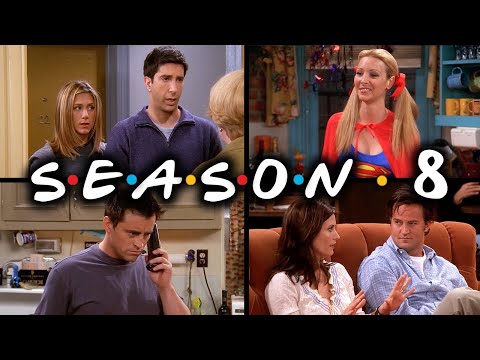
monica في 30 ثانية
- Monica is a classic female given name with ancient roots, widely recognized and used across the English-speaking world and beyond.
- It is a three-syllable proper noun, typically spelled with a 'c' in English, and stressed on the first syllable (MO-ni-ca).
- The name carries strong cultural associations, from religious figures like Saint Monica to modern pop culture icons like Monica Geller.
- Grammatically, it functions as a proper noun, requiring capitalization and following standard rules for subjects, objects, and possessives.
The name Monica is a classic and enduring female given name that has resonated through centuries of history, literature, and popular culture. While primarily recognized today as a common first name, its linguistic roots and cultural associations are deep and multifaceted. At its core, Monica is more than just a label; it carries connotations of strength, maternal devotion, and intellectual clarity. In modern English-speaking contexts, it is a name that fits comfortably in both professional environments and casual social circles. It is neither overly trendy nor archaic, occupying a stable middle ground that makes it recognizable across generations. When people use the name Monica, they are often invoking a sense of reliability and groundedness. Historically, the name gained significant prominence due to Saint Monica, the mother of Saint Augustine, who is celebrated for her persistence and faith. This historical anchor has given the name a legacy of resilience. In the late 20th century, the name saw a massive resurgence in global popularity, partly due to iconic characters in media, most notably Monica Geller from the television sitcom Friends. This character's traits—competitiveness, cleanliness, and a nurturing spirit—have, for many, become modern archetypes associated with the name. Whether you are meeting a Monica in a boardroom or a classroom, the name carries a phonetic crispness that is easy to pronounce and remember.
- Etymological Root
- The name is thought to have North African or Libyan origins, later adopted by the Romans and linked to the Latin word 'monere', meaning to advise or warn.
- Cultural Archetype
- Often associated with the 'nurturer' or the 'organized leader' in contemporary Western storytelling and social dynamics.
- Phonetic Structure
- A three-syllable dactylic rhythm (MO-ni-ca) that provides a melodic yet firm sound in English speech.
Everyone in the office knows that Monica is the person to go to when a project needs meticulous organization.
In social settings, the name Monica is used with a high degree of familiarity. It is a name that transcends socio-economic boundaries, appearing frequently in various ethnic communities, particularly those with Latin, Italian, or Portuguese heritage. The versatility of the name allows it to be shortened into affectionate nicknames like Mon or Moni, though the full three-syllable version remains the standard for formal and professional address. When discussing the name in a linguistic sense, it serves as a perfect example of a proper noun that has maintained its spelling and pronunciation with remarkable consistency over several hundred years. Unlike names that fluctuate wildly in spelling (like Catherine or Kaitlyn), Monica has a 'standard' form that is rarely deviated from in English. This stability contributes to its perception as a 'safe' and 'timeless' choice for parents. Furthermore, the name's presence in music—ranging from jazz standards to 90s R&B—highlights its rhythmic appeal. When a speaker uses the name Monica, they are participating in a long tradition of naming that values clarity, history, and a certain understated elegance. It is a name that does not need to shout to be heard; its history and the people who have borne it provide all the necessary resonance.
The biography of Saint Monica illustrates her profound influence on her son's philosophical development.
I am meeting Monica at the café at noon to discuss the upcoming community fundraiser.
Beyond the personal level, 'Monica' can sometimes appear in geographical contexts, such as Santa Monica, California. This usage shifts the word from a personal identifier to a locational one, yet it retains the same phonetic and orthographic properties. In these cases, the name becomes part of a larger brand or identity, associated with beaches, sunshine, and a relaxed coastal lifestyle. This duality—being both a person's name and a place's name—adds a layer of geographical recognition to the word. For a learner of English, understanding 'Monica' involves recognizing it as a foundational piece of the English-speaking world's onomastic (naming) landscape. It is a word that you will encounter in literature, news reports, and daily conversations. Its frequency of use makes it an essential addition to an A1-level vocabulary, as it provides a concrete example of how proper nouns function within sentence structures. Whether used as a subject, an object, or a possessive, Monica follows the standard rules of English grammar, making it an excellent 'model' word for beginners to practice with.
Using the name Monica in a sentence is straightforward because it follows the standard rules for proper nouns in English. As a name, it functions primarily as a noun and can occupy various positions within a sentence: as the subject, the direct object, the indirect object, or the object of a preposition. Because it refers to a specific individual, it does not typically take an article (a, an, the) unless you are referring to a specific person among several people with the same name (e.g., 'The Monica I know is very kind'). One of the most common ways to use the name is in introductory sentences where a person is being identified. For example, 'This is Monica' or 'My name is Monica.' In these instances, the name serves as a predicate nominative, identifying the subject of the sentence. When Monica is the one performing an action, she becomes the subject: 'Monica wrote a beautiful poem.' Here, the name is the focus of the sentence, and the verb must agree with it in the third-person singular form.
- Subjective Case
- Monica is a talented musician who plays the violin with great passion and skill.
- Objective Case
- I saw Monica at the grocery store yesterday, but she was in a hurry and didn't see me.
- Possessive Case
- Monica's car is parked in the driveway, so she must be home from work already.
Please give this book to Monica when you see her at the library later today.
Another important aspect of using the name Monica is the possessive form. To indicate that something belongs to Monica, you simply add an apostrophe and an 's' to the end of the name: 'Monica's'. This is a frequent construction in daily English, used to describe everything from personal belongings ('Monica's house') to abstract qualities ('Monica's sense of humor'). It is also common to see the name used in conjunction with titles or roles to provide more context. For instance, 'Doctor Monica Smith' or 'Aunt Monica.' In these cases, the name remains the central identifier, but the title adds a layer of social or professional standing. When addressing someone named Monica directly, no special grammatical changes are needed; you simply use the name as a vocative: 'Monica, could you pass the salt?' This direct address is common in both formal and informal settings. In more complex sentence structures, Monica might be part of a compound subject or object, such as 'Monica and David are going to the cinema.' In such cases, the plural verb form ('are') is used because the subject consists of two people.
The teacher asked Monica to read the first paragraph of the story aloud to the class.
We are planning a surprise party for Monica to celebrate her recent promotion.
In creative writing or storytelling, the name Monica can be used to establish a character's identity quickly. Because the name has certain cultural associations, a writer might choose it to suggest a character who is dependable or perhaps a bit traditional. The name can also be used in the plural form, 'Monicas', if you are referring to multiple people with that name in a group: 'There are three Monicas in my yoga class.' While this is less common, it demonstrates the flexibility of the name within English grammar. Furthermore, the name can be used as an appositive, providing extra information about a noun: 'My neighbor, Monica, is a professional gardener.' This construction is very useful for adding detail without starting a new sentence. For English learners, practicing these different sentence positions with the name Monica helps build a strong foundation in syntax and the use of proper nouns. By moving the name around the sentence, you can see how the surrounding words change to accommodate its role as a subject, object, or possessive.
The name Monica is ubiquitous in the English-speaking world, and you are likely to encounter it in a vast array of contexts, from the most mundane daily interactions to high-profile media and historical texts. One of the most common places to hear the name is in social introductions. Whether at a party, a business meeting, or a casual gathering, 'Hi, I'm Monica' is a phrase that resonates across many cultures. In the workplace, the name appears on email signatures, name tags, and in meeting rosters. Because it is a name that has remained popular for decades, you will find Monicas in almost every age group, from young children to retirees. This makes it a 'bridge' name that feels appropriate in any setting. In educational environments, teachers often call out the name during roll call, and students use it when referring to their peers. The name's phonetic simplicity makes it easy to hear and identify even in noisy environments, which contributes to its continued use.
- Television and Film
- The name is famously associated with Monica Geller from 'Friends' and Monica Rambeau from the Marvel Cinematic Universe.
- Geographic Locations
- Santa Monica, California, is one of the most famous cities in the world, making the name a constant in travel and weather reports.
- Music and Arts
- The singer Monica (Monica Denise Arnold) was a major star in the 90s, and the name appears in various song lyrics across genres.
The announcer at the airport called for a passenger named Monica to come to the information desk immediately.
In the realm of pop culture, the name Monica has a massive footprint. For many people, the name is synonymous with the character Monica Geller from the hit TV show Friends. Even years after the show ended, the character's traits—her obsession with cleanliness, her competitive nature, and her role as the 'mother hen' of the group—continue to influence how people perceive the name. You might hear someone say, 'You're being such a Monica right now,' implying that the person is being overly organized or controlling in a humorous way. This is a rare instance where a proper name has transitioned into a descriptive archetype. Additionally, in the world of music, the American singer Monica became a household name in the 1990s with hits like 'The Boy Is Mine.' Her success ensured that the name remained in the public consciousness as a symbol of talent and R&B cool. In sports, you might hear the name when commentators discuss Monica Seles, the legendary tennis champion whose grit and power on the court redefined the game.
In the movie, the protagonist's mother, Monica, provides the emotional core of the entire story.
I was listening to a podcast about history, and they mentioned how Saint Monica influenced early Christian thought.
Beyond media, the name Monica is frequently heard in religious contexts. Saint Monica is a significant figure in the Catholic and Orthodox churches, known as the patron saint of mothers and difficult marriages. During religious services, feast days, or in theological discussions, her name is often invoked as an example of patience and persistent prayer. This gives the name a spiritual dimension that many other common names lack. In literature, Monica appears in various novels and plays, often representing a character with a strong moral compass or a complex internal life. Whether it's a character in a modern thriller or a figure in a classic drama, the name provides a sense of realism. For someone learning English, hearing the name in these diverse contexts—from a sunny beach in California to a 4th-century religious text—demonstrates how a single word can weave through the entire fabric of a language and its culture. It’s a name that is both specific to an individual and broad enough to encompass a wide range of meanings and associations.
While the name Monica is relatively simple, there are several common mistakes that English learners and even native speakers can make regarding its spelling, pronunciation, and usage. The most frequent error is related to spelling. In many languages, such as German, Polish, or Scandinavian languages, the name is spelled with a 'k' (Monika). In English, however, the 'c' spelling is the standard. Using a 'k' in an English context isn't necessarily 'wrong' if that is the person's actual name, but if you are referring to the general English name or a specific person like Monica Geller, using a 'k' would be considered a misspelling. Another common spelling mistake is adding an extra 'n' (Monnica), which was actually the original Latin spelling but is virtually never used in modern English. Learners should stick to the single 'n' and the 'c' to ensure they are following modern conventions.
- Spelling Confusion
- Mistaking 'Monica' (English) for 'Monika' (German/Eastern European) or 'Monique' (French).
- Pronunciation Errors
- Misplacing the stress on the second syllable (mo-NI-ca) instead of the first (MO-ni-ca).
- Grammatical Slips
- Forgetting to capitalize the 'M' or using an article like 'the Monica' incorrectly.
Incorrect: I am going to the party with monica. (Lower case 'm' is a common error in quick typing).
Pronunciation can also be a stumbling block. In English, the stress is almost always on the first syllable: **MAH**-ni-kuh. Some learners, especially those whose native languages are syllable-timed (like Spanish or Italian), might give equal weight to all syllables or stress the middle one. This can make the name sound unfamiliar to native English speakers. Additionally, the 'o' in Monica is a short vowel sound, similar to the 'o' in 'hot' or 'pot'. Pronouncing it as a long 'o' (like in 'go') is a common mistake that changes the character of the name. Another subtle error involves the final 'a'. It should be a soft schwa sound /ə/, like the 'a' in 'sofa', rather than a sharp 'ah' sound. Mastering these small phonetic details will make your pronunciation sound much more natural and fluent.
Incorrect: Is that Monicas coat? (Missing the apostrophe for possession: Monica's).
Incorrect: Monique is coming over. (Confusing the French version with the English Monica).
Usage mistakes often involve the possessive form. As mentioned earlier, 'Monica's' requires an apostrophe. Leaving it out ('Monicas') makes the word look like a plural, which can confuse the reader. Furthermore, learners sometimes confuse 'Monica' with similar-sounding names like 'Monique' or 'Veronica'. While they share some phonetic elements, they are distinct names with different origins and cultural vibes. Monique is French and has a different stress pattern (mo-NEEK), while Veronica has four syllables. Finally, a common mistake in written English is failing to capitalize the name. In English, all proper nouns—including names of people, places, and specific entities—must begin with a capital letter. This is a non-negotiable rule of the language. Even in informal texting, keeping names capitalized is a sign of good literacy. By being mindful of these spelling, pronunciation, and grammatical nuances, you can use the name Monica accurately and confidently in any situation.
When exploring the name Monica, it is helpful to look at similar words and alternatives that share its phonetic qualities, historical roots, or cultural space. In terms of direct linguistic relatives, the French name **Monique** is the most prominent. While it carries the same basic meaning, its pronunciation and 'flavor' are distinctly different, often perceived as more sophisticated or European in an English context. Another close relative is **Monika**, the version used in many Central and Eastern European countries. While the difference is only one letter, the 'k' gives it a slightly sharper, more modern visual feel compared to the softer 'c' in the English version. For those looking for names with a similar 'vibe'—names that are classic, three syllables, and end in 'a'—options like **Veronica**, **Jessica**, or **Erica** often come to mind. These names share a certain rhythmic DNA with Monica, making them feel like they belong to the same 'family' of names.
- Monique vs. Monica
- Monique is the French variant; it is two syllables and stressed on the second. Monica is three syllables and stressed on the first.
- Mona
- A shorter, two-syllable name that is often considered a diminutive or a related form of Monica, though it has its own distinct history.
- Harmonic / Monic
- In technical fields like mathematics or music, 'monic' or 'harmonic' are words that share a phonetic resemblance but have entirely different meanings.
While Monica is a very traditional name, some parents today prefer the shorter and more modern-sounding 'Mona'.
In addition to other names, there are words in English that sound similar to Monica but are used in very different contexts. For example, the word **monocle** (a single eyeglass) shares the 'mono' prefix, which comes from the Greek word for 'one' or 'single'. While the name Monica is likely derived from the Latin 'monere' (to advise), the phonetic overlap with 'mono' words often leads people to associate the name with uniqueness or solitude. In the world of science and math, the term **monic** refers to a polynomial where the leading coefficient is one. While this is a highly specialized term, it's an interesting example of how the sounds in the name Monica appear in other areas of the English language. For a learner, distinguishing between the proper noun 'Monica' and these technical terms is important for avoiding confusion in academic or professional settings.
The character Monica in the novel was often compared to her sister, Veronica, who was her complete opposite in personality.
In the French translation of the book, the name Monica was changed to Monique to better suit the local audience.
When choosing an alternative for the name Monica in a piece of writing, consider the 'register' of the name. Monica is neutral and timeless. If you want something more modern, you might choose **Mia** or **Maya**. If you want something more vintage, you might go with **Martha** or **Mildred**. However, Monica remains a popular choice because it strikes a balance between being well-known and not being overused. In summary, while there are many names and words that share phonetic or etymological space with Monica, the name itself stands out as a distinct and versatile identifier. Understanding its 'neighbors' in the English language—whether they are other names like Monique or technical terms like monic—helps to deepen your overall linguistic competence and allows you to appreciate the subtle nuances of English naming conventions.
How Formal Is It?
حقيقة ممتعة
Saint Monica is the patron saint of alcoholics, conversion, and mothers. The city of Santa Monica, California, was named by Spanish explorers who arrived there on her feast day.
دليل النطق
- Stressing the second syllable: mo-NI-ca.
- Pronouncing the 'o' as a long vowel: MOAN-ica.
- Pronouncing the 'c' as an 's' sound: Mon-isa.
- Making the final 'a' too sharp: Monic-AH.
- Confusing it with the French pronunciation of Monique.
مستوى الصعوبة
Very easy to recognize in text as a proper noun due to capitalization.
Simple spelling, though learners must remember to use 'c' instead of 'k'.
Easy to pronounce with a clear three-syllable rhythm.
Distinctive sound that is easy to pick out in conversation.
ماذا تتعلّم بعد ذلك
المتطلبات الأساسية
تعلّم لاحقاً
متقدم
قواعد يجب معرفتها
Capitalization of Proper Nouns
Always write 'Monica', never 'monica'.
Possessive 's
Monica's car is blue.
No articles with names
Say 'I saw Monica', not 'I saw the Monica'.
Third-person singular agreement
Monica works (not work) at the bank.
Vocative comma
Hello, Monica, how are you?
أمثلة حسب المستوى
Monica is my friend.
Monica est mon amie.
Subject + Verb (is) + Complement.
Her name is Monica.
Elle s'appelle Monica.
Possessive adjective (Her) + Noun + Verb + Name.
Monica has a cat.
Monica a un chat.
Third-person singular verb 'has'.
I see Monica.
Je vois Monica.
Direct object 'Monica'.
Monica lives in London.
Monica habite à Londres.
Present simple tense for a permanent state.
This is Monica's book.
C'est le livre de Monica.
Possessive 's.
Monica is a teacher.
Monica est professeur.
Using a name with a profession.
Hello, Monica!
Bonjour, Monica !
Vocative use of a name.
I am going to the cinema with Monica.
Je vais au cinéma avec Monica.
Preposition 'with' followed by a proper noun.
Monica's brother is very tall.
Le frère de Monica est très grand.
Possessive 's used to show family relationship.
Did you see Monica at the party?
As-tu vu Monica à la fête ?
Question form with 'did' and direct object.
Monica and I are learning English.
Monica et moi apprenons l'anglais.
Compound subject 'Monica and I'.
Please give this to Monica.
S'il vous plaît, donnez ceci à Monica.
Indirect object 'Monica'.
Monica likes to play tennis on Saturdays.
Monica aime jouer au tennis le samedi.
Present simple for habits.
We visited Santa Monica last summer.
Nous avons visité Santa Monica l'été dernier.
Proper noun as part of a place name.
Monica was born in Italy.
Monica est née en Italie.
Passive construction 'was born'.
Monica, who is my neighbor, is very kind.
Monica, qui est ma voisine, est très gentille.
Non-defining relative clause.
I haven't seen Monica since last week.
Je n'ai pas vu Monica depuis la semaine dernière.
Present perfect with 'since'.
Monica is known for her excellent cooking skills.
Monica est connue pour ses excellents talents de cuisinière.
Passive voice 'is known for'.
If Monica arrives early, we can start the meeting.
Si Monica arrive tôt, nous pouvons commencer la réunion.
First conditional.
The manager asked Monica to lead the new project.
Le directeur a demandé à Monica de diriger le nouveau projet.
Verb + Object + To-infinitive.
Monica's decision surprised everyone in the office.
La décision de Monica a surpris tout le monde au bureau.
Possessive noun as subject.
I think Monica would be perfect for the job.
Je pense que Monica serait parfaite pour le poste.
Modal verb 'would' for opinion.
Monica said that she would be late for dinner.
Monica a dit qu'elle serait en retard pour le dîner.
Reported speech.
Monica's meticulous nature makes her an ideal accountant.
La nature méticuleuse de Monica fait d'elle une comptable idéale.
Abstract possessive noun.
Having lived in Paris, Monica speaks fluent French.
Ayant vécu à Paris, Monica parle couramment le français.
Participle clause.
Monica is the kind of person who never gives up.
Monica est le genre de personne qui n'abandonne jamais.
Relative clause with 'who'.
It was Monica who first suggested the idea.
C'est Monica qui a suggéré l'idée en premier.
Cleft sentence for emphasis.
Monica's influence on the team cannot be overstated.
L'influence de Monica sur l'équipe ne peut être surestimée.
Modal passive 'cannot be overstated'.
Despite the rain, Monica decided to go for a run.
Malgré la pluie, Monica a décidé d'aller courir.
Concession with 'despite'.
Monica's success is a result of years of hard work.
Le succès de Monica est le résultat d'années de travail acharné.
Noun phrase as complement.
I wonder if Monica has finished reading that book yet.
Je me demande si Monica a déjà fini de lire ce livre.
Indirect question.
Monica's portrayal in the film was both nuanced and powerful.
L'interprétation de Monica dans le film était à la fois nuancée et puissante.
Complex noun phrase.
The name Monica evokes a sense of timeless elegance.
Le nom Monica évoque un sentiment d'élégance intemporelle.
Abstract subject-verb-object.
Should Monica decide to run for office, she would have my support.
Si Monica décidait de se présenter aux élections, elle aurait mon soutien.
Inversion in conditional sentences.
Monica's contribution to the field of linguistics is widely recognized.
La contribution de Monica au domaine de la linguistique est largement reconnue.
Passive voice with an adverb.
Rarely has Monica been so challenged by a professional task.
Rarement Monica n'a été aussi mise au défi par une tâche professionnelle.
Negative inversion for emphasis.
Monica's ability to empathize with others is her greatest strength.
La capacité de Monica à compatir avec les autres est sa plus grande force.
Infinitive phrase as part of a noun phrase.
The legacy of Saint Monica continues to inspire millions today.
L'héritage de Sainte Monica continue d'inspirer des millions de personnes aujourd'hui.
Historical reference as subject.
Monica's perspective on the issue provided a much-needed fresh look.
Le point de vue de Monica sur la question a apporté un regard neuf bien nécessaire.
Compound adjective 'much-needed'.
The sociolinguistic implications of the name Monica vary across cultures.
Les implications sociolinguistiques du nom Monica varient selon les cultures.
Academic subject phrase.
Monica's narrative arc in the novel serves as a critique of modern society.
L'arc narratif de Monica dans le roman sert de critique de la société moderne.
Literary analysis terminology.
To understand Monica's motivations, one must delve into her complex past.
Pour comprendre les motivations de Monica, il faut se plonger dans son passé complexe.
Infinitive of purpose at the start of a sentence.
Monica's presence in the room was palpable, commanding immediate attention.
La présence de Monica dans la pièce était palpable, commandant une attention immédiate.
Participial phrase as a modifier.
The name Monica, with its dactylic meter, possesses an inherent musicality.
Le nom Monica, avec son mètre dactylique, possède une musicalité inhérente.
Appositive phrase with technical terms.
Whether Monica succeeds or fails, her journey remains profoundly instructive.
Que Monica réussisse ou échoue, son parcours reste profondément instructif.
Concessive clause with 'whether... or'.
Monica's intellectual rigor is matched only by her boundless compassion.
La rigueur intellectuelle de Monica n'a d'égale que sa compassion sans bornes.
Passive construction with 'matched only by'.
The etymological journey of the name Monica is a testament to cultural exchange.
Le voyage étymologique du nom Monica est un témoignage d'échange culturel.
Metaphorical use of 'testament to'.
تلازمات شائعة
العبارات الشائعة
— A standard way to introduce oneself.
Hi, my name is Monica and I'm from Chicago.
— Used to introduce someone else to a third party.
John, this is Monica. She's our new marketing manager.
— Suggesting that Monica has the information or authority needed.
I'm not sure about the schedule; you should ask Monica.
— A directive to contact Monica via telephone.
Can you call Monica and tell her we'll be late?
— Indicating that it is Monica's time to act in a game or task.
I've already gone, so now it's Monica's turn.
— A simple expression of gratitude directed at Monica.
Thanks, Monica, for helping me with the groceries.
— A question asking for Monica's current location.
Where is Monica? I haven't seen her all morning.
— Announcing Monica's arrival at a location.
Oh look, Monica is here! Now we can start.
— Suggesting a conversation with Monica to resolve an issue.
If you have a problem, you really need to talk to Monica.
— Attributing a suggestion or plan to Monica.
Going to the beach was Monica's idea, and it was a great one.
يُخلط عادةً مع
The French version, often confused in spelling or pronunciation.
The German/European spelling, often used interchangeably by mistake.
A similar-sounding name with a different origin and meaning.
تعبيرات اصطلاحية
— Acting in an overly organized, competitive, or clean manner, referencing Monica Geller.
Stop being such a Monica and just let the dishes soak for a bit!
Informal / Pop Culture— Extremely clean, almost to an obsessive degree.
Her apartment is Monica-level clean; I'm afraid to sit down!
Informal— A particularly beautiful and vibrant sunset, often used metaphorically.
Their romance was as beautiful as a Santa Monica sunset.
Literary / Descriptive— A best friend who is the organized and grounded half of a duo.
I don't know what I'd do without her; she's the Monica to my Rachel.
Informal / Pop Culture— A place that is always welcoming and full of good food.
Her house feels like Monica's kitchen; there's always something cooking.
Informal— Using extreme patience and persistent prayer to achieve a goal.
She took the Saint Monica approach with her rebellious son.
Religious / Figurative— A hidden area of messiness in an otherwise organized person's life.
Don't open that door; that's my Monica's closet!
Informal / Pop Culture— A sudden outburst of competitiveness or a need for control.
I had a total Monica moment when I saw the table wasn't set correctly.
Informal— Strict, often arbitrary rules set by an organized person.
We have to follow Monica's rules if we want to play this game.
Informal— The tendency for one person's organization to improve the whole group.
Since she joined the team, the Monica effect has made us all more efficient.
Informalسهل الخلط
Phonetic similarity.
Monic is a mathematical term; Monica is a person's name.
This is a monic polynomial.
Similar first two syllables.
A monocle is an eyeglass; Monica is a person.
The old man wore a monocle.
Same Latin root 'monere'.
A monitor is a screen or an observer; Monica is a name.
Check the computer monitor.
Same word used for two different things.
One is a person, the other is a location (usually Santa Monica).
I live in Santa Monica.
Starts with the same three letters.
A monastery is a building for monks; Monica is a name.
The monks live in a monastery.
أنماط الجُمل
[Name] is [Adjective].
Monica is happy.
I like [Name].
I like Monica.
[Name]'s [Noun] is [Adjective].
Monica's house is big.
We are with [Name].
We are with Monica.
[Name], who [Verb], is [Adjective].
Monica, who lives here, is nice.
I think [Name] [Verb].
I think Monica knows.
If [Name] [Verb], then [Result].
If Monica helps, we will finish.
[Name] is known for [Noun/Gerund].
Monica is known for being kind.
عائلة الكلمة
الأسماء
الصفات
مرتبط
كيفية الاستخدام
Common in all English-speaking countries.
-
monica
→
Monica
Names must always be capitalized in English. Using a lowercase 'm' is a grammatical error.
-
Monika
→
Monica
While 'Monika' is a valid spelling in other languages, 'Monica' is the standard spelling in English.
-
Monicas car
→
Monica's car
To show possession, you must use an apostrophe before the 's'.
-
I saw the Monica.
→
I saw Monica.
We do not use the definite article 'the' before a person's first name in English.
-
Monica and me went...
→
Monica and I went...
When the name is part of the subject, use the subject pronoun 'I' instead of the object pronoun 'me'.
نصائح
Use a 'C'
Always remember that in English, Monica is spelled with a 'C'. If you use a 'K', people might think you are using the German or Polish version of the name.
Stress the First Syllable
Make sure to put the emphasis on the 'MON' part of the name. Saying mo-NI-ca sounds incorrect to native English speakers.
Capitalize Always
As a proper noun, Monica must always start with a capital 'M'. This applies even if the name is in the middle of a sentence or in a list.
Ask for Nicknames
If you meet a Monica, it's polite to use her full name unless she tells you otherwise. Some Monicas love the nickname 'Moni', while others prefer the full name.
Know the 'Friends' Reference
Being aware of Monica Geller will help you understand many jokes and cultural references. It's one of the most common associations with the name.
Santa Monica is a Place
If you see 'Santa Monica' on a map or sign, remember it's a city. The word 'Santa' means 'Saint' in Spanish, so it's 'Saint Monica'.
Learn the Root
Knowing that Monica comes from 'monere' (to advise) can help you remember the name and connect it to other words like 'monitor' and 'admonish'.
Listen for the Rhythm
The name has a very specific 'DUM-da-da' rhythm. Practicing this rhythm will help you recognize the name even when people speak quickly.
Possessive Apostrophe
Don't forget the apostrophe when writing 'Monica's'. Without it, 'Monicas' looks like you are talking about more than one person named Monica.
Ancient Roots
Remember that Monica is an ancient name. This gives it a sense of history and strength that you can use when describing characters in your writing.
احفظها
وسيلة تذكّر
Think of a 'Monitor' (someone who watches and advises). A 'Monitor' and 'Monica' both start with 'Mon' and both come from the Latin word for advising.
ربط بصري
Imagine a woman wearing a 'Monica' name tag, holding a 'Monitor' screen. This links the name to its Latin root 'monere'.
Word Web
تحدٍّ
Try to use the name Monica in three different sentences: one as a subject, one as an object, and one in the possessive form.
أصل الكلمة
The name Monica is of ancient origin, likely starting in North Africa among the Berber people. It was later adopted by the Romans and integrated into Latin. Its widespread use in the Christian world is due to Saint Monica of Hippo.
المعنى الأصلي: In Latin, it is associated with 'monere', meaning 'to advise' or 'to warn'. In Greek, it is sometimes linked to 'monos', meaning 'alone' or 'unique'.
Indo-European (via Latin) with possible Afro-Asiatic roots.السياق الثقافي
The name is generally neutral, but be aware of the 'Monica Geller' stereotype (being 'high-maintenance') when using it jokingly.
In the US and UK, the name is seen as classic and reliable. It is less common for babies born today but remains very common among adults.
تدرّب في الحياة الواقعية
سياقات واقعية
Social Introductions
- Hi, I'm Monica.
- Nice to meet you, Monica.
- This is my friend Monica.
- Have you met Monica?
Workplace
- Monica is in a meeting.
- Please email Monica.
- Monica's report is excellent.
- Ask Monica for the files.
Family and Friends
- Aunt Monica is visiting.
- Monica's birthday is tomorrow.
- I'm going out with Monica.
- Tell Monica I said hi.
Travel and Geography
- We're going to Santa Monica.
- The Santa Monica Pier.
- Is Santa Monica far?
- I love Santa Monica.
Pop Culture
- She's such a Monica.
- Monica from Friends.
- I love Monica's songs.
- Did you see Monica's movie?
بدايات محادثة
"Do you know anyone named Monica? It's such a classic name."
"Have you ever been to Santa Monica? The beach there is beautiful."
"Which character from 'Friends' do you like more, Monica or Rachel?"
"I'm thinking of naming my new kitten Monica. What do you think?"
"Did you know that Saint Monica is the patron saint of mothers?"
مواضيع للكتابة اليومية
Write about a person named Monica you have met. What was she like?
If you were to change your name to Monica, how would you feel?
Describe a day spent at Santa Monica beach. What would you do?
Think of the character Monica Geller. In what ways are you like her?
Research the history of the name Monica and write down three interesting facts.
الأسئلة الشائعة
10 أسئلةYes, Monica is a very common name in English-speaking countries, as well as in Europe and Latin America. It has been popular for many decades, so you will find people of all ages with this name. It is particularly well-known due to famous people and characters.
In English, the standard spelling is M-O-N-I-C-A. While some other languages use a 'K' (Monika), the version with a 'C' is the most widely accepted in the UK, US, Canada, and Australia. Always capitalize the first letter.
The name has two main possible meanings. From Latin, it is linked to 'monere', which means 'to advise'. From Greek, it may come from 'monos', meaning 'alone' or 'unique'. Both meanings suggest a person of strong character.
Currently, the most famous fictional Monica is Monica Geller from the TV show 'Friends'. In history, Saint Monica is very famous. In music, the singer Monica is a major star. Each of these figures has contributed to the name's fame.
No, Monica is a very old name. It dates back to at least the 4th century with Saint Monica. However, it feels modern because it has remained in constant use and was very popular in the late 20th century.
No, in English-speaking cultures, Monica is exclusively a female name. There is no common male version of the name, although 'Monaco' is a place name and 'Monty' is a male name that starts with the same letters.
Common nicknames include Mon, Moni, and Mona. These are usually used by close friends and family. In professional settings, people almost always use the full name, Monica.
It is pronounced with three syllables: MAH-ni-kuh. The stress is on the first syllable. The 'o' is short, the 'i' is short, and the 'a' at the end is a soft sound like 'uh'.
Yes, Santa Monica, California, is named after Saint Monica. Spanish explorers named the area because they arrived there on her feast day, May 4th. This is why the city shares the name.
While it is not as popular as it was in the 1970s and 80s, it is still used. It is considered a 'classic' name, meaning it never really goes out of style, even if it isn't at the top of the charts right now.
اختبر نفسك 200 أسئلة
Write a sentence introducing yourself as Monica.
Well written! Good try! Check the sample answer below.
Write a sentence about Monica's cat.
Well written! Good try! Check the sample answer below.
Describe Monica using three adjectives.
Well written! Good try! Check the sample answer below.
Write a short story about Monica going to the beach.
Well written! Good try! Check the sample answer below.
Explain why the name Monica is popular.
Well written! Good try! Check the sample answer below.
Write a formal email to someone named Monica Smith.
Well written! Good try! Check the sample answer below.
Compare the names Monica and Monique.
Well written! Good try! Check the sample answer below.
Write a sentence using the name Monica as an object.
Well written! Good try! Check the sample answer below.
Write a sentence using the possessive form of Monica.
Well written! Good try! Check the sample answer below.
Write a question to ask Monica about her day.
Well written! Good try! Check the sample answer below.
Describe Santa Monica in two sentences.
Well written! Good try! Check the sample answer below.
Write a sentence about Monica and her brother.
Well written! Good try! Check the sample answer below.
Write a sentence using 'Monica' and 'teacher'.
Well written! Good try! Check the sample answer below.
Write a sentence about what Monica likes to do.
Well written! Good try! Check the sample answer below.
Write a sentence about where Monica lives.
Well written! Good try! Check the sample answer below.
Write a sentence using 'Monica' as the subject of a passive verb.
Well written! Good try! Check the sample answer below.
Write a sentence about Monica's favorite food.
Well written! Good try! Check the sample answer below.
Write a sentence using 'Monica' in a list of three names.
Well written! Good try! Check the sample answer below.
Write a sentence about Monica's job.
Well written! Good try! Check the sample answer below.
Write a sentence using the nickname 'Mon'.
Well written! Good try! Check the sample answer below.
Say 'Hello, Monica' out loud.
Read this aloud:
قلت:
Speech recognition is not supported in your browser. Try Chrome or Edge.
Say 'Monica's car is red' out loud.
Read this aloud:
قلت:
Speech recognition is not supported in your browser. Try Chrome or Edge.
Introduce your friend Monica to someone else.
Read this aloud:
قلت:
Speech recognition is not supported in your browser. Try Chrome or Edge.
Ask Monica if she wants some coffee.
Read this aloud:
قلت:
Speech recognition is not supported in your browser. Try Chrome or Edge.
Tell Monica that you like her dress.
Read this aloud:
قلت:
Speech recognition is not supported in your browser. Try Chrome or Edge.
Pronounce the name Monica correctly, stressing the first syllable.
Read this aloud:
قلت:
Speech recognition is not supported in your browser. Try Chrome or Edge.
Say 'I am going to Santa Monica' out loud.
Read this aloud:
قلت:
Speech recognition is not supported in your browser. Try Chrome or Edge.
Ask Monica where she is from.
Read this aloud:
قلت:
Speech recognition is not supported in your browser. Try Chrome or Edge.
Tell Monica that her brother called.
Read this aloud:
قلت:
Speech recognition is not supported in your browser. Try Chrome or Edge.
Say 'Monica is a very common name' out loud.
Read this aloud:
قلت:
Speech recognition is not supported in your browser. Try Chrome or Edge.
Ask Monica for help with your homework.
Read this aloud:
قلت:
Speech recognition is not supported in your browser. Try Chrome or Edge.
Tell Monica that you will see her tomorrow.
Read this aloud:
قلت:
Speech recognition is not supported in your browser. Try Chrome or Edge.
Say 'Monica's house is very big' out loud.
Read this aloud:
قلت:
Speech recognition is not supported in your browser. Try Chrome or Edge.
Ask Monica what time it is.
Read this aloud:
قلت:
Speech recognition is not supported in your browser. Try Chrome or Edge.
Tell Monica that she did a great job.
Read this aloud:
قلت:
Speech recognition is not supported in your browser. Try Chrome or Edge.
Say 'Happy Birthday, Monica!' out loud.
Read this aloud:
قلت:
Speech recognition is not supported in your browser. Try Chrome or Edge.
Ask Monica if she likes pizza.
Read this aloud:
قلت:
Speech recognition is not supported in your browser. Try Chrome or Edge.
Tell Monica that you are sorry.
Read this aloud:
قلت:
Speech recognition is not supported in your browser. Try Chrome or Edge.
Say 'Monica and I are friends' out loud.
Read this aloud:
قلت:
Speech recognition is not supported in your browser. Try Chrome or Edge.
Ask Monica if she is busy.
Read this aloud:
قلت:
Speech recognition is not supported in your browser. Try Chrome or Edge.
Listen to the name: 'Monica'. How many syllables did you hear?
Listen to the sentence: 'Monica is at home.' Where is Monica?
Listen to the sentence: 'Monica's car is blue.' What color is the car?
Listen to the sentence: 'I saw Monica at the store.' Where did the speaker see Monica?
Listen to the sentence: 'Monica is a teacher.' What is Monica's job?
Listen to the sentence: 'Monica and Sarah are sisters.' What is the relationship between Monica and Sarah?
Listen to the sentence: 'Monica's birthday is tomorrow.' When is Monica's birthday?
Listen to the sentence: 'Please give this to Monica.' Who should receive the item?
Listen to the sentence: 'Monica lives in London.' Where does Monica live?
Listen to the sentence: 'Monica likes to play tennis.' What sport does Monica like?
Listen to the sentence: 'Monica is very kind.' How is Monica described?
Listen to the sentence: 'Monica's brother is a doctor.' What is Monica's brother's job?
Listen to the sentence: 'I am going to the cinema with Monica.' Who is the speaker going with?
Listen to the sentence: 'Monica's house is very big.' How is the house described?
Listen to the sentence: 'Monica is coming at seven.' What time is Monica coming?
/ 200 correct
Perfect score!
Summary
The name Monica is a versatile and timeless identifier that serves as an excellent example of a proper noun in English. It is easy to pronounce, culturally rich, and grammatically straightforward, making it an essential word for learners at all levels to understand and use correctly. Example: 'Monica's leadership was key to the project's success.'
- Monica is a classic female given name with ancient roots, widely recognized and used across the English-speaking world and beyond.
- It is a three-syllable proper noun, typically spelled with a 'c' in English, and stressed on the first syllable (MO-ni-ca).
- The name carries strong cultural associations, from religious figures like Saint Monica to modern pop culture icons like Monica Geller.
- Grammatically, it functions as a proper noun, requiring capitalization and following standard rules for subjects, objects, and possessives.
Use a 'C'
Always remember that in English, Monica is spelled with a 'C'. If you use a 'K', people might think you are using the German or Polish version of the name.
Stress the First Syllable
Make sure to put the emphasis on the 'MON' part of the name. Saying mo-NI-ca sounds incorrect to native English speakers.
Capitalize Always
As a proper noun, Monica must always start with a capital 'M'. This applies even if the name is in the middle of a sentence or in a list.
Ask for Nicknames
If you meet a Monica, it's polite to use her full name unless she tells you otherwise. Some Monicas love the nickname 'Moni', while others prefer the full name.