quack في 30 ثانية
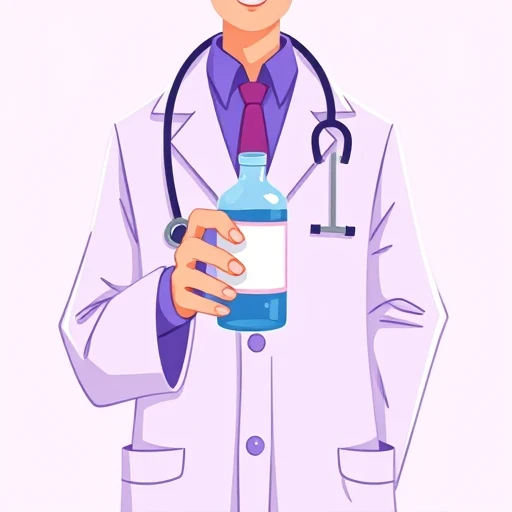
- A quack is a fraudulent person who pretends to be a doctor or medical expert to deceive others, often for financial gain.
- The term is highly negative and is used to warn people about health scams and unproven, dangerous medical treatments.
- It originates from the Dutch word 'quacksalver,' referring to someone who boasts about the effectiveness of their ointments.
- In modern English, it is a common way to describe anyone promoting pseudoscience or practicing medicine without a license.
The term quack, when used as a noun in a medical or professional context, refers to an individual who dishonestly claims to have qualifications, medical knowledge, or healing skills that they do not actually possess. This is not merely a description of a 'bad doctor' who makes mistakes, but rather a specific label for a fraudster or an impostor who intentionally deceives the public for financial gain or notoriety. The essence of being a quack lies in the pretense; they often sell 'miracle cures,' unproven treatments, or 'snake oil' that has no scientific basis. In modern society, the word is frequently used as a warning or a derogatory label to protect vulnerable people from falling victim to health scams. It carries a heavy weight of social stigma because it implies a betrayal of the fundamental trust between a healer and a patient.
- The Core Concept
- A quack is defined by their lack of legitimate credentials and their reliance on deception to sell medical services or products.
- Social Context
- Used primarily in discussions about public health, medical ethics, and consumer protection to identify fraudulent practitioners.
- Historical Weight
- The term evokes images of 19th-century traveling salesmen selling colored water as a cure for all ailments.
"The investigative journalist spent months undercover to expose the local man as a dangerous quack who was selling industrial bleach as a cancer cure."
People use this word when they want to express strong disapproval and skepticism toward someone offering medical advice without a license. It is a tool for debunking pseudoscience. For example, if a person on social media claims that eating only lemons will cure a broken leg, they might be labeled a quack by the scientific community. The word serves as a linguistic barrier, separating evidence-based medicine from fraudulent claims. It is also used in a broader sense to describe anyone who pretends to be an expert in any field, though its primary home remains in the realm of health and medicine.
"Don't listen to that quack; he doesn't even have a medical degree, yet he's prescribing expensive herbal supplements for serious infections."
In professional circles, the term is synonymous with 'charlatan.' When a regulatory body like the Medical Board warns about a quack, they are warning about a criminal element. The word is often paired with 'quackery,' which refers to the actual methods or 'medicines' used by the quack. Understanding this word is essential for navigating the complex world of health information, especially in the digital age where misinformation spreads rapidly. It is a word of defense—a way for society to say 'we value truth and expertise over lies and profit.'
"History is full of quacks who took advantage of the desperate by promising immortality through secret elixirs."
"The village quack was eventually run out of town after his 'magic powder' made several people ill."
"Modern internet quacks often use complex-sounding scientific jargon to hide the fact that their products are useless."
Using the word quack correctly requires understanding its role as a noun that labels a person. It is almost always used pejoratively (negatively). You can use it as a direct subject, an object, or as a modifier in some contexts. Because it is a count noun, it requires an article ('a quack') or can be pluralized ('quacks'). It is most effective when used to highlight the contrast between legitimate expertise and fraudulent claims. Below are various ways to integrate this word into your vocabulary across different registers.
- As a Direct Label
- Directly identifying someone as a fraud. Example: 'That man is a total quack.'
- In a Descriptive Phrase
- Using it to describe the type of person. Example: 'He was nothing more than a dangerous quack.'
- In Plural Form
- Referring to a group of fraudulent practitioners. Example: 'The internet is unfortunately full of quacks.'
"I realized he was a quack when he told me that crystals could cure my pneumonia."
When writing about history or literature, 'quack' often appears in the context of 'quack doctors' or 'quack remedies.' In these cases, it acts almost like an adjective, though it remains a noun modifying another noun. For instance, 'The quack doctor sold his wares from the back of a colorful wagon.' This usage helps set a specific historical scene, usually one involving deception and the gullibility of the public. In modern legal or journalistic writing, the word is used to describe individuals practicing medicine without a license. It is a punchy, evocative word that immediately tells the reader that the person being discussed is not to be trusted.
"The authorities are cracking down on quacks who prey on elderly citizens with fake health insurance schemes."
In a professional setting, you might use 'quack' to dismiss a theory that lacks scientific evidence. While 'quack' usually refers to a person, you can say 'That theory is pure quackery' to describe the ideas themselves. However, calling a person a 'quack' is a direct attack on their character and professional standing. It is a word used in debates to quickly invalidate an opponent's medical claims. For example, 'We cannot allow this quack to influence public policy on vaccinations.' Here, the word serves as a powerful rhetorical tool to emphasize the danger of ignoring scientific consensus.
"Despite his lack of a degree, the quack managed to convince many people that he had discovered a new form of energy healing."
"The documentary exposed the quack who had been performing surgeries in a dirty basement."
"She called her ex-husband a quack after he tried to treat her migraine with nothing but positive thinking and expensive magnets."
The word quack resonates through several specific areas of modern life, despite its historical origins. You are most likely to encounter it in the following contexts: investigative journalism, medical skepticism communities, historical narratives, and legal reports regarding fraud. In the age of the internet, the word has seen a resurgence as a way to label 'wellness influencers' who promote dangerous or unverified health advice. When a journalist uncovers a scam involving fake medical degrees, the headline will almost inevitably use the word 'quack' to grab attention and signal the fraudulent nature of the story.
In the realm of Investigative Journalism, 'quack' is a staple. Programs like '60 Minutes' or 'BBC Panorama' often feature segments on individuals who claim to have found a 'secret cure' for terminal illnesses. These individuals are described as quacks because they operate outside the bounds of regulated medicine and often cause physical or financial harm to their 'patients.' Hearing the word in this context usually accompanies a sense of outrage and a call for better regulation.
In Scientific and Medical Skepticism, the word is used as a technical-yet-informal label. Skeptics like James Randi or organizations like Quackwatch use the term to categorize various forms of pseudoscience. When you listen to podcasts about science or read blogs dedicated to debunking myths, 'quack' is the standard term for the proponents of these myths. It helps the audience quickly identify that the person being discussed is not a legitimate scientist.
In Historical Documentaries and Literature, 'quack' takes on a slightly more colorful, though still negative, tone. You might hear about the 'quacks of the Victorian era' who sold mercury as a health tonic. In this context, the word helps to illustrate the lack of medical regulation in the past and the dangers people faced before the advent of modern pharmacology. It paints a picture of a time when anyone with a loud voice and a fancy bottle could claim to be a doctor.
Finally, in Legal and Regulatory Reports, the word is used to describe the crime of 'quackery.' When a state medical board issues a press release about an individual practicing medicine without a license, they may use the term to emphasize the fraudulent nature of the individual's actions. It is a word that carries legal weight in the court of public opinion, even if the specific legal charge is 'unlicensed practice of medicine.'
Interestingly, you might also hear 'quack' used in a Self-Deprecating or Humorous Way. A person might say, 'I'm no doctor, I'm just a quack with a first-aid kit,' to indicate they are offering amateur advice and shouldn't be taken too seriously. However, this is less common than its use as a serious accusation. In all these contexts, the word 'quack' serves as a vital marker of authenticity—or the lack thereof—in the high-stakes world of human health.
While quack is a relatively straightforward word, there are several common pitfalls that learners and even native speakers can fall into. The most frequent mistake is confusing the noun 'quack' (a fraud) with the verb 'quack' (the sound a duck makes). While they are spelled and pronounced the same, their meanings are entirely unrelated. Using 'quack' to describe a person's voice without the context of a duck can be confusing unless you are specifically implying they sound like a duck, which is a different metaphor entirely.
Another common error is using 'quack' to describe any doctor you don't like or who made a mistake. A doctor who is incompetent or rude is still a doctor if they have the proper licenses and training. A quack is specifically someone who pretends to have that training. Calling a legitimate surgeon a 'quack' because they were late for an appointment is an incorrect and potentially libelous use of the word. It is important to reserve the term for actual cases of fraud and deception.
There is also a tendency to confuse 'quack' with 'charlatan' or 'impostor.' While they are synonyms, 'quack' is almost exclusively used in a medical or health context. You wouldn't usually call a fake lawyer a 'quack'; you would call them a 'charlatan' or a 'fraud.' Using 'quack' for non-medical frauds is not technically 'wrong' in a metaphorical sense, but it is non-standard and might sound slightly off to a native speaker. Keep 'quack' for the fake doctors and 'charlatan' for the rest.
Furthermore, some people mistakenly use 'quack' as an adjective without realizing it's primarily a noun. While you can say 'quack medicine,' it is more accurate to say 'the medicine of a quack' or 'quackery.' In the phrase 'quack doctor,' the word 'quack' is a noun acting as an attributive noun. Learners should be careful not to start using 'quack' as a general adjective for 'fake' in other contexts (e.g., 'a quack car' is incorrect; use 'a fake car' or 'a lemon').
Finally, be aware of the register. 'Quack' is a very strong, informal, and accusatory word. Using it in a formal medical report might be seen as unprofessional unless you are quoting someone or specifically discussing the history of quackery. In a formal setting, 'unlicensed practitioner' or 'fraudulent claimant' is often preferred. Understanding these nuances ensures that when you do use the word 'quack,' it has the intended impact and correctly identifies the specific type of deception you are describing.
To truly master the word quack, it is helpful to understand the landscape of similar words that deal with deception and fraud. Each of these words has a slightly different flavor and is used in different contexts. By comparing them, you can choose the most precise term for your needs.
- Charlatan
- A charlatan is a person falsely claiming to have a special knowledge or skill. While similar to a quack, a charlatan can exist in any field—art, law, finance, or medicine. 'Quack' is the medical specialist of charlatans.
- Mountebank
- This is an archaic, more literary term for a quack. Historically, a mountebank was someone who stood on a 'banco' (bench) in public squares to sell fake medicines. It carries a more theatrical, historical connotation.
- Snake Oil Salesman
- An American idiom for a quack. It refers to the 19th-century practice of selling 'snake oil' as a panacea. It implies a traveling fraudster who disappears before the customers realize they've been cheated.
- Fraud
- A general term for a person who intends to deceive. It is less specific than 'quack' and is often used in legal contexts. All quacks are frauds, but not all frauds are quacks.
- Impostor
- Someone who pretends to be someone else. A quack is an impostor who specifically pretends to be a doctor.
When comparing these, remember that 'quack' is the most direct and common way to describe a fake doctor in everyday English. If you want to sound more formal or academic, you might use 'charlatan.' If you are writing a Western novel, 'snake oil salesman' would be perfect. If you are writing a legal document, 'unlicensed practitioner' is the way to go. Each word allows you to fine-tune the 'flavor' of the accusation you are making.
How Formal Is It?
حقيقة ممتعة
The 'quack' sound of a duck and the 'quack' meaning a fake doctor are actually related by the idea of 'making a lot of noise.' A quack doctor 'quacks' (boasts) about their fake cures just like a duck makes loud, meaningless noises.
دليل النطق
- Pronouncing it like 'quake' (long 'a').
- Confusing the 'kw' sound with a simple 'k' sound.
- Adding an extra vowel sound at the end (e.g., 'quack-uh').
- Mixing it up with 'quick' in fast speech.
- Failing to aspirate the final 'k' sound.
مستوى الصعوبة
The word is short but requires context to distinguish from the duck sound.
Requires understanding of the negative connotation and specific medical context.
Very easy to pronounce as it is a single, sharp syllable.
Must be able to distinguish from 'quick' or the verb form in fast speech.
ماذا تتعلّم بعد ذلك
المتطلبات الأساسية
تعلّم لاحقاً
متقدم
قواعد يجب معرفتها
Attributive Nouns
In 'quack doctor,' the noun 'quack' acts as an adjective to describe the doctor.
Articles with Count Nouns
You must say 'a quack' or 'the quack,' never just 'He is quack.'
Negative Connotation
Using 'quack' automatically makes the sentence critical and pejorative.
Homonyms
Context determines if 'quack' is a sound or a person.
Pluralization
Add 's' to make 'quacks' for multiple fraudulent people.
أمثلة حسب المستوى
The duck said quack.
The sound a duck makes.
Here, quack is a noun for a sound.
Is he a real doctor or a quack?
A fake doctor.
Using 'a' before quack.
Do not go to that quack.
Don't visit the fake doctor.
Imperative sentence.
A quack tells lies.
A fake doctor lies.
Simple present tense.
He is a quack, not a doctor.
He is a fraud.
Contrastive sentence.
The quack sold fake juice.
The fake doctor sold fake medicine.
Past tense.
I saw a quack on TV.
I saw a fake expert on television.
Direct object.
That quack is very bad.
That fake doctor is evil.
Subject-complement.
The police arrested the quack yesterday.
The fake doctor was caught.
Past simple.
Many people were tricked by the quack.
The fraud deceived many.
Passive voice.
He is just a quack with no degree.
He has no university education.
Prepositional phrase 'with no degree'.
The quack's medicine made me feel worse.
The fake medicine was harmful.
Possessive 's.
Why would anyone believe that quack?
Why trust a fraud?
Interrogative with 'would'.
She called him a quack after the meeting.
She labeled him a fraud.
Direct object complement.
The quack promised a miracle cure.
He promised something impossible.
Reporting a promise.
You should avoid quacks on the internet.
Stay away from online frauds.
Modal 'should' for advice.
The documentary exposed him as a dangerous quack.
The film showed he was a fraud.
Expose someone as [noun].
I suspect that the new clinic is run by a quack.
I think the doctor is fake.
Subordinate clause starting with 'that'.
He was labeled a quack by the medical board.
The authorities said he was a fraud.
Passive voice with agent.
Don't waste your money on that quack's treatments.
Don't pay for fake cures.
Negative imperative.
The quack used fake testimonials to sell his products.
He used fake reviews.
Using 'to' + infinitive for purpose.
It turned out that the 'doctor' was actually a quack.
The truth was revealed.
Phrasal verb 'turn out'.
A quack often preys on people who are desperate.
They target vulnerable people.
Metaphorical use of 'prey on'.
The quack's license was found to be a forgery.
His permit was fake.
Passive infinitive 'to be'.
The quack's flamboyant claims were eventually debunked.
His big promises were proven false.
Debunked is a common collocation.
She was sued for calling the licensed practitioner a quack.
She faced legal trouble for the insult.
Gerund after a preposition.
The rise of social media has given quacks a larger platform.
Fake doctors have more reach now.
Present perfect tense.
He operated as a quack for years before being caught.
He worked as a fraud for a long time.
Preposition 'as' indicating role.
The quack's 'secret formula' was nothing but sugar water.
The medicine was just sugar and water.
Idiomatic 'nothing but'.
Public health officials are worried about the influence of quacks.
Experts are concerned about fake doctors.
Adjective + preposition 'worried about'.
He was a notorious quack who fled the country to avoid arrest.
A famous fraud who ran away.
Relative clause with 'who'.
The quack's lack of medical training was obvious to the experts.
Real doctors knew he was fake.
Noun phrase as subject.
The quack's rhetoric was designed to exploit the scientifically illiterate.
His words targeted people who don't know science.
Passive voice 'was designed to'.
History is replete with quacks who profited from human suffering.
History is full of fake doctors.
Adjective 'replete with'.
The quack managed to circumvent regulations by selling his 'cures' as supplements.
He avoided laws by changing the label.
Infinitive 'to circumvent'.
Calling him a quack was perhaps an understatement of his criminality.
He was even worse than just a fake doctor.
Gerund as subject.
The quack's pseudoscientific jargon served as a veneer for his ignorance.
His big words hid his lack of knowledge.
Metaphorical 'veneer'.
She spent her career debunking the claims of various medical quacks.
She proved fake doctors were lying.
Present participle 'debunking'.
The quack's influence waned after a series of high-profile lawsuits.
His power decreased after being sued.
Intransitive verb 'waned'.
He was the quintessential quack, complete with a fake accent and stolen credentials.
He was the perfect example of a fraud.
Adjective 'quintessential'.
The quack's insidious influence permeated the local community, leading to a distrust of legitimate medicine.
His bad influence spread everywhere.
Complex sentence with multiple clauses.
To label him a mere quack is to ignore the systematic nature of his deception.
He was more than just a simple fraud.
Infinitive phrase as subject and complement.
The quack's audacity in claiming to cure incurable diseases was matched only by his greed.
He was very bold and very greedy.
Noun 'audacity' followed by a prepositional phrase.
The proliferation of quacks in the digital age necessitates a more robust approach to health education.
More fake doctors mean we need better education.
Subject-verb agreement with 'proliferation'.
He was eventually unmasked as a quack, much to the chagrin of his wealthy patrons.
His rich supporters were embarrassed when he was caught.
Idiomatic 'much to the chagrin of'.
The quack's pseudo-medical empire crumbled under the weight of scientific scrutiny.
His business failed when scientists checked it.
Metaphorical 'crumbled'.
The quack capitalized on the ambiguity of the law to peddle his fraudulent elixirs.
He used legal loopholes to sell fake medicine.
Verb 'capitalized on'.
The distinction between a well-meaning amateur and a calculated quack is often a matter of intent.
The difference is whether they mean to lie.
Noun 'distinction' between two things.
تلازمات شائعة
العبارات الشائعة
— Someone who might not be a total fraud but gives questionable advice.
He's a bit of a quack, always suggesting weird diets.
— Emphasizing that the person is entirely fraudulent.
He's nothing but a quack looking for easy money.
— To force a fraudulent person to leave a community.
They practically ran the quack out of town when his lies were found out.
— Treatments that have no scientific basis.
The market was full of quack medicine in the 1800s.
— Pseudoscience that sounds real but is fake.
The book was criticized for promoting quack science.
— Don't pretend to know things you don't (informal).
Stop giving medical advice, don't be a quack.
— The place where a fraud operates.
The quack's clinic was hidden in a back alley.
— To stay far away from something suspicious (play on 'avoid like the plague').
You should avoid that website like a quack.
يُخلط عادةً مع
Often confused in fast speech due to similar vowel sounds.
Confused by learners who mispronounce the short 'a' as a long 'a'.
A similar-sounding word for a sharp noise, but unrelated in meaning.
تعبيرات اصطلاحية
— If something looks and acts like a certain thing, it probably is that thing. Often used to identify a fraud.
He has no degree and sells fake pills; if it quacks like a duck, it's a quack.
informal— To make a lot of noise without saying anything useful (rare/humorous).
The politician did nothing but duck and quack during the debate.
slang— To laugh suddenly and loudly (unrelated to the 'fraud' meaning).
That joke really made me quack up.
informal— To speak in a way that sounds fraudulent or uneducated.
He started quacking like a quack as soon as I asked for his license.
informal— A person who is very persuasive but dishonest.
He has a quack-salver's tongue and can sell anything to anyone.
literary— Promoting lies or fake products.
The internet is a great place for selling quackery.
neutral— Success gained through deception rather than skill.
It was just quack's luck that his patient got better on their own.
informal— Accusing someone of being a fraud.
The scientist was quick to call quack on the new 'miracle' study.
neutral— Something that cannot be fooled by medical fraud.
We need a quack-proof system for verifying medical licenses.
informal— A person who looks professional but is not.
He's just wearing the quack's coat; he knows nothing about surgery.
metaphoricalسهل الخلط
Both mean a fraud.
A charlatan can be in any field; a quack is specifically medical.
The quack sold fake pills, while the charlatan sold fake paintings.
Both involve bad medical outcomes.
A malpractitioner is a real doctor who failed; a quack is not a doctor at all.
The surgeon was sued for malpractice, but the quack was arrested for fraud.
Both pretend to be someone else.
An impostor might pretend to be a pilot or a prince; a quack specifically pretends to be a healer.
The quack is a medical impostor.
Historical term for someone who relies on experience rather than theory.
In the past, 'empiric' was sometimes used like 'quack,' but today 'empirical' is a positive word in science.
He was called an empiric by the university doctors.
The word 'quack' is the sound a duck makes.
One is an animal sound; the other is a human fraud.
The duck quacked at the quack.
أنماط الجُمل
He is a [noun].
He is a quack.
Don't listen to that [noun].
Don't listen to that quack.
The [noun] sold [adjective] [noun].
The quack sold fake medicine.
He was exposed as a [noun] by [agent].
He was exposed as a quack by the police.
The [noun]'s [noun] was a [noun] for his [noun].
The quack's jargon was a veneer for his ignorance.
To label him a [noun] is to [verb]...
To label him a quack is to ignore his crimes.
I think he is a [noun].
I think he is a quack.
Many people believe the [noun].
Many people believe the quack.
عائلة الكلمة
الأسماء
الأفعال
الصفات
مرتبط
كيفية الاستخدام
Common in medical and skeptical contexts.
-
He is quack.
→
He is a quack.
Quack is a countable noun and needs an article.
-
The duck quacked at the doctor.
→
The duck quacked at the quack.
Using 'quack' for both the sound and the person is a fun way to practice, but don't confuse them!
-
I went to a quack for my surgery.
→
I went to a surgeon for my surgery.
You wouldn't normally go to a quack on purpose; you are tricked by one.
-
The quack doctor was very professional.
→
The quack doctor seemed professional but was a fraud.
A quack is by definition not professional, though they may pretend to be.
-
He is a quack lawyer.
→
He is a charlatan lawyer.
While 'quack' is sometimes used for other fields, it is best kept for medical contexts.
نصائح
Check the Context
Always check if the sentence is about ducks or doctors before translating or using the word 'quack.'
Think of the 1800s
Visualizing a traveling salesman with a wagon of fake medicine will help you remember the meaning of 'quack.'
Use an Article
Always use 'a' or 'the' before 'quack' when referring to a person. 'He is a quack' is correct.
Learn the Family
Learning 'quackery' alongside 'quack' will help you describe both the person and their fake treatments.
Be Careful with Accusations
Calling a professional a 'quack' can be considered defamation if they are actually licensed. Use it for clear frauds.
The Duck Rule
If someone 'quacks' (boasts) like a duck but isn't a doctor, they are a quack.
Keep it Informal
Use 'quack' in conversation or stories, but use 'fraudulent practitioner' in formal reports.
Don't Forget the 'U'
The word is spelled Q-U-A-C-K. Don't forget the 'u' after the 'q'!
Listen for the 'K'
The sharp 'k' at the end is vital. It distinguishes it from words like 'quag' or 'quam.'
Look for 'Cure'
احفظها
وسيلة تذكّر
Think of a duck in a lab coat. A duck says 'quack,' and a fake doctor is a 'quack.' Both make a lot of noise but don't have a medical degree!
ربط بصري
Imagine a man selling a bottle of 'Magic Water' while a duck sits on his shoulder. The duck is the hint for the word.
Word Web
تحدٍّ
Try to use the word 'quack' in a sentence about a person selling a fake health product on the internet today.
أصل الكلمة
The word 'quack' is a shortened form of the archaic word 'quacksalver.' This term comes from the early modern Dutch word 'kwakzalver.' It appeared in English in the mid-17th century.
المعنى الأصلي: In Dutch, 'kwakken' meant to boast or brag, and 'zalf' meant ointment or salve. So, a quacksalver was someone who 'boasted about their ointments.'
Germanic (Dutch origin).السياق الثقافي
Be careful when using this word to describe alternative medicine practitioners; while some may be quacks, others may be practicing legitimate, though non-traditional, therapies. Use it only when there is clear evidence of fraud.
The term is widely understood in the US, UK, Canada, and Australia as a derogatory term for a medical fraud.
تدرّب في الحياة الواقعية
سياقات واقعية
Health Scams
- Beware of quacks
- Fake medical advice
- Unproven cures
- Protect yourself from fraud
History Class
- Victorian quacks
- The era of quackery
- Patent medicines
- Traveling medicine shows
Social Media Debates
- Internet quackery
- Don't follow that quack
- Scientific evidence
- Debunking myths
Legal News
- Practicing without a license
- Arrested for quackery
- Medical board warning
- Victims of the quack
Everyday Conversation
- He's a bit of a quack
- Sounds like quackery to me
- I don't trust that quack
- A total fraud
بدايات محادثة
"Have you ever seen a person on the internet who seemed like a total quack?"
"What do you think is the best way to stop quacks from tricking people?"
"In your country, is 'quack' a common word for a fake doctor?"
"Why do you think people are sometimes so willing to believe a quack's promises?"
"Do you know any historical stories about famous quacks and their 'miracle' cures?"
مواضيع للكتابة اليومية
Describe a time you encountered medical advice that sounded like it came from a quack. How did you react?
Write a short story about a quack who accidentally cures someone with a fake medicine.
Compare and contrast a legitimate doctor with a quack. What are the three biggest differences?
Should quacks be sent to prison, or is it the responsibility of the patient to be careful?
How has the internet made it easier or harder for quacks to operate in modern society?
الأسئلة الشائعة
10 أسئلةYes, when referring to a person, it is always negative and insulting. It implies the person is a liar and a fraud. You should never use it to describe a professional you respect.
Technically, no. A real doctor has a license. However, people sometimes use the word 'quack' informally to describe a real doctor who gives very bad or unscientific advice. Be careful, as this can be legally risky.
It comes from the Dutch word 'quacksalver,' which means someone who brags about their ointments. It was shortened to 'quack' in the 1800s.
Quackery is the noun for the *actions* or *methods* of a quack. A quack is the person; quackery is the fake medicine they practice.
Look for red flags: they promise 'miracle' cures, they don't have a real medical degree, they ask for a lot of money upfront, and their treatments aren't backed by science.
While the word is primarily medical, it is sometimes used metaphorically for anyone who pretends to have expertise they don't have, like a 'quack accountant.'
It is considered informal but is widely used in journalism and everyday speech. It is not 'slang' in the sense of being limited to a specific subculture.
A legitimate professional, an expert, or a qualified specialist.
Yes, but as a verb, it almost always refers to the sound a duck makes. You rarely say 'He is quacking' to mean 'He is acting like a fake doctor.'
Yes! 'Snake oil' is the fake medicine that a quack sells. A 'snake oil salesman' is another way to say 'quack.'
اختبر نفسك 200 أسئلة
Write a sentence using 'quack' to describe a person selling a fake cure.
Well written! Good try! Check the sample answer below.
Explain the difference between a quack and a real doctor in two sentences.
Well written! Good try! Check the sample answer below.
Write a warning sign about a quack doctor.
Well written! Good try! Check the sample answer below.
Describe a historical quack and what they sold.
Well written! Good try! Check the sample answer below.
Use the word 'quackery' in a sentence about the internet.
Well written! Good try! Check the sample answer below.
Write a dialogue between two people where one calls the other a quack.
Well written! Good try! Check the sample answer below.
How does a quack exploit people's fears? Write 30 words.
Well written! Good try! Check the sample answer below.
Write a headline for a news story about a quack being caught.
Well written! Good try! Check the sample answer below.
Use 'quack' as an attributive noun (e.g., quack doctor).
Well written! Good try! Check the sample answer below.
Write a sentence about the etymology of 'quack.'
Well written! Good try! Check the sample answer below.
Write a sentence using both meanings of 'quack' (sound and person).
Well written! Good try! Check the sample answer below.
Describe a modern-day quack you might find on social media.
Well written! Good try! Check the sample answer below.
Why is the word 'quack' considered an insult?
Well written! Good try! Check the sample answer below.
Write a sentence using the word 'charlatan' and 'quack' together.
Well written! Good try! Check the sample answer below.
What are the red flags of a quack? List three.
Well written! Good try! Check the sample answer below.
Write a sentence about a quack's 'secret formula.'
Well written! Good try! Check the sample answer below.
Use the word 'unmasked' with 'quack.'
Well written! Good try! Check the sample answer below.
Write a sentence about a quack's lack of credentials.
Well written! Good try! Check the sample answer below.
Write a sentence about a quack being 'run out of town.'
Well written! Good try! Check the sample answer below.
Explain why 'quack' is a B1 level word.
Well written! Good try! Check the sample answer below.
Pronounce the word 'quack' clearly.
Read this aloud:
قلت:
Speech recognition is not supported in your browser. Try Chrome or Edge.
Use 'quack' in a sentence about a fake doctor.
Read this aloud:
قلت:
Speech recognition is not supported in your browser. Try Chrome or Edge.
Explain what a quack is to a friend.
Read this aloud:
قلت:
Speech recognition is not supported in your browser. Try Chrome or Edge.
Discuss why people might trust a quack.
Read this aloud:
قلت:
Speech recognition is not supported in your browser. Try Chrome or Edge.
Tell a short story about a quack.
Read this aloud:
قلت:
Speech recognition is not supported in your browser. Try Chrome or Edge.
Compare 'quack' and 'charlatan' out loud.
Read this aloud:
قلت:
Speech recognition is not supported in your browser. Try Chrome or Edge.
Say 'The quack doctor sold quack medicine.'
Read this aloud:
قلت:
Speech recognition is not supported in your browser. Try Chrome or Edge.
Give a warning about a quack.
Read this aloud:
قلت:
Speech recognition is not supported in your browser. Try Chrome or Edge.
Describe the etymology of quack.
Read this aloud:
قلت:
Speech recognition is not supported in your browser. Try Chrome or Edge.
Use the idiom 'if it quacks like a duck' in a sentence.
Read this aloud:
قلت:
Speech recognition is not supported in your browser. Try Chrome or Edge.
Explain the danger of quackery.
Read this aloud:
قلت:
Speech recognition is not supported in your browser. Try Chrome or Edge.
What is a 'snake oil salesman'?
Read this aloud:
قلت:
Speech recognition is not supported in your browser. Try Chrome or Edge.
How do you spell quack?
Read this aloud:
قلت:
Speech recognition is not supported in your browser. Try Chrome or Edge.
Use 'notorious quack' in a sentence.
Read this aloud:
قلت:
Speech recognition is not supported in your browser. Try Chrome or Edge.
Is a quack a real doctor? (Answer in a full sentence).
Read this aloud:
قلت:
Speech recognition is not supported in your browser. Try Chrome or Edge.
Why is the word 'quack' used for fake doctors?
Read this aloud:
قلت:
Speech recognition is not supported in your browser. Try Chrome or Edge.
Use 'quackery' in a sentence.
Read this aloud:
قلت:
Speech recognition is not supported in your browser. Try Chrome or Edge.
What would you do if you met a quack?
Read this aloud:
قلت:
Speech recognition is not supported in your browser. Try Chrome or Edge.
Can a quack be a woman?
Read this aloud:
قلت:
Speech recognition is not supported in your browser. Try Chrome or Edge.
Describe a quack's clinic.
Read this aloud:
قلت:
Speech recognition is not supported in your browser. Try Chrome or Edge.
Listen to the sentence: 'The quack was caught.' What was caught?
Does the speaker sound happy or angry when they say 'He's a quack!'?
Identify the word: /kwæk/.
In the sentence 'The duck's quack was loud,' is quack a person?
In 'The quack doctor lied,' what is the quack doing?
Listen for the synonym: 'He is a medical charlatan.'
Is the word 'quack' long or short?
What is the final sound in 'quack'?
In 'Stop that quackery!', what is the speaker complaining about?
True or False: The speaker thinks the quack is a good person.
What did the quack sell in the story?
How many syllables are in 'quack'?
Does 'quack' rhyme with 'back'?
Listen to: 'He's a notorious quack.' What does notorious mean here?
Is the 'a' in quack like 'cat' or 'cake'?
/ 200 correct
Perfect score!
Summary
A quack is a medical impostor. The most important thing to remember is that a quack is not just a bad doctor, but a total fraud who lacks legitimate credentials and intentionally misleads people with fake cures. For example: 'The man was a quack who sold colored water as a cure for diabetes.'
- A quack is a fraudulent person who pretends to be a doctor or medical expert to deceive others, often for financial gain.
- The term is highly negative and is used to warn people about health scams and unproven, dangerous medical treatments.
- It originates from the Dutch word 'quacksalver,' referring to someone who boasts about the effectiveness of their ointments.
- In modern English, it is a common way to describe anyone promoting pseudoscience or practicing medicine without a license.
Check the Context
Always check if the sentence is about ducks or doctors before translating or using the word 'quack.'
Think of the 1800s
Visualizing a traveling salesman with a wagon of fake medicine will help you remember the meaning of 'quack.'
Use an Article
Always use 'a' or 'the' before 'quack' when referring to a person. 'He is a quack' is correct.
Learn the Family
Learning 'quackery' alongside 'quack' will help you describe both the person and their fake treatments.