Navigating Space and Time
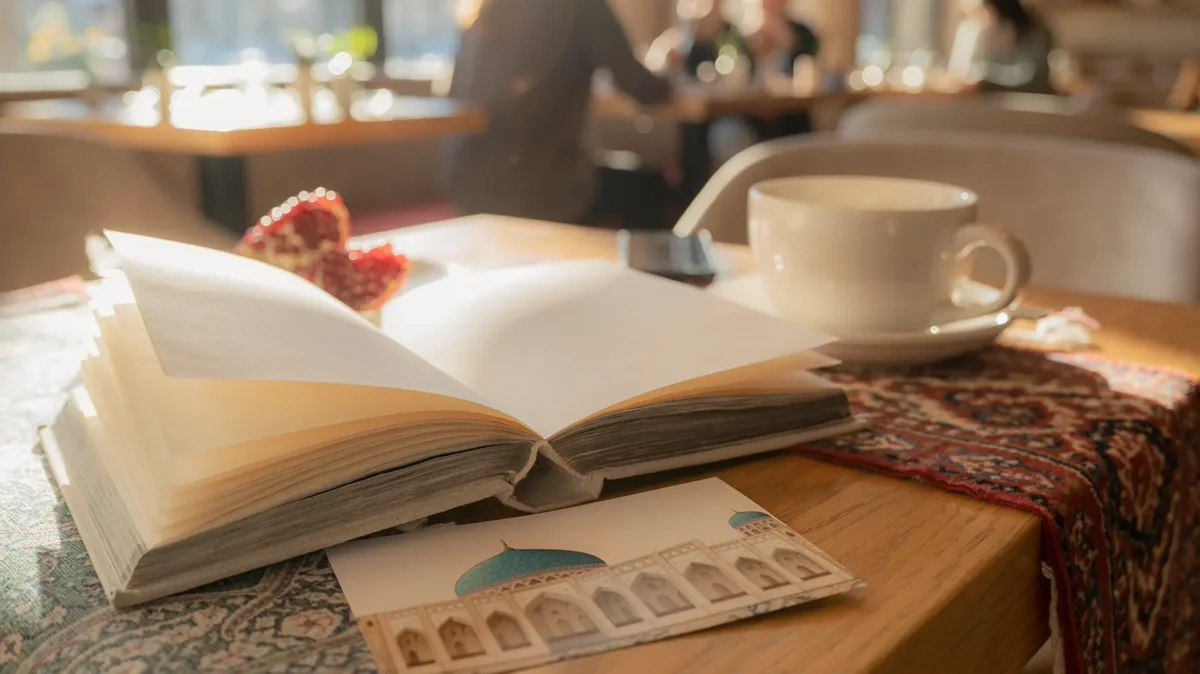
Chapter in 30 Seconds
Master the art of situating yourself in time and space with confidence and precision.
- Define exact locations using spatial prepositions.
- Connect activities using time-based markers.
- Describe habits with frequency adverbs.
ما ستتعلمه
Hey there, friend! You've already learned so many basics and you're getting comfortable speaking Persian. Good for you! Now, we're going to take another step forward and learn to talk in a way that makes it seem like you can see and plan everything precisely.
In this chapter, you'll learn how to accurately say something is in (dar), on (rū), or under (zīr) something else. For example,
the book is on the tableor
the cat is under the bed.Just remember that «rū» and
zīr connect to their nouns with a tiny Ezafe. Plus, you'll learn how to use «bā» (with) and bedūn-e (without) to talk about who was with you or what you didn't have, like I went to the cafe with my friendsor "I can't wake up without coffee." Don't forget that
bedūn-e also needs an Ezafe!
Want to know from where to where(az... tā...) something is? Or say
what something is for(barā-ye)? For instance,
I have class from Saturday to Tuesdayor
this gift is for you.You can even arrange your plans precisely with
before and after (ghabl az / ba'd az), like I exercise before work.Finally, you'll learn how to talk about your habits: what you
always do, what you usually do, or what you never do (remember, hargez (never) always comes with a negative verb!).
After this chapter, you'll never get lost giving directions or describing daily events again. You'll be able to make plans more easily, explain your schedule, and generally, your conversations will become much more precise and beautiful. Ready for this exciting journey? Let's go!
-
حروف الجر الفارسية للمكان: في، على، تحت (dar, rū, zīr)استخدم «در» للمواقع العامة، ولا تنسَ ربط «رویِ» و «زیرِ» بالاسم اللي بعدها باستخدام صوت الإضافة (الكسرة).
-
سحر المع والبدون: 'Bā' مقابل 'Bedūn'استخدم «با» للربط والأدوات، و«بدونِ» للتعبير عن الغياب، وتذكر دائماً إضافة كسرة الإضافة «-e» مع كلمة بدون.
-
النطاقات الفارسية: من... إلى... (az... tā...)استخدم هيكل الساندوتش
az [البداية] tā [النهاية]عشان تحدد أي مدى. تذكر الكلمات الأساسية:azو «tā». -
التعبير عن الغرض باستخدام 'barā-ye' (لـ)استخدم «برای» (barā-ye) مع الأسماء لتوضيح لمن هذا الشيء أو لماذا تفعله، وفكر فيها كأنها «لـ» أو «لأجل».
-
حروف جر الوقت الفارسية: قبل وبعد (ghabl az / ba'd az)إتقان «قبل از» و «بعد از» بيخليك ترتب مواعيدك وتحكي قصصك بالترتيب الزمني الصح.
-
العادات الفارسية: دائماً، عادةً، أبداً (hamisheh, ma'mūlan)حط الظرف بعد الفاعل مباشرة، وخليك فاكر إن «هرگز» (أبداً) بتحب النفي جداً. الكلمات السحرية هي: «همیشه»، «معمولاً»، «هرگز».
Learning Objectives
By the end of this chapter, you will be able to:
-
1
By the end you will be able to: Use spatial markers (dar, rū, zīr) to describe objects in a room.
دليل الفصل

نظرة عامة
Navigating Space and Time,your next exciting step in mastering A2 Persian grammar! You've built a solid foundation, and now it's time to add a layer of precision and elegance to your conversations. This chapter is all about giving you the tools to express yourself with crystal clarity, whether you're describing where something is, when an event occurs, or for what purpose.
in, on, and under, temporal expressions like before and after, and how to discuss purpose and association.كيف تعمل هذه القاعدة

الأخطاء الشائعة
- 1✗ Wrong: ketāb rū mīz ast. (The book on table is.)
- 1✗ Wrong: man hargez mīravam. (I never go.)
never correctly.- 1✗ Wrong: telefon rū-ye kīfe man ast. (The phone is on my bag.)
on top of, dar means in or inside. If the phone is *inside* the bag, dar is the correct preposition. Choose the most precise preposition based on the exact spatial relationship.
محادثات حقيقية
A
B
A
B
A
B
أسئلة شائعة
How do I know whether to use -e or -ye for the ezafe?
The ezafe particle is -e when the preceding word ends in a consonant (e.g., ketāb-e man - my book). It becomes -ye when the preceding word ends in a vowel (e.g., khāneh-ye man - my house).
Can az... tā... be used for both time and distance?
Yes, absolutely! az... tā... is incredibly versatile and can express a range in both space (az Tehrān tā Shiraz - from Tehran to Shiraz) and time (az sobh tā shab - from morning till night, or az shanbeh tā سه-shanbeh - from Saturday to Tuesday).
Is there another way to say usually in Persian besides ma'mūlan?
While ma'mūlan is the most common, you might also hear aghlab (often) or phrases like bishtar-e vaqt-hā (most of the time) which convey a similar meaning. These are good to know for expanding your Persian vocabulary.
What's the difference between dar and tū-ye for in?
Dar is more formal and general, meaning in or at (e.g., dar khāneh - in the house). Tū-ye (literally inside of) is more informal and emphasizes being *within* something (e.g., tū-ye khāneh - inside the house). Both are often interchangeable in casual speech, but dar is generally safer for formal contexts.

السياق الثقافي
أمثلة رئيسية (4)
Man hamisheh ghahve mi-khuram.
أنا دائماً أشرب القهوة.
العادات الفارسية: دائماً، عادةً، أبداً (hamisheh, ma'mūlan)U hargez be man payām nemi-dahad.
هو لا يراسلني أبداً.
العادات الفارسية: دائماً، عادةً، أبداً (hamisheh, ma'mūlan)نصائح وحيل (4)
وجه الطاولة!
Kelīd-hā rū-ye mīz hastand.
خدعة وسائل النقل
فكر في 'Tā' كأنها علامة قف
Az injā tā metro.
نبرة 'واسه' العامية
المفردات الرئيسية (6)
Real-World Preview
Meeting at the Cafe
Review Summary
- [Noun] + [rū-ye/zīr-e/dar] + [Location]
- [Adverb] + [Subject] + [Verb]
أخطاء شائعة
You forgot the Ezafe! Spatial markers like rū-ye need it to connect to the noun.
The word 'hargez' (never) requires a negative verb form.
Bedūn also requires the Ezafe marker.
القواعد في هذا الفصل (6)
Next Steps
You've done an incredible job navigating space and time! Keep practicing these structures in your daily life, and you'll be speaking like a native in no time.
Label items in your room using Post-its with Persian prepositions.
تدريب سريع (3)
Find and fix the mistake:
من قبل کلاس قهوه میخورم.
frontend.learn_grammar.from_rule: حروف جر الوقت الفارسية: قبل وبعد (ghabl az / ba'd az)
من معمولاً ________ شام تلویزیون تماشا میکنم. (أنا عادةً أشاهد التلفاز بعد العشاء).
frontend.learn_grammar.from_rule: حروف جر الوقت الفارسية: قبل وبعد (ghabl az / ba'd az)
اختر الطريقة الصحيحة لقول 'قبل أن أذهب':
frontend.learn_grammar.from_rule: حروف جر الوقت الفارسية: قبل وبعد (ghabl az / ba'd az)
Score: /3
أسئلة شائعة (6)
Ma dar daftar hastam.
Ketāb rū-ye mīz ast.
tā fardā يعني 'لحد بكرة'. بتحتاج 'az' بس لو بدك تحدد نقطة البداية كمان.Az injā tā bāzār.

